TL;DR: “Seoul Life 2026: Heritage Reimagined, Soban” is a free exhibition at DDP’s Design Dullegil Gallery (through October 8, 2026) showing 17 Korean and international designers’ reinterpretations of the soban, Korea’s traditional portable tray-table. It’s a small, single-corridor space — easy to add on to any other DDP visit in about 10 minutes — and it already drew over 20,000 visitors when it debuted at Milan Design Week in April.
I actually went to DDP that day for the Wayne Thiebaud exhibition. On the way in, I noticed a free show called “SEOUL LIFE” running in the gallery right next door and figured I’d take a quick look before or after. It ended up being the exhibition I thought about more on the way home.
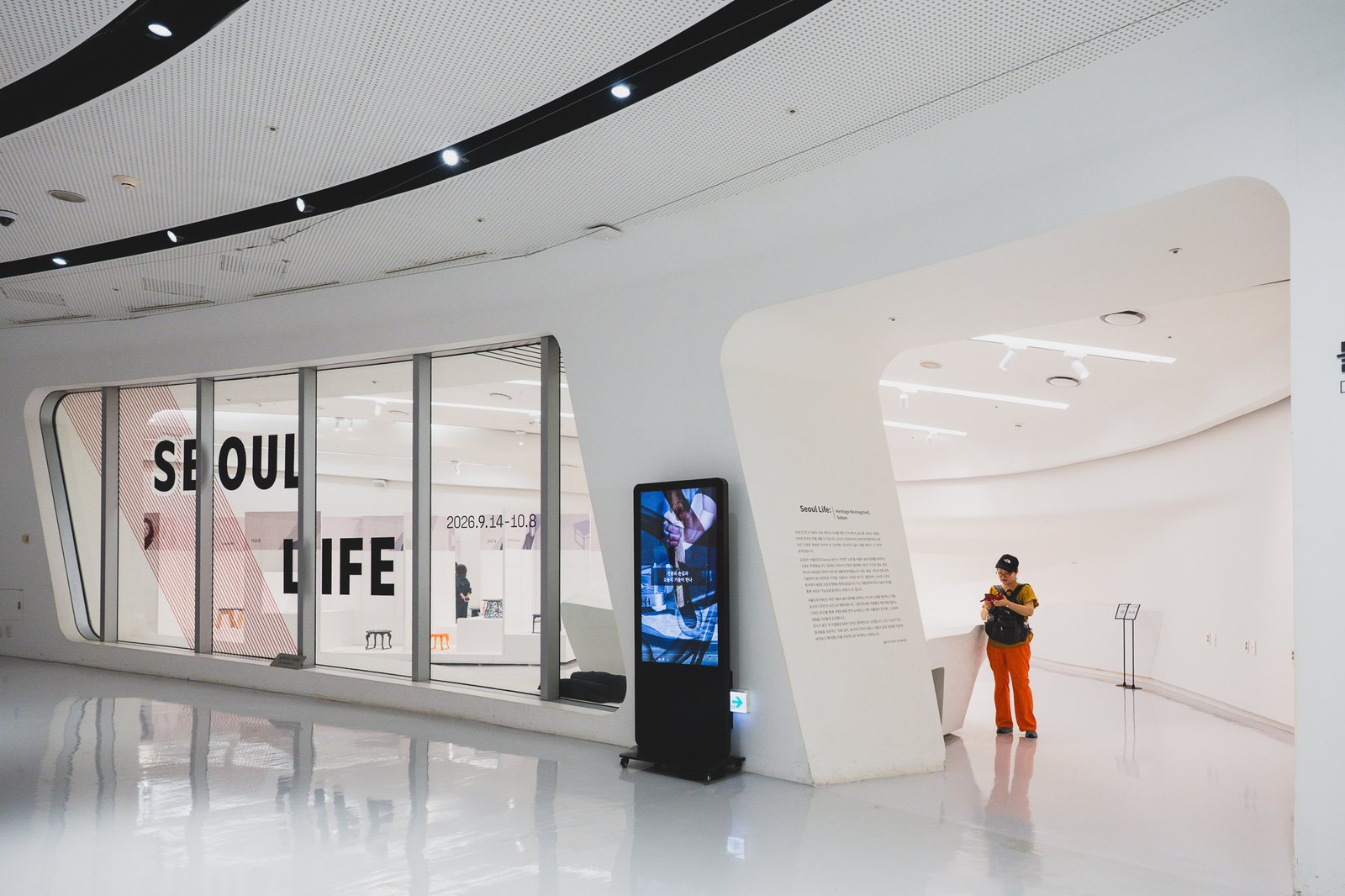
The Basics
| Venue | DDP Design Dullegil Gallery (Dongdaemun Design Plaza) |
| Address | 281 Eulji-ro, Jung-gu, Seoul |
| Dates | September 14 – October 8, 2026 |
| Hours | 10:00 AM – 8:00 PM daily |
| Admission | Free |
| Parking | DDP underground parking (paid) |
What “Soban” Means, and Why a Design Foundation Picked It
If you’re not familiar with the word, a soban is a small, low, individual dining tray-table — traditionally used to serve one person’s meal, easy enough to carry from a kitchen to wherever someone was sitting. It’s one of those objects that feels almost too plain to build a whole exhibition around, which is exactly why this show works.
“Seoul Life” is an annual project run by the Seoul Design Foundation. Each year they pick one object that represents everyday life in Seoul and hand it to contemporary designers to reinterpret. The results premiere at Milan Design Week every April, then travel back to Seoul, and afterward become part of DDP’s permanent design collection — so nothing gets scattered after the show closes. 2026’s object was the soban.
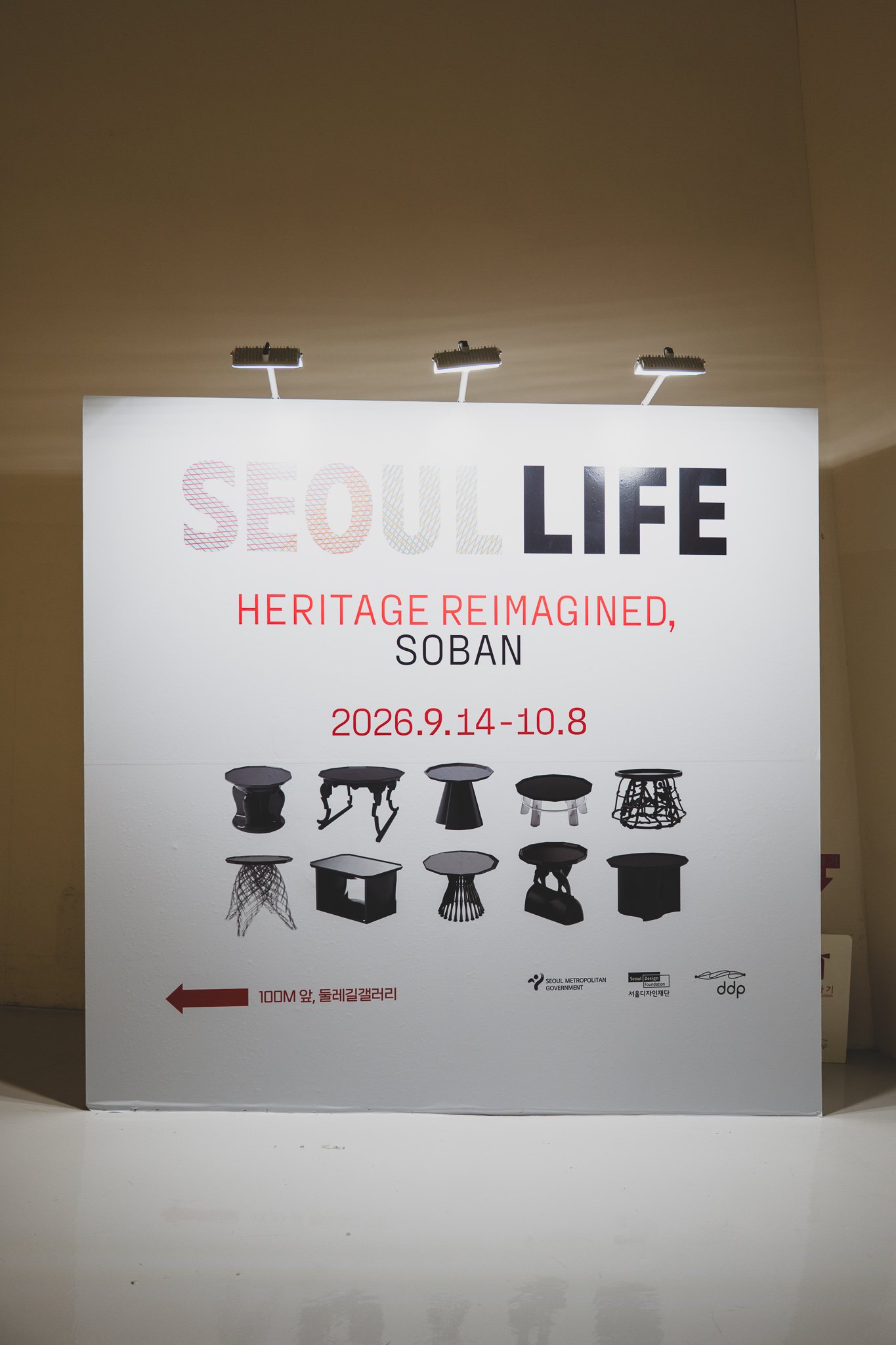
Seventeen teams took part — 13 from Korea, four from abroad — mixing traditional techniques like woodworking, lacquer, and mother-of-pearl inlay with 3D printing and digital fabrication. The pieces first showed at Milan’s ADI Design Museum this past April, where they pulled in more than 20,000 visitors. This DDP run is the first time Seoul itself gets to see them.
The Pieces That Stood Out
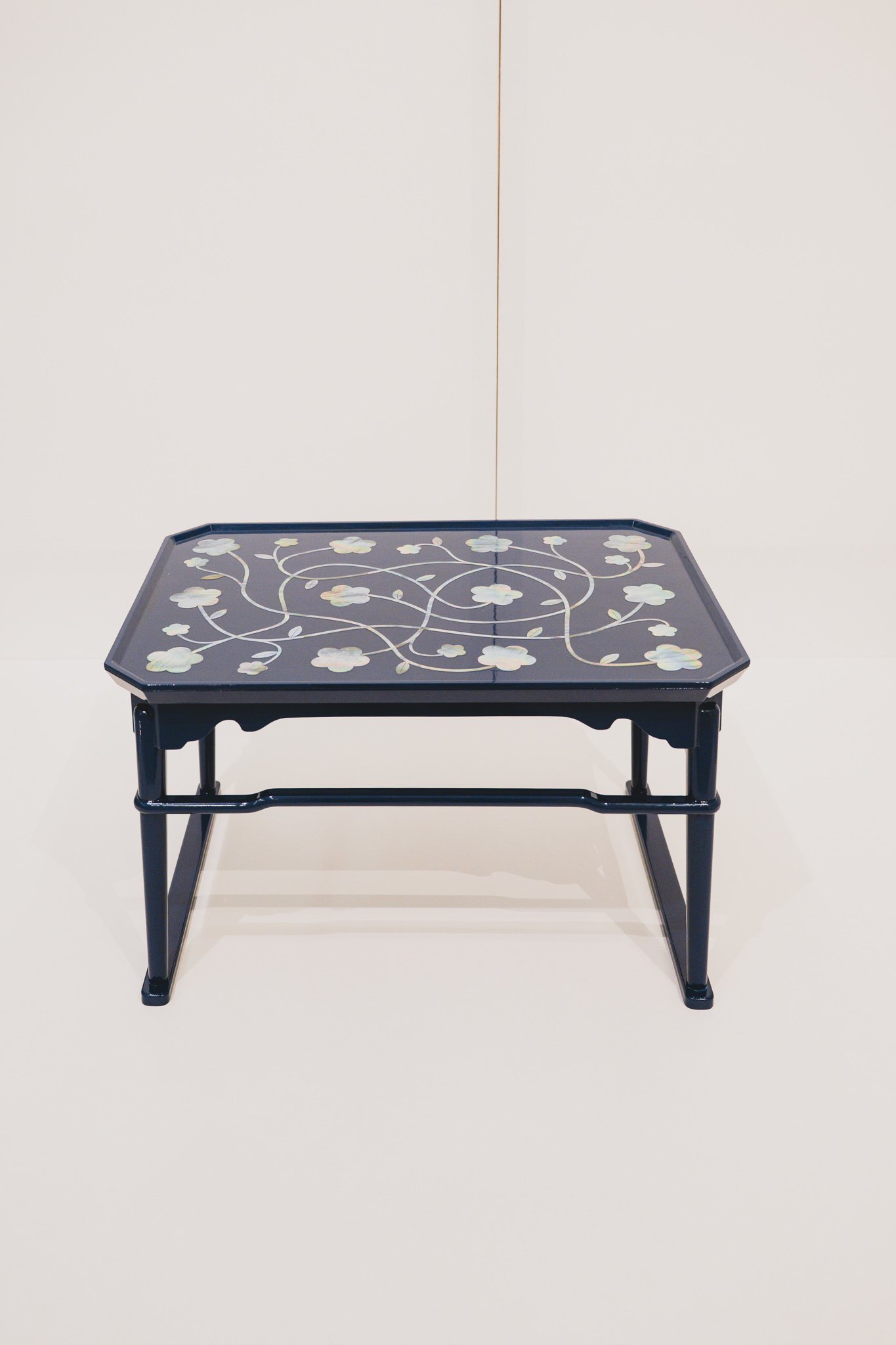
ORION by Stefano Giovannoni (gingko wood, mother-of-pearl) is the first thing you see walking in. Giovannoni is the Italian designer behind a lot of Alessi’s kitchenware, and here he’s inlaid a climbing floral pattern in mother-of-pearl across a deep navy lacquer top — completely traditional nanjeon (mother-of-pearl lacquerware) technique, but with the tabletop’s corners shaved into a noticeably more modern silhouette.
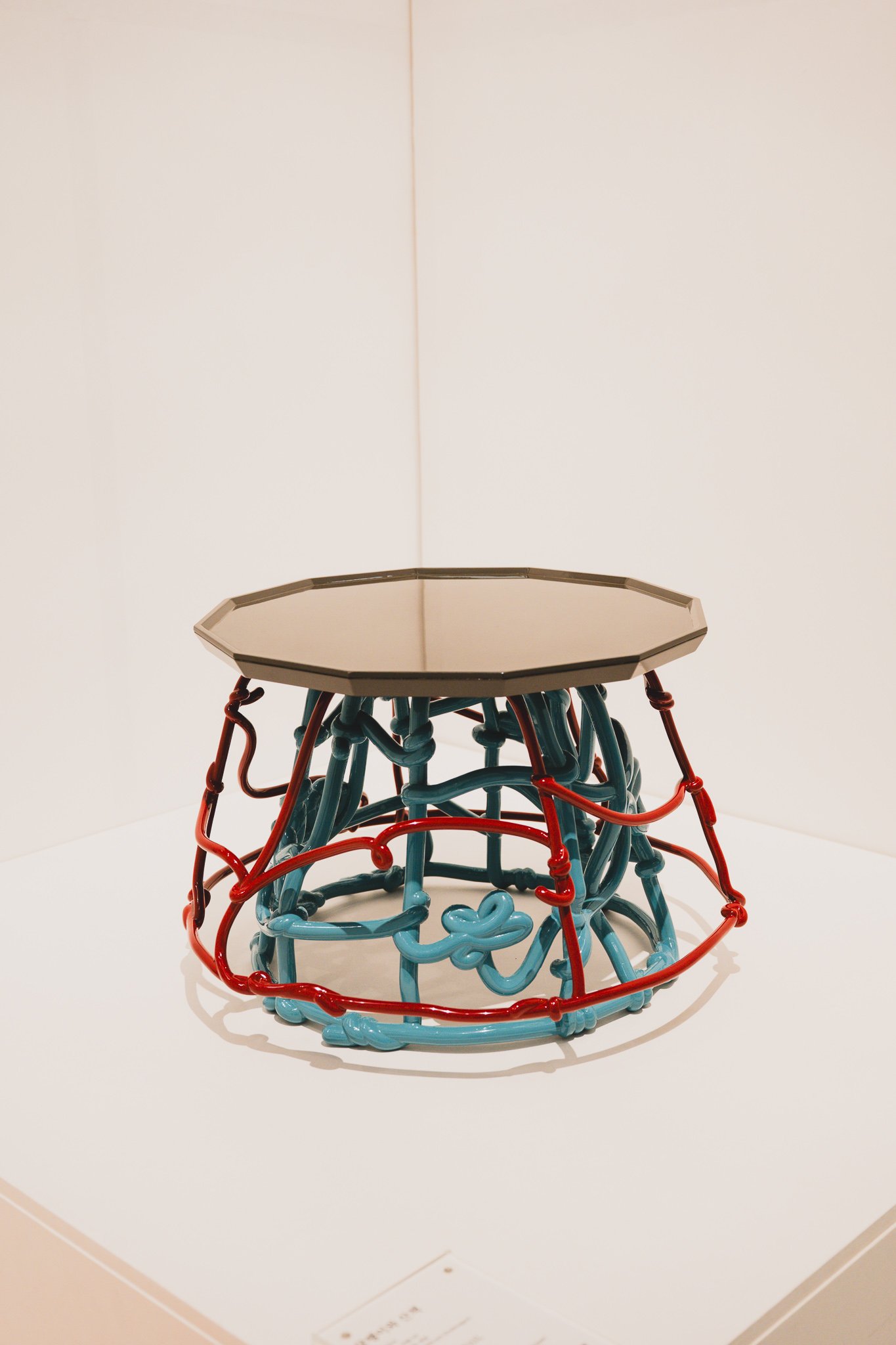
Right next to it, Taking My Snail For a Walk by Kim Jin-sik (PLA, gingko wood) was the piece I ended up standing in front of longest. The legs are entirely 3D-printed in teal and red lines that wrap around the base like a snail’s trail — it takes the traditional wooden leg structure of a soban and essentially dissolves and rebuilds it from scratch.
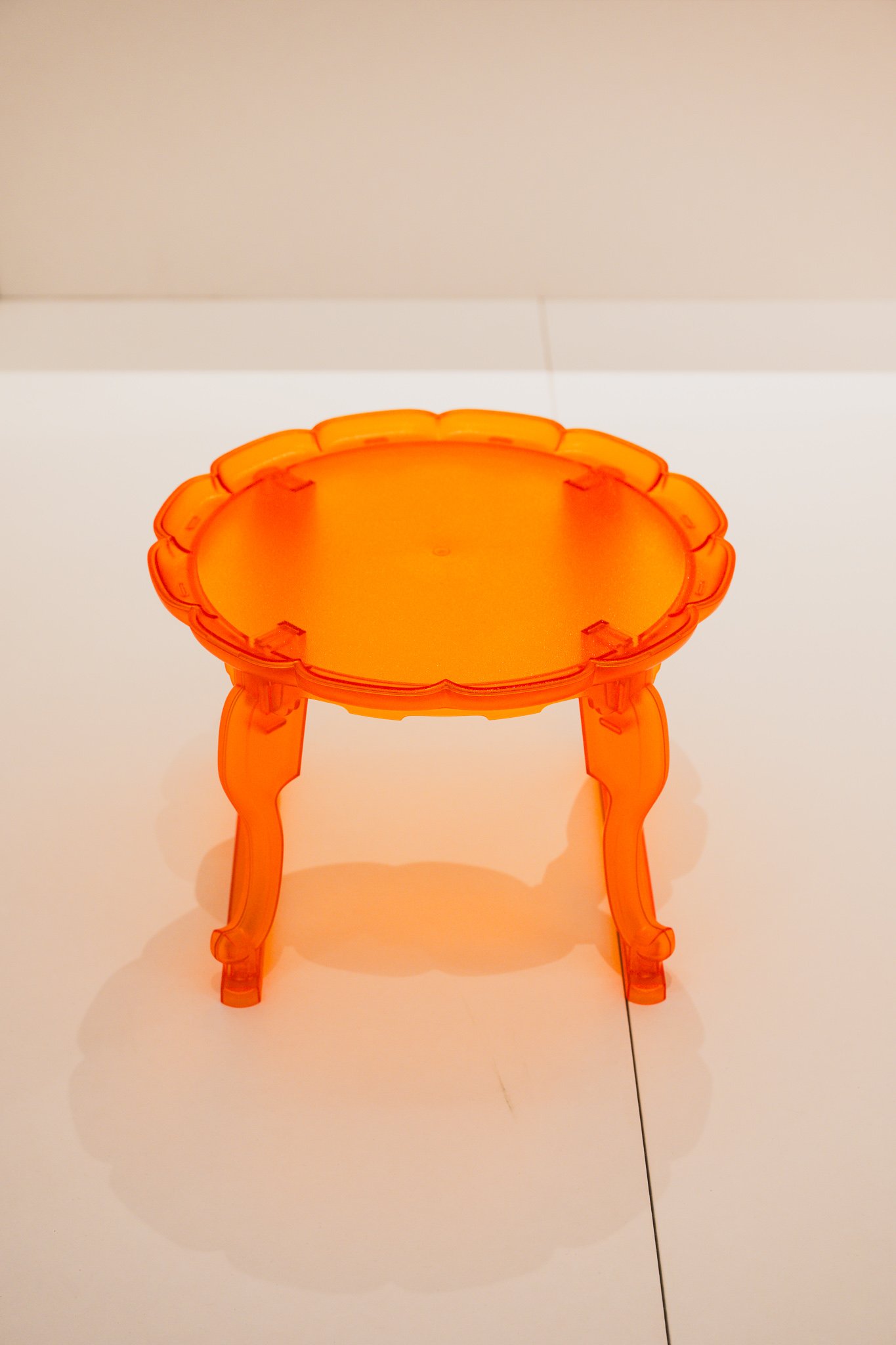
The bright orange translucent one isn’t a standalone artist’s piece — it’s part of a separate series called RE:SOBAN (PCR recycled plastic), which applies Seoul’s official annual “Seoul Color” to a soban made from recycled plastic. 2024’s color was Sky Coral, 2025’s was Green Aurora, and 2026’s is Morning Yellow (shown here in more of an orange-red under the gallery lighting). Putting a city government’s color palette on a piece of traditional furniture is a strange, fun idea on its own.
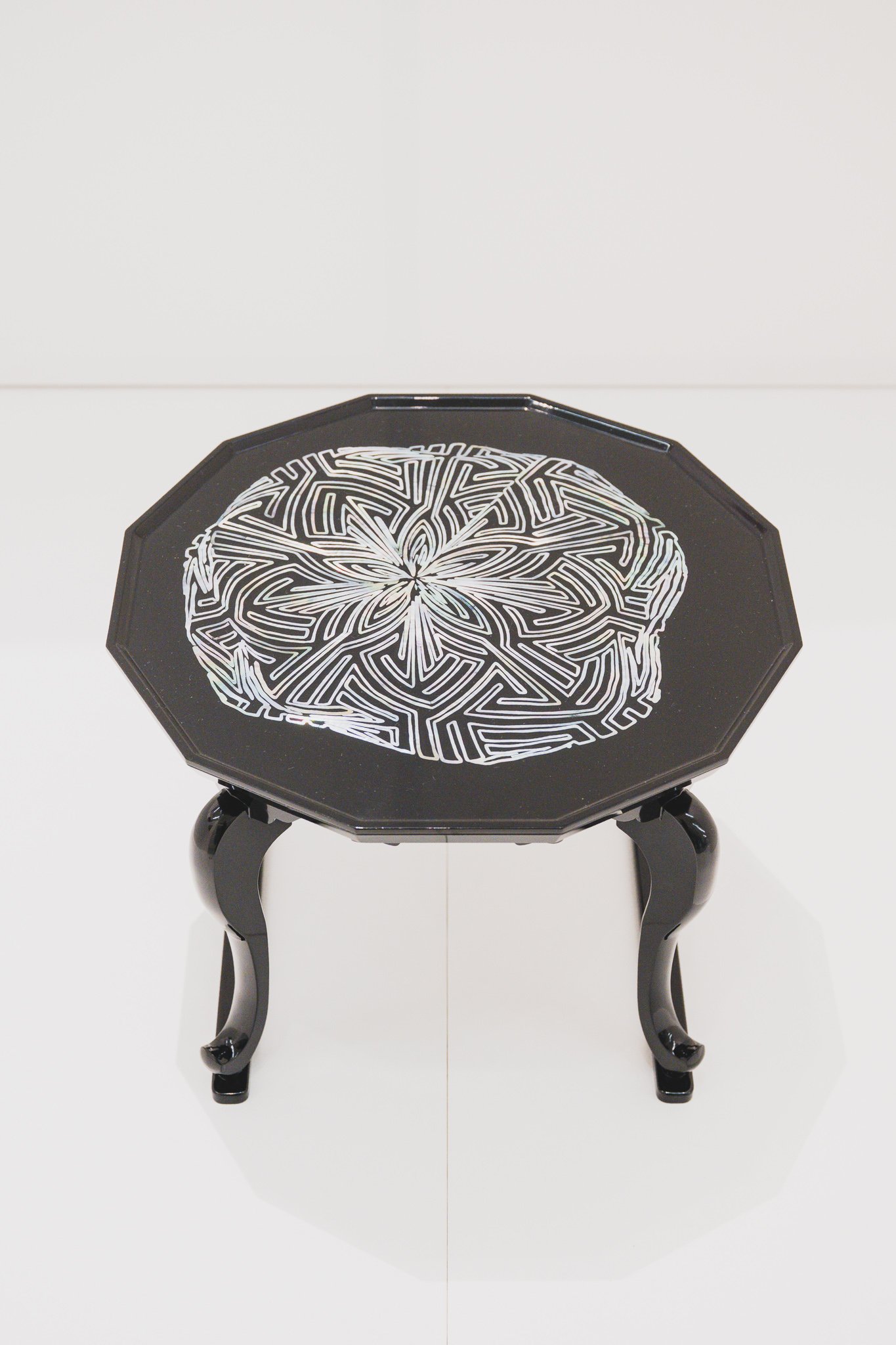
Afterimage by Kang I-yeon (gingko wood, mother-of-pearl) is by a media artist better known for video installations, and it shows — the entire tabletop is covered in a maze-like mother-of-pearl pattern that seems to shift depending on the angle you’re looking from, almost like she’s trying to inlay motion into a static surface.
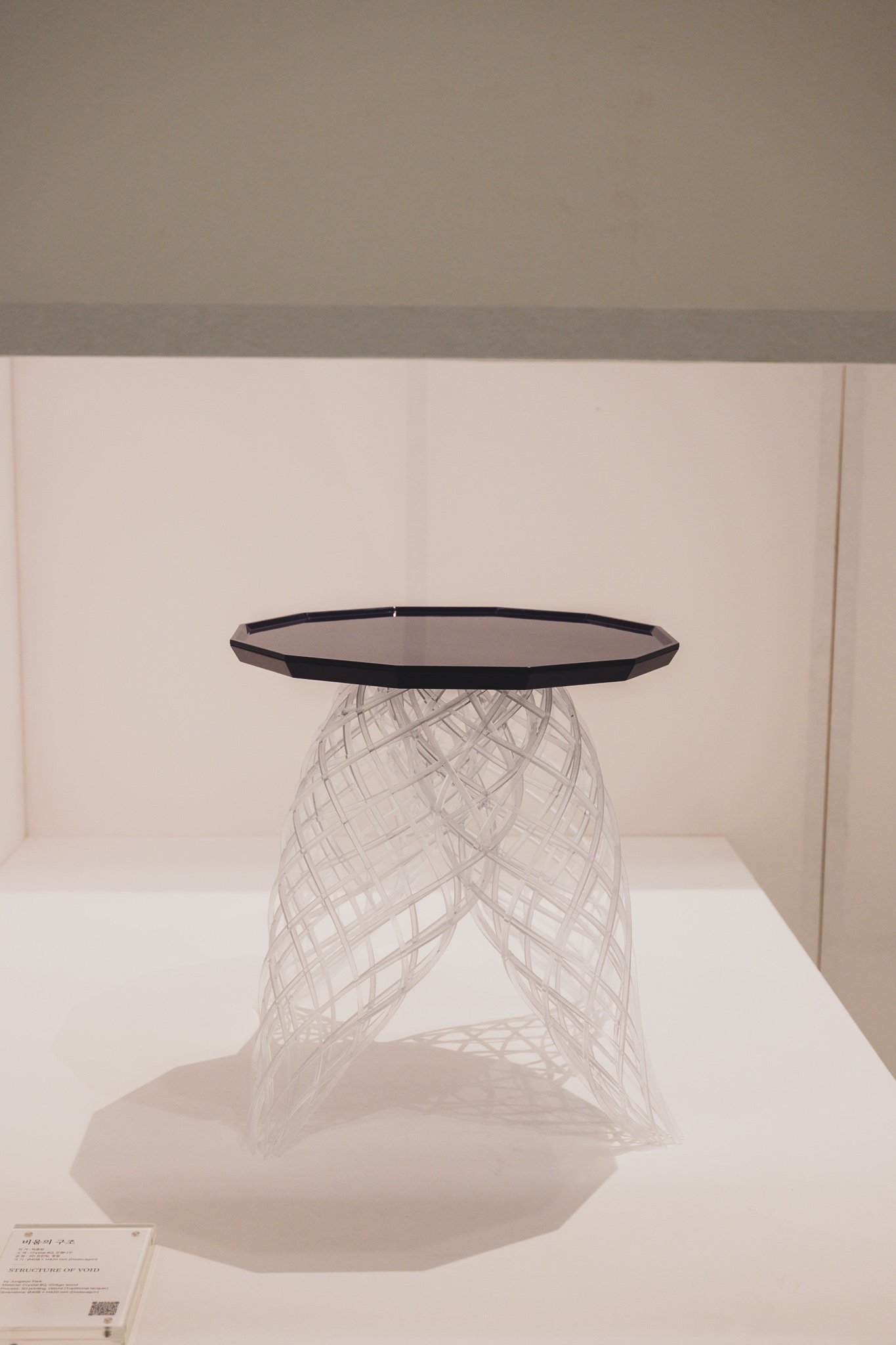
Structure of Void by Park Jung-won (Crystal 8Q, gingko wood) pairs a smoky crystal tabletop with 3D-printed transparent legs that twist upward like fabric caught mid-spiral. The contrast between the tabletop’s visual weight and the legs’ near-weightlessness made this the most photographed piece in the room, and I get why.
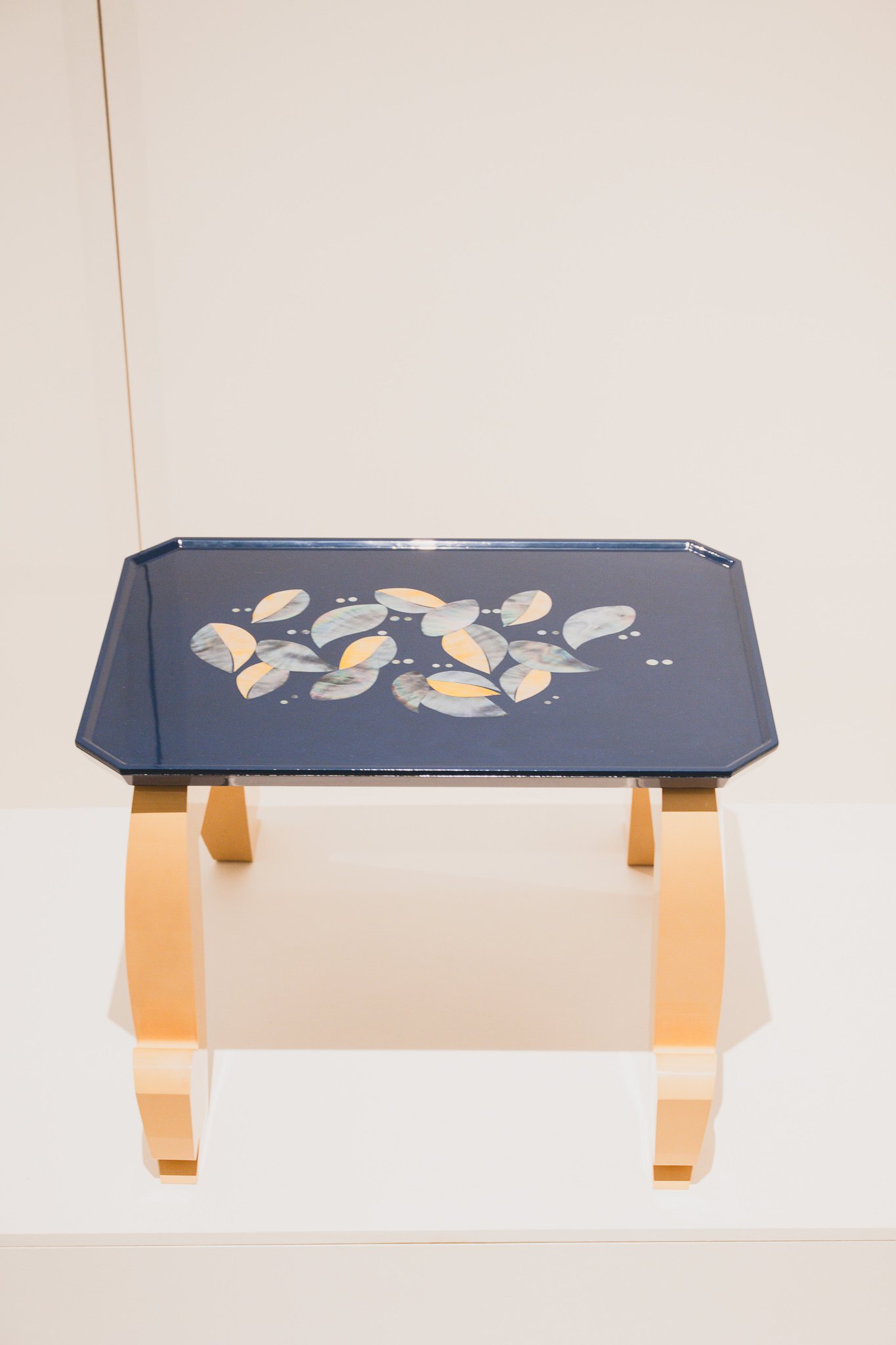
MIAWO by Anna Gili (PLA, gingko wood, mother-of-pearl) keeps a soban’s classic curved leg shape but repaints everything — a navy top scattered with gold and mother-of-pearl leaves, legs finished in a metallic gold. Same silhouette, completely different read.
The Originals Everyone Was Riffing On
Partway through, the show pauses the reinterpretations to show two traditional soban types that most of the above pieces are quietly borrowing from.
Najuban (gingko wood) comes from Naju in South Jeolla Province — square tabletop, minimal ornamentation, and joinery so clean that the construction itself is the decoration.
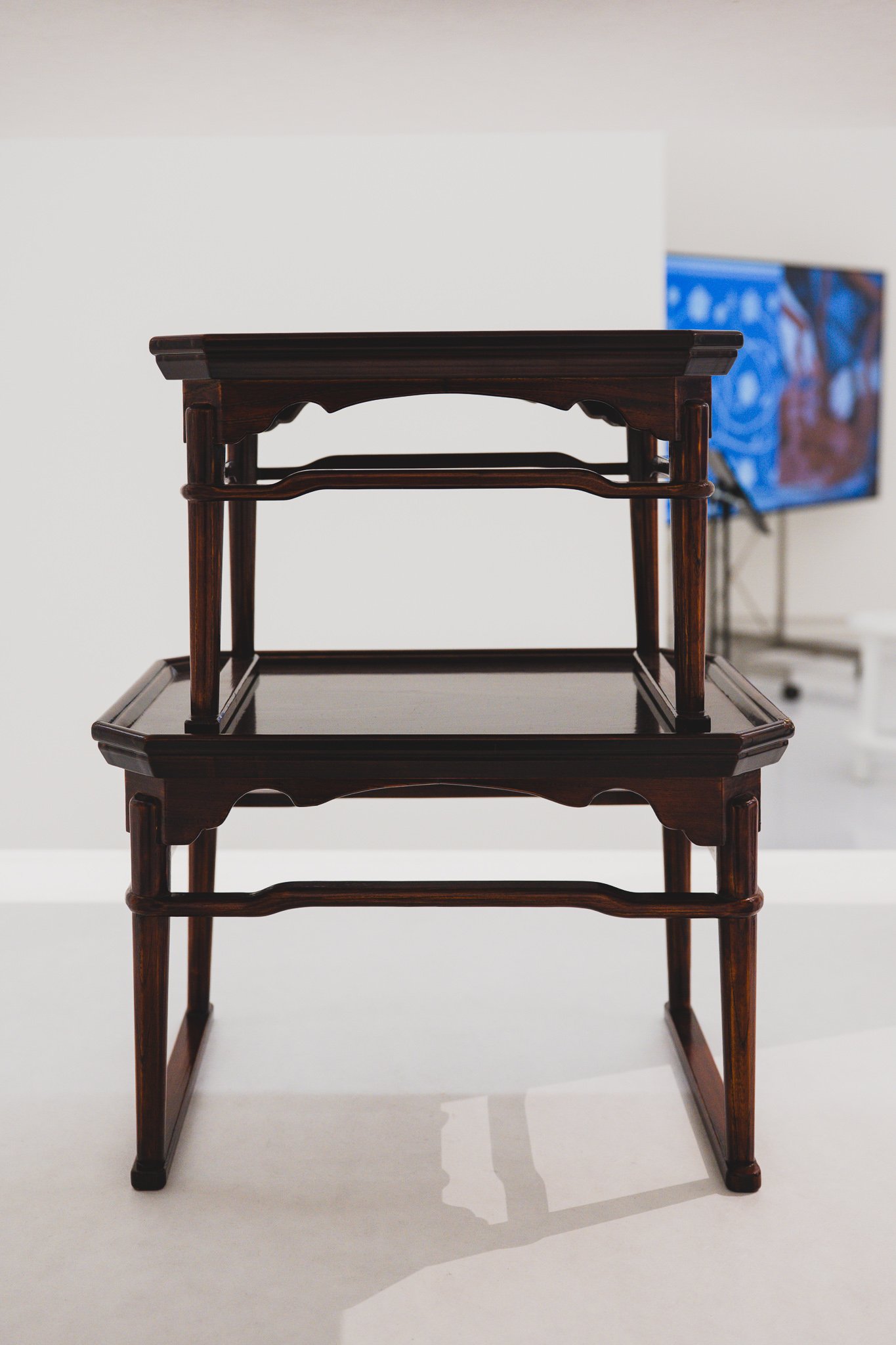
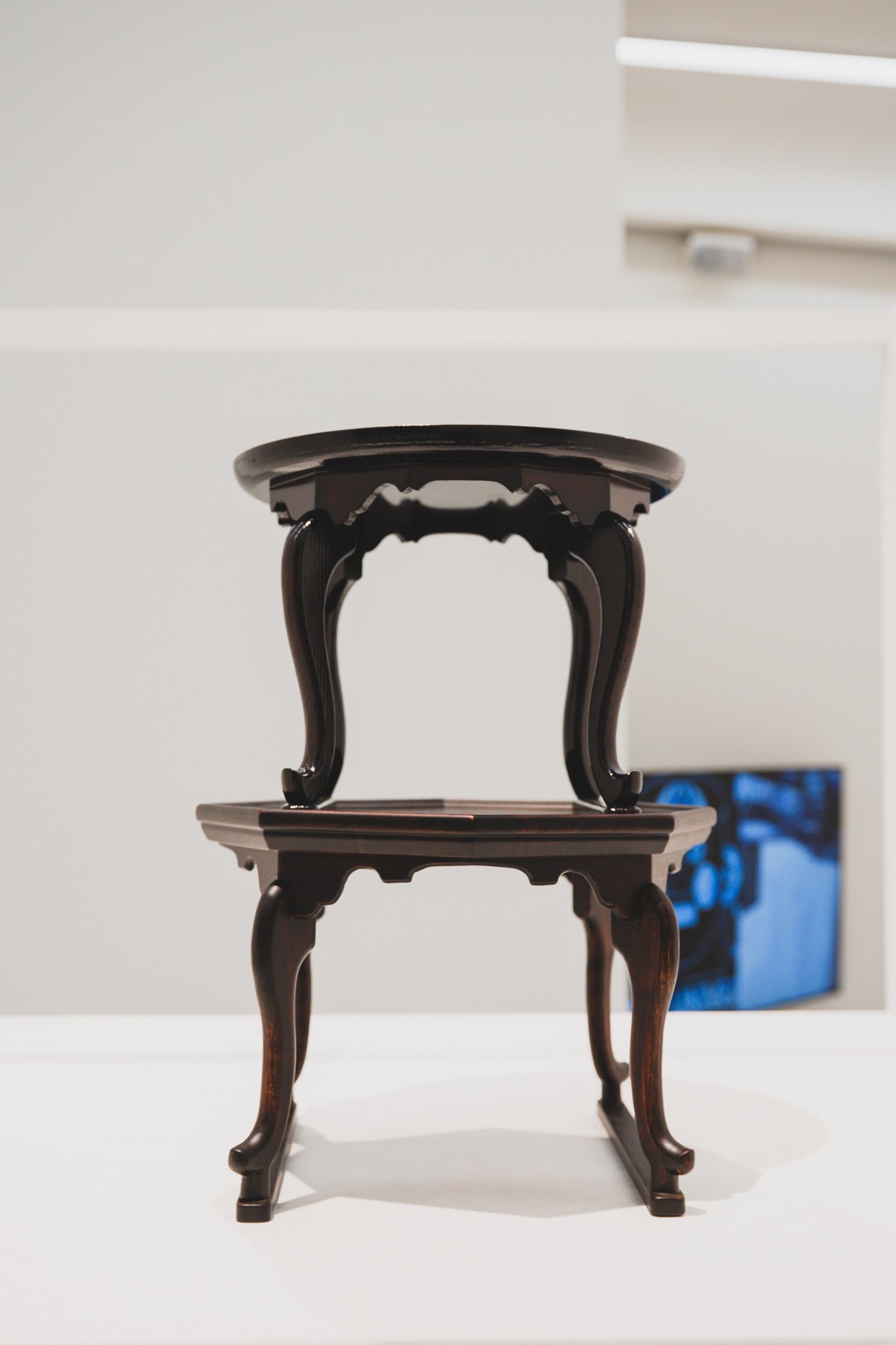
Hojokban (zelkova wood) has an octagonal top on curved legs modeled after a tiger’s legs — “hojok” literally means “tiger leg.” Once I’d seen this one, I understood where half the curved-leg silhouettes in the reinterpreted pieces actually came from, and I ended up doubling back through the room to look again.
More Highlights
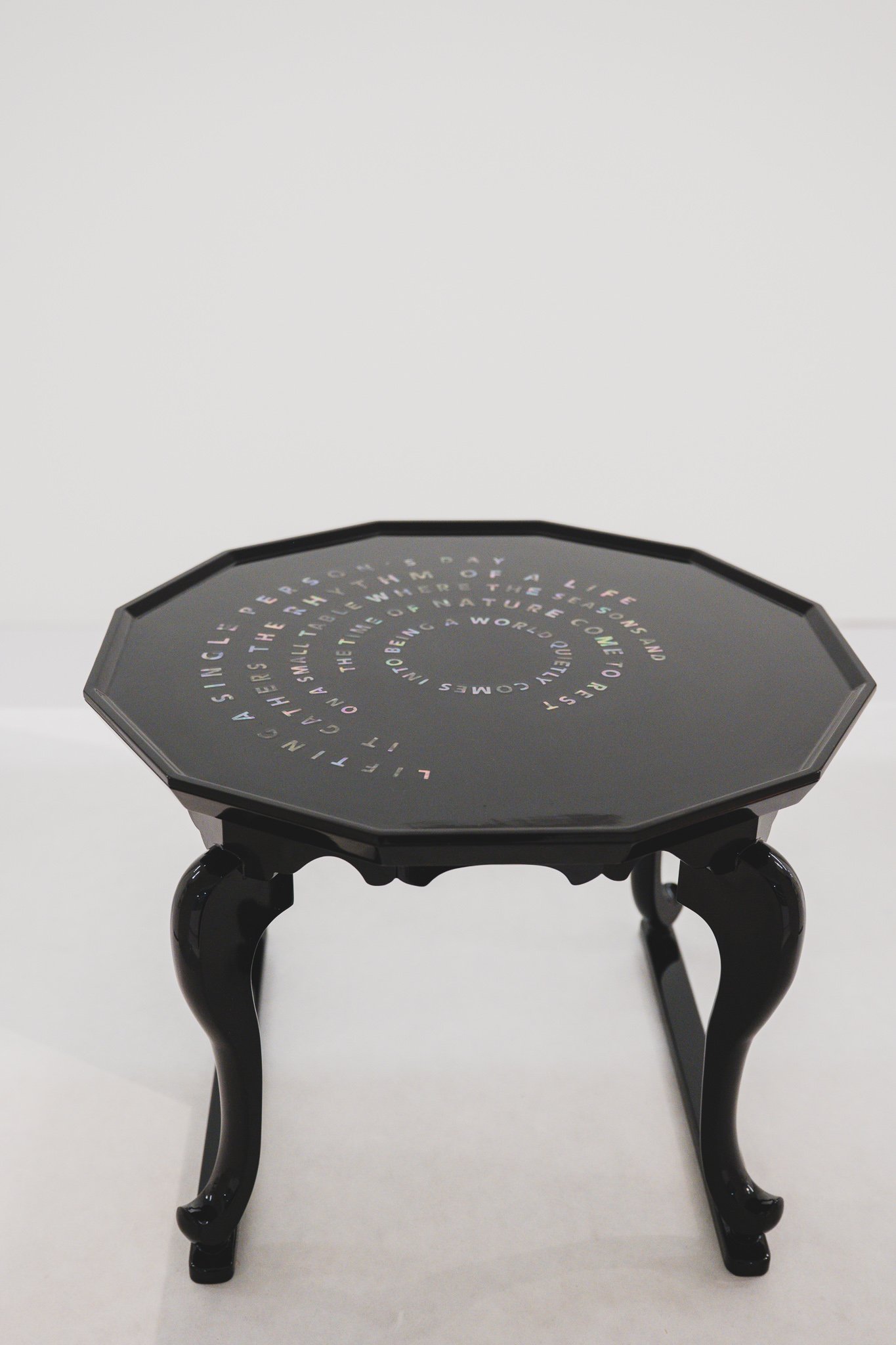
Microcosmo by Yang Sung-im (gingko wood, mother-of-pearl) inlays a full sentence in a spiral across the tabletop in mother-of-pearl: “Lifting a single person’s day, it gathers the rhythm of a life where the seasons and the time of nature quietly comes to rest — on a small table it becomes into being a world.” Out of everything in the show, this was the piece that spelled out in words what the whole exhibition is trying to say about the object.
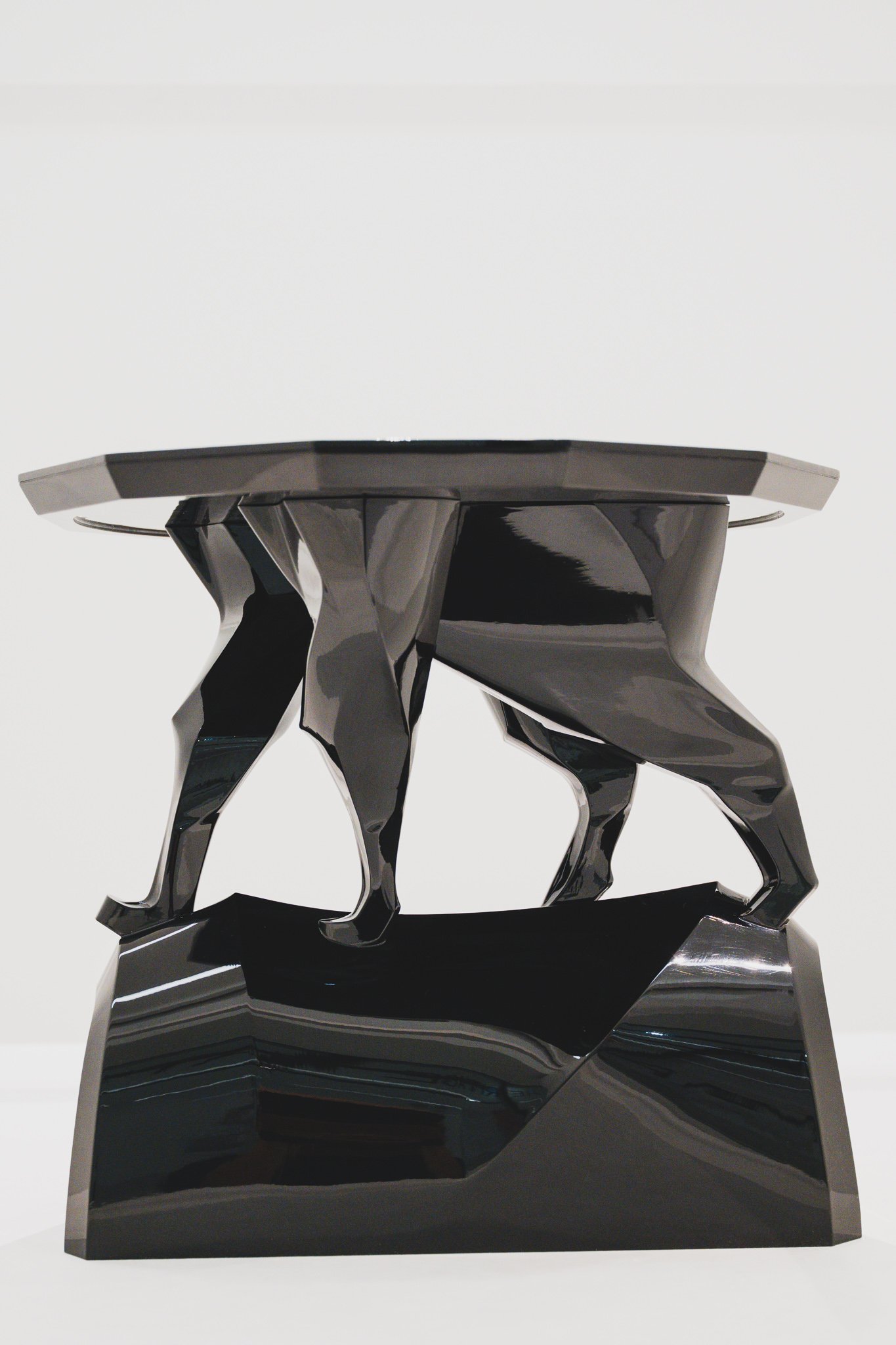
Cat-Leg Soban by Lee Seok-woo (PLA, gingko wood) stands out for being sharp where almost everything else in the room is curved — angular, metallic black legs that look like they’re mid-collision rather than resting on the floor.
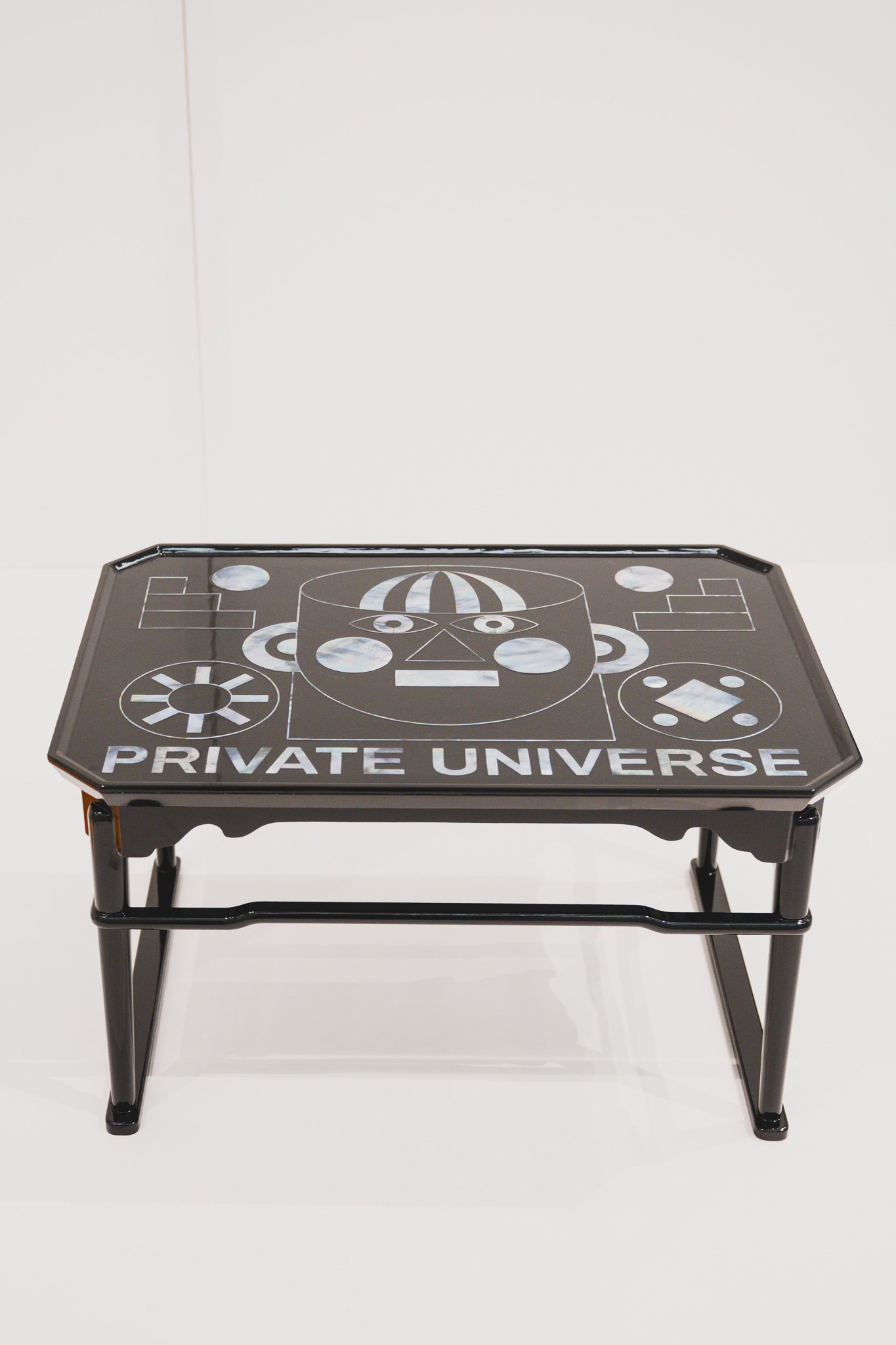
Private Universe by Marco Oggian (gingko wood, mother-of-pearl) inlays a pop-art robot face and geometric shapes in mother-of-pearl — a graphic designer’s illustration style, executed in a centuries-old lacquer technique. If you want a one-piece answer to “what does this exhibition mean by combining old and new,” this is probably it.
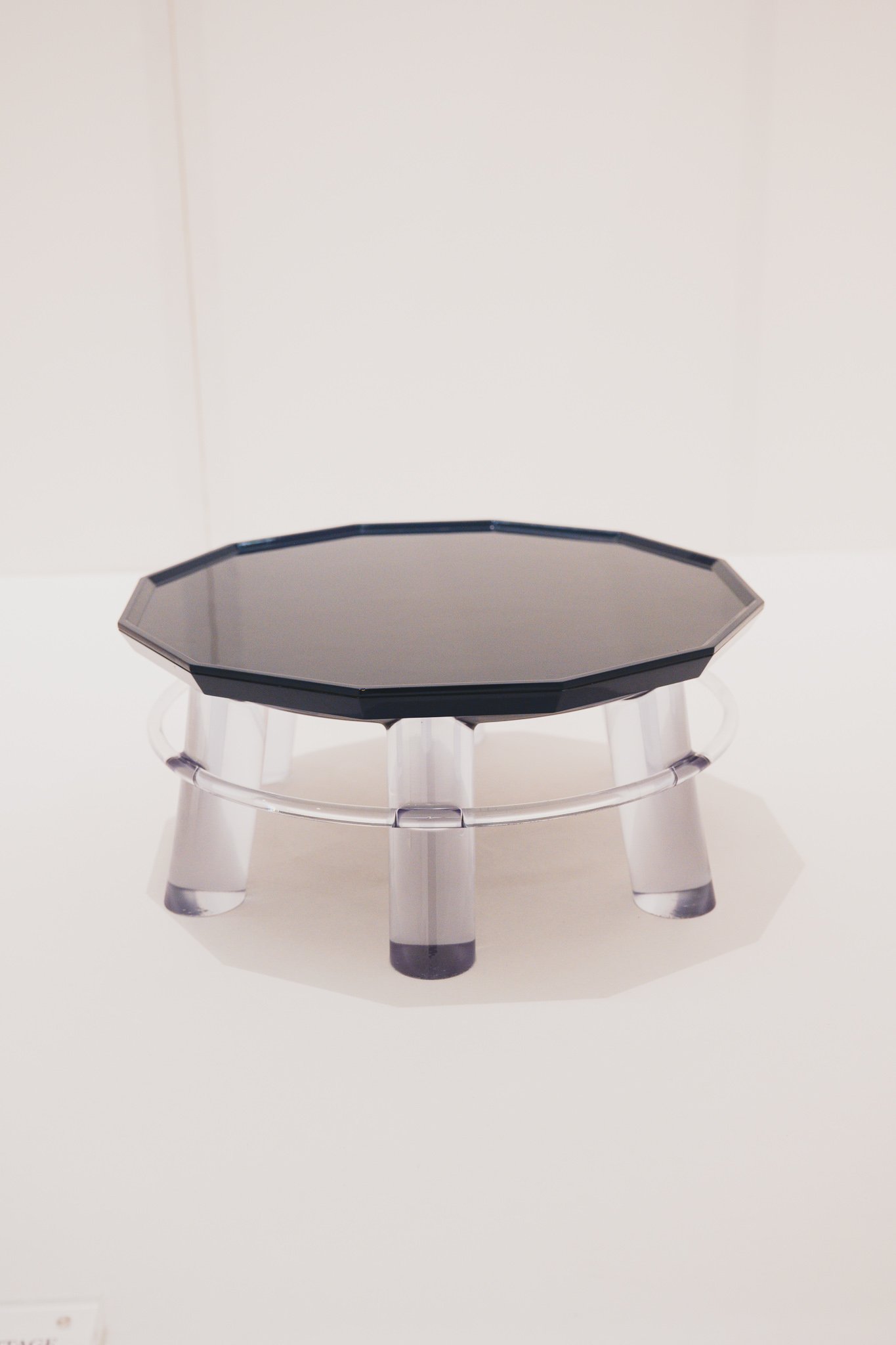
Last one I stopped at was Floating Heritage by Andy Migevant and Kim Jong-wan (Crystal 8Q, gingko wood) — a smoky crystal top resting on a clear acrylic ring and cylindrical legs, giving the impression the tabletop is hovering just off the ground. It’s also a co-design between an international and a Korean designer, which is a nice note to end the walkthrough on.
Walking Through the Show
The gallery itself is small — a single corridor, not a sprawling exhibition hall. This isn’t something you’d plan a dedicated trip around the way you might for Wayne Thiebaud or a ticketed show at DDP; it’s more of a bonus stop if you’re already there for something else. Because of that, plenty of visitors seemed to walk right past the entrance without realizing it was there.
Given that it’s free and only takes about 10 minutes, I’d say it’s worth the detour if you’re at DDP for any other reason — whether that’s another exhibition, the Dongdaemun Design Plaza architecture itself, or just passing through the neighborhood. It’s a particularly good stop if you’re curious how traditional Korean craft techniques get reinterpreted by contemporary designers, or if “soban” has only ever registered in your head as “an old-fashioned little table.”
FAQ
Q: Do I need to book a ticket in advance?
A: No. Admission is free and walk-in — there’s no reservation system for this exhibition.
Q: How long does it take to see everything?
A: About 10 minutes if you’re moving at a normal pace, longer if you stop to read the artist labels next to each piece.
Q: Is it worth visiting on its own, or only alongside another DDP exhibition?
A: The gallery is genuinely small — a single corridor — so I wouldn’t recommend making it your only reason to visit DDP. It’s best paired with another exhibition or just a walk around the building.
Q: What happens to the pieces after the exhibition ends?
A: They become part of DDP’s permanent design collection rather than being sold off or dispersed, so in theory some of them may resurface in future DDP shows.
Q: Is the exhibition explained in English?
A: The wall text I saw was primarily in Korean, but the artist labels next to each piece list the designer names and materials in English, and the pieces themselves don’t need much explanation to appreciate visually.
Worth the Stop at DDP?
If you’re visiting DDP for Frieze Seoul week exhibitions, another ticketed show, or just to see the building, add this one to the route — it costs nothing and takes ten minutes, and it’s a genuinely interesting look at how far a single humble object can be stretched by 17 different designers. Just don’t expect a full-scale museum experience; go in knowing it’s a small, focused show, and it’ll land better for it.
Last updated: September 2026.