TL;DR: Yeonggwang Tongdak is an old-school tongdak (whole fried chicken) shop in Seochon, Seoul’s low-rise neighborhood just west of Gyeongbokgung Palace, open continuously since 1984. The original location was takeout-only; this is the newer second branch, opened so people could finally sit down, order a round of draft beer, and eat there. No English menu, no reservations, and it’s rarely mentioned in tourist guides — which is exactly why it’s worth knowing about if you want a taste of chimaek (chicken + beer) the way Koreans actually do it, not the version built for visitors.
I’ve lived in and around Seochon on and off for years, and Yeonggwang Tongdak is one of the handful of places I keep coming back to. Not because it’s flashy — it’s the opposite of flashy — but because a restaurant surviving 40 years on the same block, in a neighborhood that changes storefronts every season, usually means something. This visit was to the second branch, the one where you can actually sit down.
What “chimaek” actually means, and why this place is a good place to learn it
If you’ve spent any time around Korean pop culture, you’ve probably heard the word chimaek (치맥) — it’s a portmanteau of chikin (chicken) and maekju (beer), and it’s less a menu item than a whole social ritual. Chimaek isn’t really about the food itself; it’s about the format: fried chicken and cold draft beer, shared at a table, usually after work or during a sports match, with no set end time. It’s one of the most universal “let’s hang out” invitations in Korean daily life — closer to how some cultures treat a round of drinks at a pub than to a sit-down dinner.
Most visitors first encounter chimaek through a franchise chain — Kyochon, BHC, bb.q — because those are the names with English signage and delivery apps in English. Those chains are genuinely good, but they’re also a fairly recent, corporatized version of something that existed long before franchising did. Tongdak (통닭, literally “whole chicken”) is the older tradition: a single bird, fried whole rather than cut into modern boneless pieces, sold by neighborhood shops that have often been doing it the same way for decades. Yeonggwang Tongdak, open since 1984, is a working example of that older layer of chimaek culture — not a museum piece, just a shop that never stopped.
Yeonggwang Tongdak 2 — the basics
Address: 53-26 Pirundae-ro, Jongno-gu, Seoul (Seochon neighborhood, a short walk from Gyeongbokgung Palace’s west side)
Hours: Tuesday–Sunday, 5:00 PM–10:00 PM (closed Mondays)
Reservations: Not accepted — it’s a small space, and waiting is common. If you do wait, seating is limited to 2.5 hours once you’re seated.
Parking: None — Seochon is a walking neighborhood; come by subway or on foot.
The original Yeonggwang Tongdak — a few minutes away near Tongin Market — is still takeout-only, exactly as it’s always been: no delivery, no dine-in, just walk up and carry your chicken home. That shop built the reputation over 40 years and kept getting written up in magazines despite (or maybe because of) never making it easy on customers. This second branch exists so people who wanted to eat it hot, on-site, with a beer in hand, finally could.
What it actually looks like
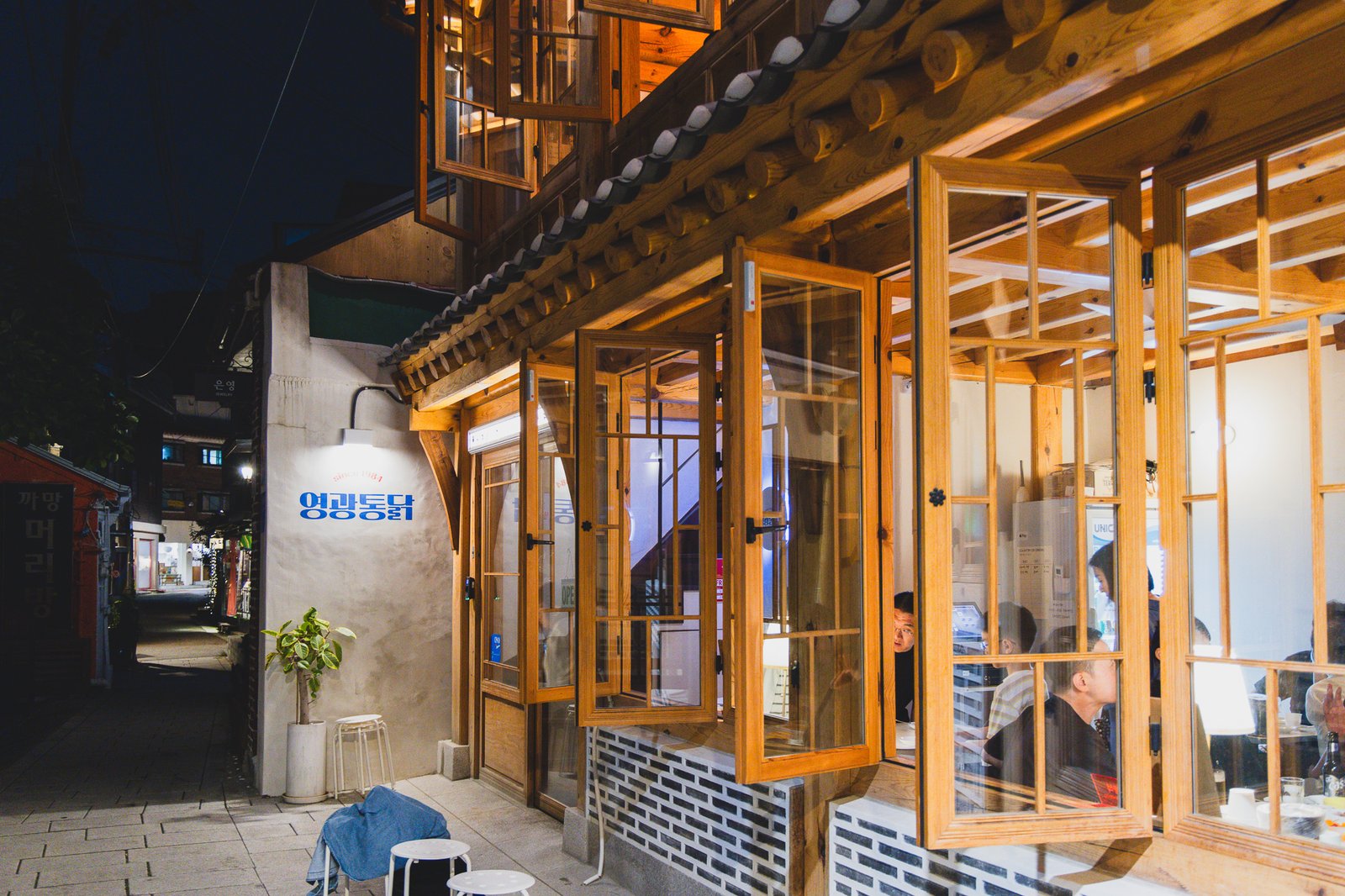
Unlike the original takeout shop, this branch occupies a full two-story hanok-style building — wooden window frames, tiled roof, the whole look. It fits into Seochon’s low-rise alleys without feeling like it’s performing “traditional” for visitors; the neighborhood around it is full of real hanok houses, so this is just… the local building style.
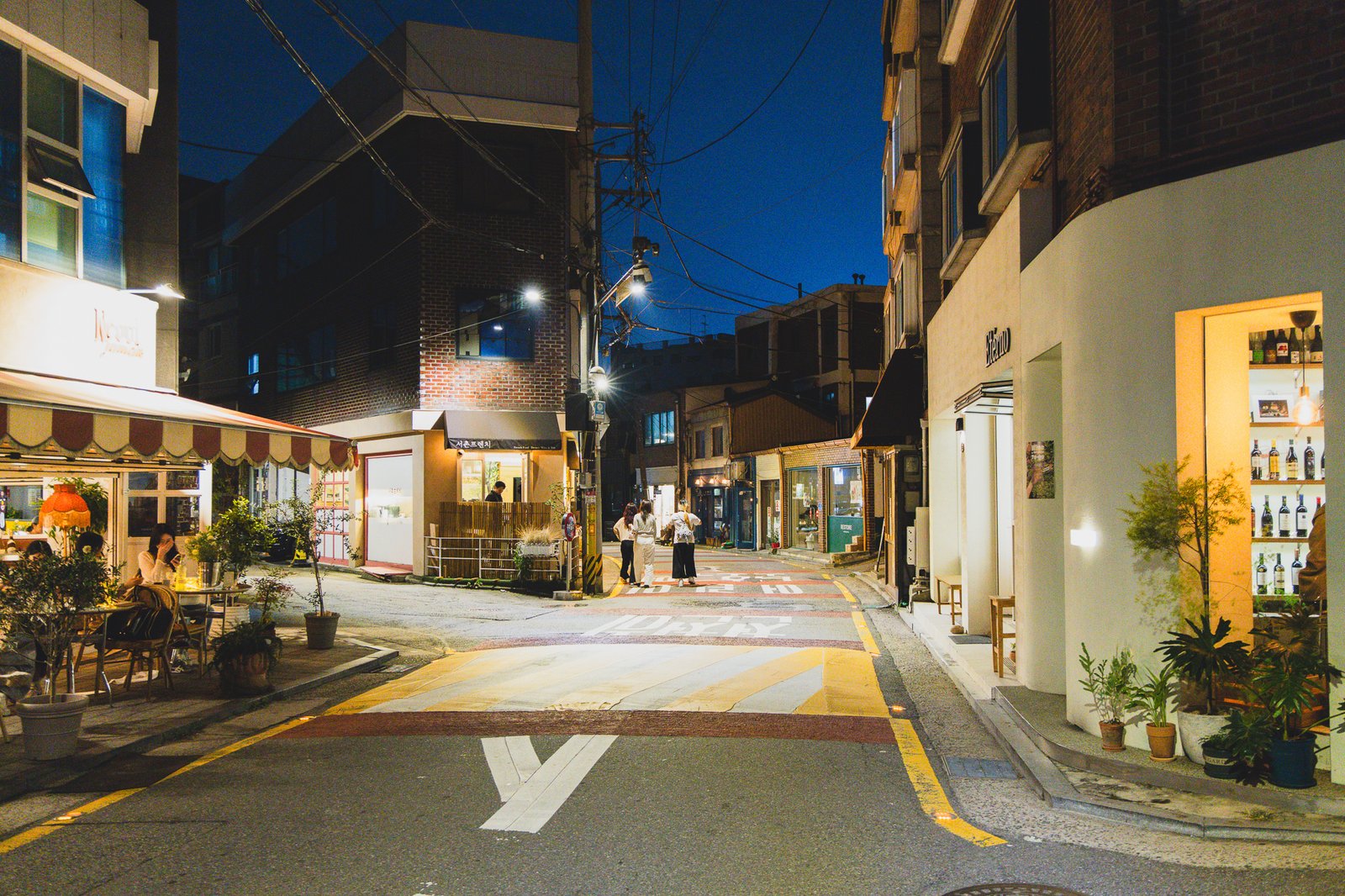
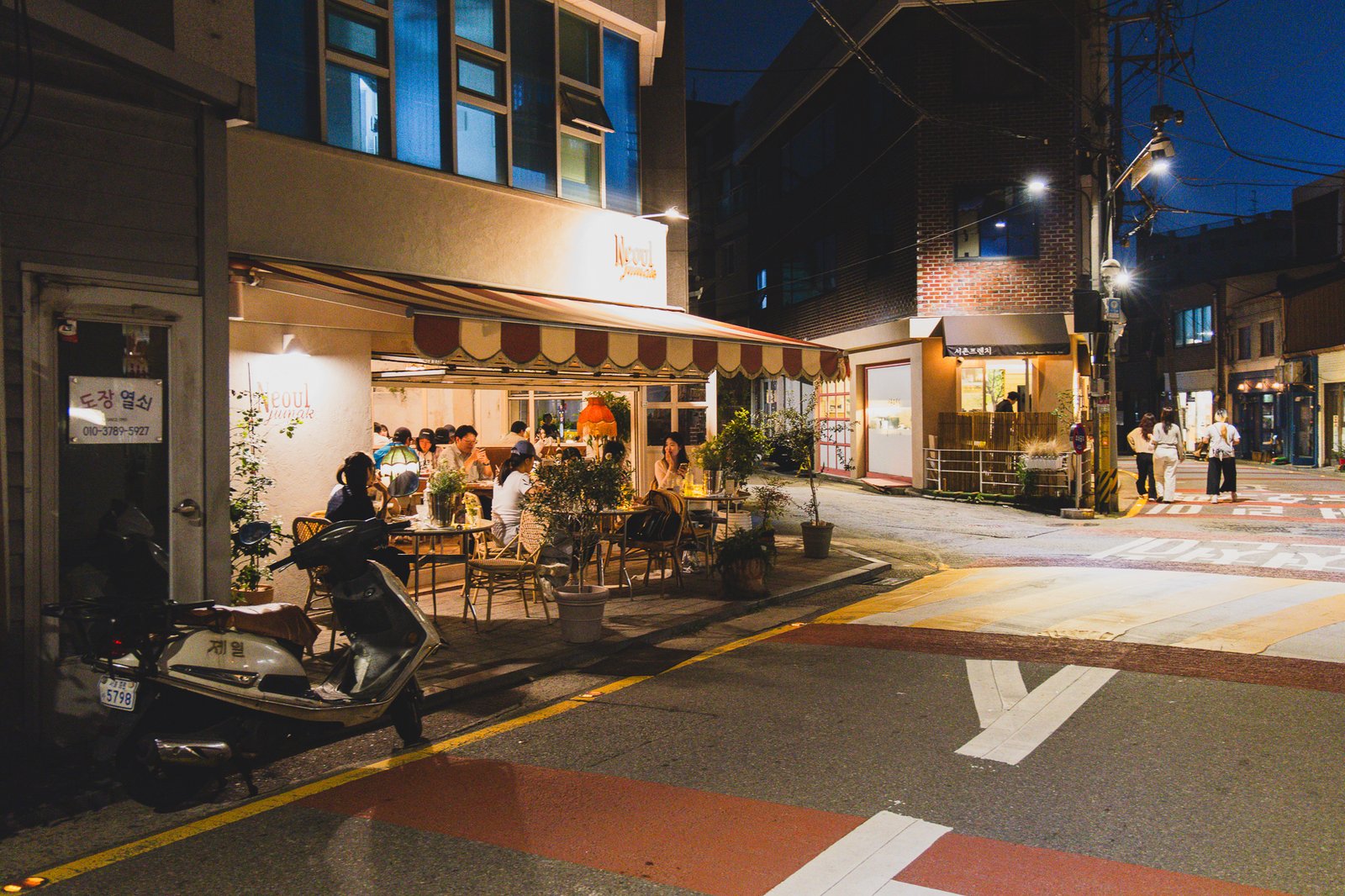
Seochon at night has that particular low-rise, low-light quality that’s disappearing fast from central Seoul — old hanok mixed with new cafés and bars, nothing over three or four stories. Walking through it, you’re not really choosing where to eat; if you already know Yeonggwang Tongdak, you’ve already decided.
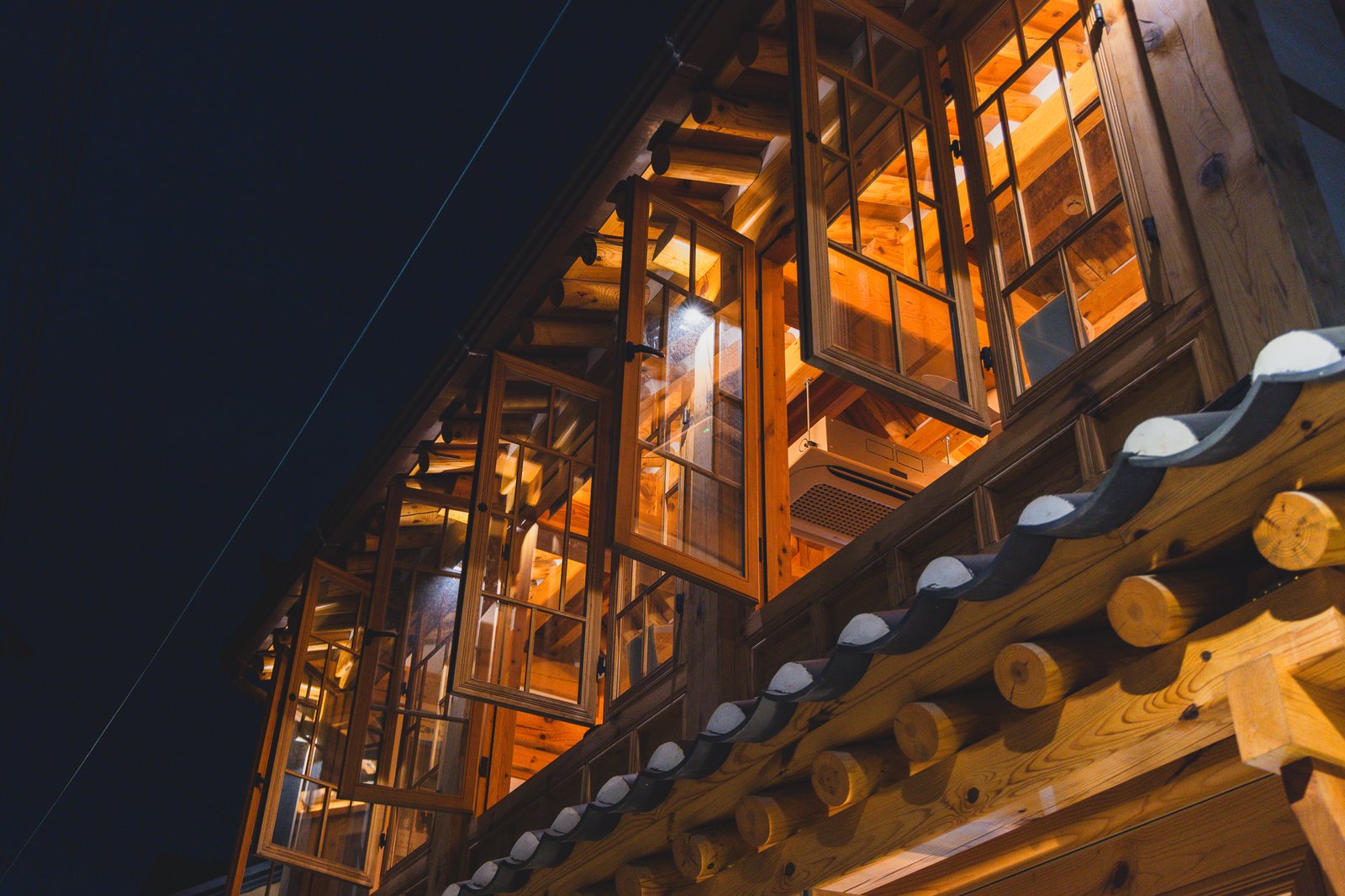
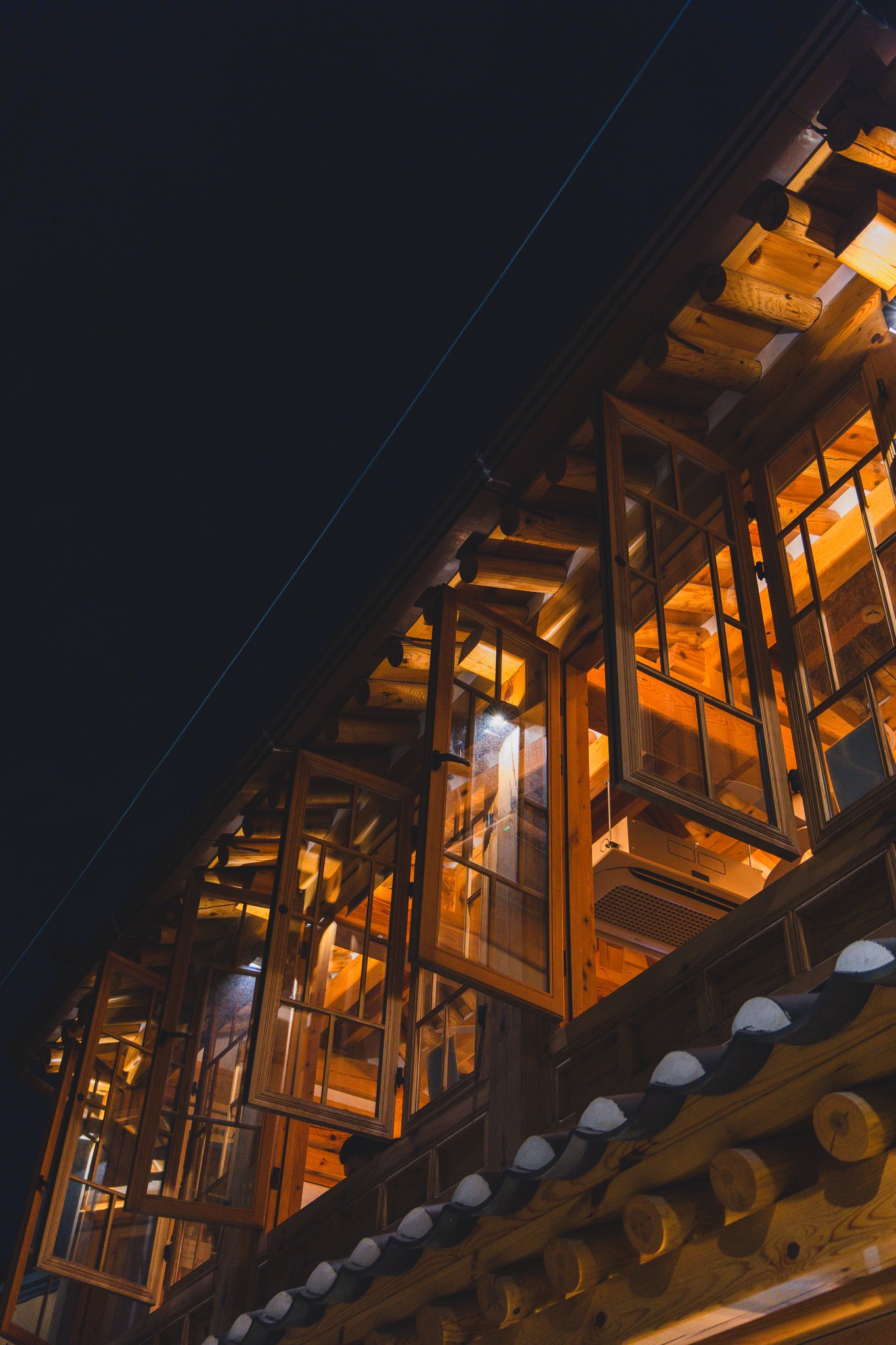
Up close, the roof tiles and window joinery look genuinely cared for, not just slapped on for atmosphere — a small tell that whoever built this branch out wasn’t trying to cut corners.
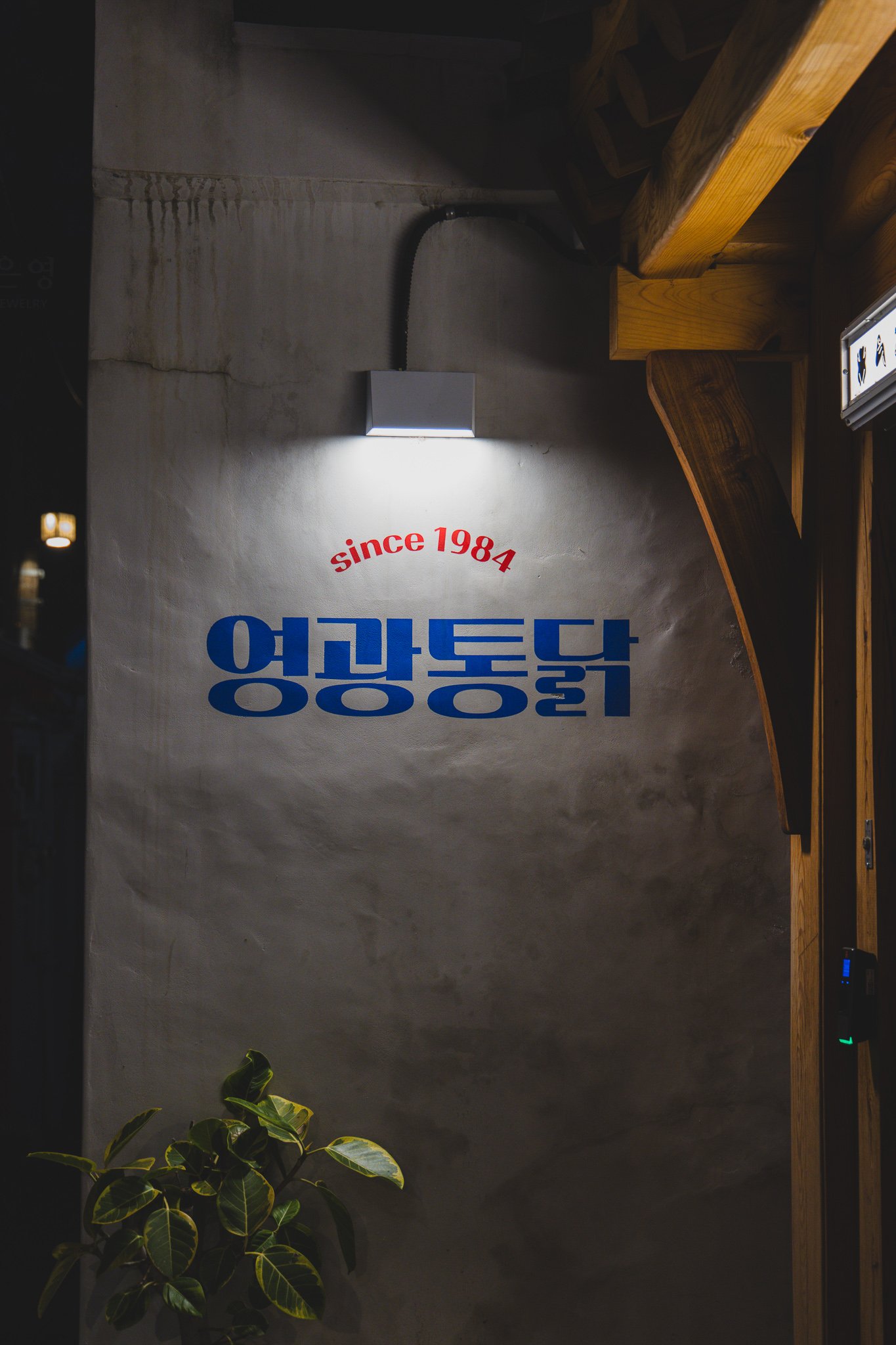
The “since 1984” plaque on the wall is a small detail, but it’s the whole pitch in three words — this isn’t a new shop dressed up to look old.
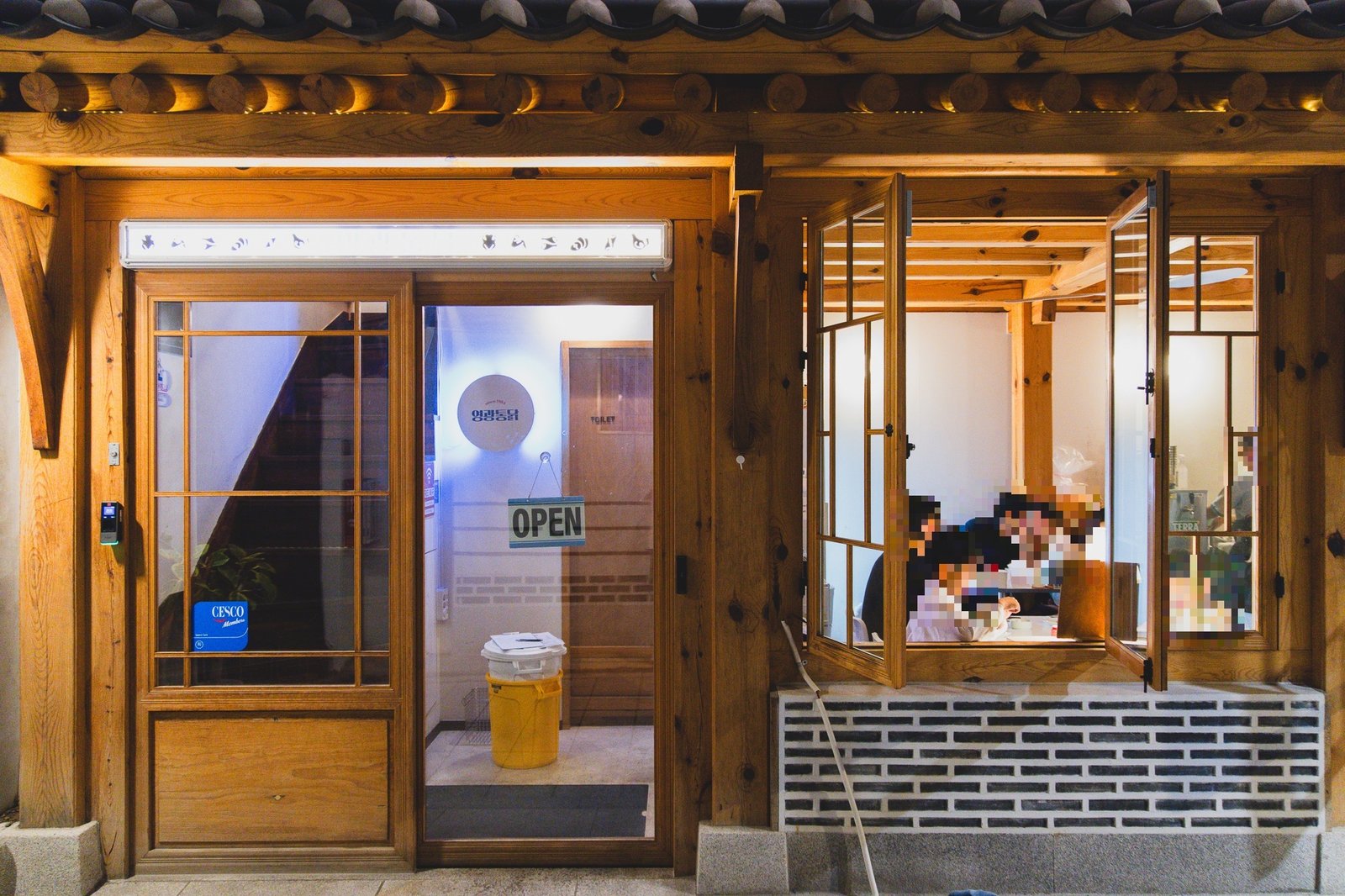
In the evening, the windows stay open, and you can see the tables filling up from the street. On an ordinary weeknight, empty seats were already hard to find.
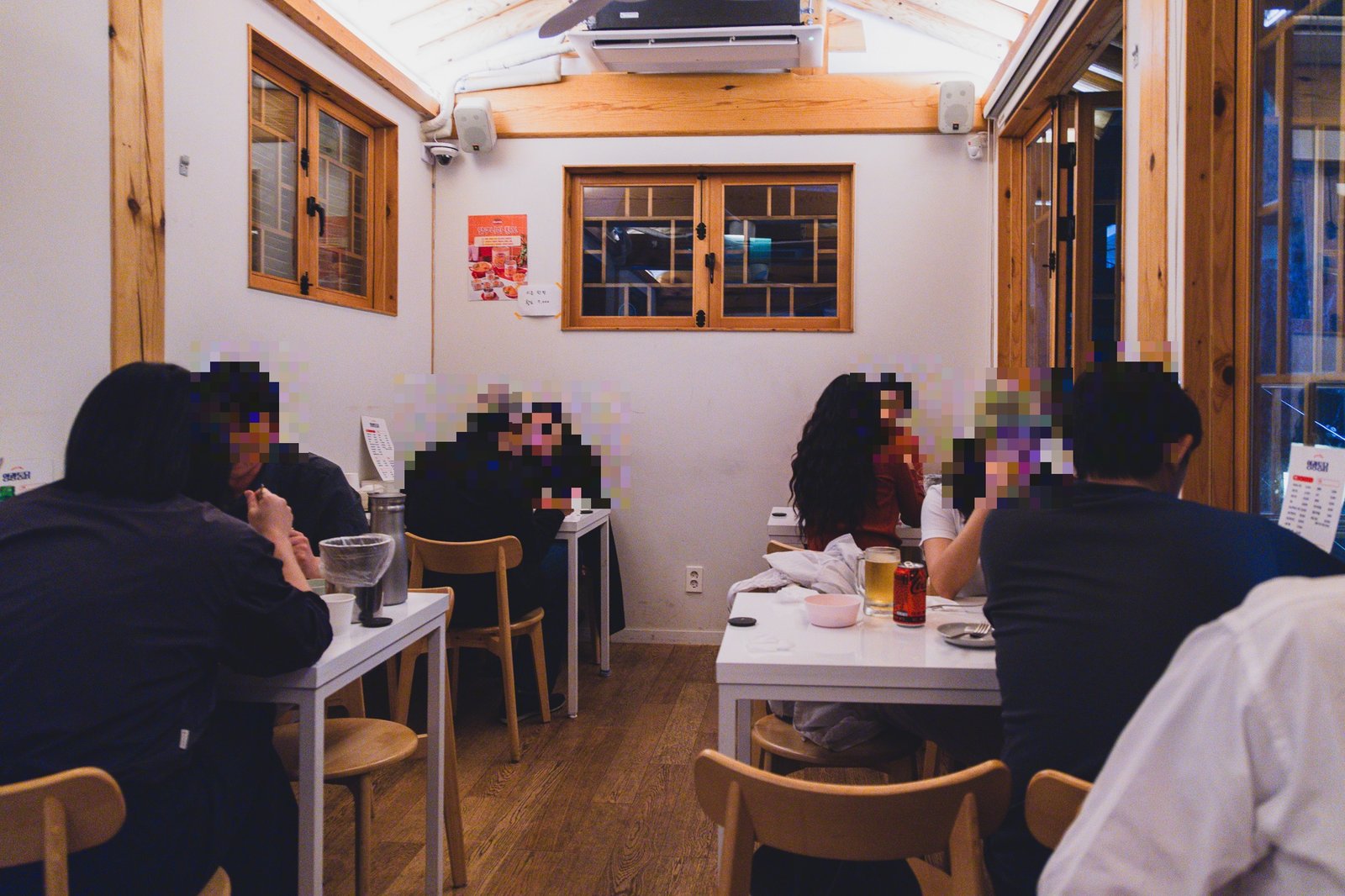
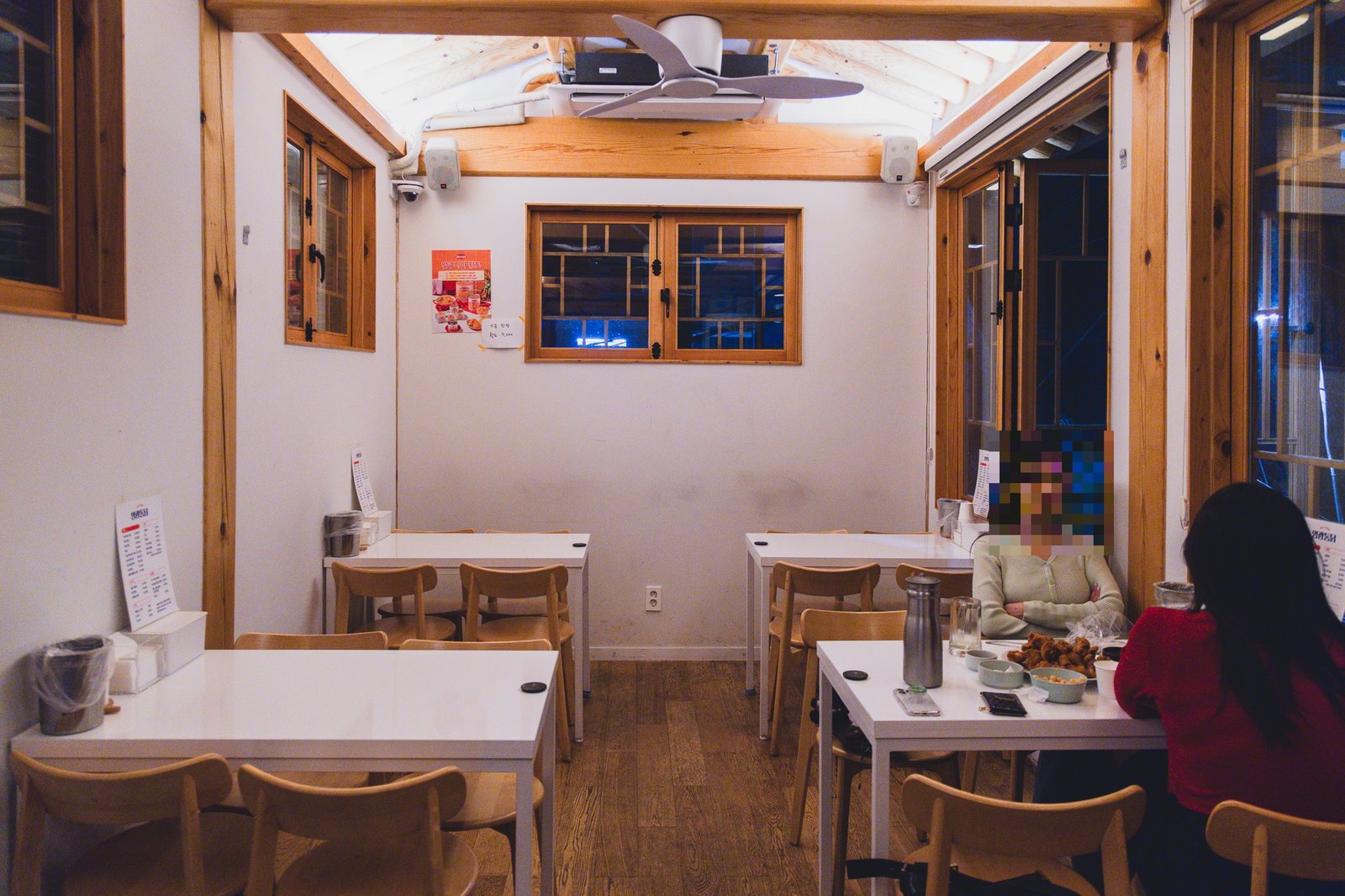
Inside, it’s deliberately plain — white tables, plain wooden chairs, nothing on the walls beyond the menu board and a couple of notices. The hanok exterior does the aesthetic work; the dining room is just there to feed people efficiently.
The menu
Chicken comes fried whole or half-and-half, plus a short list of sides built to go with beer rather than stand alone.
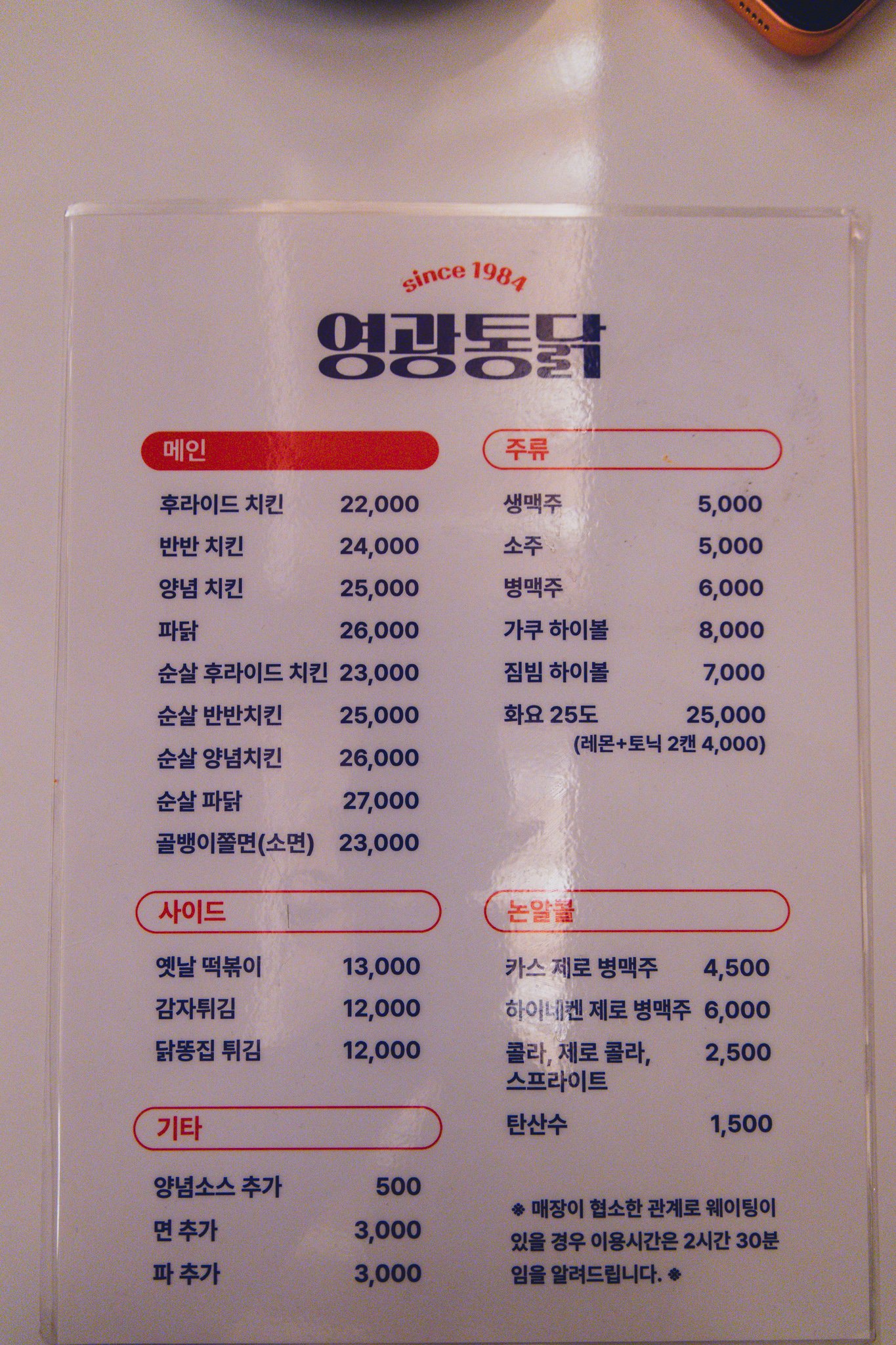
- Whole fried chicken (후라이드): 22,000 KRW
- Half fried, half seasoned (반반): 24,000 KRW
- Boneless half-and-half (순살 반반): 25,000 KRW
- Fries: 12,000 KRW
- Fried gizzards (닭똥집): 12,000 KRW
- Golbaengi jjolmyeon (spicy whelk with cold noodles): 23,000 KRW
- Draft beer: 5,000 KRW per glass
The prices aren’t franchise-cheap, but they’re in line with what a sit-down chimaek spot in central Seoul runs these days. What’s worth knowing before you order: the fries and gizzards aren’t really “extra” sides here — order the boneless chicken and both show up on the same plate automatically, which is a small thing that ends up defining the whole meal.
What we actually ordered
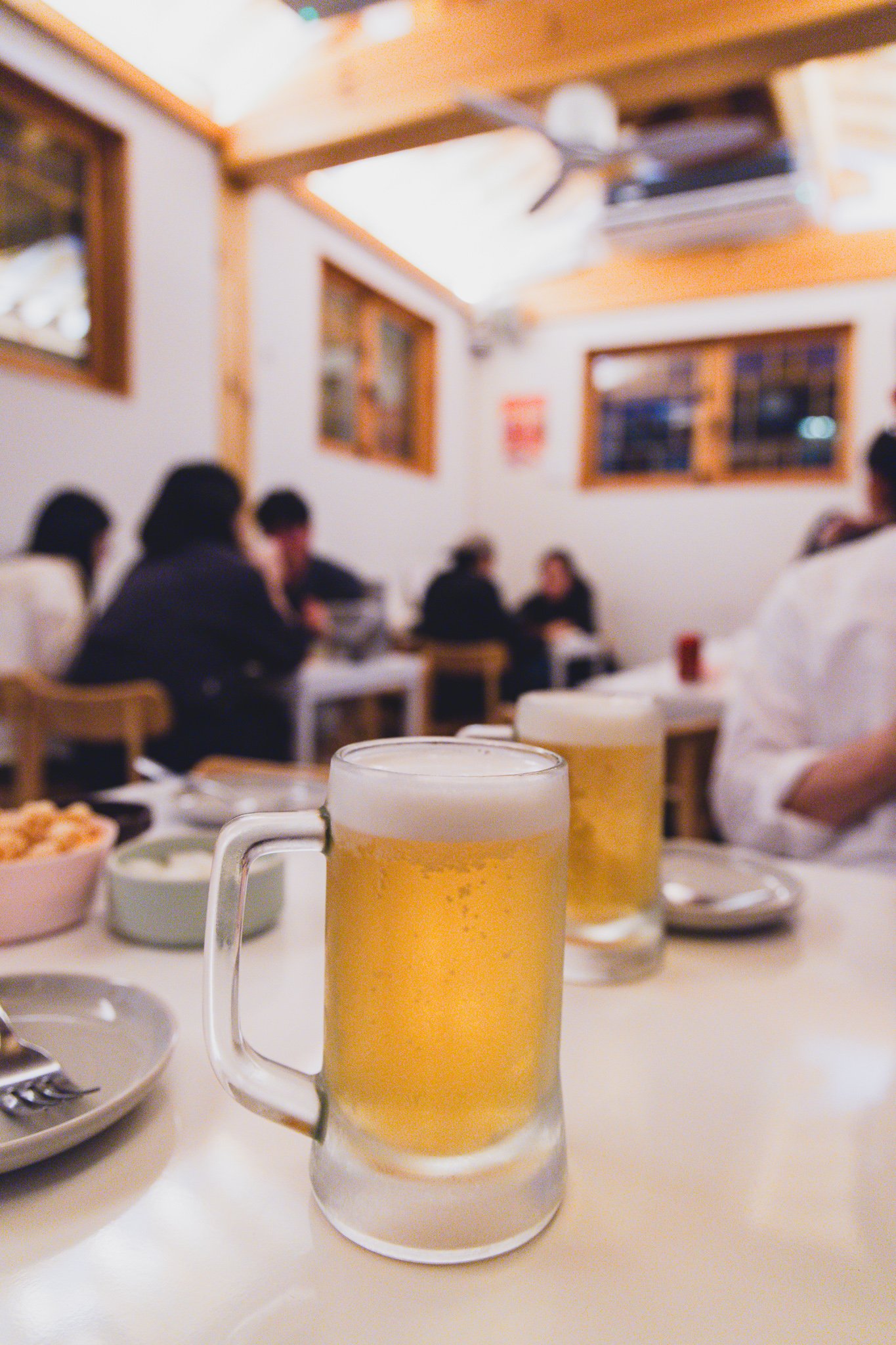
We started with the obvious move — two glasses of draft beer, poured cold with a proper head of foam. Chimaek doesn’t really start until this part happens.
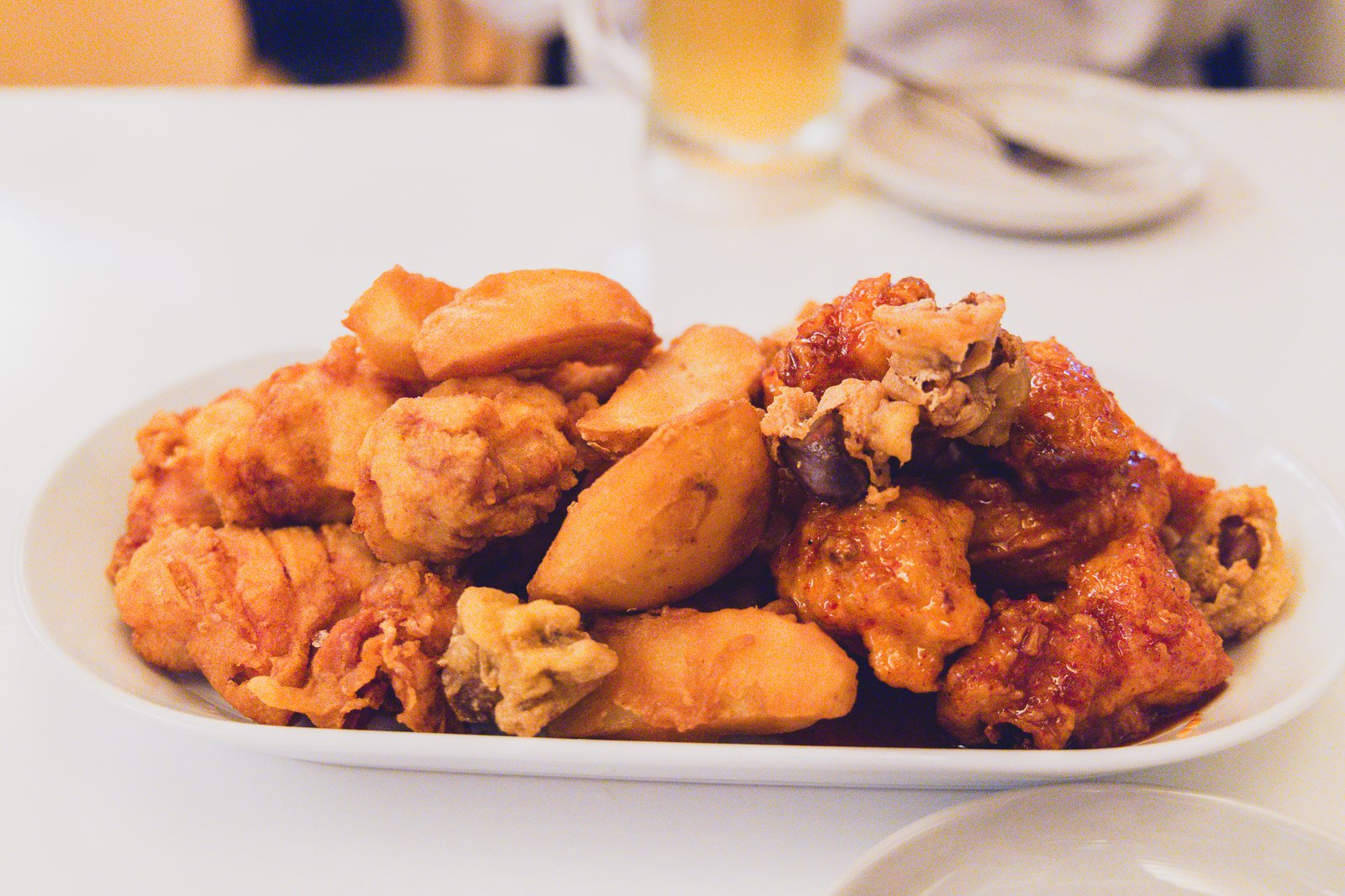
The boneless half-and-half came out on one plate with fries and gizzards already arranged around it — again, not something we ordered separately. First-time visitors should know this ahead of time so the sides on the menu don’t seem redundant.
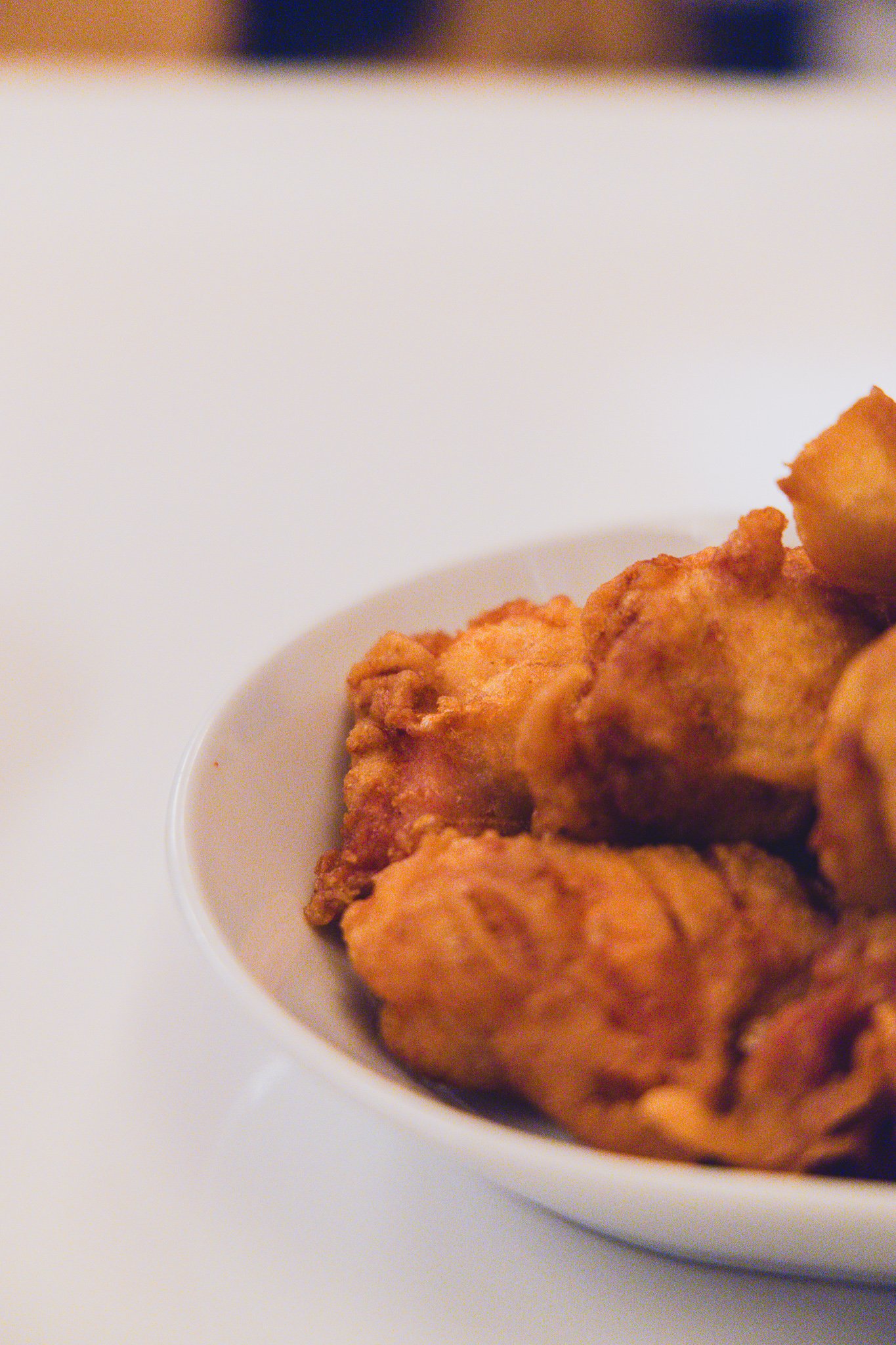
The batter is thin, not the thick, craggy crust you get from some modern chains — which means it’s less rich and doesn’t wear you out halfway through. Crisp on the outside, the meat underneath stays properly moist, and it reads as distinctly old-school: less sauce-forward, more about the chicken itself.
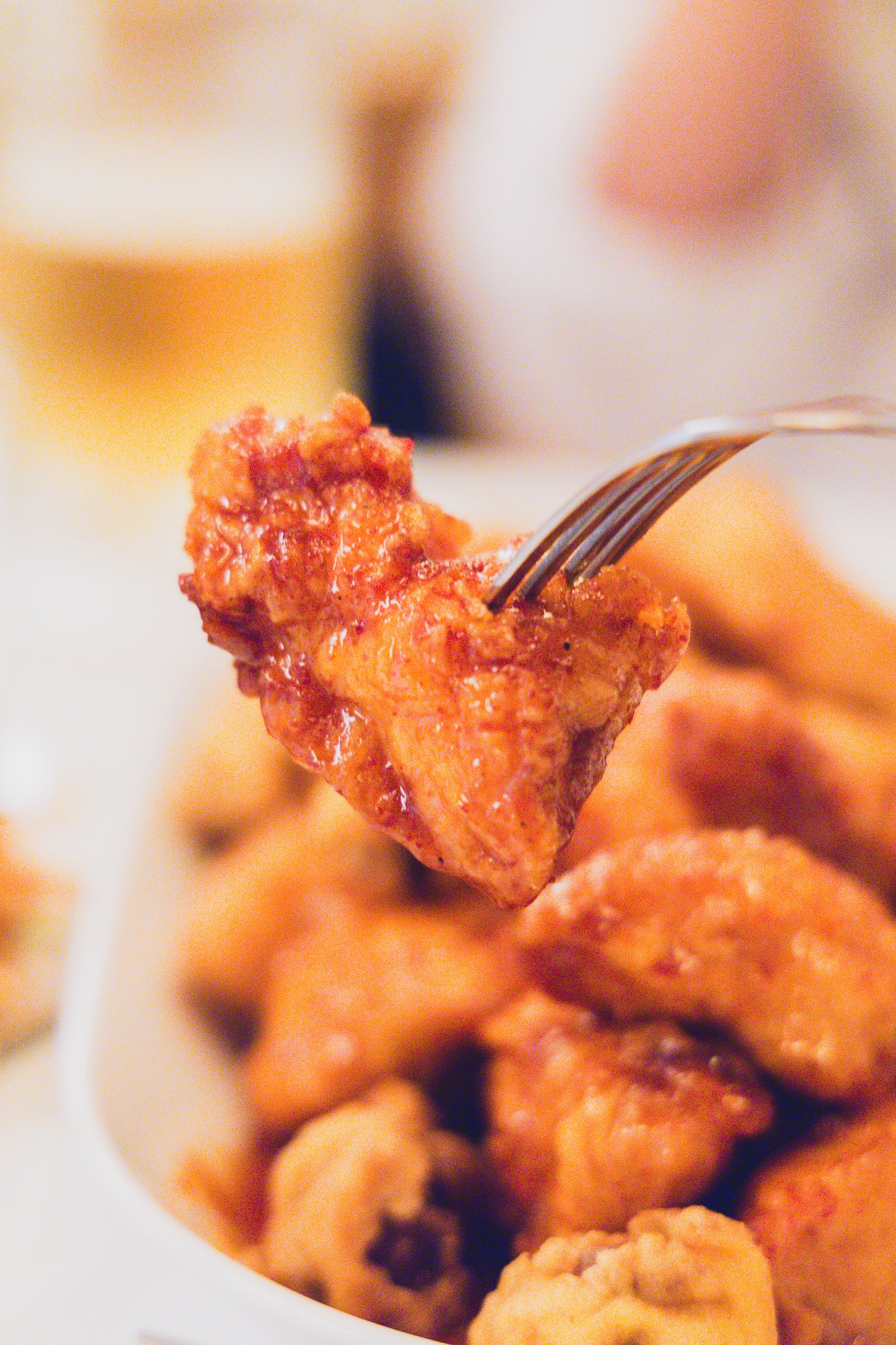
The seasoned half is mild by current standards — a light sweet-savory glaze rather than the sticky-spicy sauce most yangnyeom chicken chains lean into now. If you’re expecting the fiery, syrupy style that’s become the default, this will taste comparatively subdued. That’s not a flaw; it’s just an older style of seasoning, and it’s the kind you don’t get tired of three pieces in.
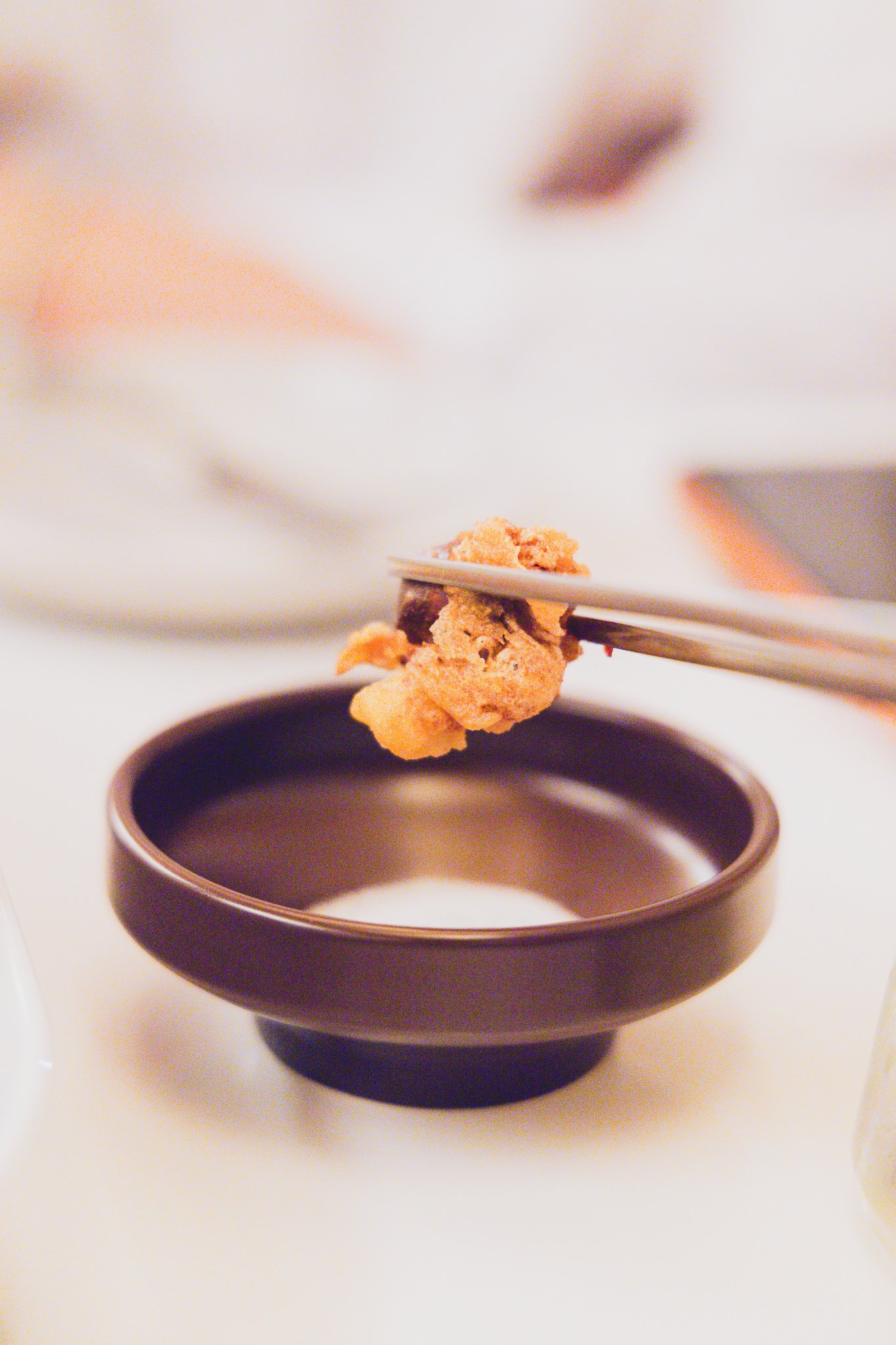
Gizzards are a fairly common Korean bar-food side but a hard sell for a lot of visitors — texturally they’re closer to a firm mushroom than anything chewy or organ-like, and here they’re battered thin enough that the texture is the whole point rather than something to get through.
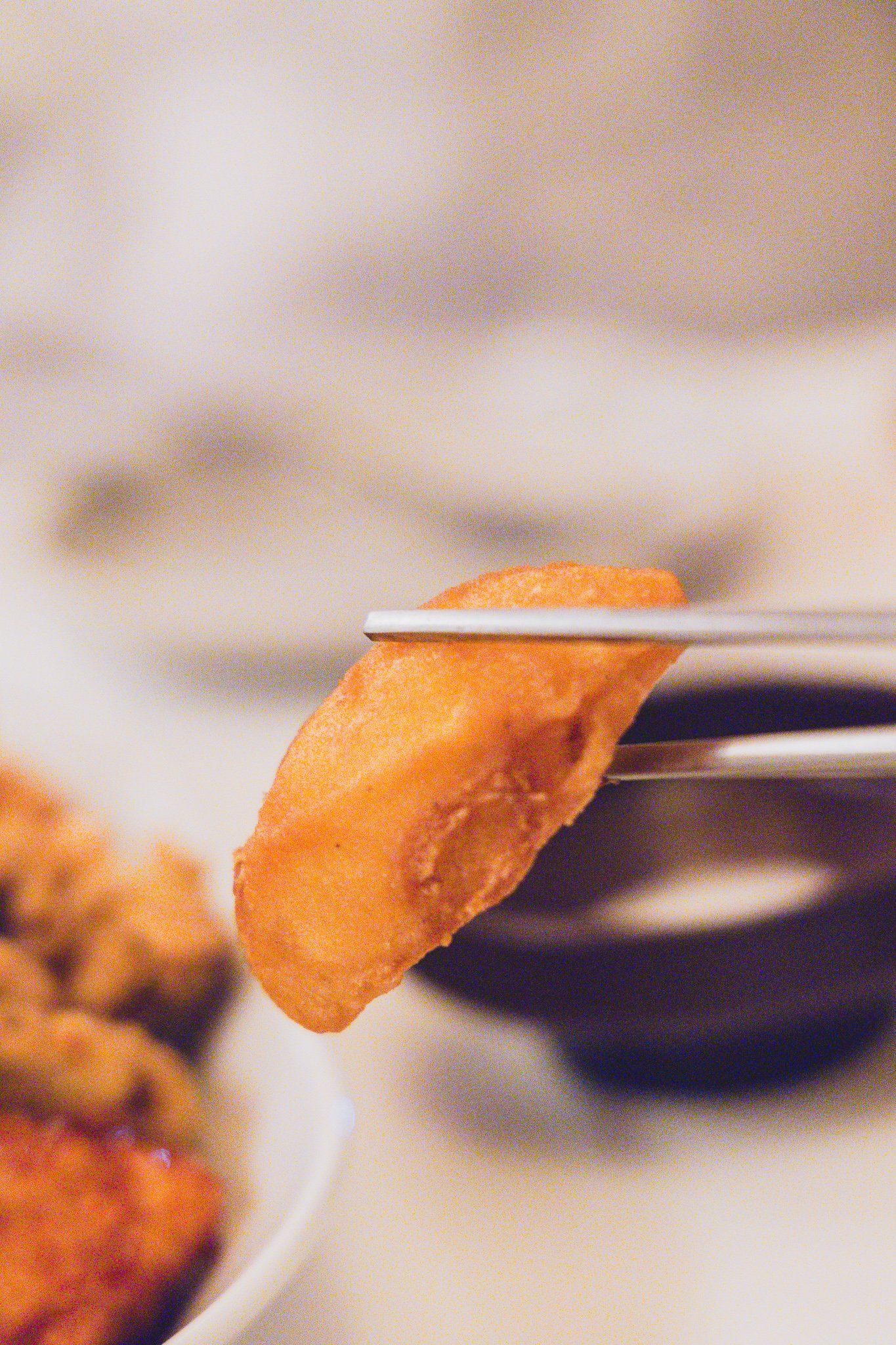
Even the fries — the most forgettable item on paper — come out properly crisp and hot, not an afterthought side.
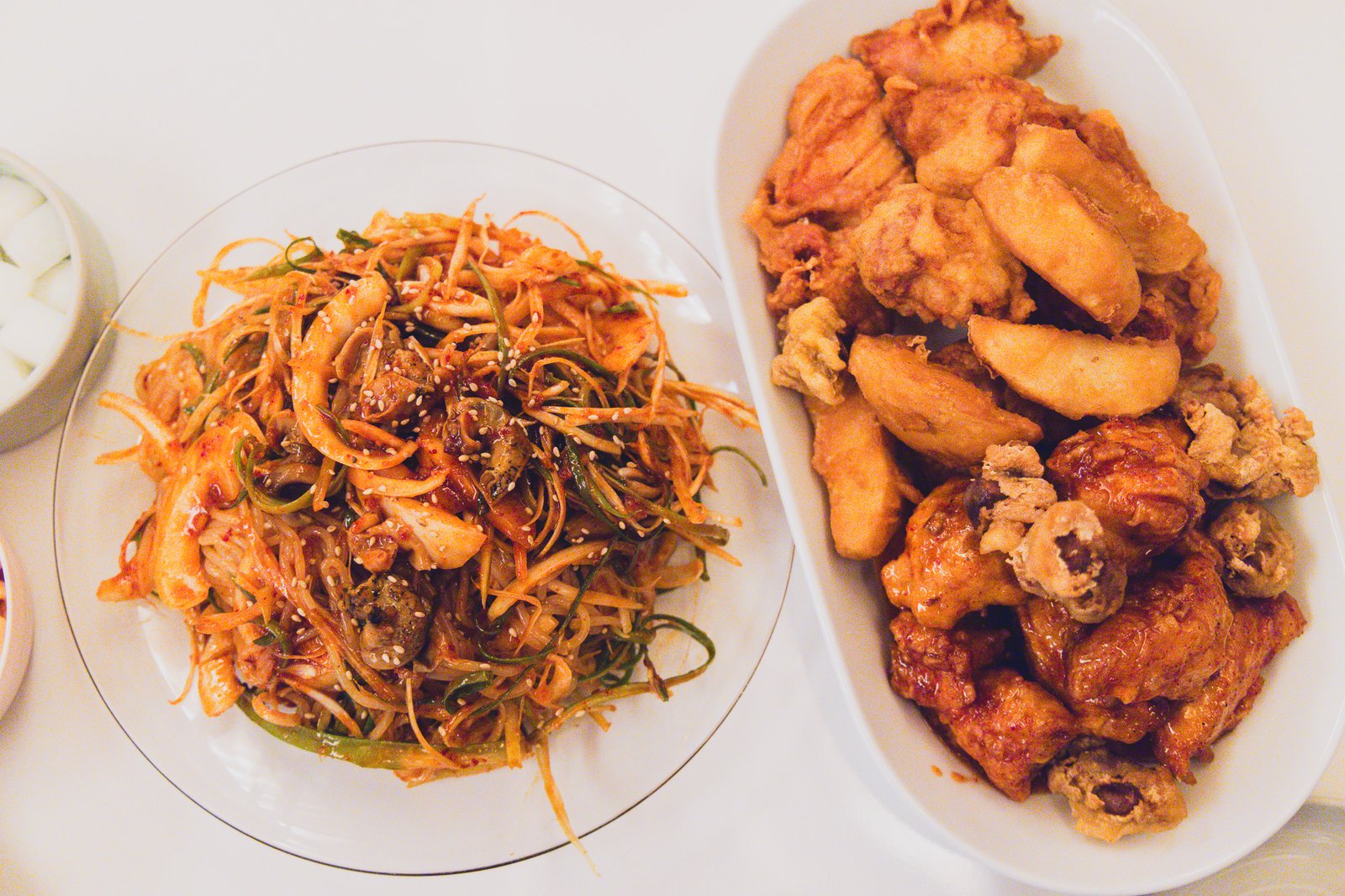
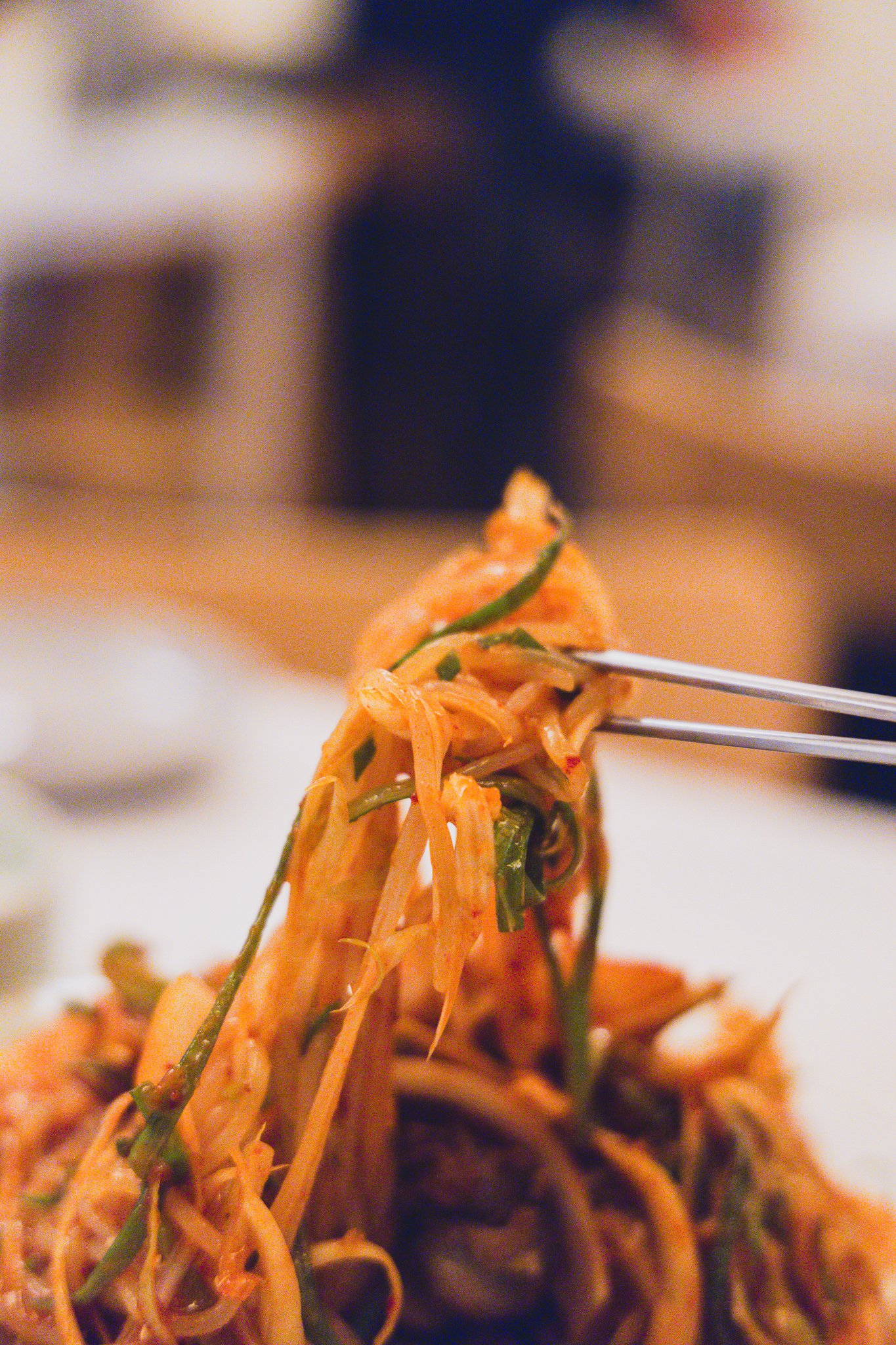
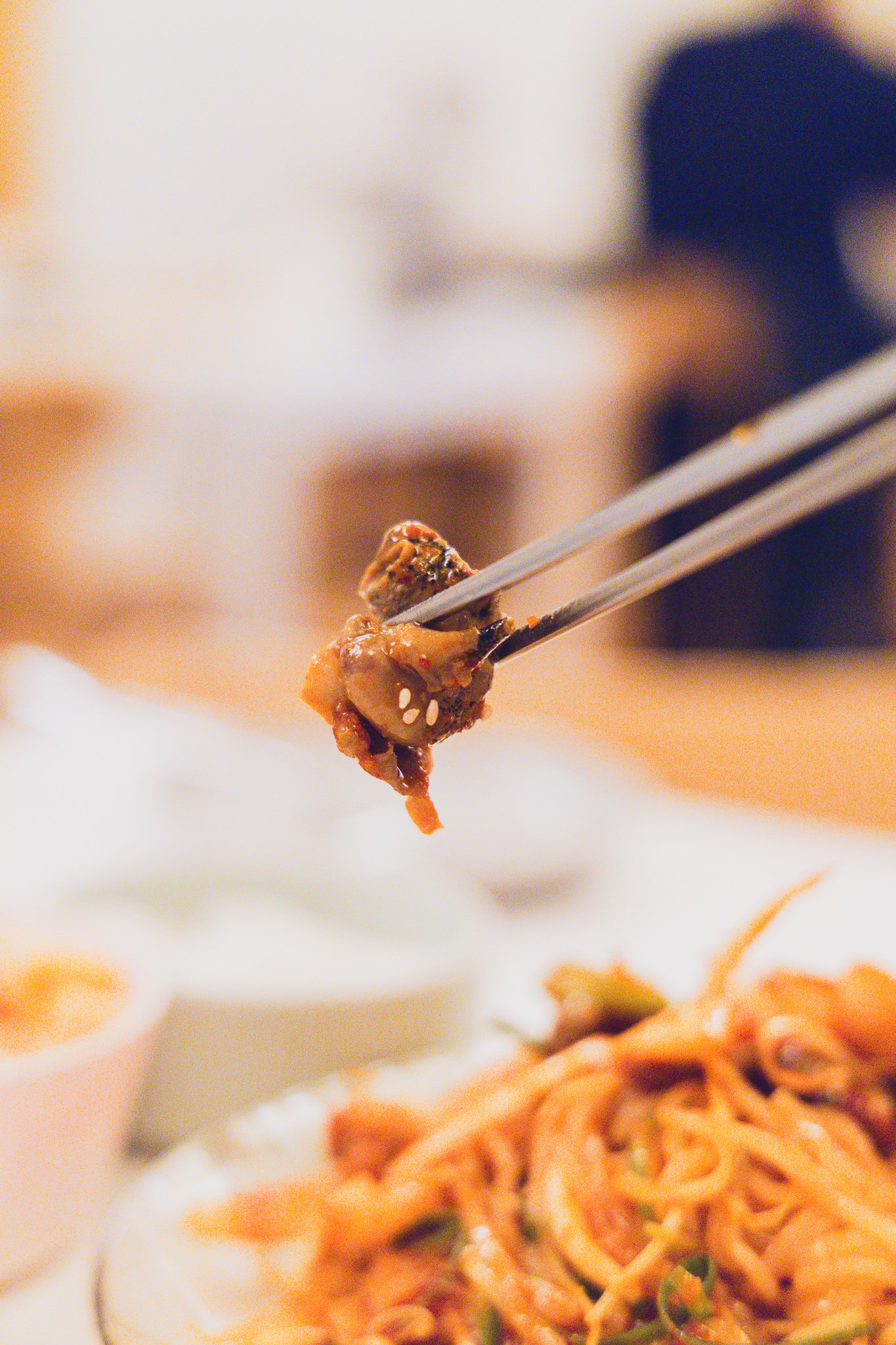
The golbaengi jjolmyeon — cold chewy noodles and whelk in a sweet-spicy-tangy sauce, with cucumber for crunch — is the other classic chimaek-adjacent dish here, and it’s worth ordering even though it has nothing to do with chicken. It’s a common enough dish that most Korean drinking spots serve some version of it, but the whelk pieces here were larger and meatier than the usual thin slices, which is the detail that actually matters in a dish this simple.
Tips if you’re going
- No reservations, and it fills up on ordinary weeknights — go early or be ready to wait. If you do wait, note there’s a 2.5-hour seating limit once you’re in.
- Order the boneless half-and-half if you want to try everything at once — it comes with fries and gizzards on the same plate.
- Bring cash or a Korean-linked card as backup — like a lot of small, decades-old restaurants in Korea, don’t assume every foreign card will go through smoothly on their terminal.
- There’s no English menu. The dish names above (후라이드, 반반, 순살 반반, 골뱅이쫄면) are worth screenshotting before you go.
- If you only want takeout, the original 1984 location near Tongin Market is a few minutes’ walk away — but it’s pickup-only, with no seating at all.
FAQ
Q: What’s the difference between the two Yeonggwang Tongdak locations?
A: The original, near Tongin Market, has been takeout-only since 1984 — no delivery, no seating. This second branch, a couple minutes’ walk away, is the newer dine-in location, opened so people could eat on-site with beer.
Q: Is there an English menu?
A: No. The core items are 후라이드 (whole fried chicken), 반반 (half fried, half seasoned), 순살 반반 (boneless half-and-half), and 골뱅이쫄면 (spicy whelk cold noodles) — useful to know or screenshot ahead of time.
Q: What exactly is “chimaek,” and is this a good place to try it?
A: Chimaek is short for chicken (chikin) + beer (maekju) — the combination itself, plus the whole social habit of eating fried chicken with draft beer at a table for as long as the conversation lasts. Because Yeonggwang Tongdak predates the big franchise chains by decades, it’s a good way to taste an older, less sauce-heavy version of the tradition rather than the modern chain version most visitors default to.
Q: Do I need to make a reservation?
A: No reservations are taken. Waits are common, especially on weekends, and once seated you’re limited to 2.5 hours.
Q: Is it walkable from Gyeongbokgung Palace?
A: Yes — Seochon sits just west of the palace, and this branch is a short walk from the palace’s western wall, tucked into the neighborhood’s alleys.
Bottom Line
Yeonggwang Tongdak isn’t trying to impress anyone — there’s no viral dish, no line around the block for Instagram, no English signage courting visitors. It’s a chicken shop that’s been feeding the same neighborhood since 1984 and only recently added seats. If what you actually want out of a trip to Korea is chimaek the way locals do it on an ordinary Tuesday night, rather than the tourist-facing version, this is closer to the real thing than most places that show up on a “best fried chicken in Seoul” list.