TL;DR: Oh, Lolly Day — the Korean stationery and lifestyle brand known for its “HAPPIER” diaries and daily-habit trackers — has a store on Seoulsup 2-gil near Seoul Forest, inside a building shared with a soft-serve shop and a wellness studio. It’s a quieter, calmer alternative to the crowded pop-up strip in central Seongsu, with a basement-level shop packed with diaries, DIY notebook kits, pouches, and small goods. Address: 18-11 Seoulsup 2-gil, Seongdong-gu, Seoul (1F). Hours: 11:30 AM–7:30 PM. No dedicated parking.
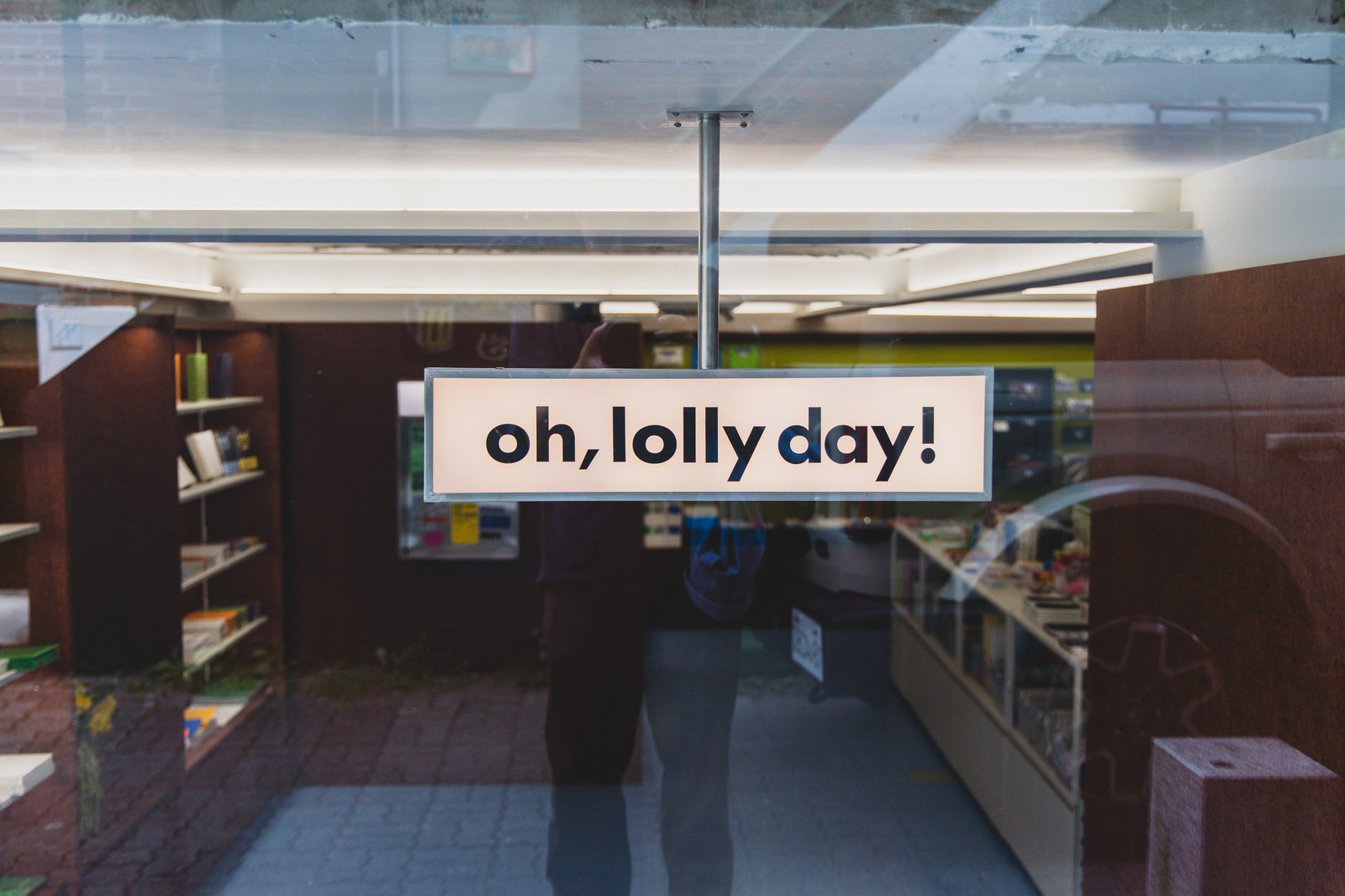
A Brand That Outgrew the Pop-Up Strip
If you’ve spent any time in Seongsu-dong, you’ve seen how fast the pop-up scene turns over — a new brand takes over a storefront every few weeks, and Yeonmujang-gil, the neighborhood’s main pop-up strip, has become the place to catch whatever’s trending this month. It’s great for novelty, but it’s not exactly built for a brand that wants people to remember it a year from now.
That’s part of why it caught my attention that Oh, Lolly Day — a Korean stationery and lifestyle brand built around the slogan “oh, lolly day! makes your life happier” — has a store tucked into the quieter, greener end of Seongsu-dong near Seoul Forest, a short walk from the pop-up chaos. I hadn’t planned to stop in; I was just walking through the neighborhood near the park when the sign caught my eye.
Oh, Lolly Day has been around since 2014, built by Korean designer Shinhoo Park, and it’s developed a genuinely loyal following in Korea’s stationery and diary-planning community over the past decade. Whether or not this location is a full relocation from a previous Yeonmujang-gil address, the choice to plant a store here — away from the turnover-driven pop-up crowd — says something about how the brand wants to be experienced: less “check it out before it’s gone,” more “come sit with your diary for a minute.”
Finding the Store
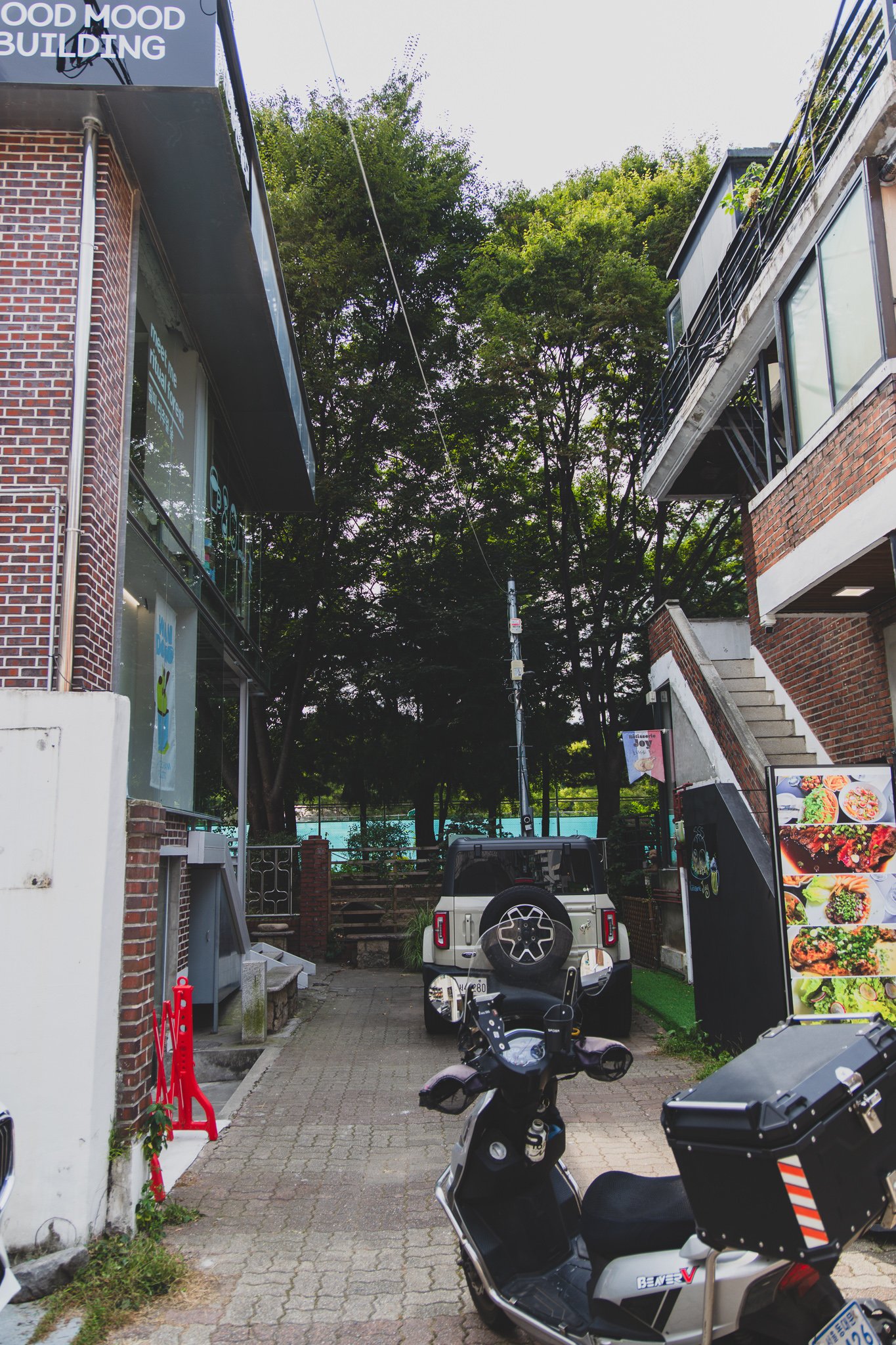
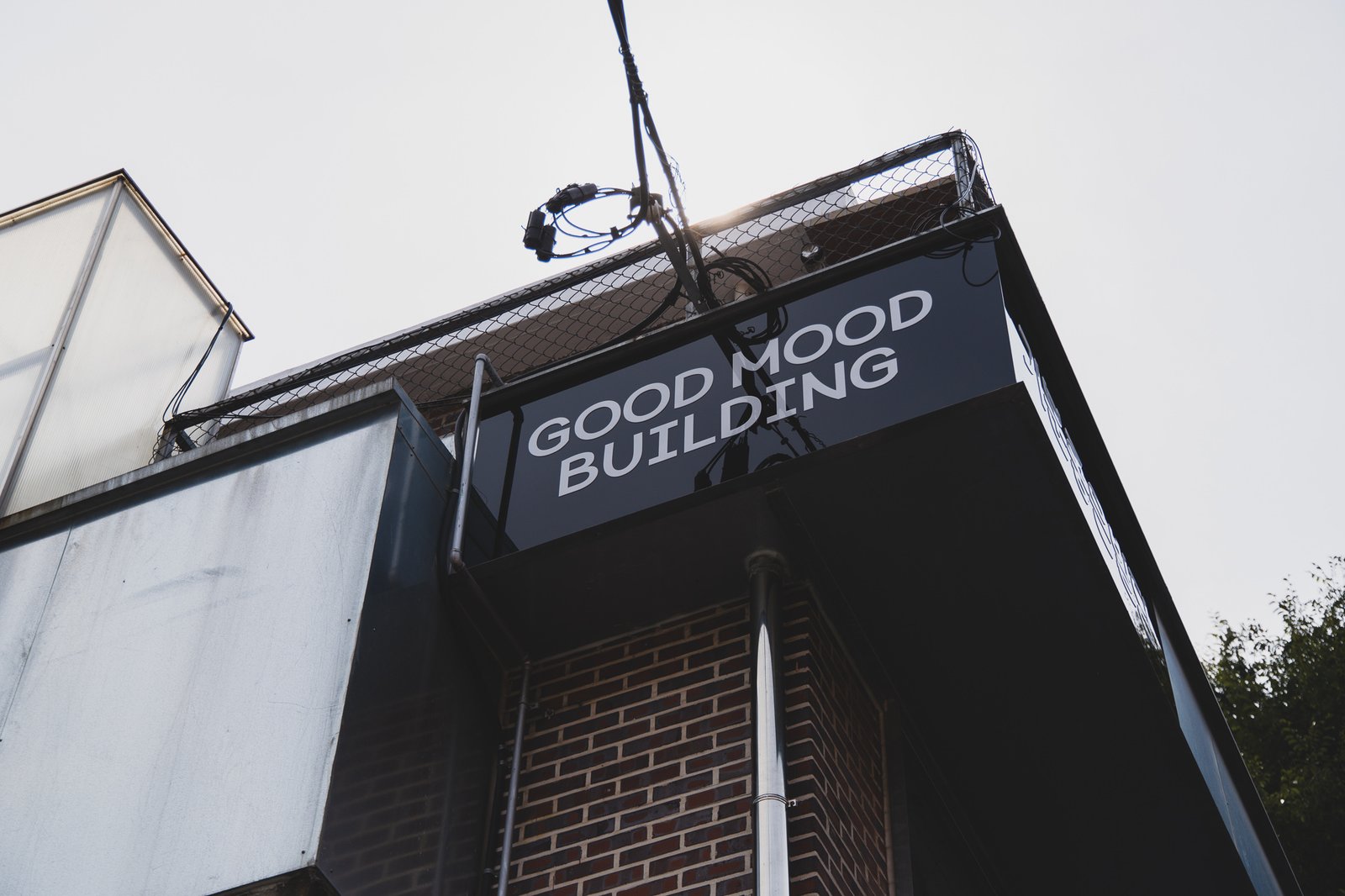
The store sits a little off Seoul Forest’s main street, down a side alley rather than right on the main road. It’s easy enough to find once you’re looking for it — a large sign reading “GOOD MOOD BUILDING” marks the alley entrance — but it’s not the kind of place you’d stumble into by accident the way you might on Yeonmujang-gil.
The building name turns out to be the whole concept. It’s not just Oh, Lolly Day renting a storefront — the building houses Oh, Lolly Day on the 1st floor, a soft-serve and dessert shop called WAN DOO (완두, which literally means “pea” in Korean) on the 2nd floor, and a wellness studio called meet me (밑미) on the 3rd. All three brands share a similar “feel-good, everyday happiness” positioning, so instead of leasing to whoever pays rent, the building appears to have been curated around one mood. It’s a smart piece of small-scale retail planning, whether or not that was the explicit intent.
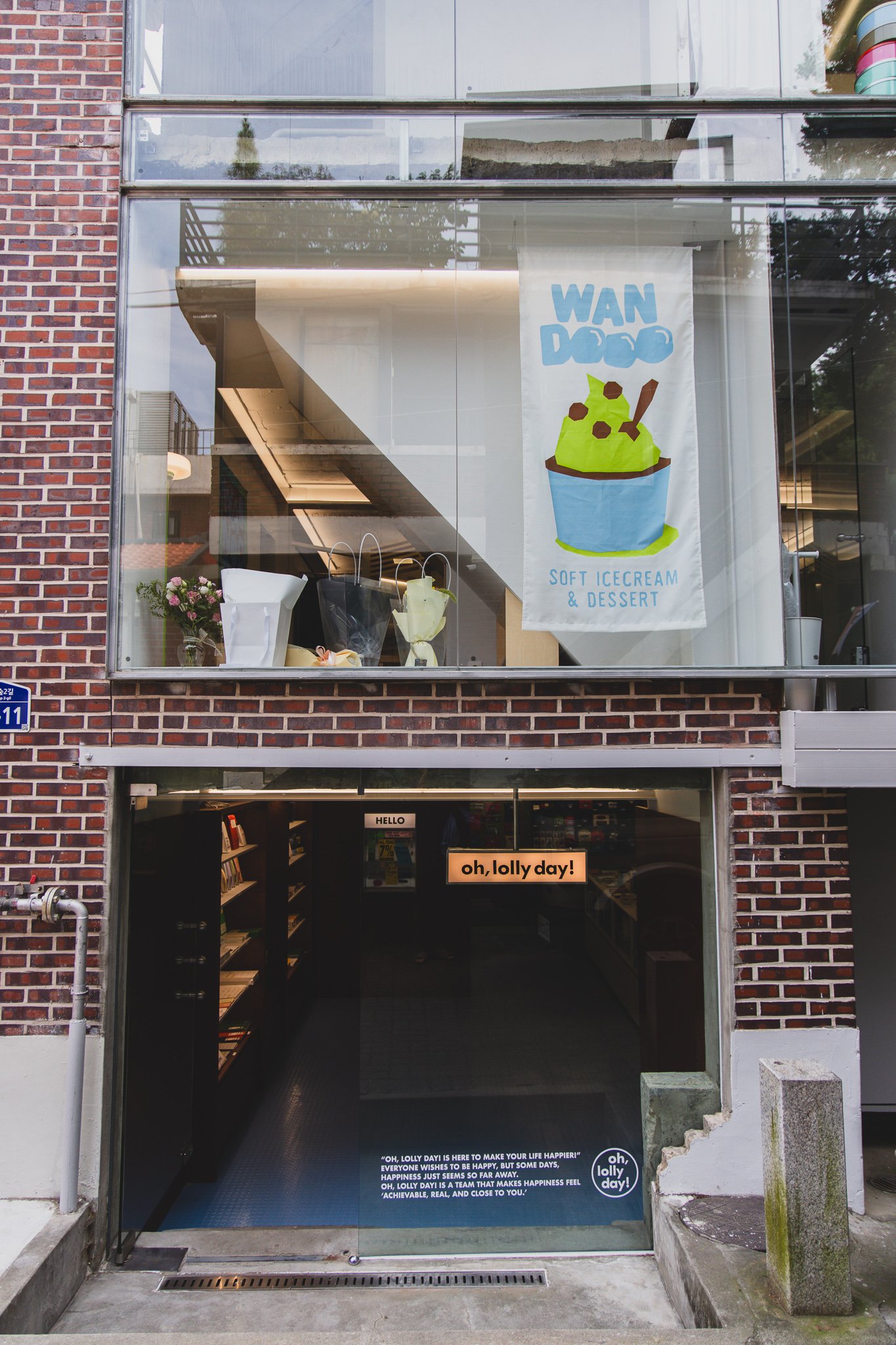
The glass storefront makes the interior fully visible from outside, and the entrance window carries the line “OH, LOLLY DAY! IS HERE TO MAKE YOUR LIFE HAPPIER!” in large lettering — so the brand’s tone lands before you’ve even stepped inside.
Inside the Shop
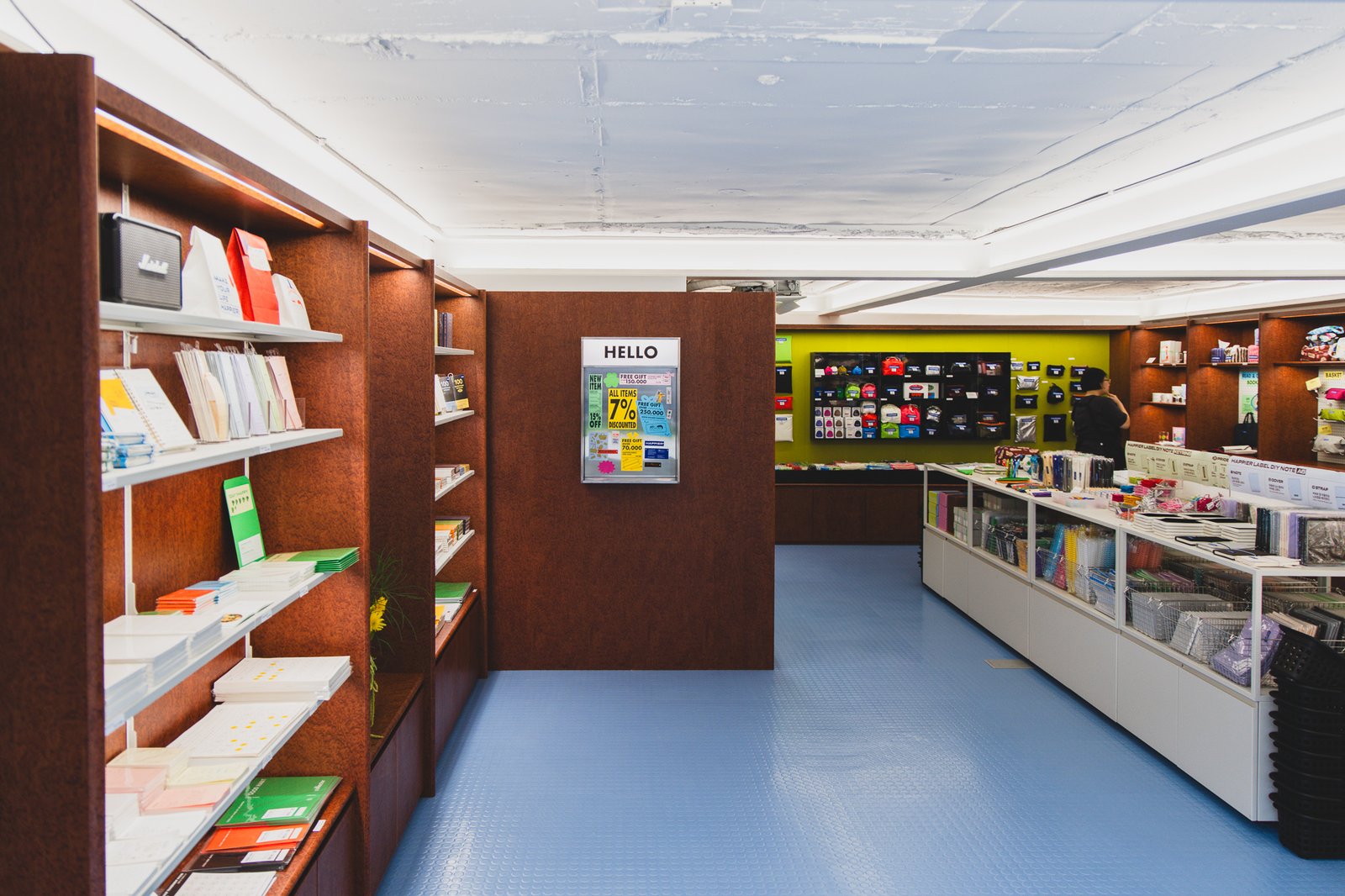
The shop itself is one level down, reached by a short staircase. It’s not large, but the layout loops in a single, easy path, so it doesn’t feel cramped even with a fair amount of stock on the shelves. Wood fixtures paired with a blue floor give it a calmer look than the neon-heavy interiors common at Seongsu pop-ups.
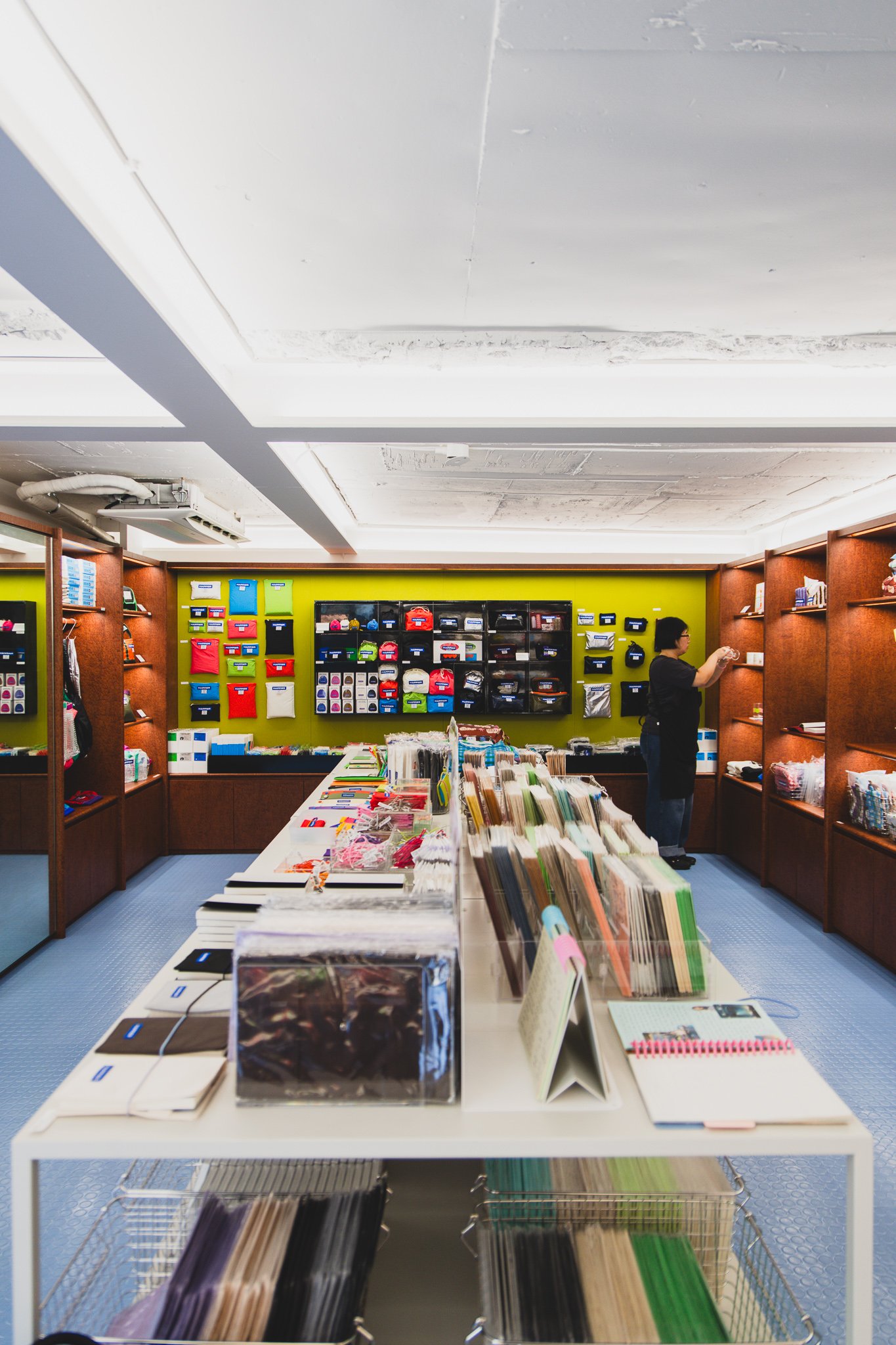
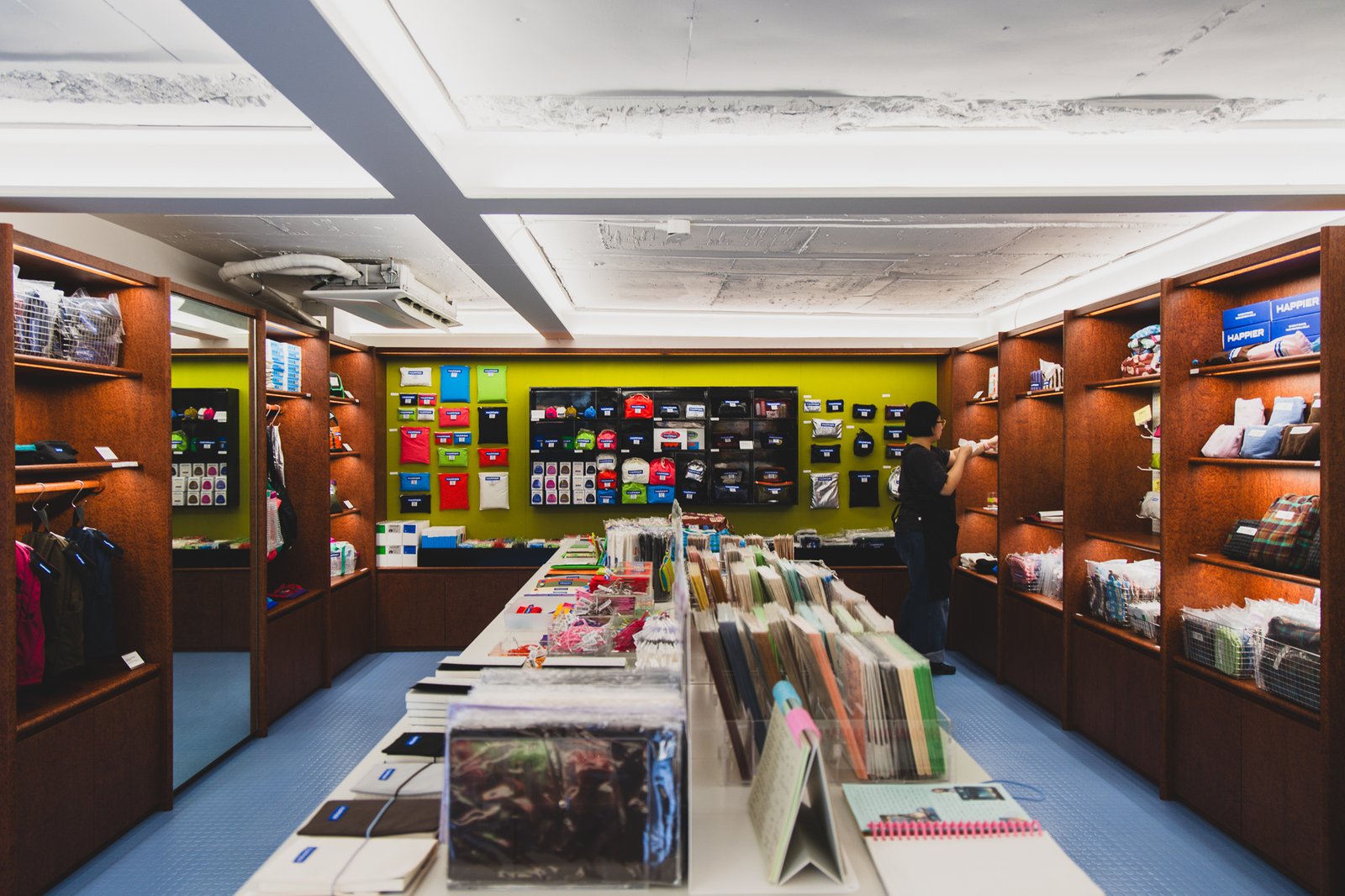
Oh, Lolly Day describes itself as carrying roughly 800 products across stationery, apparel, and home goods, and even in this relatively compact footprint, that range shows — notebooks, diaries, pouches, and stickers are organized by category rather than crammed together.
HAPPIER: The Diary System That’s the Brand’s Real Draw
The most prominent thing in the store is a sub-line called HAPPIER — a system of diaries, memo pads, and habit trackers designed to work together. It’s less about selling one nice notebook and more about selling a daily habit of writing things down.
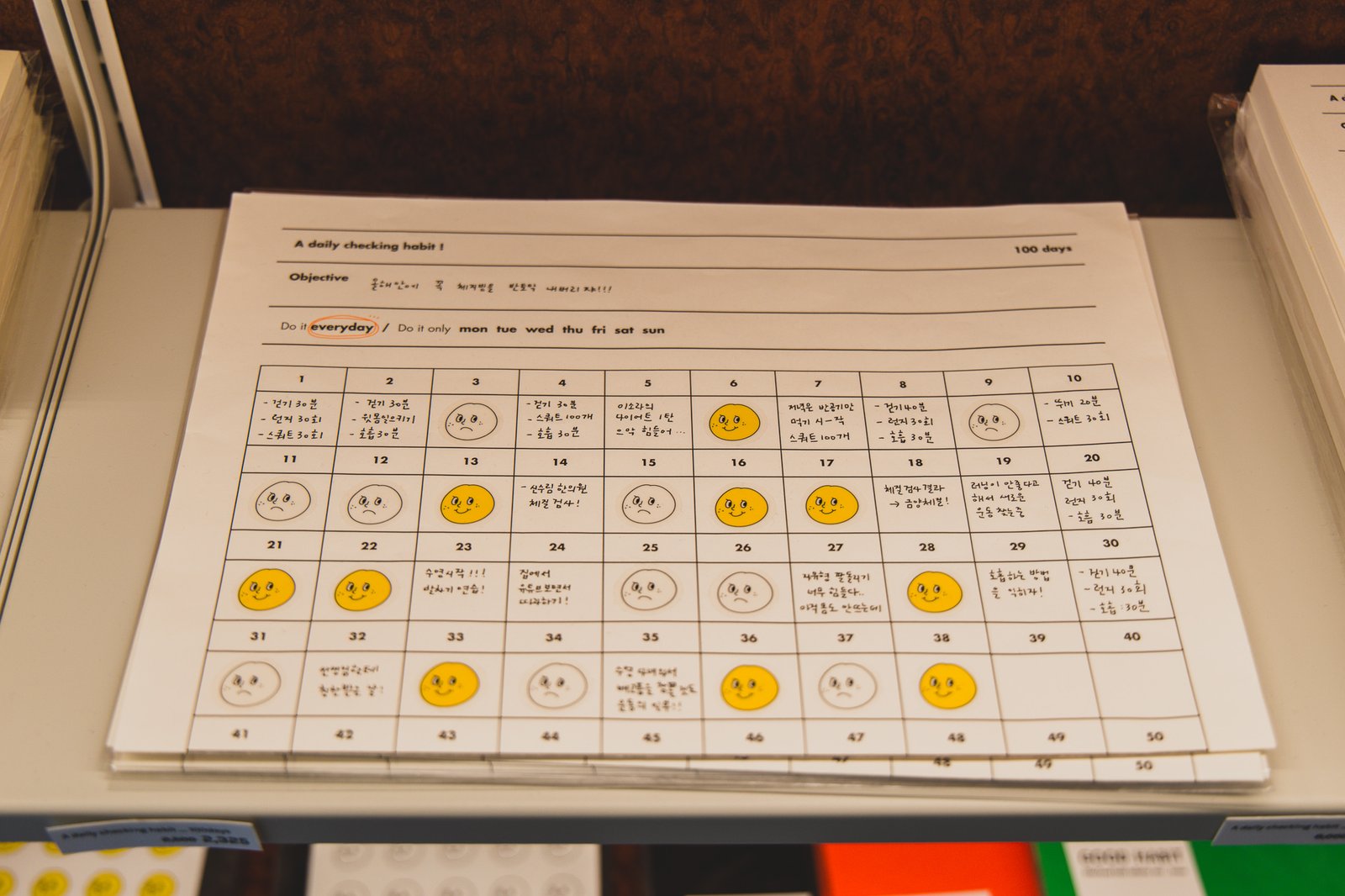
One display sample had clearly been filled out by a real user — squats, walks, breathing exercises logged day by day, marked complete or not with small round stickers. Using an actual filled-in sample as the display, instead of a mockup, is a smart way to show shoppers exactly how the product gets used day to day.
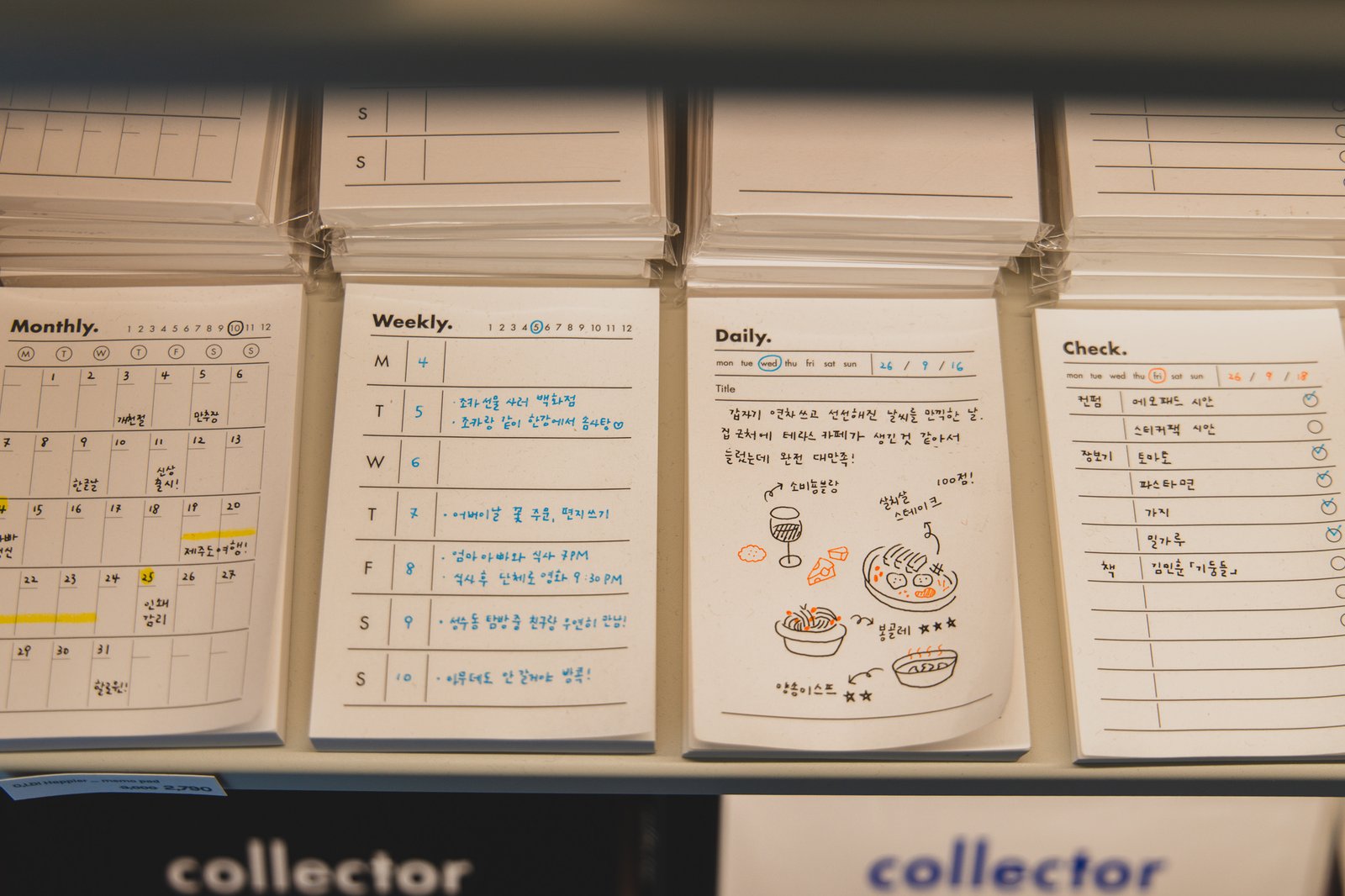
The memo pad lineup comes in four formats — Monthly, Weekly, Daily, and Check — and the sample Daily pad had a note along the lines of “took a spontaneous day off and enjoyed the cooler weather,” paired with a small drawing of that day’s meal. It’s a good snapshot of the brand’s tone: not built around ambitious life plans, but around noticing small, ordinary days.
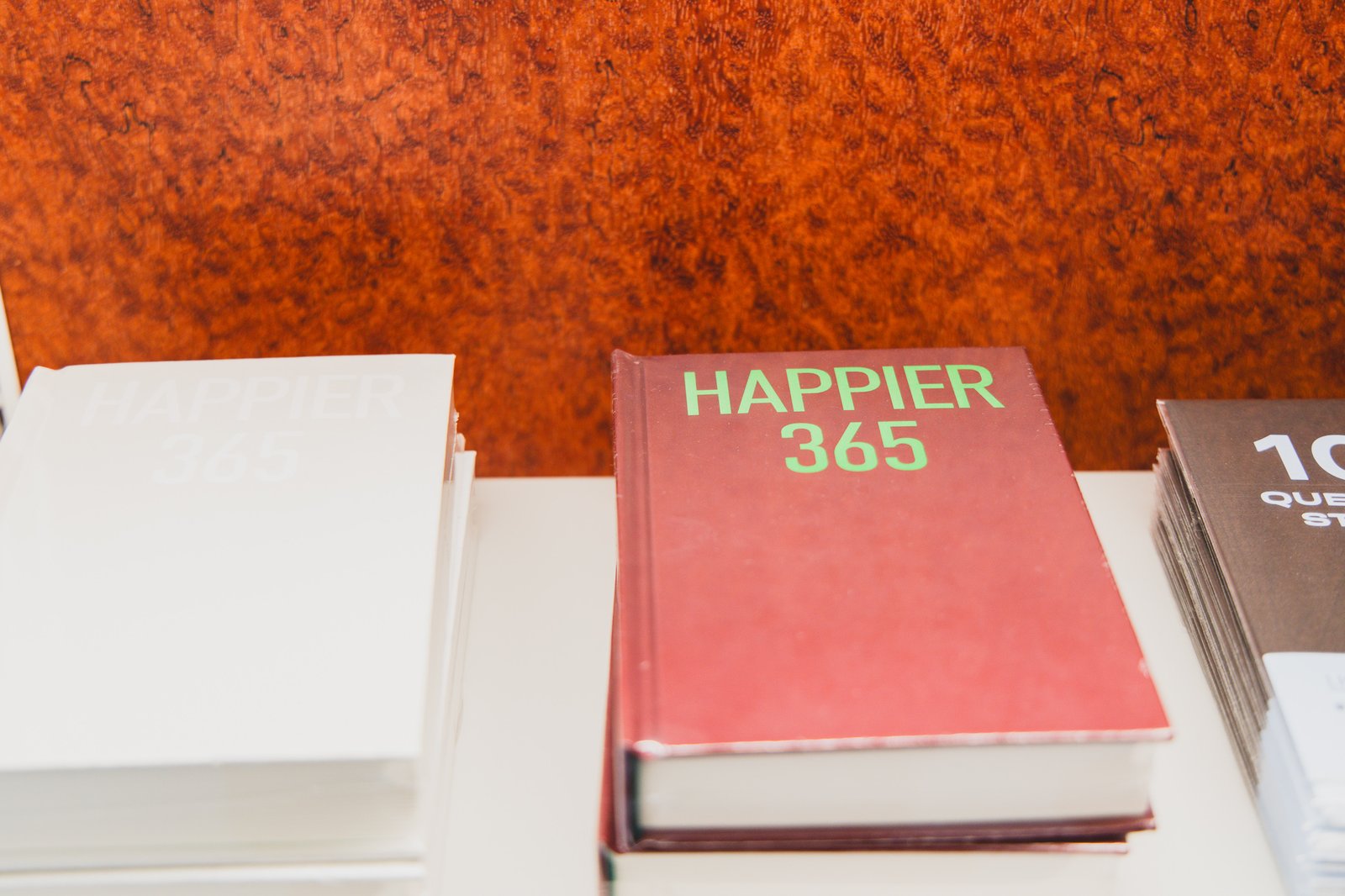
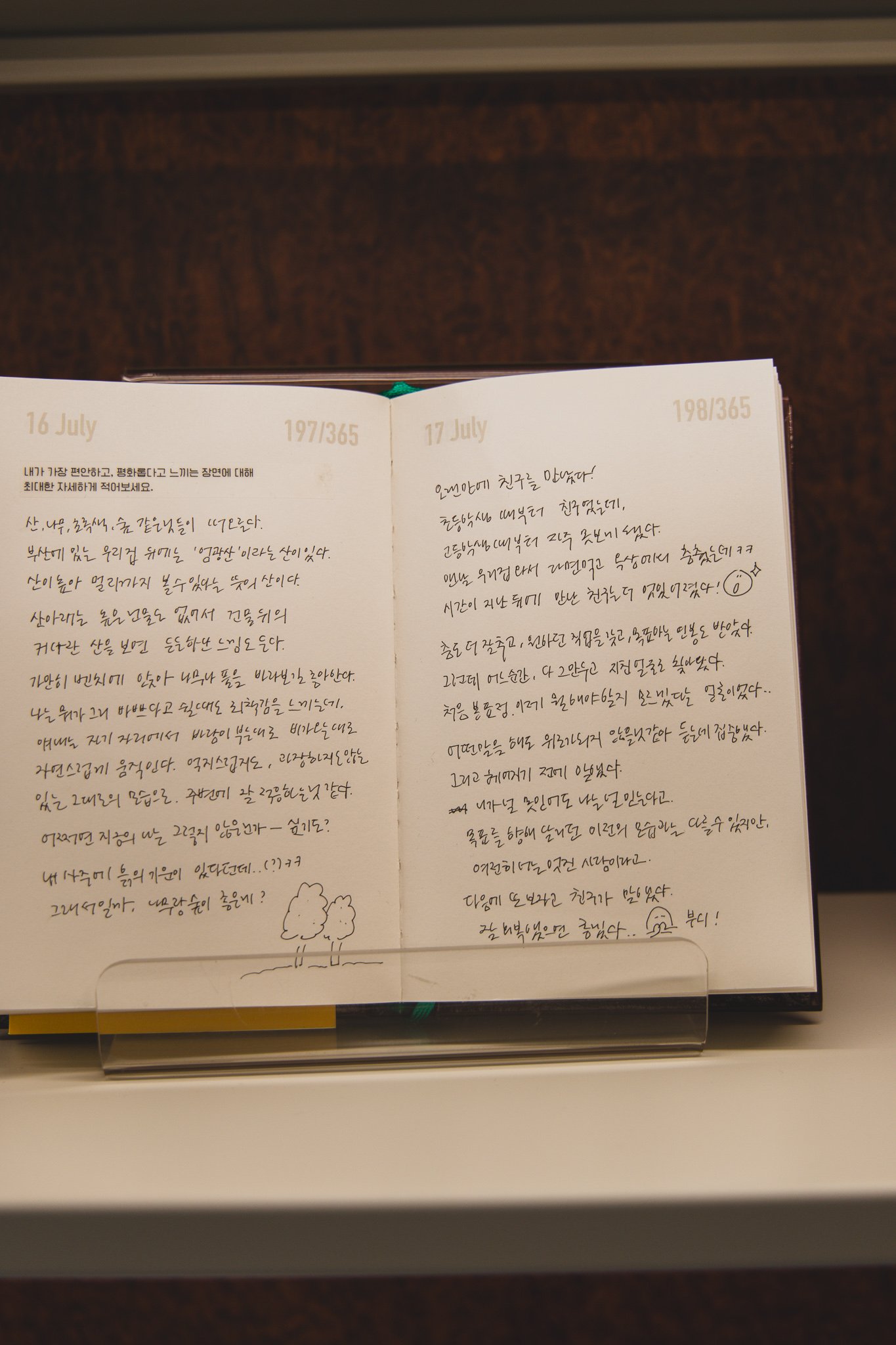
The flagship item is HAPPIER 365, a one-page-per-day diary for a full year. Each page comes with a printed prompt — one example asked the writer to describe, in detail, the place where they feel most calm and at peace — which lowers the barrier to entry considerably compared to a blank diary. You don’t need to be someone who “journals” to use it; you just need to answer the question.
HAPPIER LABEL DIY NOTE: Build Your Own Notebook
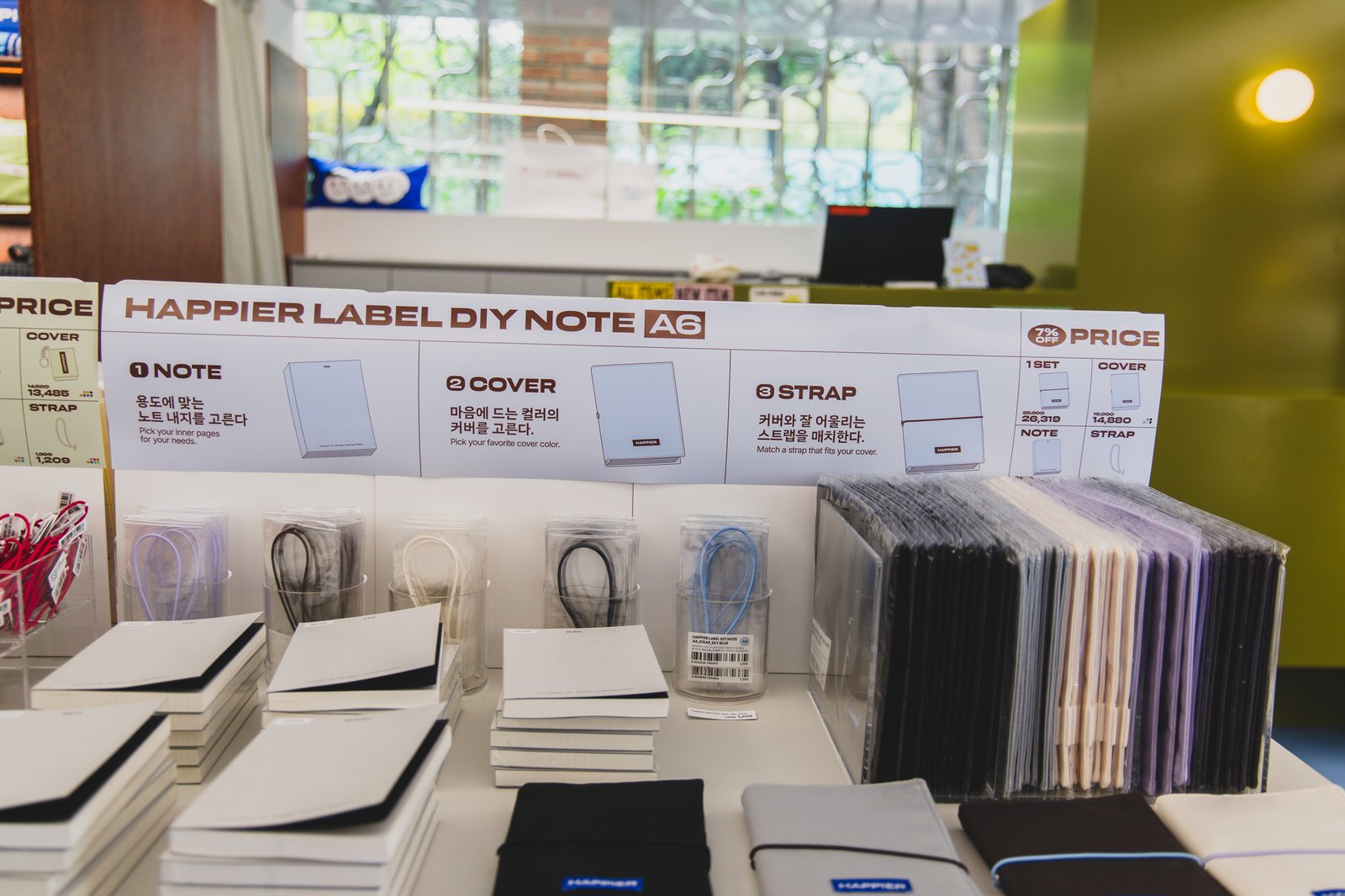
This was the most cleverly merchandised corner of the store. Instead of selling finished notebooks, Oh, Lolly Day sells the inner pages, the cover, and the strap separately, and you build your own combination at the register. Buying the pieces individually is priced to come out slightly cheaper than a pre-made set — a structure that nudges you toward spending more time (and more money) customizing, while still feeling like the “smart” choice.
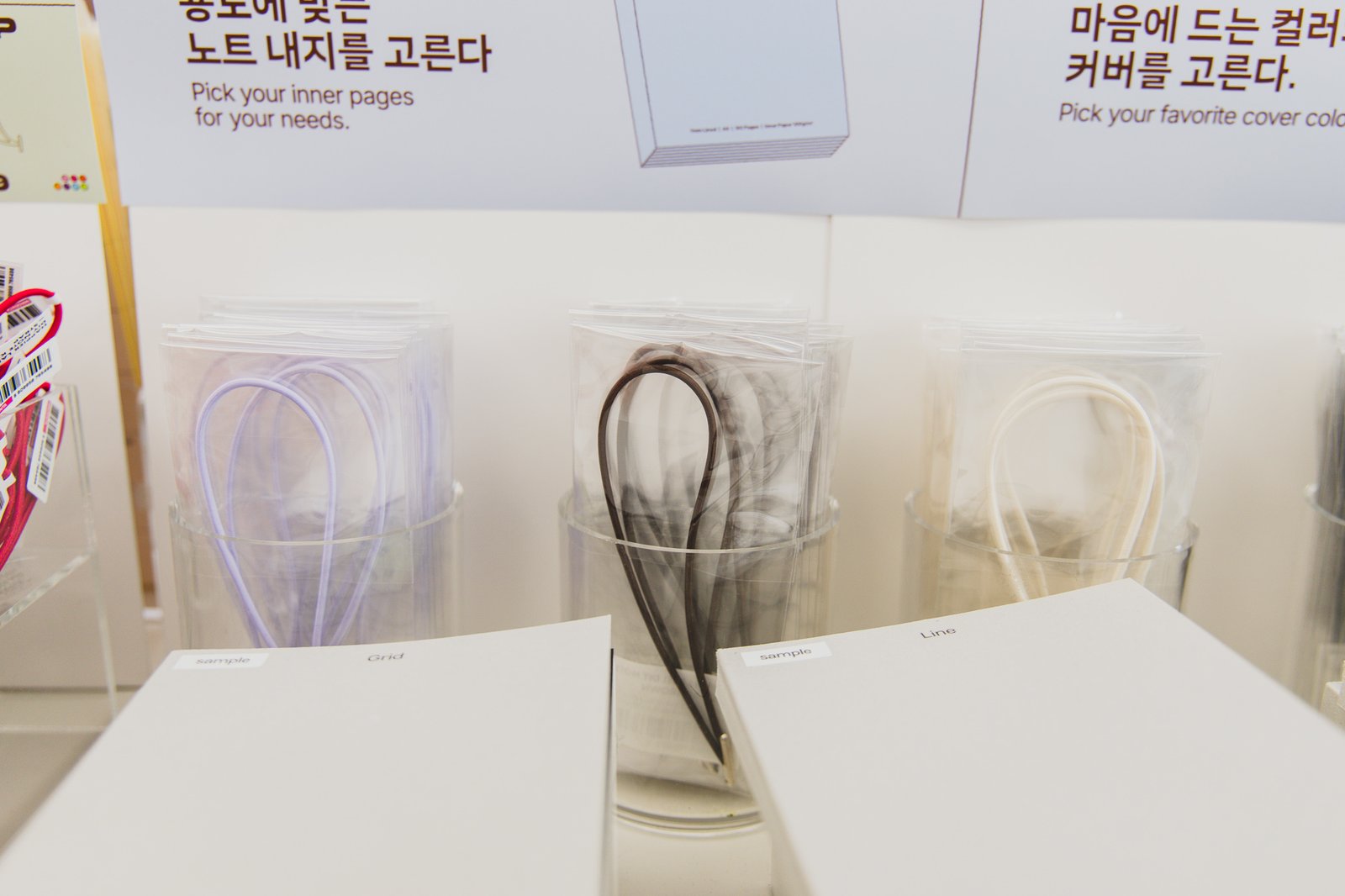
The straps alone come in a wide range of colors, so the same cover looks completely different depending on which one you pick. Paper weight and ruling style (grid, lined, dot) are also available as physical samples you can flip through before deciding.
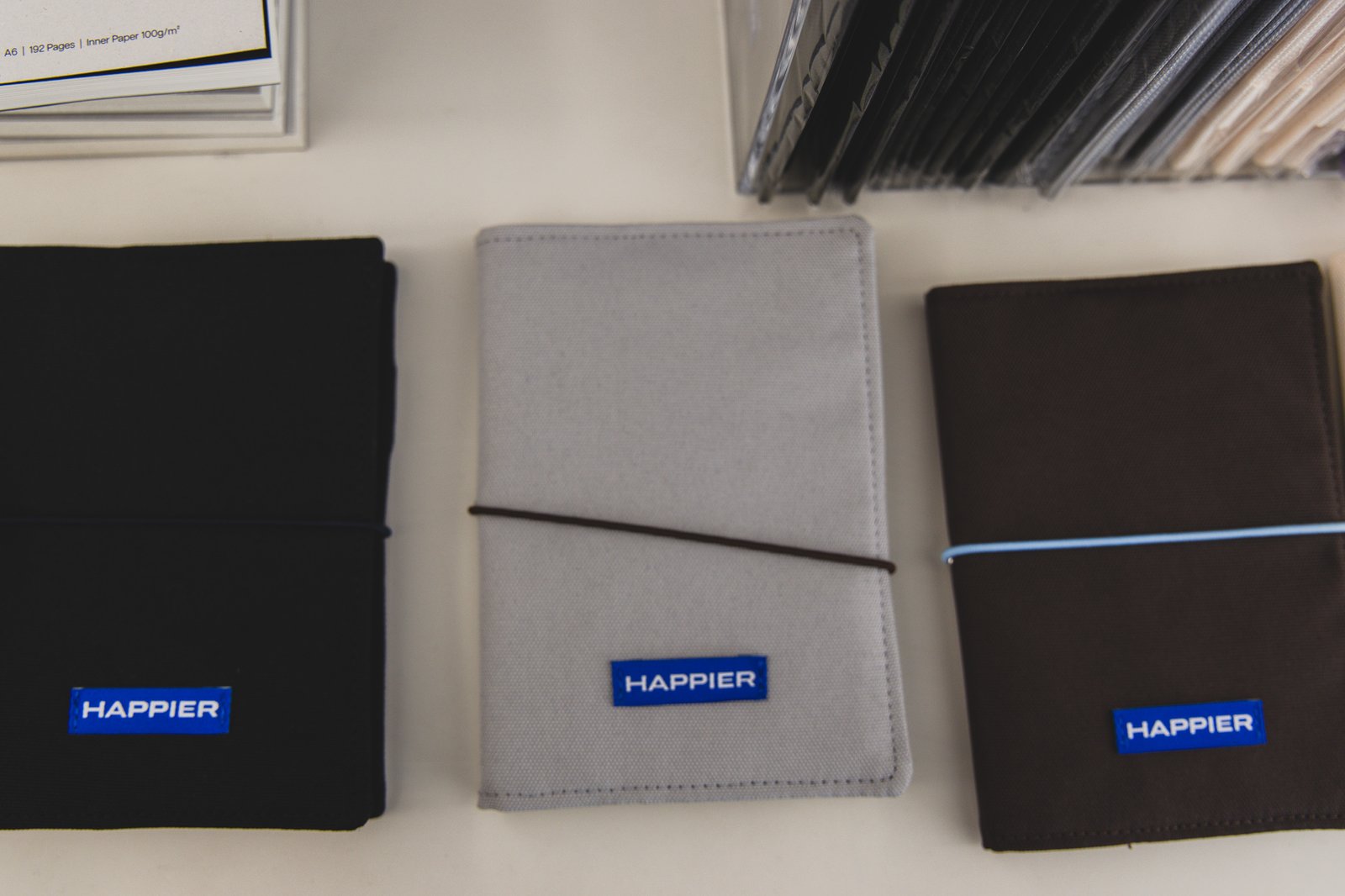
Every finished cover — regardless of color — carries the same small blue “HAPPIER” label, which is a simple but effective way of keeping the whole line visually tied together no matter how customers mix and match.
The Pen Case I Ended Up Buying
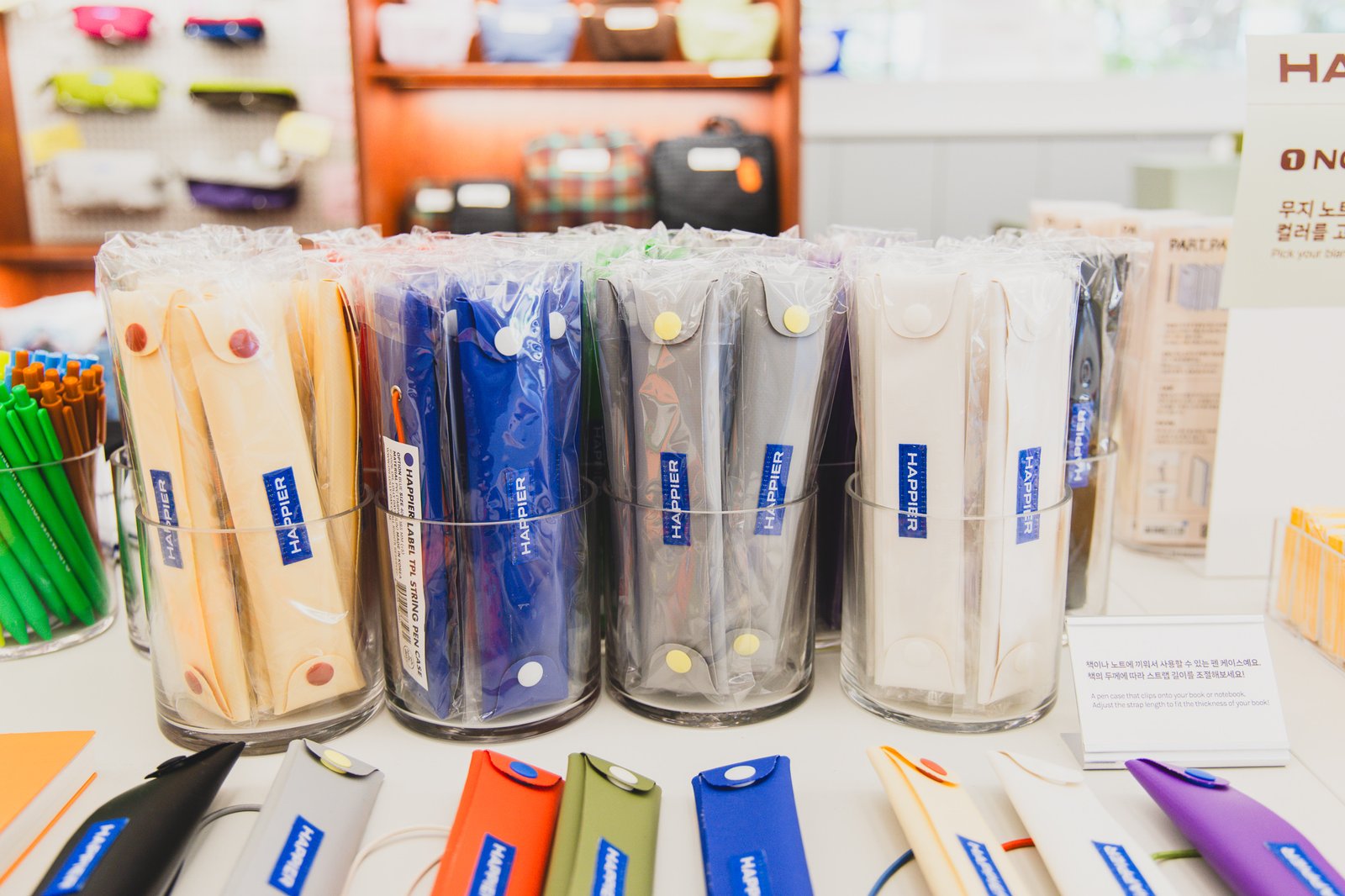
I hadn’t planned on buying anything until I got about halfway through the store and stopped in front of this pen case display.
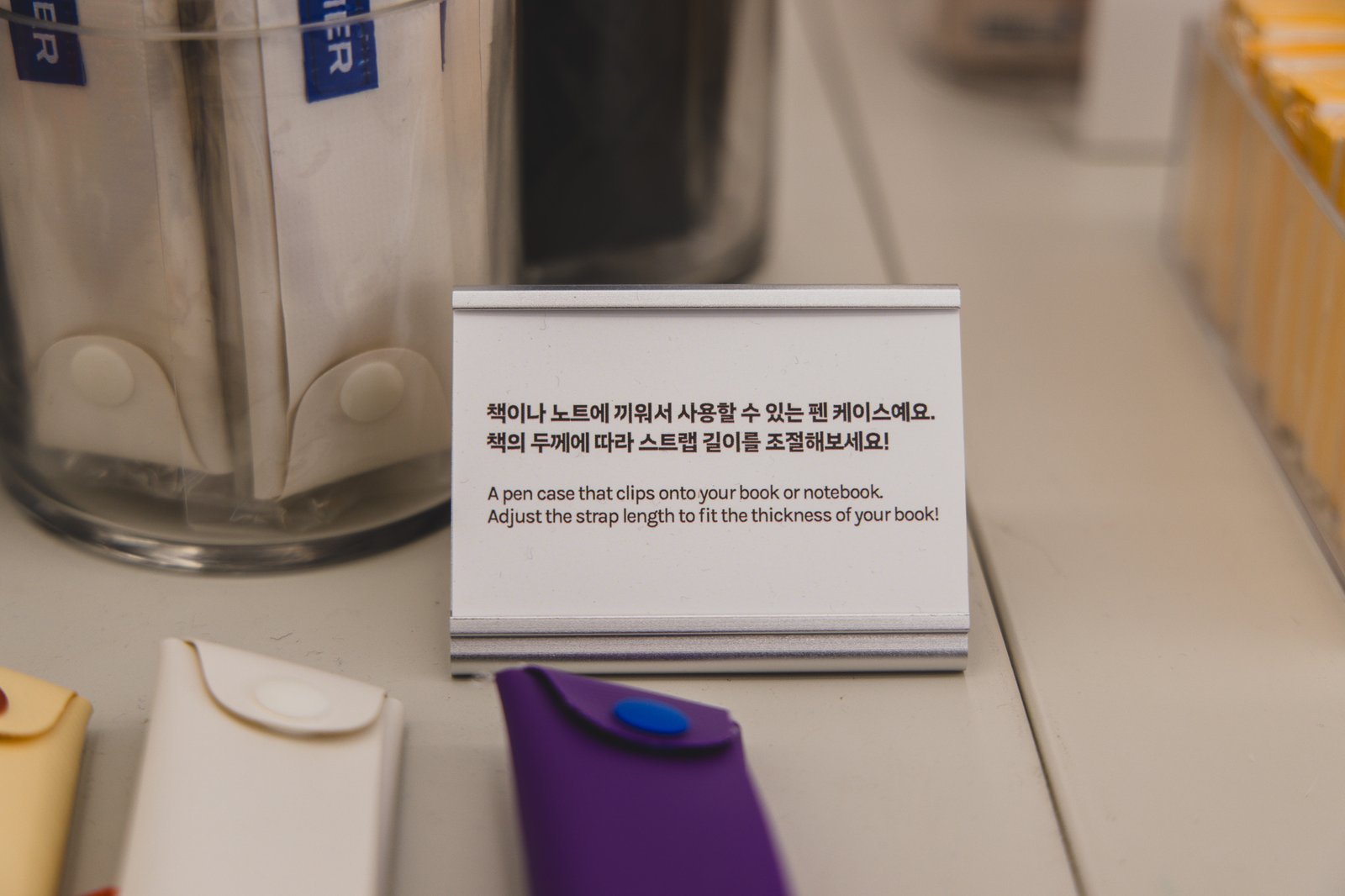
The idea is simple but genuinely useful: the case straps directly onto a book or notebook cover, and the strap length adjusts to fit anything from a thin notebook to a thick paperback. If you’re someone who reads with the intention of taking notes but never actually has a pen on hand when the moment hits, this solves that specific problem — the pen is physically attached to the book, so it’s never missing.
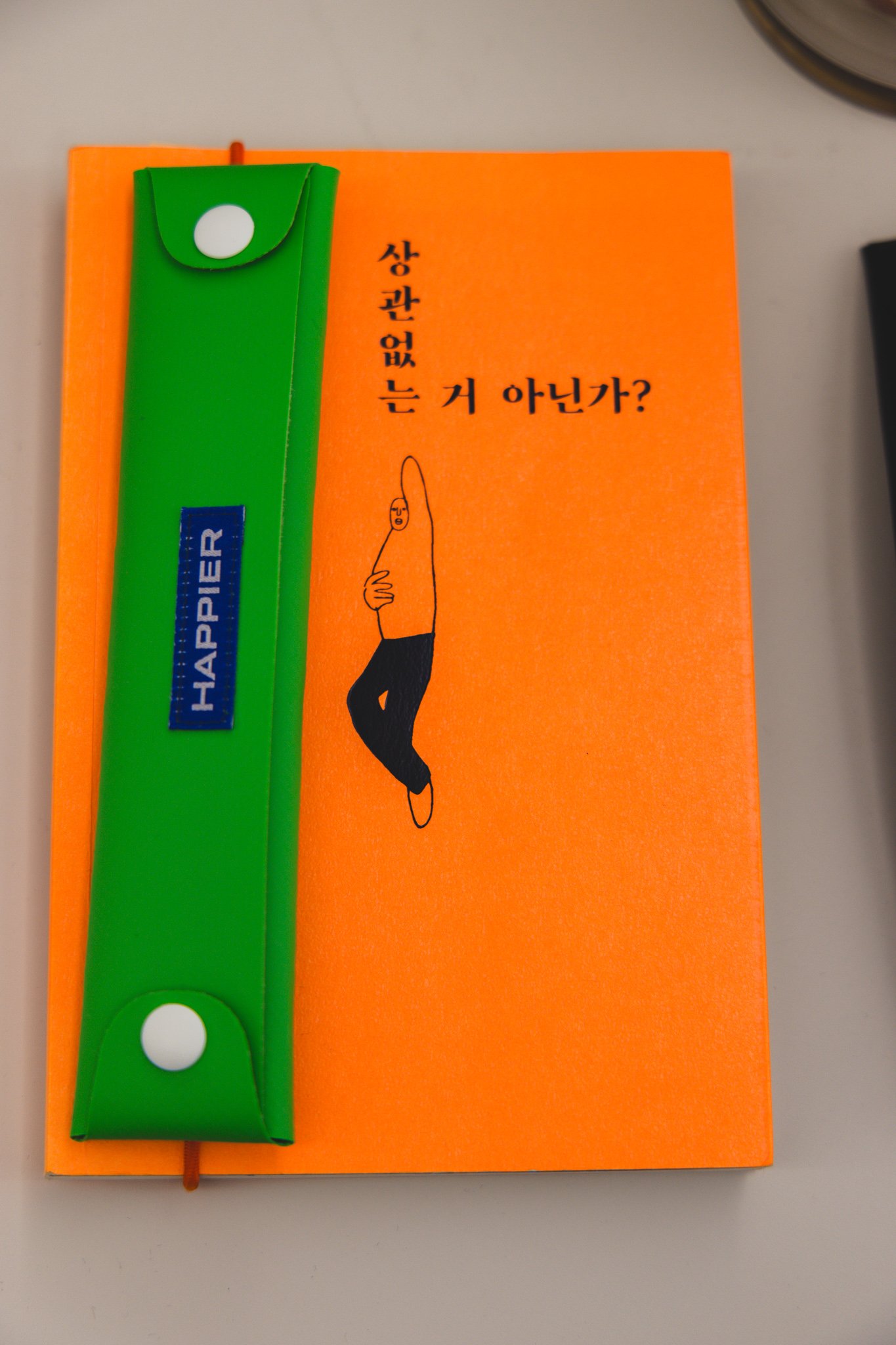
I picked up an orange notebook and a green pen case and tried it out once I got home. Two snap buttons hold it firmly in place, with no wobble or risk of it sliding off, and you can pull the pen out and start writing without fully opening the book. It’s a small design detail, but it solves a real annoyance.
Pouches and Small Living Goods
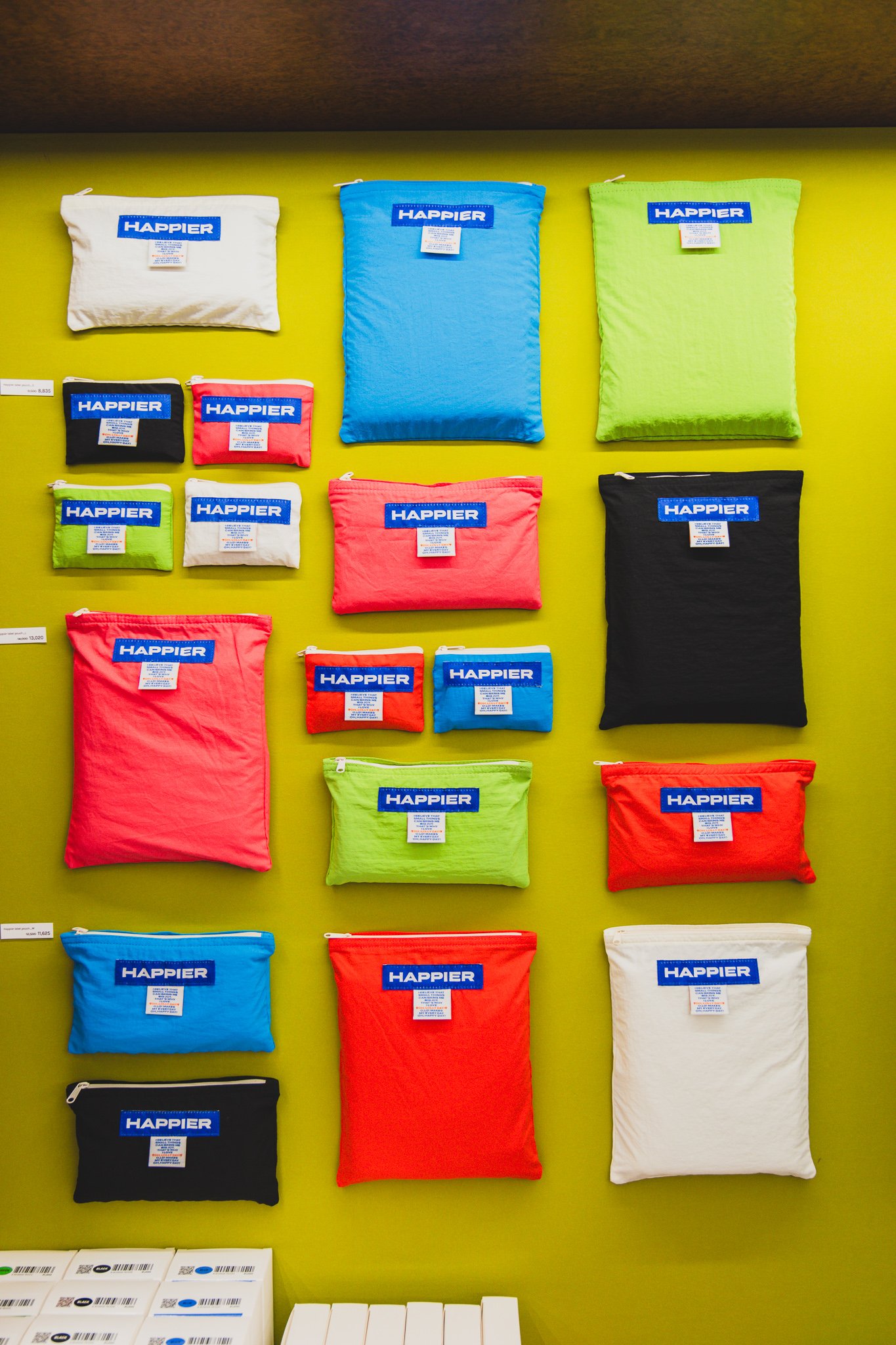
An entire wall is dedicated to pouches, in enough size and color combinations that it’s genuinely eye-catching from across the room — mostly bold primary colors like red, blue, and lime.
What I liked here is that the sizing is explained by actual use case rather than just dimensions — small for things like lip balm or a mini perfume, medium for makeup brushes or pens, large for bulkier items like hair rollers. It’s a small thing, but it means you’re shopping by scenario instead of guessing.
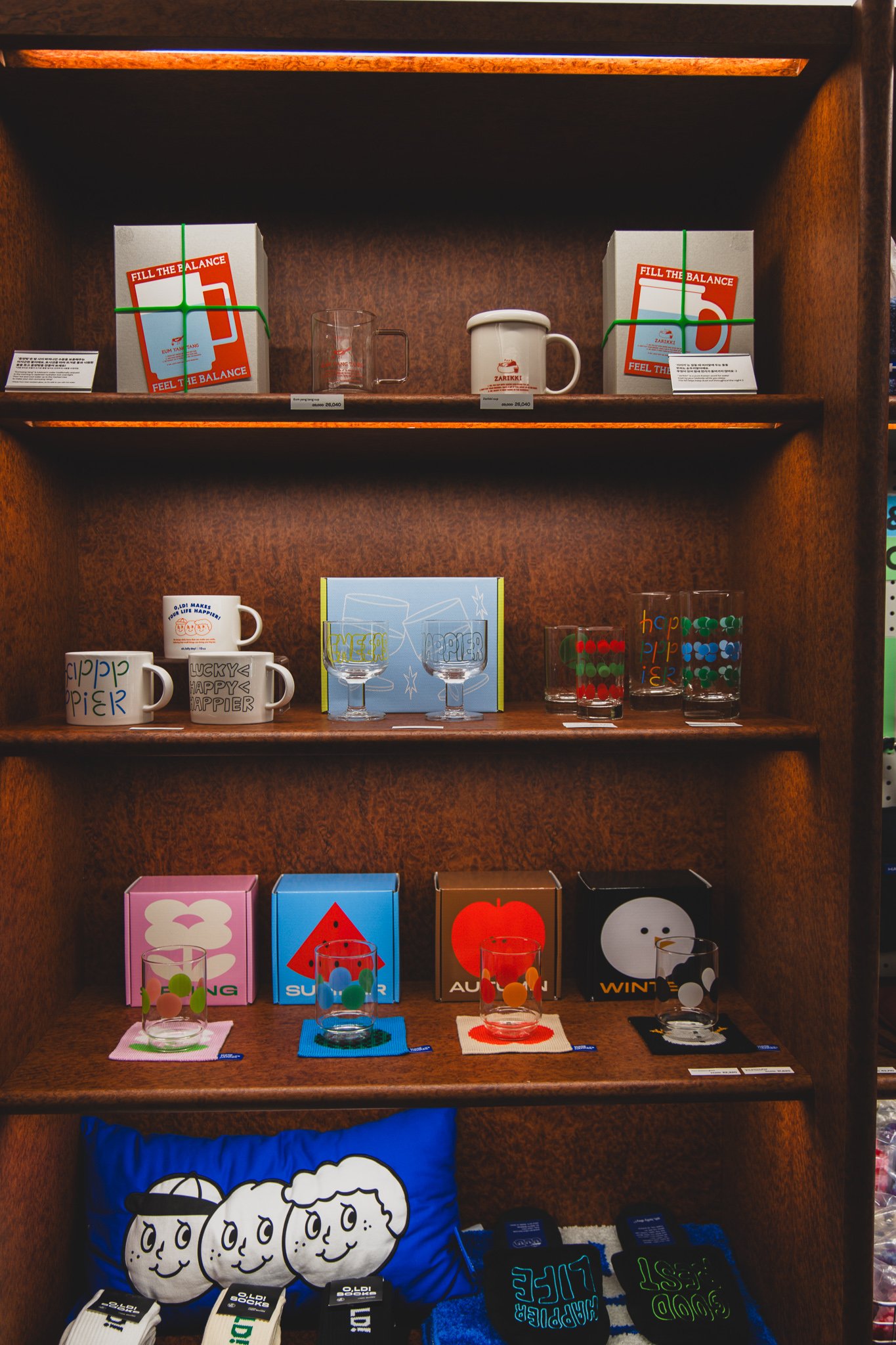
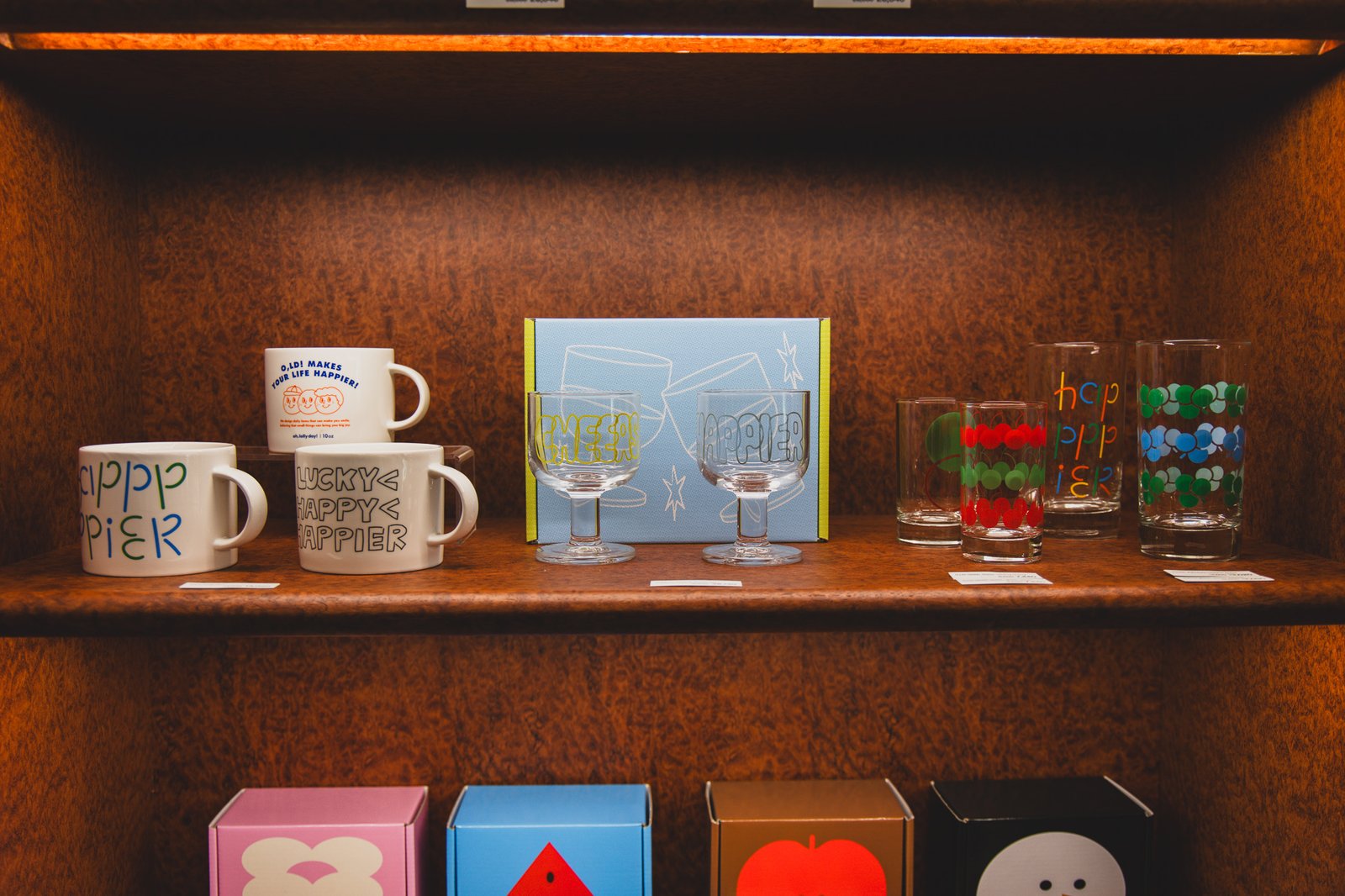
There’s also a small selection of home goods — mugs and glasses carrying the brand’s handwritten-style “Lucky Happy Happier” logo, a common move for stationery brands expanding into lifestyle goods.
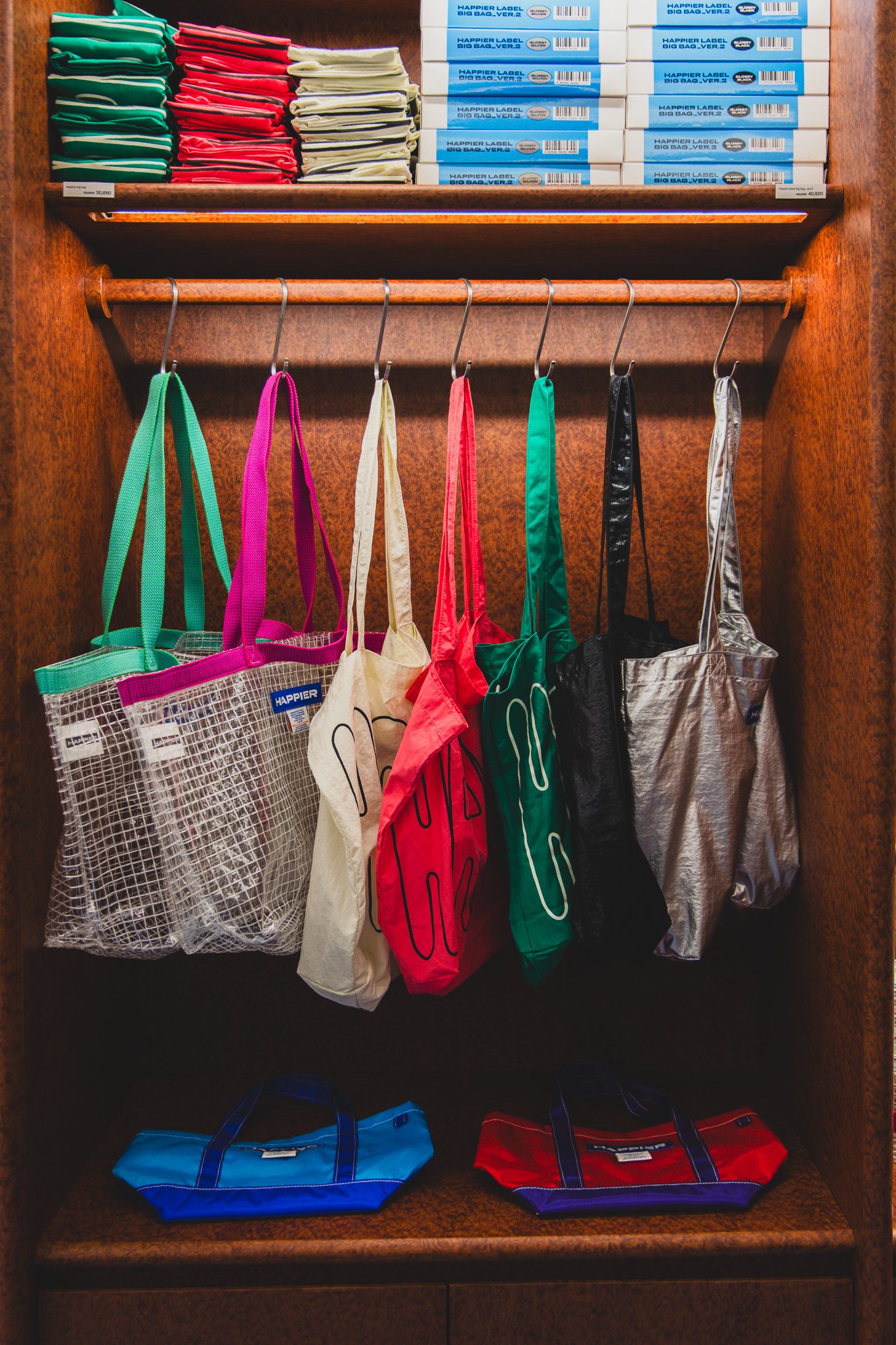
Tote bags and larger canvas bags round out the fabric goods, in a noticeably wide range of colors compared to most stationery brands that dabble in bags.
Cards, Stickers, and Small Gifts
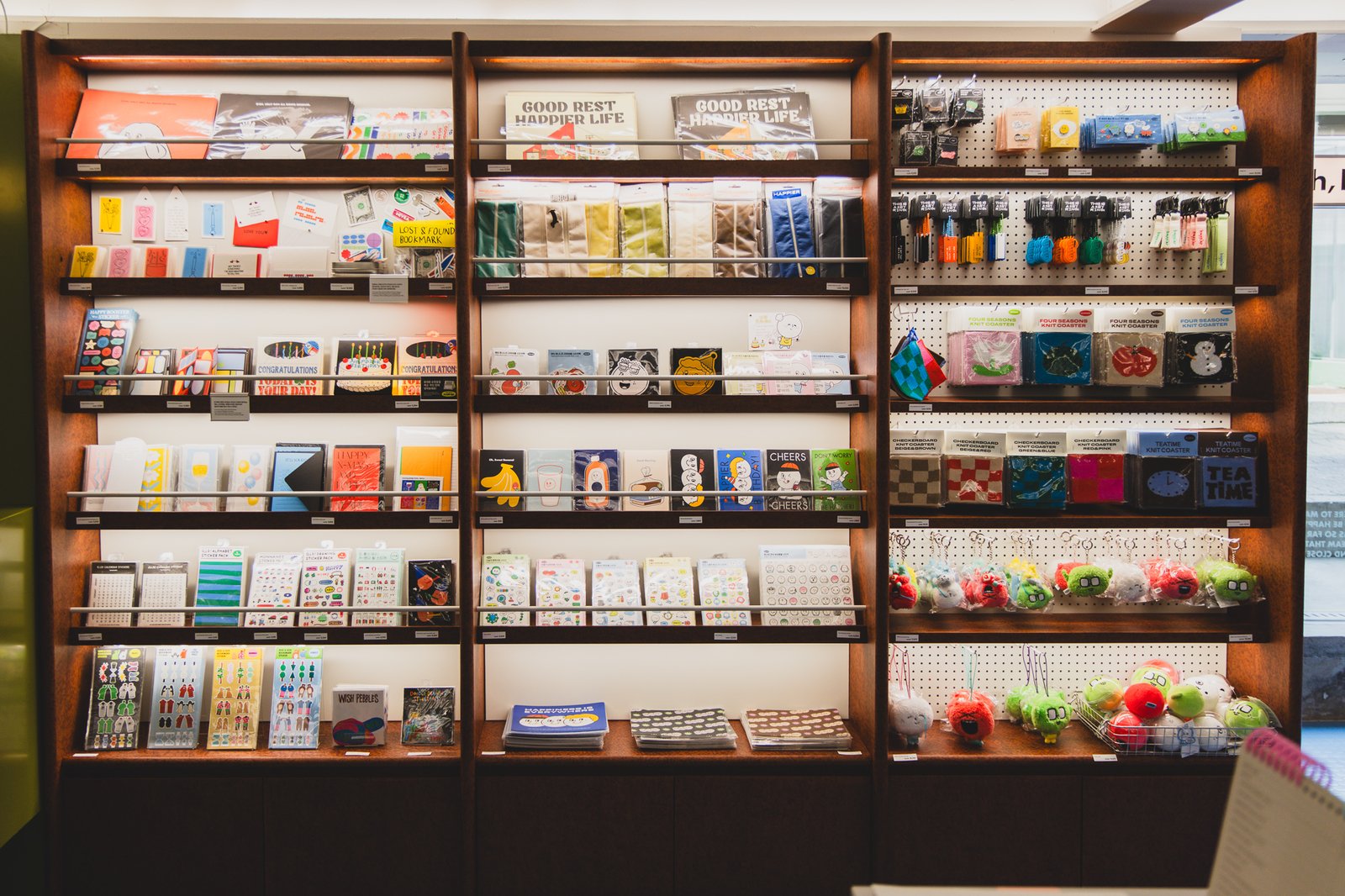
The checkout area is stacked with smaller, lower-priced items — cards, stickers, seasonal knit coasters, and character keyrings — the kind of impulse-buy zone you’d expect near any register.
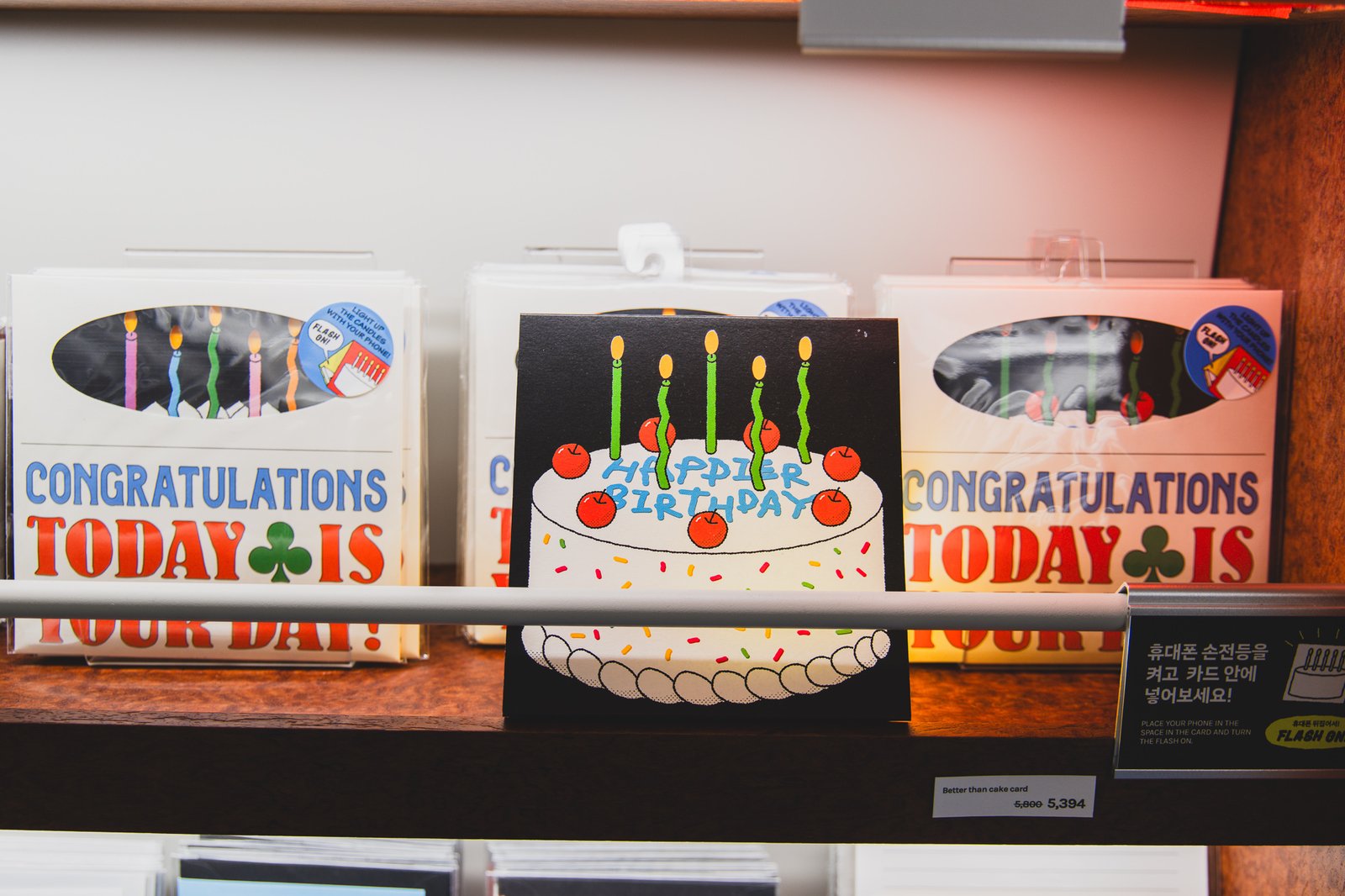
One birthday card has a built-in gimmick — hold your phone’s flashlight behind it, and a printed candle appears to light up. At roughly ₩5,000 (around $3.60), it’s pricier than a standard card, but that kind of interactive touch tends to make a gift card feel a lot more worth giving.
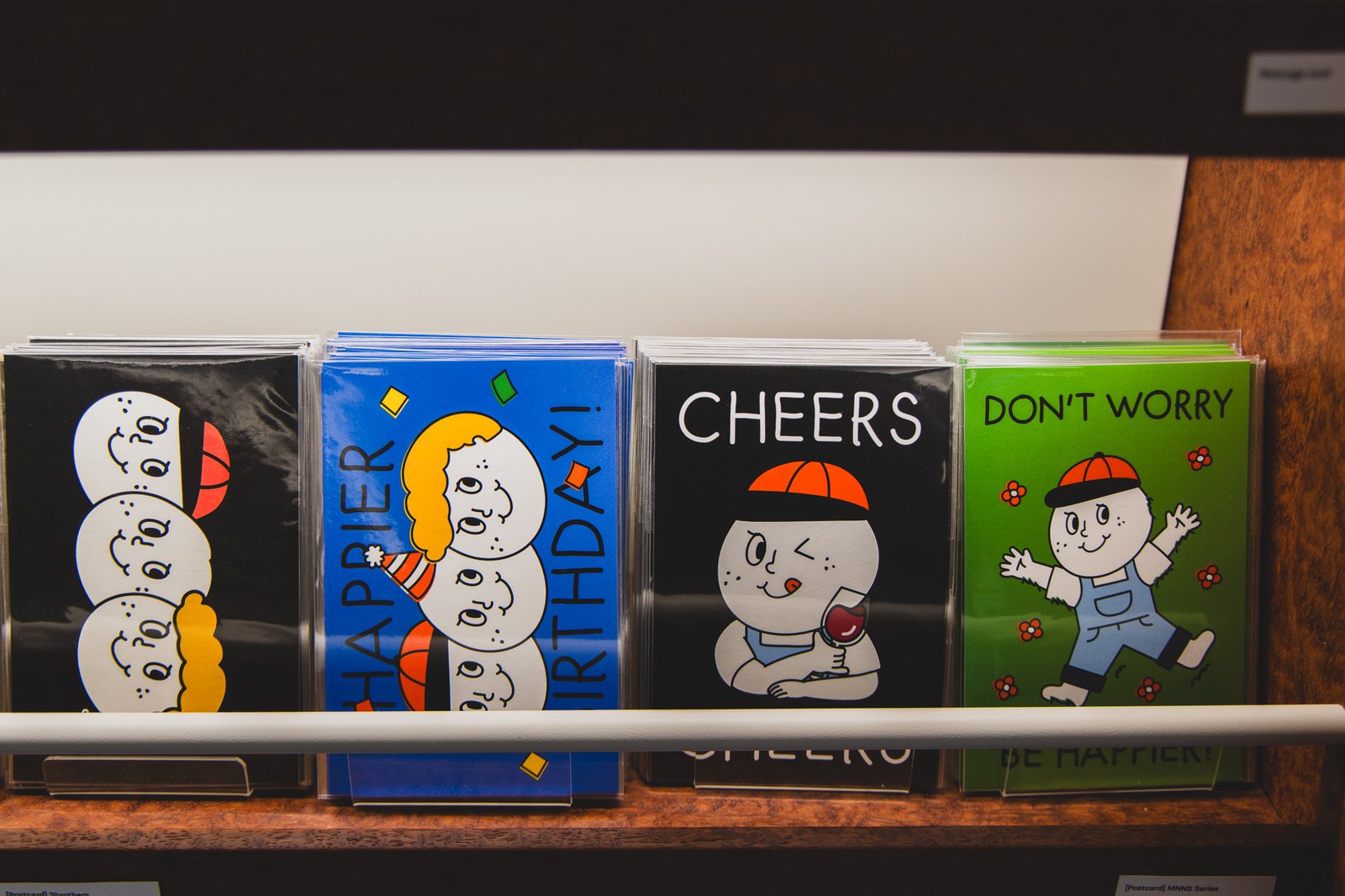
Every card in the series carries the brand’s round-faced mascot, so the brand identity stays recognizable no matter which specific card you pick up.
Practical Info
- Address: 18-11 Seoulsup 2-gil, Seongdong-gu, Seoul, 1F (Good Mood Building) — a short walk from Seoul Forest.
- Hours: 11:30 AM–7:30 PM daily.
- Parking: None on-site. If you’re driving, plan on a nearby paid public lot.
- Getting there: The store is on the Seoul Forest side of Seongsu-dong, within walking distance of Seoul Forest Station (Suin-Bundang Line) and Ttukseom Station (Line 2).
- Nearby: If you’re making a day of it, Seoul Forest itself and the rest of Seongsu-dong’s cafes and pop-ups are all within a short walk.
FAQ
Q: Is this the brand’s only store in Seoul?
A: No — Oh, Lolly Day has had a presence in Seongsu-dong for years, and this Seoul Forest location is a newer, quieter addition to the area rather than the brand’s only shop. If you’ve seen an older Yeonmujang-gil address listed elsewhere, it’s worth double-checking directly with the brand, since Seongsu’s retail map changes often.
Q: Is it worth visiting if I’m not into stationery?
A: It’s a nice stop even for casual browsing — the building itself (shared with a soft-serve shop and a wellness studio) has a cohesive, calming feel that’s worth a look regardless of whether you buy anything.
Q: How does this compare to the Yeonmujang-gil pop-up strip?
A: It’s a different kind of experience. Yeonmujang-gil is dense with fast-rotating pop-ups and can feel overwhelming; this store is a single, permanent brand in a quieter setting, better suited to actually taking your time.
Q: Do I need cash, or do they take foreign cards?
A: Standard Korean retail card terminals accept international Visa/Mastercard in most cases, but it’s always smart to carry some cash as backup for smaller independent shops in Korea.
Q: Is there English signage?
A: Product names and some signage are in English or bilingual, but most explanatory cards are in Korean. It’s a browsing-friendly store even without reading Korean — the products are visual and self-explanatory.
Bottom Line
If you’re doing the rounds of Seongsu’s pop-up stores and want a break from the crowds, Oh, Lolly Day’s Seoul Forest location is a good place to slow down for twenty minutes. It’s not flashy, and it’s not going anywhere next month — which, after a few hours on Yeonmujang-gil, is honestly part of the appeal.
This post is based on a personal visit in September 2026. Prices and hours are current as of the visit but may change — worth a quick check before you go.