TL;DR: Rakhian is a hwagyo (ethnic Chinese-Korean) restaurant in Yeouido’s One Sentinel building, near IFC Mall, now run by the third generation of the same family on recipes dating to 1945. It’s open daily 11:00–22:00. The printed menu covers classics like black pepper tenderloin and an eight-ingredient cold appetizer platter, while off-menu seasonal specials — a whole-crab spicy noodle soup on this visit — rotate in on top of it. Free basement parking is available, and booking ahead through CatchTable or Tabling is worth doing if you want a specific time.
I went back to Rakhian a second time, and that alone tells you something. A group of us had wrapped up work in Yeouido and needed a dinner spot with zero risk of disappointing anyone — the kind of pick you make for a reunion with people you haven’t seen in a while, not a place you’re testing out. Yeouido is dense with company dinner restaurants competing for the same crowd, and Rakhian had already earned a repeat visit from an earlier trip, so it was the easy call.
Quick info
- Where: One Sentinel, 2F, 70 Yeouidaero, Yeongdeungpo-gu, Seoul (near IFC Mall)
- Hours: Daily, 11:00–22:00
- Parking: Free, in the building’s basement lot
- Price range: Dumplings and noodle dishes 10,000–17,000 KRW; specialty plates 39,000–79,000 KRW
- Reservations: Available via CatchTable and Tabling — recommended, it fills up
A hwagyo restaurant, three generations in
Hwagyo refers to Korea’s ethnic Chinese community, many of whom trace their roots to Chinese immigrants who settled in Korea generations ago and built a food culture that’s genuinely distinct from both mainland Chinese cooking and the sweet-and-sour-pork version of “Chinese food” most visitors picture. Rakhian is run by the third generation of one such family, working from recipes the restaurant has used since 1945, and the signage doesn’t let you forget it.
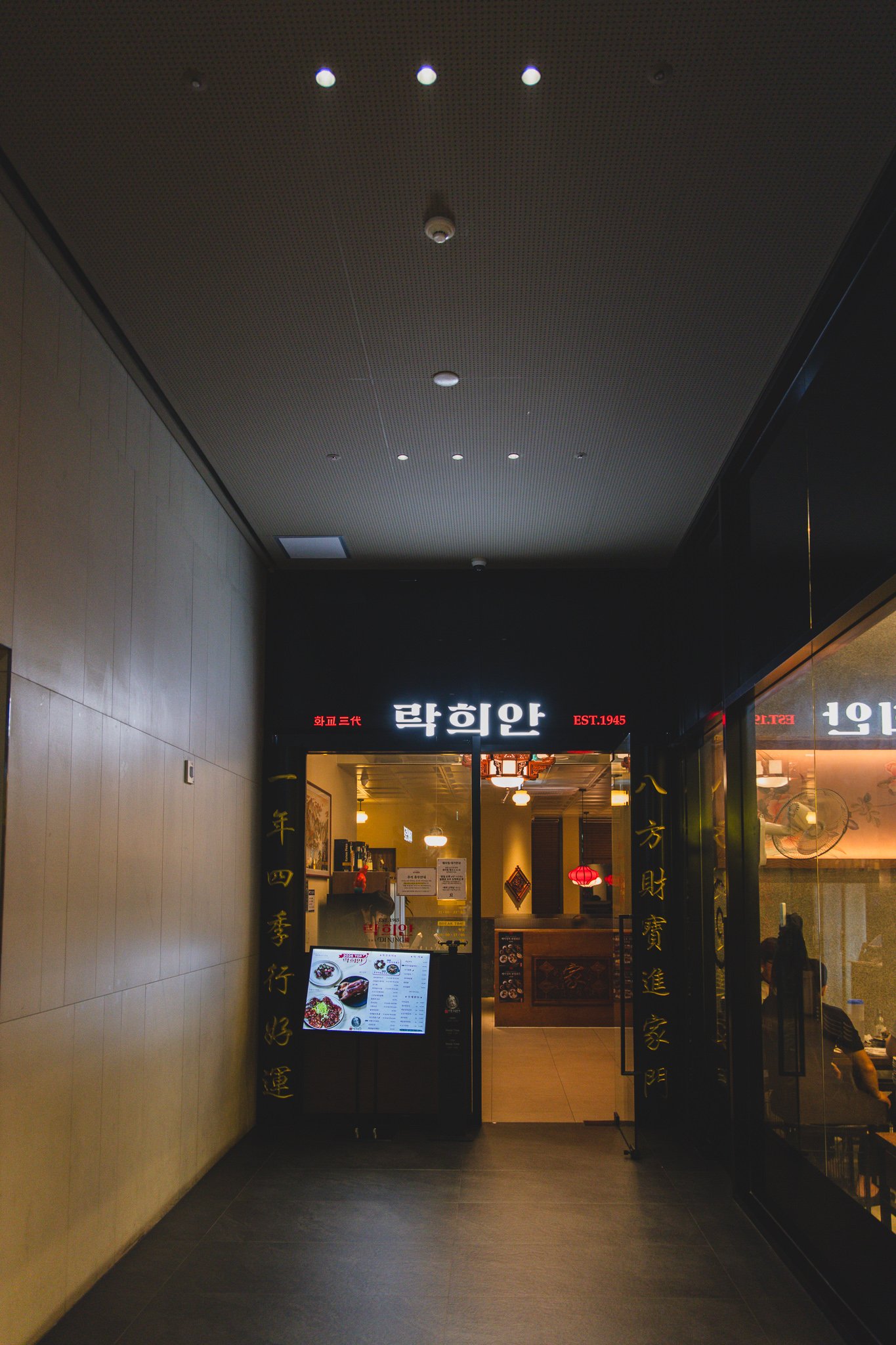
At the end of the hallway leading in, a glowing sign spells out “화교三代” (“hwagyo, third generation”) next to “EST. 1945” — the restaurant stating its own thesis before you’ve even walked through the door.
Inside: red lanterns and a full house on a weeknight
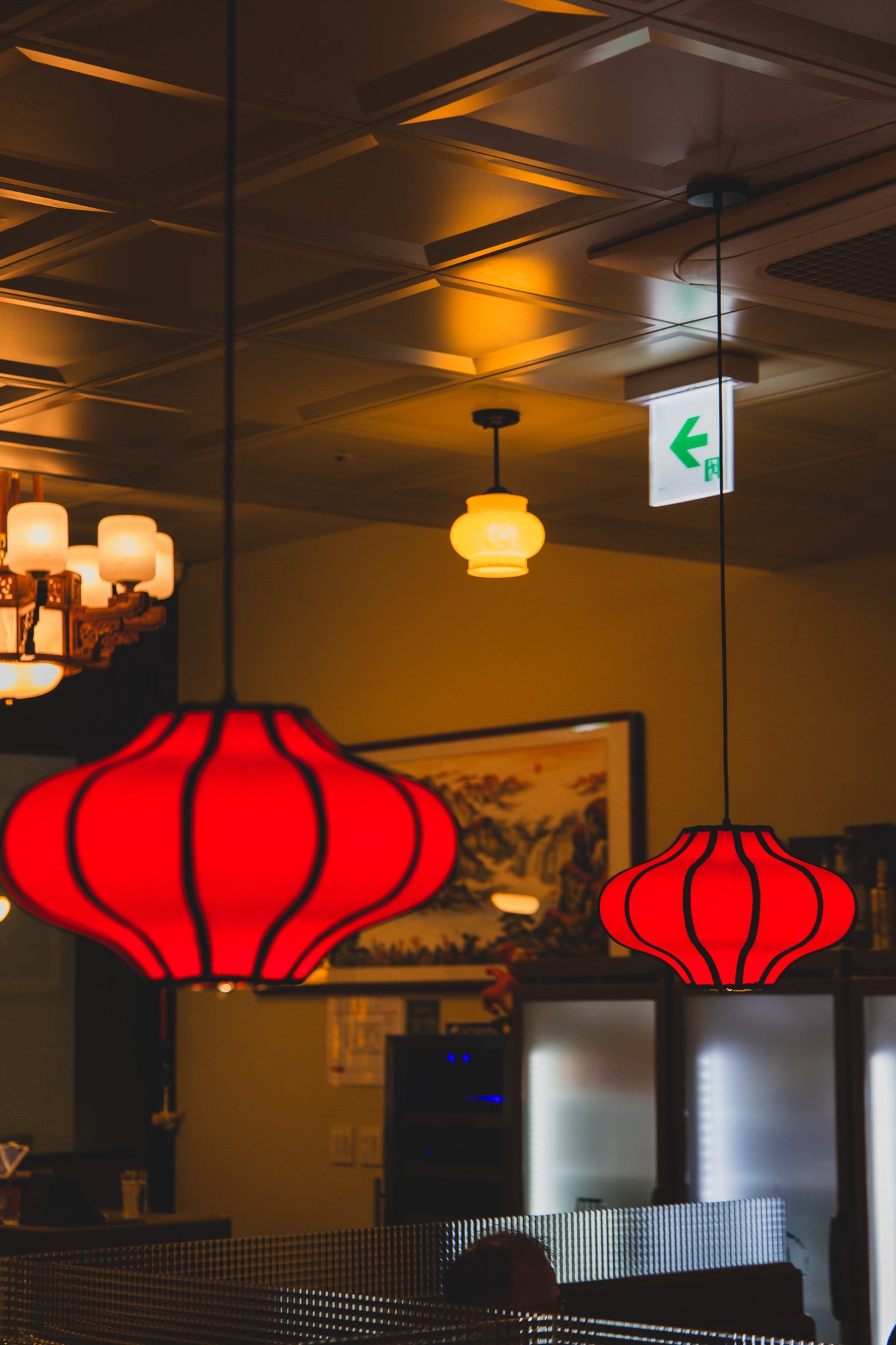
Past the entrance, the dining room leans into its own theme without tipping into kitsch — rows of red paper lanterns, gold lattice panels on the walls, and a framed landscape painting that could have come from any hwagyo restaurant of this vintage.
We were seated in a window booth, which turned out to be the better half of the room — floor-to-ceiling glass looking out over the Yeouido skyline at night, which makes the space feel more like an occasion than a quick group dinner.
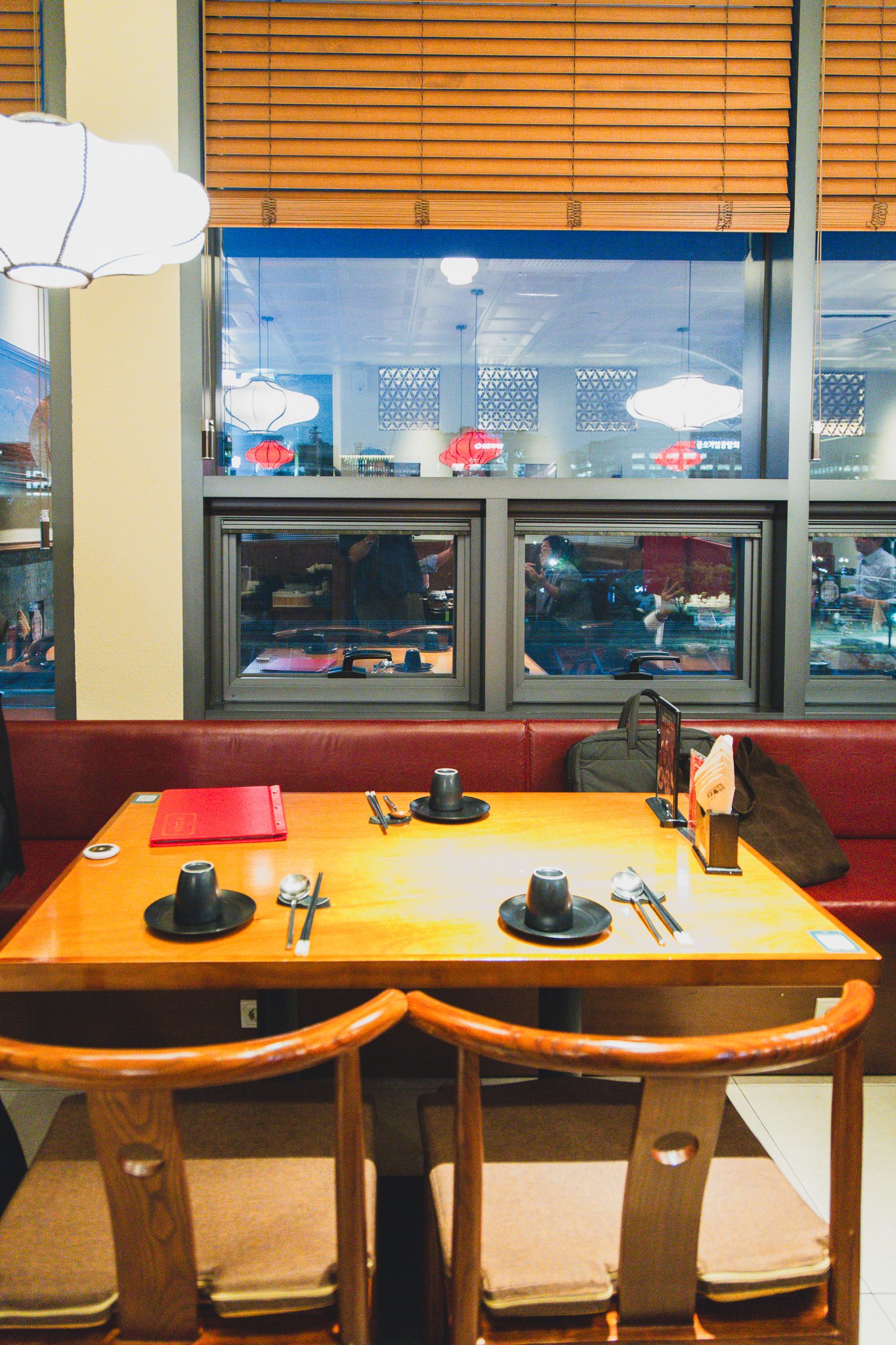
Even on a weekday evening, the dining room was close to full — a reasonable proxy for how the restaurant is actually doing with a local audience rather than just tourists passing through.
The menu: printed classics, plus specials that aren’t on it
The table menu opens with a “2026 TOP 3” callout — eohyang eggplant shrimp and baby octopus hot-stone jjajang lead the list — alongside a full roster of specialty plates: black pepper tenderloin (65,000 KRW), an eight-ingredient cold appetizer called palsaek-yangjangpi (39,000 KRW for a small), and jeonga-bok, a mixed seafood dish (79,000 KRW). Whatever you order off this printed menu, it’s hard to go wrong.
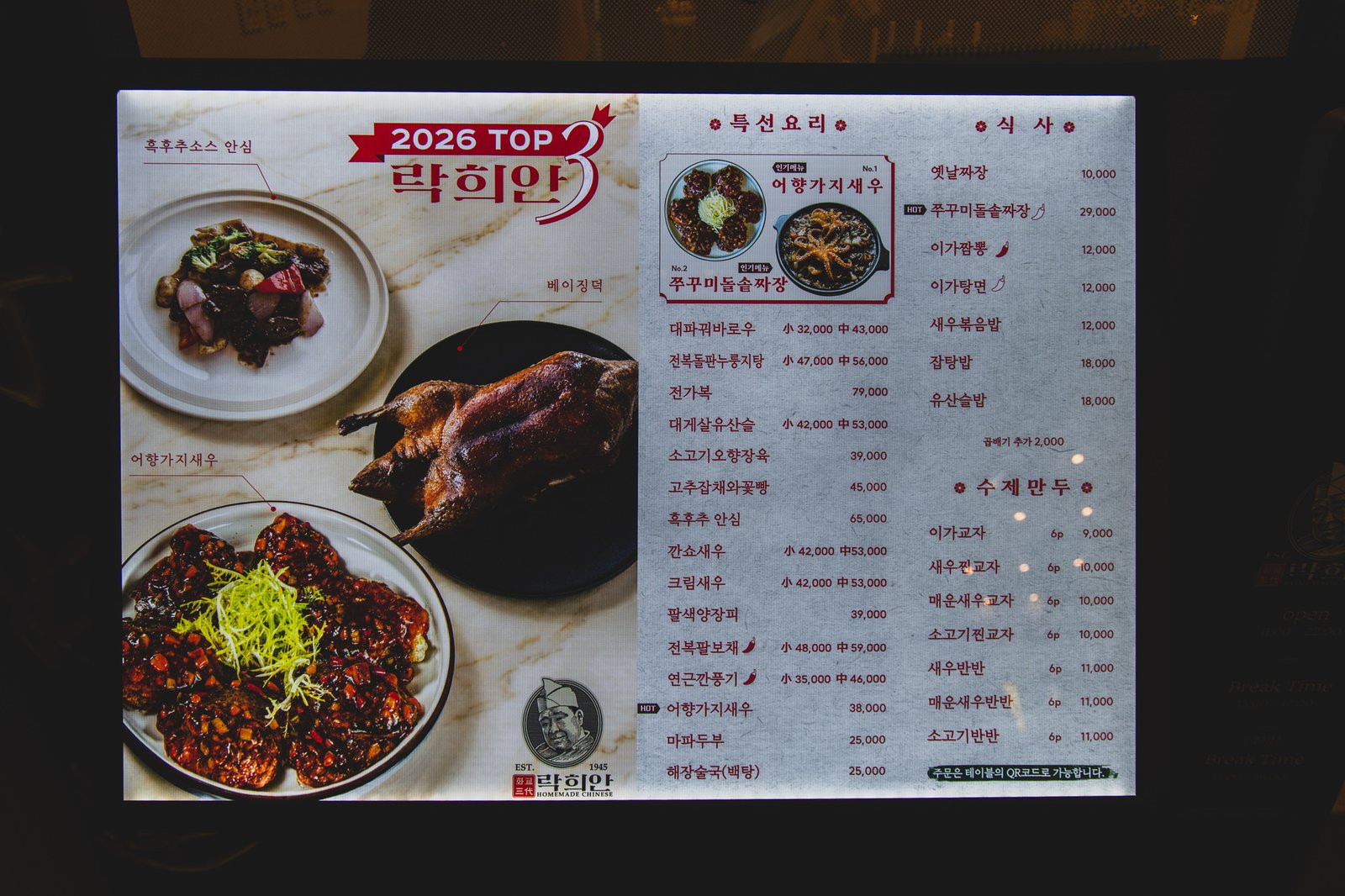
What we actually ordered that night, though, included two dishes that weren’t on this menu at all: a whole-crab spicy noodle soup and a pork jowl black bean noodle. That’s the restaurant’s real differentiator — a base of 1945-era hwagyo recipes with rotating seasonal specials layered on top, so the printed menu is really only half the story. If a dish looks interesting on a banner or a table tent but isn’t on the laminated menu, ask — it’s probably a limited-run item worth trying while it’s around.
What we ordered
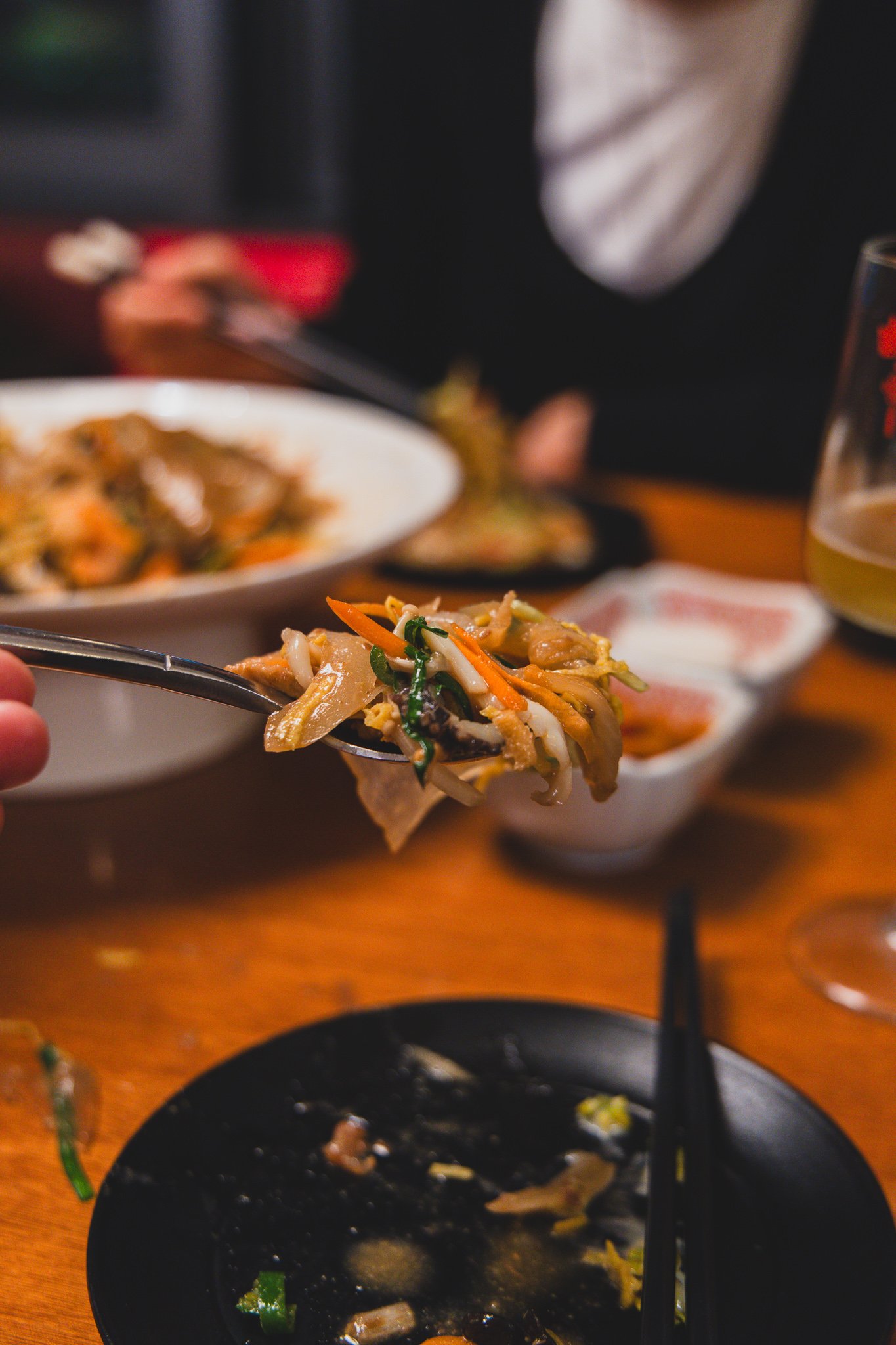
We went with pistachio shrimp, black pepper tenderloin, palsaek-yangjangpi, shrimp dumplings, and the two off-menu specials — a Seosan crab jjamppong and a pork jowl spicy jjajang — plus a round of Tsingtao on draft.
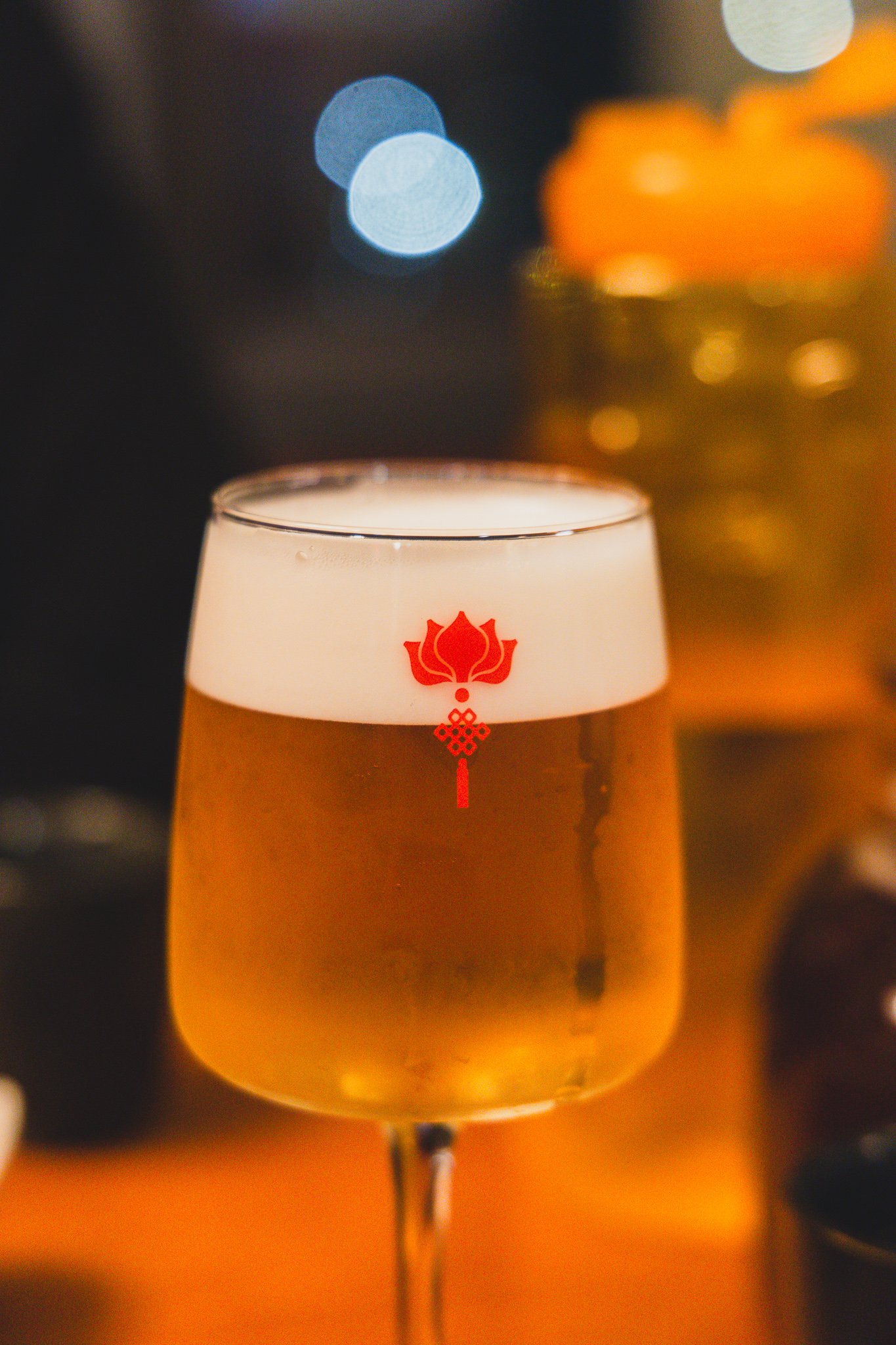
Tsingtao usually shows up bottled in Korea; draft is the less common version, and having it poured into a glass stamped with the restaurant’s own logo is a small detail that suggested some actual care went into the drinks menu, not just the food.
Pistachio shrimp
Whole shrimp, battered and fully coated in crushed pistachio before frying, arrived as six neat mounds on a long white platter.
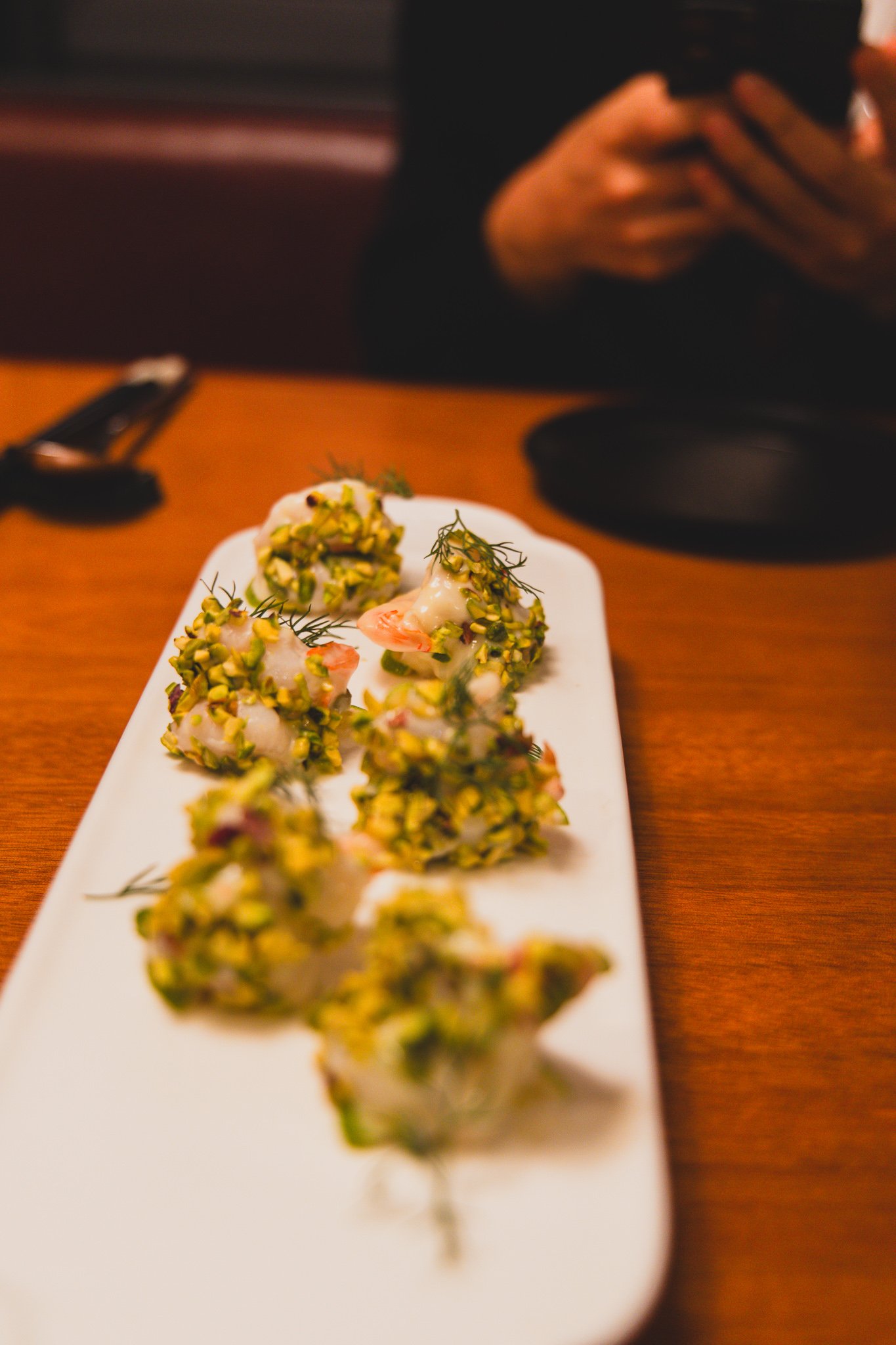
The nut coating gives it a crunch and toasted flavor that a standard candied walnut shrimp doesn’t have, and the shrimp itself stayed firm and snappy rather than mushy under the breading — a small technical detail that separates a kitchen that’s actually frying to order from one that isn’t.
Palsaek-yangjangpi
The name translates loosely to “eight-color mung bean jelly platter” — carrot, cucumber, mung bean starch sheets, jellyfish, smoked duck, and shrimp, arranged in color-blocked sections on one large plate, meant to be doused in mustard sauce and mixed together at the table.
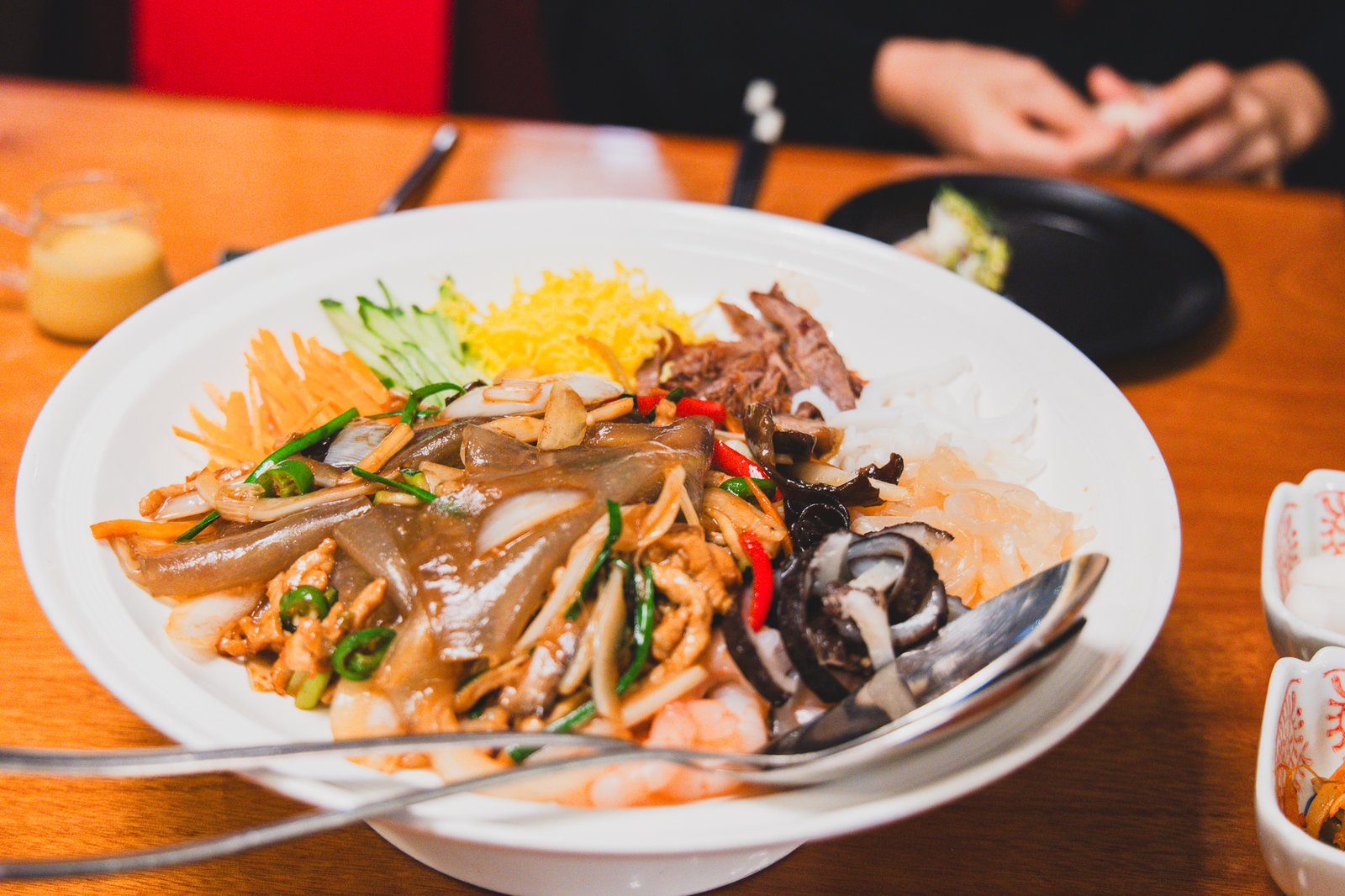
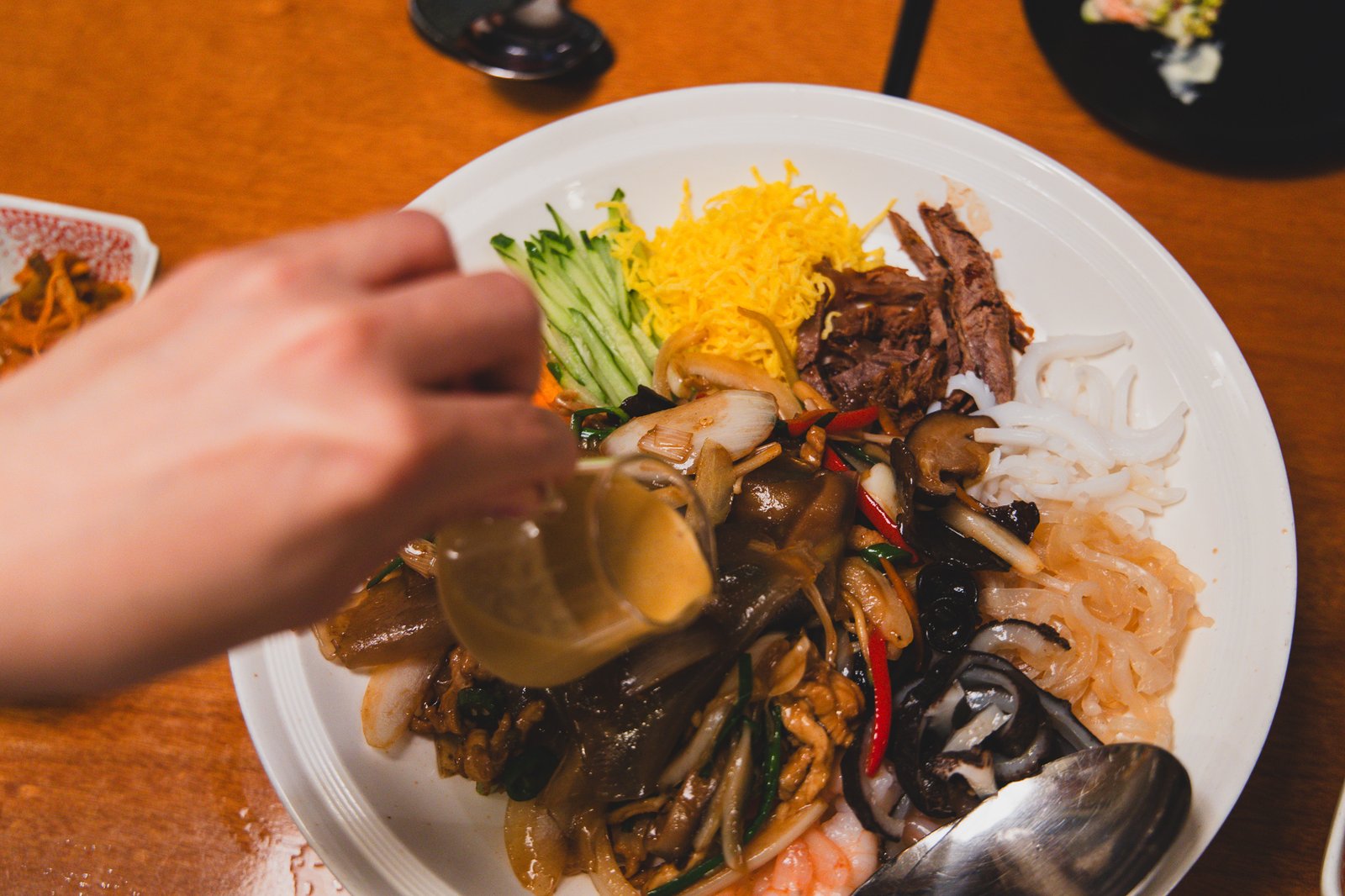
Once mixed, it’s a genuinely fun plate to eat — different textures showing up in almost every bite, from the snap of the julienned vegetables to the chew of the jellyfish and the softness of the starch sheets — and it’s built for a table of three or four sharing rather than eating solo.
Black pepper tenderloin
This one gets a small tableside moment: a server grinds whole black pepper directly over the dish right before it’s set down.
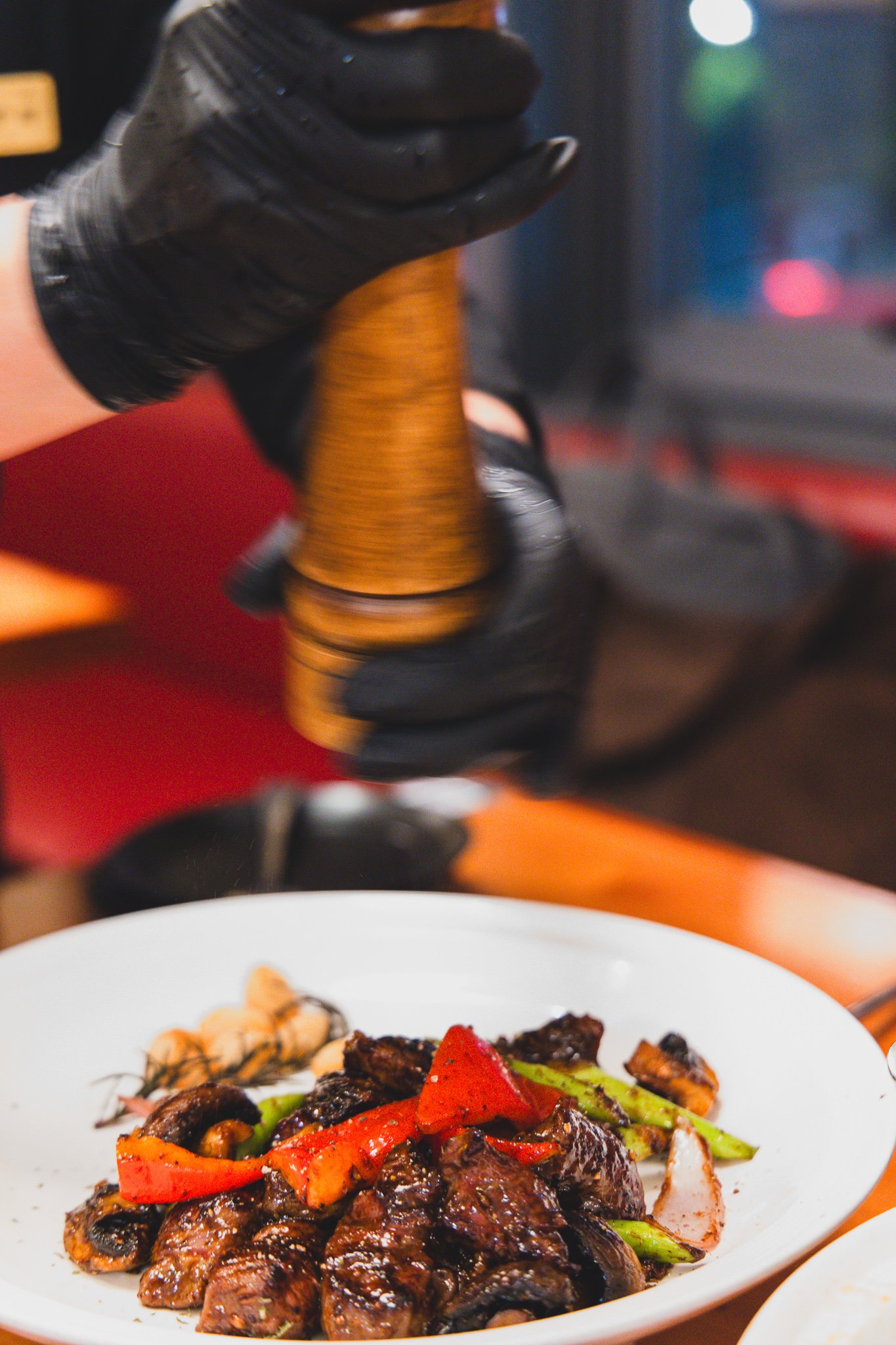
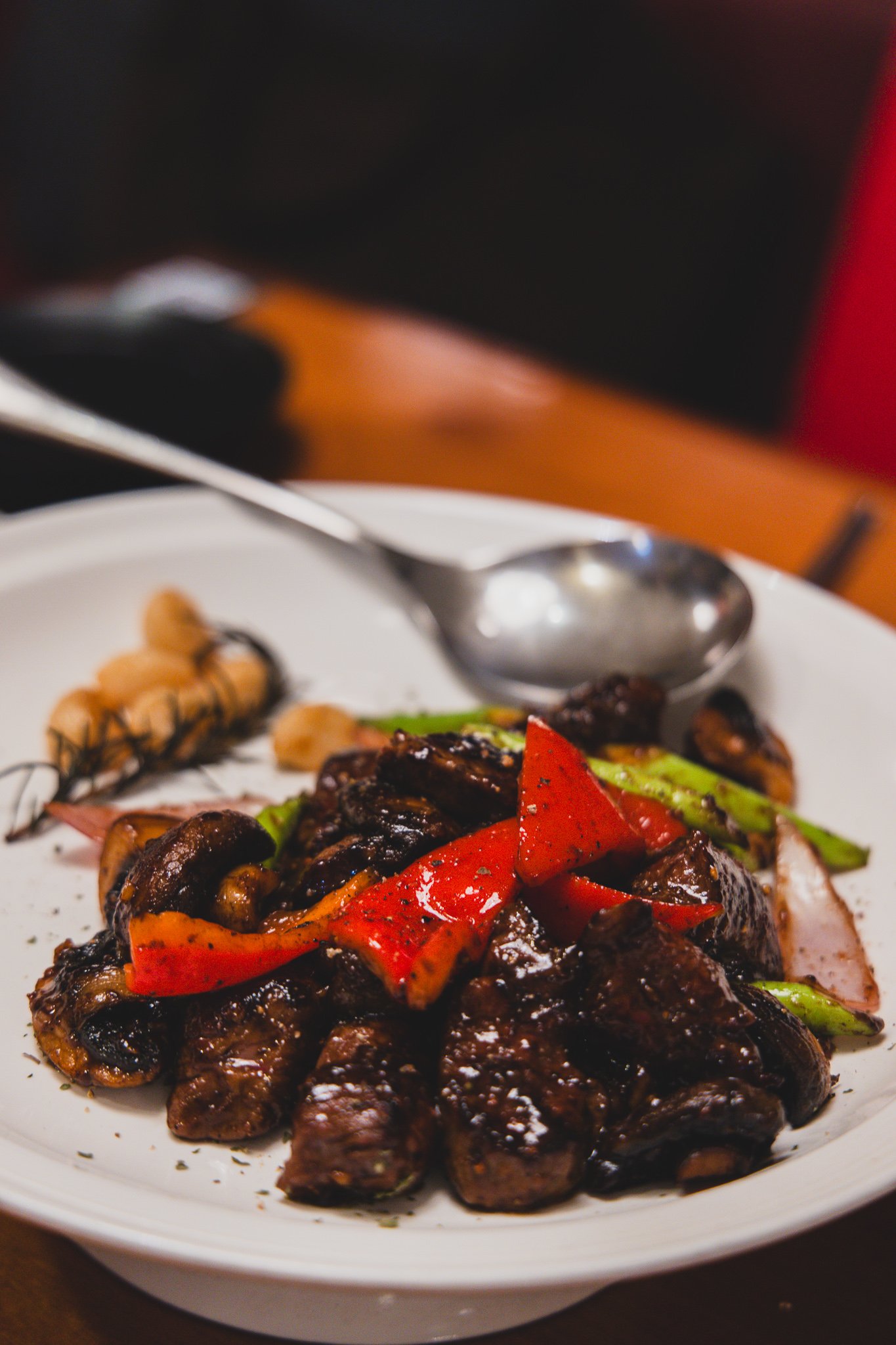
The beef itself came char-seared on the outside and tender inside, stir-fried with bell pepper, asparagus, onion, and mushroom in a sauce that leaned savory rather than sweet — pepper-forward without tipping into aggressively spicy, so it worked equally well as a drinking snack or a rice side.
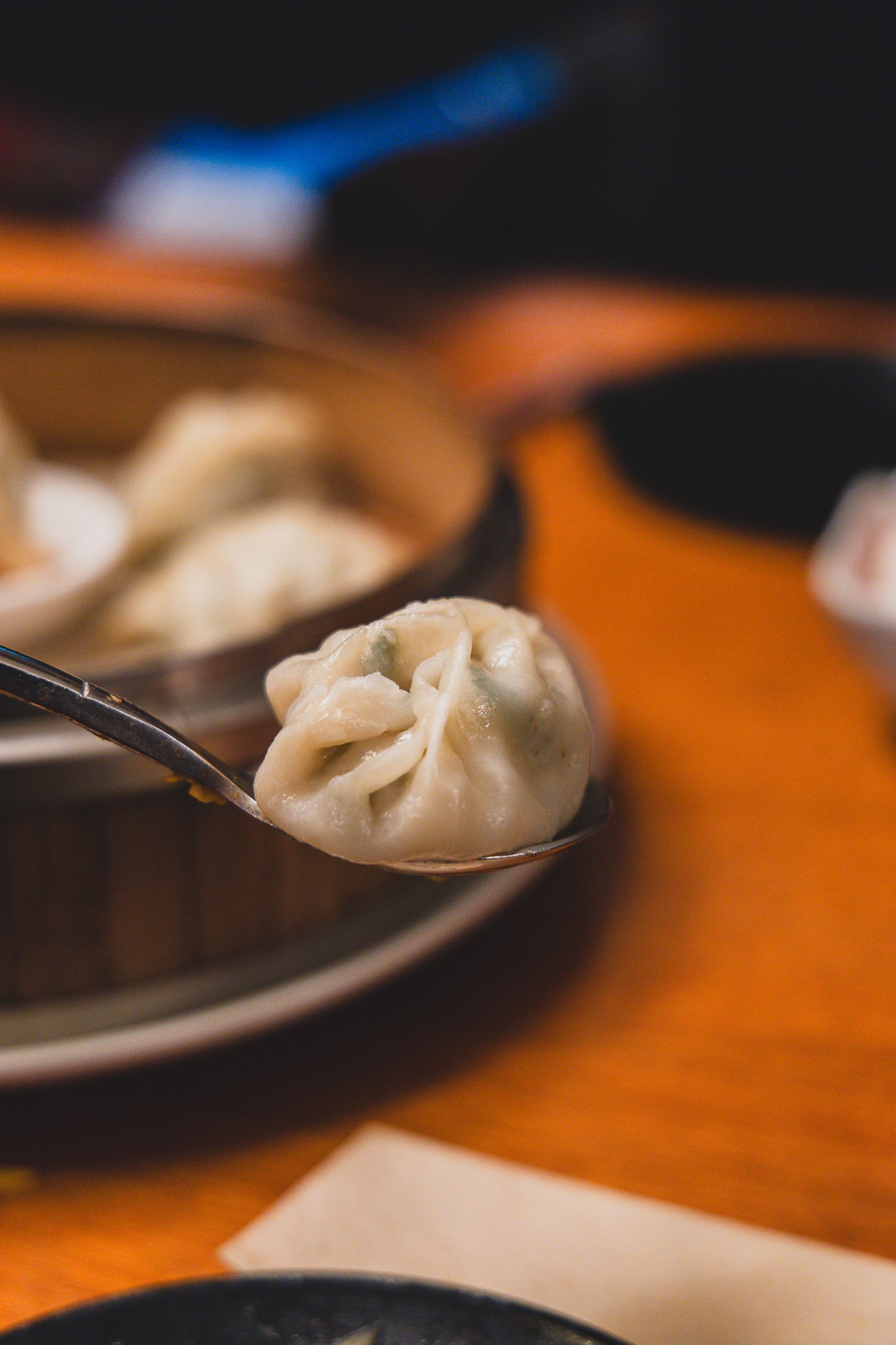
Shrimp steamed dumplings
A bamboo steamer of six dumplings, packed generously with whole shrimp rather than filler, came with a small dish of ginger-scented vinegar on the side.
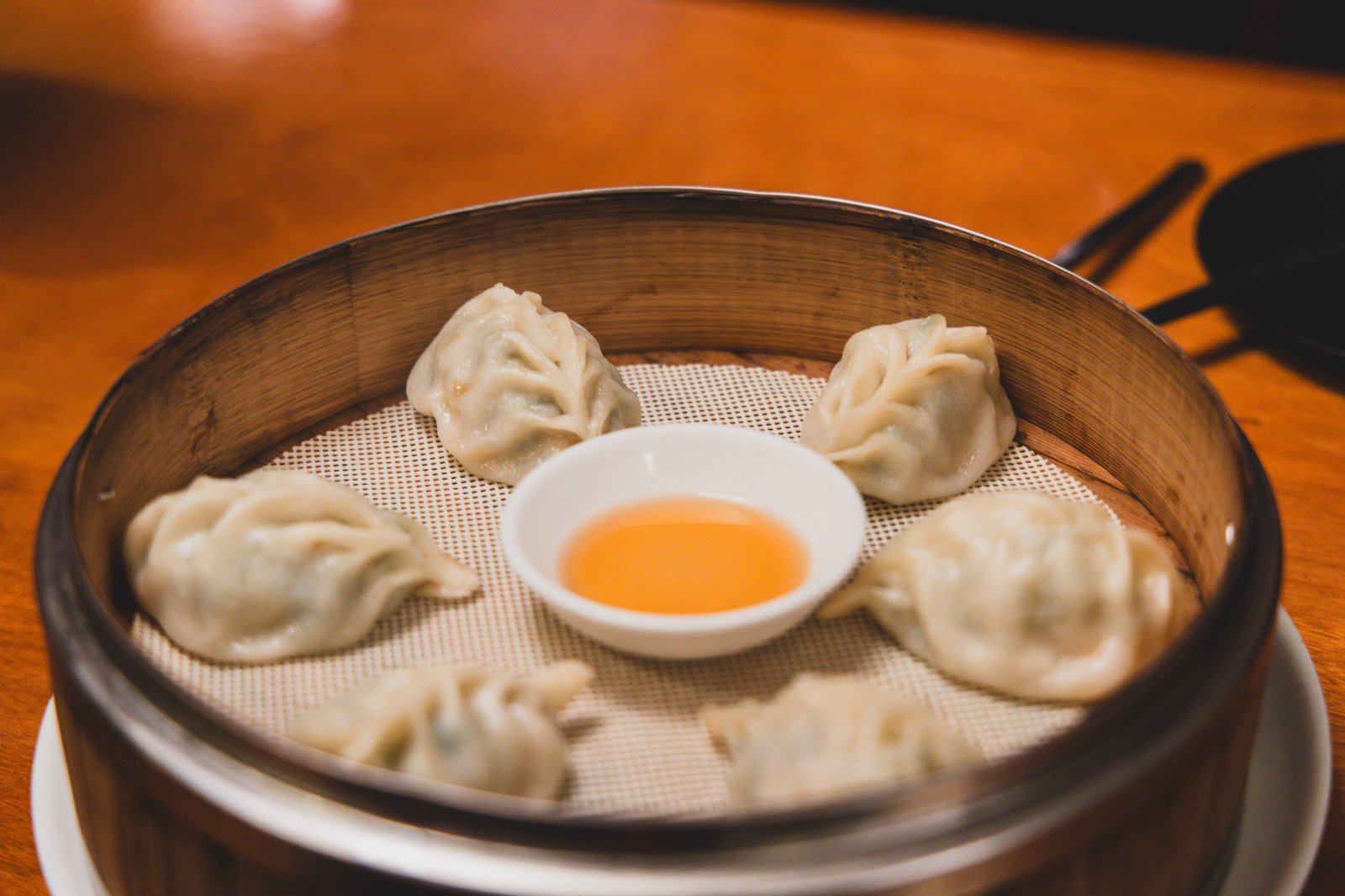
After the richer dishes on the table, this was the palate-cleanser of the meal — light, clean, and easy to keep going back to between bites of everything else.
Seosan crab jjamppong and pork jowl jjajang (the off-menu picks)
The two seasonal specials were the standouts of the night, and neither is on the laminated menu — ask for them by name if you’re visiting while they’re still running.
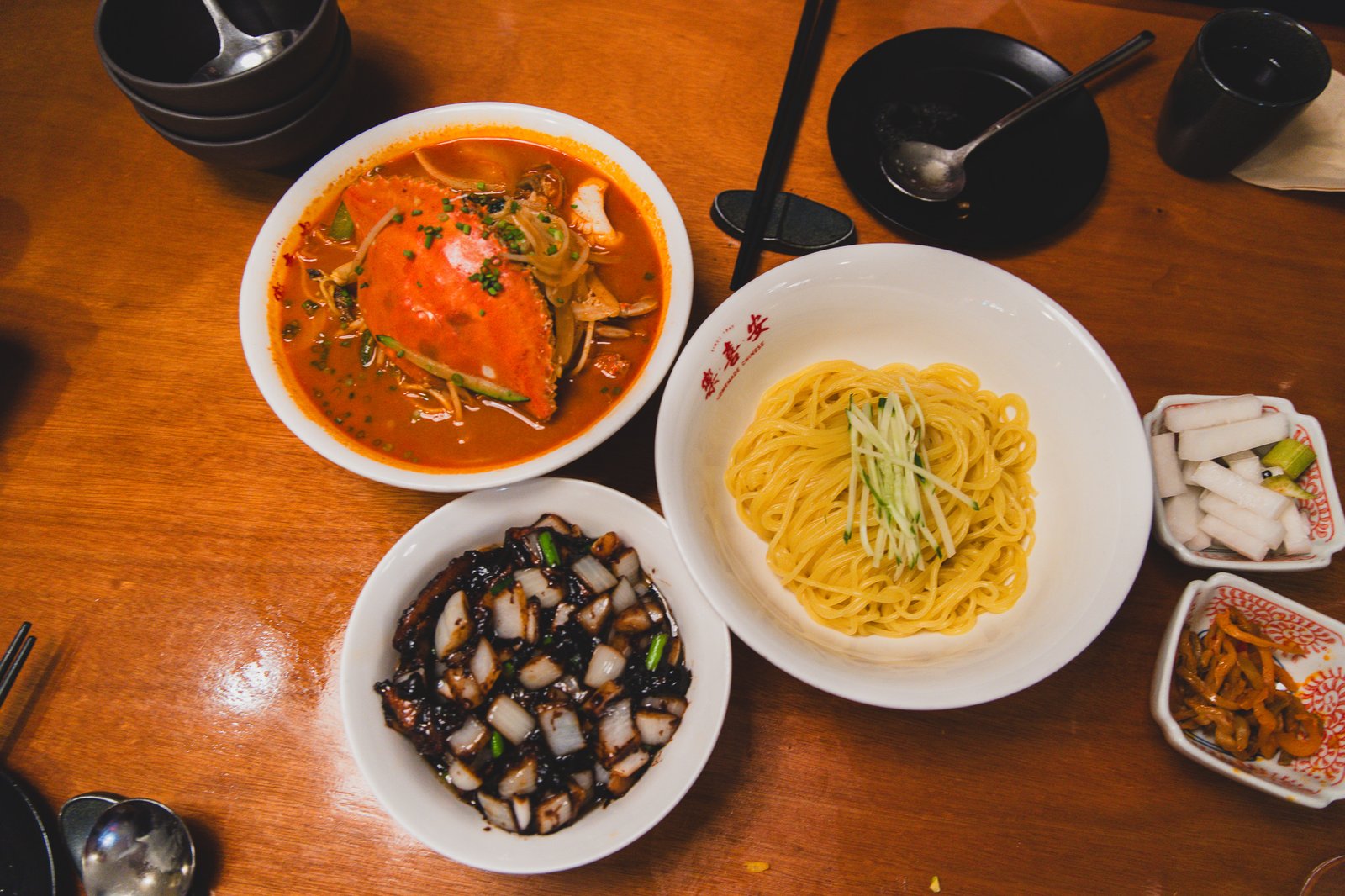
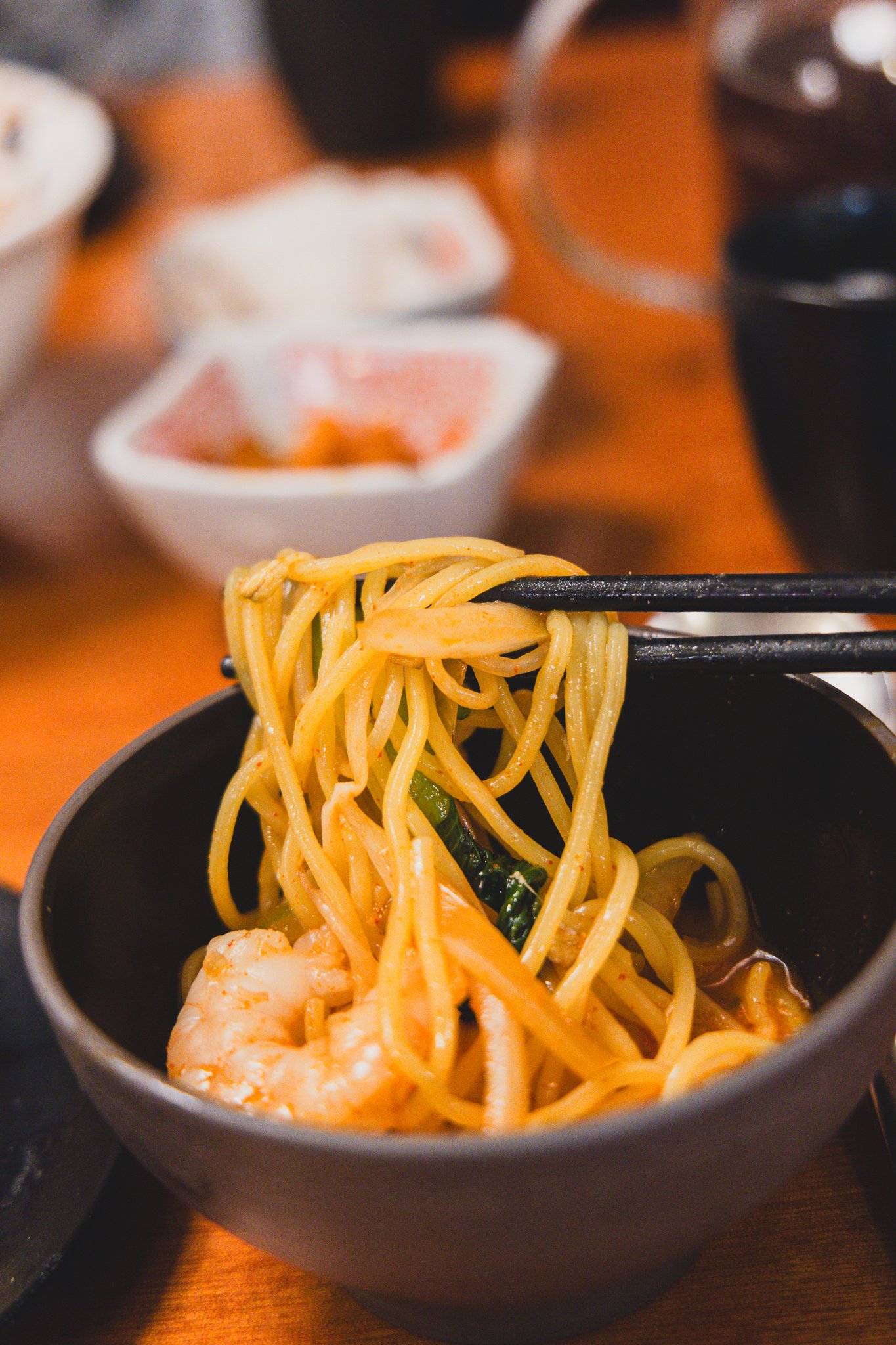
The Seosan crab jjamppong (17,000 KRW) arrives with a whole crab sitting in a deeply savory, spicy seafood broth — the kind of dish that’s as much about picking crab meat out of the shell as it is about the noodles underneath.
The pork jowl spicy jjajang (14,000 KRW) is served deconstructed — noodles and black bean sauce in separate bowls, mixed at the table — with large-cut pork jowl giving it a chewier, richer bite than a standard jjajangmyeon.
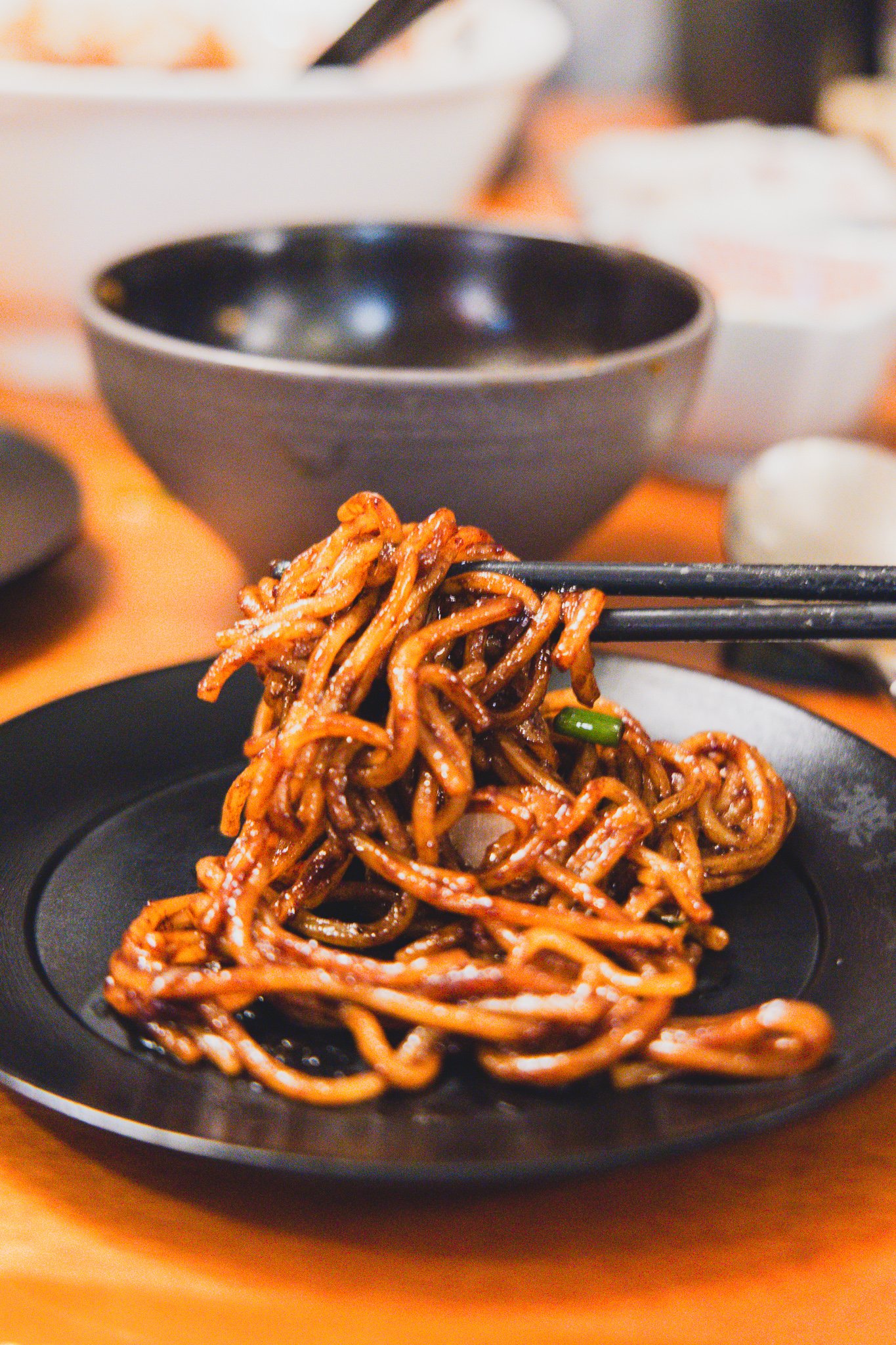
Both dishes read as noticeably more full-flavored than their standard-menu equivalents — which tracks with the idea that these seasonal items are where the kitchen is actually pushing itself, rather than just running the same 1945 recipes on autopilot.
FAQ
Q: Do I need a reservation?
A: Not strictly, but recommended — the dining room was close to full on a weekday evening, and CatchTable or Tabling reservations are both supported.
Q: What’s the one dish I should order if I can only pick one?
A: If the seasonal specials are running, get whichever noodle dish is currently featured — that’s where Rakhian seems to be doing its most interesting cooking. If you want something guaranteed to be on the menu, the black pepper tenderloin is the safer classic pick.
Q: Is this a good spot for a group dinner or work dinner?
A: Yes — it’s built for exactly that. Portions are sized for sharing, the window booths comfortably fit a small group, and the atmosphere sits somewhere between casual and celebratory.
Q: Is the menu in English?
A: Not confirmed either way. The printed menu we saw was Korean-only; bring a translation app, especially if you want to ask about off-menu seasonal dishes by name.
Q: Is parking actually available?
A: Yes, free parking in the building’s basement lot — useful in Yeouido, where street parking near office towers is limited.
Bottom line
Rakhian earns its repeat visits by doing two things at once: running a solid, reliable menu of hwagyo classics that won’t let a group dinner down, and quietly rotating in seasonal specials that reward going back. If you’re in Yeouido and need a Chinese restaurant that can handle a reunion dinner, a work team outing, or a family gathering without anyone feeling shortchanged, this is a safe, well-executed choice — and worth checking what’s currently off-menu before you order.
This post reflects a dinner visit in September 2026. Menu items, prices, and seasonal specials are accurate as of that visit but are worth confirming directly, especially for anything not on the standard printed menu.