TL;DR: Gyeongbokgung Palace opens at night for one month each spring and fall — this fall’s run is September 2 to October 2, 2026, 7:00–9:30 PM (last entry 8:30 PM), closed Mondays and Tuesdays. Admission is 3,000 won (free in hanbok). Most tickets go through a Korean-only booking site (NOL/Interpark) that opens August 26 at 10 AM and typically sells out within minutes. What a lot of guides don’t lead with: foreign visitors get a separate same-day allocation at the Gwanghwamun ticket booth — passport required, no Korean account or phone number needed.
I went once on a trip home during a previous fall run, more or less by luck — a friend who actually managed to fight through the Korean booking site had a spare slot. I remember standing in the queue as the sky went from orange to navy, thinking this was going to be a quick in-and-out kind of visit. It wasn’t. An hour later I was still wandering between lantern-lit courtyards, in no hurry to leave. If you’re planning a Seoul trip around this fall’s dates, here’s what actually getting a ticket looks like — and the option most tourists don’t realize exists.
What the night opening actually is
Gyeongbokgung is Seoul’s largest palace, and during the day it’s exactly what you’d expect: big crowds, hanbok rental photo ops, guards in traditional dress marching around the main gate. A few weeks a year — usually one stretch in spring, one in fall — the palace stays open after dark instead of closing at sunset. The lighting is deliberately understated, mostly warm lanterns and uplighting rather than anything flashy, and the daytime crowds are gone. It’s a genuinely different atmosphere from the same building you’d see at 2 PM.
Fall 2026 dates and hours
- Viewing dates: September 2 – October 2, 2026
- Hours: 7:00 PM – 9:30 PM, last entry 8:30 PM
- Closed: every Monday and Tuesday during the run
- Admission: 3,000 won (free for anyone wearing hanbok)
- Address: 161 Sajik-ro, Jongno-gu, Seoul
- Bonus: court music and dance performances by the National Gugak Center run several nights inside Sujeongjeon hall — check the exact dates before you go if that’s a draw for you.
Option 1: the Korean booking site (NOL/Interpark)
Most tickets — 3,000 a day, up to 4 per person — go on sale through NOL Ticket (Interpark’s ticketing platform) starting August 26 at 10:00 AM KST, running through October 1. In practice, “on sale through October 1” is misleading — popular dates are gone within minutes of the site opening, the same way K-pop concert tickets vanish.
The bigger issue for visitors isn’t the speed, it’s the site itself: it’s Korean-language only, and getting through checkout smoothly is much easier with a Korean phone number for verification. It’s not impossible for a foreign visitor to book here, but if you don’t read Korean and don’t have a Korean SIM, this is a rough way to spend your first attempt.
Option 2: the foreign-visitor walk-up ticket (the one most guides skip)
This is the part worth knowing: Gyeongbokgung sets aside a separate, much smaller allocation — historically around 300 tickets a day, 2 per person — sold same-day at the Gwanghwamun ticket office, specifically for international visitors. You’ll need your passport (or Alien Registration Card) to buy one; Korean nationals can’t use this line.
It’s not a guaranteed entry — 300 tickets a day still runs out, and Korean coverage of this fall’s run describes the odds as slim with a real wait involved — but it’s a real, English-speakable path that doesn’t depend on beating a Korean crowd to an online lottery. The general advice is to line up at the Gwanghwamun ticket booth 1–2 hours before the 7 PM opening; the exact release time isn’t published far in advance, so treat that window as a guideline and confirm with your accommodation or the ticket booth itself on the day.
Option 3: skip the lottery with a guided tour
If you’d rather not gamble on either ticket option, guided night-viewing tours are sold through platforms like Creatrip that bundle in a licensed English-speaking guide and a guaranteed spot — no competing with the Korean site at all. It costs more than the 3,000-won base ticket, but if your trip dates are fixed and you can’t risk missing out, it’s the closest thing to a sure bet. (We’re waiting on affiliate approval to link the exact booking page — for now, search “Gyeongbokgung Starlight Tour” or “Gyeongbokgung night tour” on Creatrip or Klook.)
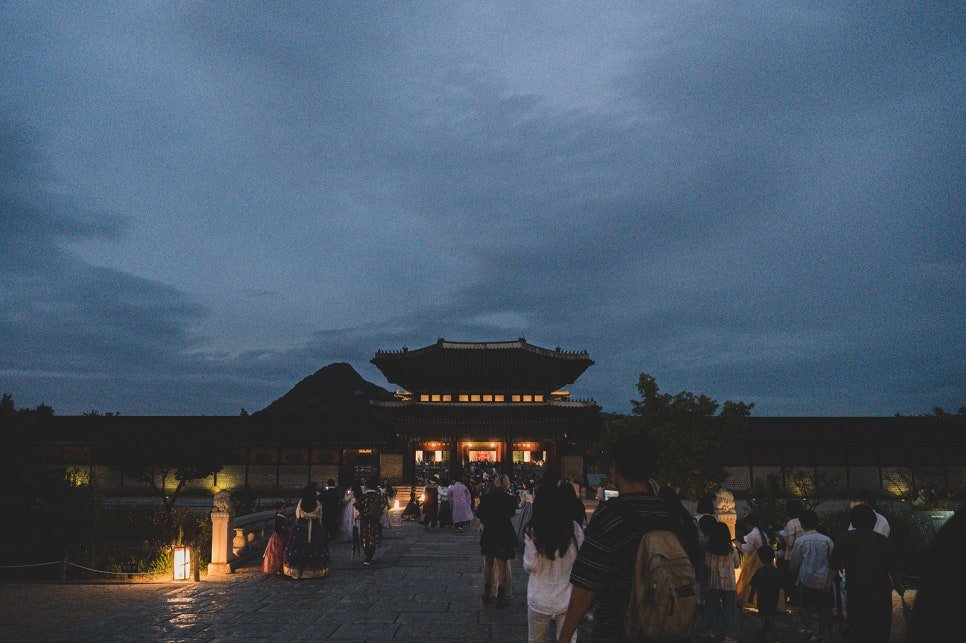
What it’s actually like once you’re inside
By the time we’d gotten through the ticket line, the sky had gone from orange to that deep pre-night blue, and everyone around us seemed to be walking in with the same slightly giddy energy — a lot of first-timers, a lot of phones already out.
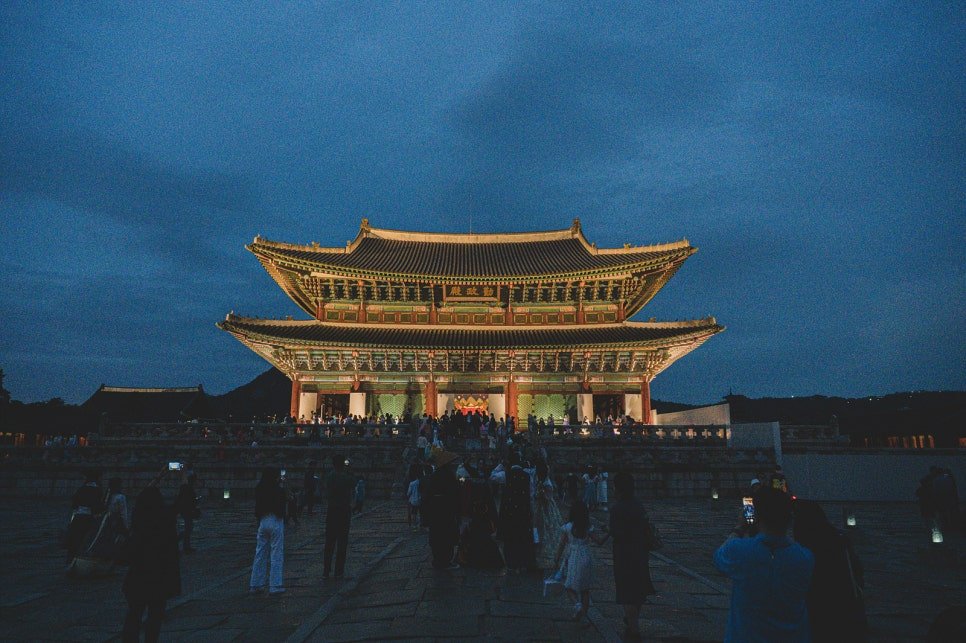
Geunjeongjeon — the main throne hall, where kings were once formally enthroned — is where everyone heads first, and it’s easily the most photographed building on the grounds. It’s worth seeing, but it’s also the most crowded corner of the entire event.
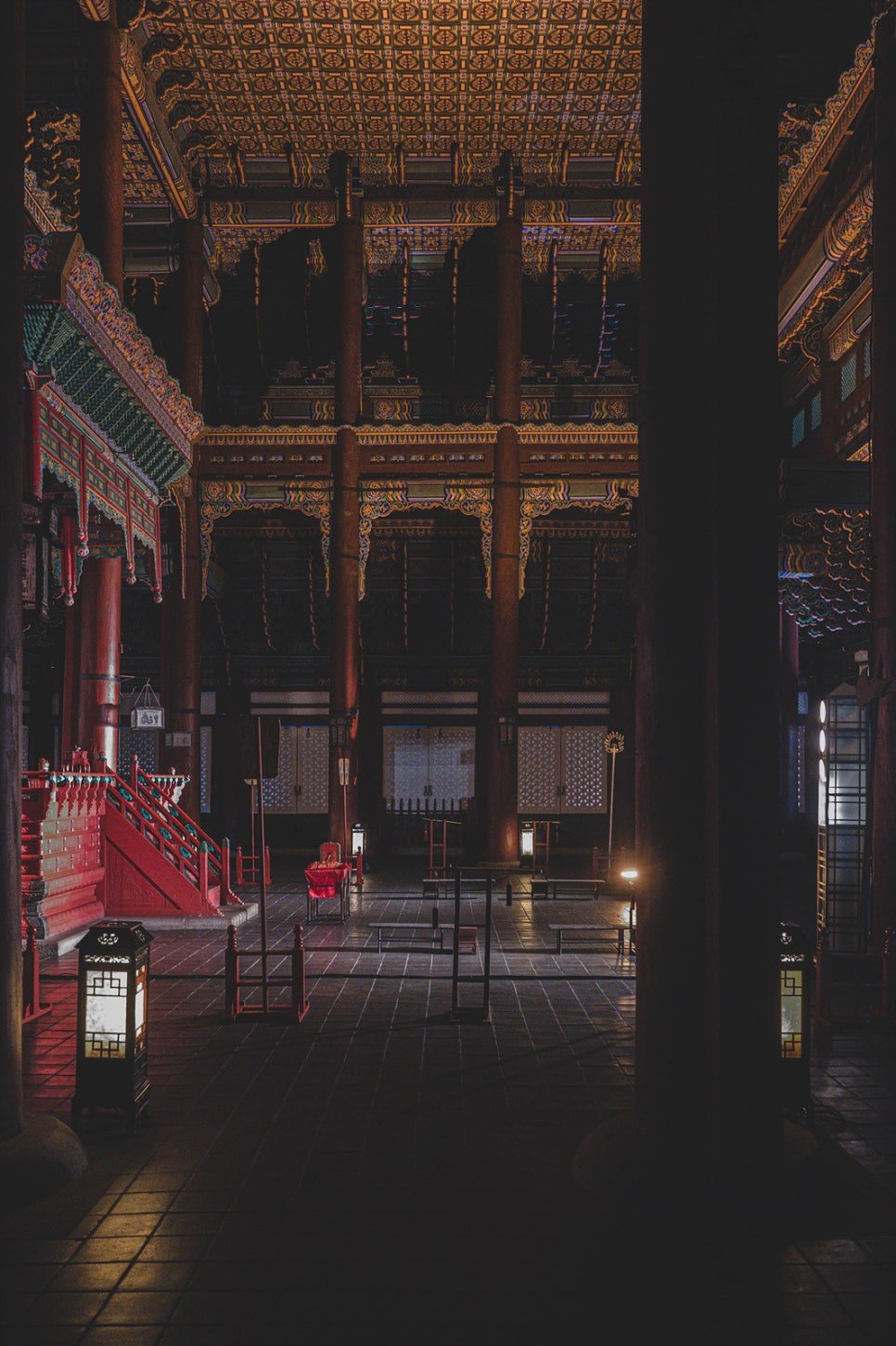
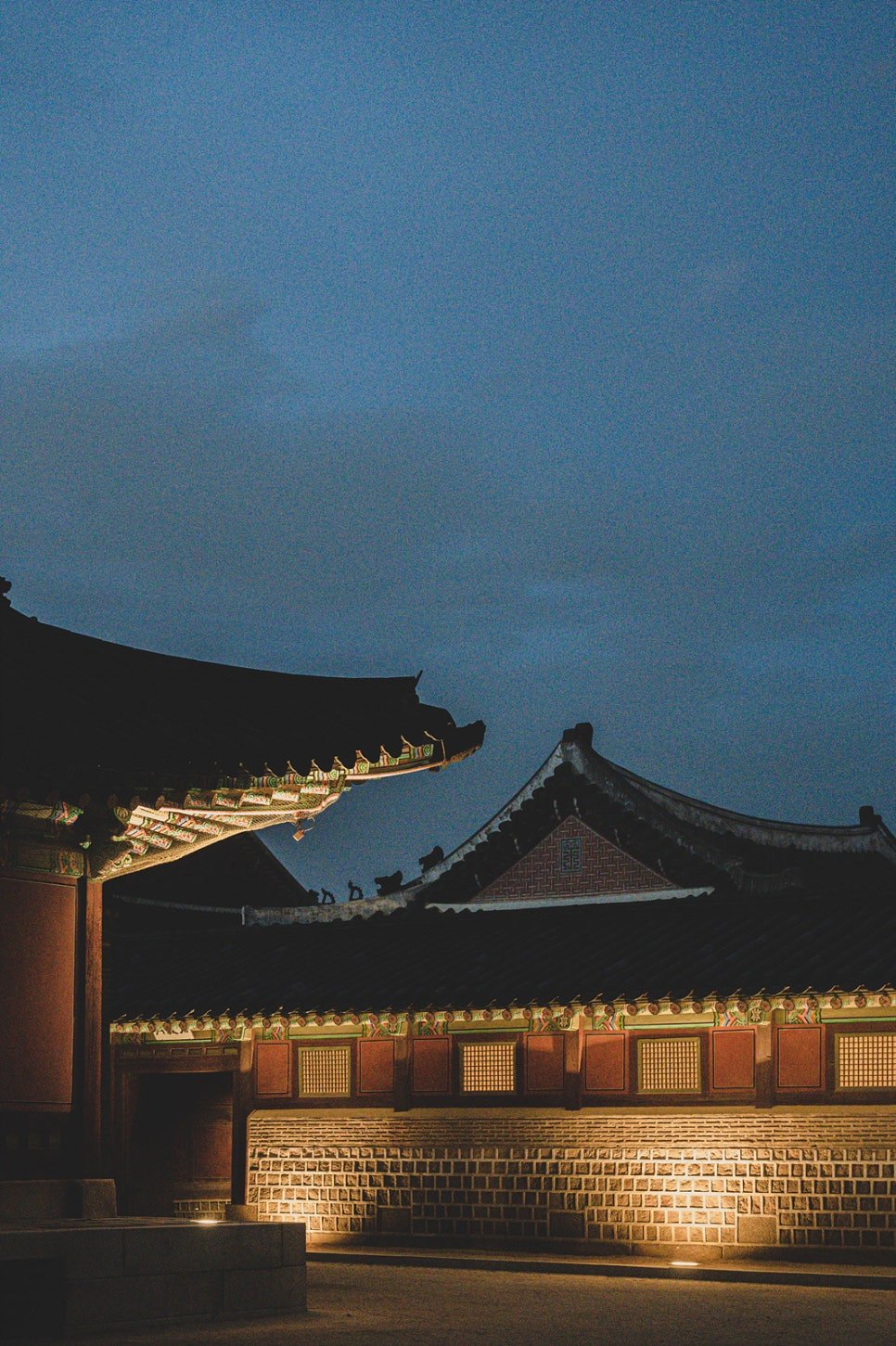
One thing that made the visit better: instead of fighting for a spot dead-center in front of Geunjeongjeon like most of the crowd, we drifted to the side, where you can actually look up at the painted ceiling detail without someone’s selfie stick in the frame.
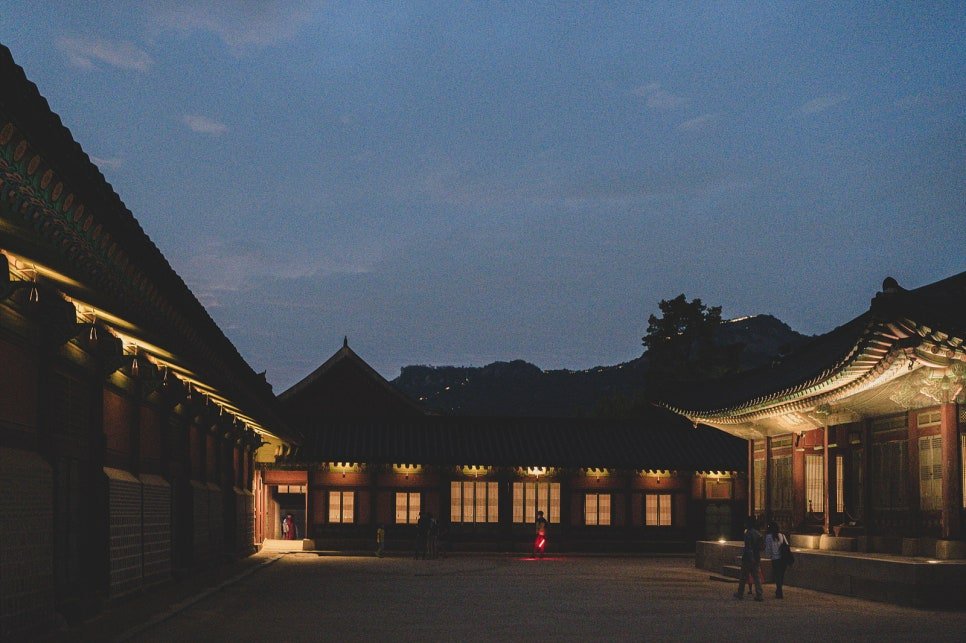
Just behind Geunjeongjeon is Sajeongjeon, where the king actually held daily meetings with senior officials — smaller, quieter, and noticeably less crowded. Of everything we saw that night, this is the corner I’d point people toward if they want a few minutes of actual quiet inside the palace grounds.
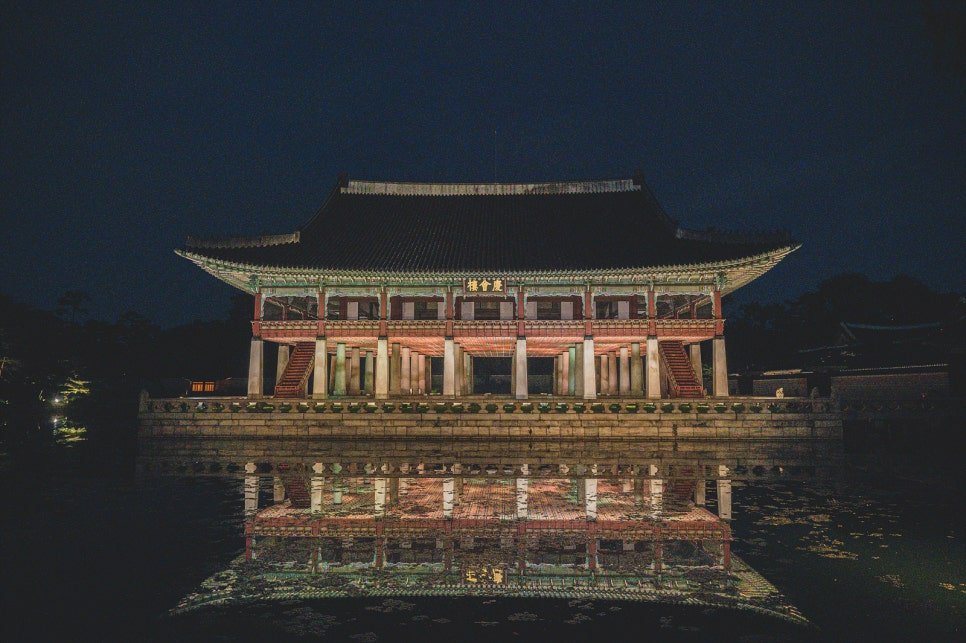
Then there’s Gyeonghoeru — the pavilion built out over an artificial pond — and this is the moment that makes the whole ticket scramble worth it. At night, with no wind, the reflection on the water is close to a perfect mirror image. You can’t see this version of the building during the day.
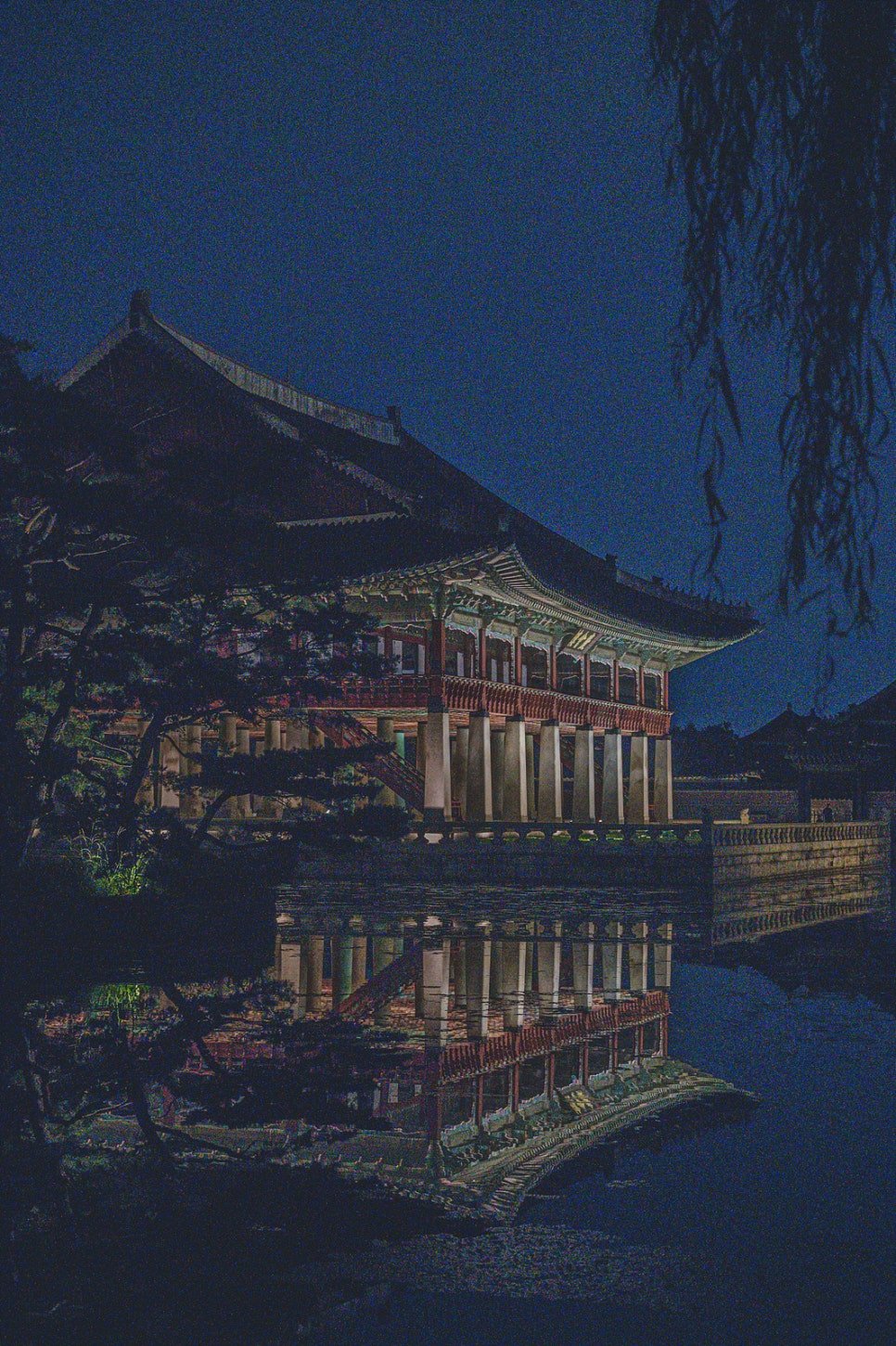
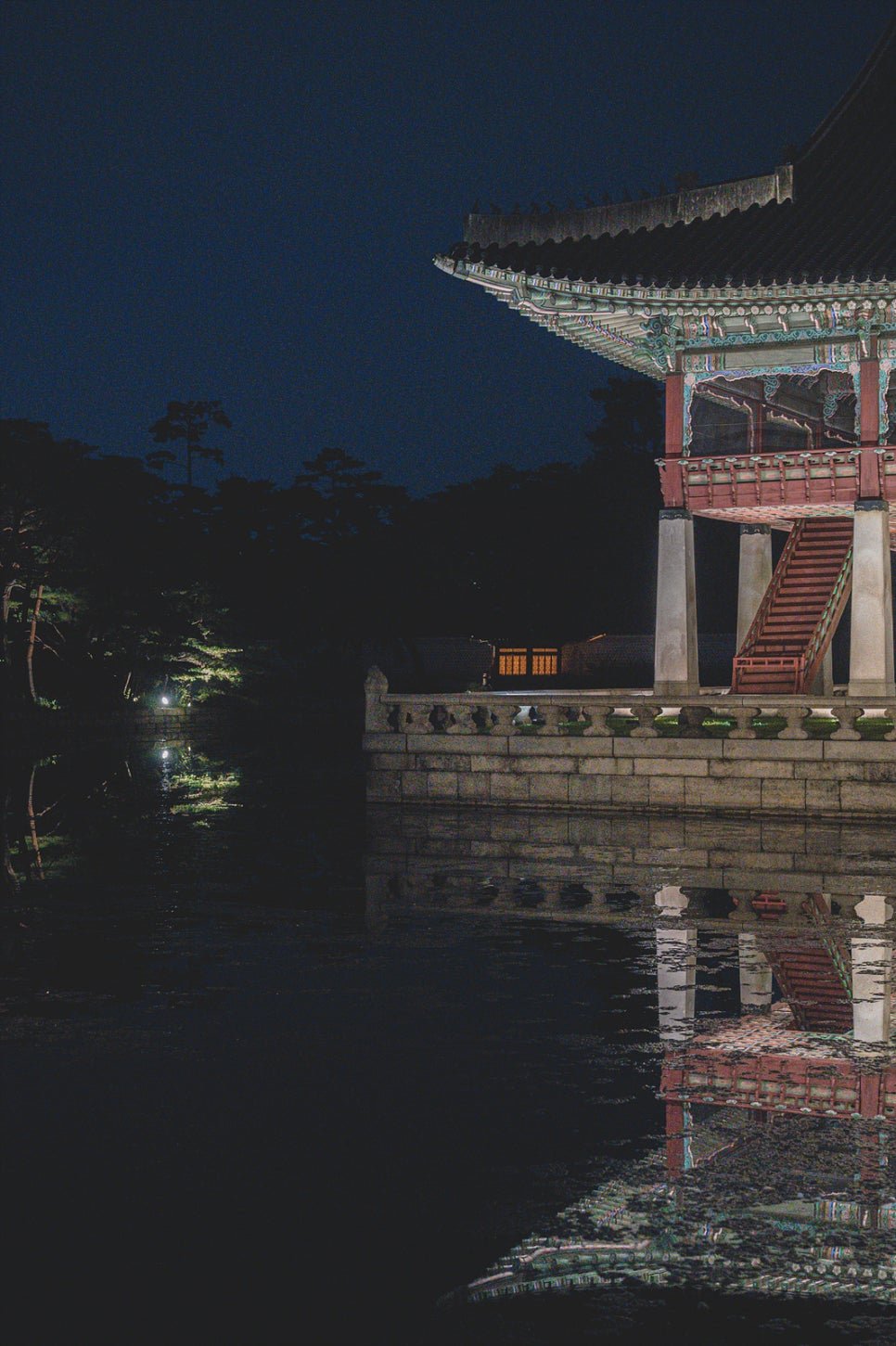
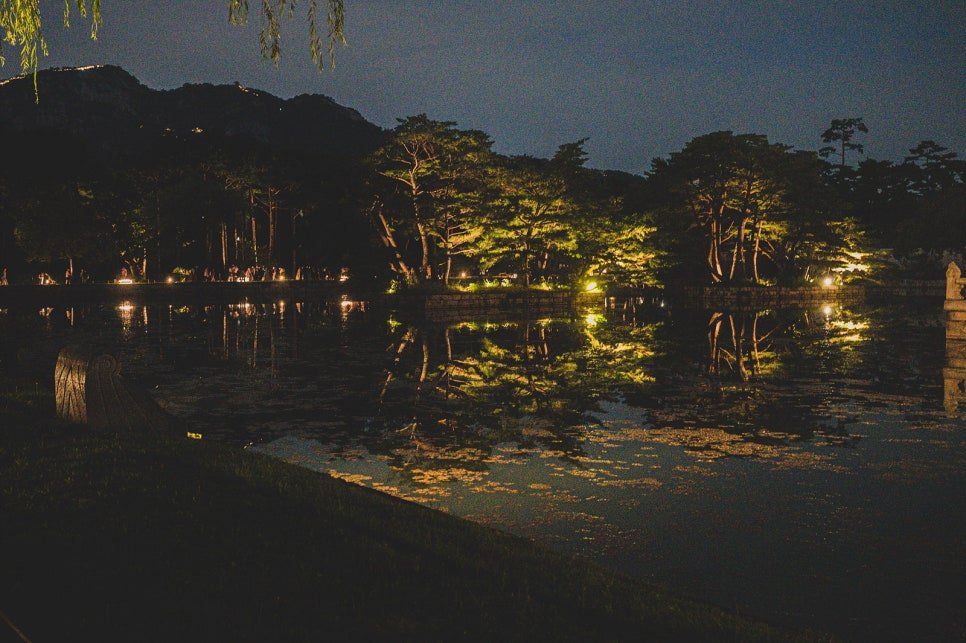
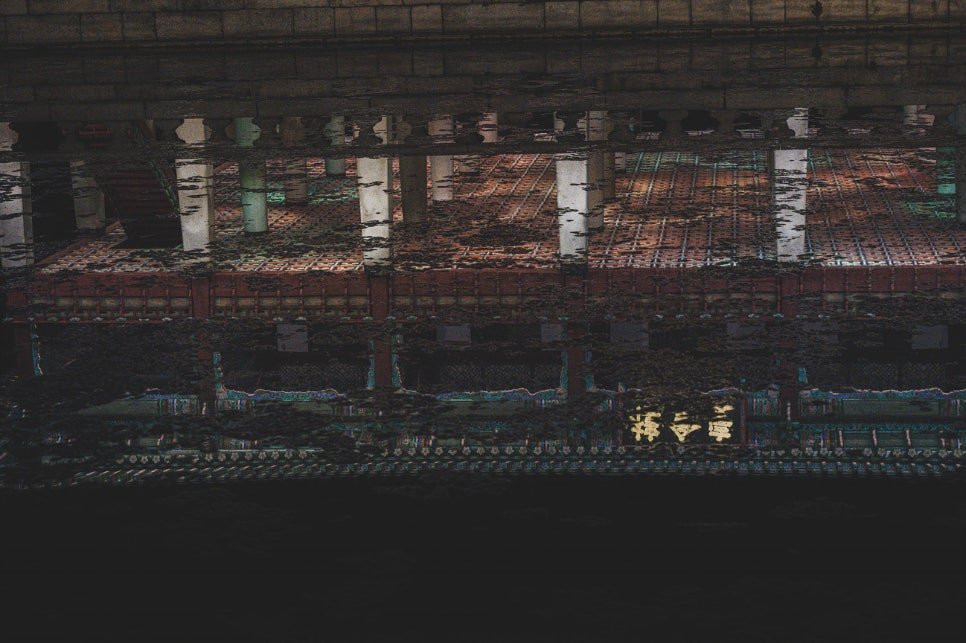
We ended up circling the pond a couple of times just for different angles — the reflections change depending on where you’re standing, and the willow trees along the bank add another layer that you don’t get in the standard front-on shot everyone takes.
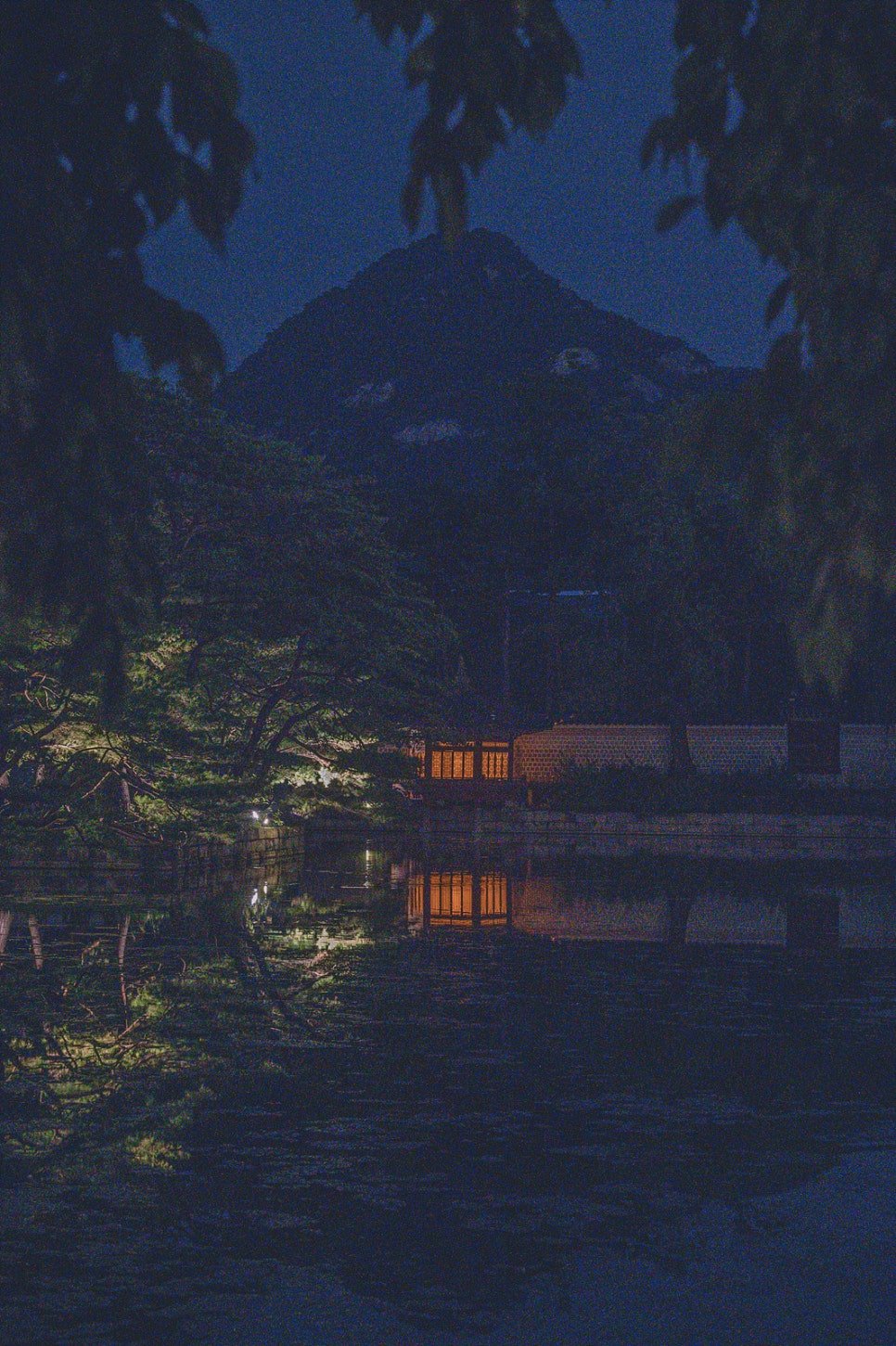
From near Gyeonghoeru you can also see Bukhansan in the distance — a reminder that this is a palace with a mountain range as its backdrop, which is not a normal thing for a capital-city landmark to have.
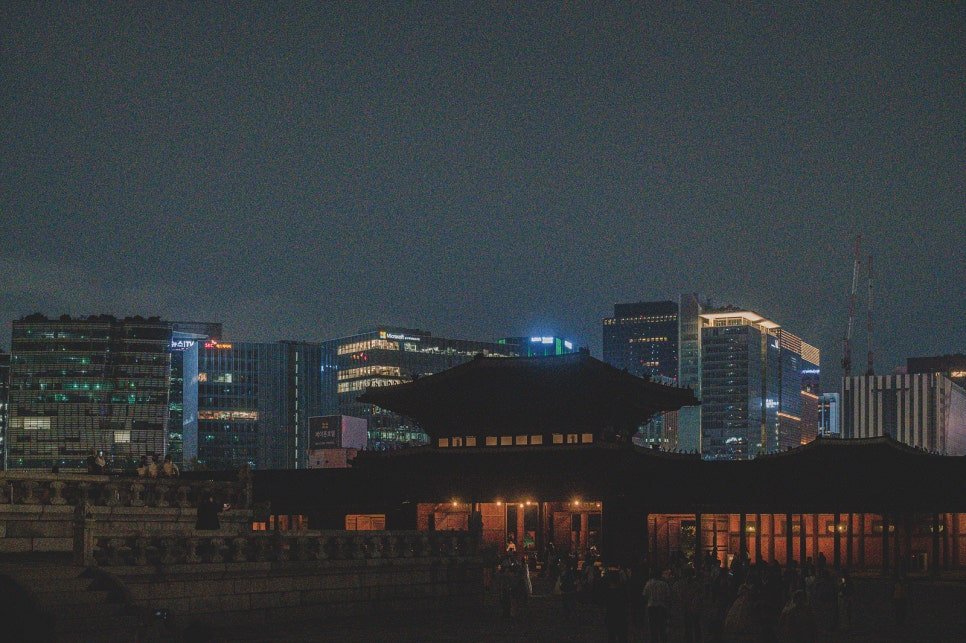
My favorite frame of the night, though, wasn’t inside the palace walls at all — it’s the view where the old roofline lines up against the lit-up towers of downtown Seoul behind it. Six-hundred-year-old palace, glass office towers, same skyline. That contrast is a big part of why this city photographs the way it does.
Tips if you’re going
- Bring your passport regardless of how you’re entering — even with an online ticket, staff sometimes check ID at the gate, and it’s required for the foreign walk-up line.
- If you’re going for the walk-up ticket, get there 1–2 hours before the 7 PM opening. It’s a real line with limited supply, not a formality.
- Wear a hanbok and skip the ticket fee entirely — this applies to the night opening too, not just daytime admission. There are rental shops within a few minutes’ walk of the palace if you don’t already have one.
- Dress for the temperature drop. September and October evenings in Seoul cool off fast after sunset — bring a layer even if the afternoon was warm.
- Tripods are generally restricted inside the palace grounds during the night event, so plan your photos assuming handheld only.
- Don’t rush Geunjeongjeon and move on. The quieter side buildings and the Gyeonghoeru pond area are, honestly, the better part of the visit.
Want the guided version instead of the walk-up ticket line? The Gyeongbokgung Starlight Night Tour on Creatrip → bundles guaranteed entry with a royal-style dinner and an English-guided walk through the night-lit palace.
This post contains an affiliate link. If you book through it, we may earn a small commission at no extra cost to you.
FAQ
Q: Can foreign tourists actually get into Gyeongbokgung’s night opening?
A: Yes — either through the same Korean online lottery everyone uses, or through a separate same-day walk-up allocation at the Gwanghwamun ticket booth reserved for international visitors (passport required).
Q: Do I need to book weeks in advance?
A: For the online lottery, tickets for popular dates disappear within minutes of the sale opening (August 26, 10 AM KST for this fall’s run). The foreign-visitor walk-up option is same-day only, but has its own separate, smaller quota.
Q: Is the walk-up foreign ticket guaranteed?
A: No — it’s a limited daily allocation (300 tickets, 2 per person), and Korean coverage of this fall’s event describes the odds as slim with a genuine wait. Show up 1–2 hours before the 7 PM opening if you’re relying on it. It’s still a much less competitive line than the general online sale, just not a sure thing.
Q: Does wearing hanbok get you free entry to the night opening specifically, or just daytime visits?
A: Both — free entry for hanbok-wearers applies to this night event too, confirmed for the fall 2026 run specifically, not only regular daytime admission.
Q: How much does it cost?
A: 3,000 won per person. Free if you’re wearing hanbok.
Q: Is it worth paying for a guided tour instead?
A: If your travel dates are fixed and you don’t want to risk missing out, yes — guided tours sold through platforms like Creatrip guarantee a spot without the lottery, for a higher price than the base ticket.
Bottom Line
If you can navigate a Korean-language site and you’re willing to be online right at 10 AM KST on sale day, try the NOL/Interpark lottery first — it’s free-ish and it’s the same experience everyone in Korea is fighting for. If that sounds like a headache on top of everything else you’re juggling for a Seoul trip, the foreign-visitor walk-up ticket at Gwanghwamun is a genuinely underused option — and if your dates are fixed and you just want it guaranteed, a guided tour is worth the extra cost. However you get in, budget at least an hour once you’re there — Geunjeongjeon gets the crowds, but Sajeongjeon and the Gyeonghoeru pond are where the night visit actually earns its reputation.