TL;DR: Hanjungsun (한정선), the Seongsu mochi brand that’s become something like Korea’s own version of Japanese omiyage, also has a 24-hour shop inside Seoul Station’s Connect Place — 2F for the counter, but the waitlist tablet is now up on 3F. We checked in at 8:52 PM and were told we were 527th in line; the Kakao call-back came 1 hour 29 minutes later. We went specifically for the newer Greek yogurt mochi line (₩6,000 each, six flavors) and tried shine muscat, blueberry, and the viral Dubai-style chocolate. Short version: the wait is real even late at night, but the yogurt line is worth seeking out.
The first time we stopped by this location, the Greek yogurt mochi — the one flavor we’d actually come for — had already sold out. We left with Dubai chocolate and a couple of fruit mochi instead, no real complaints, but it meant we hadn’t tried the thing we were most curious about. So this time we went back on purpose, specifically for the yogurt line, on a weeknight after dinner. We assumed a later visit would mean a shorter line. It did not.
Hanjungsun Seoul Station
Address: 2F, Connect Place Seoul Station, 405 Hangang-daero, Jung-gu, Seoul
Hours: Open 24 hours, daily (a short break from 12:30 AM–4:30 AM)
Parking: None on-site
Reservations: Walk-in only — no app booking, no seated dining. You register at an in-store tablet and get a Kakao message when it’s your turn.
Why the Escalators Trip People Up
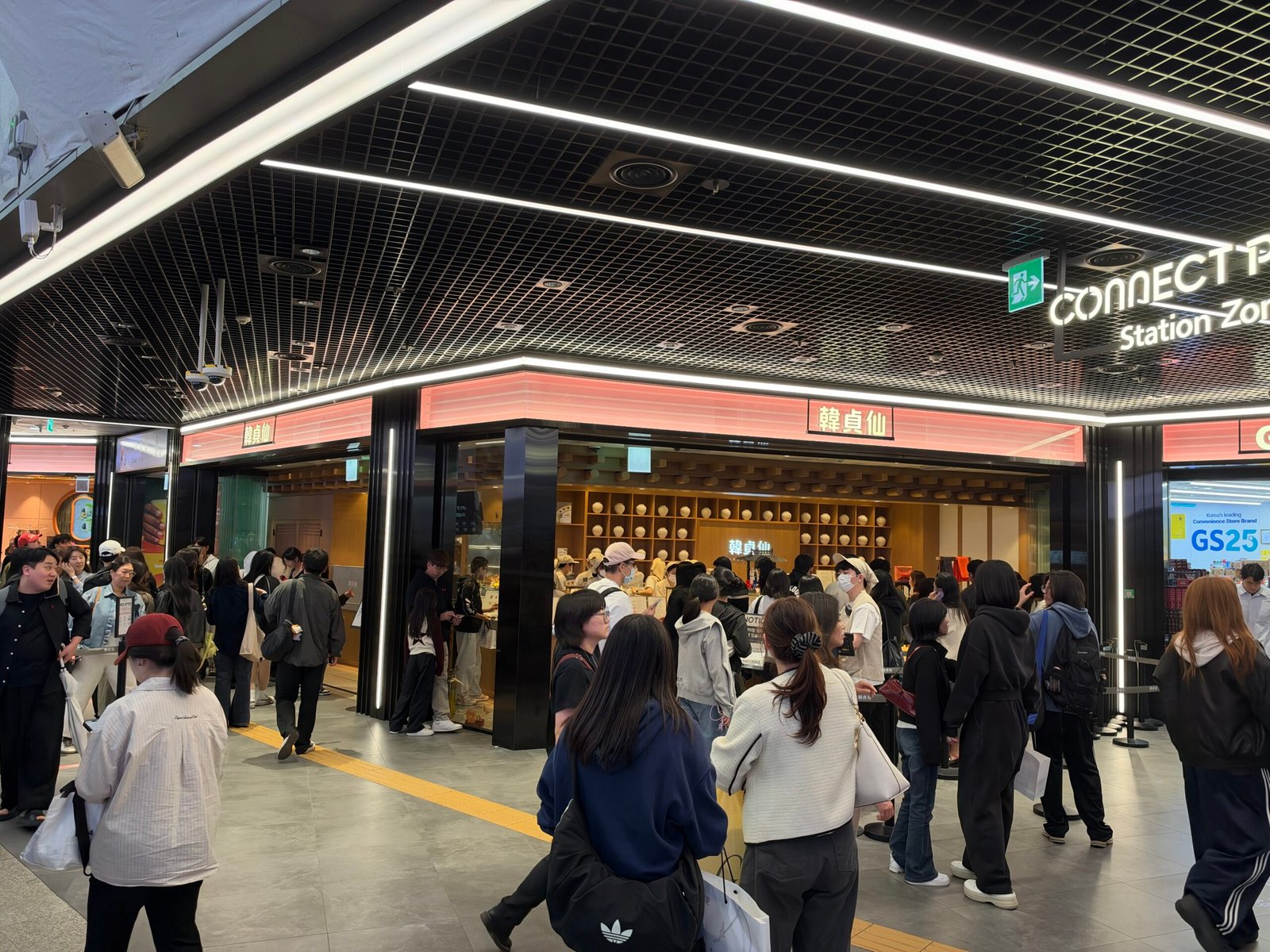
The shop itself sits right next to a GS25, in the Connect Place retail concourse inside Seoul Station — easy to spot once you’re there, since the line usually gives it away first. What’s not obvious: the waitlist tablet used to be on the same floor as the counter (2F), but it’s since moved up to 3F. There are two escalators that both look like they go to 3F, which is exactly where people get stuck — you want the one on the left. If you take the wrong one, you’ll end up walking back across a floor to find the registration tablet.
527 Groups: What the Wait Actually Looked Like
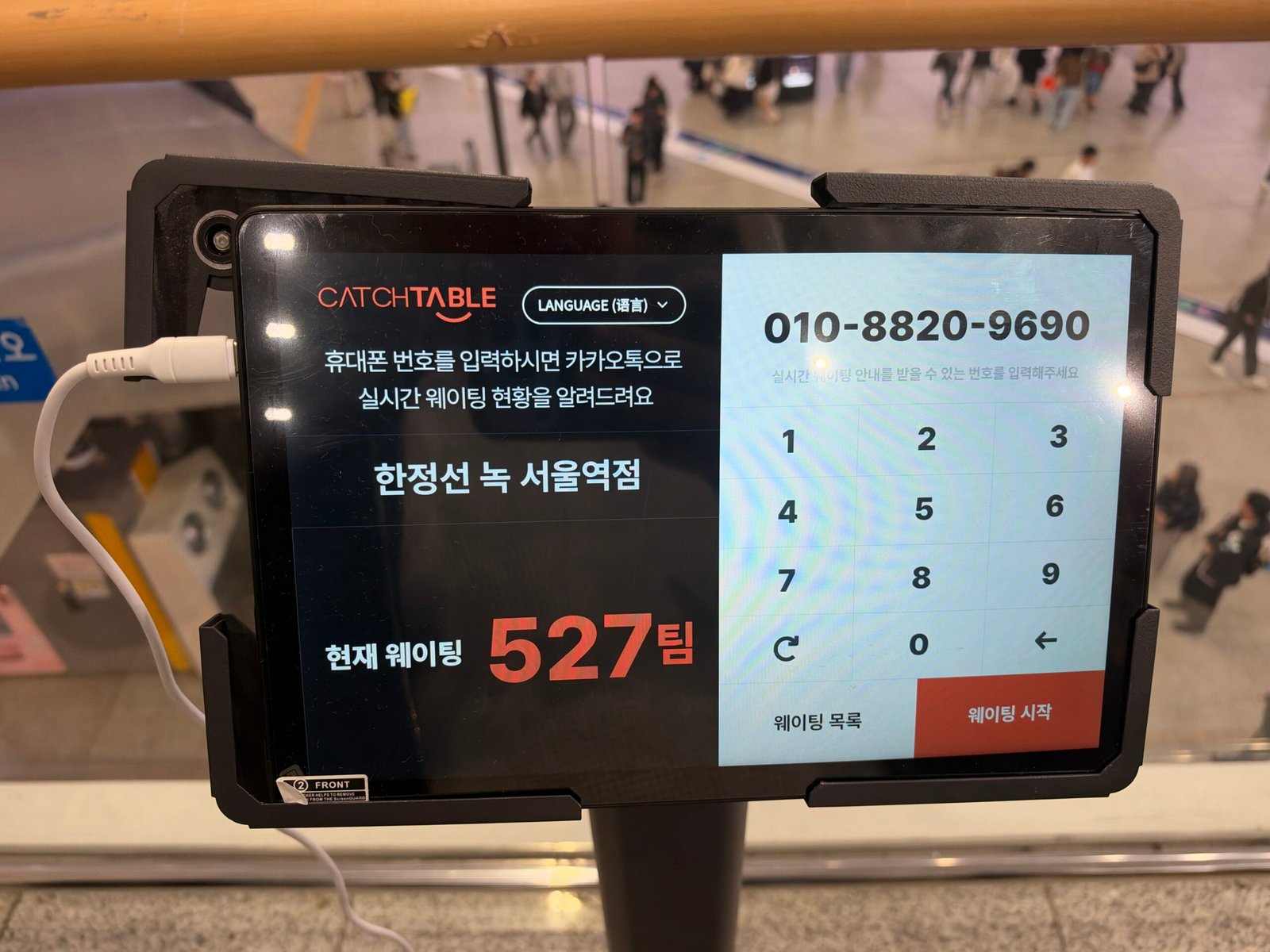
We registered at 8:52 PM. The tablet’s live counter read 527 teams waiting — enough to make us double-check we’d read it right. For context, a previous visit around 11 PM felt busier in terms of the physical line, but this 9 PM number says the queue backs up well before closing time rolls around; there’s no predictable “quiet hour” here.
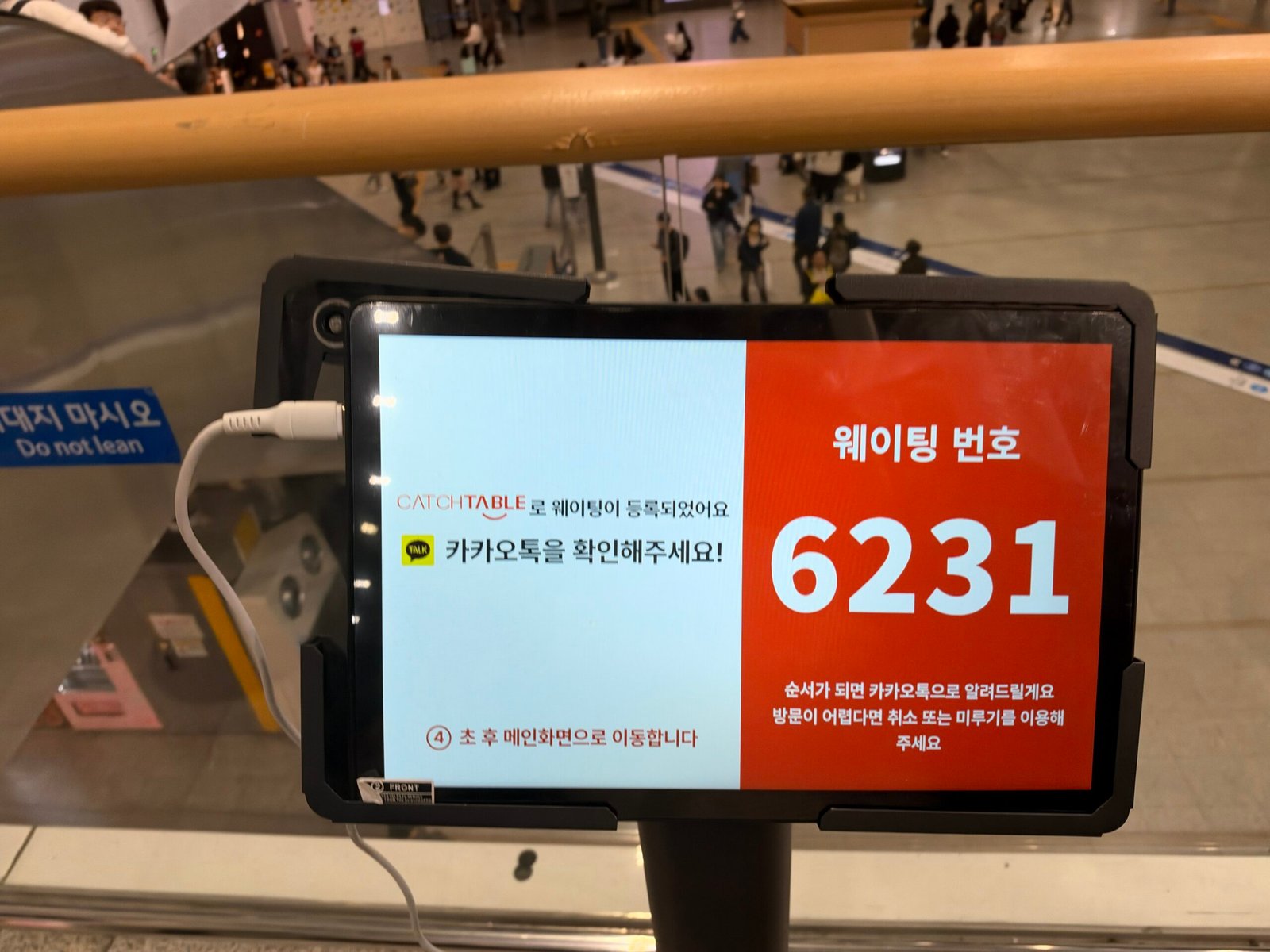
After registering, we got waiting number 6231 — and the app showed our actual position as 527th from the front, matching the tablet’s live count. The number itself looks alarming out of context, but the system is genuinely convenient for a train station: you’re not required to physically stand in line. You get a Kakao message when you’re close, so you can go find a coffee, browse the shops upstairs, or just sit down somewhere in the station while you wait.
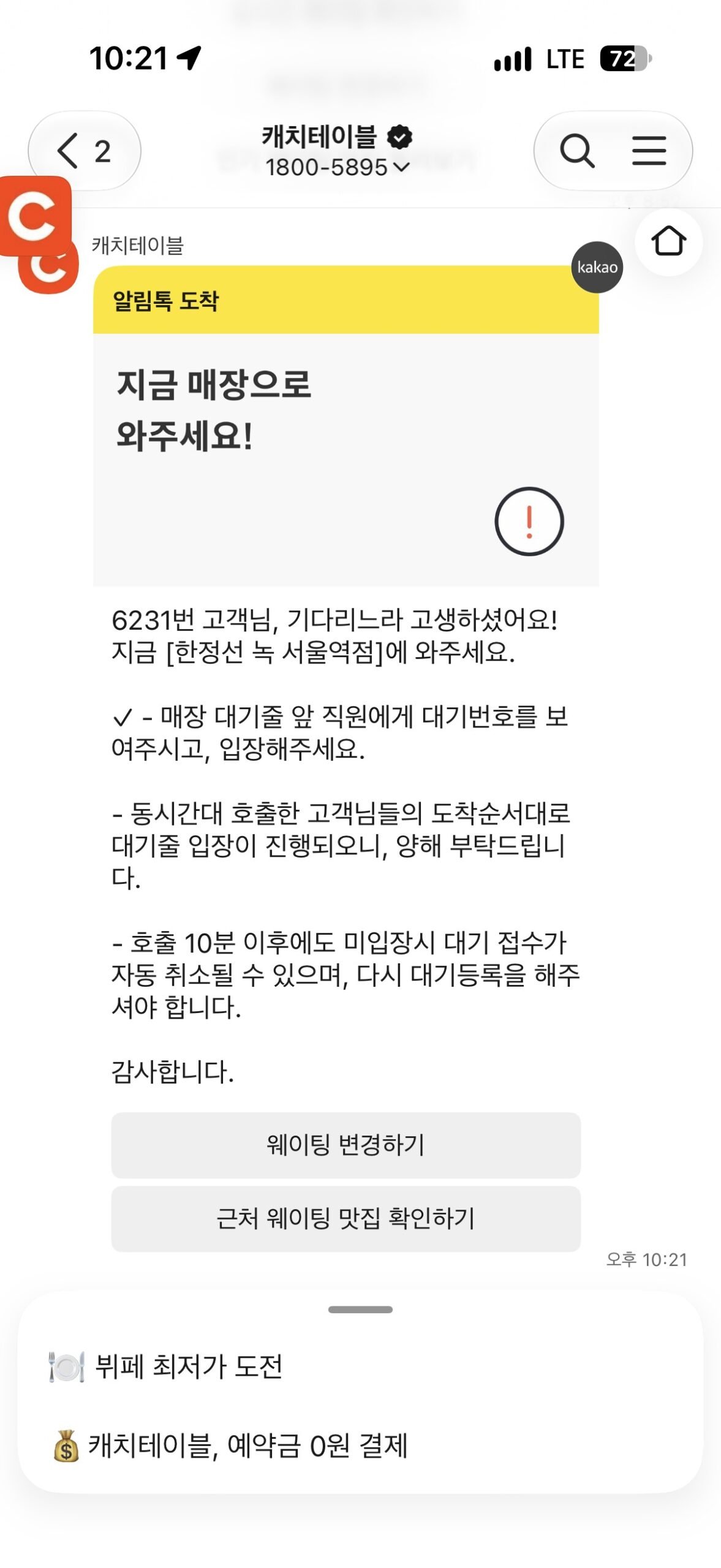
The call came at 10:21 PM — 1 hour and 29 minutes after we registered. That’s a long wait by any measure, even with the freedom to wander off in the meantime. If you’re on a tight connection or your train is boarding soon, do the math before you register; this isn’t a quick grab-and-go stop.
Inside: Same Brand, Train-Station-Sized Space
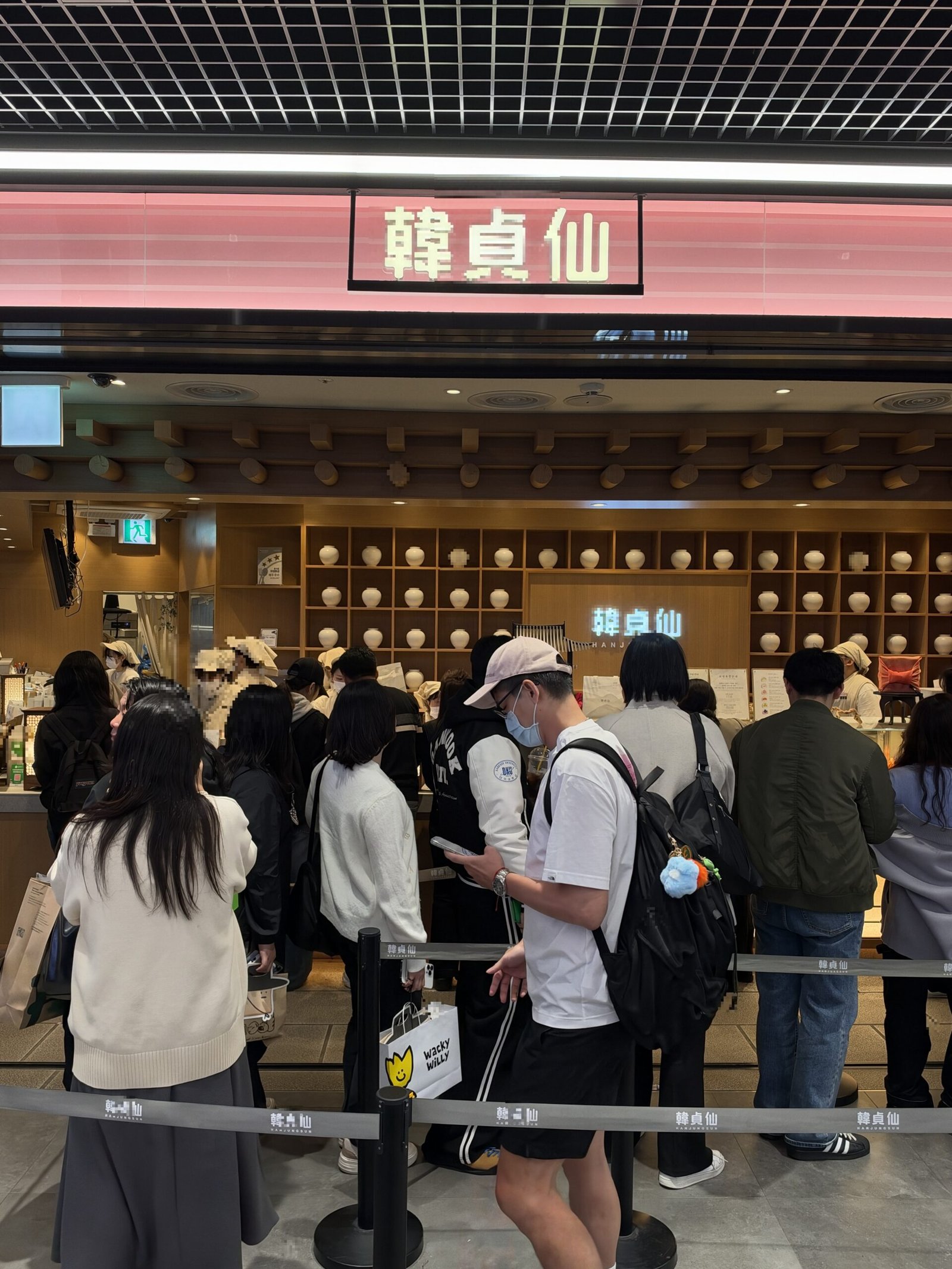
Once we got in, the interior matched the Seongsu flagship’s look almost exactly — the same wall of white ceramic jars, warm wood paneling, and staff in hanbok-collar uniforms. The footprint itself is noticeably smaller, scaled to a station retail unit rather than a standalone shop, but the brand’s visual identity hasn’t been cut any corners to fit.
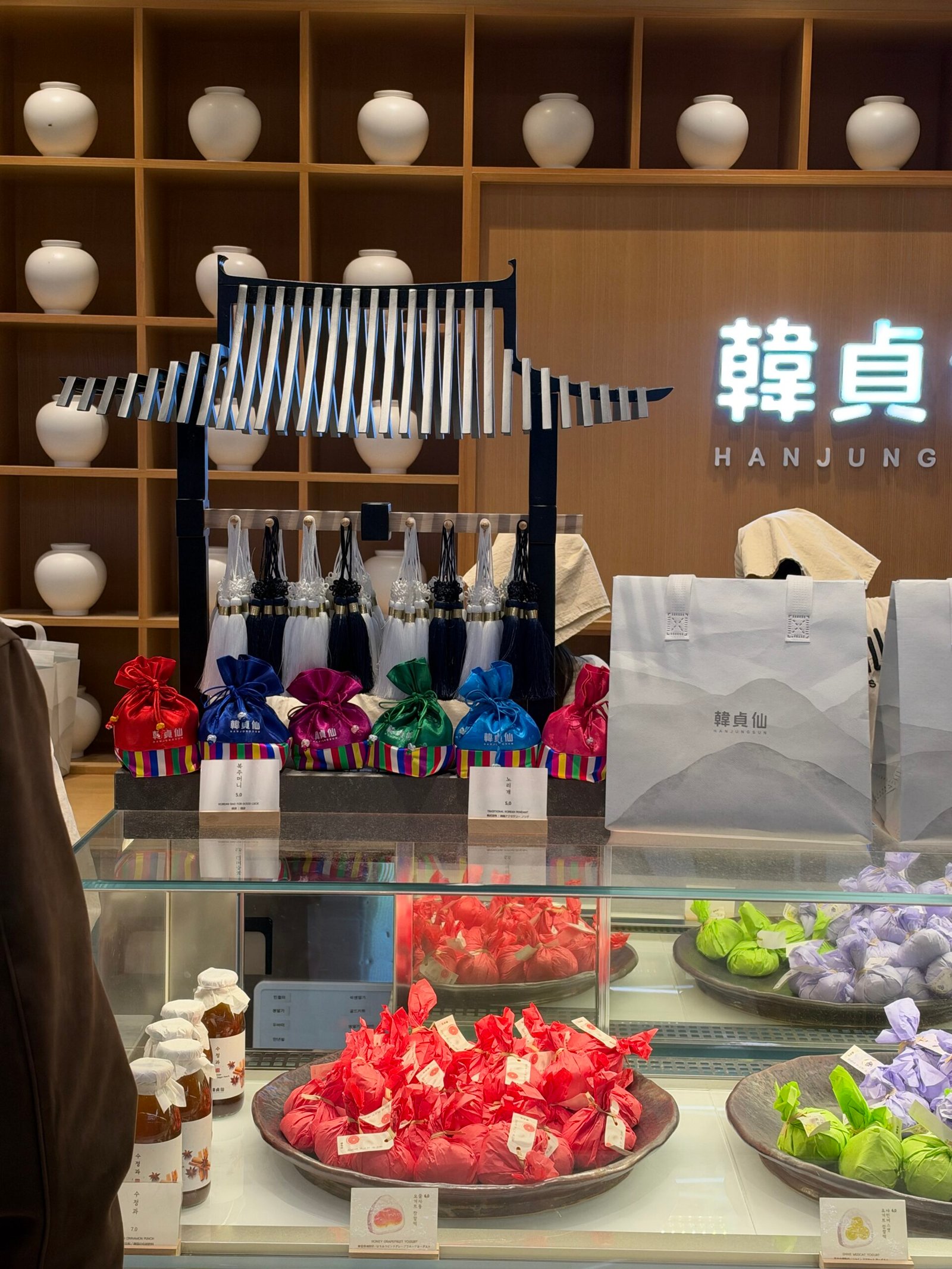
Behind the counter, a lit-up logo sign sits above rows of bojagi-style gift pouches — the fabric-wrapped boxes modeled on traditional Korean cloth wrapping. Chuseok (Korean Thanksgiving) had already passed by the time of this visit, but the gift sets were still fully stocked, which tells you these aren’t just a holiday-season item.
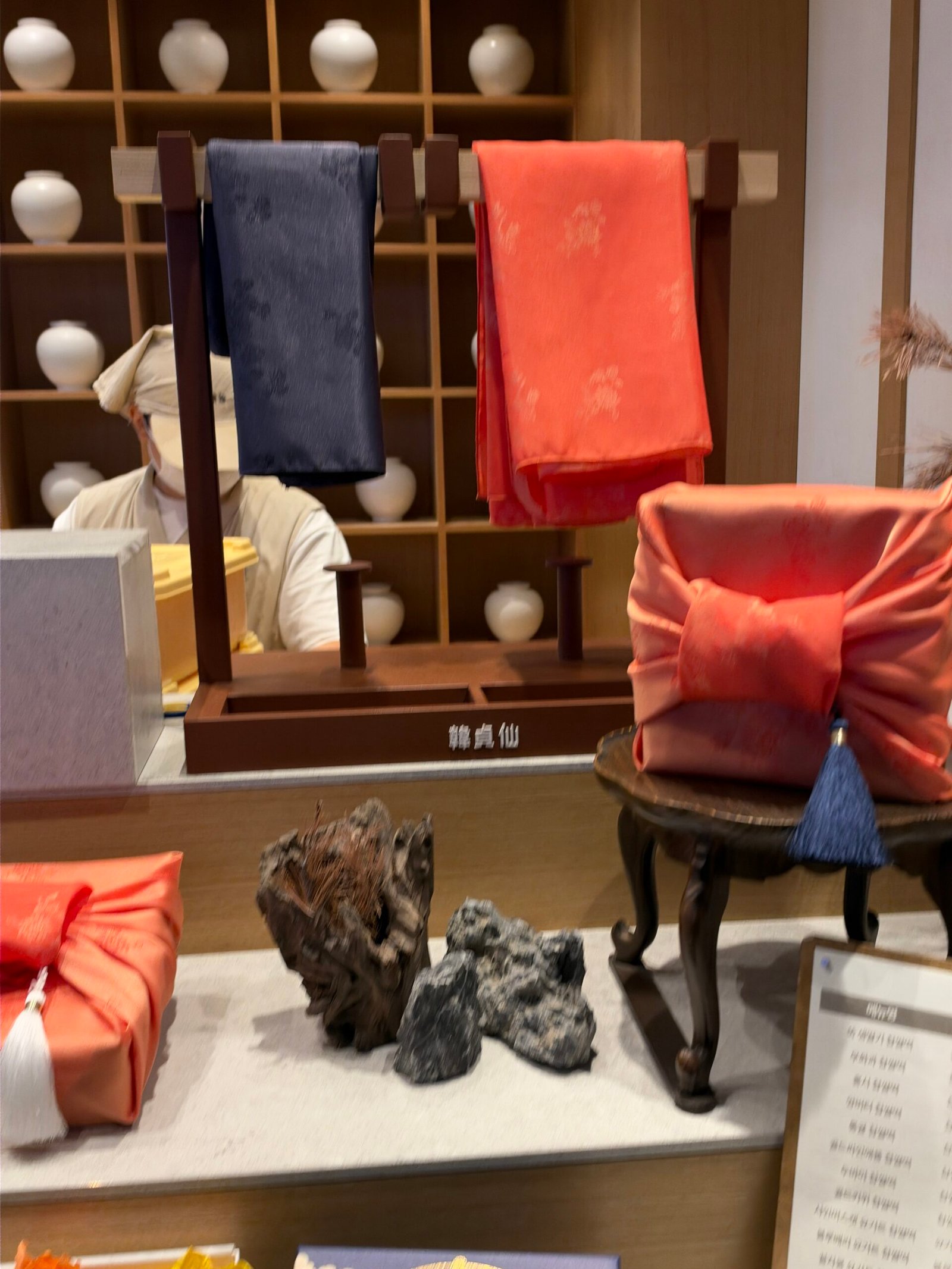
Each box opens to reveal mochi wrapped individually in colored hanji-style paper, arranged almost like a bouquet rather than just packed in a tray. It’s the kind of packaging detail that explains why this brand reads as a gift item rather than a casual snack stop.
The Greek Yogurt Line: 6 Flavors, All ₩6,000
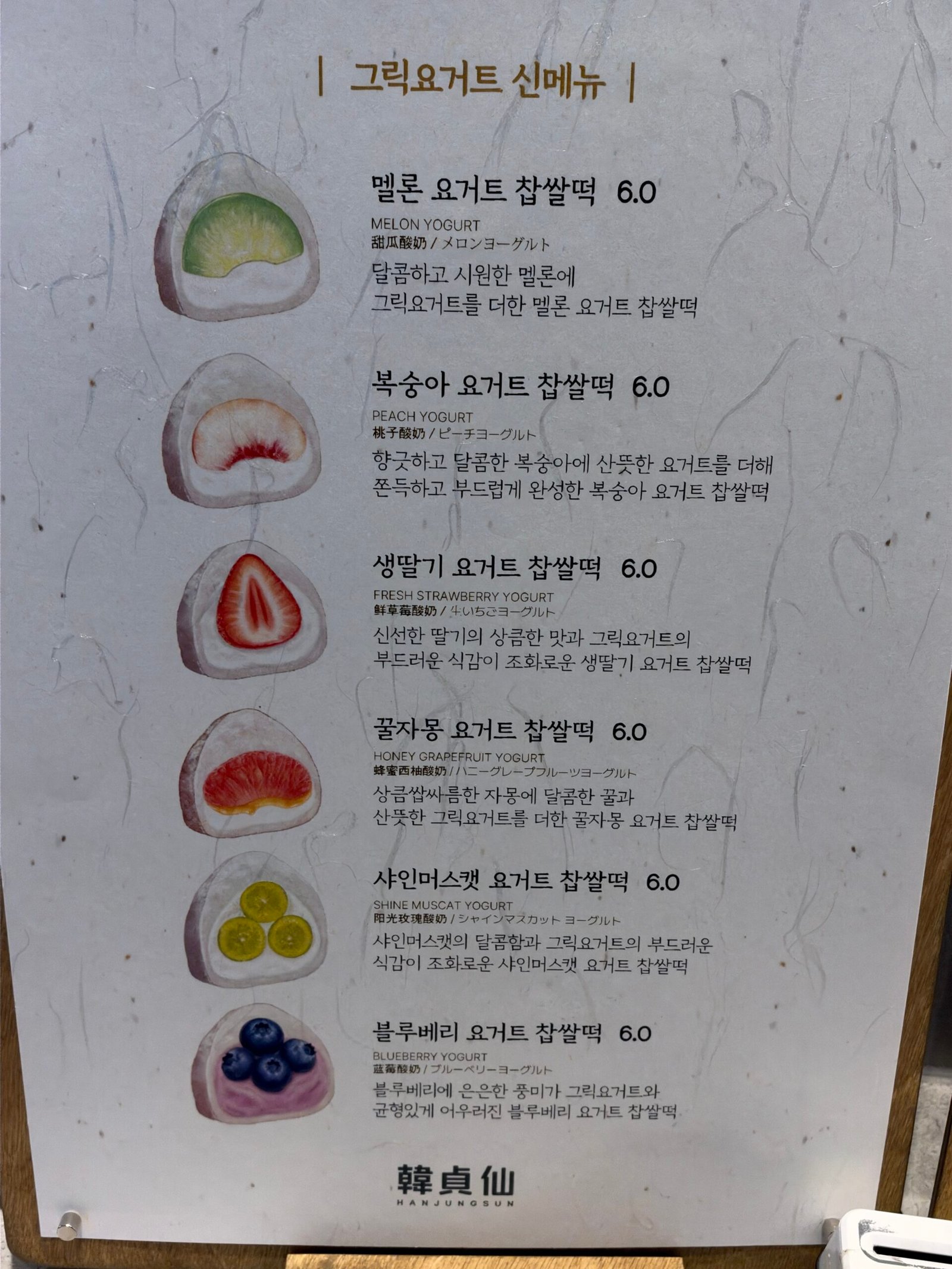
This was the whole reason for the return trip: a full lineup of Greek yogurt mochi — melon, peach, fresh strawberry, grapefruit, shine muscat, and blueberry — each priced at a flat ₩6,000 (~$4.38). It’s a separate line from the classic fruit-and-cream mochi, built around a tangier, yogurt-based filling.
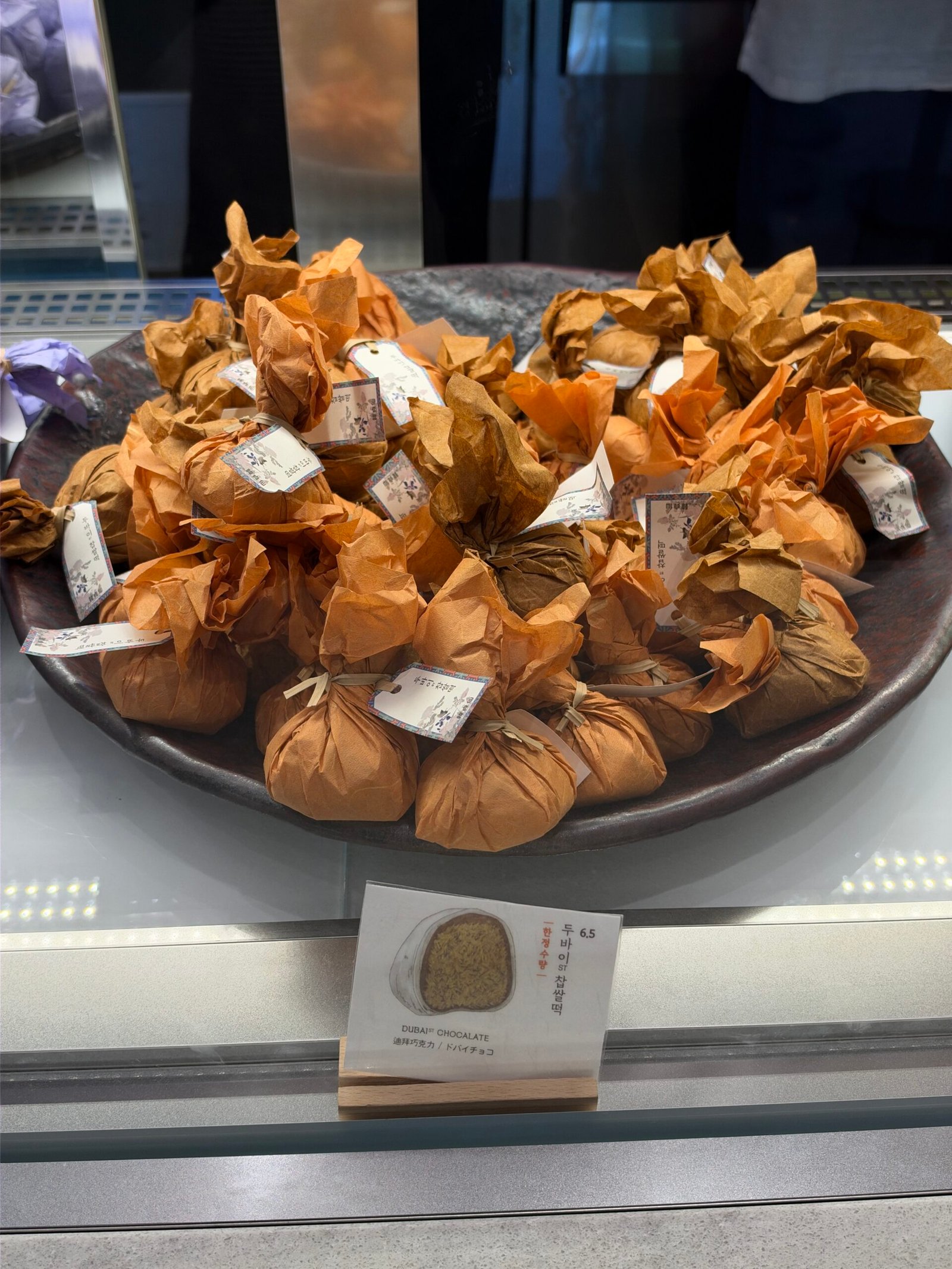
The regular lineup was unchanged from a previous visit: Dubai-style chocolate ₩6,500 (~$4.74), ripe persimmon ₩4,200 (~$3.07), citrus unshiu (mandarin) ₩4,000 (~$2.92), sweet redbean & butter ₩3,500 (~$2.55), and gold kiwi ₩4,500 (~$3.28).
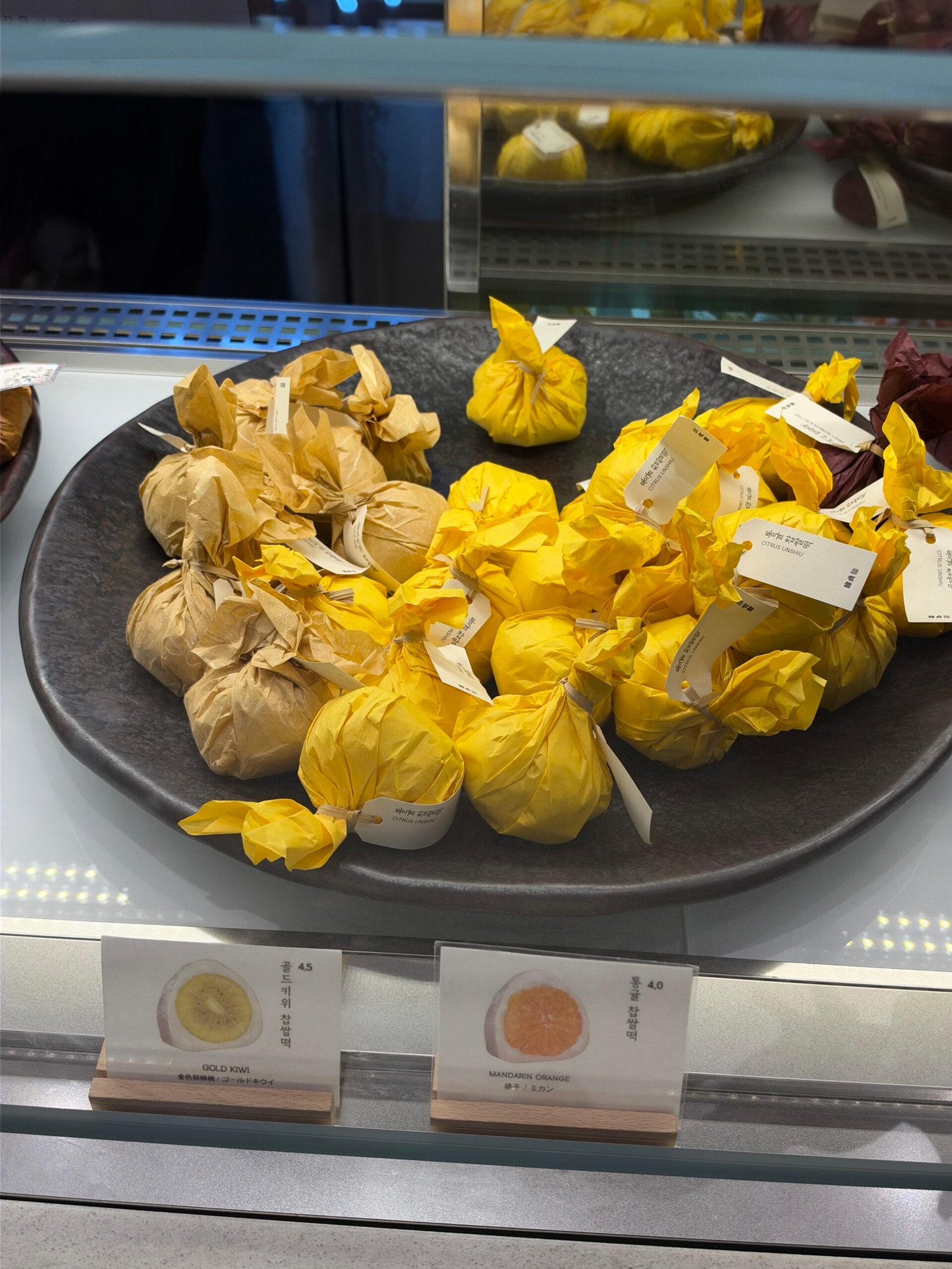
We skipped the classics we’d already tried before and loaded up on three: shine muscat Greek yogurt, blueberry Greek yogurt, and Dubai-style chocolate.
What We Actually Tasted
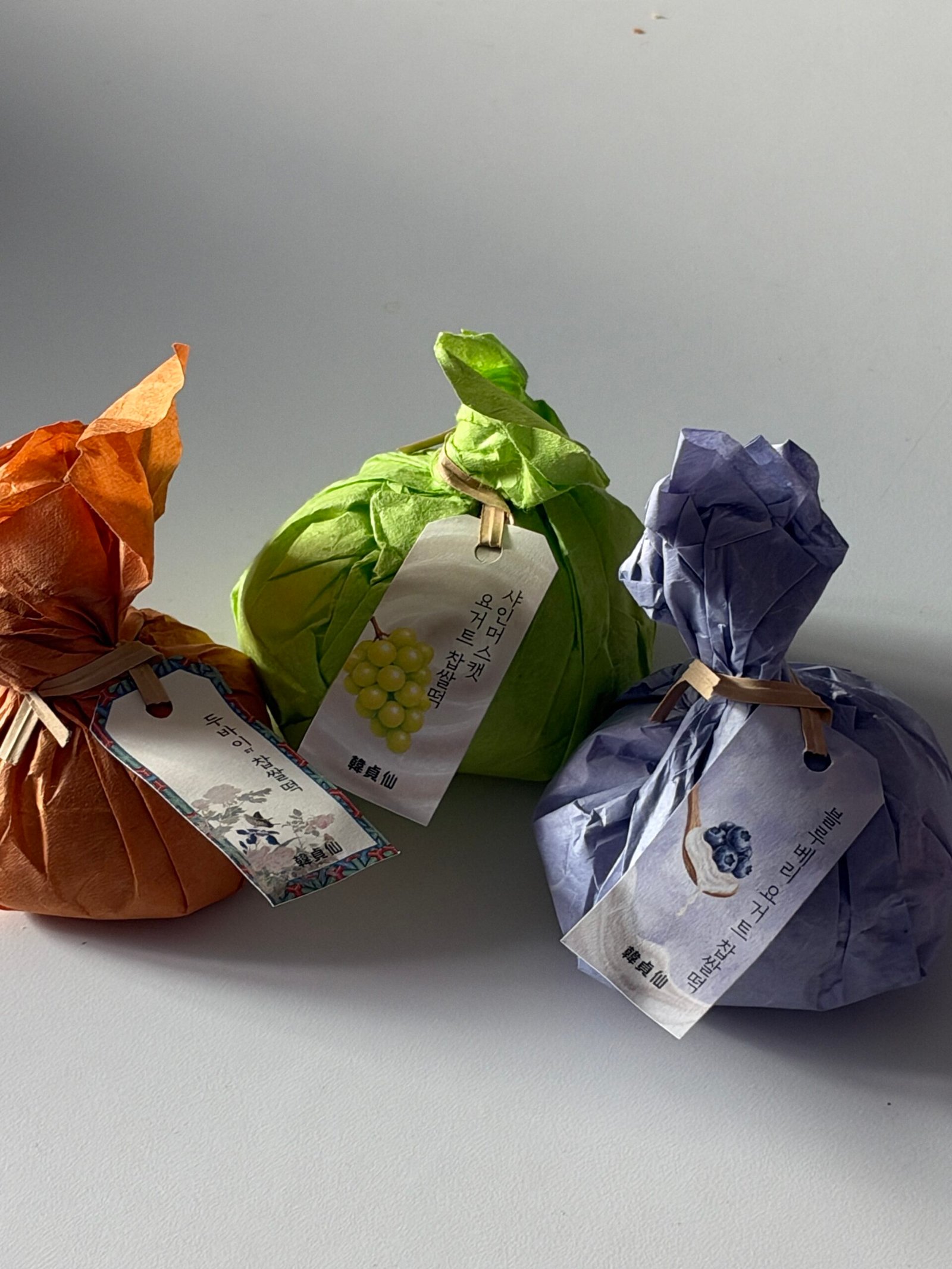
We brought everything home before unwrapping, which also worked as a decent test of how well the wrapping holds up — the rice-cake skin turned out thinner and chewier than expected for all three, not the thick, gummy texture you sometimes get from mass-produced mochi.
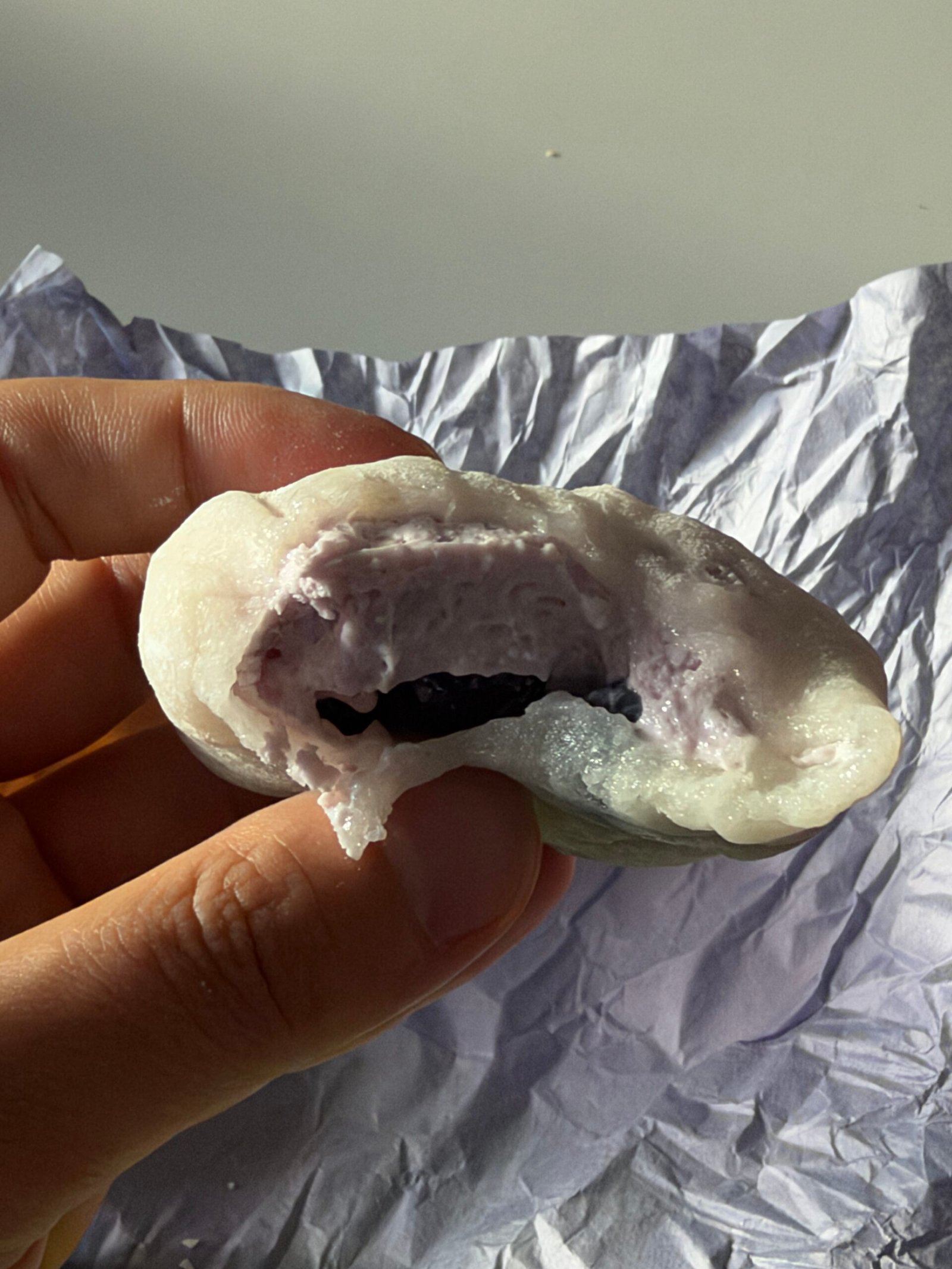
Blueberry Greek yogurt. A pale lavender yogurt cream gives way to a thick streak of blueberry sauce running through the center. The yogurt’s tartness and the blueberry’s slightly tannic sweetness balance each other out — more refreshing than we expected, and genuinely a step up from the sold-out experience of not getting to try this line at all last time.
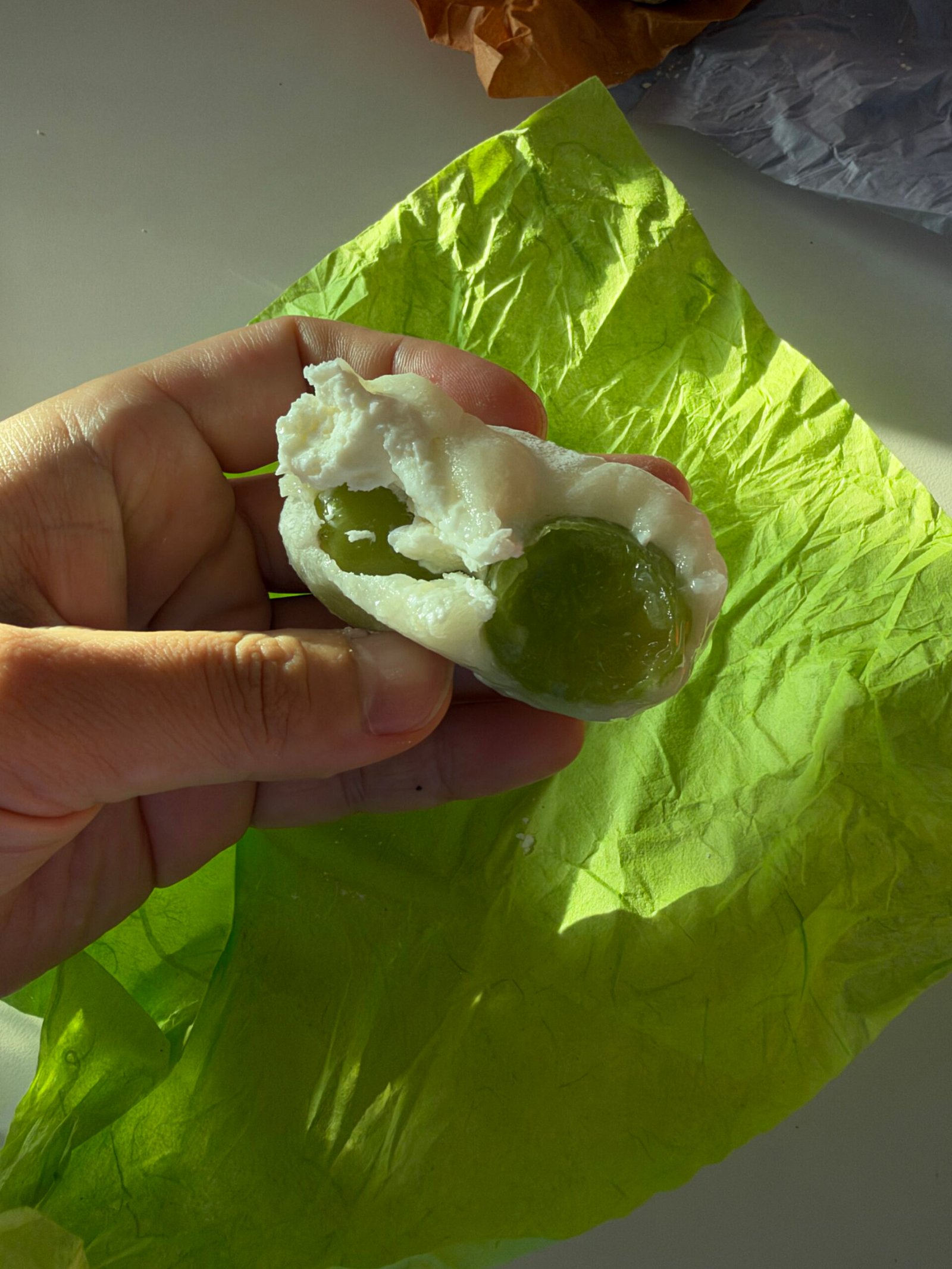
Shine muscat Greek yogurt. A whole grape sits inside, bursting with juice on the first bite. The yogurt cream cuts the sweetness just enough that it doesn’t feel like candy — of the three we tried, this is the one we’d recommend to someone trying Hanjungsun’s yogurt line for the first time.
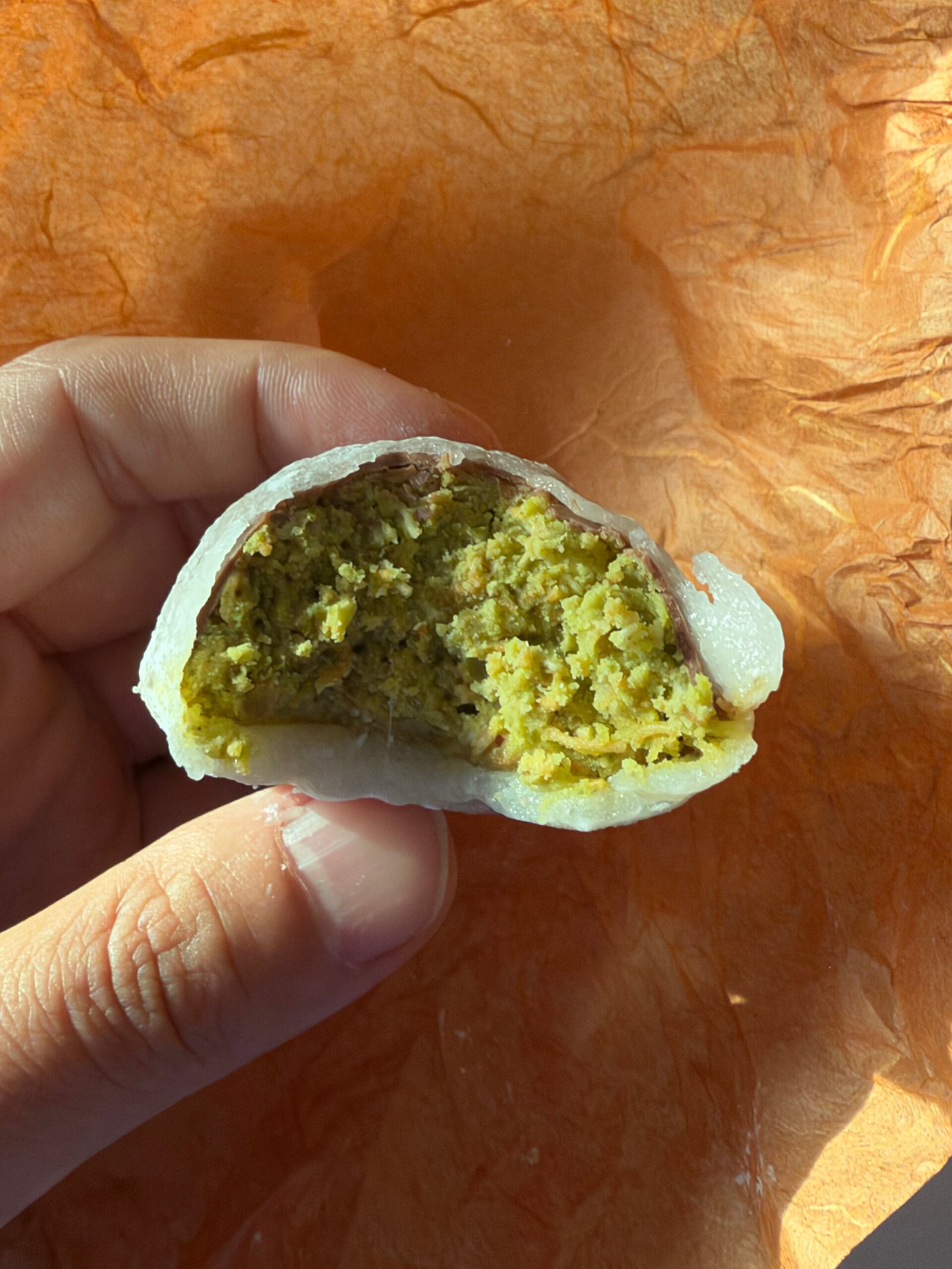
Dubai-style chocolate. Still our favorite from the regular menu. The filling — shredded kunafa and pistachio bound in chocolate — gives a genuinely crisp bite that contrasts hard against the chewy mochi skin, closer to a candy bar wrapped in rice cake than a fruit mochi. It’s rich enough that pairing it with the tangier yogurt flavors actually works as a palate cleanser between bites.
Seoul Station vs. the Seongsu Flagship: Which Should You Visit?
If you’ve read our guide to the Seongsu flagship, you’ll notice the menu and packaging here are nearly identical — same brand, same quality, same core lineup. The real difference is logistics. Seongsu is a destination in itself, worth building time around; Seoul Station is a shop you pass through on your way somewhere else, open 24 hours specifically because train traffic doesn’t stop.
That convenience comes with a catch: a 9 PM wait of over an hour means this isn’t a quick stop before boarding. If your train is close to departing, skip it rather than risk missing it. But if you have an hour or two of slack time at Seoul Station — waiting for a KTX connection, killing time before an early departure — registering on the tablet and wandering the station concourse until your Kakao notification comes through is a genuinely efficient way to spend that time.
FAQ
How long is the wait at Hanjungsun Seoul Station?
It varies, but don’t assume off-peak hours help much. We registered at 8:52 PM on a weeknight, were told 527 groups were ahead of us, and got called 1 hour 29 minutes later.
Is Hanjungsun Seoul Station really open 24 hours?
Yes — it’s open daily around the clock, with a short break from 12:30 AM to 4:30 AM.
Where do I register for the waitlist?
The registration tablet is on 3F of Connect Place, not on 2F where the actual shop counter is. There are two escalators to 3F in this section of the station; take the one on the left.
Is the Seoul Station location different from the Seongsu flagship?
Not in terms of product — same mochi, same prices, same packaging. The difference is mainly convenience and footprint: Seoul Station is smaller and open 24/7 for transit traffic, while Seongsu is the original, larger storefront worth visiting as a standalone stop.