TL;DR: Dongmyo Flea Market, just outside Exit 3 of Dongmyo Station (Lines 1 and 6), is Korea’s largest secondhand market — around 600 stalls selling everything from vintage denim to sports jerseys to old film cameras. It’s not a browse-for-fun spot so much as a hunt-for-something-specific one: budget real time and energy. I went in looking for vintage Levi’s and walked out with a pair of 550s (₩35,000, ~$25.50) plus an unexpected find — a discontinued 1980s Ralph Lauren Polo Country denim shirt (₩90,000, ~$65.70, negotiated down from ₩110,000).
Vintage Levi’s washes like the 501 and 550 have come back around in a real way, and with that, a certain kind of shopper — a lot of them in their 20s and 30s — has started actively hunting secondhand instead of buying new. It’s not really about the discount. It’s the thrill of digging something out of a flea market bin that nobody else has, which has become its own kind of currency worth documenting.
That’s the mindset I brought to a recent trip to Dongmyo Flea Market. The goal was specific: find a pair of vintage Levi’s if I could. I found the jeans — and one thing I wasn’t expecting on top of that.
Dongmyo Flea Market — Quick Facts
Location: Sungin-dong, Jongno-gu, Seoul — right outside Exit 3 of Dongmyo Station (Line 1 or Line 6). It’s easier to navigate by station exit than by street address.
Hours: Varies stall by stall — busiest from late morning through early evening
Parking: Not available — take the subway
Note: Widely reported to close on the 2nd and 4th Tuesdays of the month — worth double-checking before a special trip
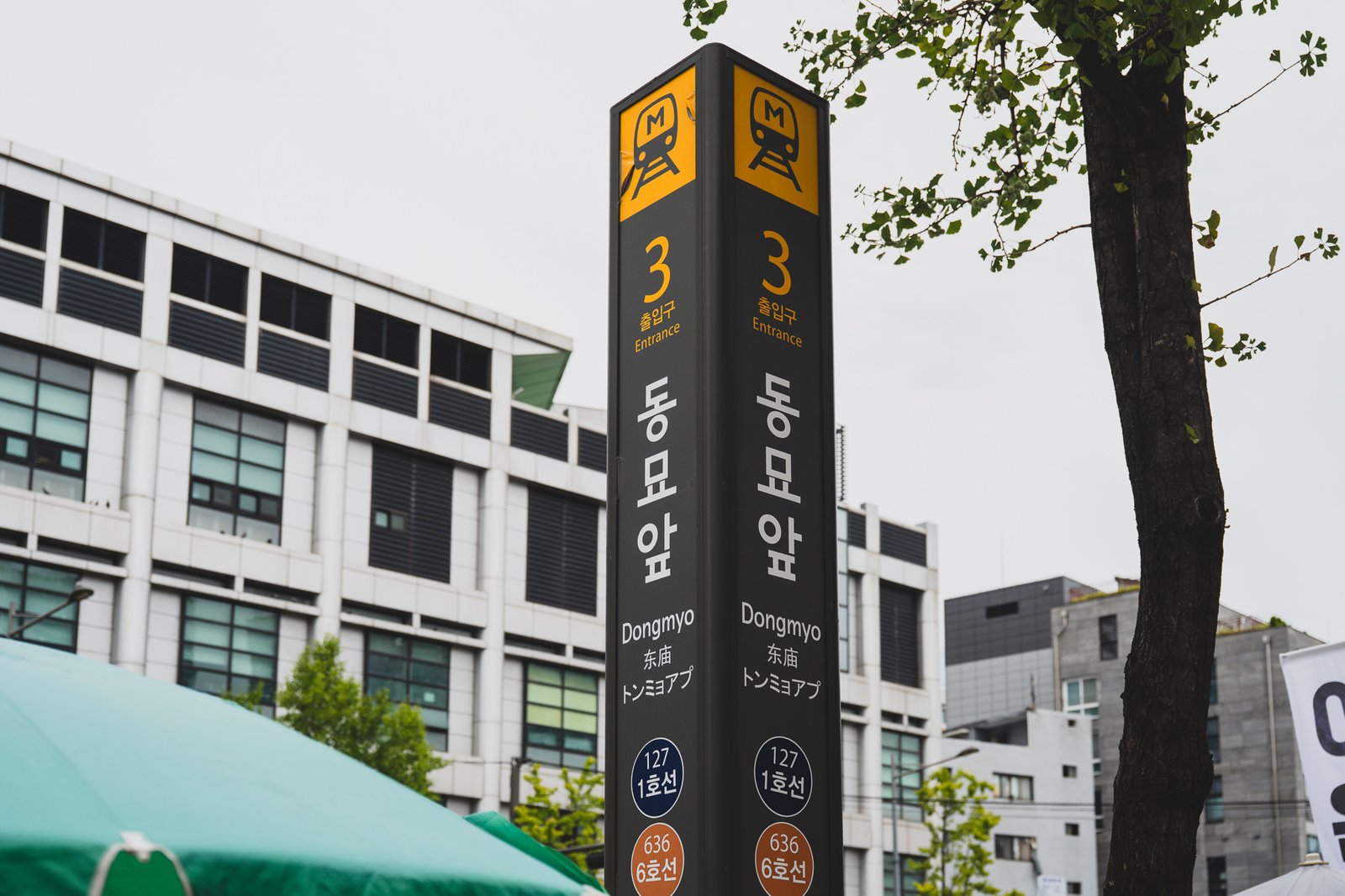
Getting There Is the Easy Part
Exit 3 of Dongmyo Station puts you directly into the market — no side streets to hunt for, no map-squinting required. The moment you’re above ground, clothing racks and secondhand shop signs are already in view. For a market this size, the accessibility is genuinely one of the best in Seoul.
The Food Is Its Own Reason to Visit
Most people think of Dongmyo purely as a clothing market, but the street food deserves a mention on its own. Misutgaru (a roasted-grain drink), iced coffee, and iced green tea are all a flat ₩1,000 (~$0.75) — less than half the price of a basic Americano at most cafes, for an old-school drink you won’t find on many modern menus. Toast stalls are scattered throughout too, useful for a quick refuel between racks of clothes.
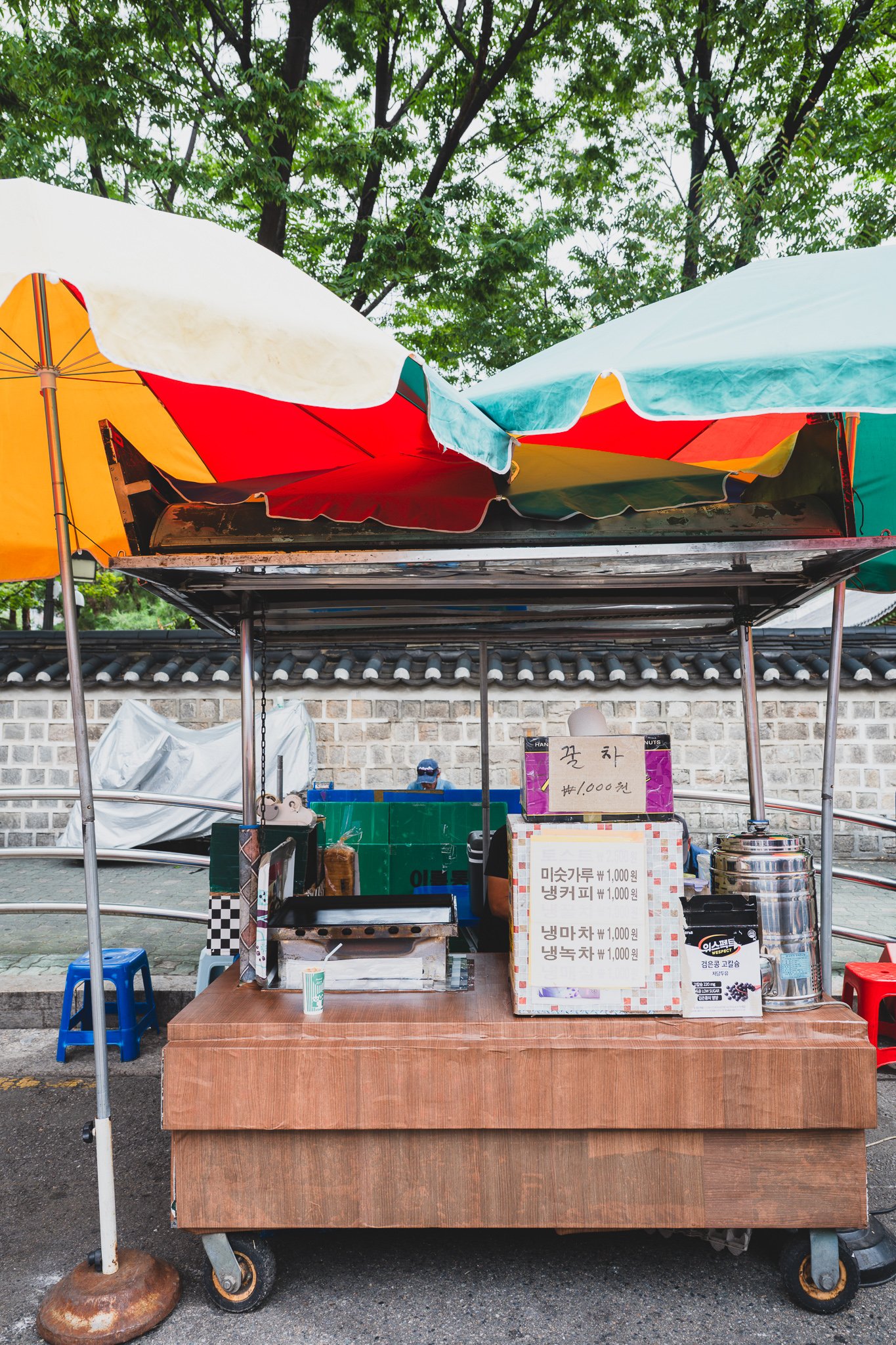
The Range Is Wider Than “Secondhand Clothes”
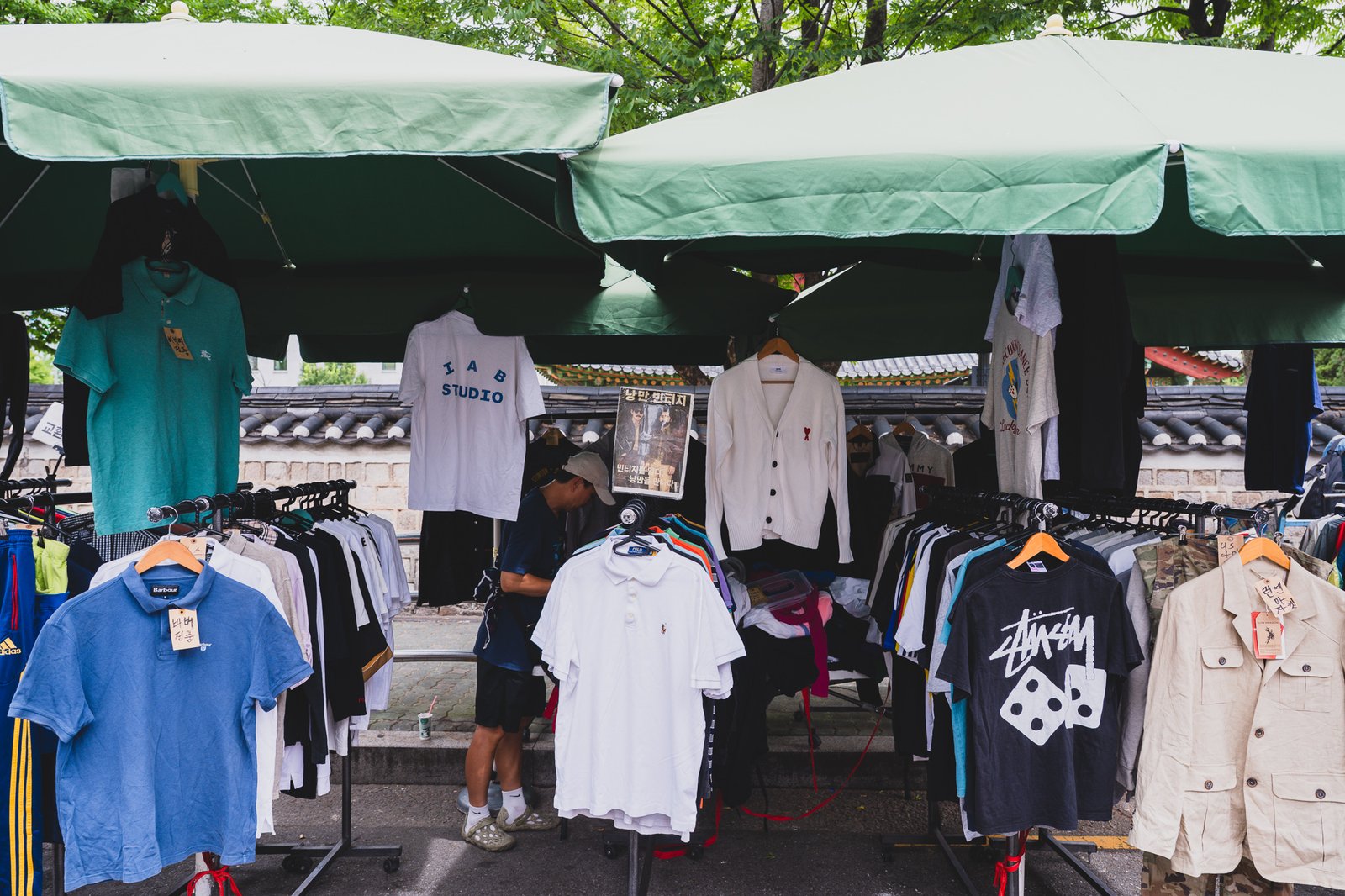
Walking through, it became clear fast that Dongmyo isn’t just “old clothes” in the generic sense. Polo and Burberry-style casualwear sit next to streetwear labels like Stüssy and genuine military surplus, often within the same block. Prices swing wildly stall to stall, which means the more ground you cover, the better your odds of a real find.
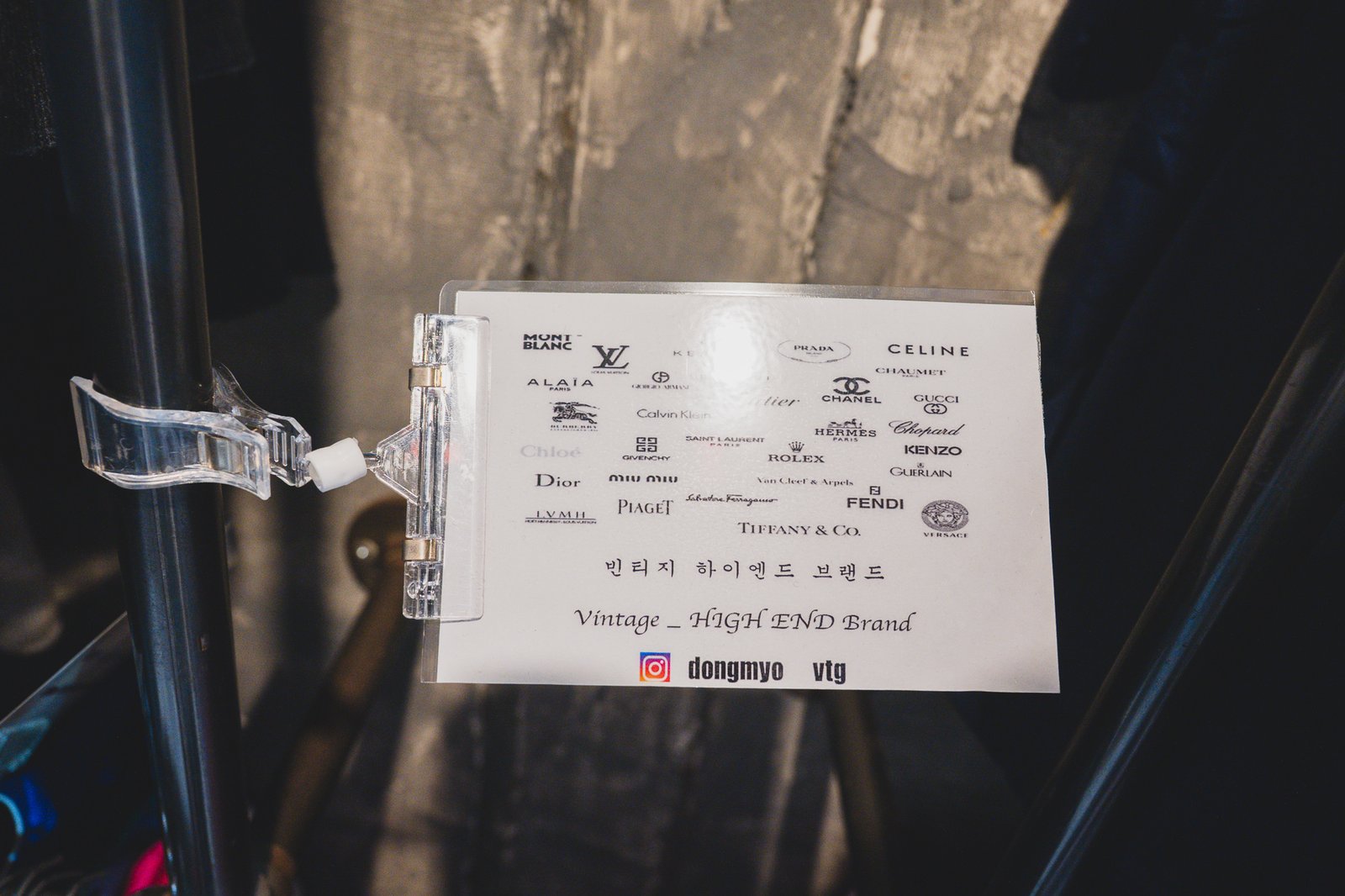
What genuinely surprised me was a hand-lettered sign at one stall reading “Vintage HIGH END Brand,” listing Montblanc, Louis Vuitton, Prada, Céline, Chanel, Hermès, and Rolex. Most people picture Dongmyo as strictly casual/thrift territory — finding a stall explicitly specializing in high-end vintage reframes the whole market. It reads less like “one big flea market” and more like a cluster of category-specific boutiques that happen to share a neighborhood.
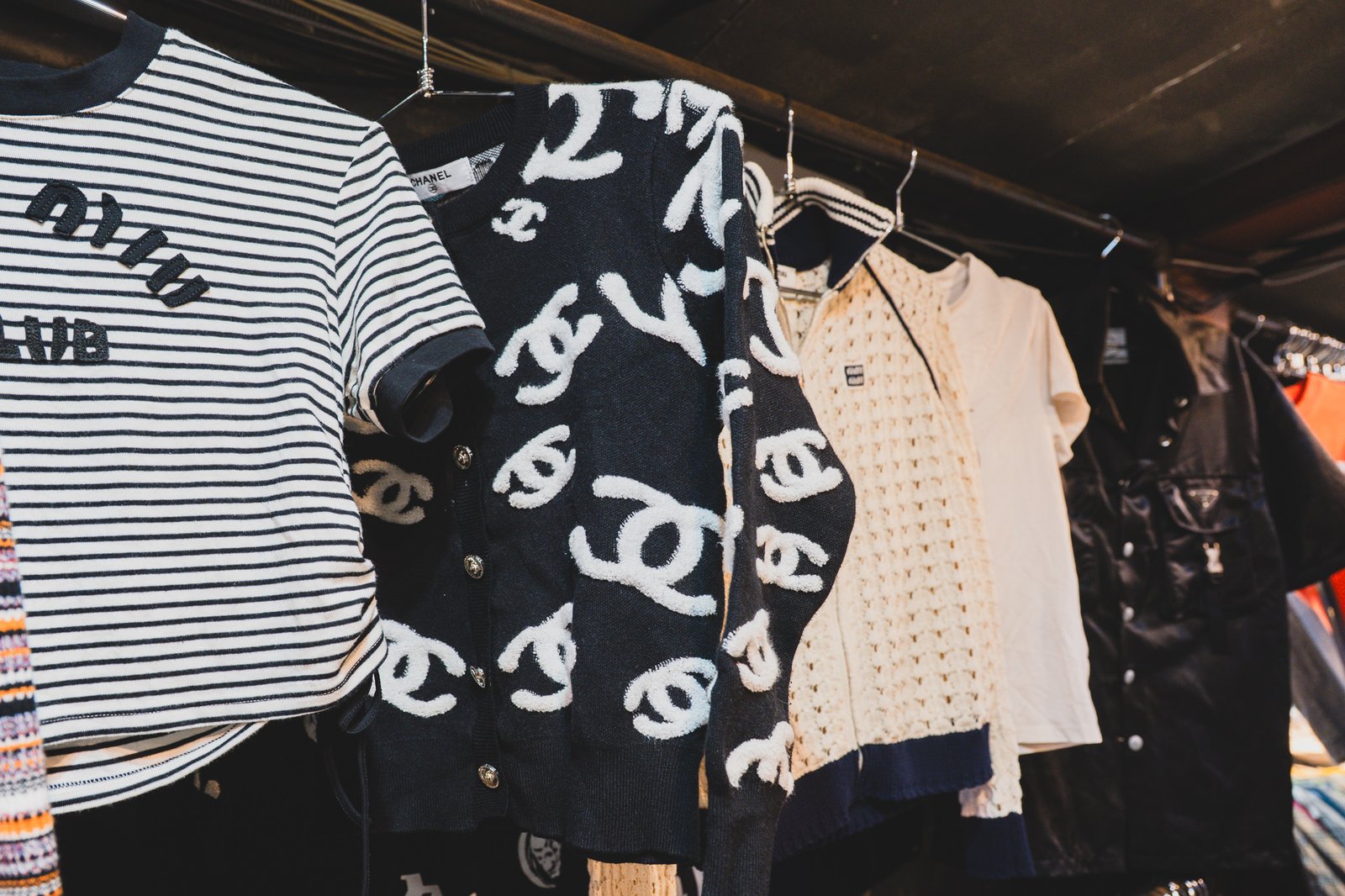
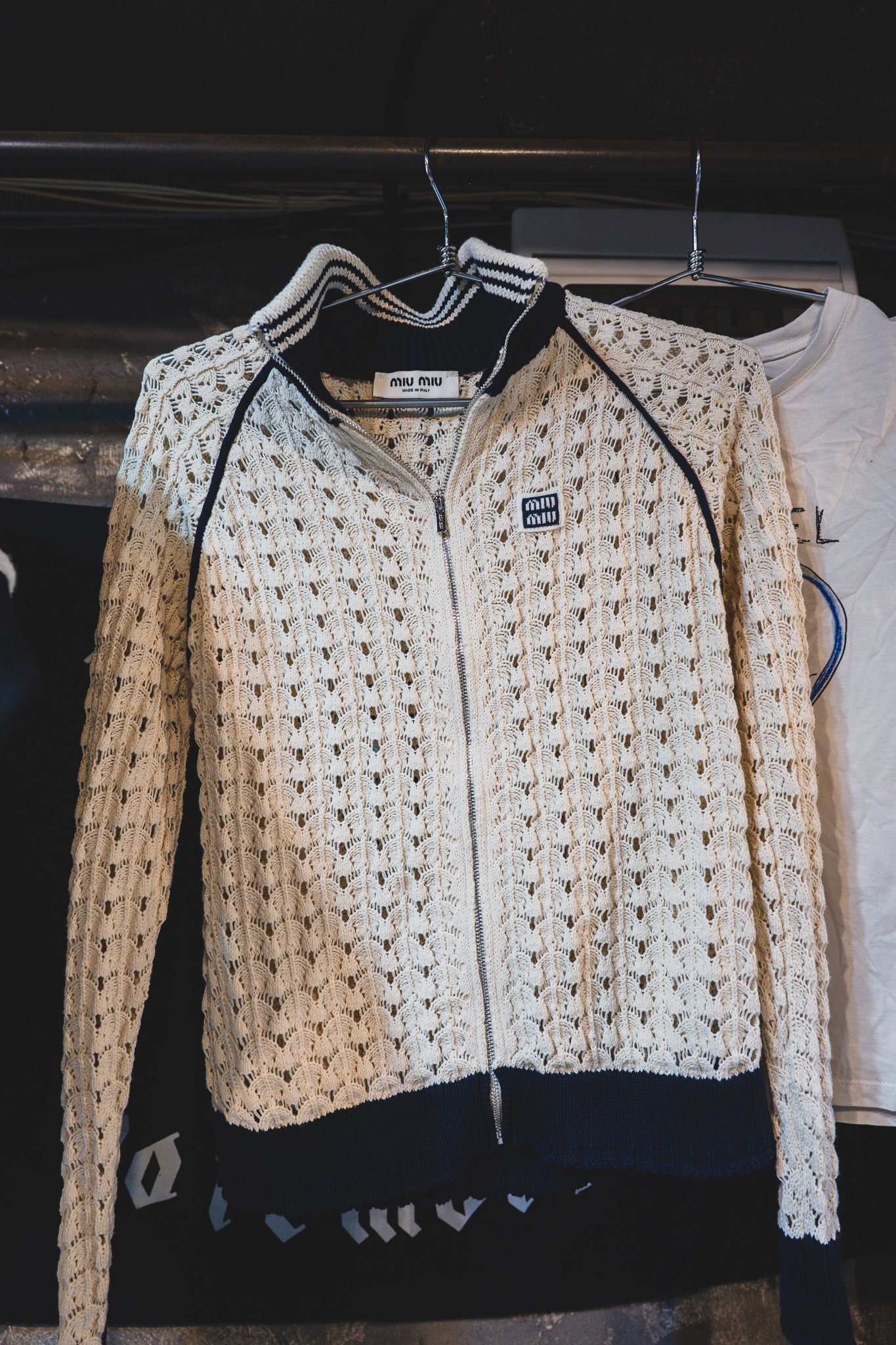
Denim shirts had real range too — Carhartt work shirts and others, each with subtly different washes and weights. New denim shirts tend to run thin and light these days; the vintage pieces here are noticeably heavier and thicker, and comparing that weight difference stall to stall turned into its own small hobby for the afternoon.
There’s also an electronics corner — early-2000s digital cameras, film cameras, the kind of gear most buyers aren’t picking up to actually shoot with but to use as props or decor, which lines up neatly with the current film-photography aesthetic trend.
Sports jerseys get real shelf space too: soccer leans toward European club jerseys, while baseball racks are stocked with Korean professional players’ numbers. Whether you’re buying out of genuine fandom or hunting jerseys as a normcore/retro styling piece, it’s a solid source either way. Vintage graphic work shirts turned up as well — Mickey Mouse and Tweety embroidery, oversized and a little goofy in a way that reads better than most new novelty merch does.
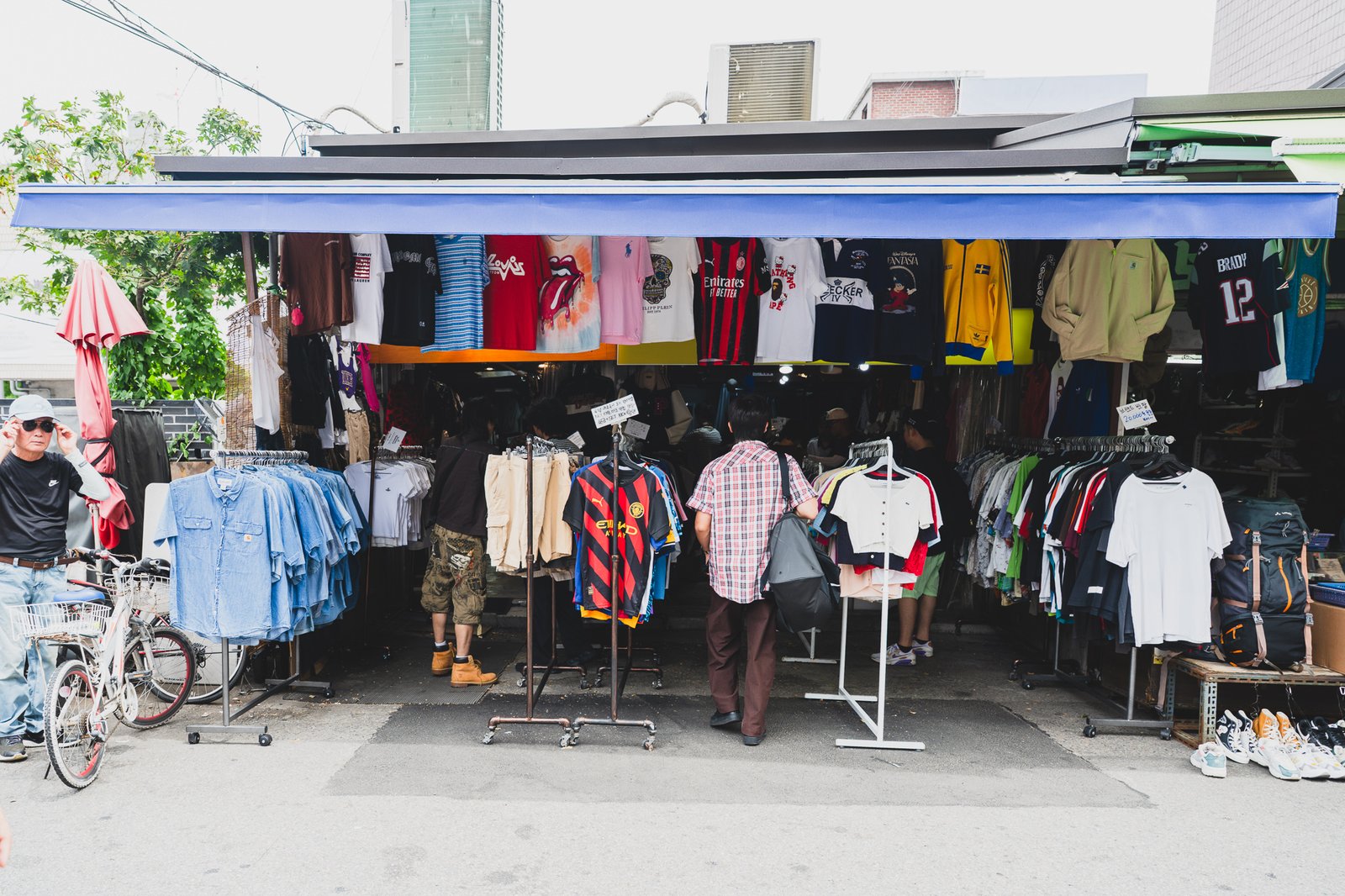
The Levi’s 550: A Fit Decision, Not Just a Purchase
The main target — vintage Levi’s — ended up being a 550. I went back and forth between a 32 and 34 waist for a while. Unlike new denim, vintage washes shift the fit slightly from what the tag size suggests, so trying it on in person mattered more than trusting the label. After going back to the mirror a few times, I landed on the 32. If this had been new denim, I’d have just grabbed my usual size without thinking twice — vintage shopping makes the actual fitting part of the experience rather than a formality. Price: ₩35,000 (~$25.50).
The Real Find: A Discontinued Ralph Lauren Polo Country Shirt
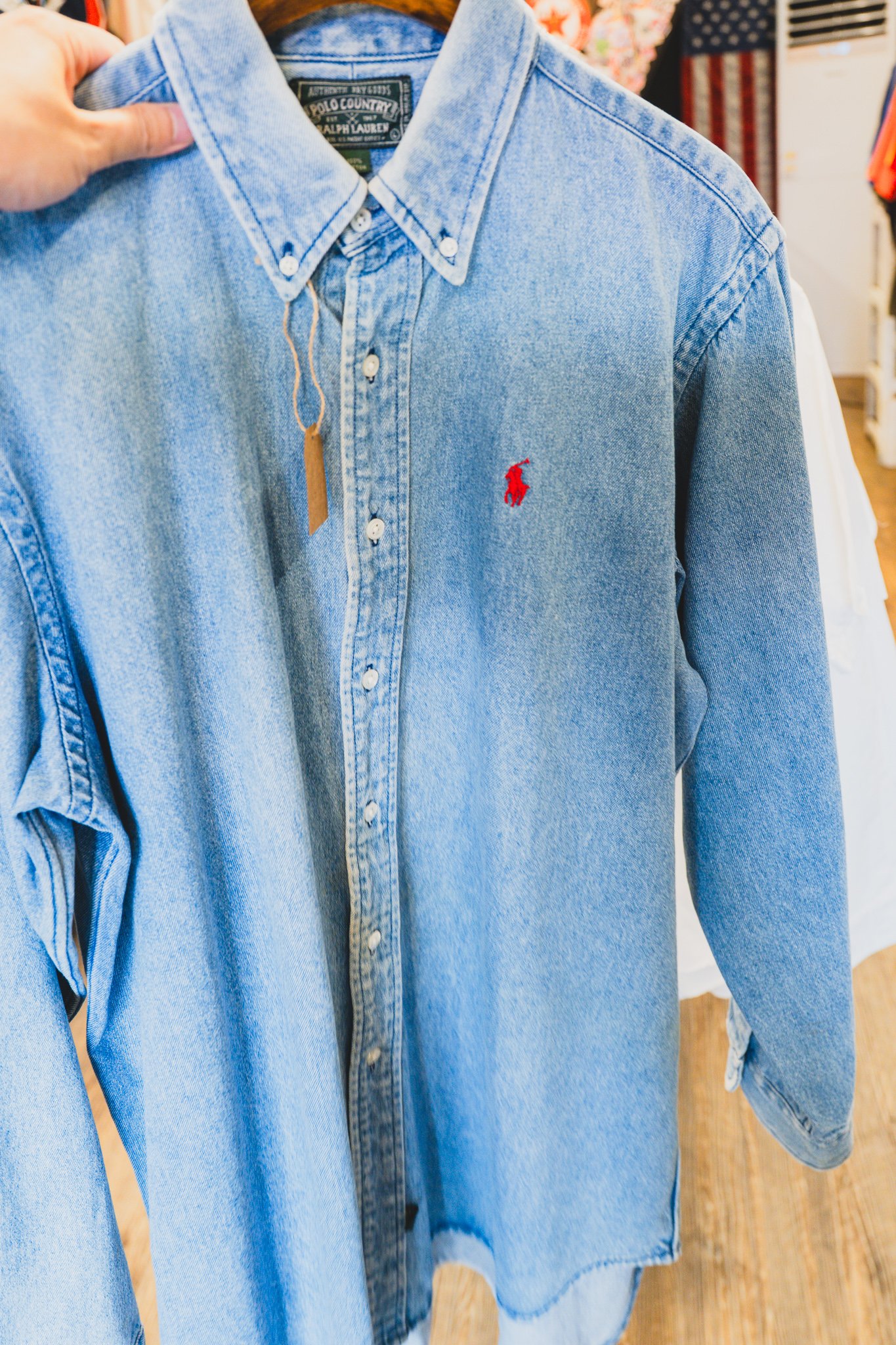
The actual highlight of the day, though, was something I wasn’t hunting for. A Polo Country denim shirt — I recognized the label the second I saw it. My high school homeroom teacher used to wear this exact shirt, and back then I had no idea what the brand even was; I just remembered thinking the fit looked good. Running into the same shirt years later, in the middle of Dongmyo, felt like exactly the kind of chance encounter that makes flea market shopping worth the effort.
The fabric alone sets it apart — noticeably thicker than anything in Polo Ralph Lauren’s current denim shirt lineup, closer in weight to a light jacket than a shirt. It works buttoned up as a shirt on its own, or layered open over a t-shirt like an outer layer.
Polo Country itself is a discontinued sub-label — Ralph Lauren launched it in 1988 as a separate line from the main Polo label, built around waxed cotton, tweed, and heavy denim, chasing an American West/country-lifestyle mood. It was discontinued in the mid-1990s. What makes it more than just “an old brand,” though, is its place in the lineage: Polo Country is widely regarded as the spiritual predecessor to RRL (Double RL), Ralph Lauren’s heritage workwear line launched in 1993. Given how sought-after RRL is now among premium denim collectors, Polo Country is essentially the prototype for that whole aesthetic. Short production run, long since discontinued — surviving pieces are genuinely scarce, and Polo Country specifically gets mentioned by overseas vintage sellers as a hard-to-find grail item. Listed at ₩110,000, the shop owner talked me down to ₩90,000 (~$65.70), mentioning it was a fairly rare piece — after seeing the label and feeling the fabric weight myself, that didn’t feel like a sales pitch.
Dongmyo Rewards Having a Target
My honest take: Dongmyo works better as “I’m hunting for a specific item” than “let’s just browse and see.” It takes real legwork, there are a lot of stalls to cover, and if you’re after something particular, budgeting extra time is worth it. That legwork is exactly what makes a find like the Polo Country shirt possible — something you simply cannot buy new, at any price.
FAQ
Q: What’s the best way to get to Dongmyo Flea Market?
A: Take subway Line 1 or Line 6 to Dongmyo Station and exit through Exit 3 — the market starts immediately above ground.
Q: Is bargaining expected?
A: Yes, especially on higher-priced or vintage/designer items — the Polo Country shirt in this piece was negotiated down about 18% from the listed price.
Q: Is Dongmyo only clothes, or is there more?
A: Clothing is the core, but you’ll also find sports jerseys, vintage electronics and cameras, and street food stalls throughout — it’s broader than a typical thrift market.
Q: Should I go with a specific item in mind, or just browse?
A: Going in with a target — a specific brand, era, or item type — makes the trip far more rewarding than open-ended browsing, simply because of how many stalls there are to sort through.
Bottom Line
If you’re the kind of traveler who’d rather dig for a one-of-a-kind piece than buy the same souvenir everyone else has, Dongmyo Flea Market delivers on that in a way few other Seoul shopping spots can. Go in with a rough target (a brand, an era, an item type), set aside more time than you think you need, and treat any high-end or unusual find as a genuine possibility — not everything there is basic thrift-store stock.