TL;DR: Hotels give you the most predictable, hands-off experience and the widest range across every budget. Guesthouses are the value pick, often with shared kitchens and a more social atmosphere, usually cheaper than hotels for similar locations. Hanok stays — traditional Korean houses with heated floors (ondol) and a courtyard feel — start around $40–50/night on the budget end and climb well past $270+ for upscale options, and they’re worth it specifically if experiencing traditional architecture is part of why you’re visiting Korea.
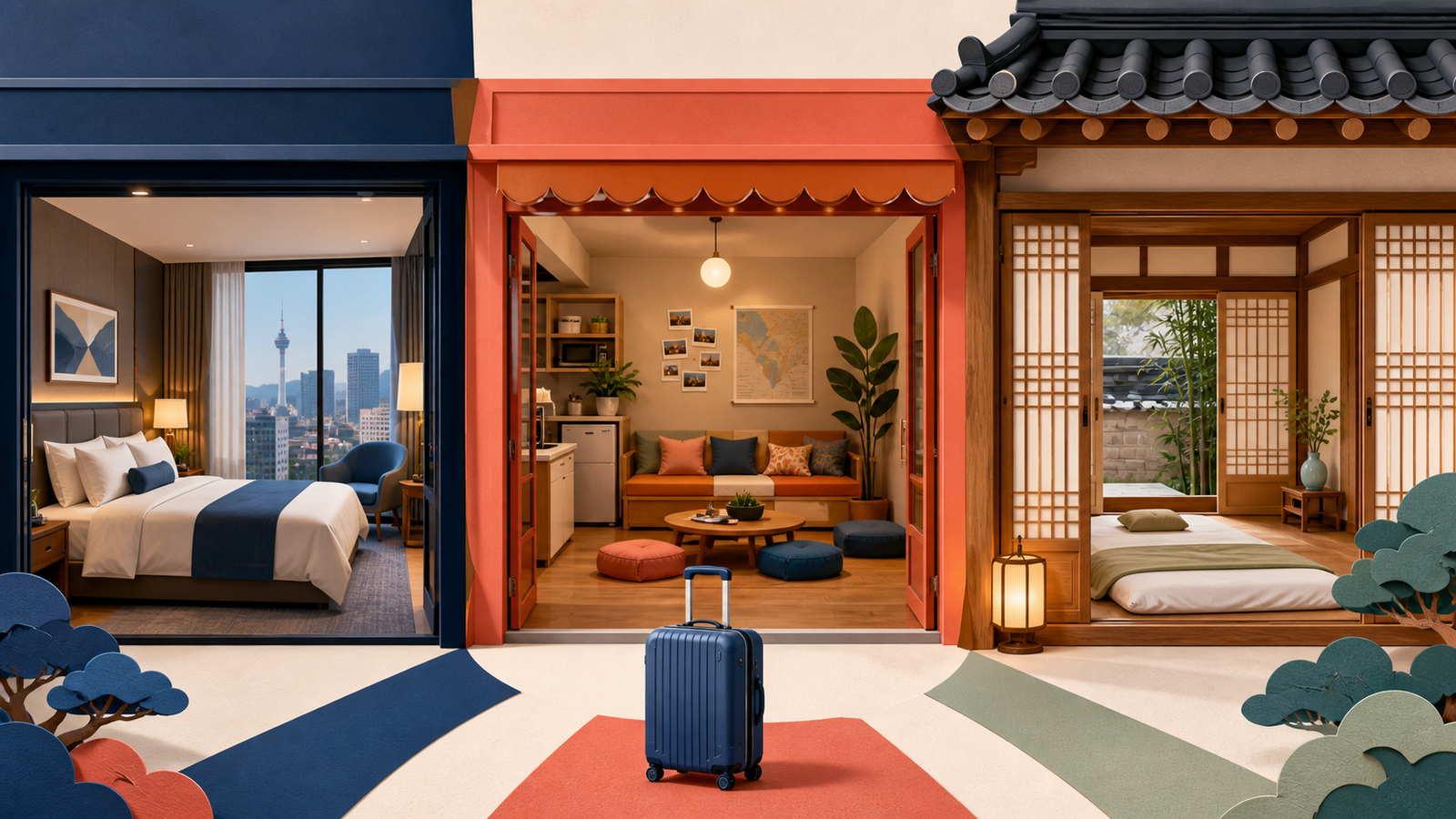
None of these is objectively “better” — they solve different problems, and a week-long trip can reasonably include more than one.
Hotels: predictable and available everywhere
If you want a straightforward stay with daily housekeeping, a front desk that speaks English, and no surprises, a standard hotel is the safest default — and Seoul has options at every price point, from budget business hotels to five-star properties. This is the right call if you’d rather not think about your accommodation at all and just want a reliable base.
Guesthouses: the value and social pick
Guesthouses generally undercut hotels on price for a comparable location, often trading some of the hands-off polish for a shared kitchen, a more communal atmosphere, and sometimes shared bathrooms depending on the property. If you’re traveling on a tighter budget, don’t mind a more casual setup, or actually want to meet other travelers, this is usually the better value than a budget hotel room.
Hanok stays: traditional, distinctive, worth planning around
A hanok is a traditional Korean house — low-slung, built around a courtyard, with under-floor heating (ondol) that’s genuinely part of the experience rather than just a design flourish. Staying in one is less about saving money and more about the experience itself.
What to expect:
– Prices range widely — budget hanok guesthouses start around $40–50/night, while upscale properties (some in Bukchon Hanok Village) can run $270+.
– Most modern hanok guesthouses balance tradition with comfort: private bathrooms, air conditioning, sometimes a small kitchenette, and heated floors rather than historically bare ones.
– Breakfast, when included, often leans toward warm home-style dishes rather than a big buffet spread.
– They’re typically located in or near traditional neighborhoods — close to palaces, historic markets, and cultural sites — which suits a first Seoul trip nicely.
The tradeoff: hanok rooms tend to be smaller and more minimalist than a comparable hotel room, and the traditional layout (lower ceilings, floor seating in some properties) isn’t for everyone.
How to decide
- Want zero-thought convenience? Hotel.
- Budget matters most, or you want a social stay? Guesthouse.
- You want a Korea-specific experience and don’t mind paying for it? Hanok, ideally for at least one or two nights even if you split the rest of your trip elsewhere.
A common pattern for longer trips: hotel or guesthouse for the bulk of the stay, with one or two nights in a hanok specifically for the experience, often timed around a visit to a historic neighborhood like Bukchon or Ikseondong.
FAQ
Q: Is a hanok stay uncomfortable for people used to Western beds?
A: Many modern hanok guesthouses offer Western-style beds rather than traditional floor bedding — check the specific listing rather than assuming, since it varies by property.
Q: Are guesthouses safe for solo travelers?
A: Generally yes — most cater specifically to independent travelers and have English-speaking staff, though it’s worth checking reviews for the specific property.
Q: Do hanok stays include modern amenities like WiFi and air conditioning?
A: Most contemporary hanok guesthouses do — they’ve been renovated internally while keeping the traditional exterior and layout.
Q: Which option is best located for sightseeing?
A: Hanok stays are often clustered near historic districts (Bukchon, Ikseondong), which can put you closer to cultural sites than a hotel in a more commercial district like Myeongdong.
Q: Can I book all three types through the same platforms?
A: Yes — major booking platforms list hotels, guesthouses, and hanok stays side by side, making it easy to compare all three for the same dates and area.
Bottom Line
Default to a hotel if you want simplicity, a guesthouse if budget and atmosphere matter more than polish, and set aside at least one night for a hanok if experiencing traditional Korean architecture is part of what brought you to Seoul in the first place.