TL;DR: Hand to Home is a Korean craft shop on the ground floor of 63 Building, home to the new Centre Pompidou Hanwha (opened June 2026). Everything it sells — folk tiger paintings, moon jars, mother-of-pearl charms, hanji paper hearts — is rooted in gilsang (길상), Korea’s centuries-old culture of objects believed to invite good fortune. Prices range from about ₩44,000 (~$32) for small charms to ₩2.4 million (~$1,750) for a hand-thrown moon jar. It’s an easy add-on if you’re already visiting the museum, and arguably a more meaningful souvenir stop than most gift shops in Seoul.
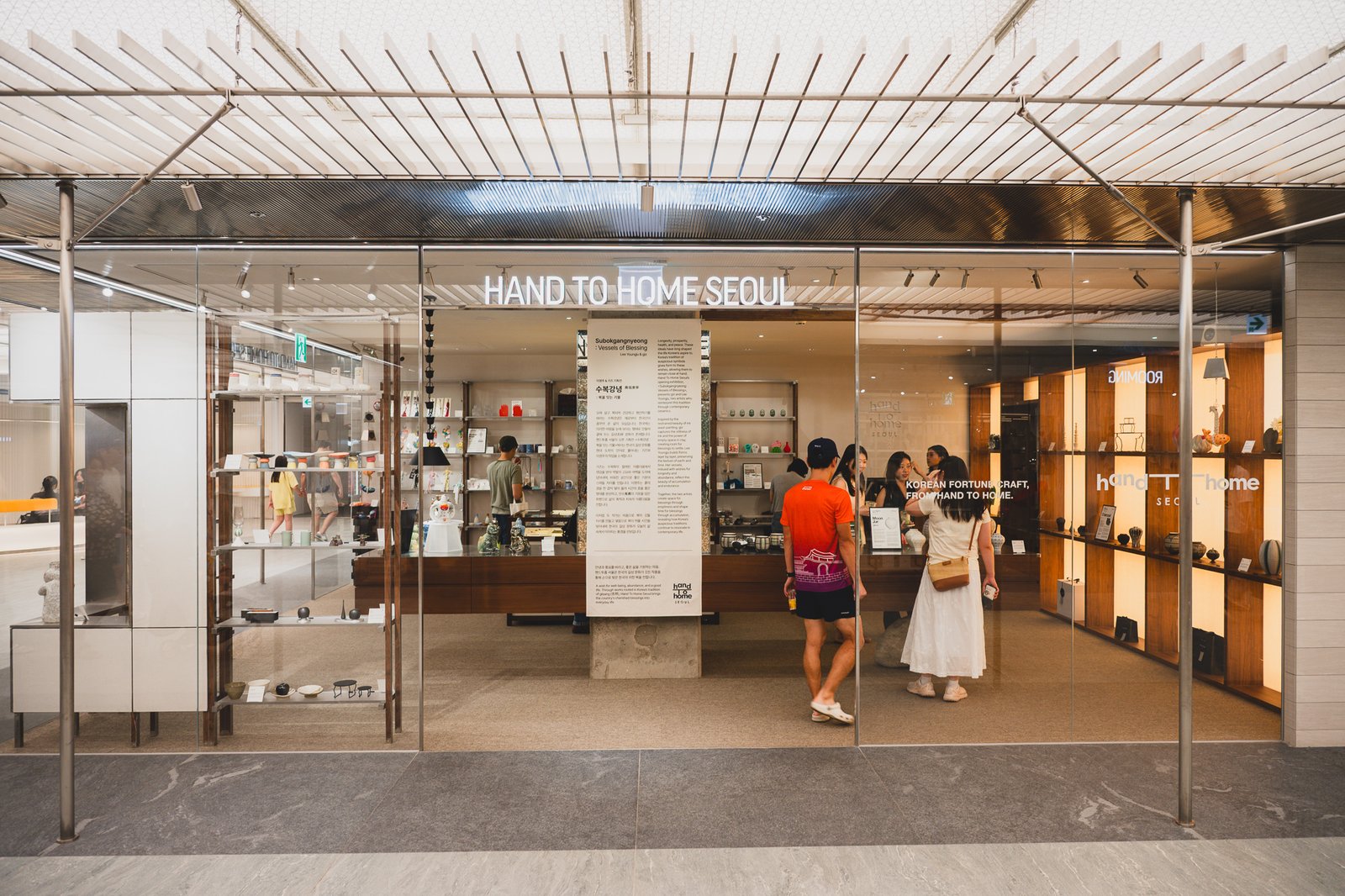
I Went for the Art. I Stayed for the Shop.
I’d gone to Centre Pompidou Hanwha — the first overseas outpost of Paris’s Centre Pompidou, which opened in Seoul’s Yeouido district in June 2026 — expecting to spend my time in the galleries. Instead, the place I lingered longest wasn’t a gallery at all. It was a small shop tucked into the building called Hand to Home.
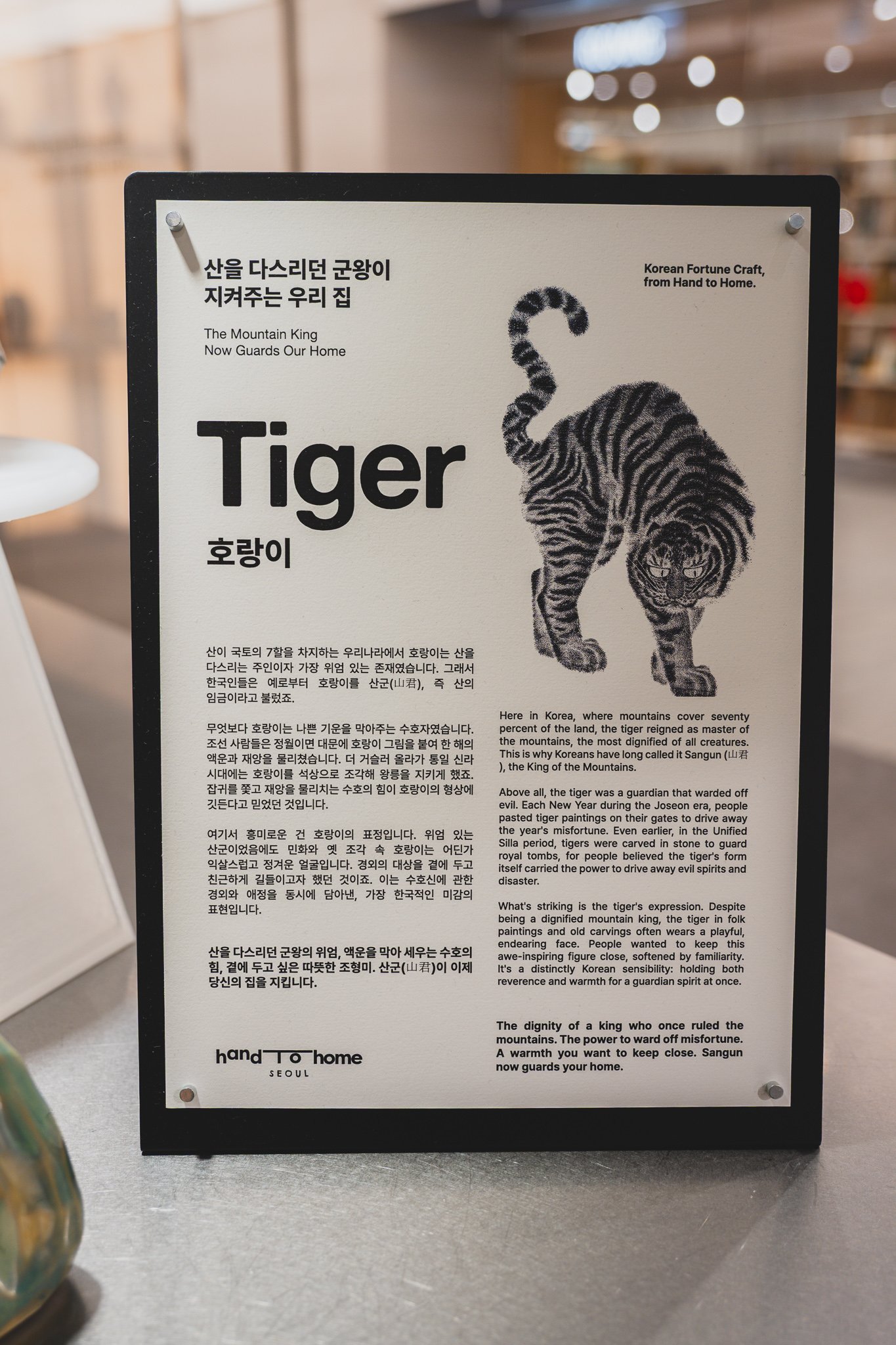
The name didn’t tell me much walking in. What stopped me was a line near the entrance about a “mountain lord” — a tiger — that used to protect the mountains and now protects your home instead. I went in mostly to figure out what that meant.
What Is Gilsang, and Why Does It Matter Here?
Gilsang (吉祥) is the Korean tradition of surrounding yourself with objects and symbols believed to bring good fortune, ward off bad energy, or express a wish — for a long life, a prosperous household, a good marriage. It’s the same instinct behind hanging a horseshoe or knocking on wood, except in Korea it produced an entire visual language: specific animals, specific patterns, specific objects, each carrying its own wish.
Hand to Home is built entirely around this idea. Rather than selling generic “Korean souvenirs,” it curates work from Korean ceramicists and craftspeople who are reinterpreting gilsang symbols for a modern shelf. Here’s what shows up on the floor, and what it’s actually supposed to mean:
-
Tigers — Korea is a mountainous country, and tigers were traditionally seen as sangun (산군), the “lord of the mountain.” Families used to paste tiger paintings on their front doors around the New Year to keep bad luck out. Tiger folk paintings from the Joseon dynasty (often paired with magpies, a style called hojakdo) are still one of the most recognizable gilsang images today — and notably, painted with a comically friendly face rather than a fierce one, since people wanted a protector they could also feel close to.
-
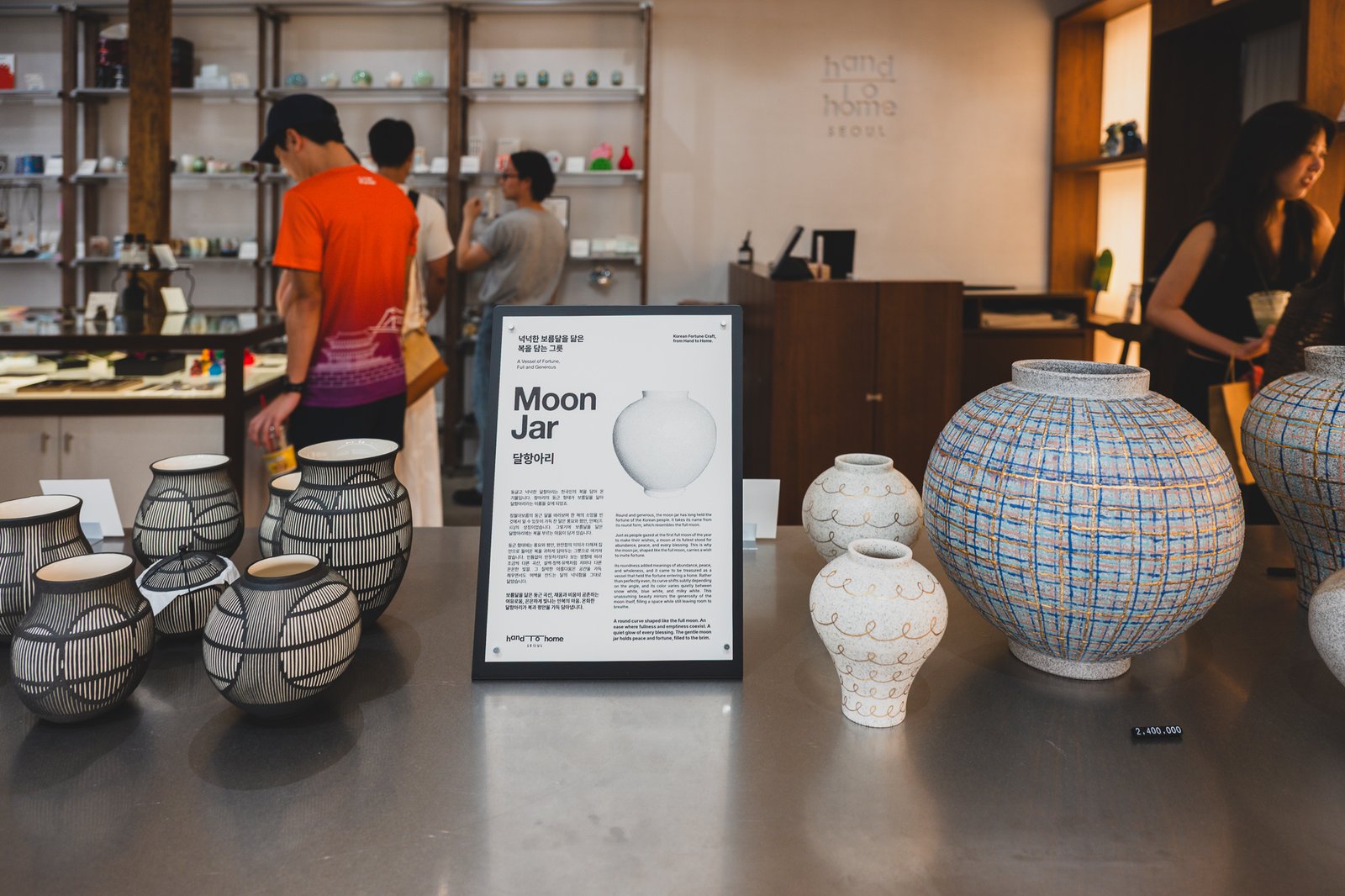
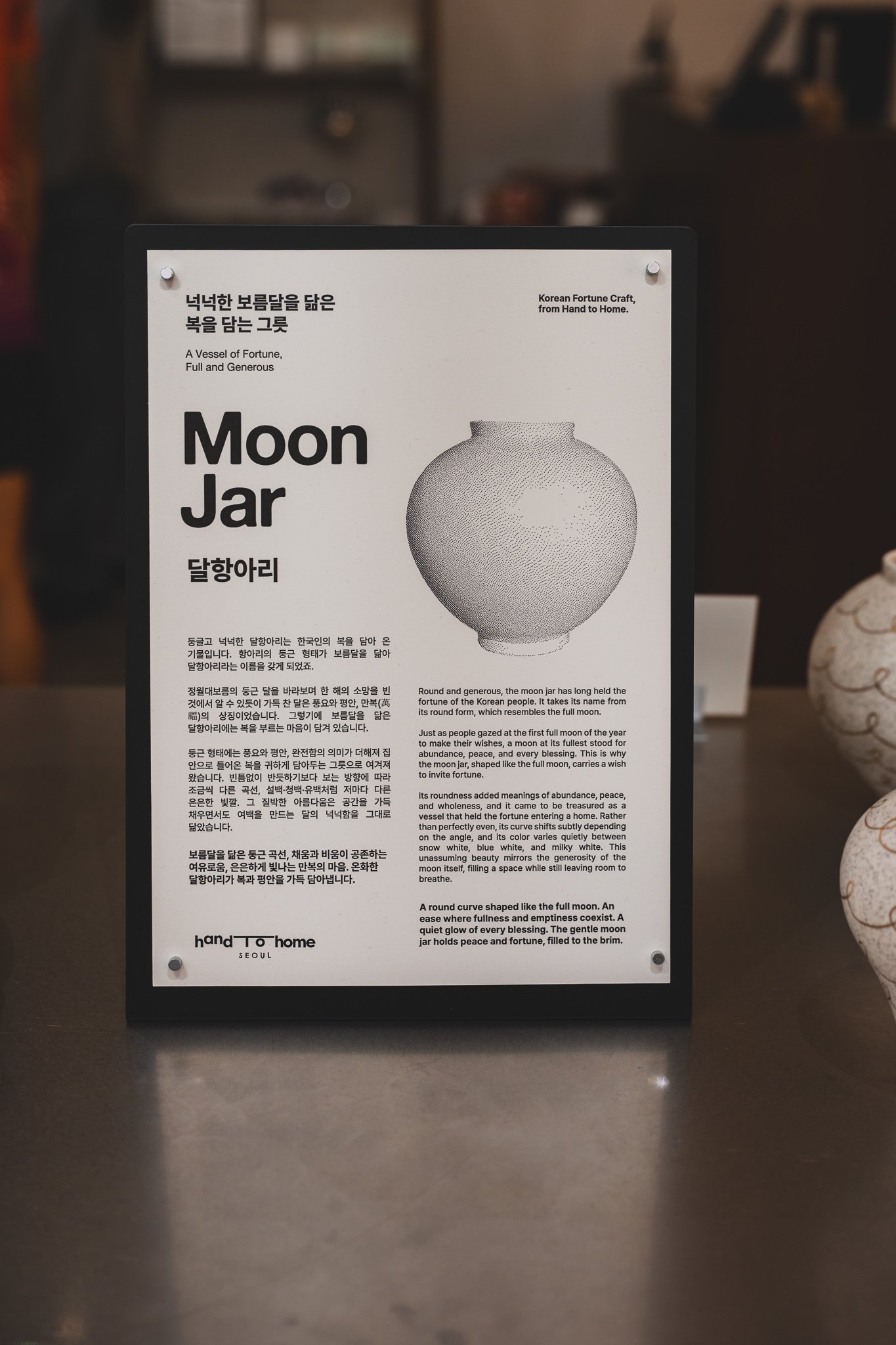
Moon jars — large, round white porcelain jars named for their resemblance to a full moon. Historically, people made wishes on the Lunar New Year’s first full moon, and the jar’s generous, rounded shape came to symbolize that same abundance.
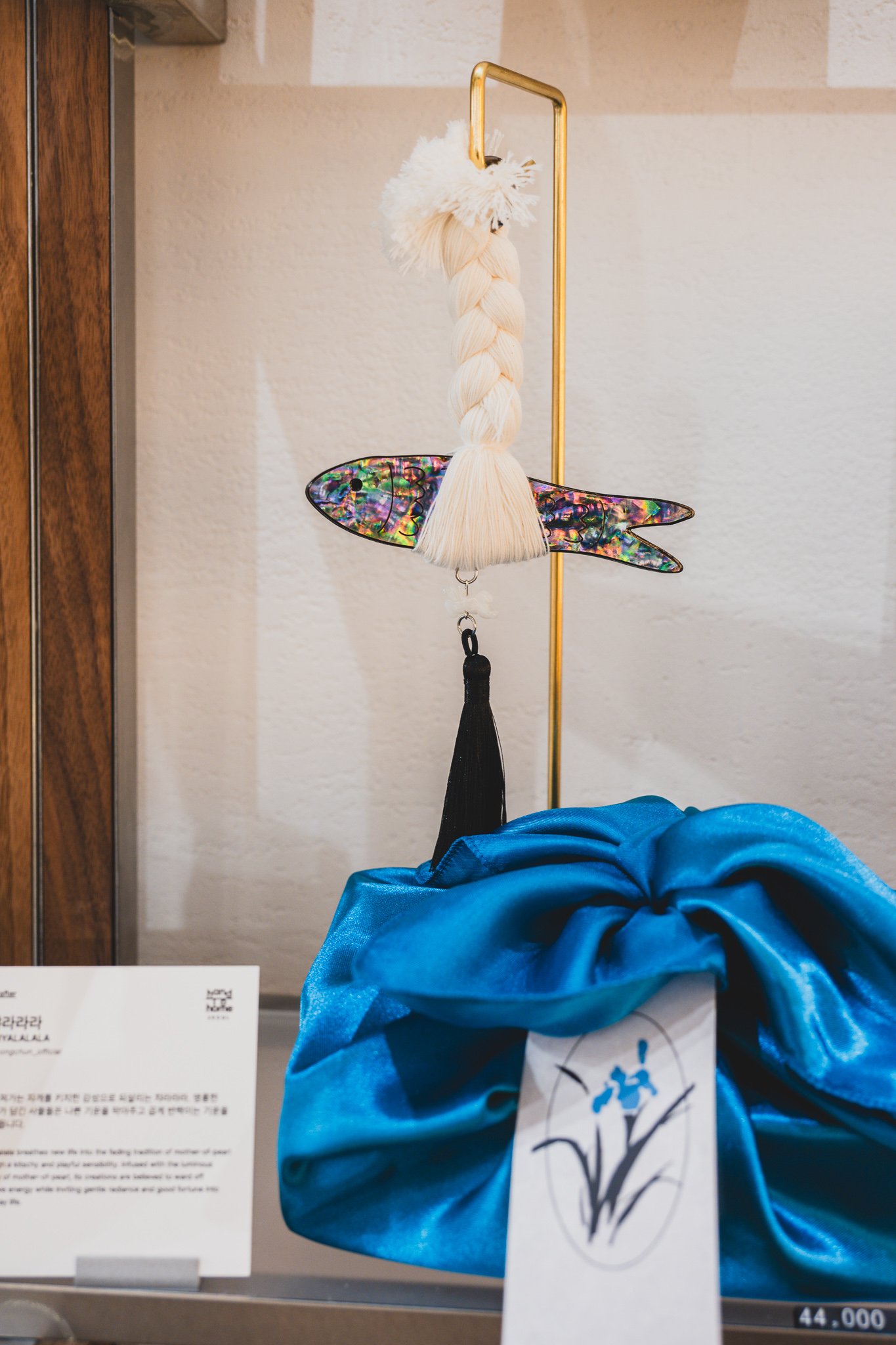
- Mother-of-pearl (najeon) charms — small inlaid pieces, often shaped like fish, believed to repel bad energy and invite good fortune.
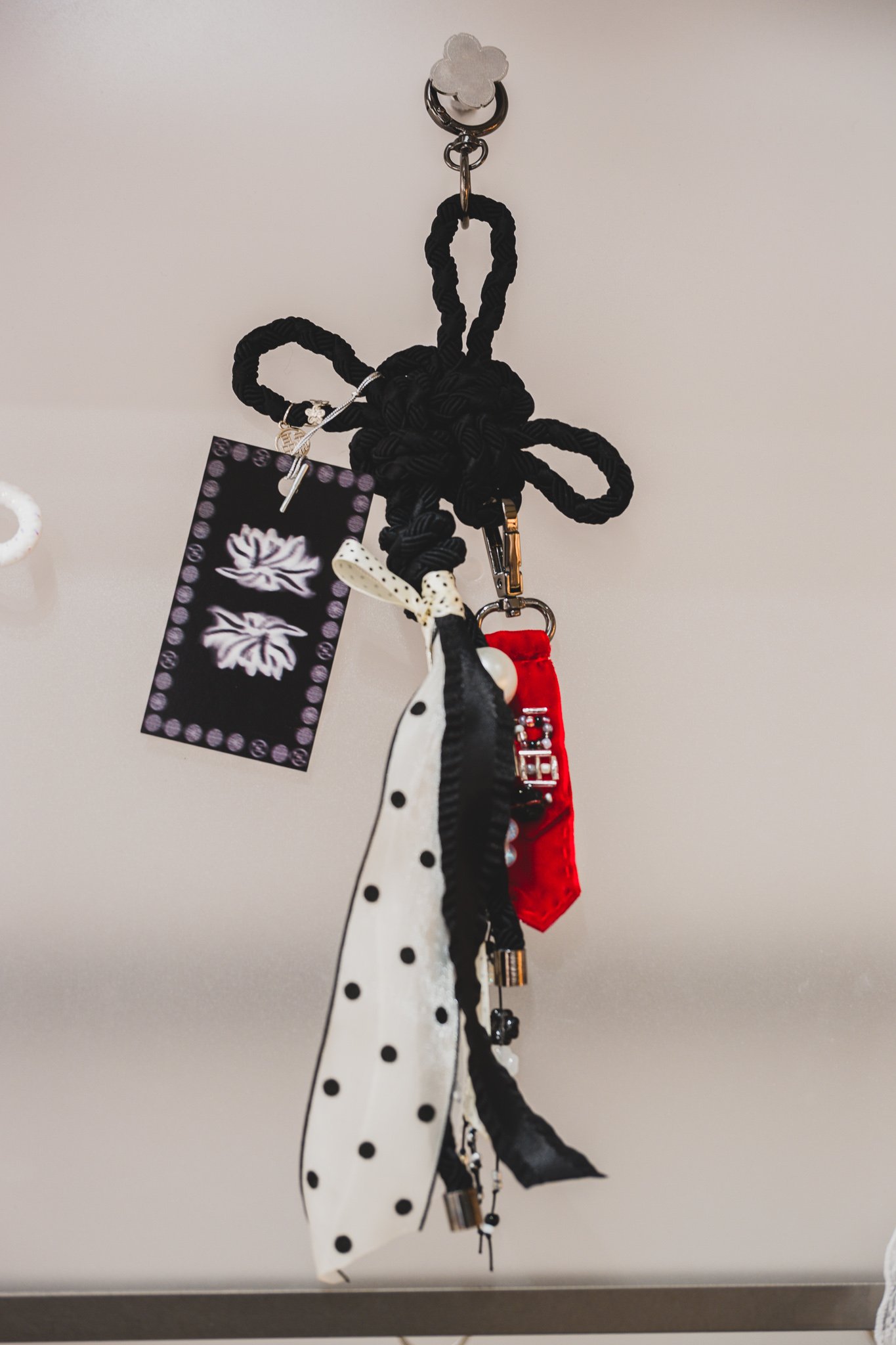
- Norigae knot charms — traditional hanbok accessories made of decorative knots, historically worn with wishes for longevity and prosperity woven in (literally — the knotting pattern itself carries meaning).
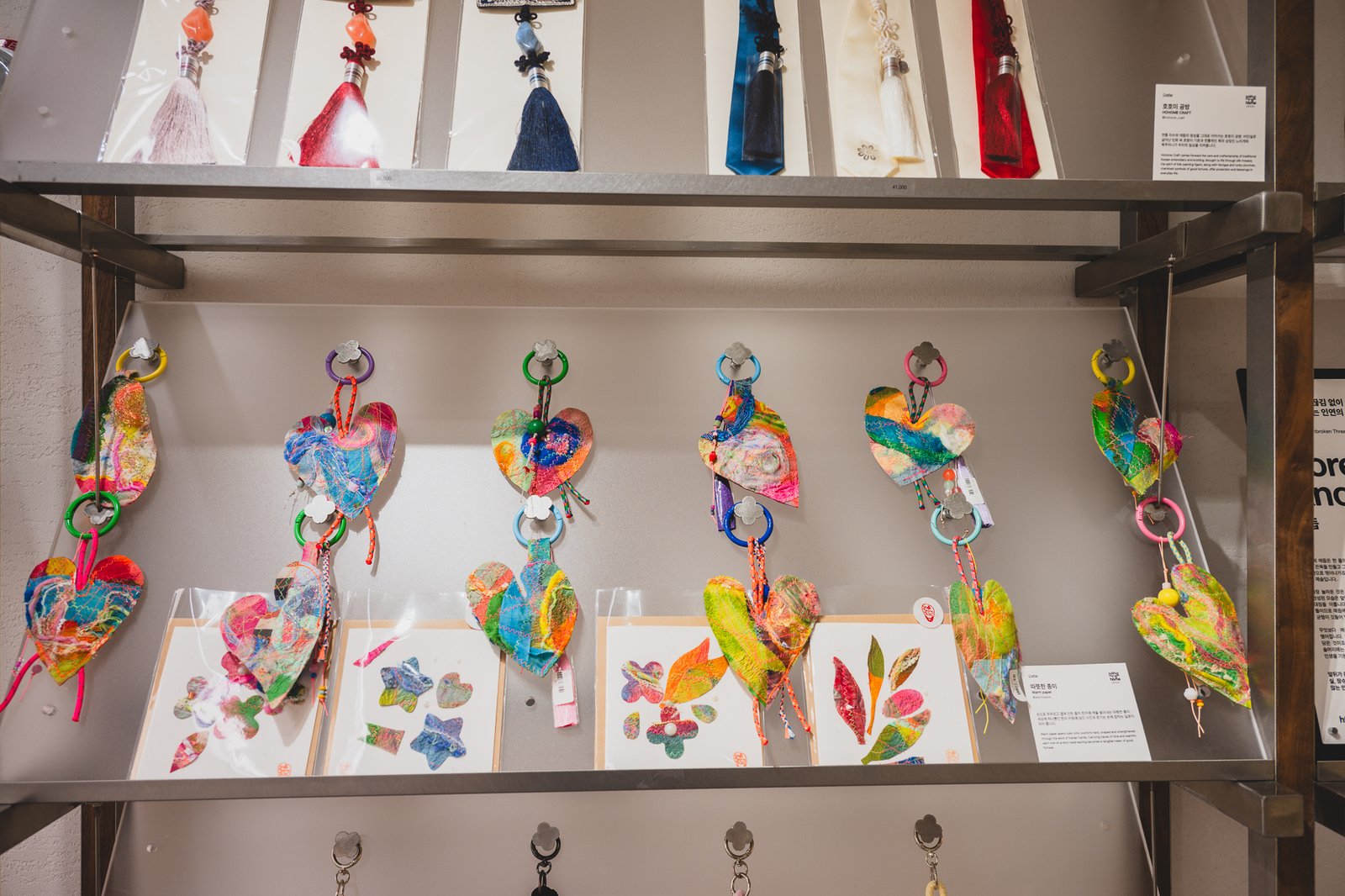
- Hanji paper craft — objects hand-folded and dyed from hanji, traditional Korean mulberry paper, which is said to grow stronger with time — read here as a metaphor for effort compounding into good fortune.
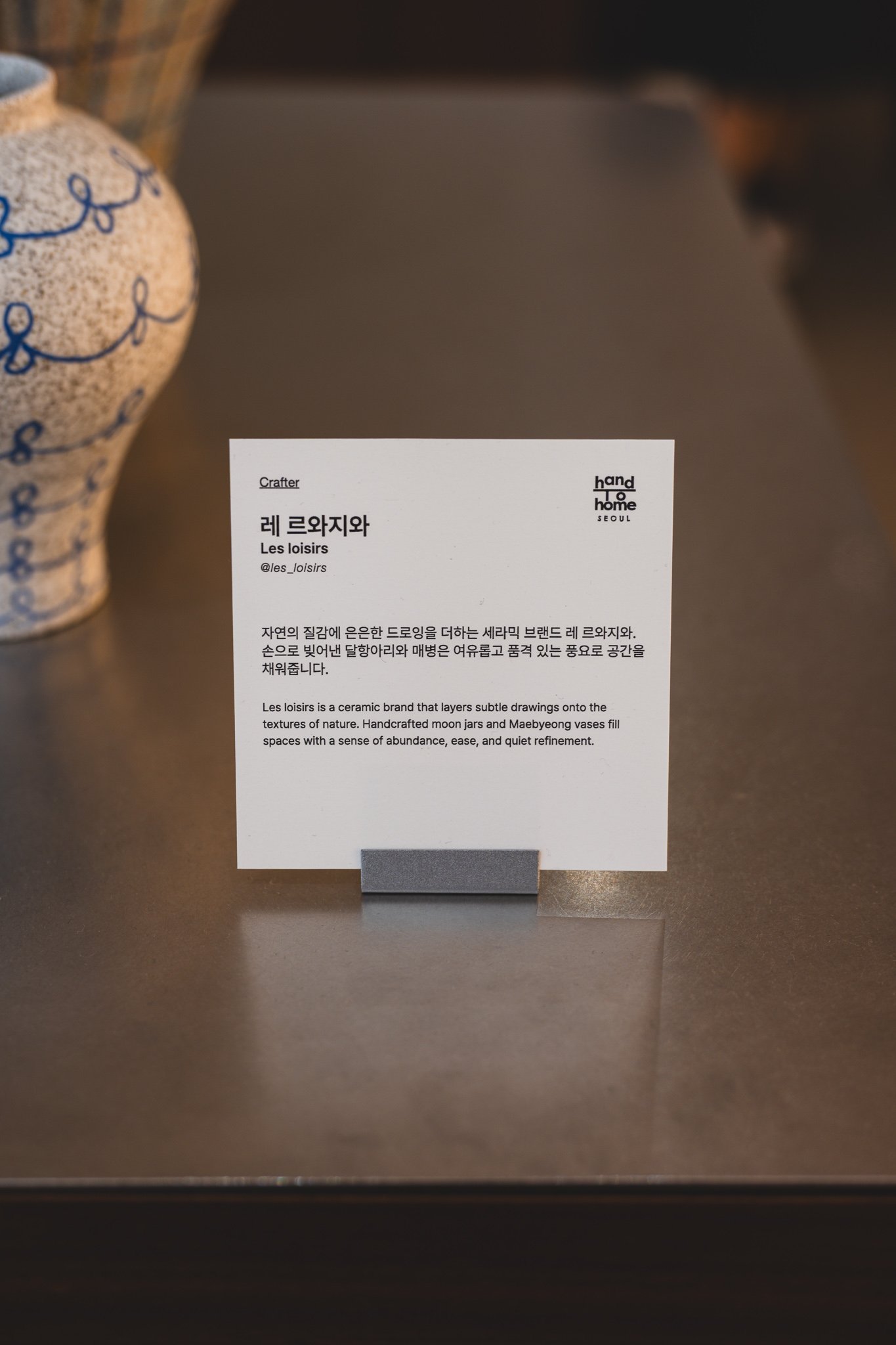
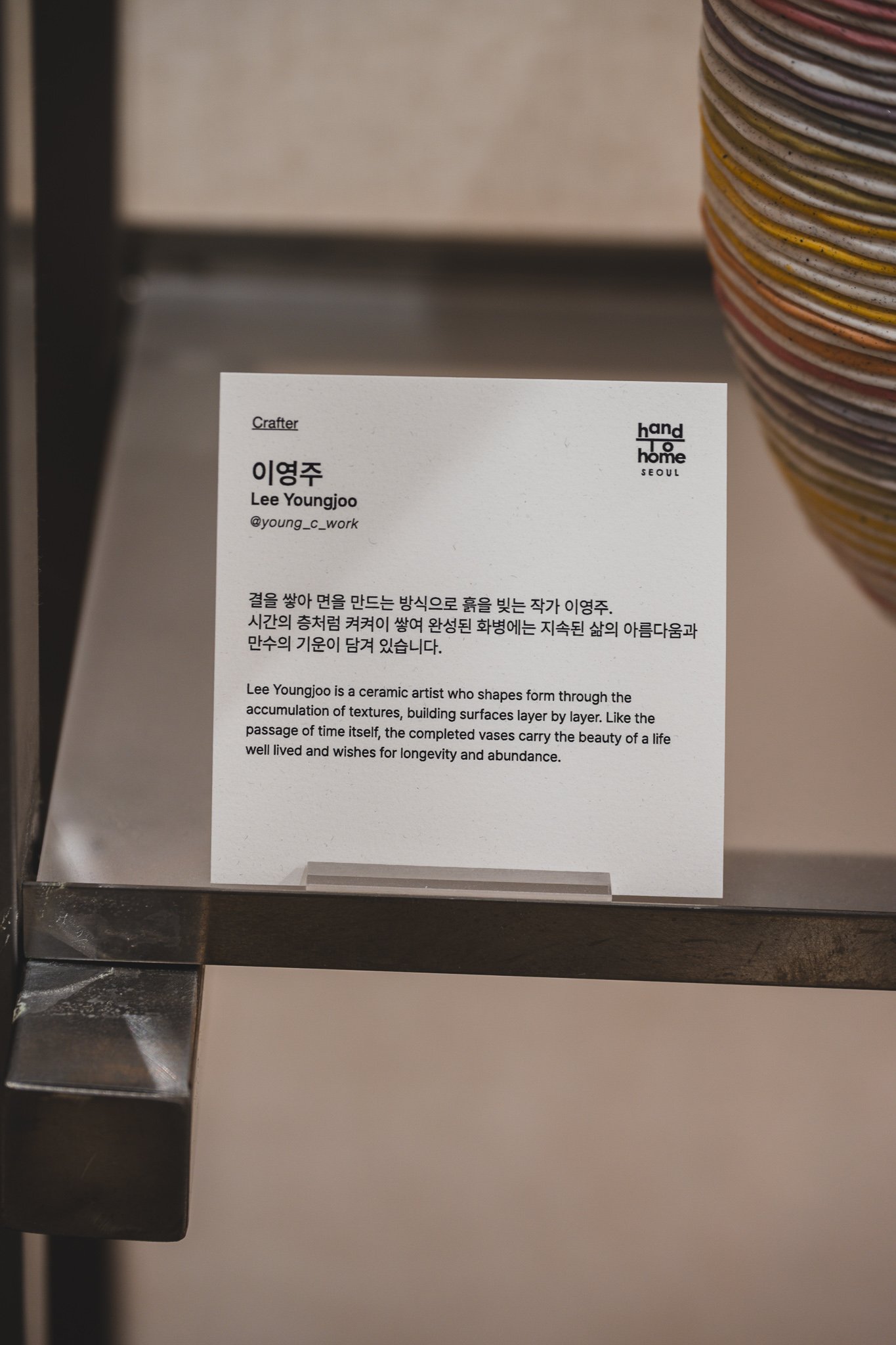
None of this is explained loudly. Each piece comes with a small bilingual card from the maker, and you have to actually stop and read them to get the story — which is a big part of why I ended up staying so long.
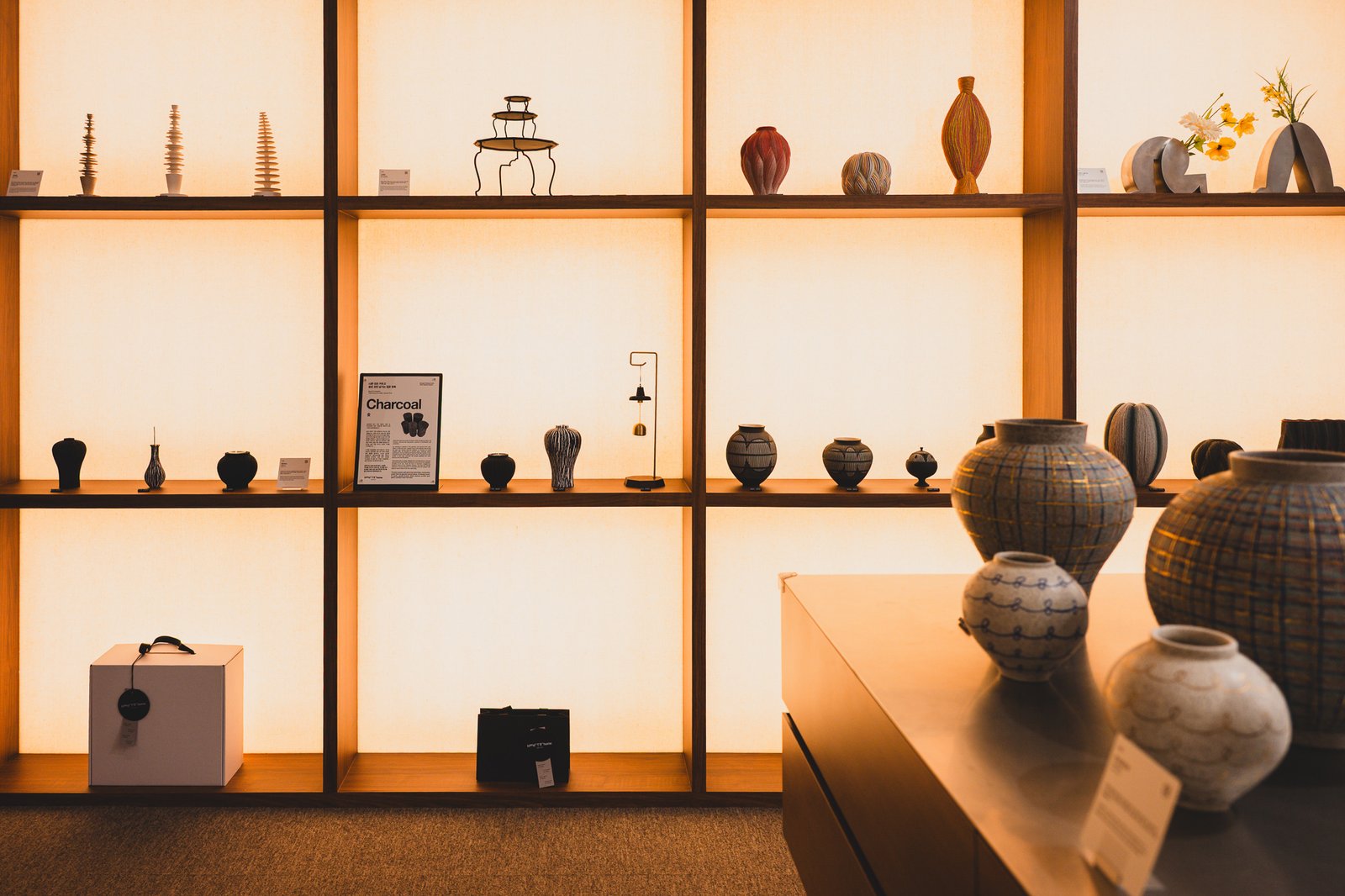
A couple of the makers behind these pieces are worth naming. Les loisirs, a ceramic brand, hand-throws the moon jars and maebyeong vases — their card describes the work as bringing “abundance, ease, and quiet refinement” to a space. Lee Youngjoo builds her vases by layering texture on texture, a process her card ties directly to mansu (萬壽), a wish for a long life — “like the passage of time itself.”
Finding the Shop
Hand to Home sits on the ground floor of 63 Building in Yeouido — the same building that now houses Centre Pompidou Hanwha (address: 50 63-ro, Yeongdeungpo-gu, Seoul). If you’re visiting the museum, it’s worth budgeting 20–30 extra minutes to walk through afterward.
Good news if you’re just after the shop: it sits along an open indoor corridor, not behind the museum’s ticket gate, so you likely don’t need to buy a Pompidou ticket (₩28,000, timed entry) just to browse. That’s based on what I saw on-site rather than anything posted officially, though, so it’s worth a quick double-check if a shop-only trip is your whole plan.
What You Can Actually Buy (and What It Costs)
Prices vary a lot depending on whether you’re after a small gift or a genuine collector’s piece:
| Item | Price (KRW) | Roughly in USD |
|---|---|---|
| Mother-of-pearl fish charm | ₩44,000 | ~$32 |
| Hanji paper heart charm (Hohomi studio) | Varies by piece | — |
| Reworked norigae knot charm | Varies by piece | — |
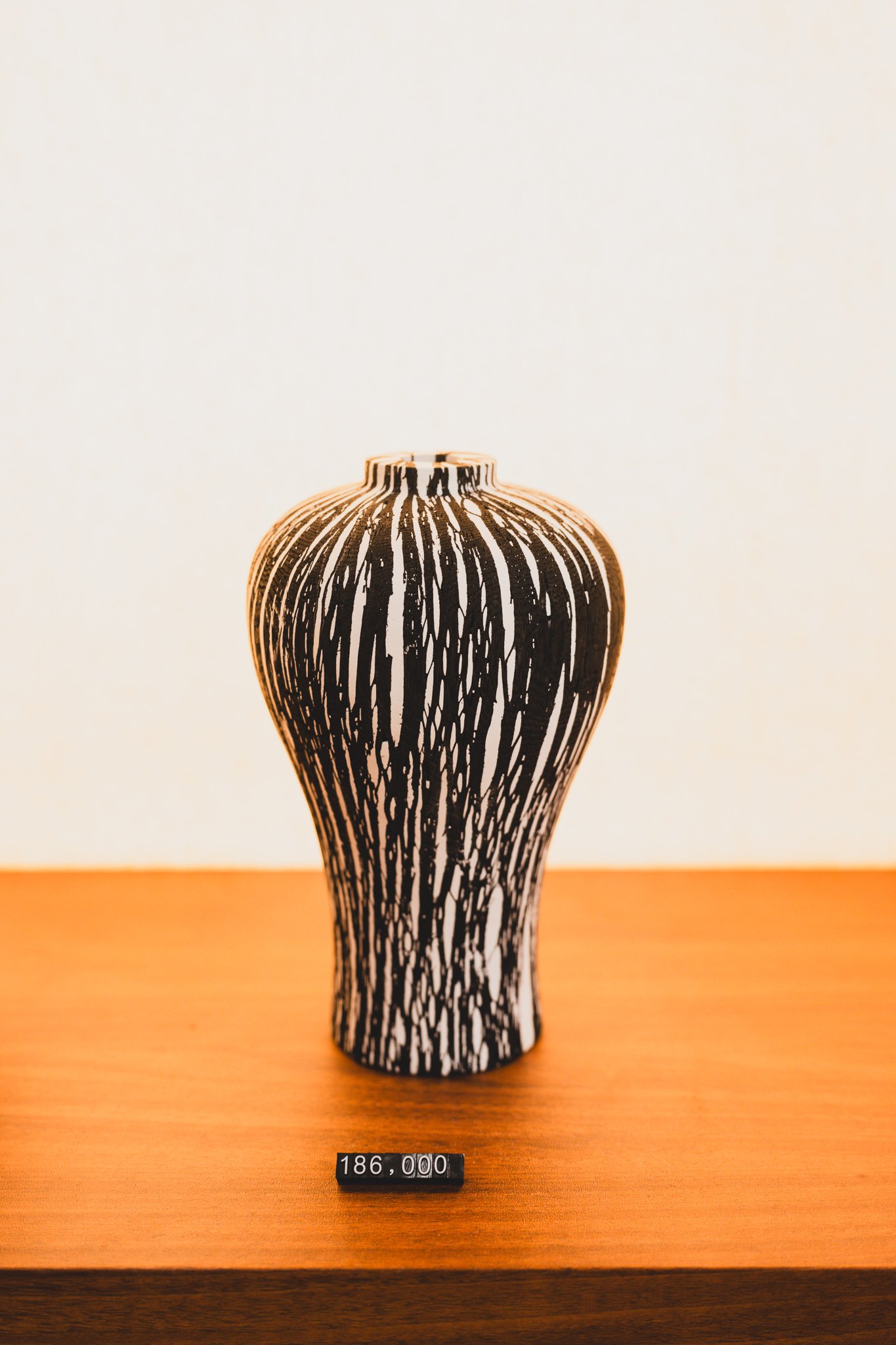
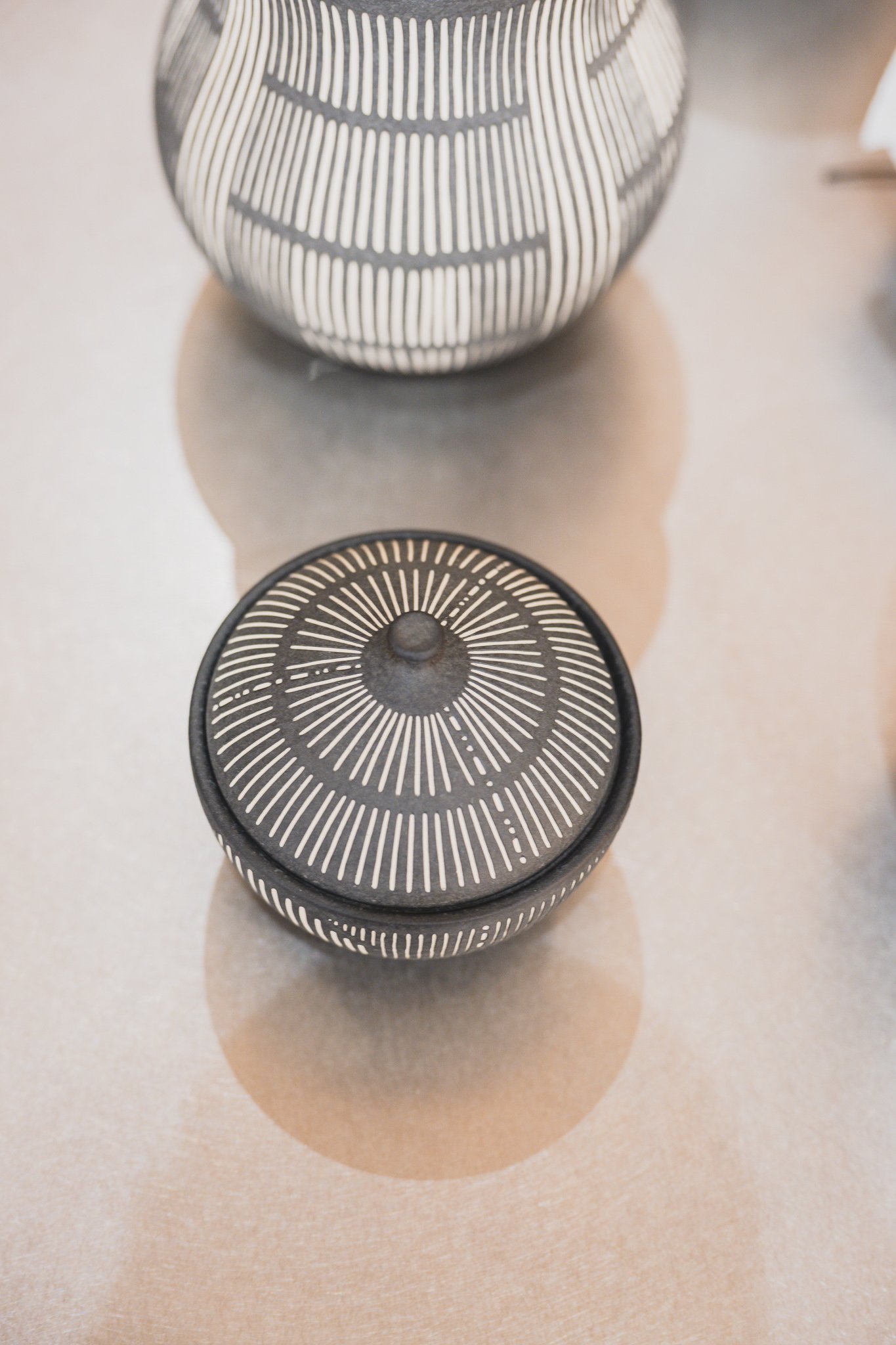
| Striped ceramic maebyeong vase | ₩186,000 | ~$135 |
| Hand-thrown moon jar | ₩2,400,000 | ~$1,750 |
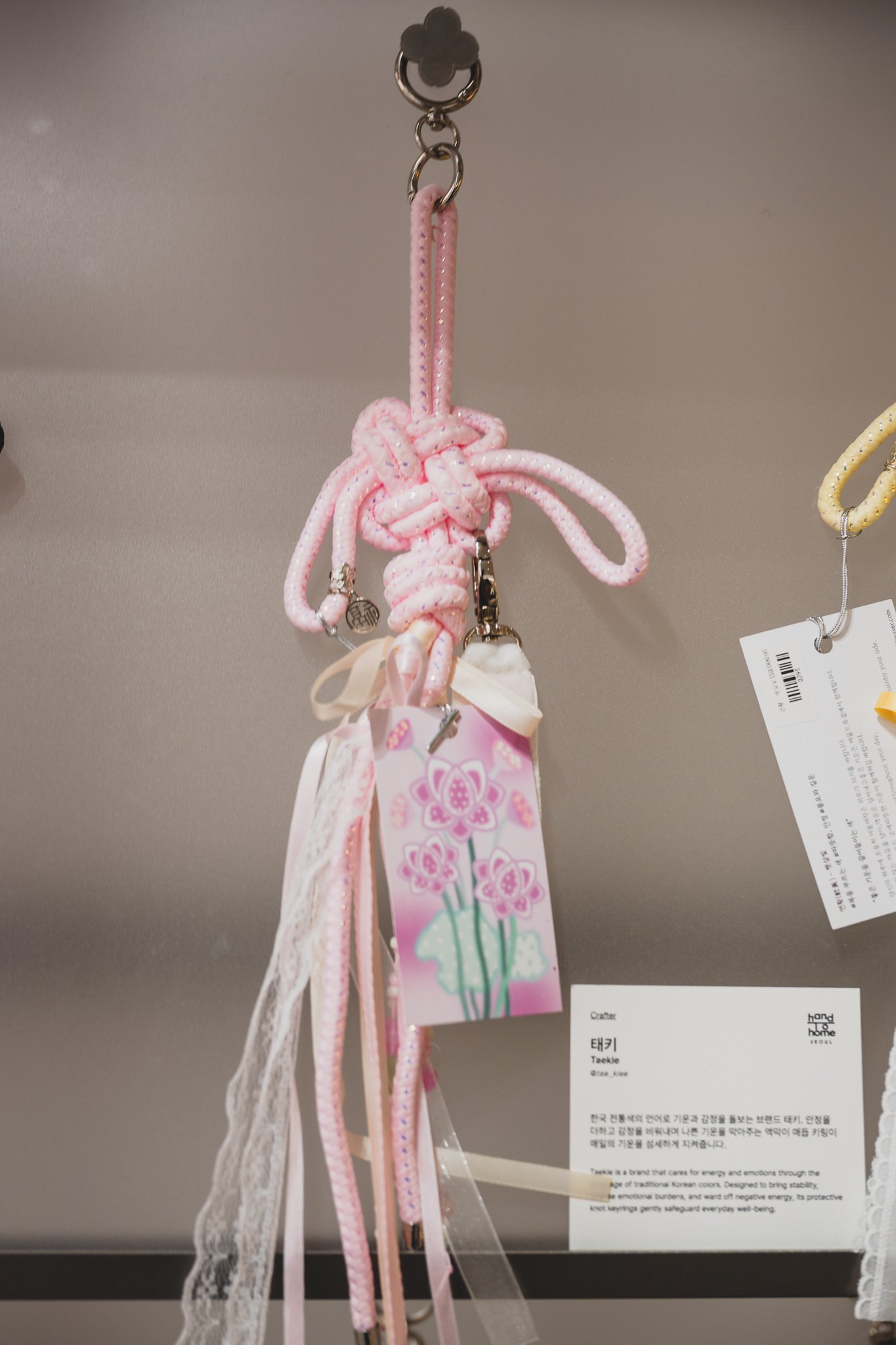
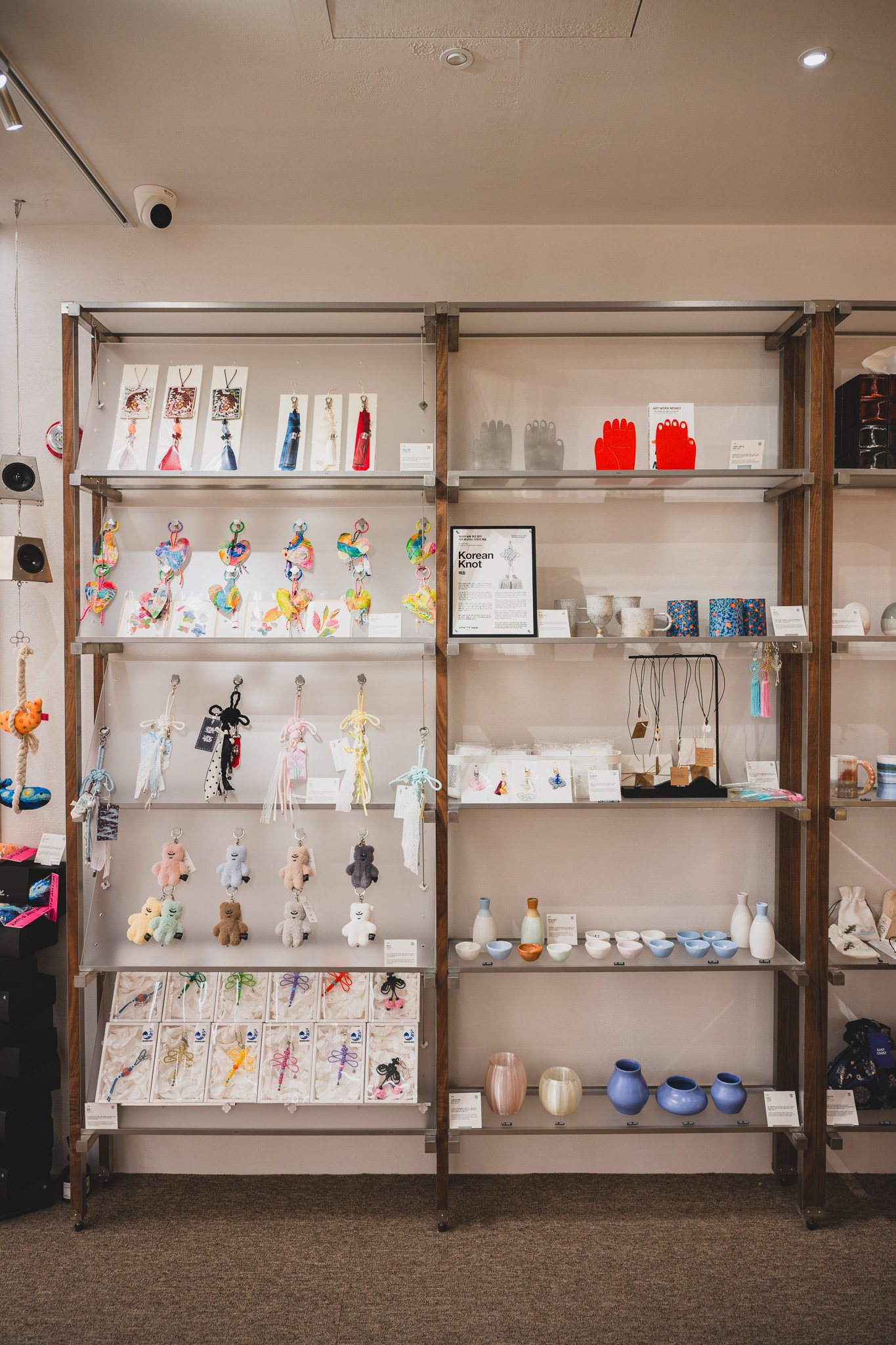
One knot-charm brand stood out: Taekie, whose card explains itself as looking after “energy and emotions through the language of traditional Korean colors,” designed to “bring stability” and “ward off negative energy” one keyring at a time. It’s a good example of how literally the shop takes the gilsang premise — even a $15 keychain comes with a stated job to do.
(USD figures are rough conversions and will shift with the exchange rate — treat them as a ballpark, not a quote.)
The gap between the ₩44,000 charms and the ₩2.4 million moon jar is intentional — the shop covers everything from an easy, pack-in-your-suitcase gift to an actual art acquisition. If you’re shopping for a gift, the charms and small ceramics are the sweet spot; if you’re after something closer to a museum-piece, the moon jars and vases from named ceramicists are where the shop’s curation really shows.
Browsing the Shelves
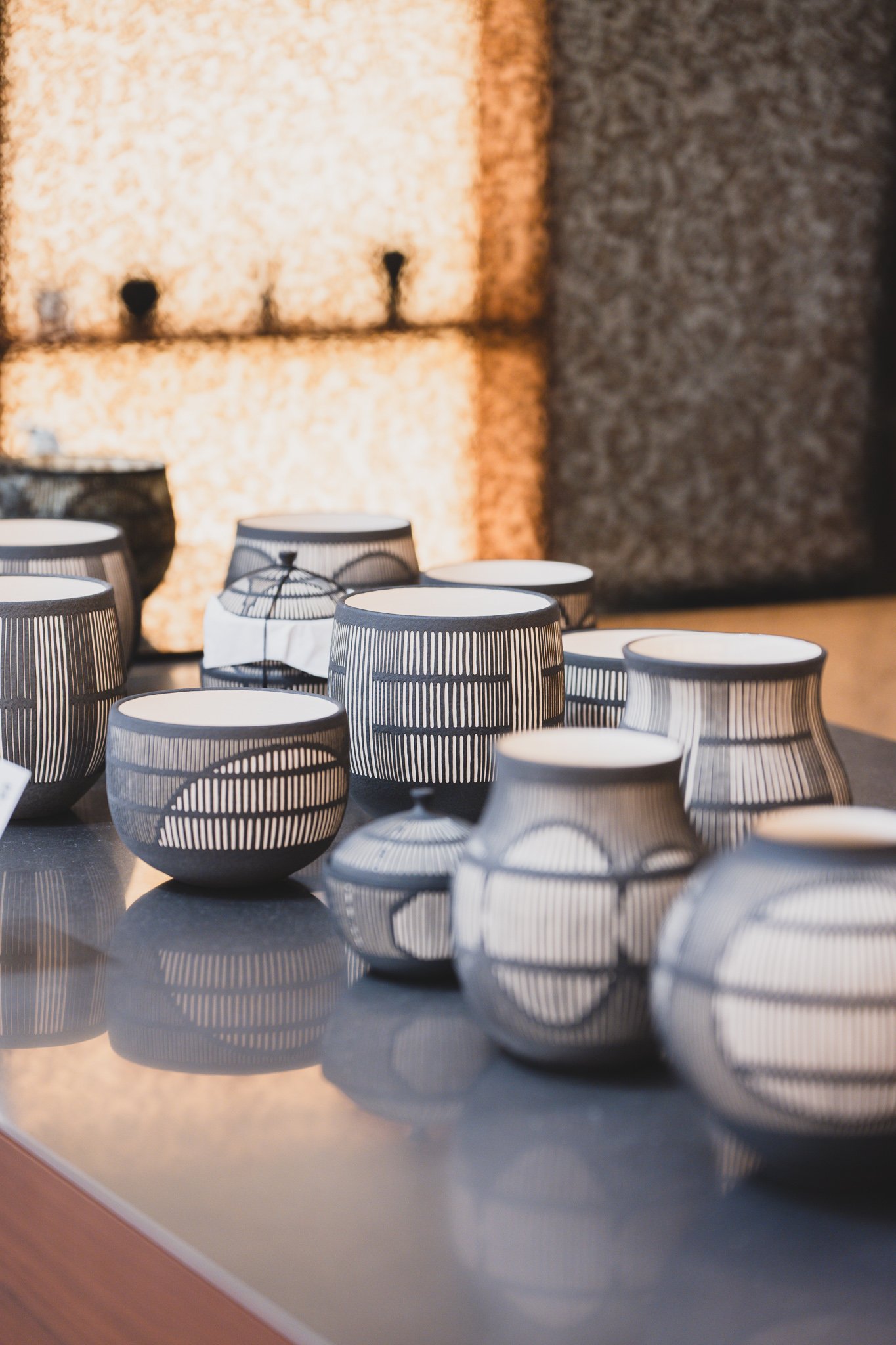
The shelving itself is worth a slow walk-through — dozens of small makers are packed into a fairly compact floor, mixing keychains, knot charms, jewelry, and ceramics from more than 40 different artists and brands.
Practical Tips
- Go on a weekday morning if you can. The shop is small, and when it’s busy, you won’t have much room to stop and read the maker cards — which is honestly the best part of the visit.
- Budget for a range. If you only want a light souvenir, ₩40,000–₩60,000 covers it. If you’re eyeing ceramics or a moon jar, bring a real budget.
- Read the cards. The pieces look like plain (if elegant) home decor without the context — the gilsang meaning is what makes them worth buying over a generic souvenir.
FAQ
Q: Do I need a Centre Pompidou Hanwha museum ticket to visit Hand to Home?
A: It doesn’t appear so. From what I saw, the shop opens directly onto an open indoor corridor on 63 Building’s ground floor, alongside other stores — there’s no ticket gate in front of it. That said, this isn’t officially confirmed anywhere, so it’s worth double-checking on-site if you’re planning a shop-only trip.
Q: What does “gilsang” mean?
A: Gilsang (吉祥) refers to the Korean tradition of objects and symbols — tigers, moon jars, certain knots and patterns — believed to bring good fortune or ward off bad luck. It’s the cultural idea behind everything Hand to Home sells.
Q: Is this a good spot for souvenir shopping, or more of a gallery?
A: Both, depending on your budget. Small charms and ceramics work as gifts; the higher-end moon jars and vases are closer to collectible art.
Q: Is there English signage or English-speaking staff?
A: Yes — every maker card and symbol panel I saw was bilingual, with a full English translation alongside the Korean. English-speaking staff isn’t confirmed, but you won’t have any trouble reading what each piece means.
Bottom Line
If you’re already visiting Centre Pompidou Hanwha, Hand to Home is worth the extra 20–30 minutes — not because it’s flashy, but because it’s one of the few souvenir stops in Seoul where the objects actually mean something specific, and the shop makes sure you know what. If you’re short on time or budget, skip the moon jars and look for the smaller charms — you’ll still walk away with a piece of gilsang culture, just a cheaper one.
Source for gilsang, tiger folk-painting, and moon jar background: Google Arts & Culture, Korea Times, Daebak Magazine, Easy Feng Shui, and Hand to Home’s own site (handtohome.kr).