TL;DR: Chabaidao (茶百道) is a Taiwanese milk tea chain with a Seongsu location built around fresh fruit and handmade toppings. Rather than push new items, the store curates its menu around verified bestsellers — most notably the Mango Pomelo Sago, which a wall poster claims has sold 92 million cups annually. It’s genuinely worth the hype: chewy fruit-based texture, real mango sweetness, and a citrus edge from the pomelo that keeps it from feeling too sweet.
Chinese and Taiwanese tea brands keep landing in Korea — CHAGEE, Michelle Bing Cheng, Heytea, one after another — even in a market that already feels saturated with milk tea and fruit tea options. Curious what keeps drawing new entrants in, I stopped by Chabaidao’s Seongsu location, one of several the brand now runs in Seoul (including Gangnam and Samsan).
Where it is and the basics
Location: 14 Yeonmujang 5-gil, Seongdong-gu, Seoul, 2F
Hours: Daily, 10:00 AM–10:00 PM
Parking: Building parking available (up to 3 hours); a temporary public lot across the street is free when the building lot is full
Reservations: Not needed — walk-in only (a “WALK-INS WELCOME” sign is posted at the entrance)
Exterior and interior
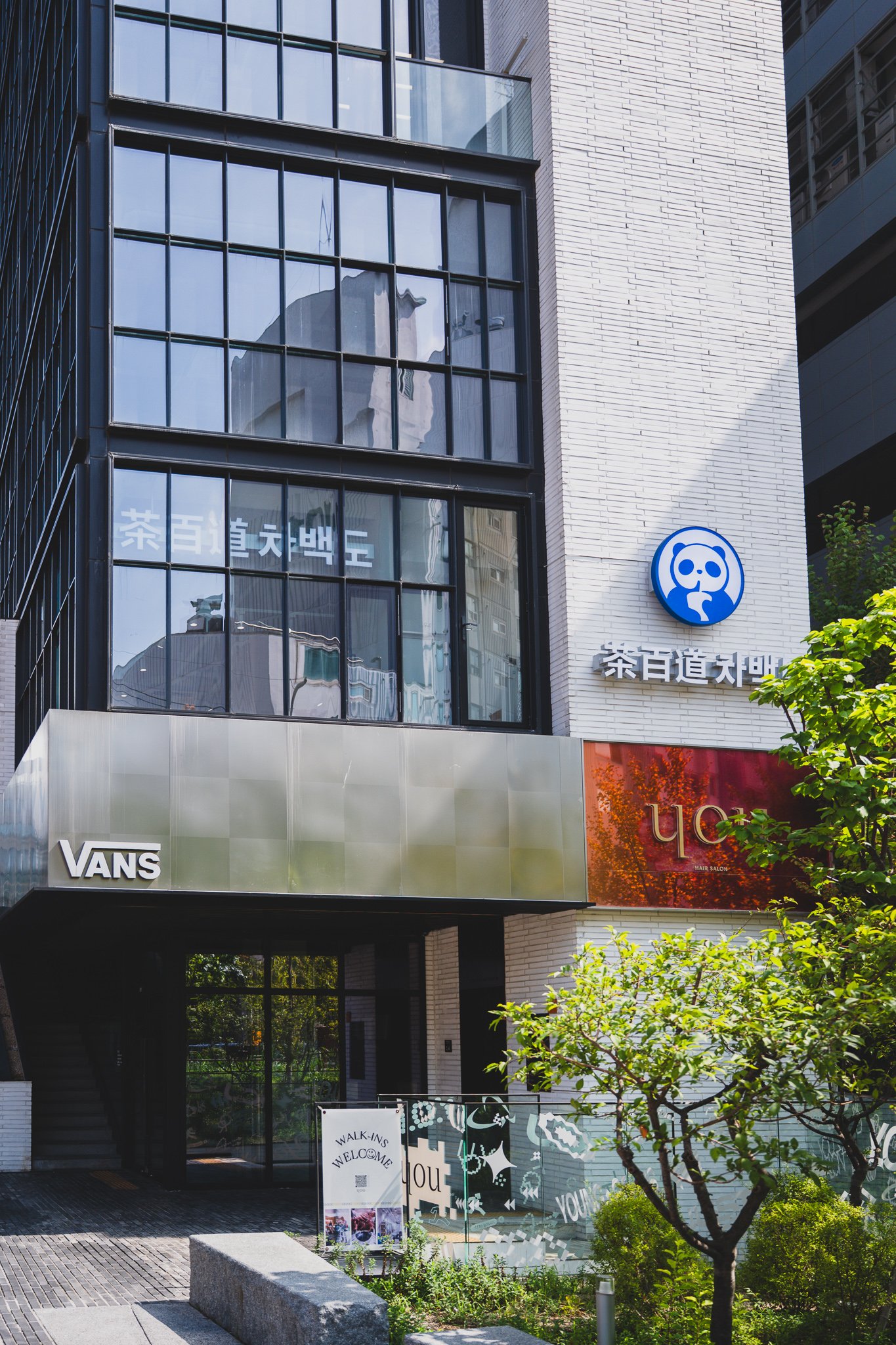
The store sits at the entrance to a Seongsu backstreet, next to a Vans store and a hair salon called “you.” A simple blue panda logo marks the entrance — understated enough that you might mistake it for something other than a drink shop at first glance, which somehow makes it stand out more.
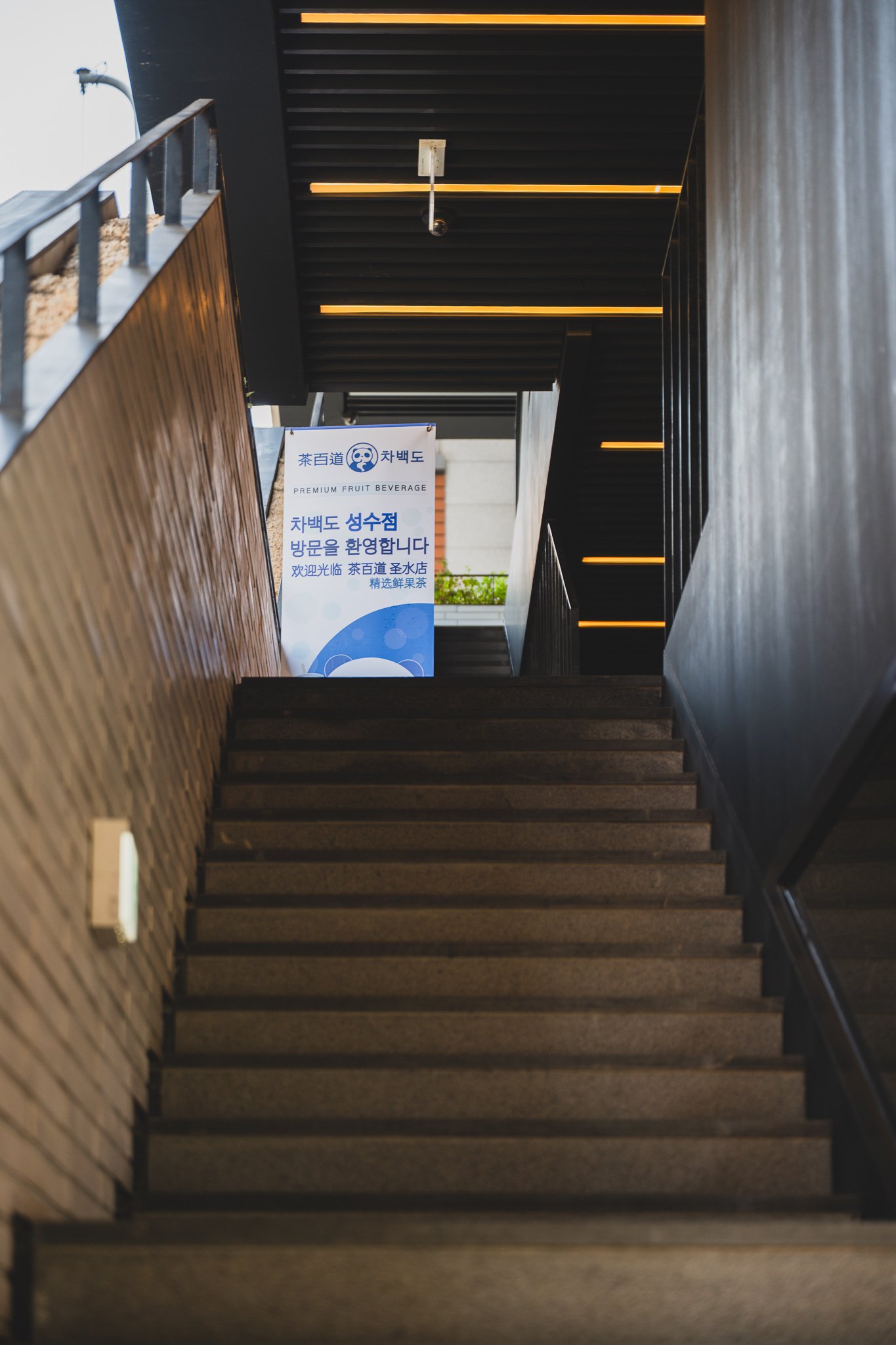
The store is on the second floor, up a staircase marked with a bilingual welcome banner — easy to find even on a first visit.
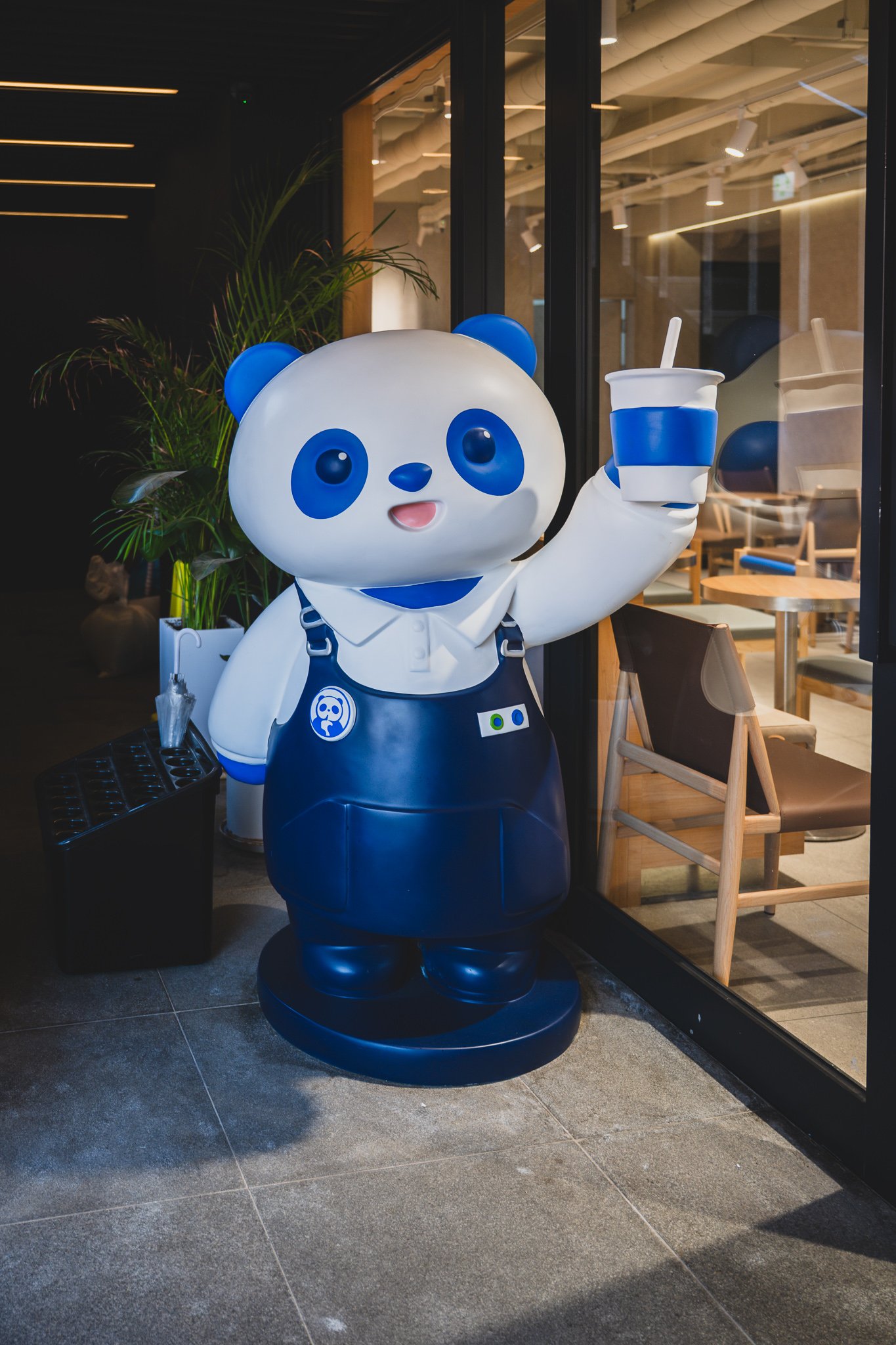
A life-size panda mascot stands at the entrance, cup in hand, mid-wave — cuter in person than you’d expect, and it basically sums up the brand’s whole identity in one photo op.
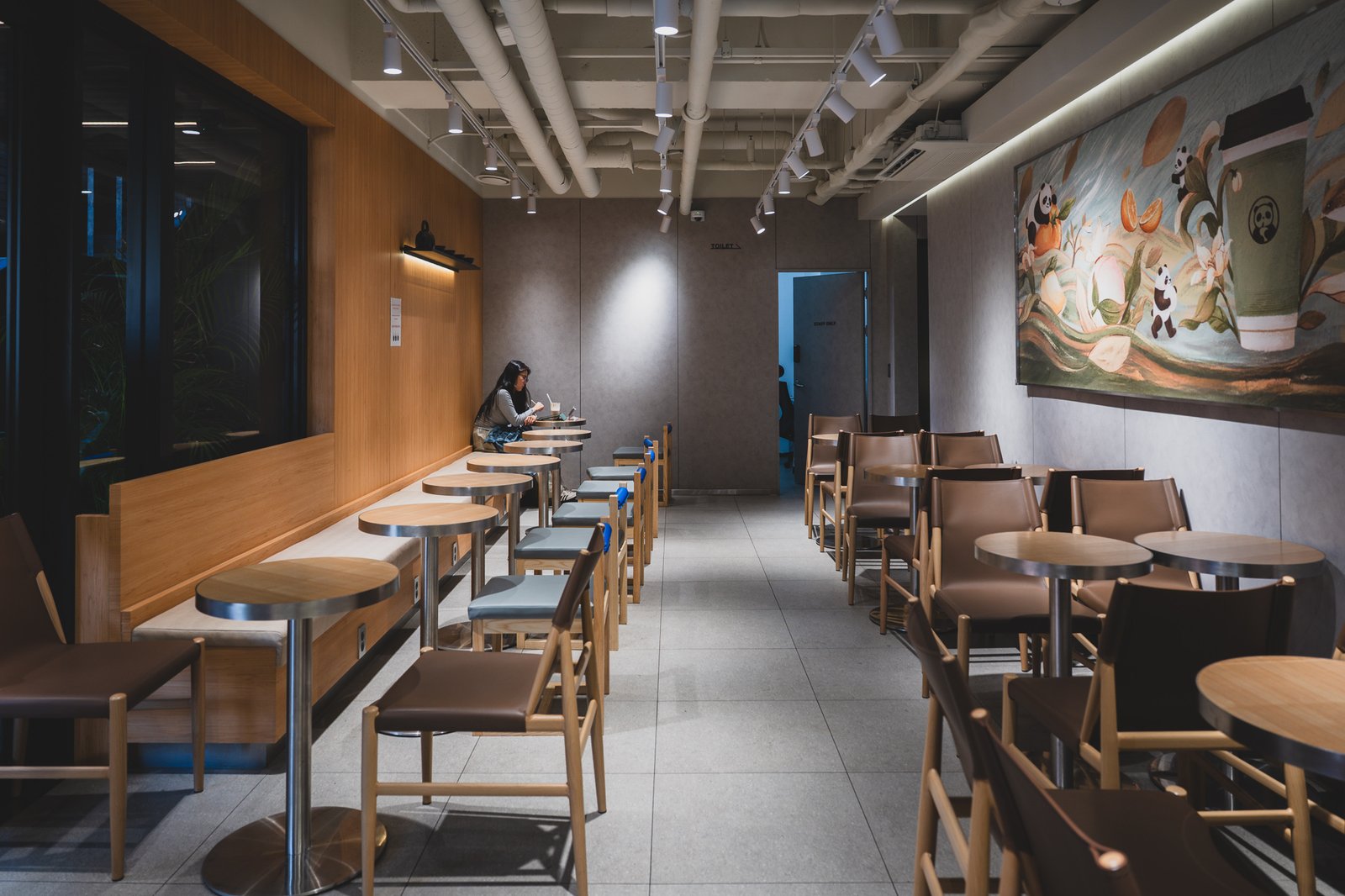
Inside, wood tones paired with leather chairs give it a calmer feel than most chain cafés. On a weekday morning, there was plenty of open seating.
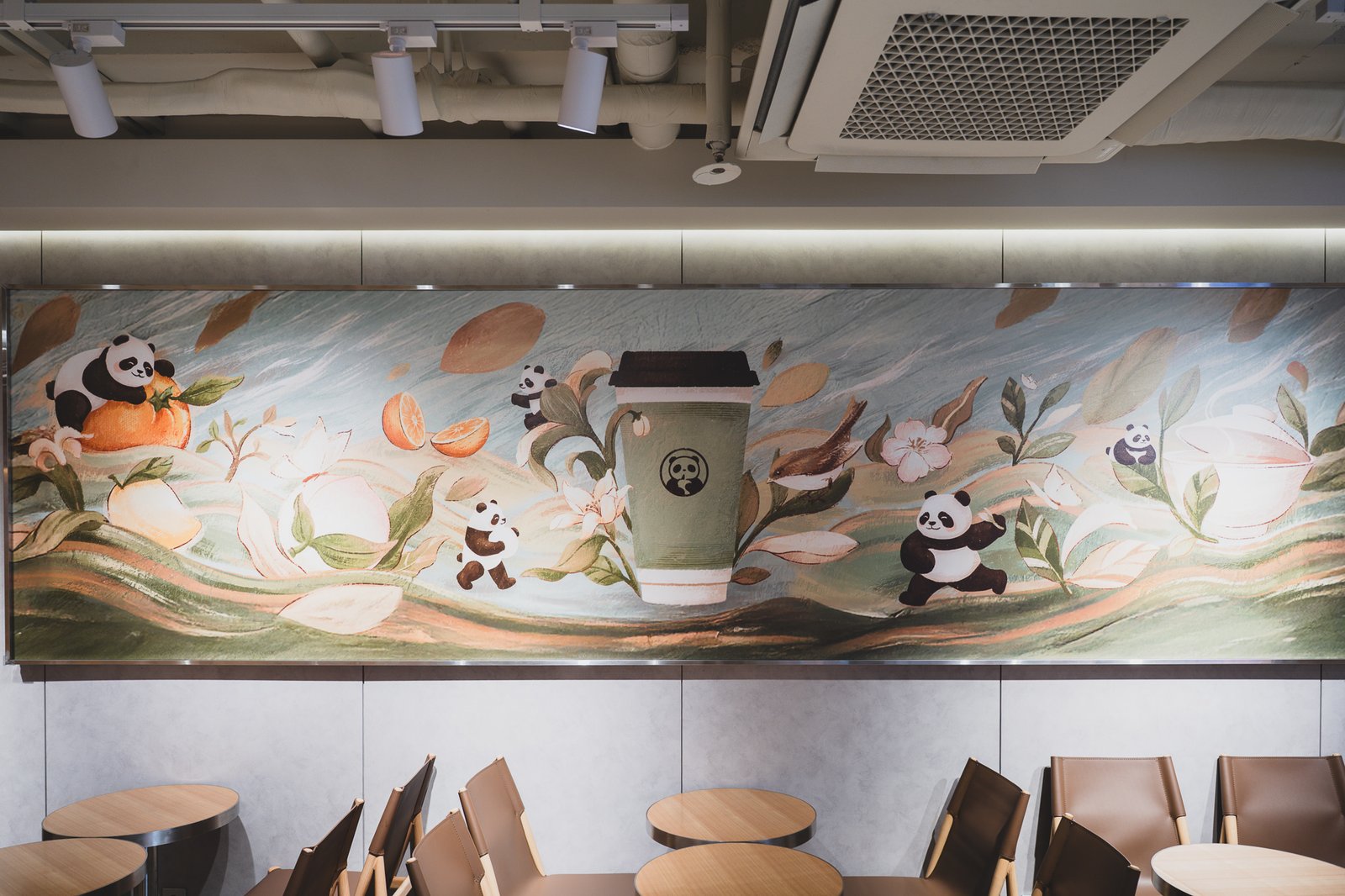
One whole wall is a mural of pandas running through persimmons, oranges, and magnolia blossoms — a visual extension of the brand’s “fresh fruit and tea” concept.
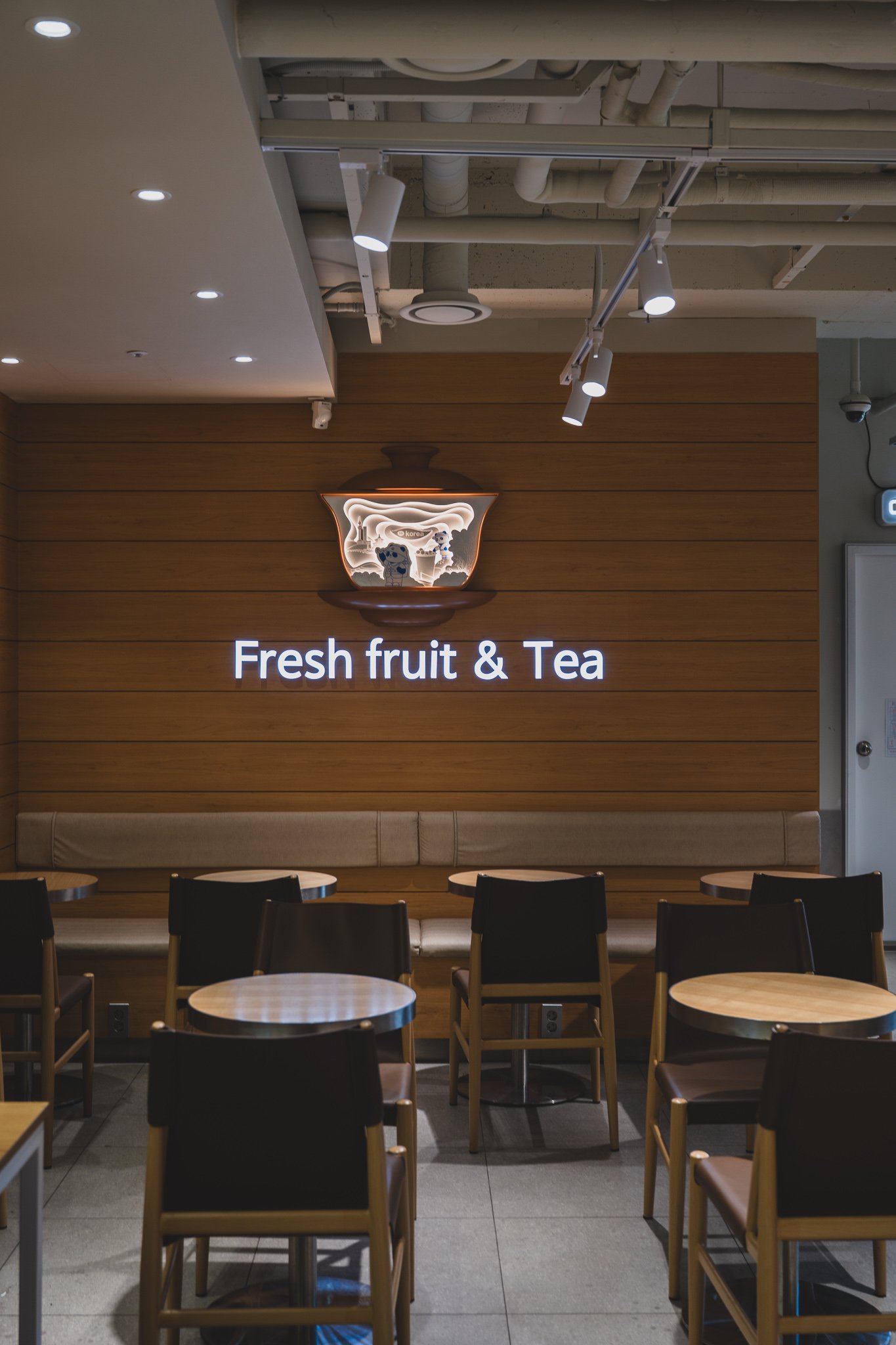
That phrase — “Fresh fruit & Tea” — repeats throughout the store, making it clear that fresh fruit is the brand’s core selling point, not an afterthought.
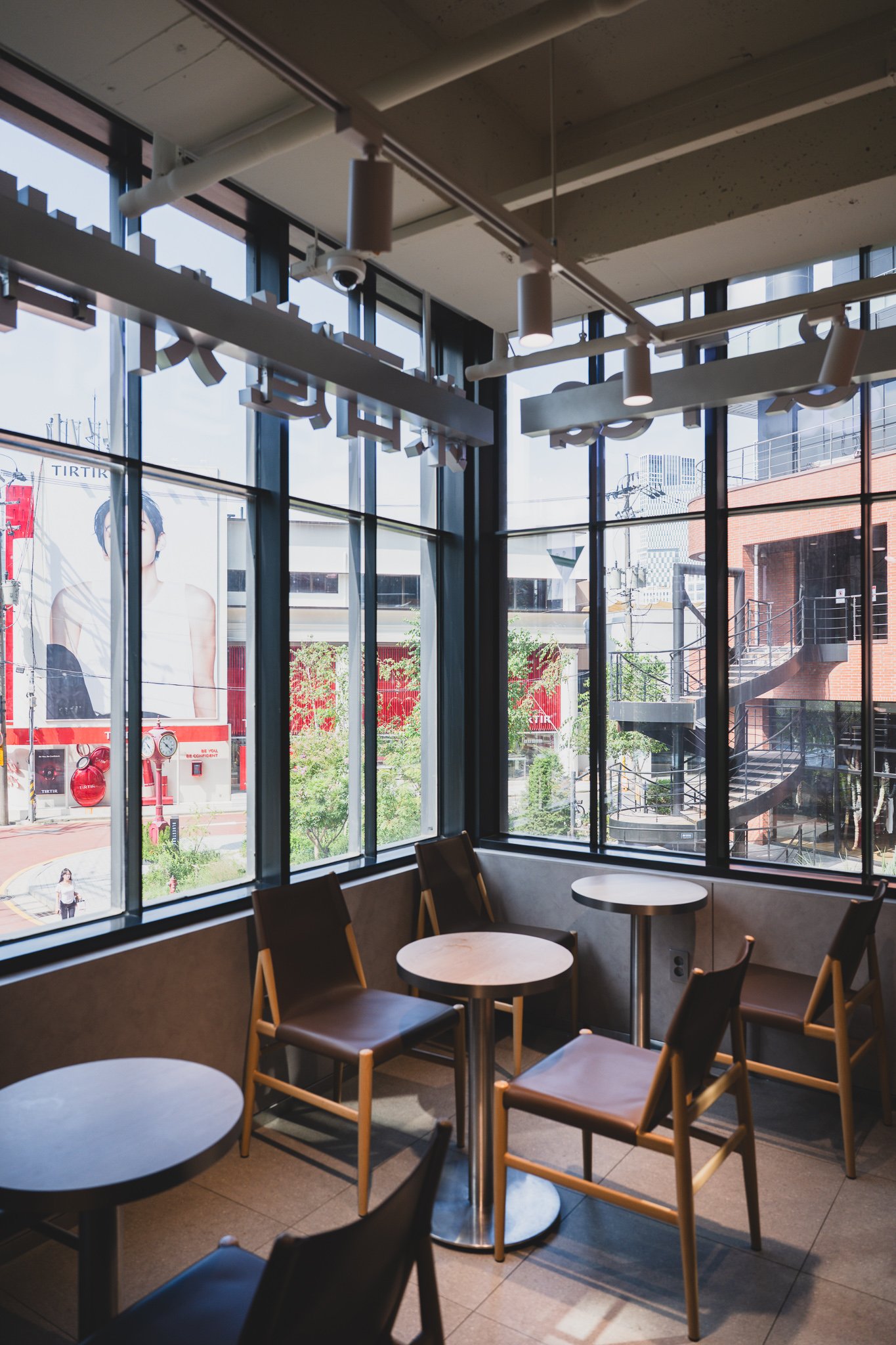
My favorite spot was a window corner table — being on the second floor gives you a clear view down onto the street, including a TIRTIR billboard and the spiral staircase on the red-brick building across the way. A solid seat for taking in Seongsu’s warehouse-district atmosphere while you drink.
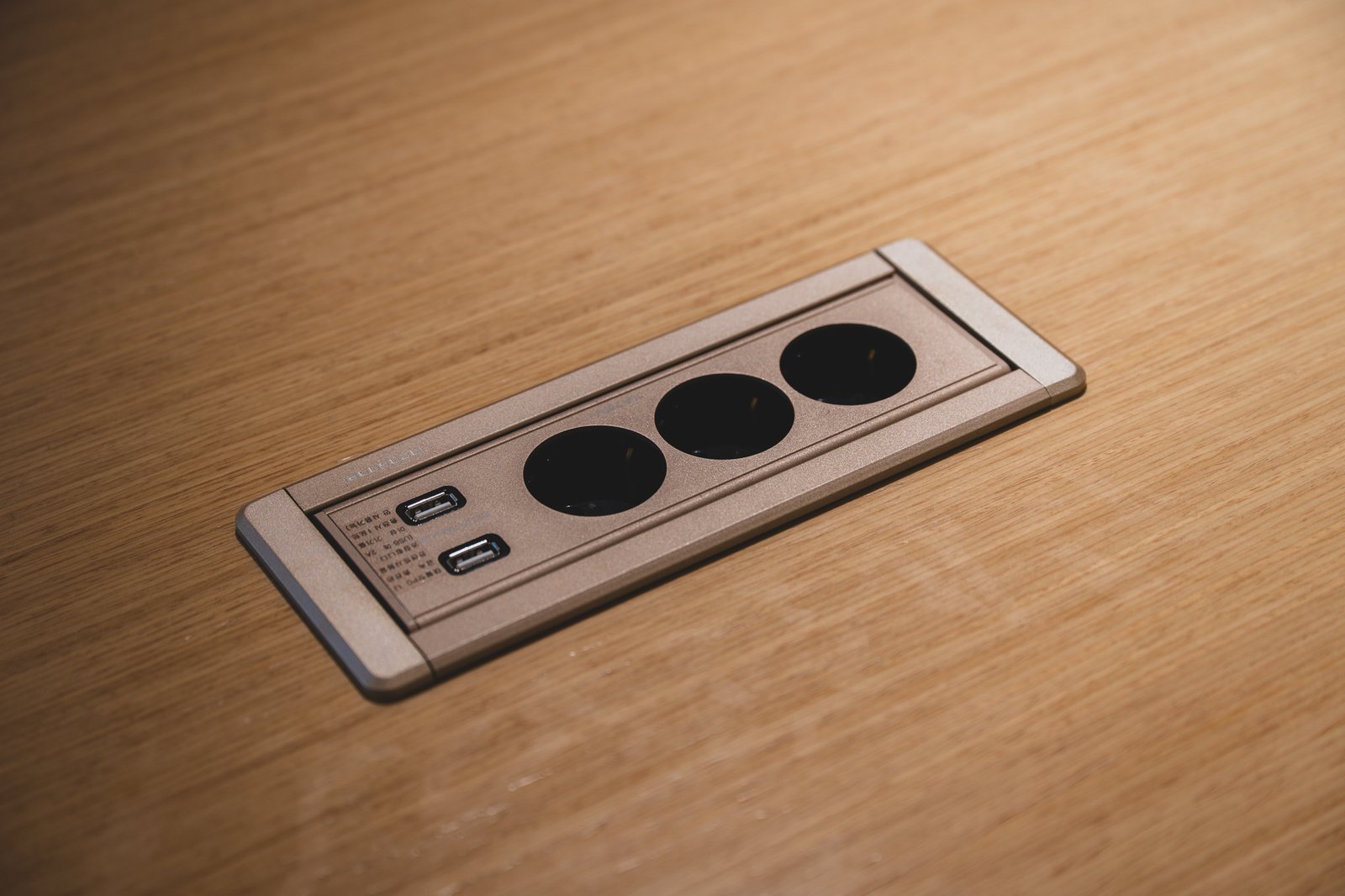
Every table has a built-in outlet and USB port — I spotted one customer working on a laptop, so it’s a reasonable option if you need a spot to get some work done too.
Menu
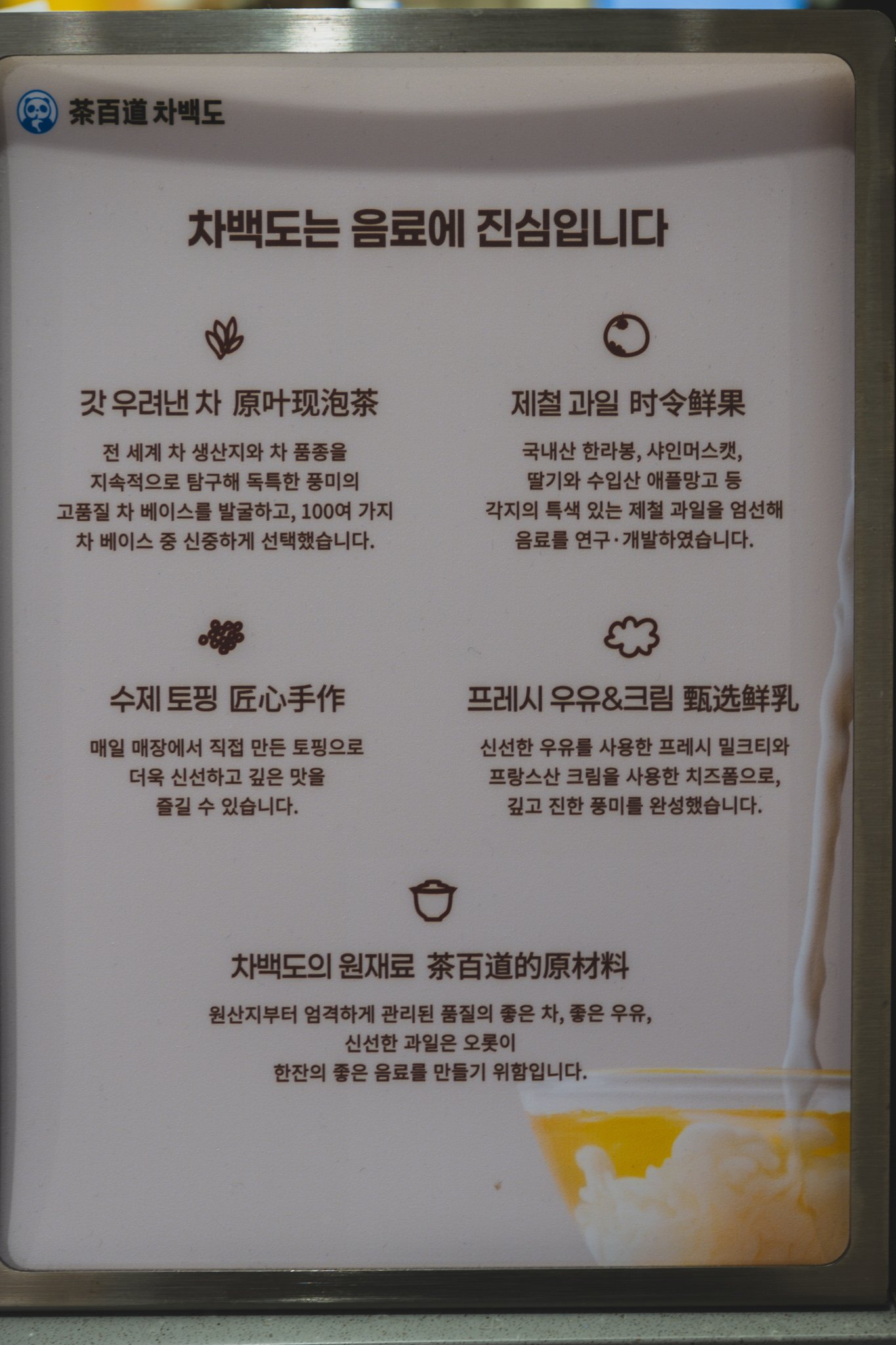
Signage throughout the store makes four claims: freshly brewed tea leaves, seasonal fruit, handmade toppings made daily in-store, and fresh milk and cream sourced from France. That’s a more specific ingredient story than most chains bother telling.
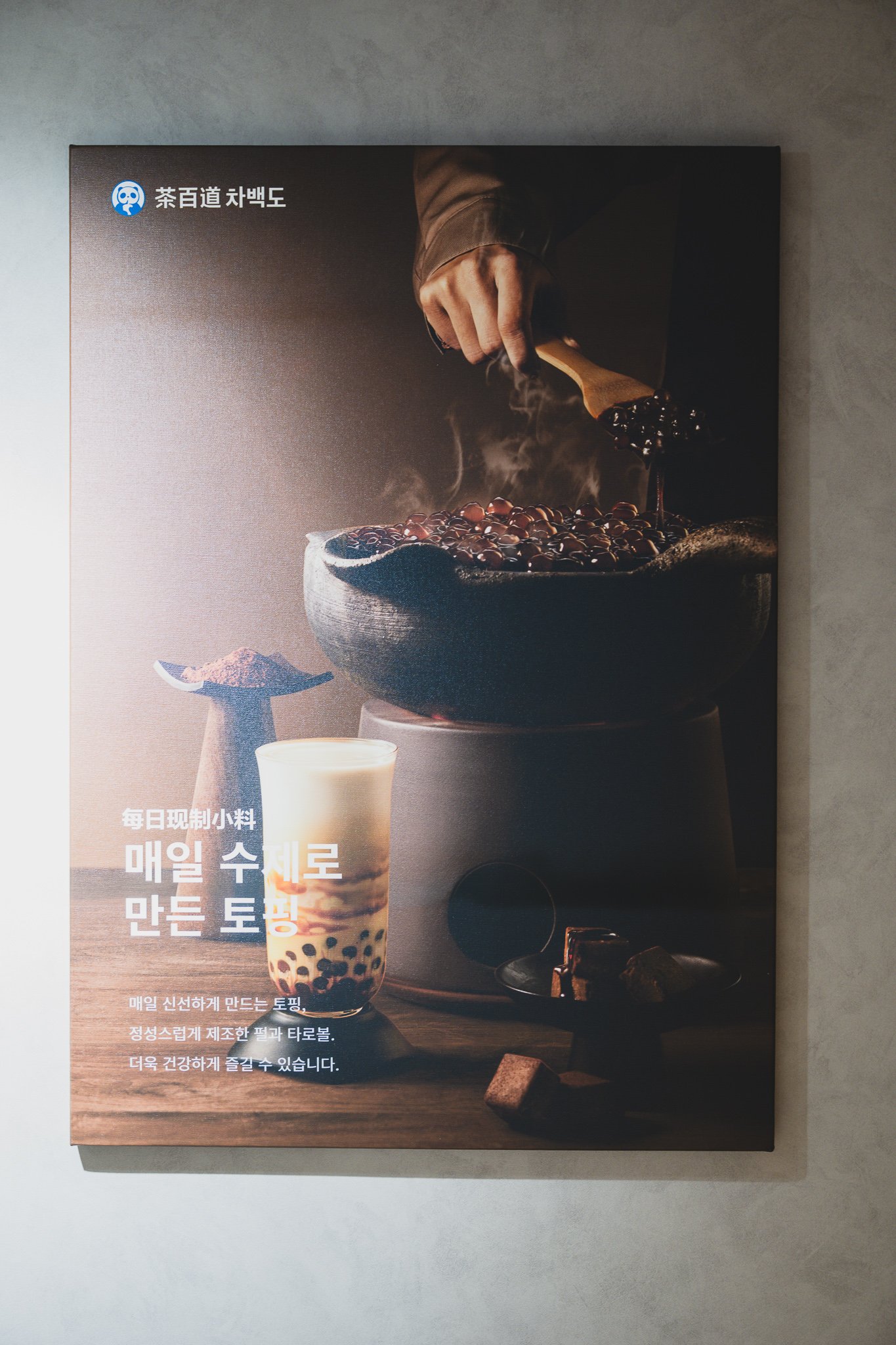
This poster stood out — it explains that the pearls and taro balls are boiled fresh in-store rather than shipped in from a factory. That’s a real texture difference, and leading with it as a marketing point felt like a smart call.
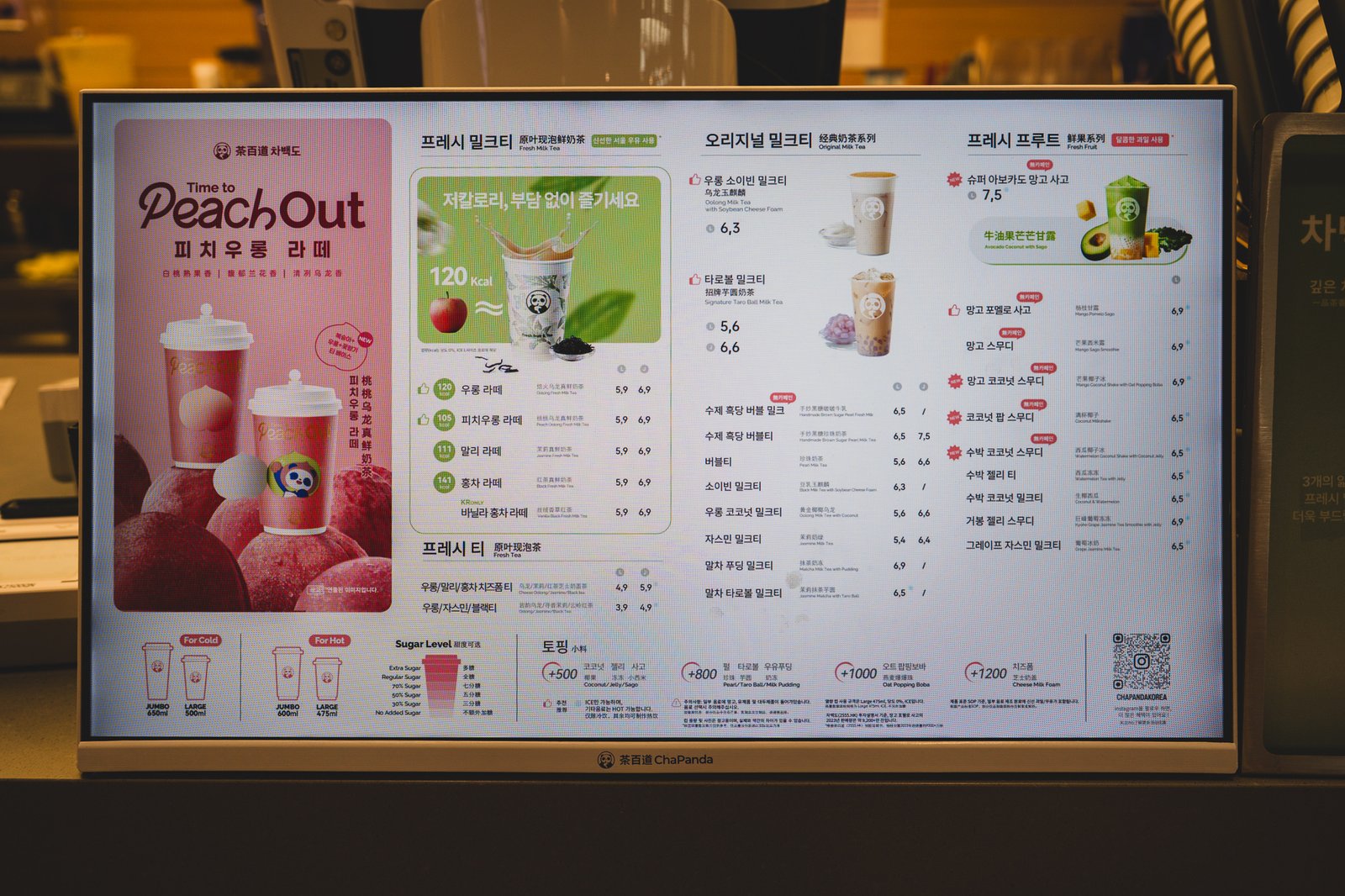
The menu splits into three categories: Fresh Milk Tea, Original Milk Tea, and Fresh Fruit. Prices range from 5,400 KRW (Jasmine Milk Tea) up to 7,500 KRW (Super Avocado Mango Sago) — reasonable by current Seongsu café standards.
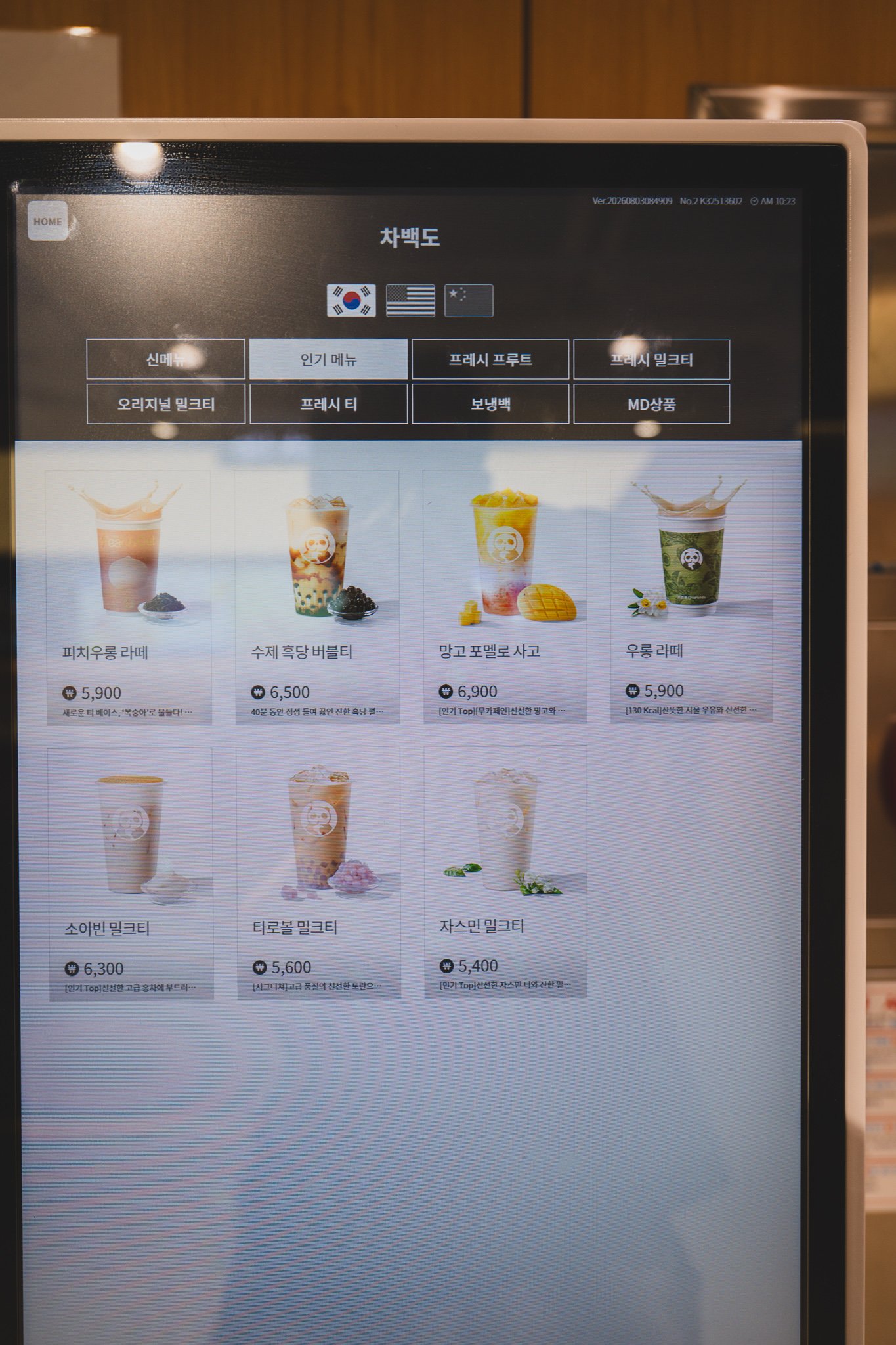
What caught my attention was the kiosk’s dedicated “Popular Menu” tab, echoed by an in-store sign showing only the bestsellers. Most chains push new items — curating around proven favorites instead cuts down decision fatigue for first-time visitors.
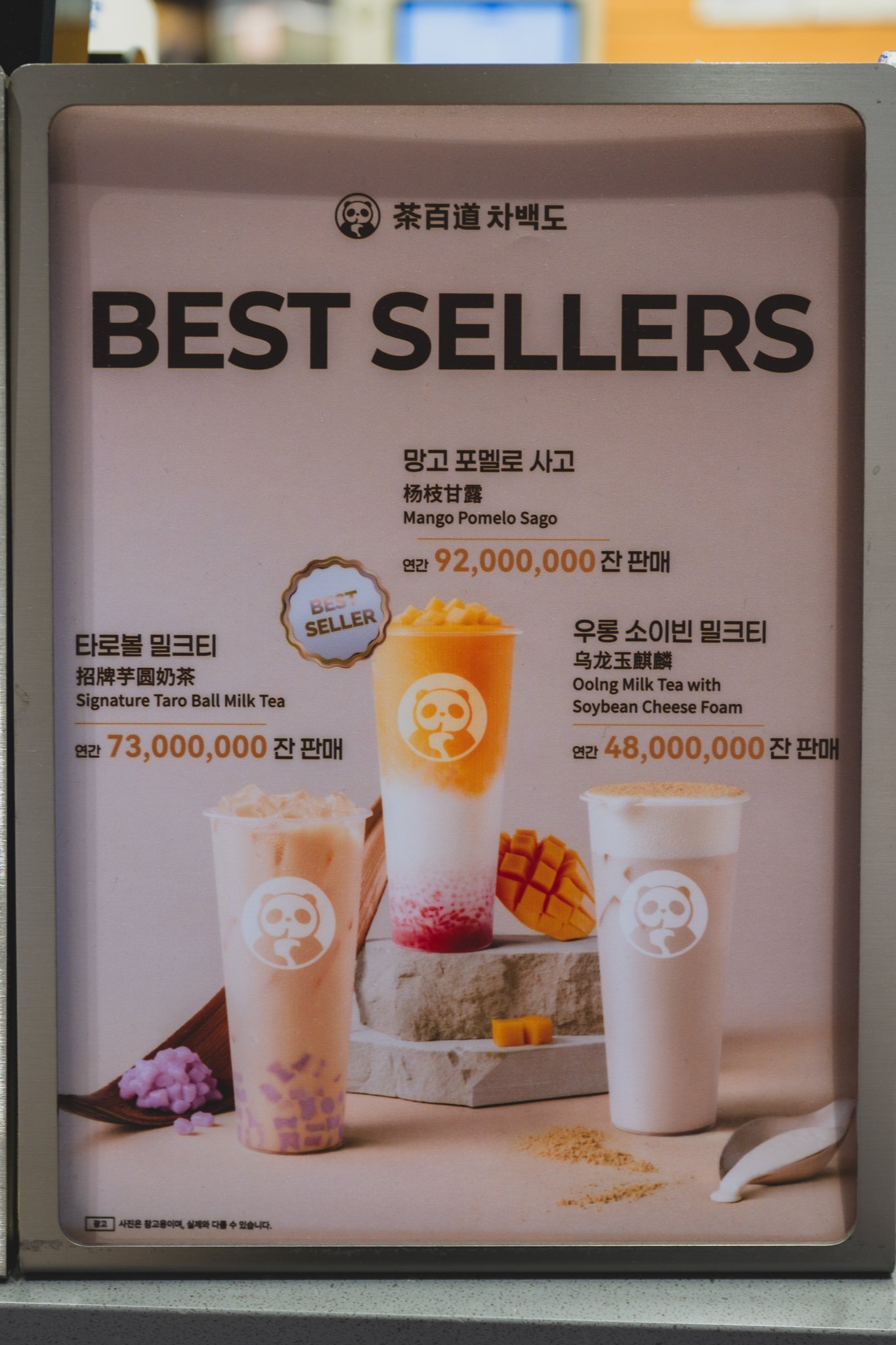
This poster explains why “Chabaidao menu recommendations” is such a common search — it states, in large text, that the Mango Pomelo Sago has sold 92 million cups a year, followed by Taro Ball Milk Tea (73 million) and Oolong Soy Milk Tea (48 million). Seeing exact sales figures displayed that boldly is rare, and it makes the choice pretty easy.
The taste test
I went with the top seller — a large Mango Pomelo Sago, 6,900 KRW.
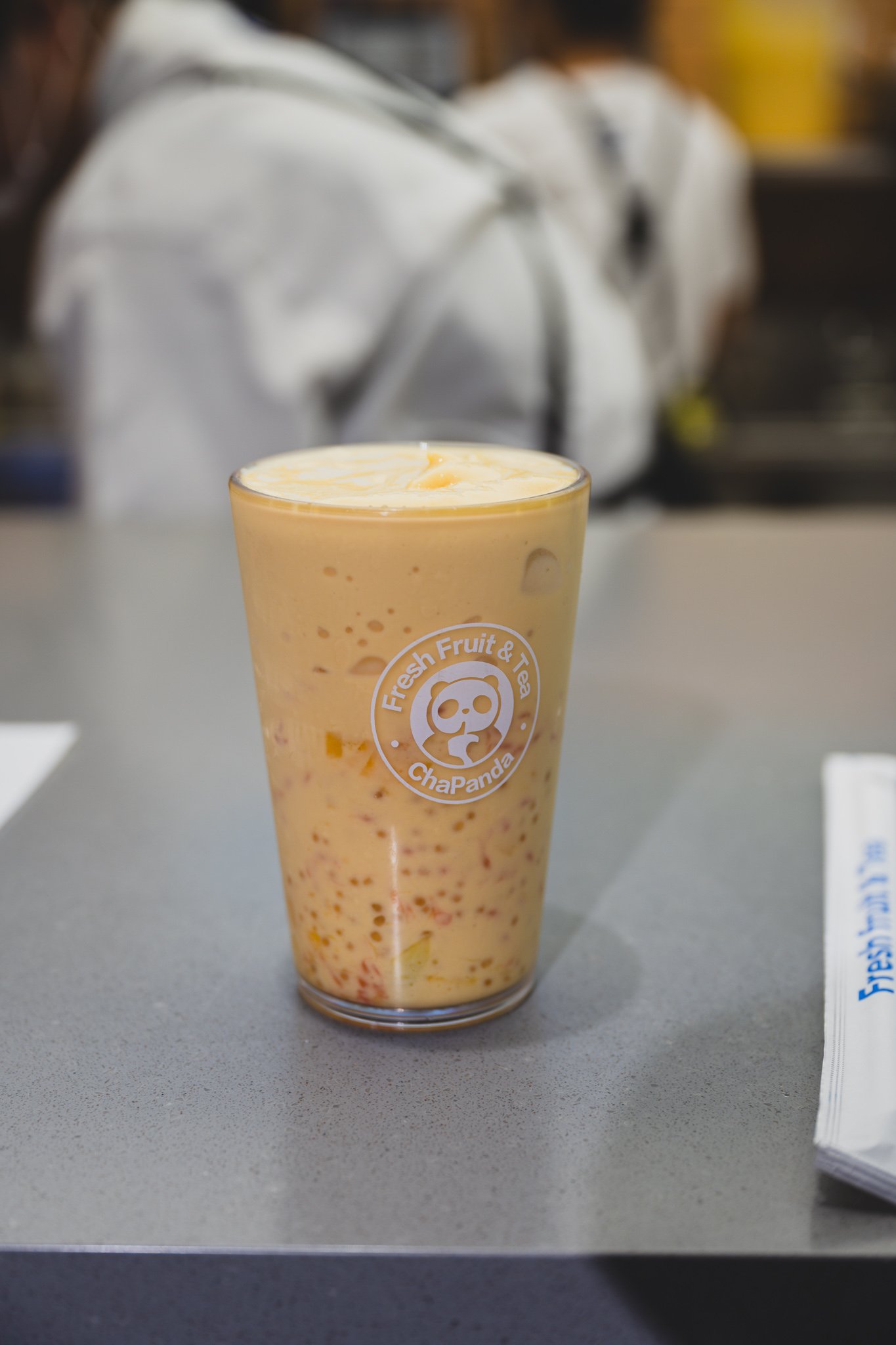
Mango-colored liquid topped with a layer of white cream, with mango flesh and red pomelo (grapefruit) segments visible through the glass. Sipped without stirring, the top is smooth cream and the bottom is tart-sweet fruit — the flavor shifts as you work your way down the cup.
The sweetness level is fairly high, but it reads as real mango sweetness rather than an artificial syrup taste. What stood out most was the texture — whatever the exact fruit-based pearls are, they’re genuinely chewy, with real bounce rather than the mushy consistency you get from typical fruit-jelly toppings. Tasting it, the 92-million-cup number made a lot more sense.
Compared to CHAGEE, which I drink fairly regularly, I actually preferred this. Where CHAGEE wins on aroma and a clean finish, the Mango Pomelo Sago wins on real fruit presence and sweetness — and the pomelo’s mild bitterness keeps that sweetness from becoming cloying by the end of the cup.
The real strategy was the curation
What impressed me most on this visit wasn’t the drink itself — it was the store’s information design. Instead of pushing new items, it backs up proven bestsellers with hard sales numbers, then repeats that same curated list on both the kiosk and in-store signage. From a marketing standpoint, that’s a clean way to cut down on choice paralysis.
One thing to flag: the Mango Pomelo Sago runs fairly sweet, so if you’re sensitive to sugar, ask for a lower sweetness level (adjustable 0–120%) when ordering. I had it at the default level and it worked fine for me, but if you usually prefer lower-sugar drinks, try around 70%.
Worth noting too — most of the Fresh Fruit line, including the Mango Pomelo Sago, is caffeine-free. With more people actively cutting caffeine these days, a fruit-and-tea-based brand like this has a natural advantage that coffee chains are still catching up to with late-arriving decaf options.
Tips if you’re going
- Start with the Mango Pomelo Sago if you don’t know what to order — it’s the store’s proven top seller for a reason.
- Prefer something cleaner over fruit-forward? Try the Taro Ball Milk Tea or Oolong Soy Milk Tea instead.
- Ask for reduced sweetness (around 70%) if you don’t usually go for very sweet drinks.
- Most fruit-based drinks are caffeine-free — a good pick if you’re avoiding caffeine later in the day.
- Grab the window corner seat if it’s open — the best street view in the store.
FAQ
Q: What’s the most popular drink at Chabaidao?
A: The Mango Pomelo Sago, which the store’s own signage credits with roughly 92 million cups sold annually.
Q: Is Chabaidao Seongsu the only location in Seoul?
A: No — Chabaidao already has multiple Seoul locations, including Gangnam and Samsan, alongside Seongsu.
Q: Can I adjust the sweetness?
A: Yes, sweetness is adjustable from 0–120%.
Q: Are the drinks caffeinated?
A: Most of the Fresh Fruit line, including the Mango Pomelo Sago, is caffeine-free. Milk tea options do contain tea-based caffeine.
Q: Is there parking?
A: Yes — the building has parking (up to 3 hours), with a free temporary public lot across the street when it’s full.
Bottom Line
If you’re only trying one drink in Seongsu’s crowded milk tea scene, the Mango Pomelo Sago at Chabaidao is a legitimately strong pick — real fruit texture, balanced sweetness, and a menu design that makes ordering easy even on a first visit.