TL;DR: If your phone supports eSIM, get one — plans start around $1.15–6 for a few days and you can activate it before you even land. Go with a physical SIM instead if your phone doesn’t support eSIM, or if you specifically need a Korean phone number. Physical SIMs are sold 24/7 at Incheon Airport arrival counters (SKT, KT, LG U+) for roughly 15,000–30,000 KRW for 7–30 days of unlimited data.
Deciding between a SIM card and an eSIM before a Korea trip trips up a lot of first-time visitors, mostly because both options are genuinely fine — the right one just depends on your phone and how you plan to use it.
eSIM: the easier option for most travelers
An eSIM is a digital SIM — no physical card, no swapping anything out of your phone. You buy a plan online, get a QR code, scan it to install the profile, and activate it whenever you’re ready (often set to trigger the moment you land and connect to a Korean network).
Compatibility: You’ll need a reasonably recent phone. iPhone XS, XR, or newer all support eSIM, as do most recent Android flagships (Google Pixel 3 and up, Samsung Galaxy S20 and up). If you’re on an older phone, skip ahead to the physical SIM section.
Price: eSIM data plans for Korea run from about $1.15–6 for short 3-day passes up to roughly $25 for a full month, depending on the provider and how much data you want per day (1GB–50GB/day options exist). Providers worth comparing include Airalo, Ubigi, Nomad, Woori Mobile, and Klook’s own eSIM listings (several of which partner directly with SKT or KT).
Why people prefer it: You keep your original SIM in your phone, so your home number still works for texts and calls if you’re on a dual-SIM phone. You can also install and even activate it before you land, so you’re not standing in an arrivals hall trying to get online.
Physical SIM: when you need it
A physical SIM makes more sense if your phone isn’t eSIM-compatible, or if you actually want a working Korean phone number — useful if you’re renting an apartment short-term, making restaurant reservations that require a local number, or just prefer having a real SIM you can see swapped into your phone.
Where to buy: Incheon Airport has 24-hour arrival counters run by SKT, KT, and LG U+ in both Terminal 1 and Terminal 2. In T1, LG U+ has a 24-hour counter near Arrival Hall F and a second counter near Arrival Hall A (06:00–22:00). In T2, LG U+ has a 24-hour counter near Exit 4 and another near Exit 7 (06:00–22:00). Staff will swap the SIM into your phone for you on the spot.
Price: Expect roughly 15,000–30,000 KRW for 7–30 days of unlimited data, with short 3-day plans starting around 18,000 KRW.
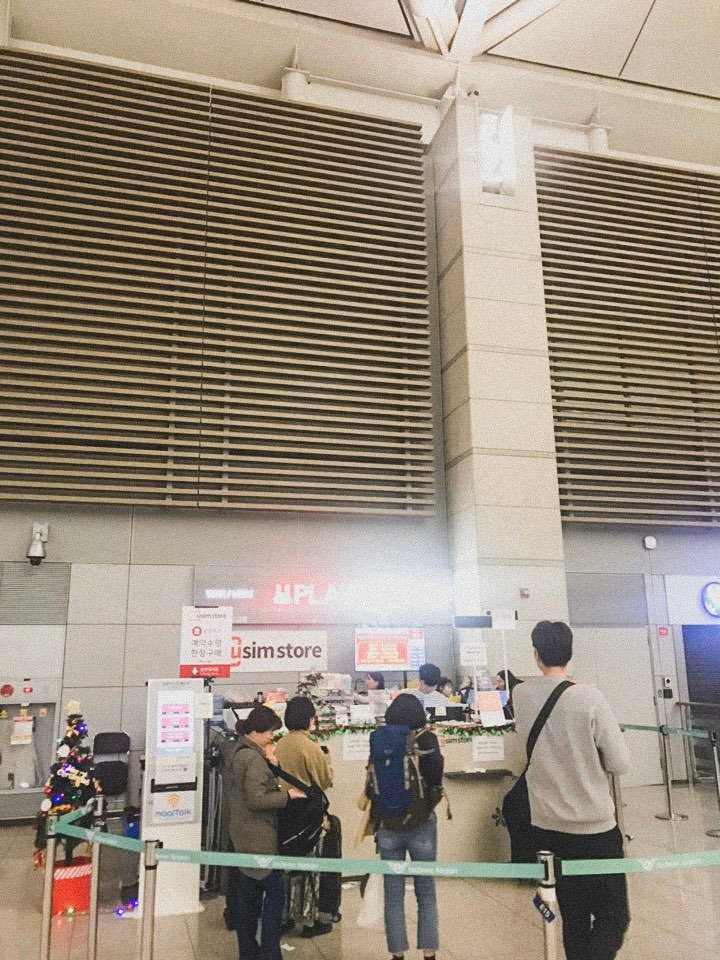
eSIM vs Physical SIM — quick comparison
| eSIM | Physical SIM | |
|---|---|---|
| Setup | Scan QR code, install remotely | Swapped in by staff at the counter |
| When you can activate | Before landing | Only after picking it up at the airport |
| Phone number | Usually data-only, no Korean number | Comes with an actual Korean number |
| Price (short trip) | ~$1.15–6 for 3 days | ~18,000 KRW for 3 days |
| Requires | eSIM-compatible phone | Any unlocked phone |
Which one should you get?
- Recent iPhone or Android flagship, want zero hassle at the airport? Get an eSIM before you fly.
- Older phone, or you specifically need a Korean number? Get a physical SIM at an Incheon Airport counter on arrival.
- Traveling with a group and want to split one connection? Neither — consider a pocket WiFi router instead, which isn’t covered here but is worth comparing.
Ready to just pick a plan instead of comparing providers yourself? Compare Korea eSIM plans on Klook →
FAQ
Q: Do I actually need a Korean phone number as a tourist?
A: Not usually. Most apps (Naver Map, Kakao T, translation apps) work fine on a data-only eSIM. You’d only need a real number for things like local reservations or signing up for certain Korean services.
Q: Will my phone definitely support eSIM?
A: Check before you buy — generally iPhone XS/XR or newer, and mid-2020-onward Android flagships, support it. Older or budget phones often don’t.
Q: Is Korean mobile data actually unlimited, or is there a catch?
A: Most “unlimited” plans have a fair-usage cap (often around a certain GB/day) after which speeds may throttle, but for typical browsing, maps, and social media use, you’re unlikely to notice.
Q: Can I buy a physical SIM anywhere besides the airport?
A: Yes — convenience stores and telecom retail stores in the city also sell tourist SIMs, but the airport counters are the most convenient right when you land.
Q: What if I buy the wrong one?
A: eSIM purchases are non-refundable once installed, so double-check compatibility first. Airport SIM counters can usually help you switch plans on the spot if needed.
Bottom Line
For most visitors with a phone from the last few years, an eSIM bought in advance is the least stressful option — you land already connected. If your phone doesn’t support eSIM or you need an actual Korean number, the 24-hour counters at Incheon Airport have you covered either way.