TL;DR: Hanjungsun (한정선) is a fruit-and-cream mochi shop that started in Seongsu and has grown into something close to Korea’s own version of Japanese omiyage — the dessert people specifically go out of their way to bring home. The Seongsu flagship is walk-in only with a real line most of the day, mochi run ₩3,500–6,500 (~$2.55–4.75), and the lineup rotates between year-round classics and seasonal drops (fig and a new Greek yogurt series when we visited in September). We tried the viral Dubai chocolate, a shine muscat Greek yogurt mochi, and fig — our take: shine muscat is the safest first pick, Dubai chocolate is genuinely polarizing, and fig is the best palate-cleanser of the three.
If you’ve spent any time on Seoul TikTok or Lemon8 lately, you’ve probably already seen Hanjungsun’s mochi — rows of hand-wrapped rice cakes in colored paper, unwrapped to reveal a whole strawberry or a shard of kunafa. What those short clips don’t usually cover is the practical stuff: how long the line actually is, what the full menu costs, and how you’re supposed to store the things if you’re not eating them in the next ten minutes. We went on a rainy weekday to find out.
Hanjungsun Seongsu
Address: 43-1 Yeonmujang-gil, Seongdong-gu, Seoul, 1F
Hours: Daily, 10:30 AM–10 PM
Parking: None on-site
Reservations: Walk-in only — there’s no seated dining, just a takeout counter, so it’s first-come-first-served. Weekday evenings before 6 PM tend to have shorter waits than weekends or after-work hours.
What Is Hanjungsun, and Why Are Koreans Calling It Their Own “Omiyage”?
If you’ve traveled in Japan, you know omiyage: the specific, packaged sweet you’re expected to bring back from wherever you went, because that’s what people do there — Tokyo Banana from Tokyo, Shiroi Koibito from Hokkaido, and so on. Korea never really had an equivalent single “you have to bring this back” dessert brand — until, arguably, now.
Hanjungsun opened as a single Seongsu storefront and has since expanded to Seoul Station, Shinsegae Gangnam, Hyundai Department Store’s Yeouido and Pangyo branches, Lotte World Mall, and Lotte Department Store’s main branch — eight locations at last count, all selling the same core product. That kind of department-store-counter expansion is usually reserved for long-established Korean confectionery brands, not a mochi shop that’s only been viral for a couple of years, which tells you the demand is more than a passing TikTok trend.
The Wait: What to Expect
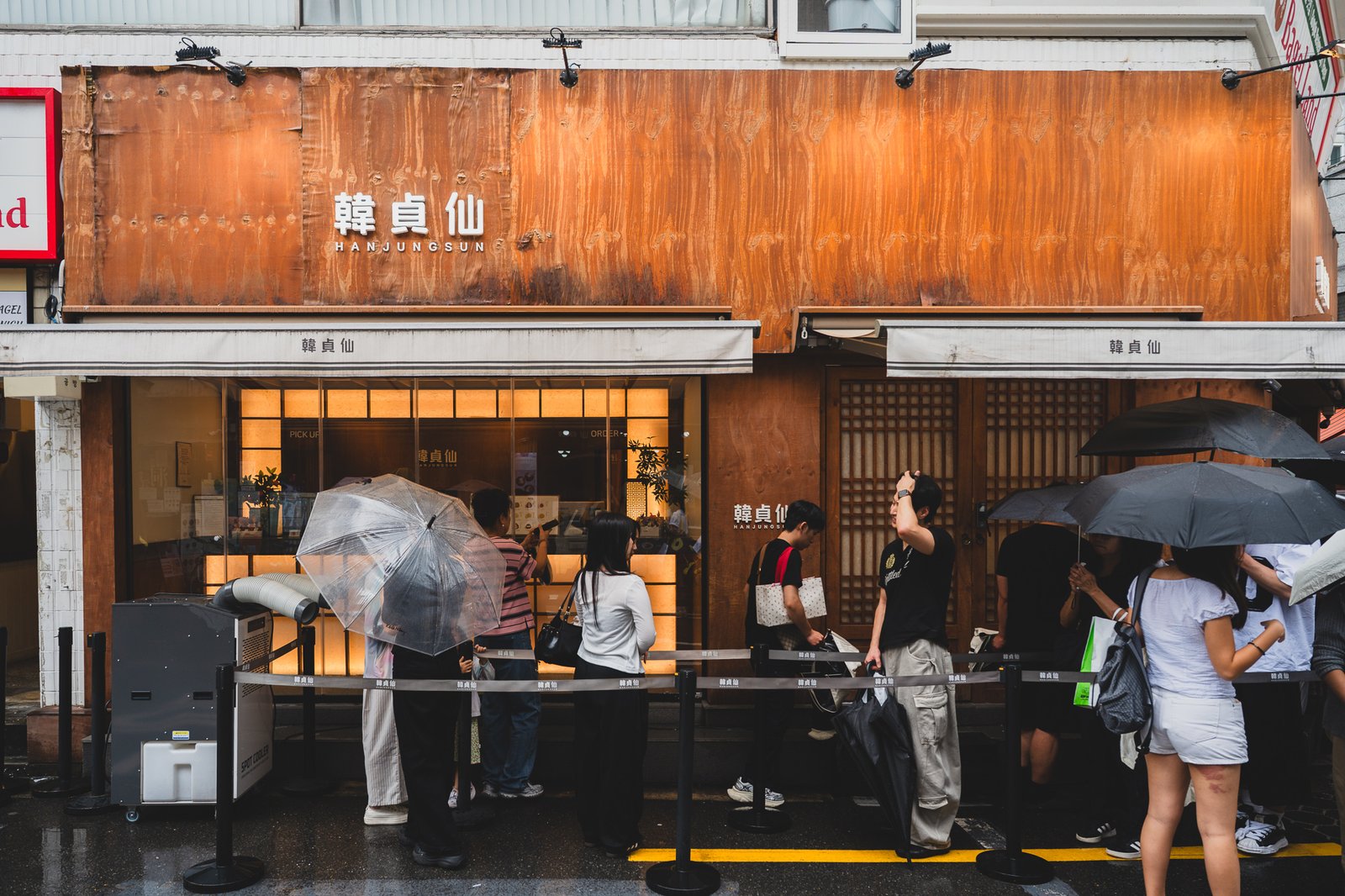
Even on a rainy weekday, the line stretched past the storefront. The exterior itself is worth a look regardless — a mix of weathered corten steel and plain wood, with the shop’s name rendered only in Hanja (韓貞仙) and its romanization, HANJUNGSUN, with no English menu visible from outside. There’s no way to skip the line or order ahead through an app; you queue, you get to the counter, and you order off the boards inside.
The Menu: Evergreen Classics vs. Seasonal Drops
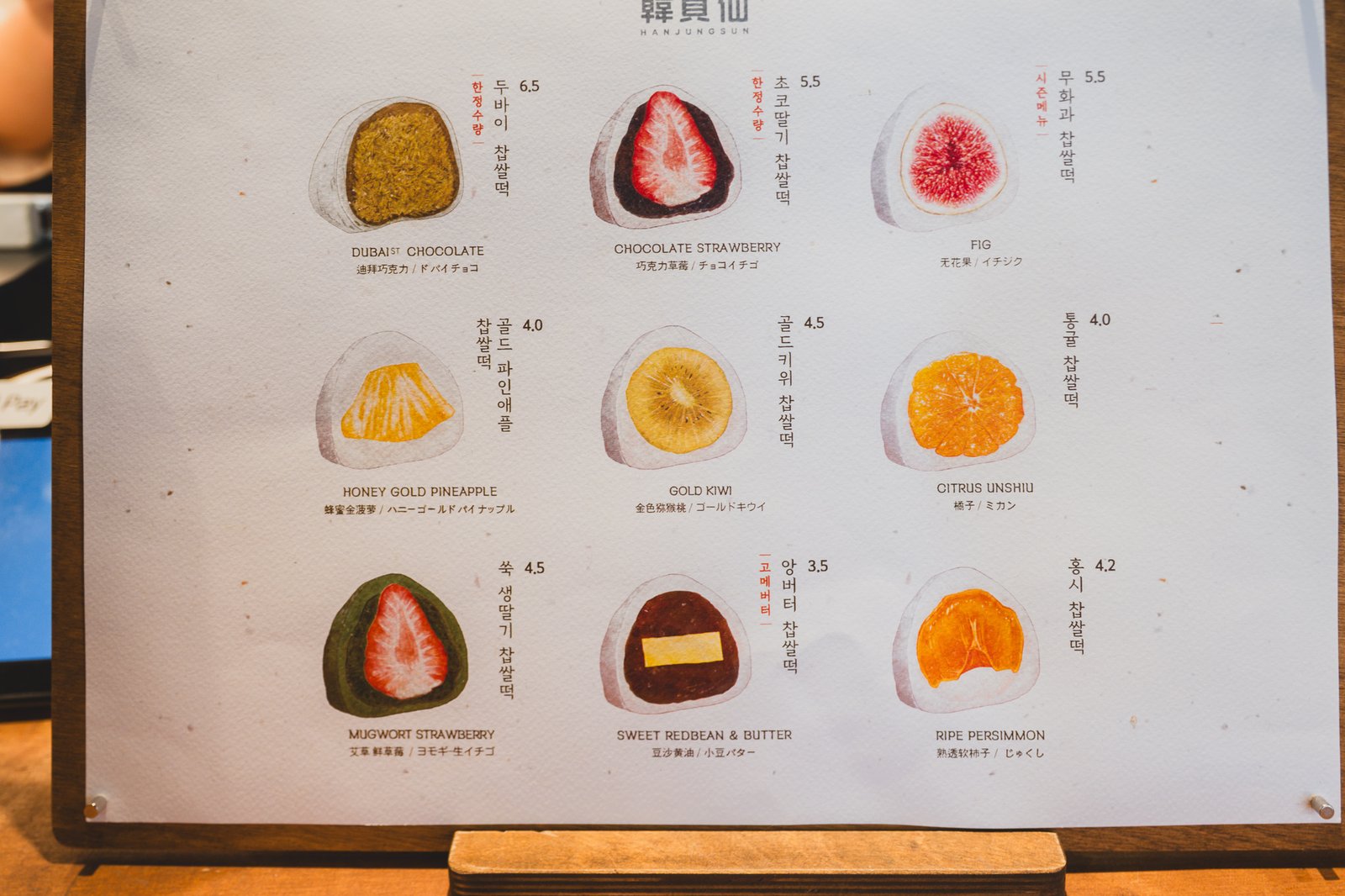
The core menu, in Korean won and approximate USD:
- Dubai-Style Chocolate — ₩6,500 (~$4.75) — limited quantity daily
- Chocolate Strawberry — ₩5,500 (~$4.00) — limited quantity daily
- Fig — ₩5,500 (~$4.00) — seasonal
- Honey Gold Pineapple — ₩4,000 (~$2.90)
- Gold Kiwi — ₩4,500 (~$3.30)
- Citrus Unshiu (mandarin) — ₩4,000 (~$2.90)
- Mugwort Strawberry — ₩4,500 (~$3.30)
- Sweet Redbean & Butter — ₩3,500 (~$2.55)
- Ripe Persimmon — ₩4,200 (~$3.05)
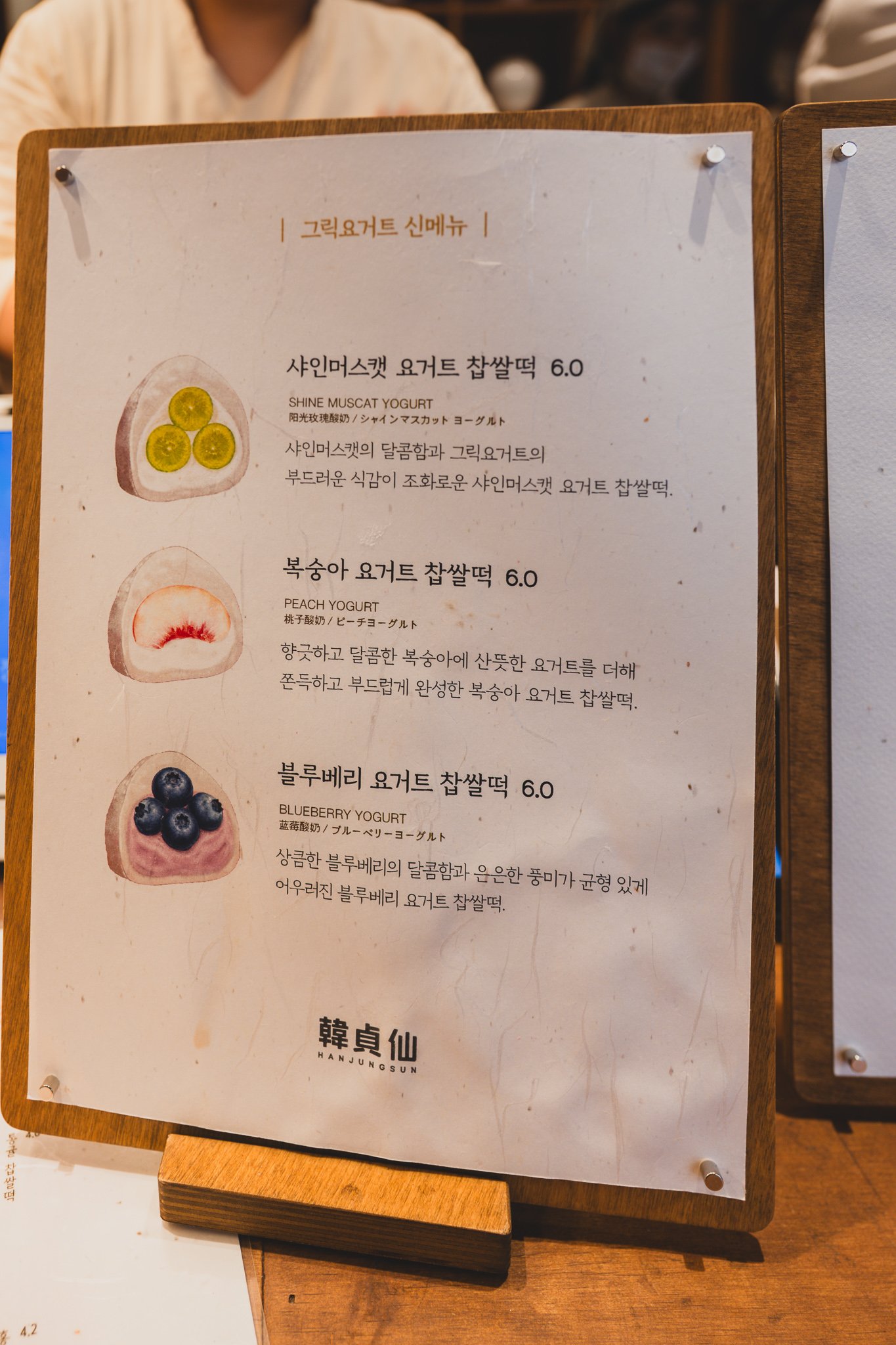
There’s also a newer Greek yogurt line that rotates by season — shine muscat, peach, and blueberry when we visited, each ₩6,000 (~$4.40).
The reason this matters for a visitor: Hanjungsun deliberately keeps a handful of “evergreen” flavors always in stock (redbean & butter, persimmon, the tropical fruit mochi) alongside items that only run for a season or in limited daily batches. If you come back in a different month, expect a different lineup — the fig and Greek yogurt items we tried in September won’t necessarily be there in spring.
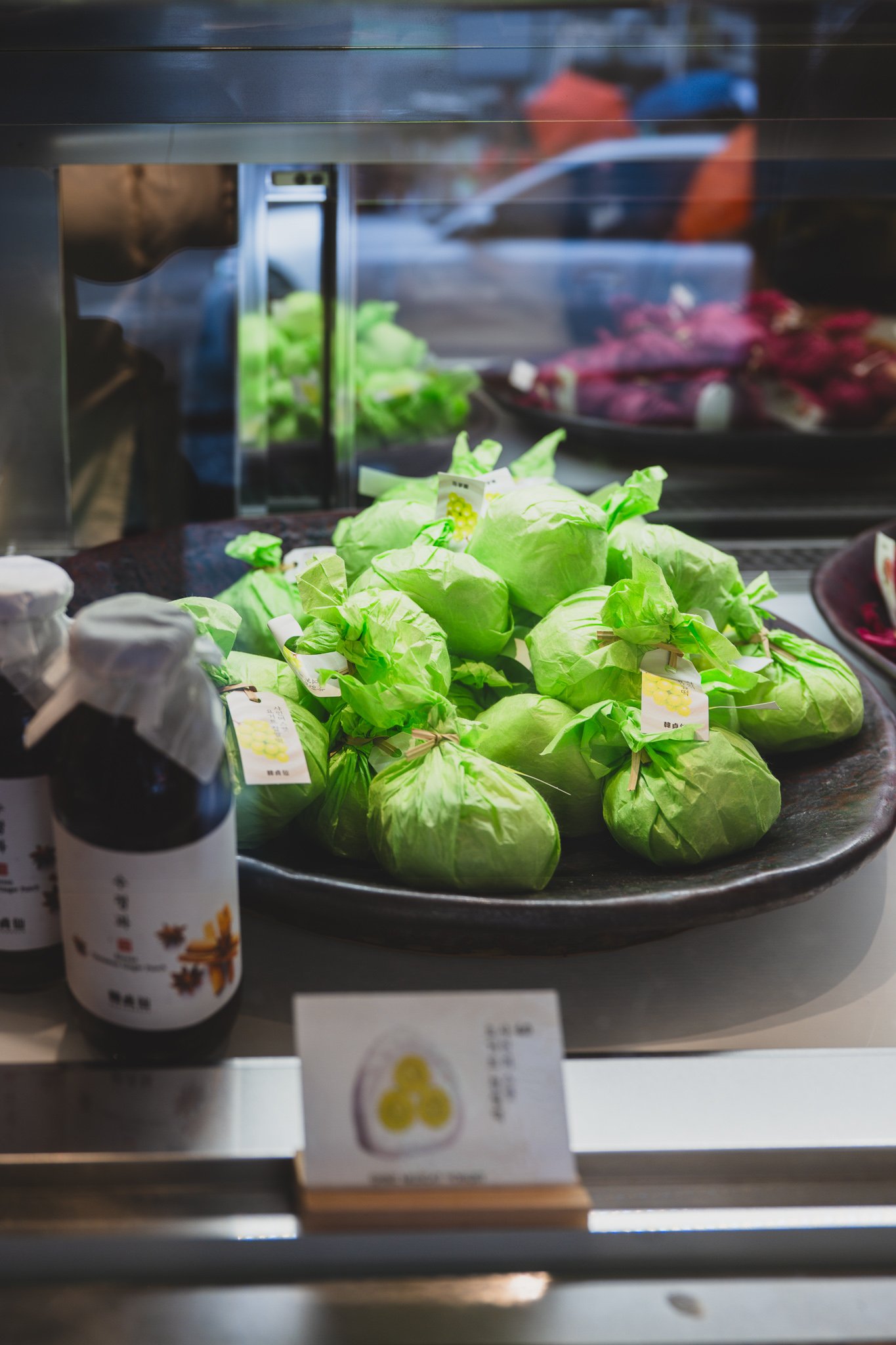
Each mochi is hand-wrapped in colored paper twisted at the top — shine muscat in green, fig in magenta, persimmon and redbean-butter in orange and purple. It’s a small thing, but it’s a big part of why this reads as a gift item rather than a grab-and-go snack.
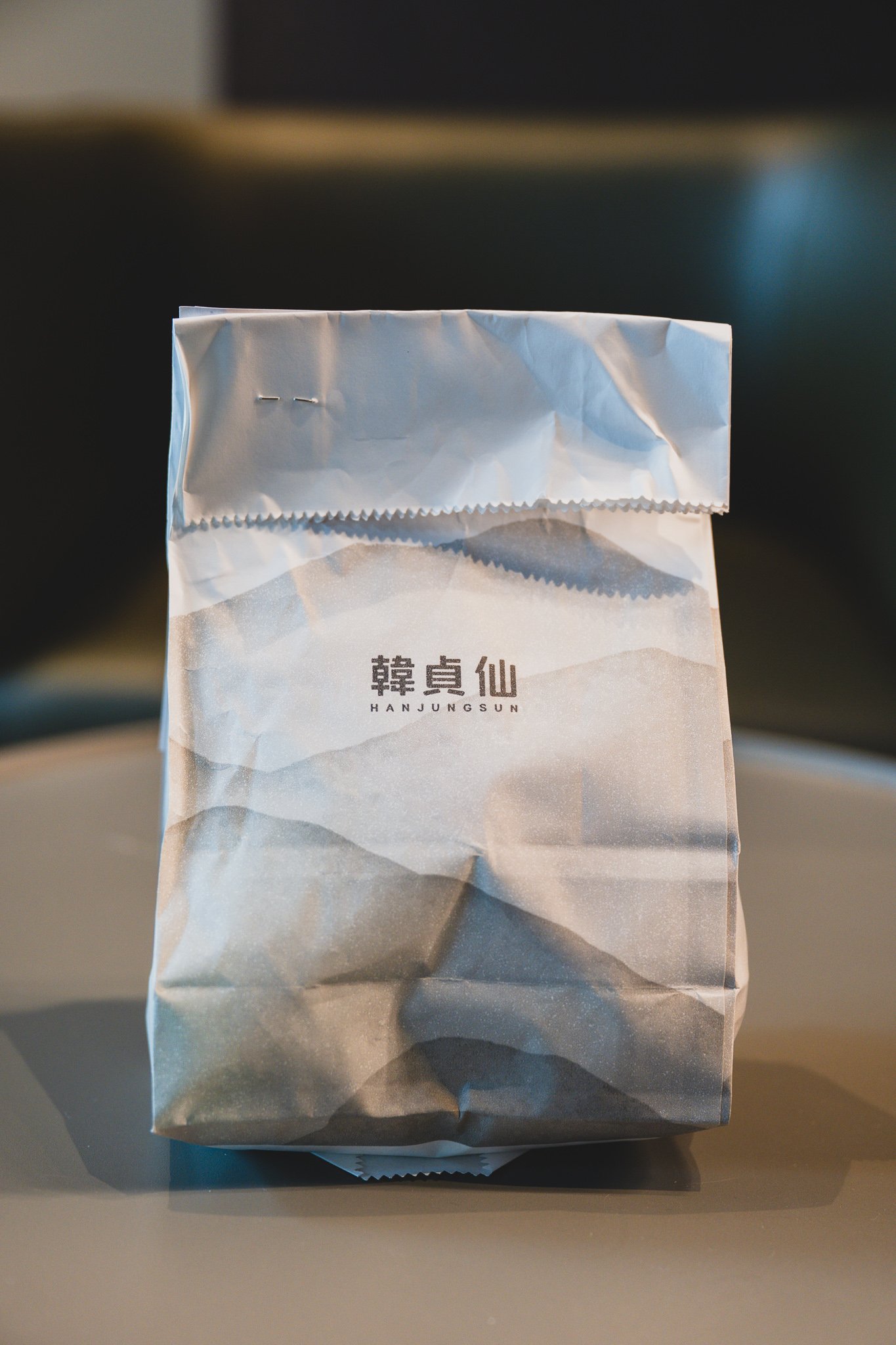
The takeout bag continues the theme — a soft, hanji-textured mountain-range print with the logo in the corner, understated enough that it reads as a design object rather than packaging. If you’re buying to gift rather than to eat on the spot, boxed sets are available: 6 pieces for ₩33,000 (~$24.10) or 9 pieces for ₩46,000 (~$33.60).
How to Store Your Mochi (Read This Before You Buy a Box for Later)
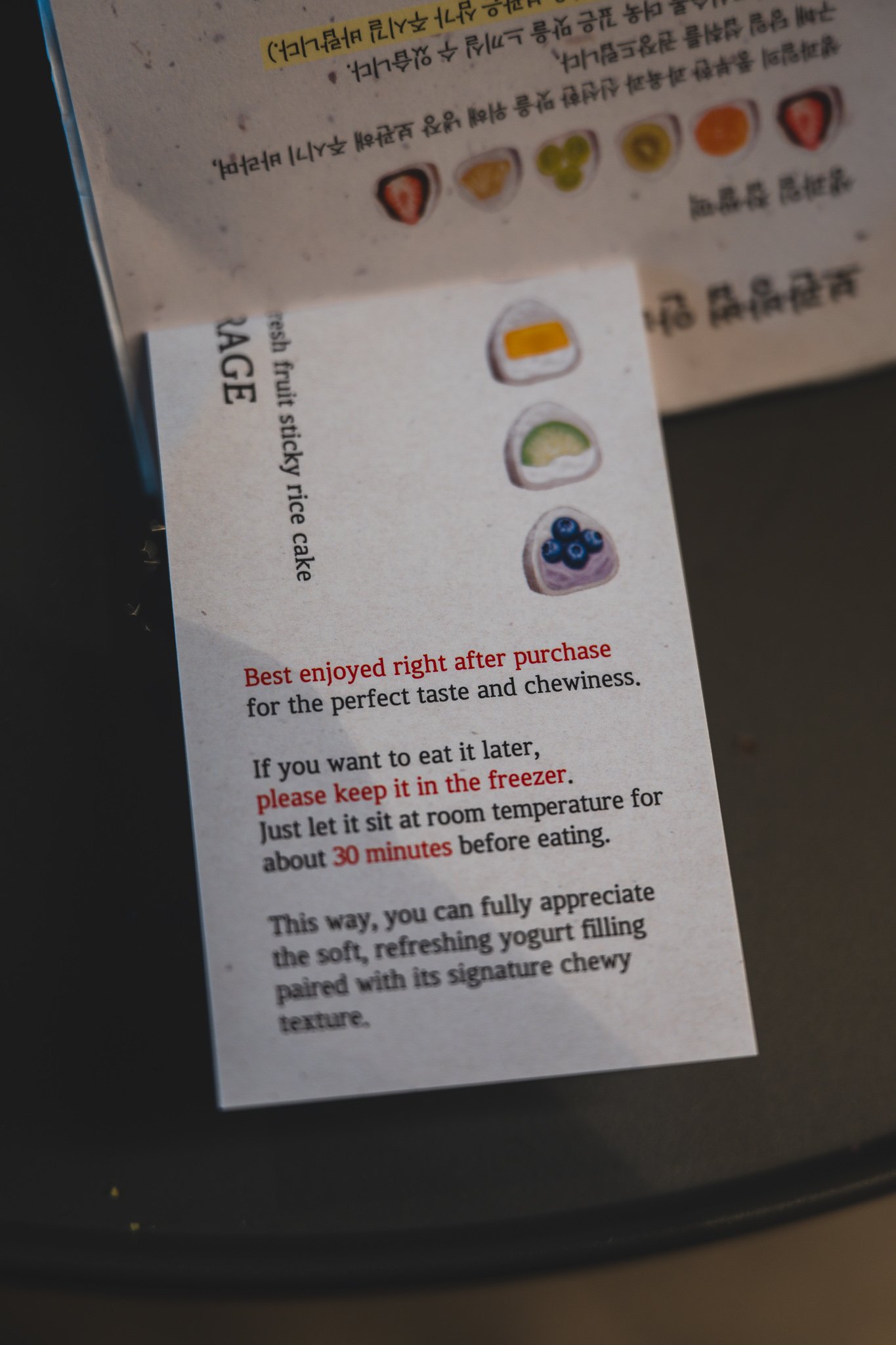
This is the part that actually matters if you’re a tourist rather than a local popping in on the way home. Hanjungsun includes a printed storage card with every order, and the rules differ by mochi type:
- Fresh fruit mochi (shine muscat, gold kiwi, citrus, mugwort strawberry, persimmon, chocolate strawberry): refrigerate and eat the same day. Don’t leave them at room temperature.
- Cream/jam-filled mochi (persimmon, sweet redbean & butter, Dubai-style chocolate): refrigerate and eat within 2 days of purchase.
- Greek yogurt mochi: best eaten immediately for texture and flavor. If you can’t, freeze it and let it thaw at room temperature for about 30 minutes before eating.
Practically, that means: if you’re staying at a hotel with a mini-fridge, you have a day or two of leeway on most flavors. If you’re heading straight to the airport or don’t have fridge access, treat this as a same-day dessert, not a souvenir to pack in your suitcase.
What We Ordered and How It Actually Tasted
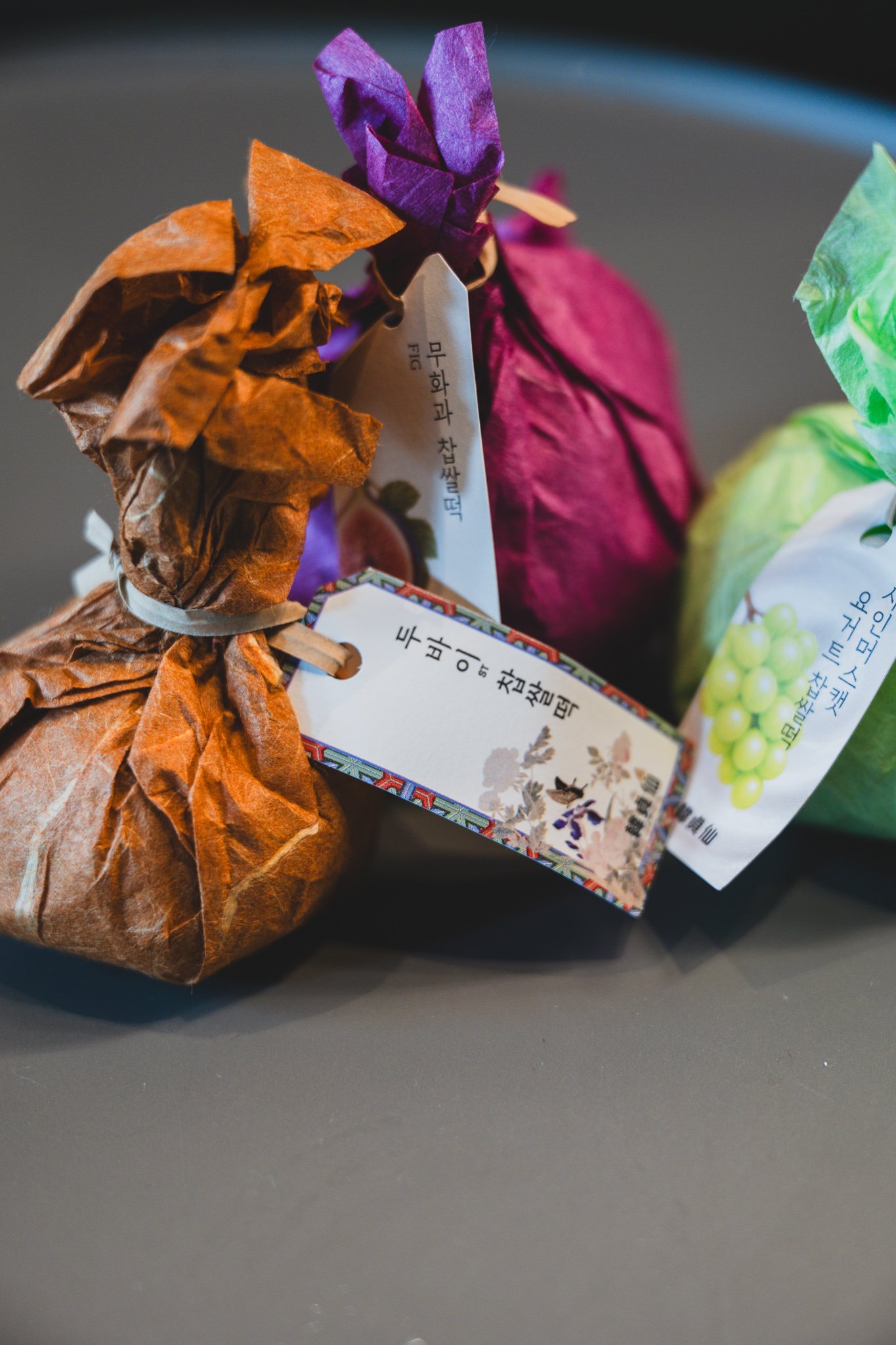
We went with three: Dubai-Style Chocolate, the shine muscat Greek yogurt mochi, and Fig.
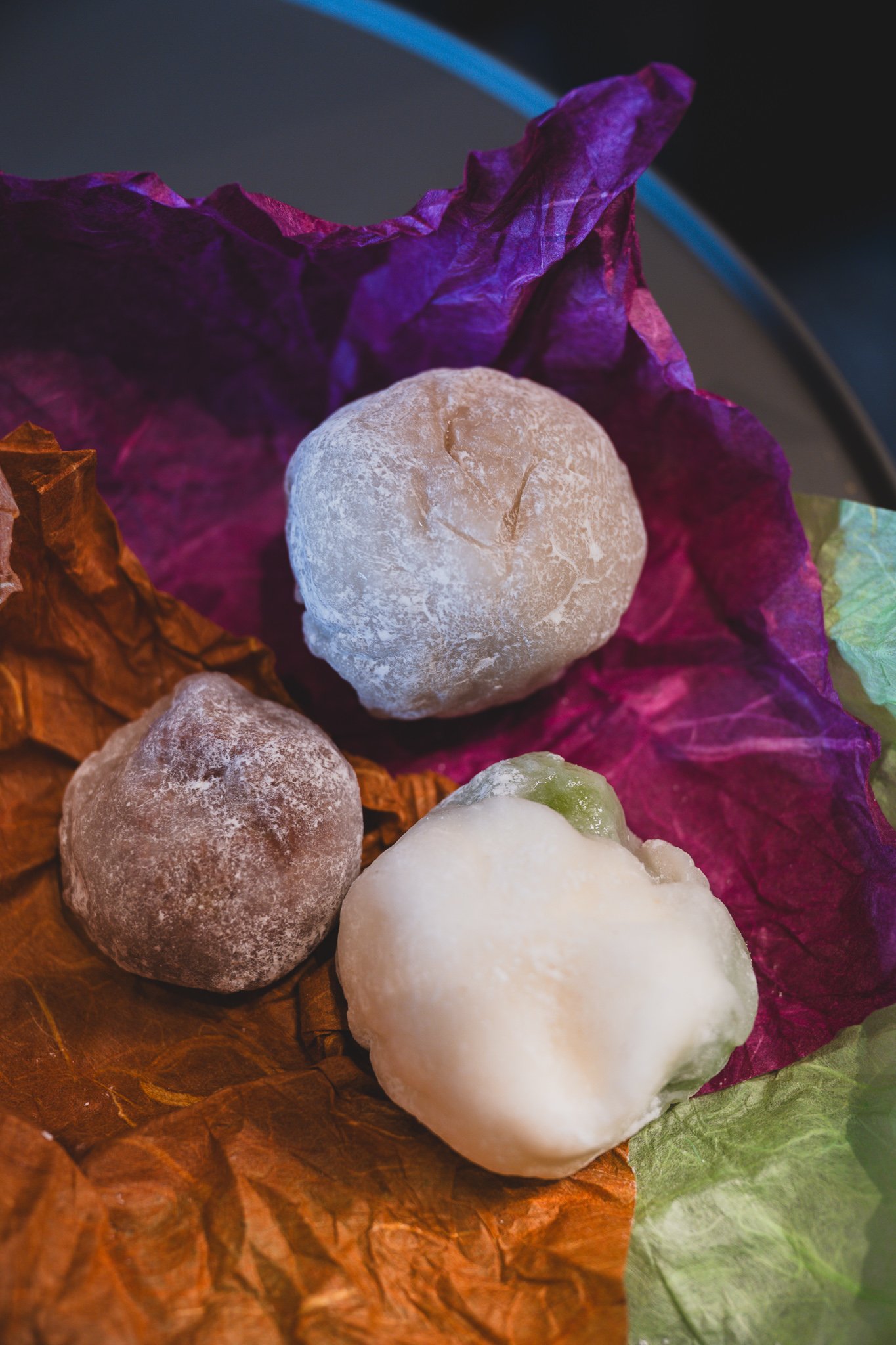
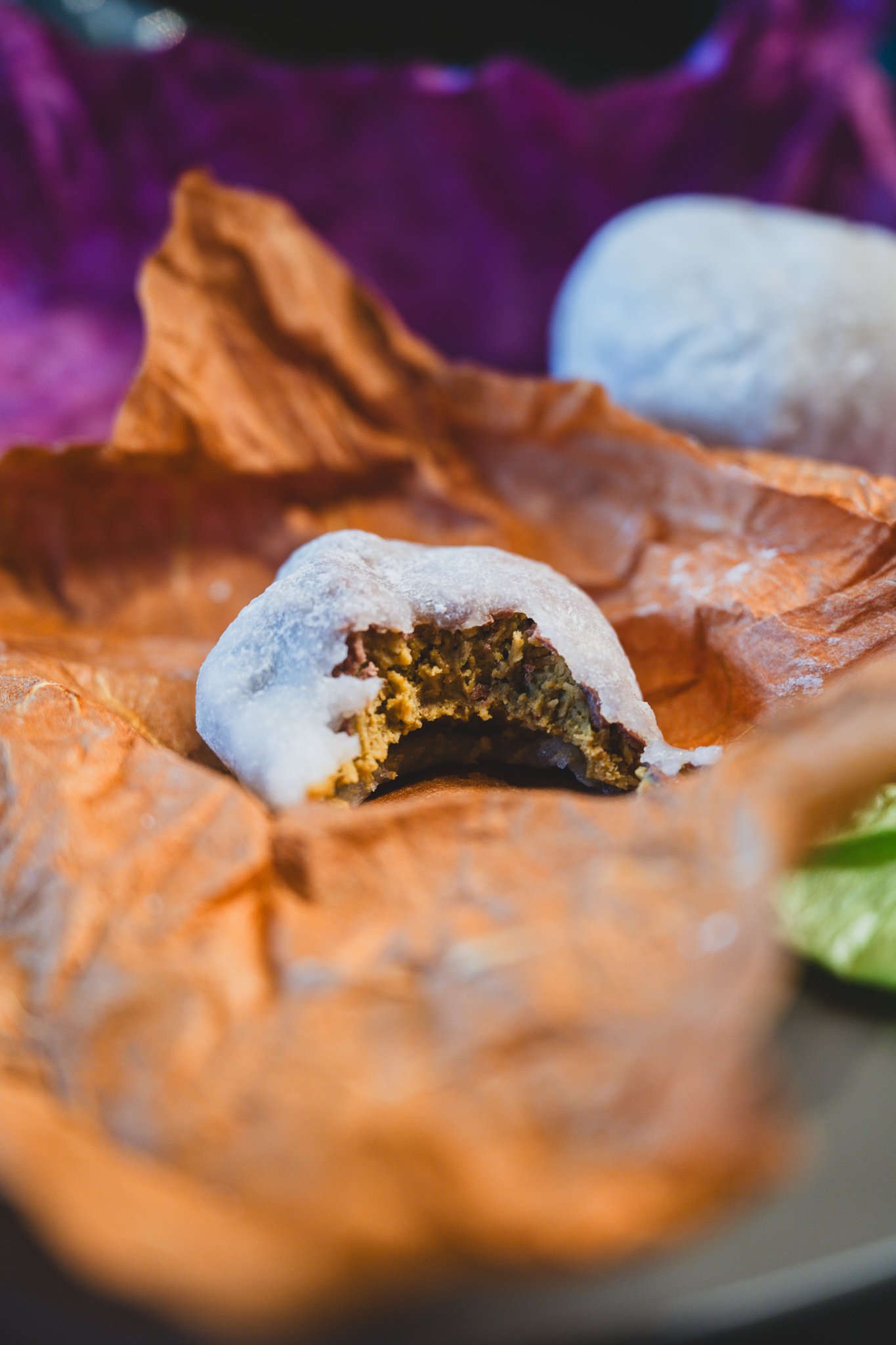
Dubai-Style Chocolate. This is the flavor that’s actually driving a lot of the current mochi trend in Seoul right now — a local take on the viral “Dubai chocolate” (pistachio-kunafa chocolate bar) format, reworked into mochi form. Online opinion on this exact flavor is split: some reviewers call it a must-try, others find the combination of textures off-putting. Our take, after biting into it: the chewy mochi skin gives way to a genuinely crisp shredded kunafa layer mixed with chocolate and pistachio — it’s a real textural contrast, closer to a candy bar wrapped in mochi than a traditional fruit mochi. It’s rich, and one is plenty in a sitting.
Shine Muscat Greek Yogurt Mochi. This was the most immediately likeable of the three. Biting in, a tangy Greek yogurt cream hits first, and then a whole shine muscat grape bursts through the middle. The tartness of the yogurt actually makes the grape taste sweeter by contrast. If you’re ordering just one thing to see what the hype is about, this is the safer, more universally appealing choice over the chocolate.
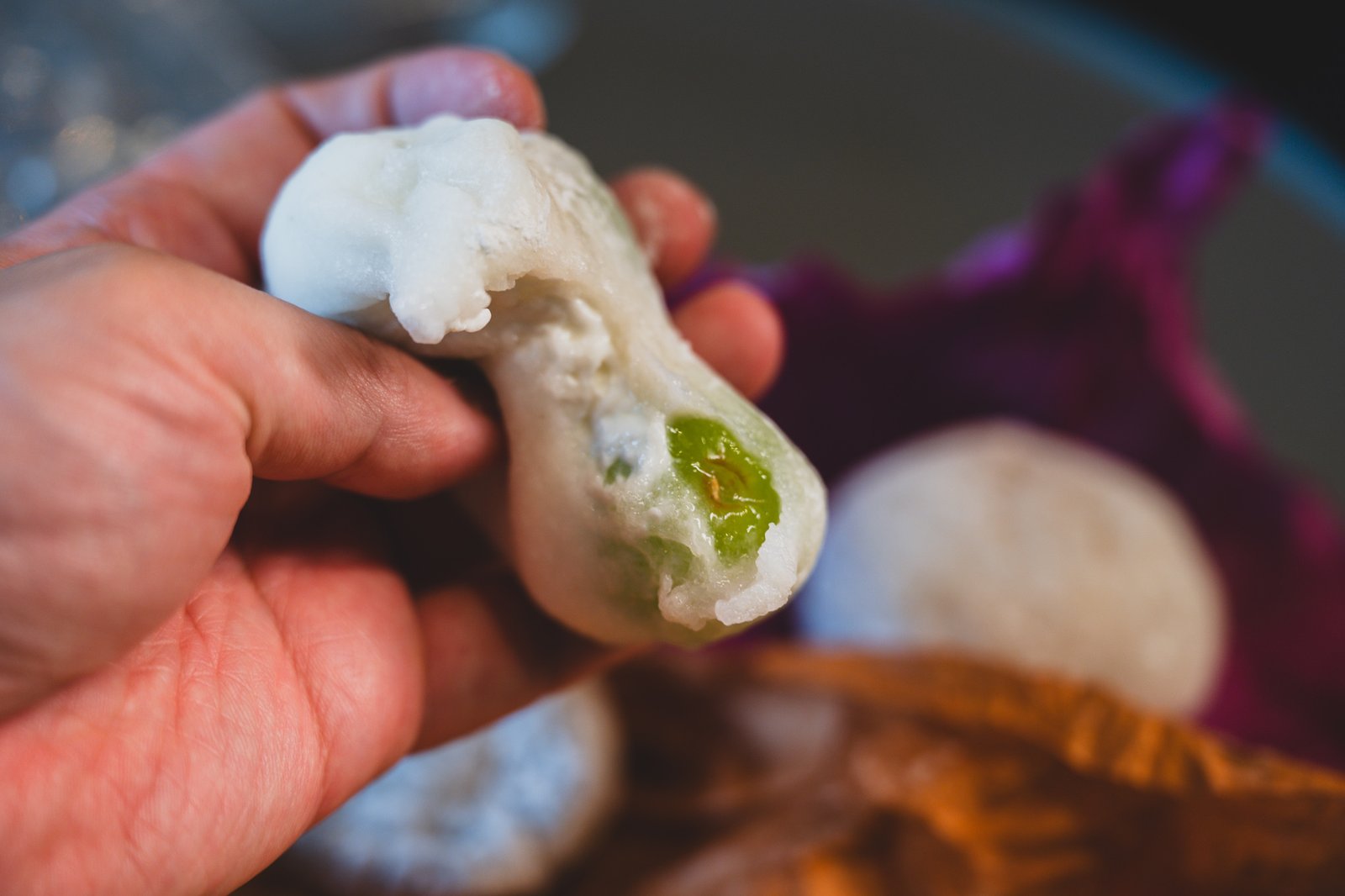
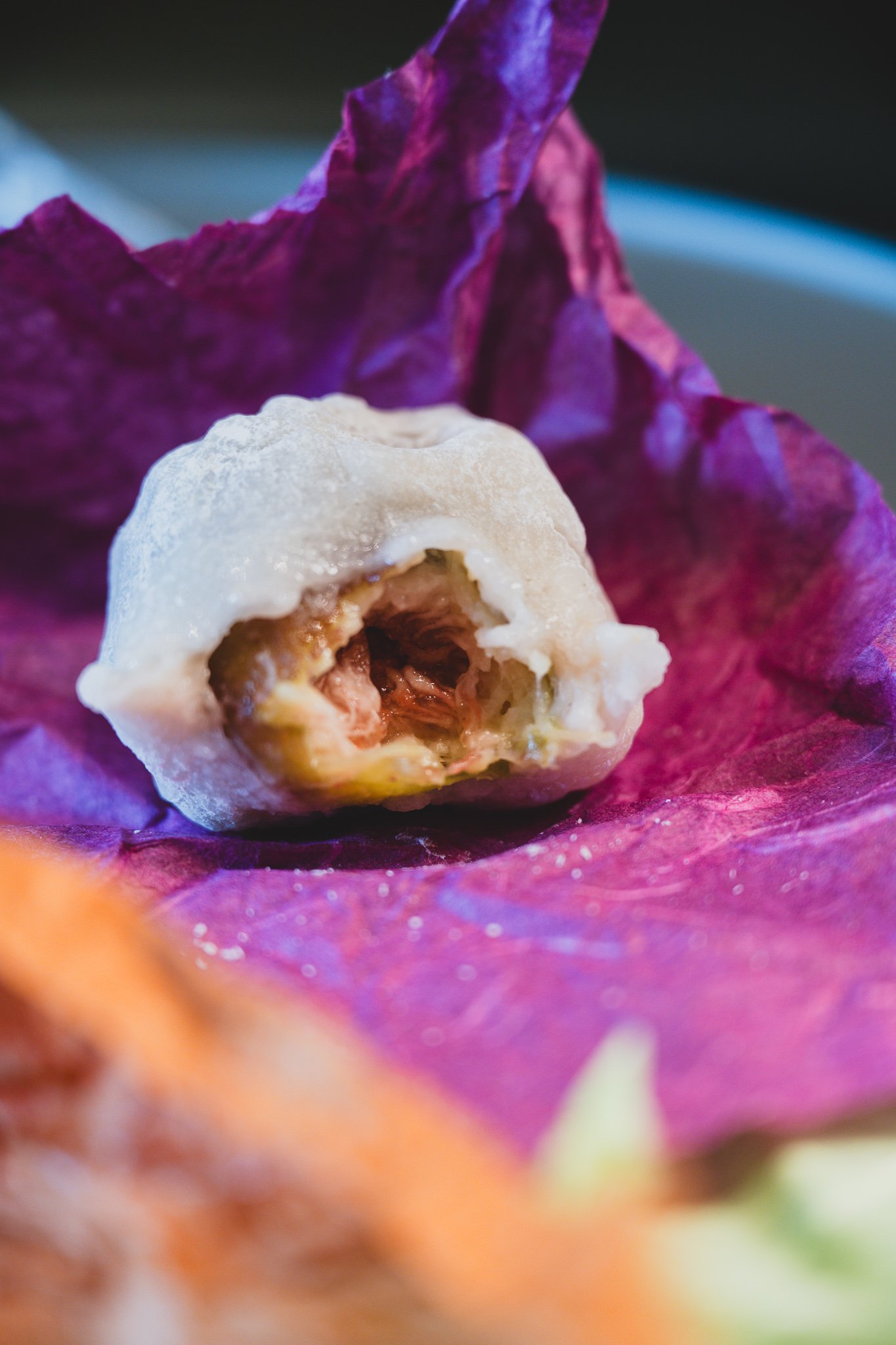
Fig. The quietest of the three — a slightly tart, mildly sweet fig filling with the seeds still giving it some texture. After the intensity of the chocolate and the yogurt cream, this one worked well as a closer. Across all three, the mochi skin itself was thin and properly chewy rather than thick and gummy, which is the detail that separates a good mochi shop from a mediocre one.
Is Hanjungsun Worth the Wait?
Between the always-available classics and the rotating seasonal and limited-quantity items, Hanjungsun has built a real reason to come back more than once — which is presumably the point. Add in fresh seasonal fruit, a genuinely chewy mochi texture across the board, and gift-ready hanji-style packaging, and it’s easy to see why this has become the thing people specifically detour to Seongsu for.
The real costs are time and shelf life: there’s no way to skip the line, and several flavors need to be eaten within a day or two. If you’re short on time in Seongsu or don’t have fridge access afterward, factor that in before you commit to a big box for later.
Good for: dessert-focused visitors doing a Seongsu-dong day who want something to photograph and something to actually bring home. Less good for: anyone with a tight schedule who can’t spare 20–40 minutes for a line, or who won’t have a fridge in the next couple of days.
FAQ
Do I need a reservation for Hanjungsun Seongsu?
No — it’s walk-in only, first-come-first-served. There’s no app-based queue for the Seongsu flagship.
How long is the wait at Hanjungsun Seongsu?
It varies by day and time. Weekday evenings before 6 PM tend to be shorter; weekends and after-work hours (7 PM onward) can mean a longer wait, based on our visit and other visitor reports.
Is Hanjungsun only in Seongsu?
No — Seongsu is the original location, but there are now branches at Seoul Station, Shinsegae Gangnam, Hyundai Department Store (Yeouido and Pangyo), Lotte World Mall, and Lotte Department Store’s main branch.
Can I bring Hanjungsun mochi home on a long flight?
Be cautious. Fresh fruit mochi is meant to be eaten the same day, and cream-filled flavors only last about 2 days refrigerated — this isn’t a shelf-stable souvenir like packaged cookies. If your flight home is more than a day or two away, treat it as something to eat in Seoul rather than pack.
What’s the best flavor to order first?
The shine muscat Greek yogurt mochi is the most broadly appealing and the easiest to recommend to a first-time visitor. Dubai-Style Chocolate is worth trying if you’re curious about the trend, but go in expecting a rich, candy-bar-like flavor rather than a traditional fruit mochi.