TL;DR: Park Seo-bo Museum opened on August 21, 2026 in Seoul’s Yeonhui-dong neighborhood, dedicated to Dansaekhwa (monochrome painting) pioneer Park Seo-bo (1931–2023). It’s open Tuesday–Sunday, 11:00–18:00 (closed Mondays), admission is 5,000 KRW, and photography isn’t allowed inside the galleries. The opening show, Park Seo-bo & Huong Dodinh: Emptiness Fullness, runs through January 3, 2027.
I’d already seen Park Seo-bo’s work more times than I could count — a solo show at Kukje Gallery, the MMCA retrospective, art fair booths where his Ecriture paintings kept turning up. So when I heard a museum dedicated entirely to him was opening in Yeonhui-dong, my first reaction wasn’t excitement, it was a genuine “do I actually need to go see this again?”
Turns out, yes — and the reason had almost nothing to do with Park Seo-bo’s own work. It was a single room on the third floor. More on that below.
Quick info
- Where: 9-2 Yeonhui-ro 24-gil, Seodaemun-gu, Seoul, 03723
- Hours: Tuesday–Sunday, 11:00–18:00 (last admission 17:30)
- Closed: Mondays, and the days of Lunar New Year and Chuseok
- Admission: 5,000 KRW
- Docent tours: Tue–Fri at 14:00; Sat, Sun & public holidays at 14:00 and 16:00 — free, no reservation needed, just show up
- Parking: A small basement lot exists, but the museum sits on a narrow residential lane, so it’s tight for larger vehicles
- Photography: Not permitted inside the exhibition galleries (exterior and lobby are fine)
- Current show: Park Seo-bo & Huong Dodinh: Emptiness Fullness, August 21, 2026 – January 3, 2027
[Confirm before you go]: this museum opened only days before this visit, so operating policies could still shift — worth a quick check of the museum’s own channels before you head out, especially for the docent schedule.
Getting there is part of the experience
Park Seo-bo Museum isn’t next to a subway exit — it’s tucked into a quiet residential lane in Yeonhui-dong, a neighborhood better known for its bakeries and hillside cafés than its transit access. The nearest larger station is Sinchon (Line 2), but honestly, a taxi or rideshare straight to the address is the least stressful way in, especially since the museum itself warns that the approach road is a narrow, car-lined residential alley. If you’re combining this with a Yeonnam-dong or Sinchon visit, budget extra time to walk it rather than relying on a bus that drops you right at the door.
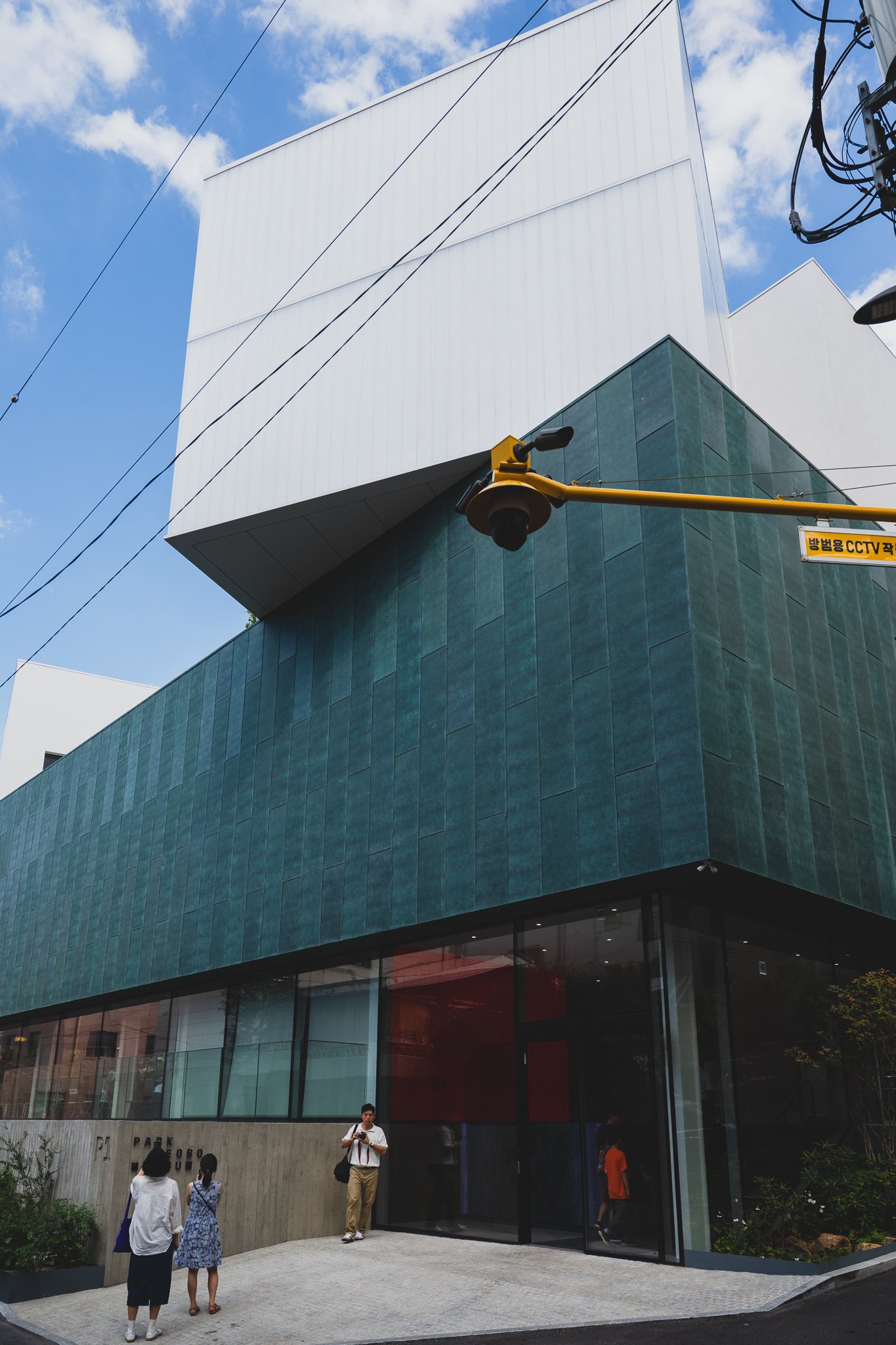
The building itself does some of the work before you even step inside. You round a corner in an ordinary residential block and suddenly there’s this — a facade in ribbed, teal-toned zinc panels, its vertical grooves echoing the texture of Park’s own Ecriture paintings. The architect, Choi Moon-gyu (also behind Ssamziegil and the Daegu Kansong Art Museum), built it across five levels — two below ground, three above — on a site right next to the studio where Park actually lived and worked.
Why the opening show isn’t a Park Seo-bo retrospective
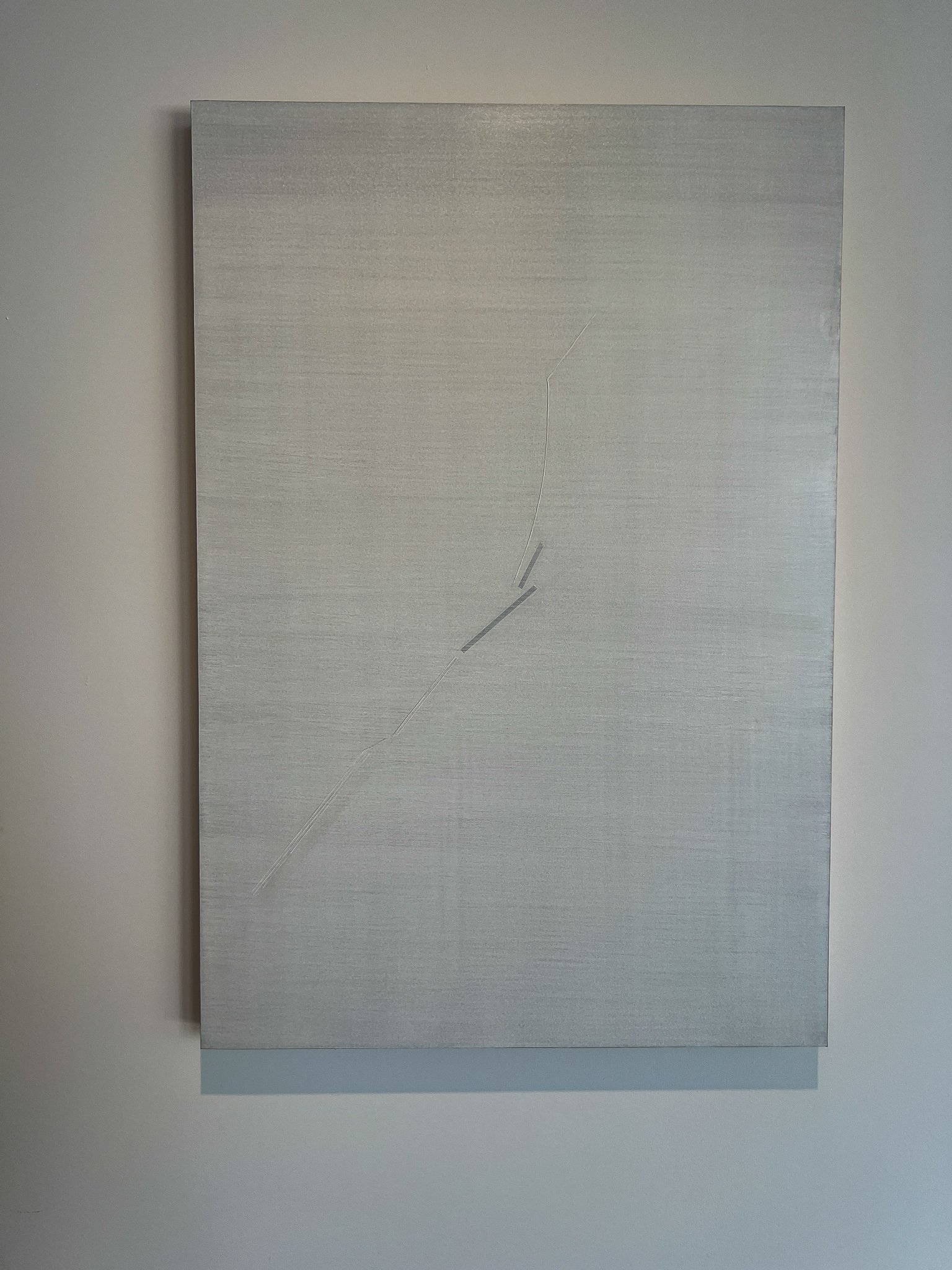
Here’s the choice that got me curious enough to actually book a visit: instead of opening with a straightforward Park Seo-bo retrospective, the museum chose a two-person show pairing him with Huong Dodinh, a Vietnamese-born painter who has spent her career in France. 2026 also happens to be the 140th anniversary of Korea-France diplomatic relations, so the pairing reads as a deliberate cultural gesture as much as a curatorial one.
The backstory behind the pairing is what makes it land, though. The two artists only ever met once — in the summer of 2023, a few months before Park passed away that October. Despite the language barrier (conversation went from Korean to English to French), they reportedly talked for hours and found they understood each other’s work almost instantly. Dodinh later made a new painting, X.K.N.31 (2025–2026), in response to that meeting — and it’s hanging on the third floor of this exhibition.
The route follows Park’s career, floor by floor
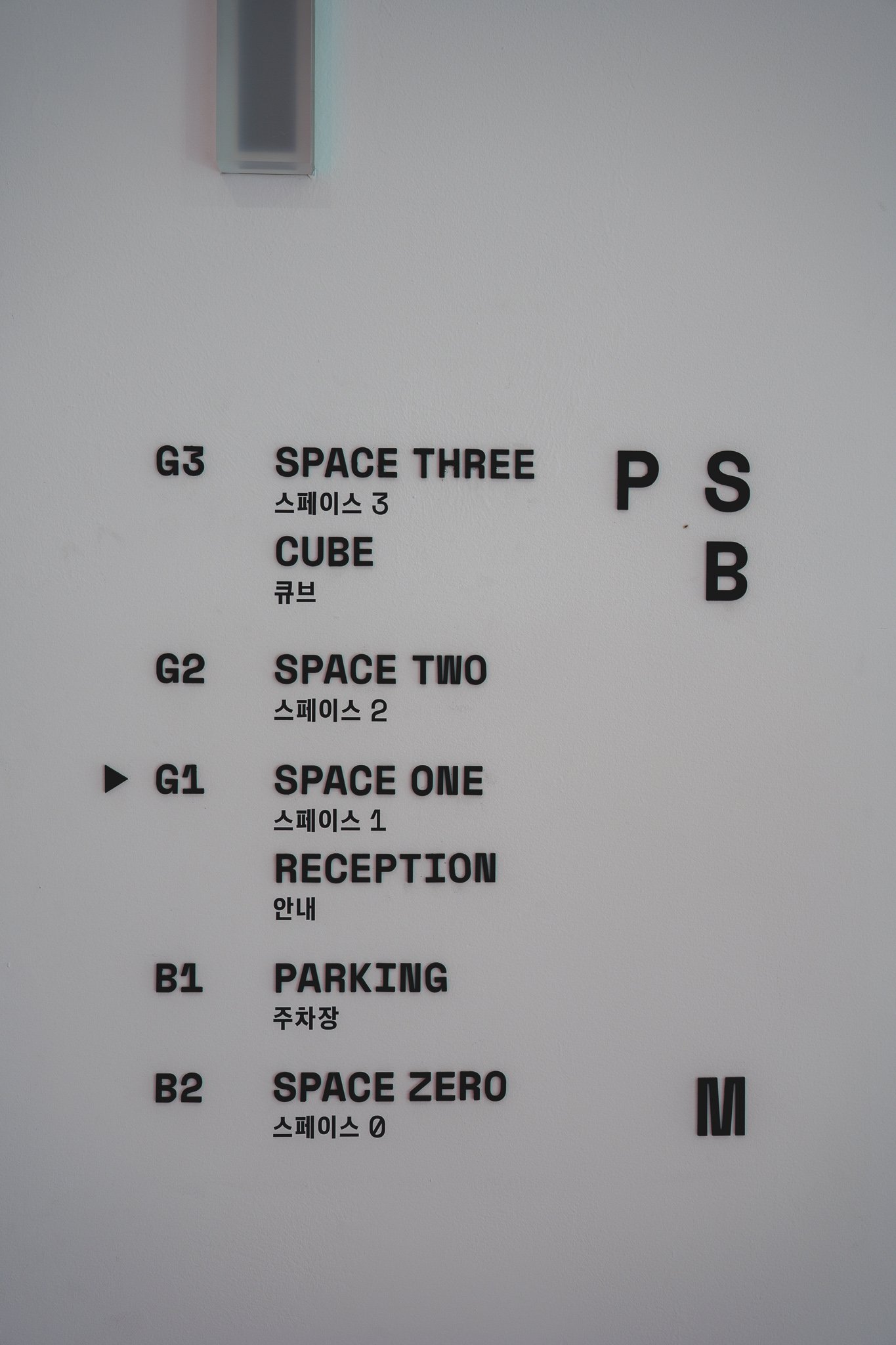
The visit path starts at basement level 2 and climbs to the third floor — and it’s not just floor numbering, it’s mapped onto Park’s own artistic trajectory. Color drains out as you rise, ending in near-total white by the top floor. It’s a simple structural trick, but it’s also the clearest possible embodiment of the show’s subtitle, “Emptiness Fullness.”
SPACE Ø — where the two artists first meet
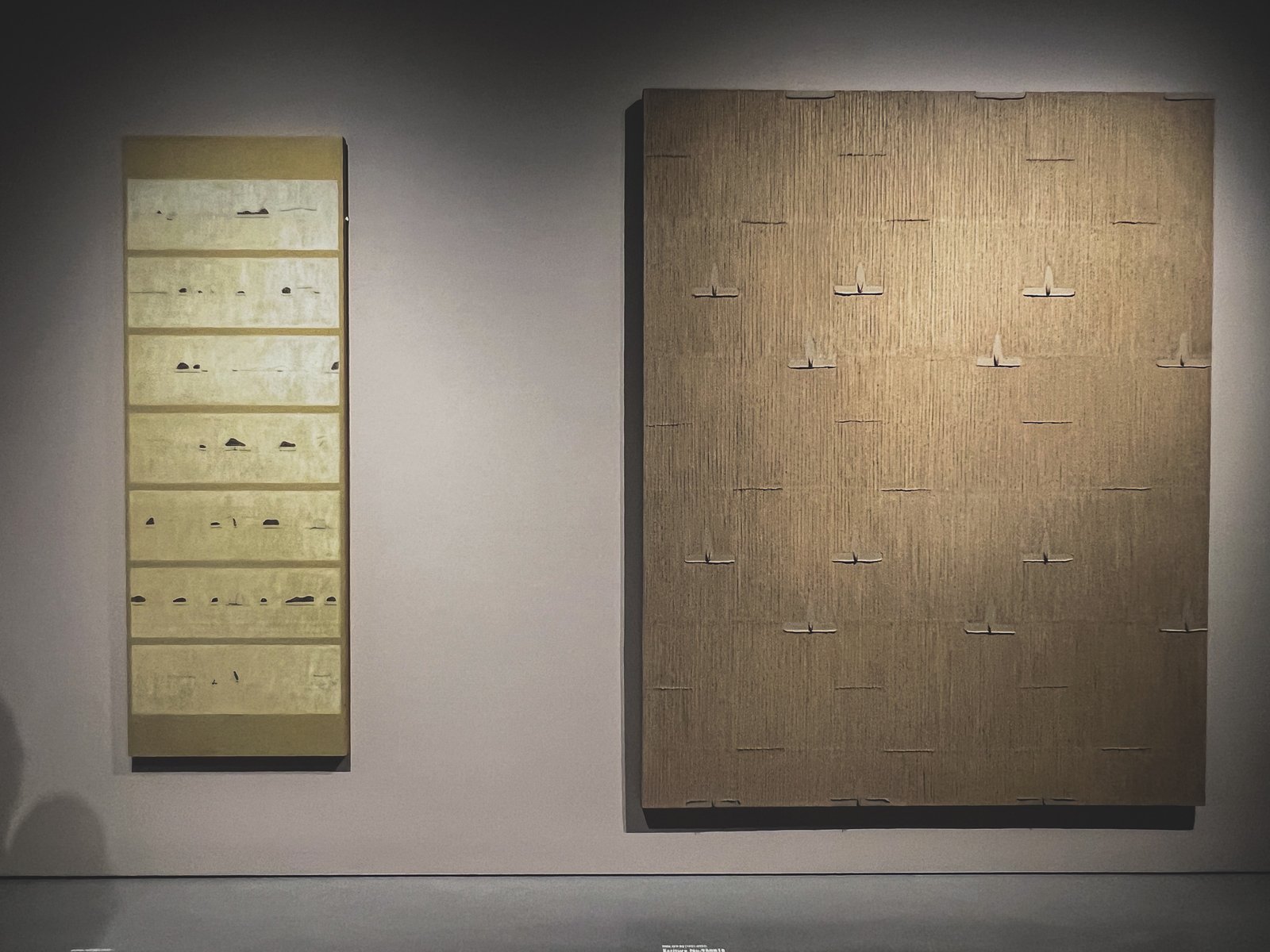
The basement level puts 1990s works by both artists side by side — different materials, different countries, but placed here so you can see where their formal languages actually converge and where they split.
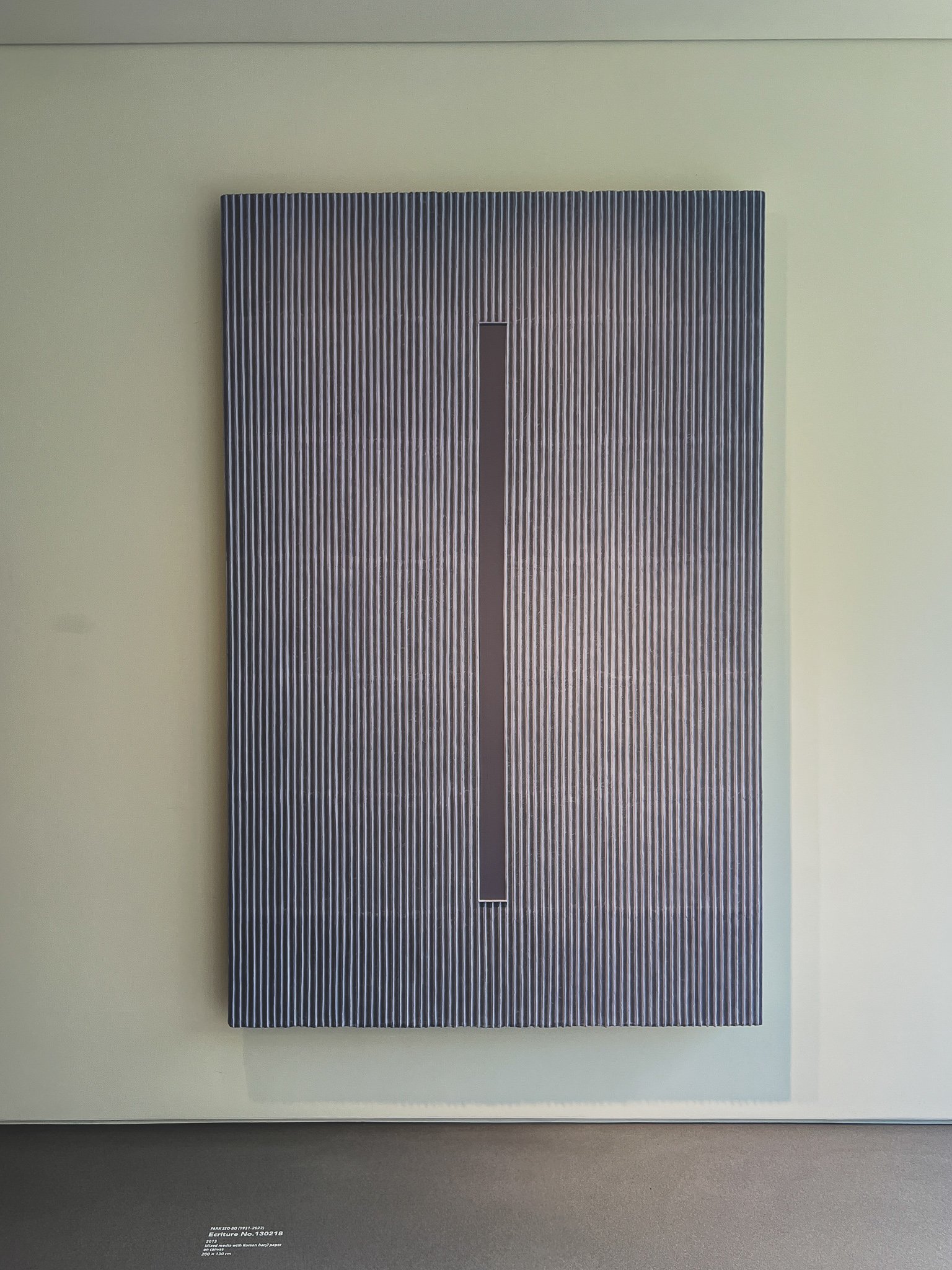
Photos genuinely undersell Park’s Ecriture (描法) paintings. From a distance they read as simple vertical stripes; up close, they’re built from layers of mulberry paper (hanji) pushed and pulled by hand before it dries, leaving ridges that feel more like relief sculpture than painting.
SPACE 2 — where the color comes in
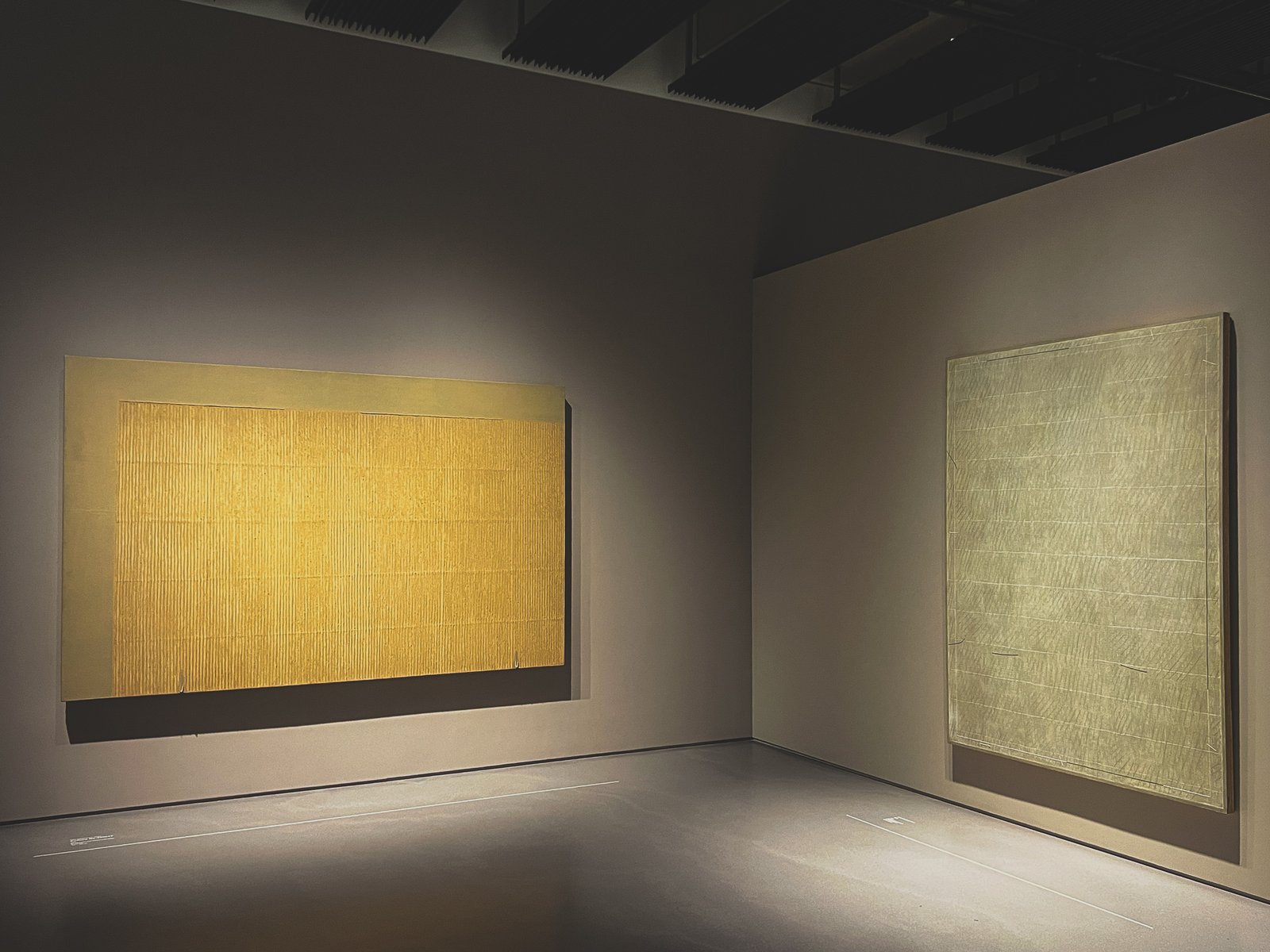
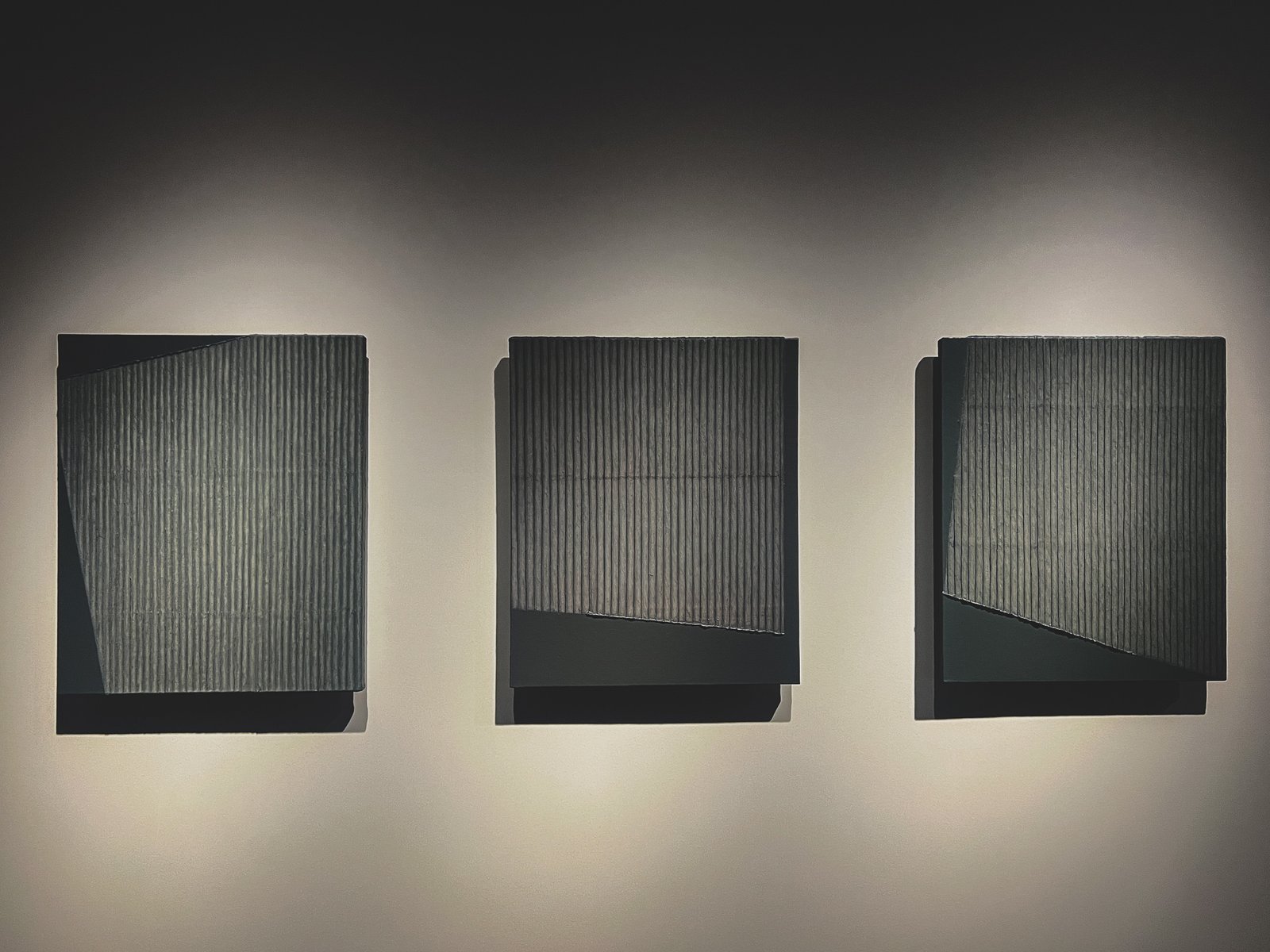
The second floor is where Park’s color starts showing up, and the wall text explains why the black isn’t just black — Park called it “hearth color,” drawn from the soot that built up in his mother’s cooking fire as a child. It’s the kind of deep, almost bottomless black that makes you want to reach out and touch it.
The color arrived later, around the 2000s, and the wall text tells that story too: Park, then in his seventies, was wrestling with not wanting to be an artist who stood still — and a chance encounter with the intensity of autumn foliage color burned through that block in an instant. From there, color became part of the work.
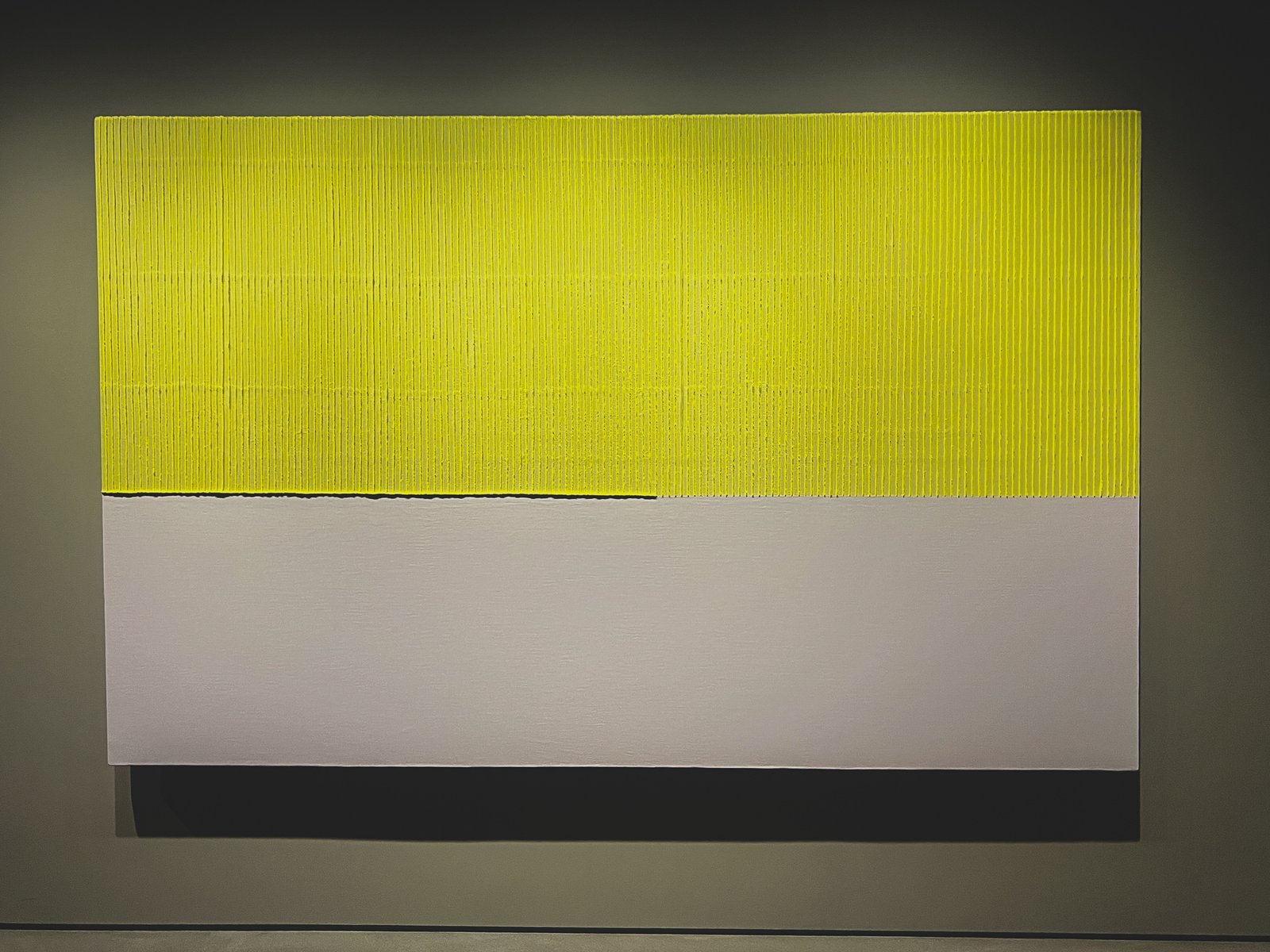
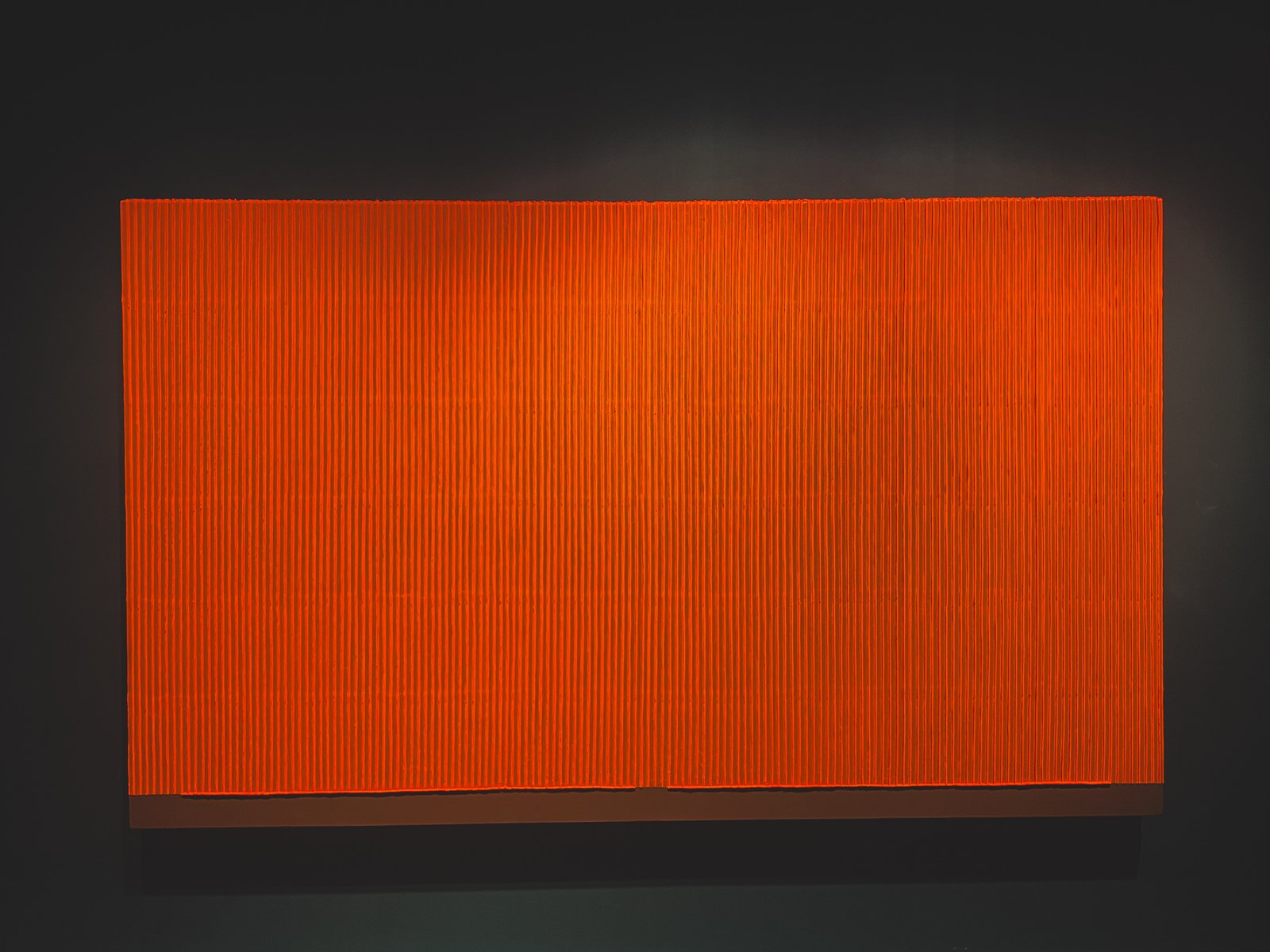
Same technique, only the color changes, and the emotional register shifts completely. Standing in front of the yellow and orange works in a dimmed room, they almost seem to glow on their own. This floor also repeats a pairing device — Park’s color works sharing a wall with Dodinh’s paintings, which she builds by layering mineral pigment dozens of times over until light starts emerging from within the layers. Completely different technique, same underlying instinct: build meaning through repetition over time.
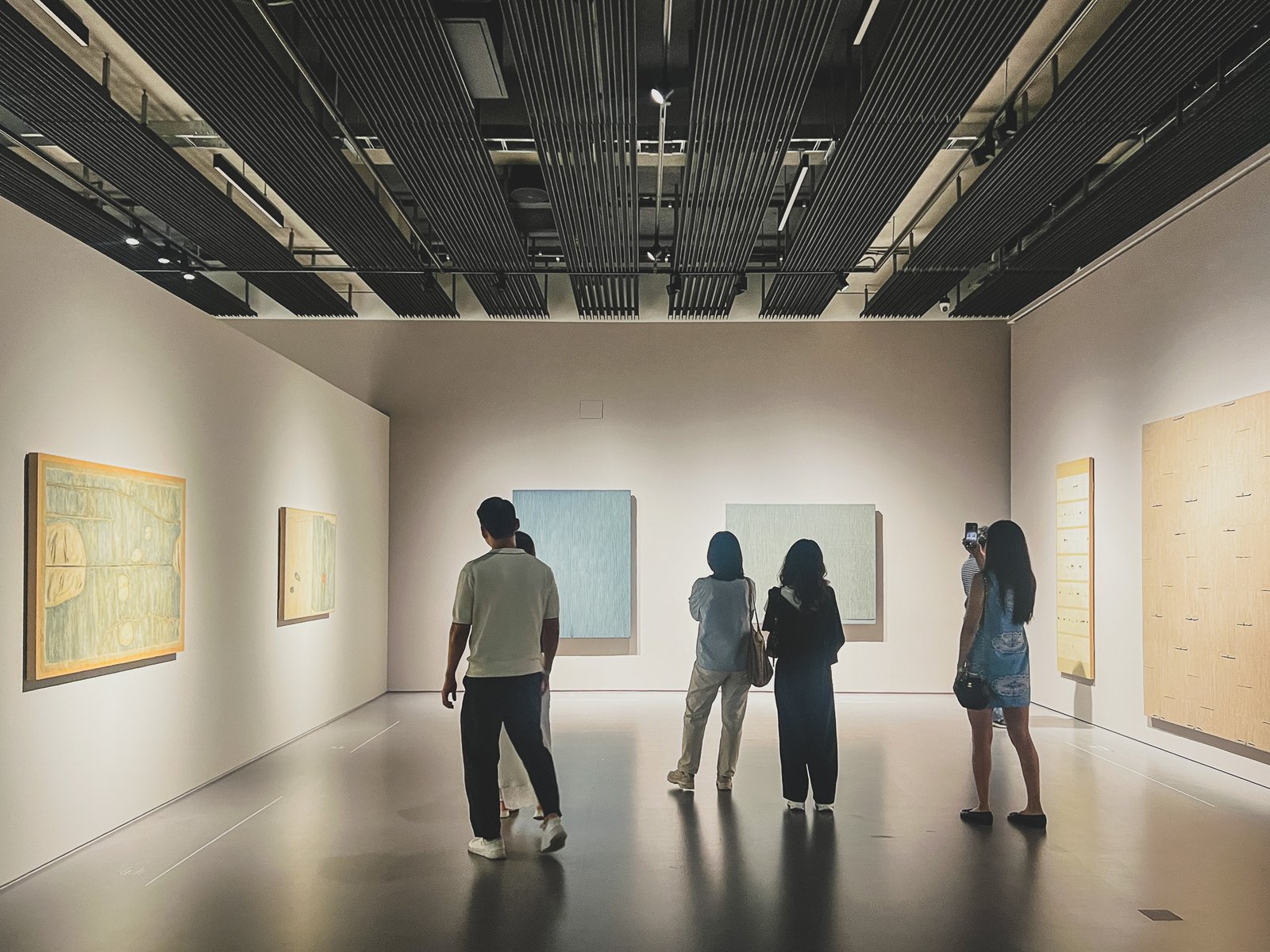
Opening weekend meant this floor was easily the busiest in the museum. I couldn’t always get a clear shot, but there was something I liked about it anyway — a room full of people standing quietly in front of paintings, which is a different kind of crowded than Seoul’s usual pop-up-store crush.
SPACE 3 — the room that answers my opening question
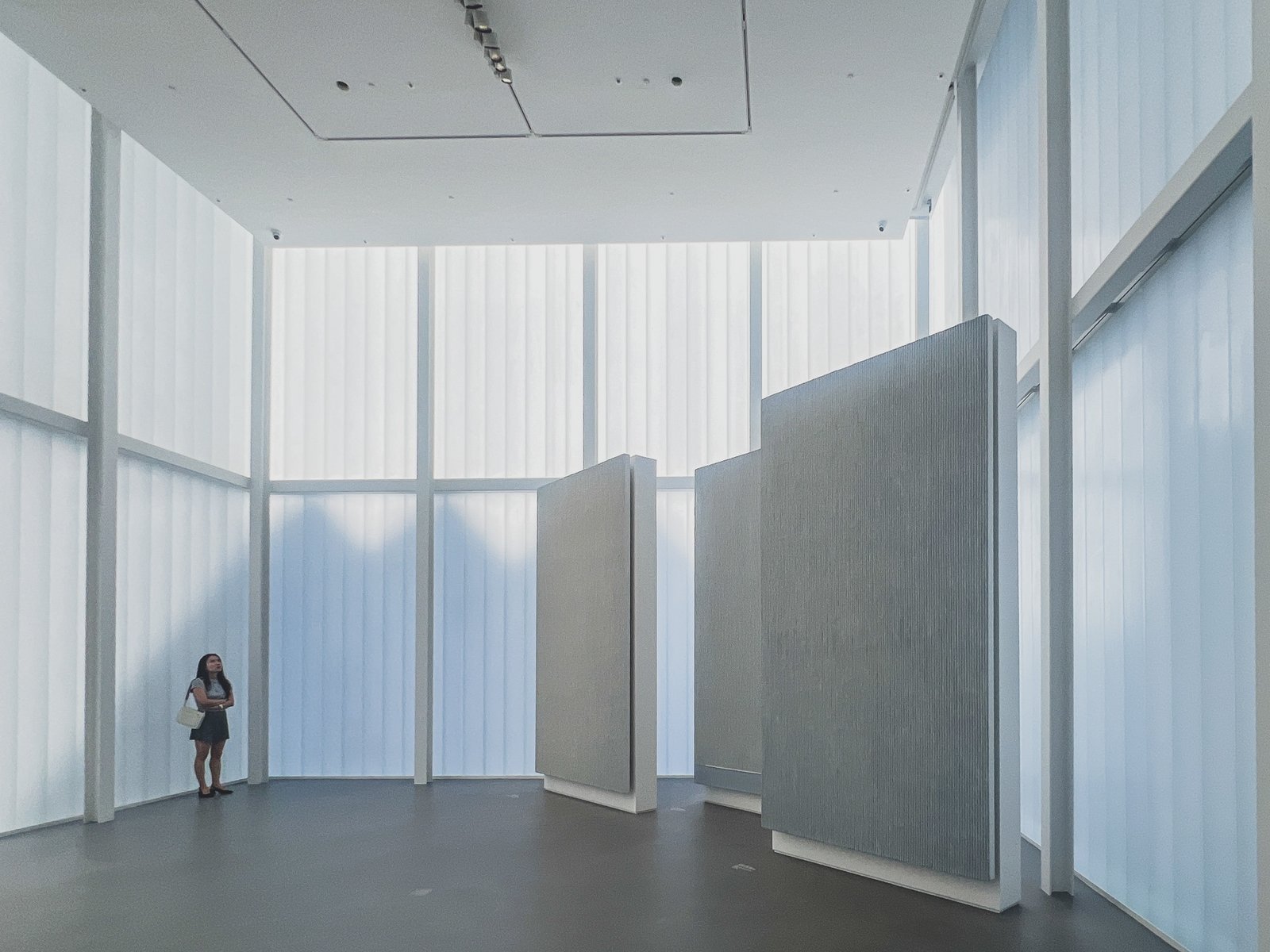
If there’s one floor that justifies going back to see an artist you’ve already seen several times, it’s this one. The wall text frames the room as “Fullness of White” — Park’s white draws on Joseon-era ceramics, while Dodinh’s draws on the winter snow of her French childhood. Every other level is a fairly standard white-cube hanging show; the third floor feels like walking into an installation. Walls, ceiling, and floor are all kept in the same white tone, wrapped in translucent, vertically ribbed walls that let natural daylight filter straight in.
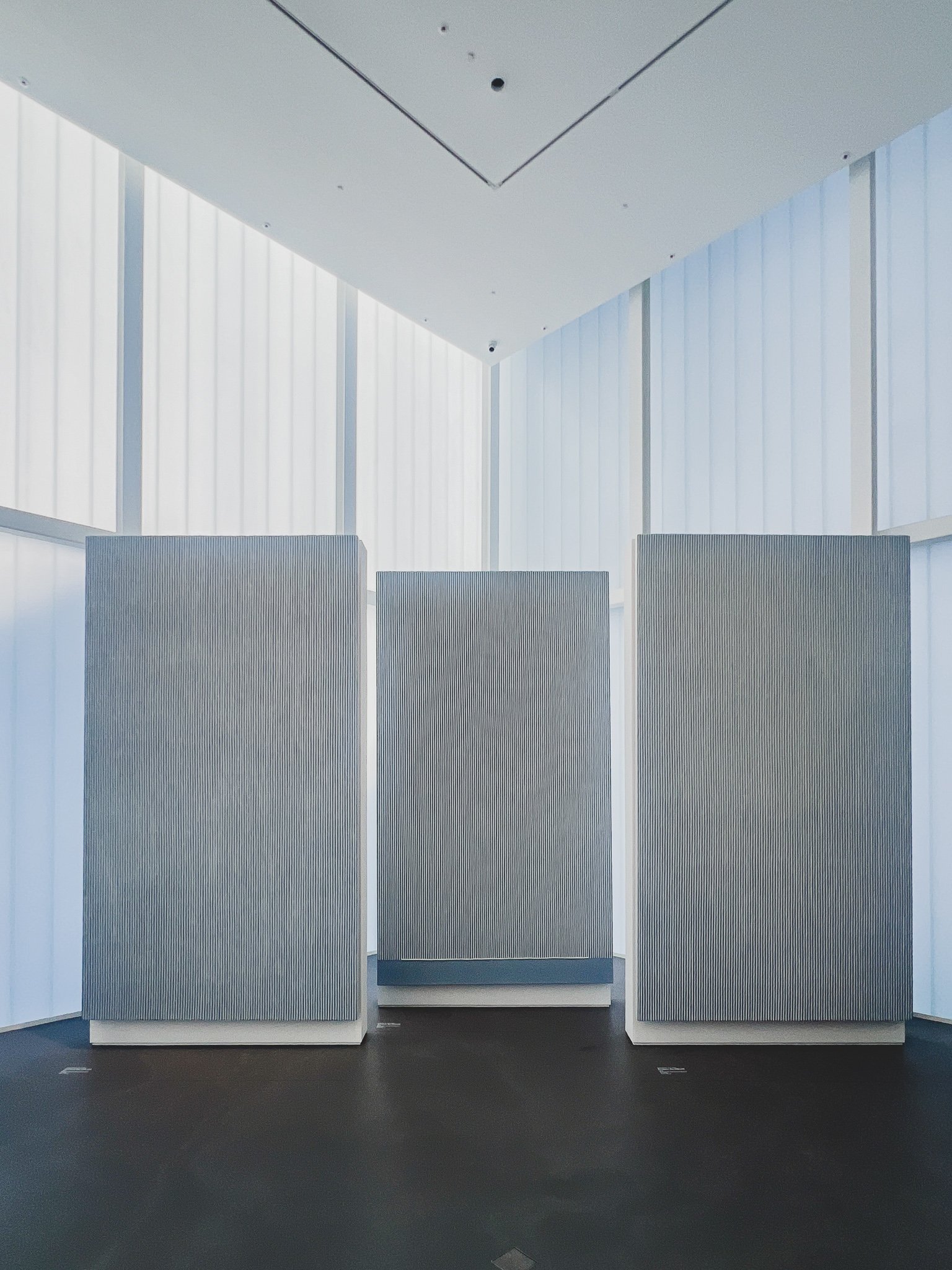
Park’s large white hanji Ecriture works here aren’t hung on the wall — they’re mounted as freestanding panels so you can walk around and see both sides. According to the wall text, these are pieces Park began making in anticipation of this very museum being built, designed with the shifting angle of natural light in mind. Move a few steps and the shadows across the ridges genuinely change.
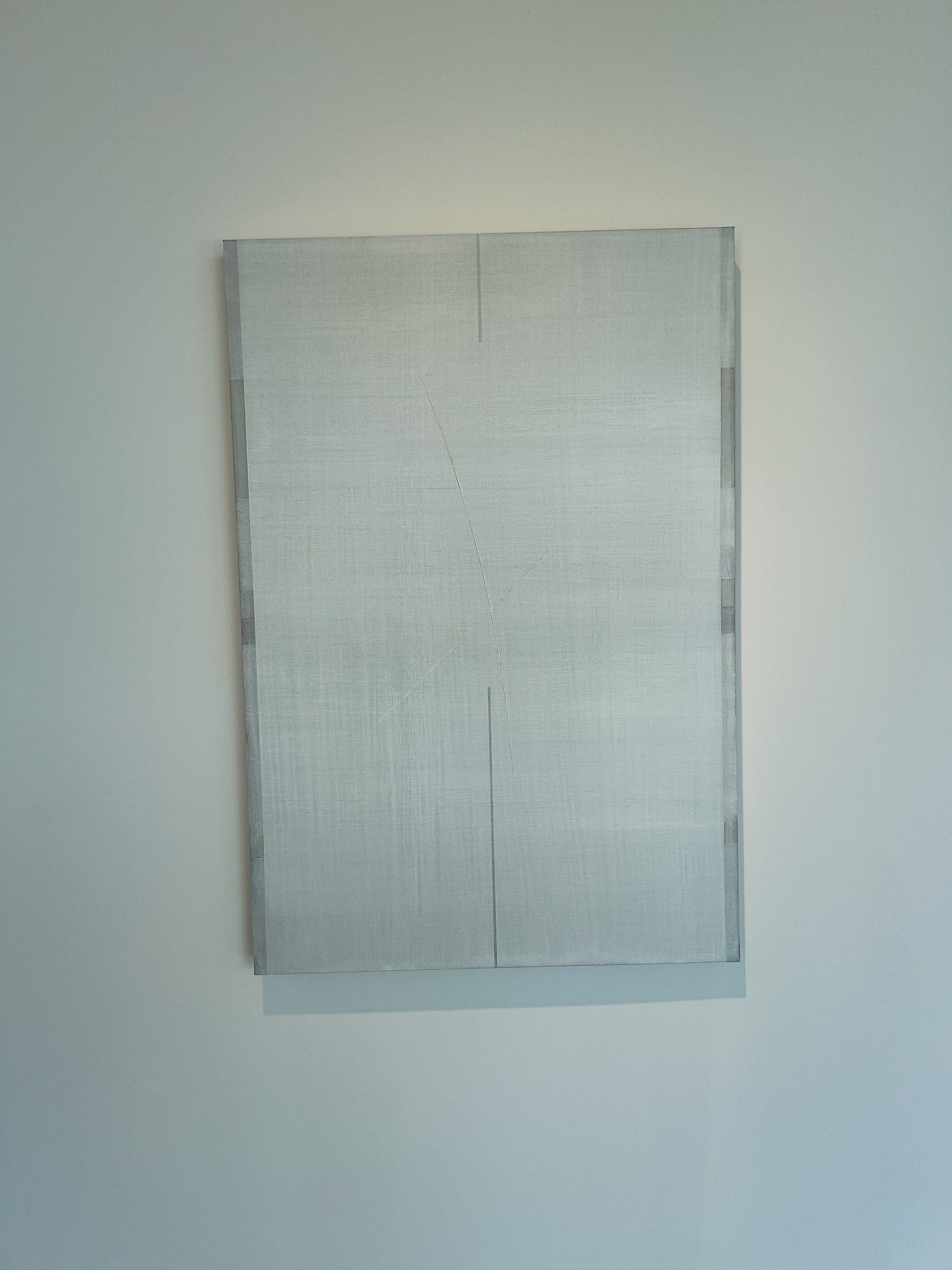
I’ve been in plenty of museums with dramatic lighting design, but I hadn’t seen a gallery built around how a work’s appearance changes across the day, rather than simply illuminating it well. It’s the clearest expression of the museum’s stated goal of being a “contemporary platform” rather than a memorial to one artist — the building itself was reshaped around the work, not the other way around.
No cameras allowed inside the galleries — plan for it
One thing that caught me off guard at the entrance: cameras are not allowed past the lobby. I’d brought a Nikon specifically for this visit and ended up only using it for a few exterior shots — everything from the galleries onward had to be shot on a phone. If you’re hoping to capture the texture of the Ecriture ridges or the way natural light hits the third floor, a phone camera won’t fully do it justice, so temper your expectations if photography is a priority for the visit.
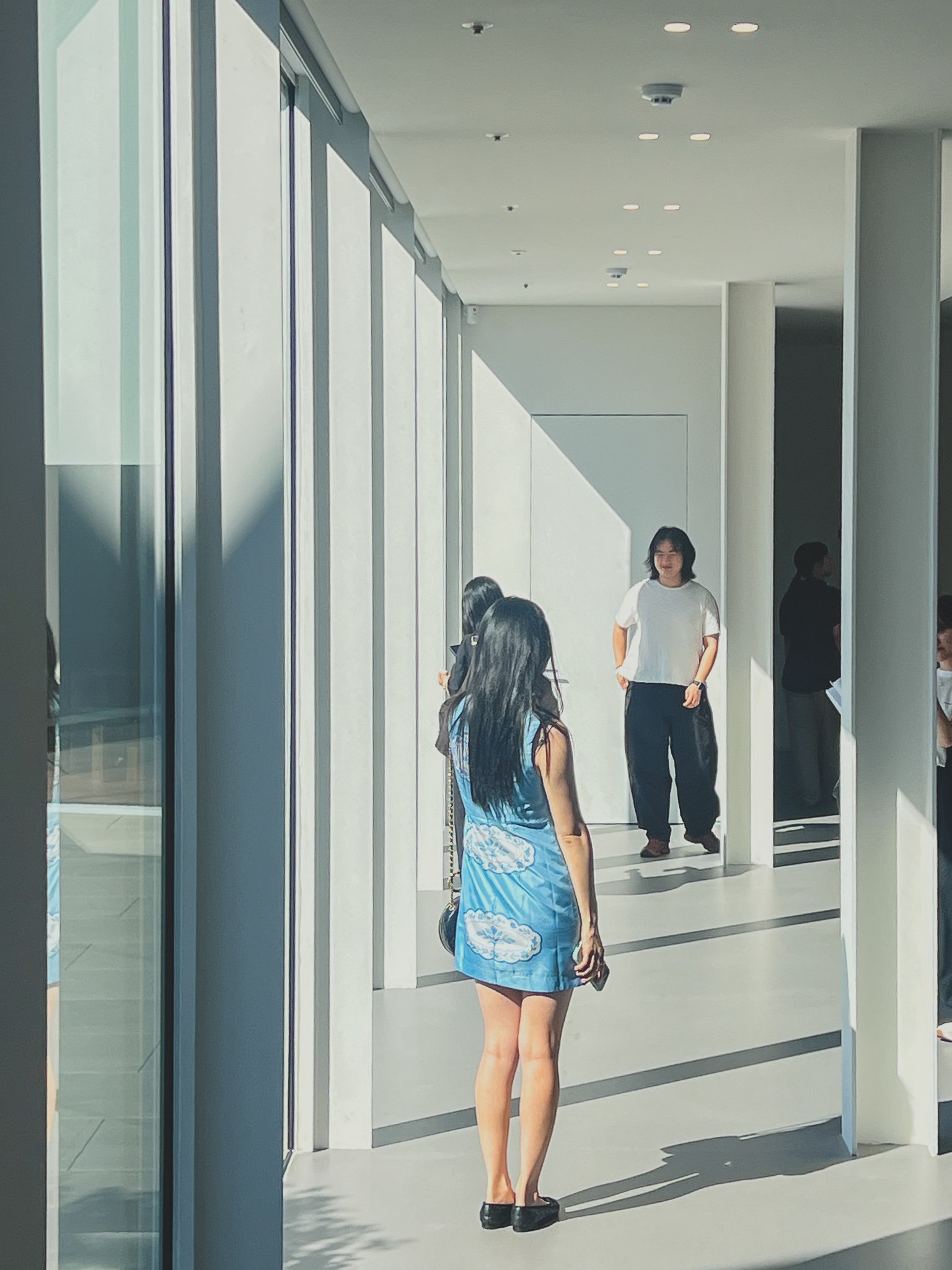
The corridors connecting the galleries are fair game for photos, though, and they’re worth a shot in their own right — the same ribbed, light-filtering walls from the third floor Cube show up here too, just on a smaller scale.
The roof is a good place to end
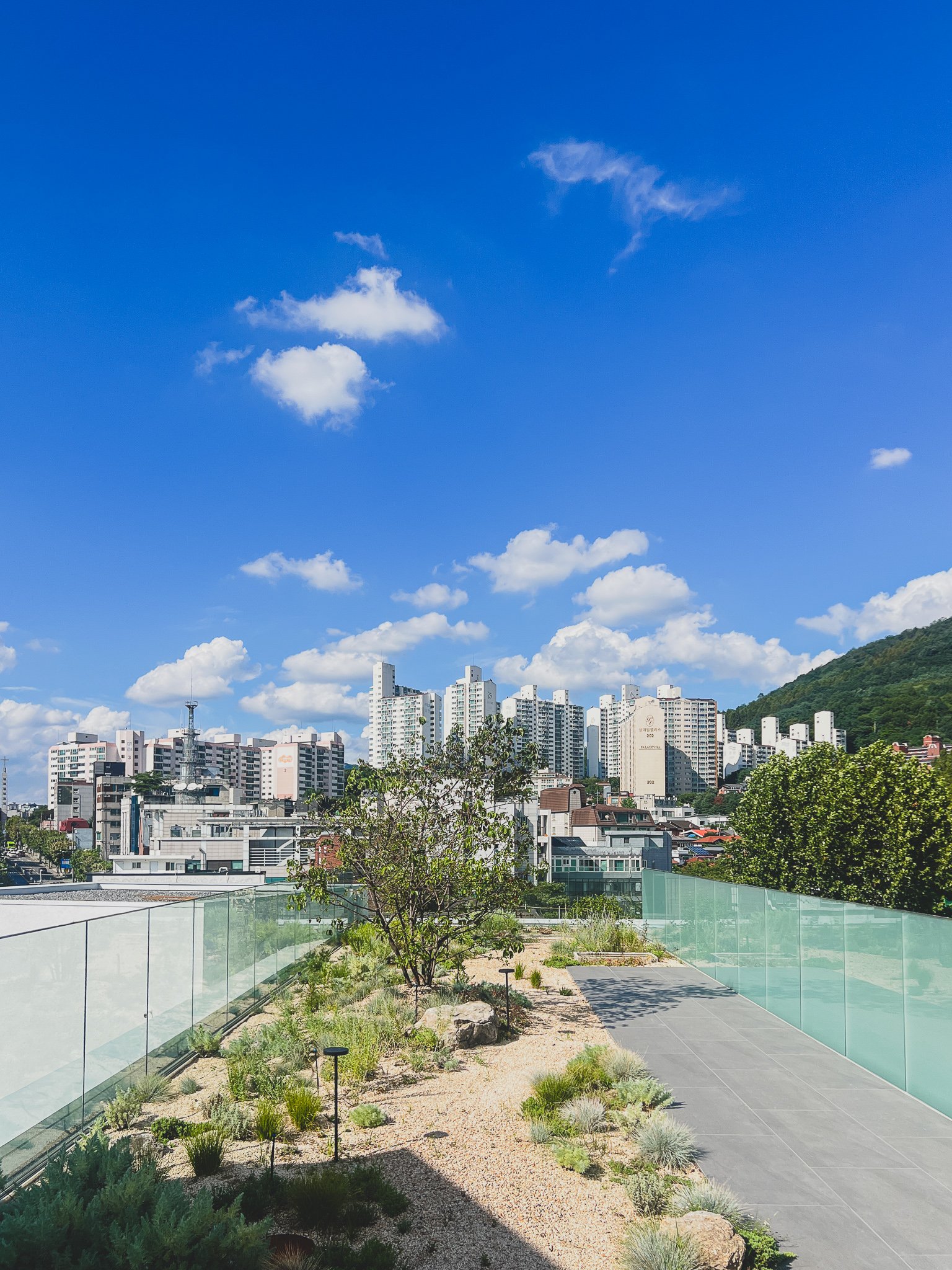
The visit route ends on a rooftop garden — modest, mostly ornamental grasses and gravel, not a big photo-op destination — but coming out of the dense white third floor into open sky works as a genuine palette cleanser after an intense final room.
FAQ
Q: Is it worth visiting if I’ve already seen a Park Seo-bo exhibition elsewhere in Seoul?
A: If you’ve only seen his work in a group show or an art fair booth, yes — this is the first time a permanent space in Seoul has laid out his full career arc in one visit, and the third-floor installation isn’t something you’ll see replicated in a standard gallery hang.
Q: Can I take photos inside?
A: No — photography is restricted to the lobby and exterior. Bring a phone if you want any record of the interior; larger cameras aren’t useful once you’re past the entrance desk.
Q: How do I get there without a car?
A: There’s no subway station right at the door. Sinchon Station (Line 2) is the nearest larger hub, but the museum sits down a narrow residential lane — a taxi or rideshare directly to the address is the simplest option.
Q: Is there English information available?
A: Wall text for the opening exhibition includes English alongside Korean, though as with any newly opened museum, depth of translation may vary section to section — worth confirming current signage on-site rather than assuming full English coverage everywhere.
Q: How long should I plan for the visit?
A: An hour is enough to see everything, but if you want to catch a docent tour or linger in the third-floor room, closer to 1.5 hours is more comfortable.
Bottom line
This is a worthwhile stop even if Park Seo-bo’s Ecriture paintings are already familiar to you — the third-floor installation alone makes the trip worth it, and the building itself is doing something genuinely different from a standard gallery hang. It’s a good fit if you’re interested in Dansaekhwa (Korean monochrome painting) or Korean contemporary art generally, and also worth a look if you’re curious how architecture can be designed around how light interacts with a specific body of work rather than just illuminating it. Just don’t expect to walk out with gallery photos — leave the big camera at the hotel and plan on phone shots only.
This post is based on a visit during the museum’s opening week in August 2026. As a newly opened institution, hours, admission, and docent schedules may still be adjusted — check the museum’s official channels before visiting if any of these details matter to your plans.