TL;DR: Kori (고리) is a new dessert brand at Shinsegae Department Store Gangnam’s Sweet Park, specializing in baked chapssaltteok (Korean glutinous rice cake) filled with red bean paste — baked to order in-store rather than served cold, which sets it apart from every other rice cake brand in Korea. Prices run 3,800–5,000 KRW per 100g. No wait when I visited, though the counter can get busy.
A handful of Korean food and dessert influencers have built enough trust that “if this person recommends it, it’s worth trying” — Hyoni (@hyoooooni_) is one of them, credited by other major Korean food influencers as their own go-to source for café and dessert picks. So when word got out that she was directing a brand of her own, I went to check it out. The brand is Kori — baked glutinous rice cakes with a cookie line alongside — and it opened inside Shinsegae Department Store Gangnam’s Sweet Park, widely considered Korea’s largest dessert concept space. Getting a slot there in the first place says something about how much pull she has in the industry.
Where it is and the basics
Location: Sweet Park, B1, Shinsegae Department Store Gangnam — 176 Sinbanpo-ro, Seocho-gu, Seoul
Hours: Same as Shinsegae Department Store Gangnam’s store hours
Parking: Available at Shinsegae Gangnam’s parking structure, with discounts based on purchase amount
Wait: None on my visit — purchase was immediate
Branding built on white porcelain
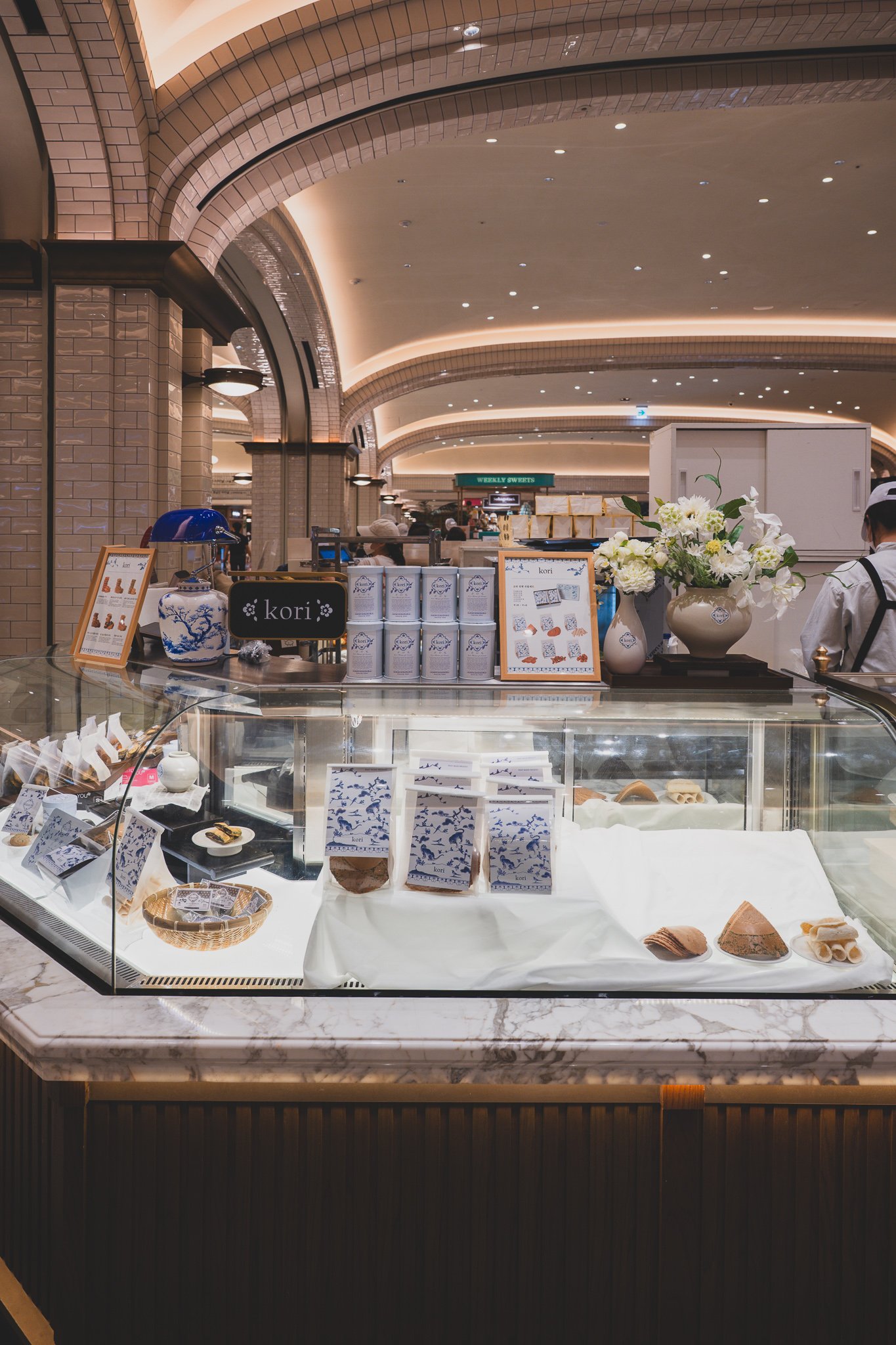
The counter sits in a prime spot within Sweet Park. A white porcelain jar, a blue banker’s lamp, and white floral arrangements surround the display, with the “kori” logo mounted above — restrained in tone against the usual flash of a department store dessert floor, which makes it stand out more, not less.
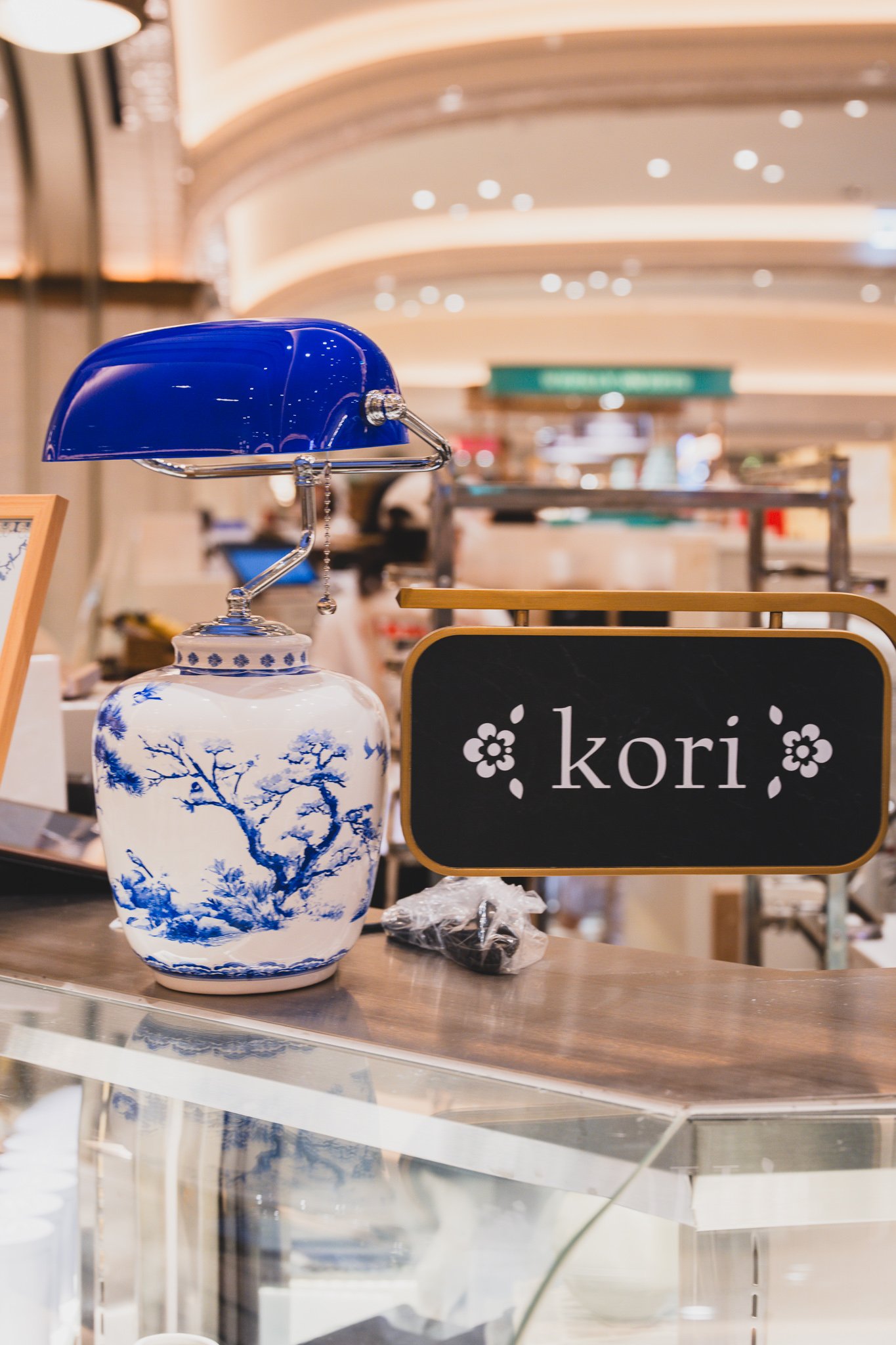
I’d read that the packaging draws on Joseon-era white-and-blue porcelain, but seeing it in person, this goes well past “printed a porcelain pattern on the box.” The porcelain jar on the counter, folk-art-style illustrations of tigers and magpies, and the blue-and-white tin cases are all held to one consistent tone — the whole space reads more like a small gallery than a dessert counter. That level of detail is what convinces you this isn’t an influencer lending her name to a product line, but someone who was genuinely involved in the direction.
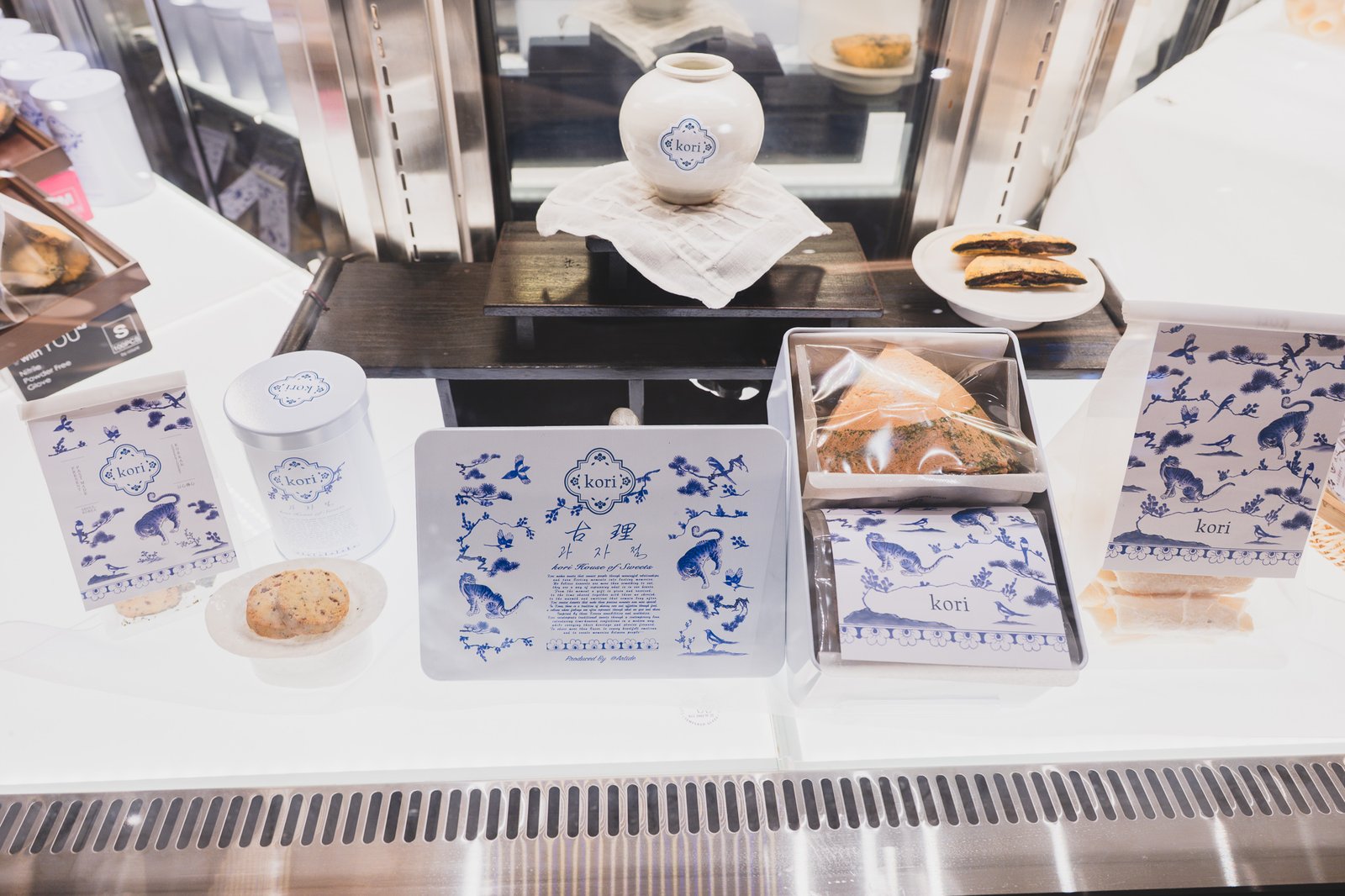
Inside the display case, baked rice cakes, cookies, and gift-box rice crackers are all laid out at a glance, each package stamped with the same recurring tiger, magpie, and pine tree motifs — giving the whole brand a clear, consistent identity.
Menu: 4 baked rice cakes, 6 savory snacks
According to the menu board, the rice cake lineup comes in four varieties:
- Baked Rice Cake (signature) — chewy dough with roasted sesame, packed with red bean paste and baked until golden. Billed as Kori’s signature item. 3,800 KRW (100g)
- Mugwort Rice Cake with Soybean Powder — Korean mugwort dough coated generously in roasted soybean powder for an injeolmi-style flavor. 4,800 KRW (100g)
- Chocolate Baked Rice Cake — filled with rich chocolate ganache, recommended chilled. 5,000 KRW (100g)
- Pumpkin Castella Baked Rice Cake — red bean and fresh cream topped with castella cake crumbs, marked as a “Shinsegae Gangnam exclusive.” Price wasn’t listed at the time of visit.
Checked against department-store dessert pricing generally, these numbers land on the reasonable side rather than the premium end.
There’s also a savory snack line, playing on Korean side-dish and comfort-food flavors rather than typical cookie flavors:
- Salted pollock roe mayo — 4,500 KRW (50g) / 9,000 KRW (100g)
- Kimchi fried rice — 4,500 KRW (50g) / 8,500 KRW (100g)
- Salty gim (seaweed) and dried shrimp — 4,800 KRW (50g) / 9,500 KRW (100g)
- Bacon pepper cheese — 4,000 KRW (50g) / 7,500 KRW (100g)
- Deep chocolate new potato cookie — 4,500 KRW (50g) / 8,500 KRW (100g)
- Honey gorgonzola — 4,000 KRW (50g) / 7,500 KRW (100g)
For gifting, there’s also a rice cracker (jeonbyeong) set — choose 2 or 4 varieties from fan-shaped, peanut, white roll, tofu, and small seaweed crackers, plus a nut-and-syrup confection called dora-gangjeong.
The tasting: what baking actually changes
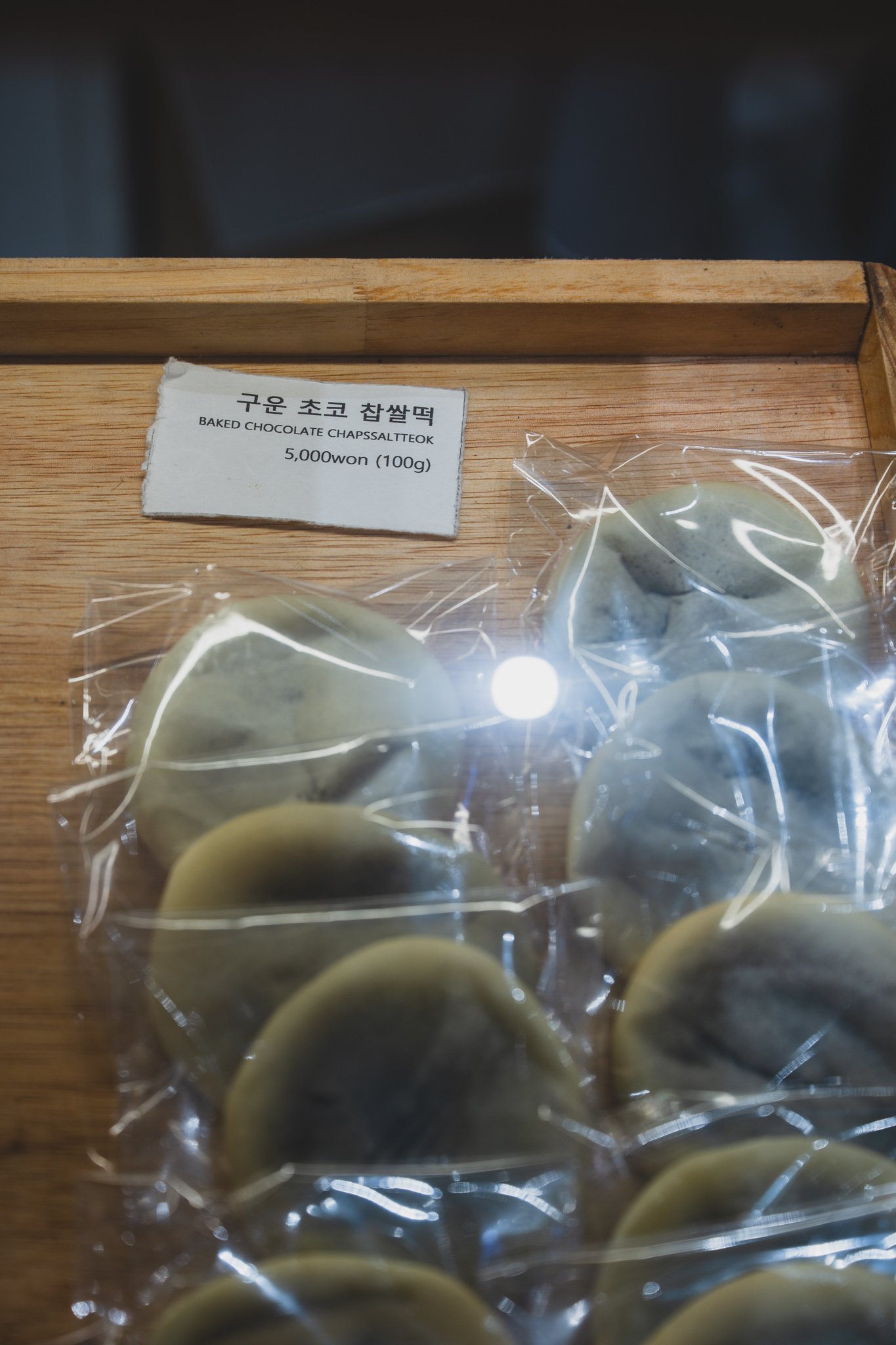
The most memorable part of the visit wasn’t the display case — it was watching the oven. Staff pulled a tray straight out of the oven, still loaded with unbaked round dough. Unlike most rice cake brands, which keep everything refrigerated and pre-made, Kori bakes each piece fresh in-store and restocks as they go.
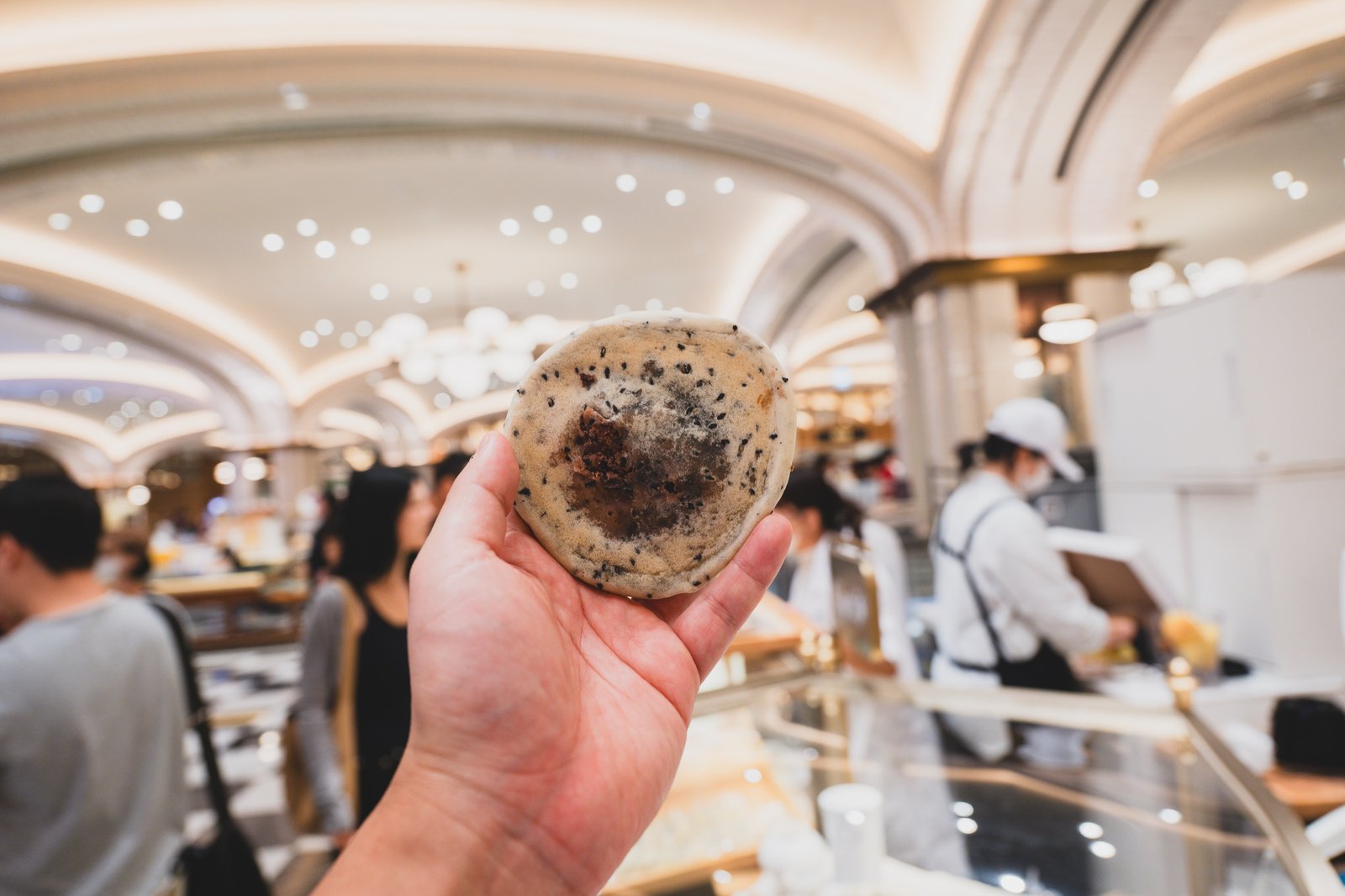
I picked one up right off the tray, and it was genuinely still warm. The exterior — studded with black sesame — was baked golden with a slightly firm edge, and pulling it apart by hand revealed a center that was still warm and chewy.
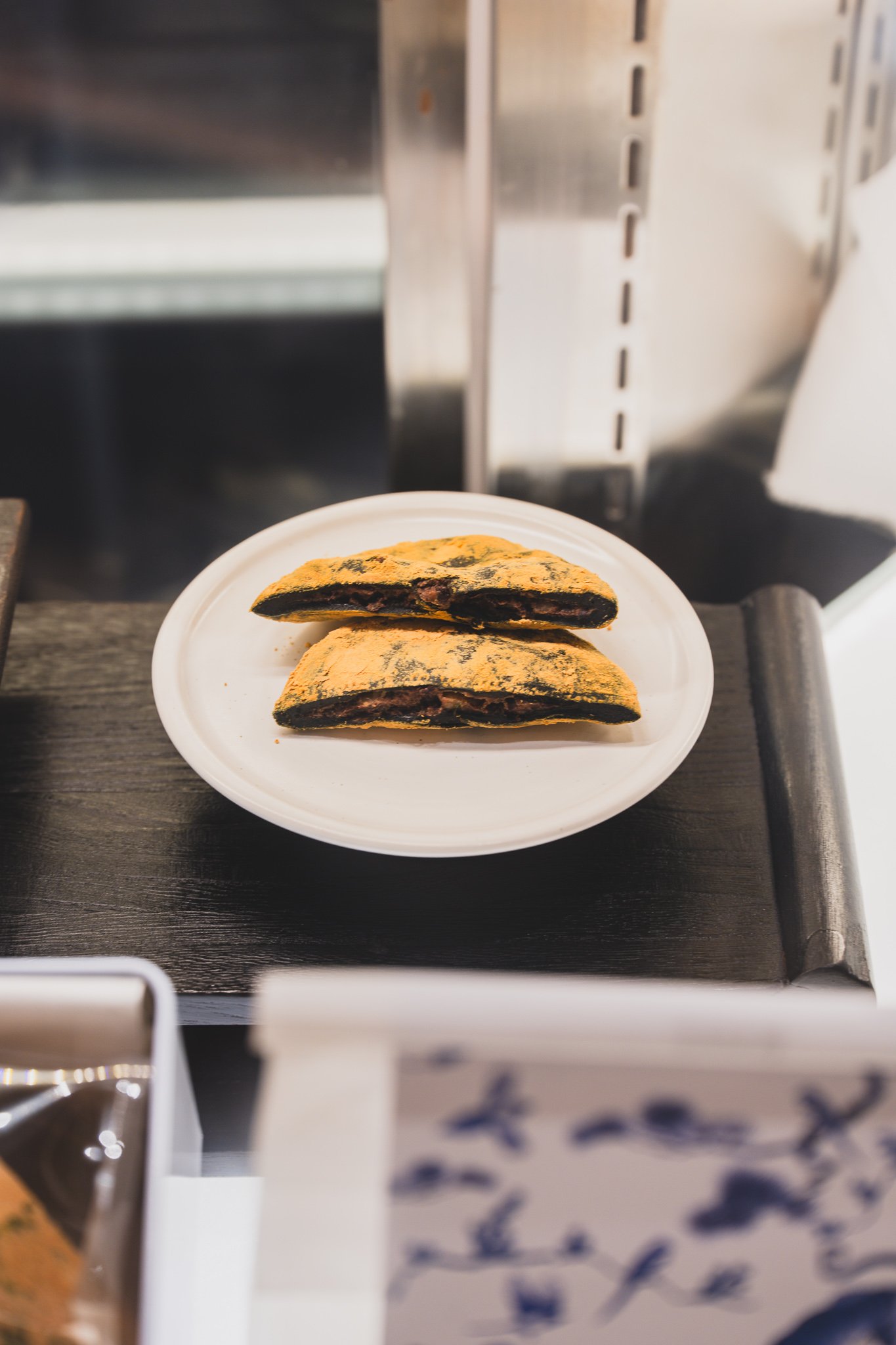
Cutting one in half, the red bean filling isn’t just a thin layer around the edge — it fills the whole interior. That contrast — a crisp, hardened exterior against a hot, chewy center — is really the whole point of what makes Kori different. A typical refrigerated fruit rice cake has chew, but it can’t replicate this temperature and texture contrast. Just by changing the cooking method to baking, it becomes a completely different category of dessert.
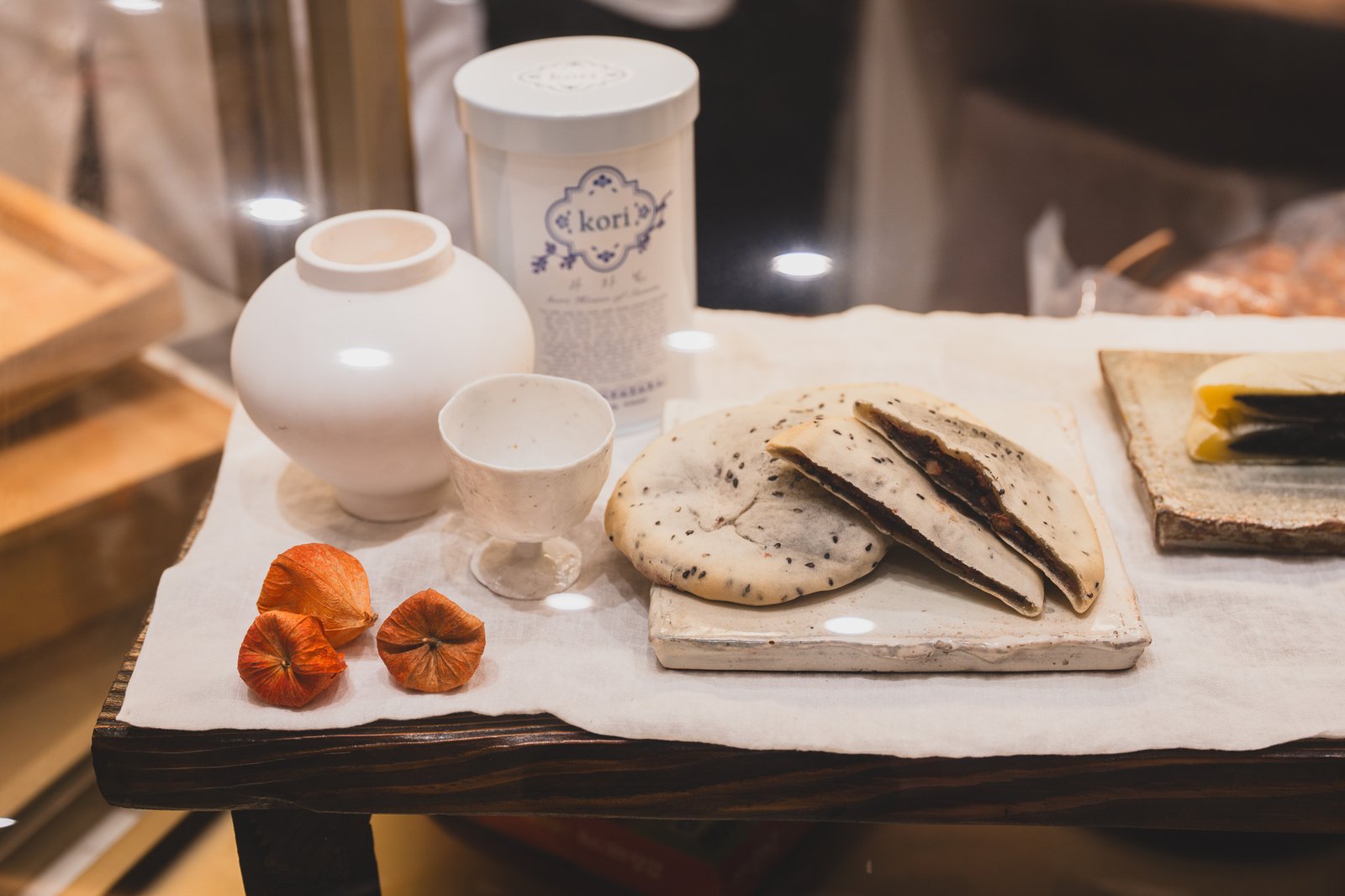
Set against the porcelain jar and tin packaging, the finished product photographs as premium as the branding suggests — the warm, fresh-baked reality and the refined packaging aren’t fighting each other.
Cold fruit rice cakes vs. fresh-baked: two different markets
Hanjungsun is already the established name in Korean rice cake desserts — starting from its original Seongsu location and expanding to Shinsegae Gangnam, The Hyundai Seoul, and Hyundai Trade Center, known for colorful hanji-wrapped fresh fruit rice cakes at similarly accessible prices, generally starting around 4,000 KRW.
Lined up side by side, though, the two brands are aiming at completely different things. Hanjungsun’s appeal is fresh fruit and cold, chewy texture, with bright multicolor hanji packaging to match. Kori, by baking red-bean-filled rice cakes fresh in-store, has carved out a “warm dessert” niche that didn’t really exist in this category before — and its packaging, unified in porcelain blue-and-white, reads far more restrained and formal. Same base ingredient, but a different consumption occasion entirely: Hanjungsun is a quick, refreshing grab; Kori reads more like a considered gift.
A new kind of Korean omiyage?
From a branding standpoint, the most interesting part of this launch isn’t the taste — it’s who’s behind it. Plenty of influencers put their name on a product line, but landing a spot at Shinsegae Gangnam’s Sweet Park from day one, a space with notoriously selective entry standards, is rare. That alone reflects how much the industry trusts Hyoni’s eye. This isn’t a simple merch-style collab either — the porcelain-based branding and the baking method itself were clearly designed together from the start, which suggests real potential for this to expand to other department stores or pop-ups down the line.
If there’s one downside, it’s the location — even within Sweet Park, the counter sits in a slightly out-of-the-way corner, and I spent a while looking for it on my first visit. Given how polished the brand execution is, a more visible spot would have suited it better.
Still, if you’re browsing a department store dessert floor for something a little different to gift, or you’re curious how much thought actually went into an influencer-directed brand, it’s worth a stop. Personally, it brought to mind the concept of omiyage from traveling in Japan — a well-packaged, formal gift dessert tied to a specific region or shop, a category that’s firmly established there but hasn’t really had a clear equivalent in Korea. Between the porcelain-inspired packaging, the fresh-baked-in-store story, and the Shinsegae Gangnam-exclusive item, brands like Kori feel like an early sign that a “Korean omiyage” category could start taking shape.
Tips if you’re going
- Ask for one straight from the oven if you can — the warm, just-baked version is noticeably better than one that’s been sitting out.
- The counter is tucked into a corner of Sweet Park — budget extra time to find it on a first visit.
- The Pumpkin Castella flavor is Shinsegae Gangnam-exclusive, worth trying if you want something you can’t get elsewhere.
- Good for gifting — the porcelain-motif tins and gift sets are built with that in mind.
FAQ
Q: What makes Kori different from other Korean rice cake (chapssaltteok) brands?
A: Most rice cake brands sell everything refrigerated and pre-made. Kori bakes each piece fresh in-store, giving it a crisp exterior and warm, chewy interior that cold rice cakes can’t replicate.
Q: Where exactly is Kori located?
A: Inside Sweet Park, the dessert concept space on B1 of Shinsegae Department Store Gangnam.
Q: Is it good for gifts?
A: Yes — the porcelain-inspired tin packaging and rice cracker gift sets are designed with gifting in mind.
Q: Do I need to wait in line?
A: There was no wait on my visit, though the counter can get busy given how new and popular the brand is.
Q: How is it different from Hanjungsun, the other well-known rice cake brand?
A: Hanjungsun specializes in cold, fresh-fruit rice cakes with bright, colorful packaging. Kori bakes its rice cakes fresh with red bean filling and uses a more restrained, porcelain-toned aesthetic — a different product and a different gifting occasion.
Bottom Line
If you’re at Shinsegae Gangnam and want something more distinctive than the usual department-store dessert case, Kori is worth seeking out — both for the fresh-baked rice cake itself and as an example of how much design thought can go into a single dessert brand when the person behind it actually knows the space.