TL;DR: Louis Vuitton Visionary Journeys Seoul is a free, reservation-based exhibition on the 4th and 5th floors of LV The Place Seoul at Shinsegae’s “The Reserve” building in Myeongdong. It traces the house’s history through more than 200 archival trunks and objects across a dozen themed rooms, takes about 1–2 hours, and — unlike a lot of things in Seoul — you can book it by email, so you don’t need a Korean phone number. It runs through the end of 2028, so it’s not going anywhere soon.
I’ll admit I went in expecting a glorified store display. What I got was closer to a small design museum that happens to have a Louis Vuitton logo on the door. I spent about two hours inside on a December visit and came out having learned more about trunk-making, watch cases, and 1990s DJ culture than I expected from a luxury brand’s Myeongdong flagship.
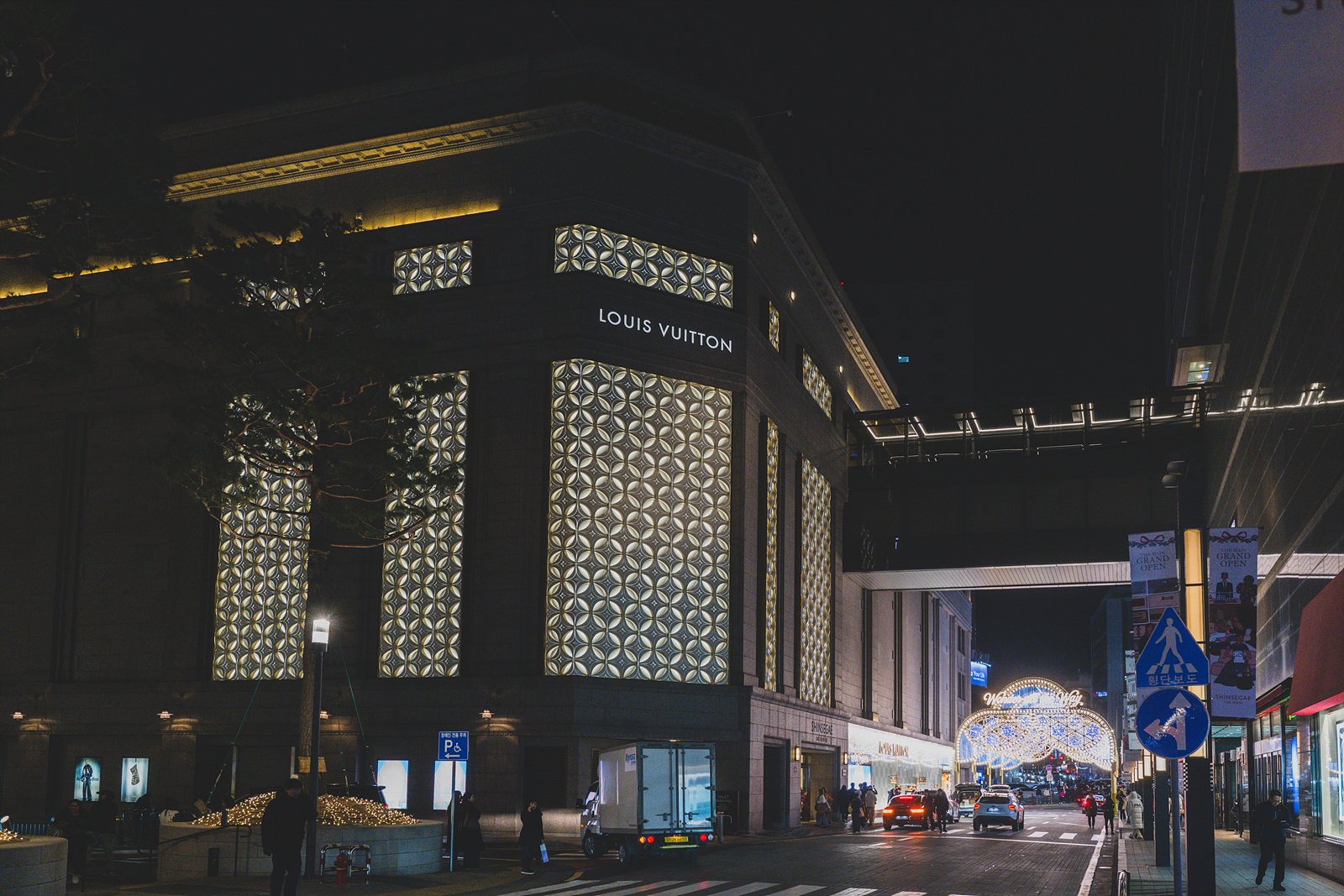
Louis Vuitton Visionary Journeys Seoul — Quick Facts
Address: LV The Place Seoul, Shinsegae The Reserve, 4th–5th floors, 63 Sogong-ro, Jung-gu, Seoul
Hours: Mon–Thu 10:30–20:00, Fri–Sun and public holidays 10:30–20:30
Admission: Free (reservation recommended, walk-ins allowed)
Getting there: Subway Line 4, Hoehyeon Station Exit 7 (~220m) or Myeongdong Station Exit 5 (~335m)
Dates: Nov 28, 2025 – Dec 31, 2028 (long-term installation, not a pop-up)
What Louis Vuitton Visionary Journeys Seoul actually is
This isn’t a pop-up. It’s a permanent cultural space inside LV The Place Seoul, the brand’s flagship at Shinsegae Department Store’s “The Reserve” building — the historic main store in Myeongdong. The building also houses Louis Vuitton retail floors, Le Café Louis Vuitton, a chocolate boutique (Le Chocolat Louis Vuitton), and a restaurant collaboration with a Michelin-starred Korean chef called JP at Louis Vuitton.
The exhibition itself — the part that’s free and open to the public without buying anything — occupies the 4th and 5th floors and was designed by architect Shohei Shigematsu of OMA. It runs from November 28, 2025 through December 31, 2028, so despite launching with a lot of opening-week press, this is a long-term installation, not a two-week pop-up. If you’re reading this any time before 2029, it should still be open.
Getting in: how to book without a Korean phone number
This is the part most foreign visitors actually search for, so here it is up front.
Reservations are handled through the exhibition’s own booking site, and you can register using just an email address — you don’t need a Korean mobile number or a local ID, which is more than I can say for a lot of reservation systems in this city. There’s also a KakaoSync login option if you already use KakaoTalk, but email works fine for visitors passing through.
A few practical notes from actually going through the process:
– Booking gives you a specific date and time slot. Walk-ins are allowed too, but you may have to wait — the LV site itself says booking gets you “immediate entry without waiting.”
– Slots do sell out, especially afternoons and weekends, so book a day or two ahead if you can.
– It’s completely free either way. There’s no ticket price to worry about.
At the entrance you’re handed a leaflet with a short write-up for each room, which turned out to be genuinely useful — the wall text throughout is in Korean and English, but the leaflet let me read ahead instead of queueing at every placard.
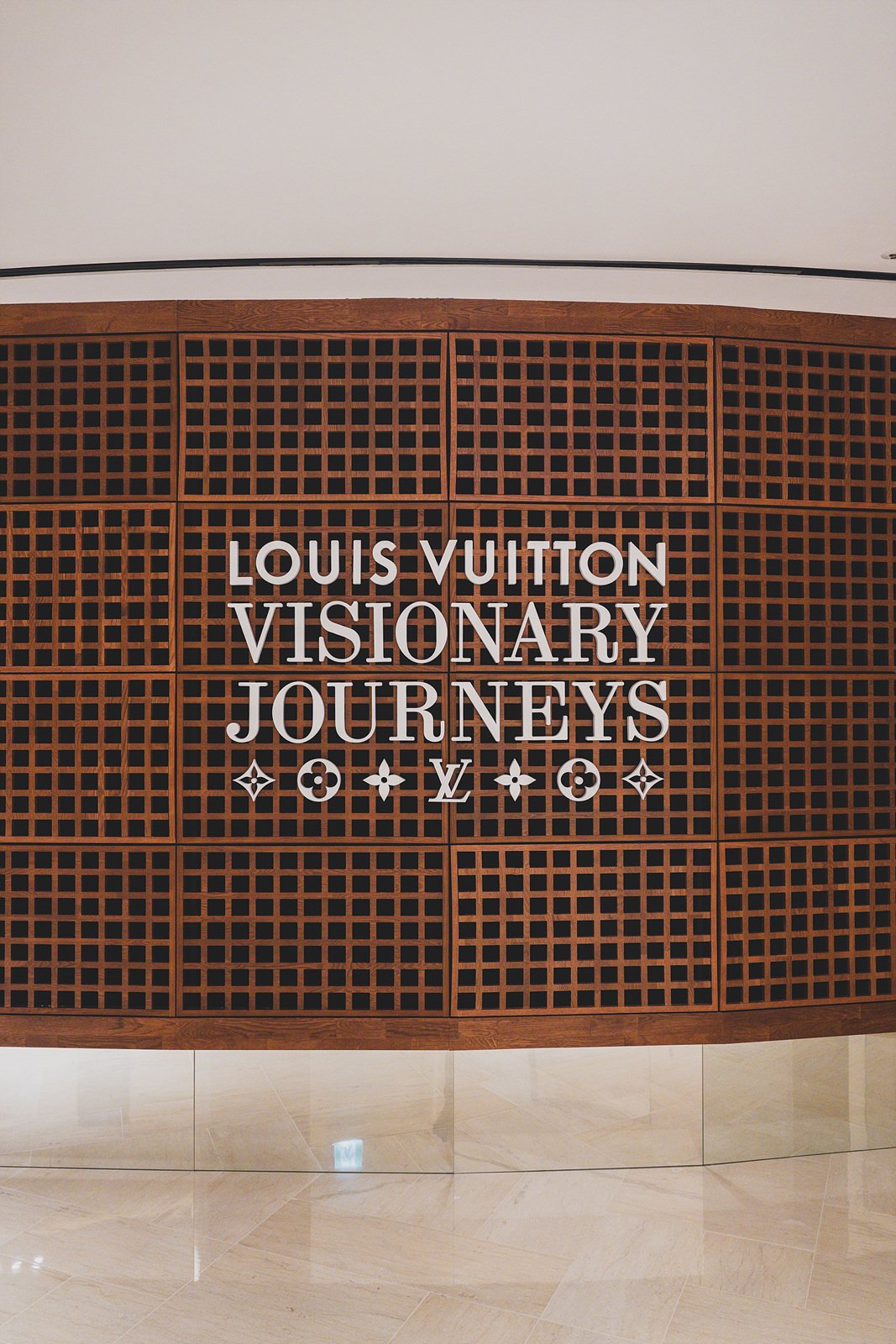
What’s actually inside
The route runs from the 5th floor down to the 4th via a central staircase, through around a dozen themed rooms. You don’t need to know all the names going in, but here’s what stood out on my visit.
Origins
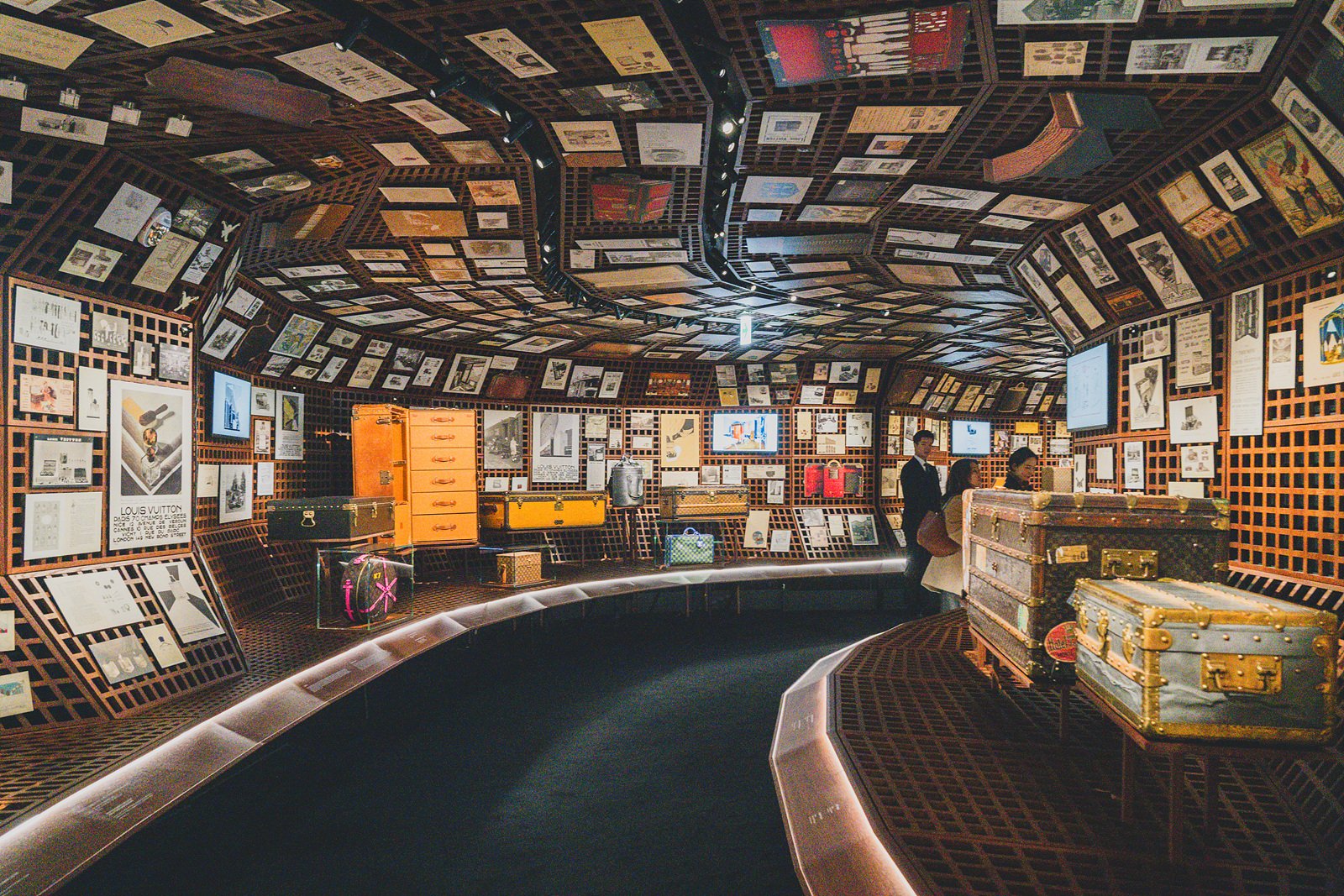
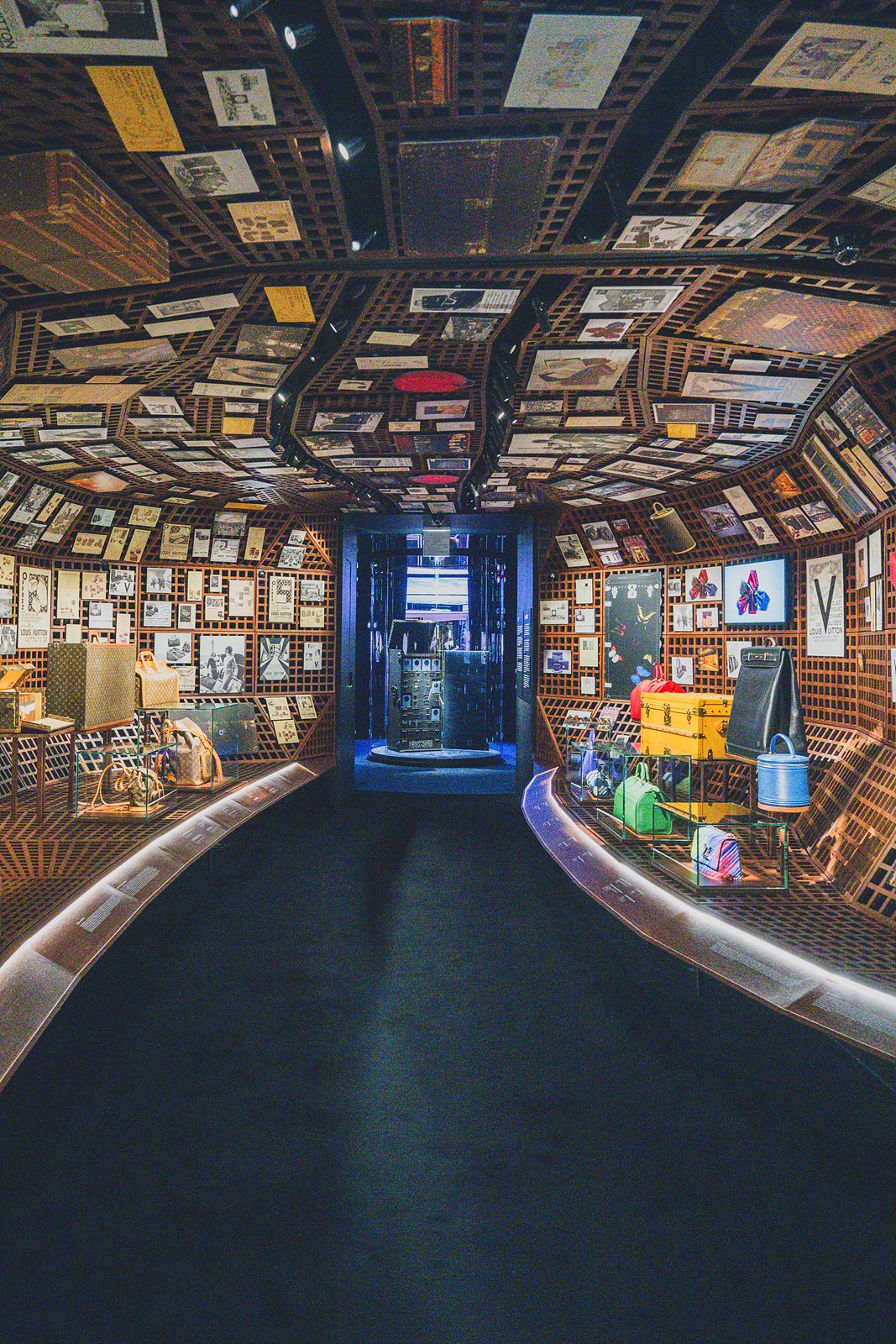
The opening room is a curved space entirely lined with vintage Louis Vuitton advertisements, catalogs, and early trunks — a kind of visual overload that sets the tone before you’ve even started. This is where the birth of the monogram and the brand’s earliest trunk-making get their context.
Watchmaking and Picnic
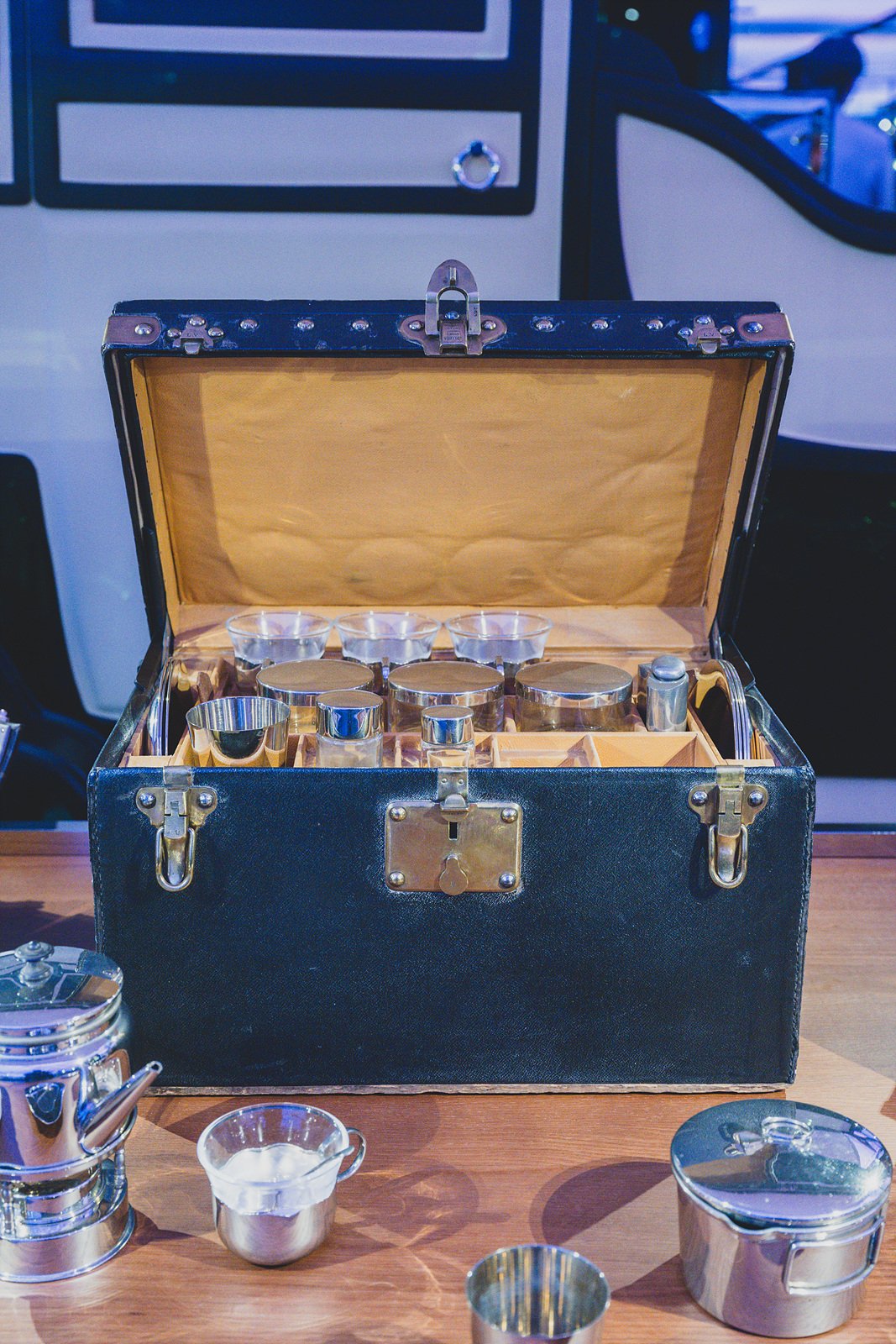
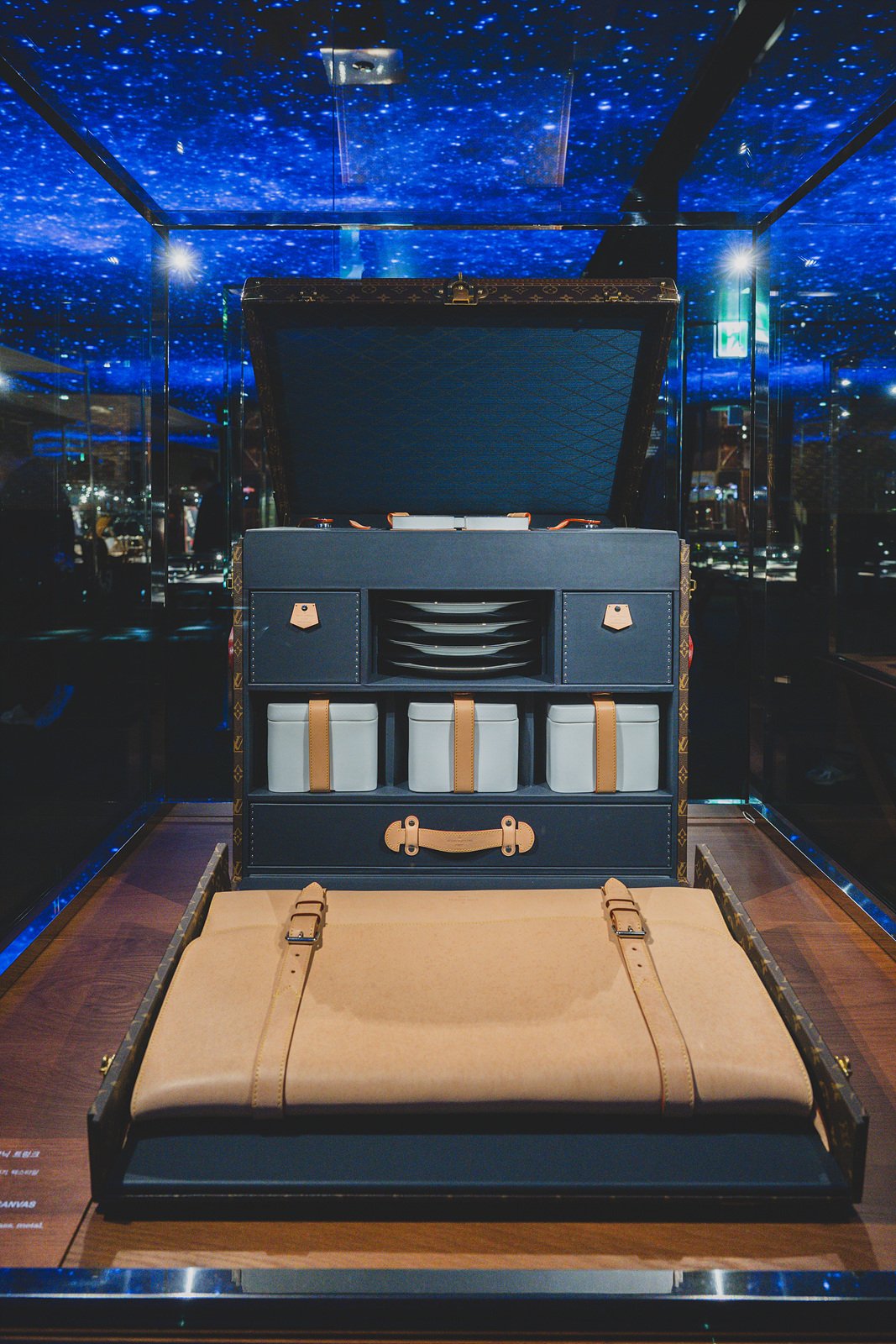
A small room is built around Louis Vuitton’s watch trunks — a reminder that a “travel house” ends up making cases for almost everything eventually. Next door is my favorite room in the whole exhibition: Louis Vuitton’s early-20th-century car-travel trunks, including full picnic sets with built-in cutlery, cups, and folding furniture, built for people who apparently could not be bothered to eat a sandwich without proper flatware.
Personalisation and the Atelier
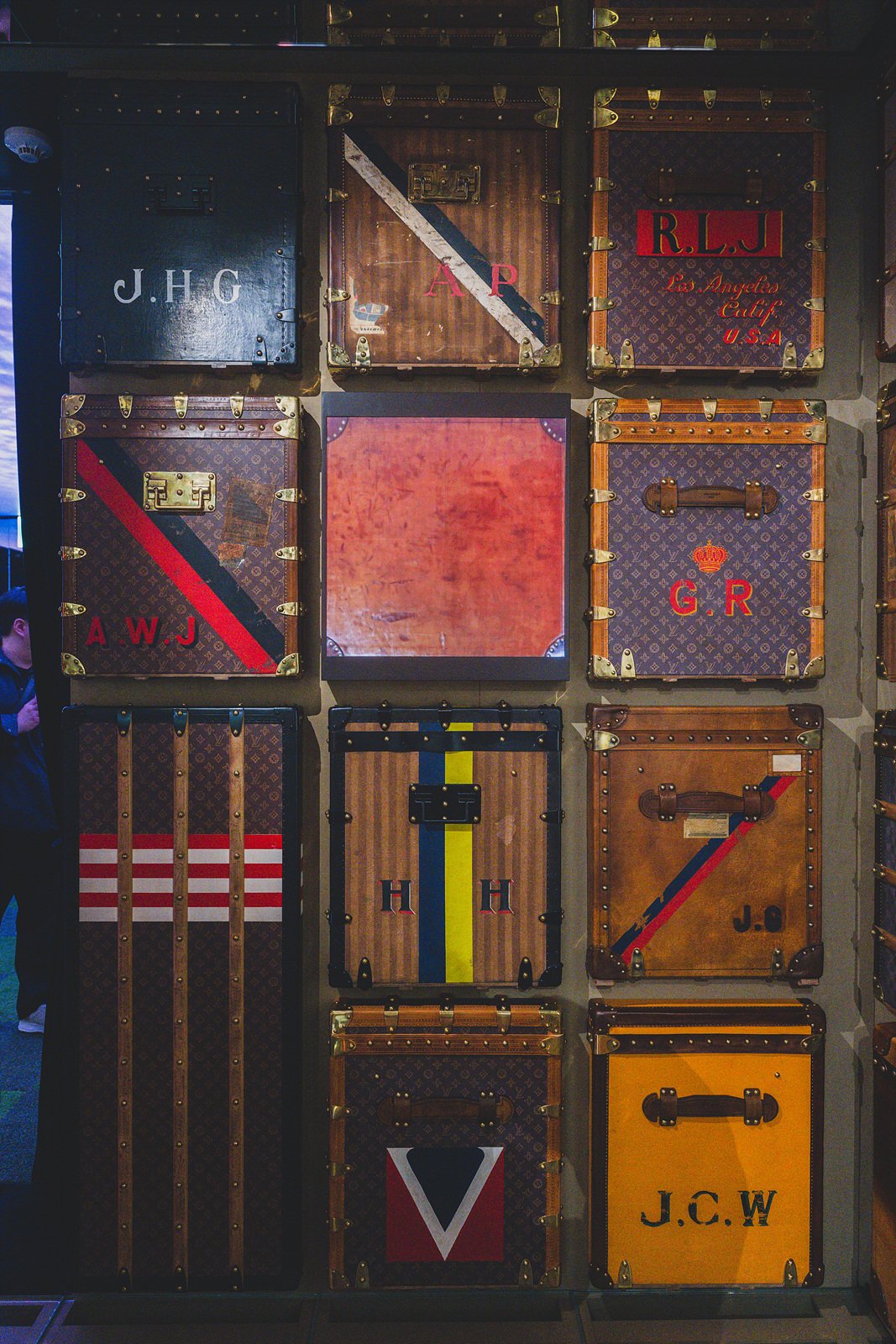
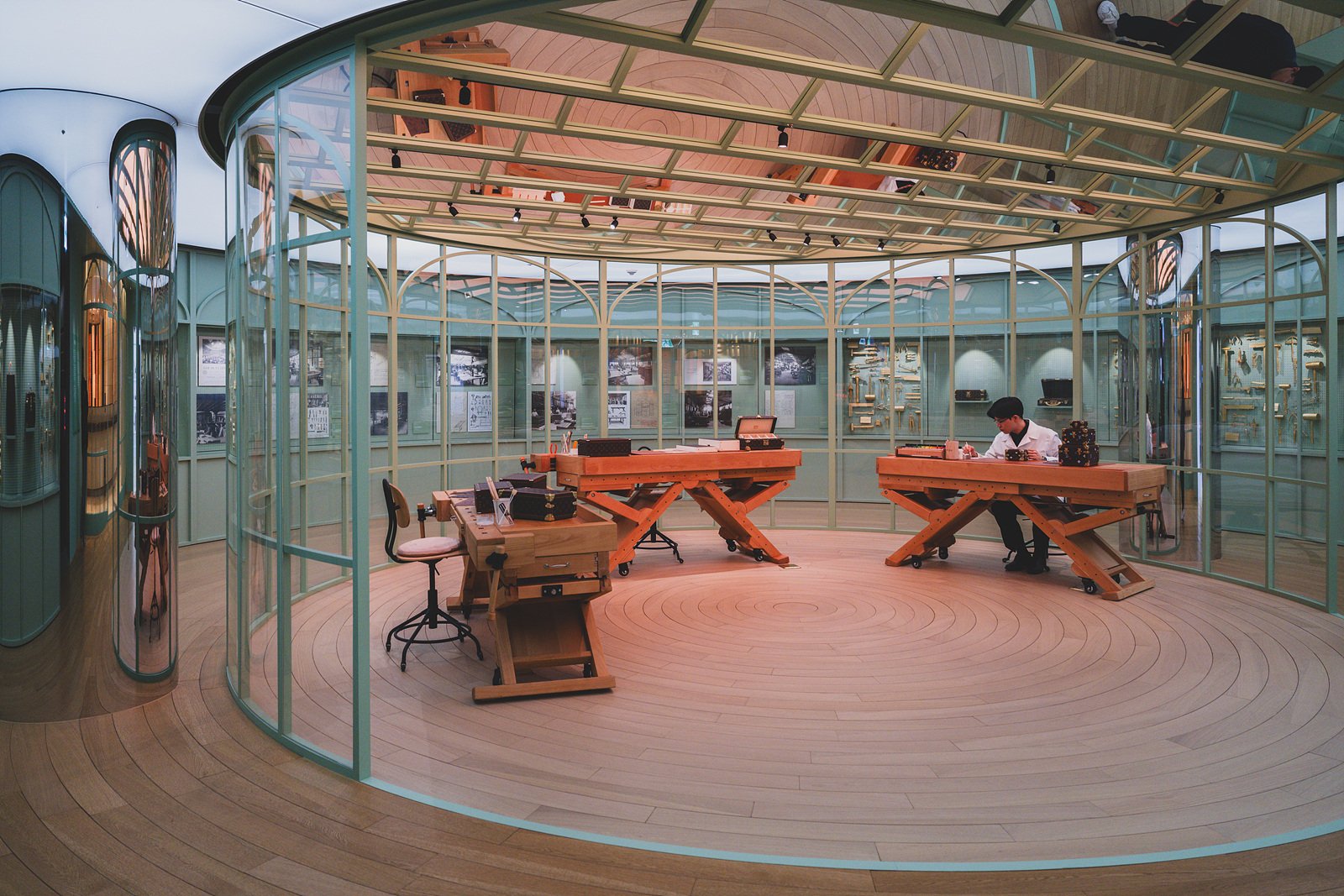
This section covers the history of custom monogram striping and initials — originally added so travelers could tell their trunks apart on crowded train platforms, long before it became a status symbol. Just past it is a working atelier setup where a craftsperson demonstrates trunk-making and leatherwork live.
Testing
A slightly nerdy but satisfying room shows the durability tests Louis Vuitton runs on finished products — a robotic rig that opens and closes trunk latches thousands of times to simulate years of use. Not glamorous, but it’s the kind of detail that explains why a vintage LV trunk from the 1920s can still function today.
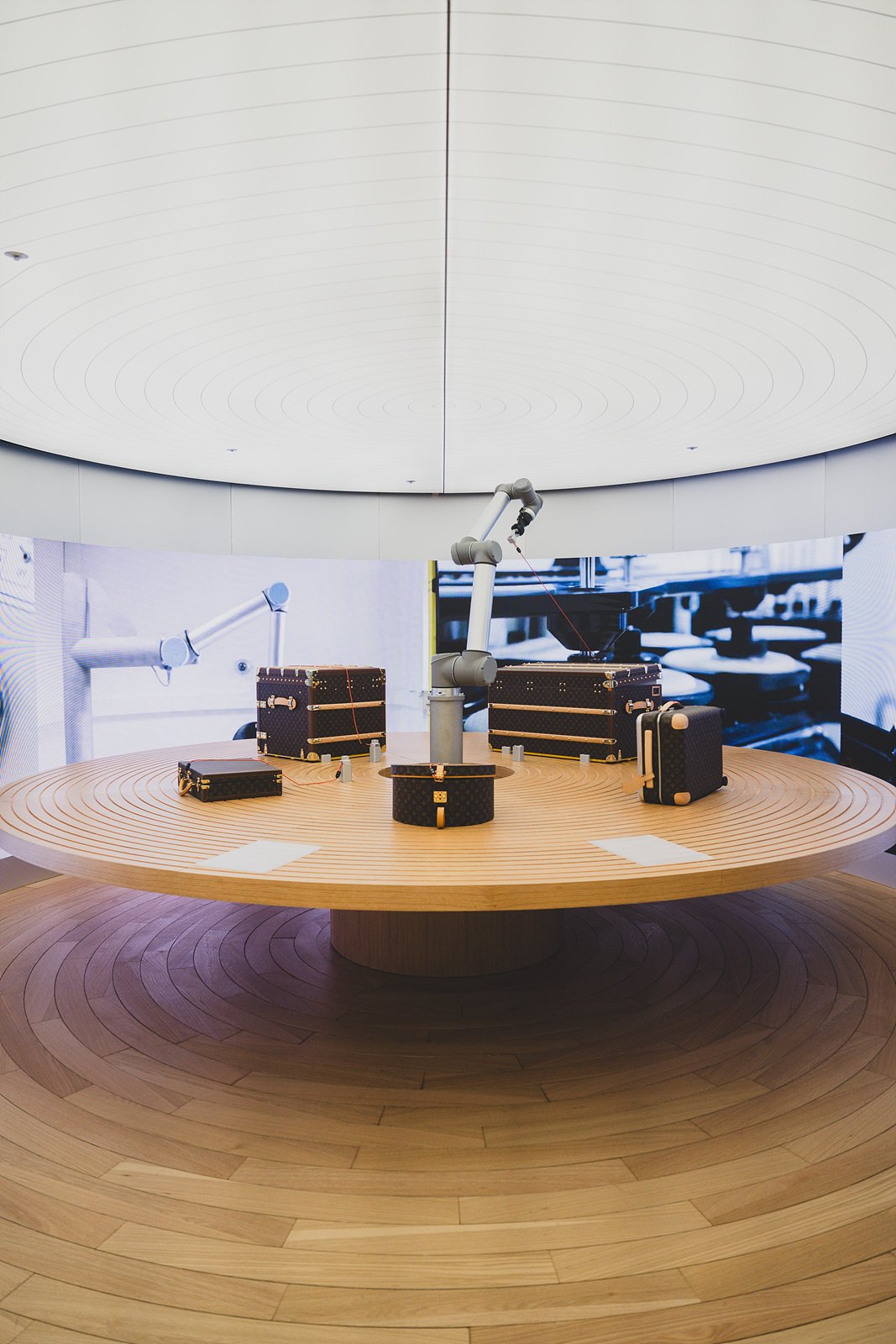
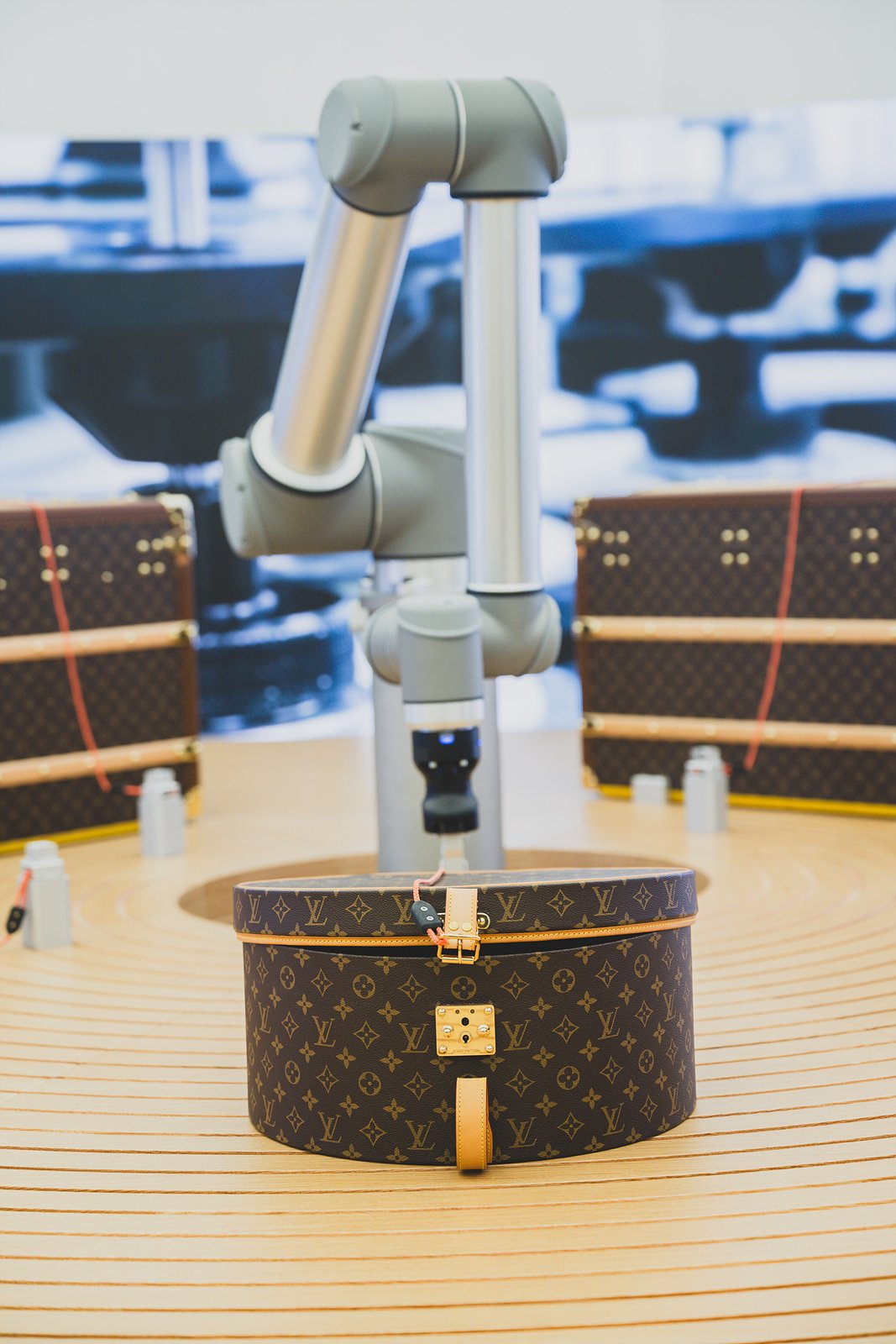
Icons and Collaborations
A mirrored room displays signature bags — Alma, Speedy, Keepall — including pieces from the Marc Jacobs, Virgil Abloh, and Pharrell Williams eras. A separate kaleidoscope-mirrored space covers the house’s artist collaborations (Stephen Sprouse, Takashi Murakami, Yayoi Kusama, and others), which is also the most photogenic room in the building if you care about that sort of thing.
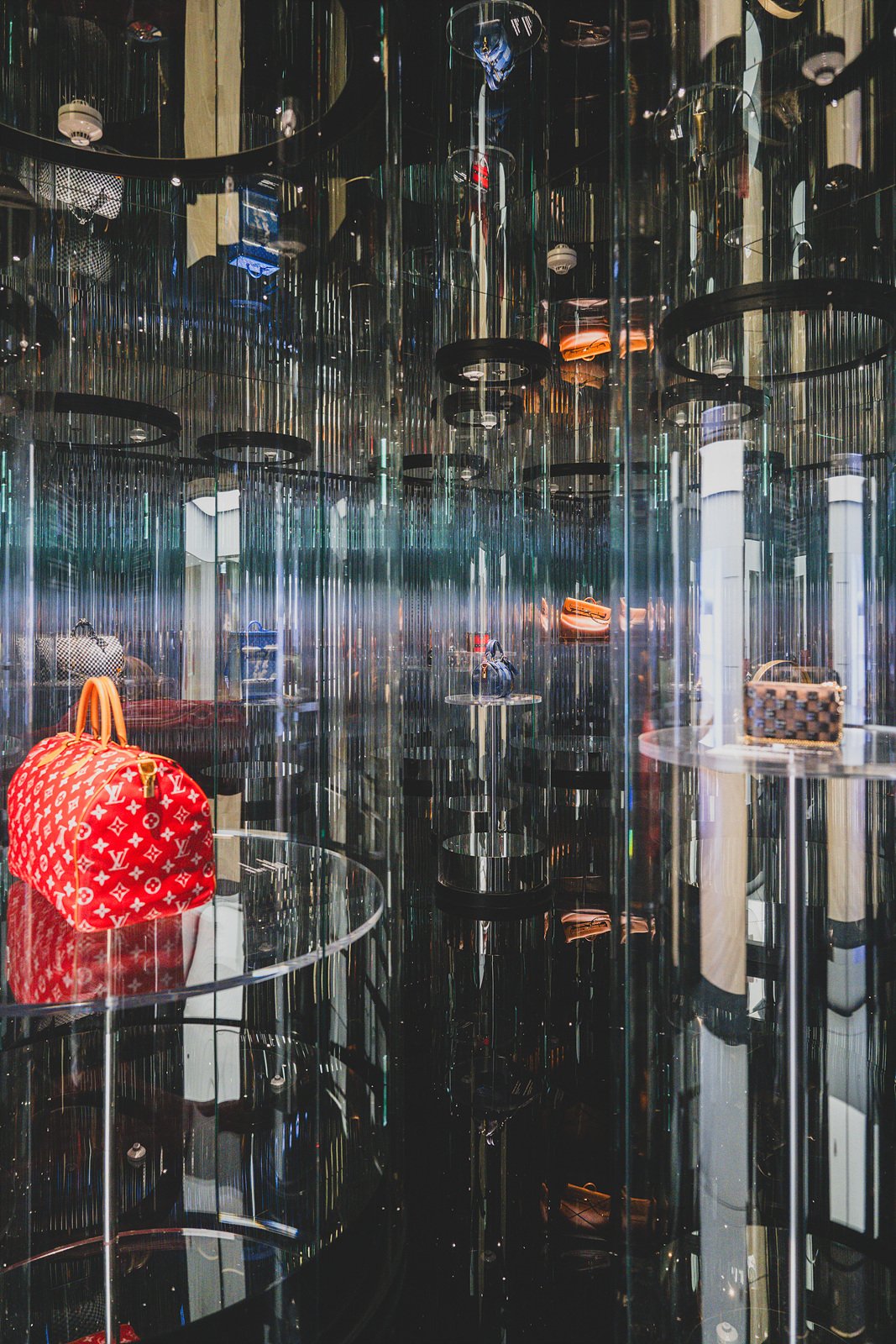
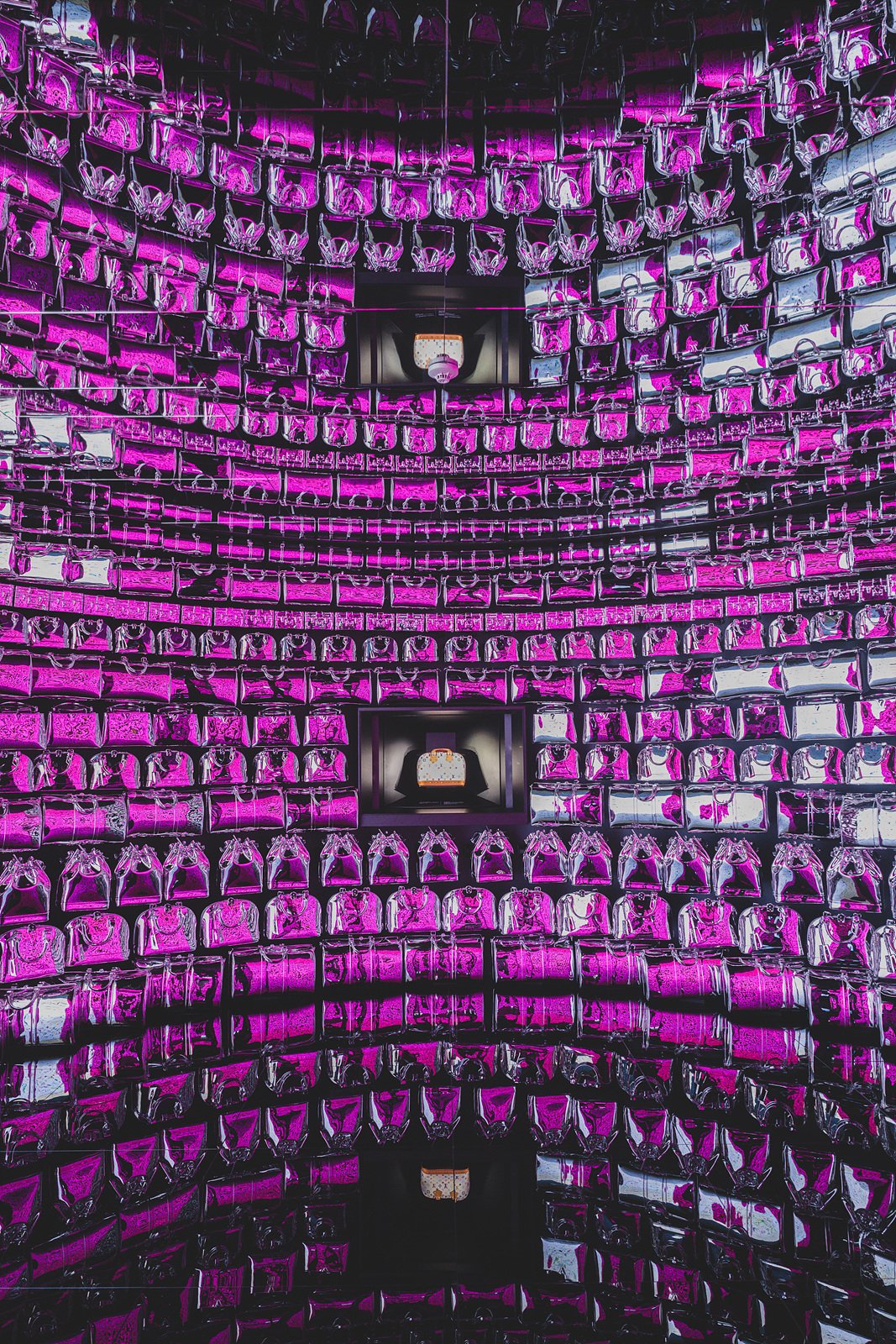
Monogram
A room dedicated to the 1896 monogram canvas itself, tracing its Japanese- and Gothic-influenced motifs through sketches, catalog pages, and playful one-off pieces.
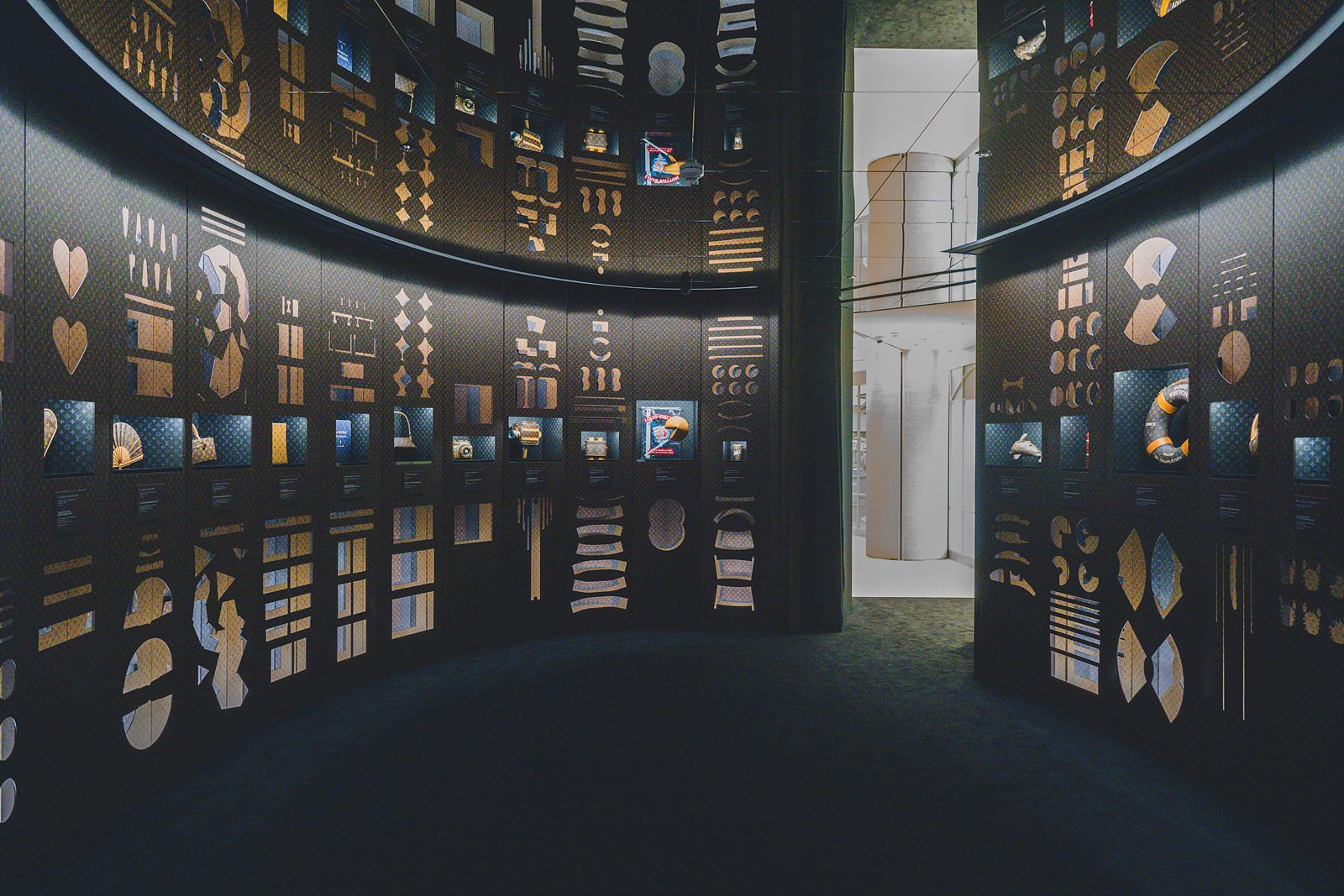
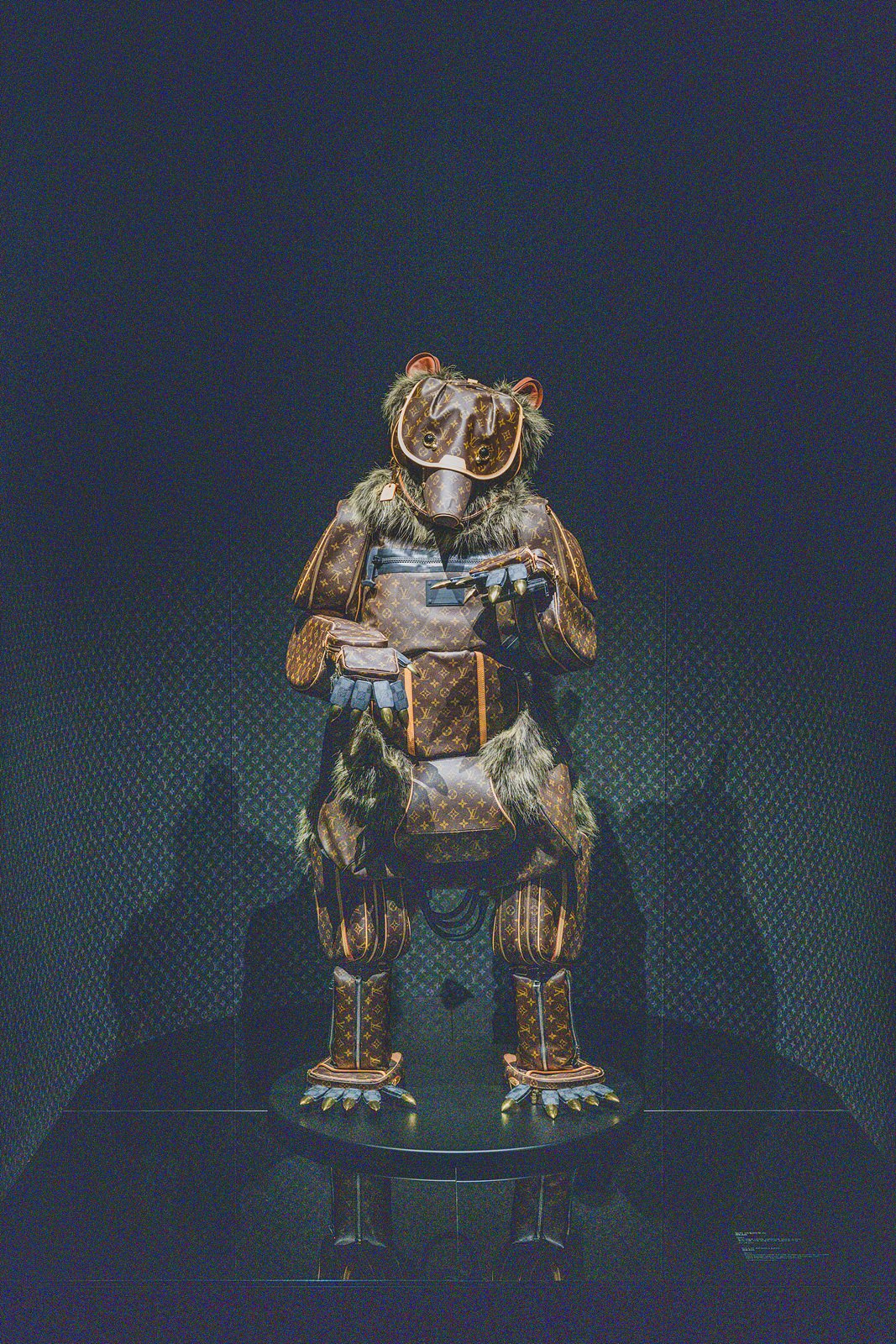
Music and Fashion
A moody, tech-lit room is built around Louis Vuitton’s instrument trunks and DJ cases, tracing the house’s collaborations with musicians and club culture back over a century.
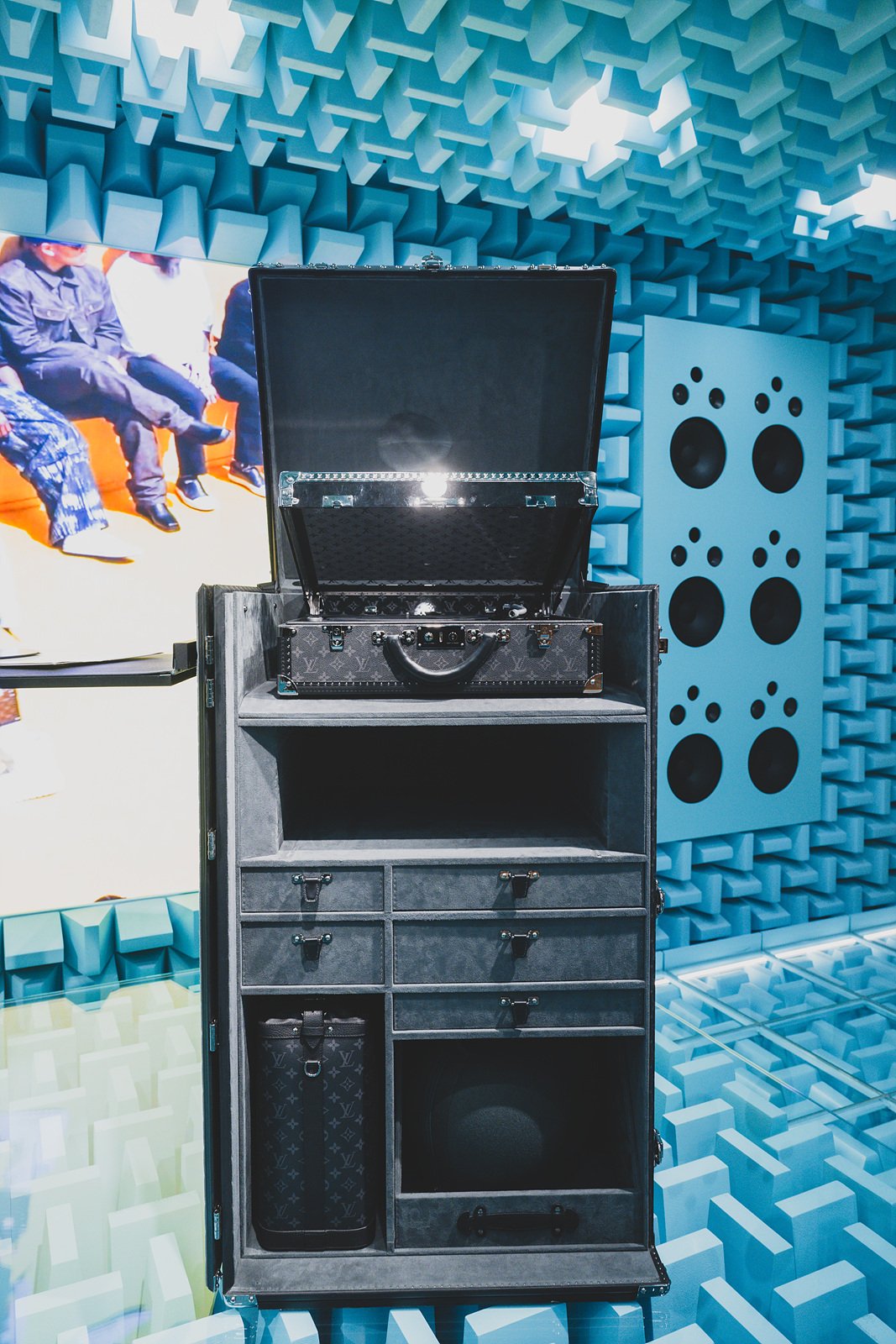
Just past it is a runway-look room spanning Marc Jacobs to present-day collections.
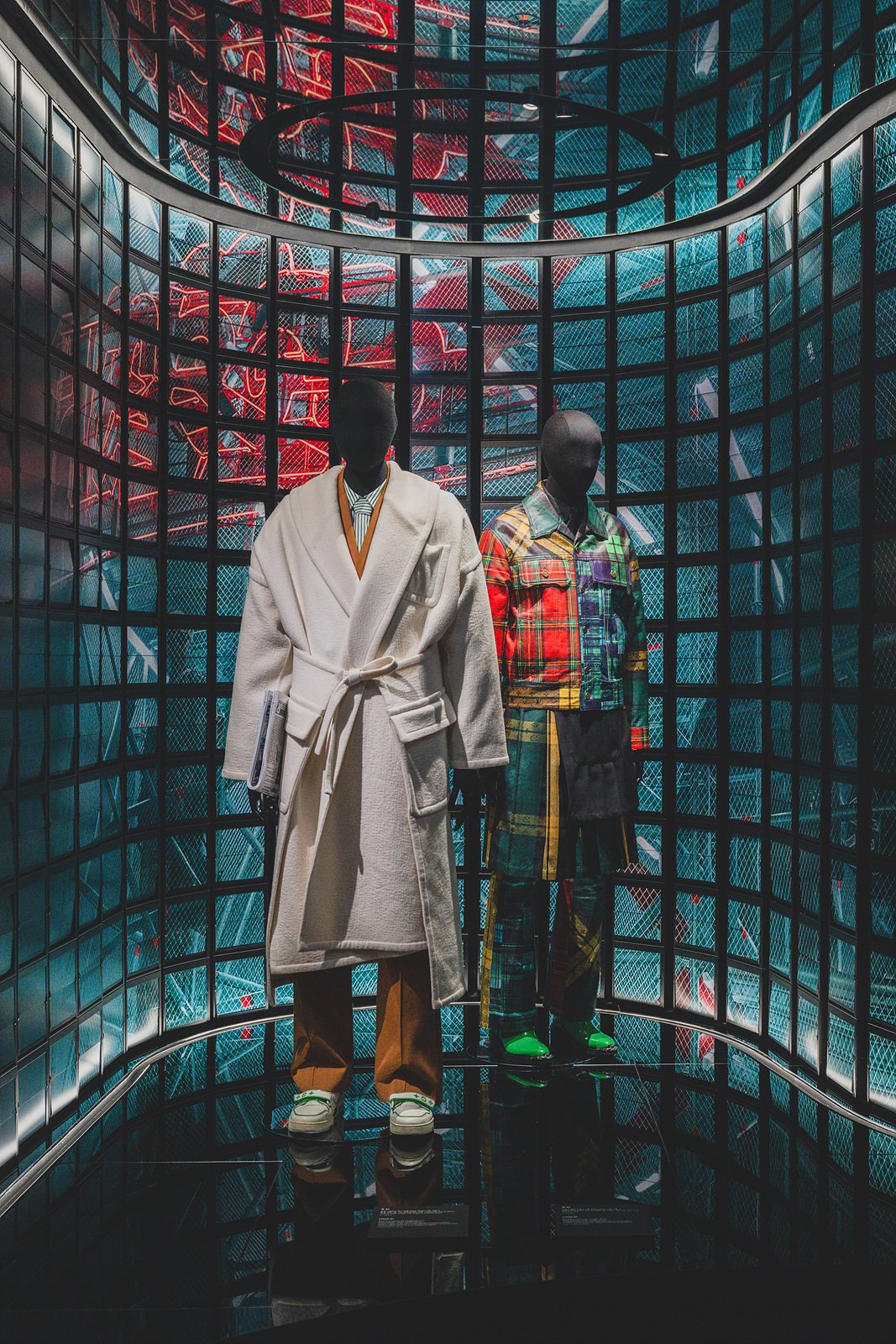
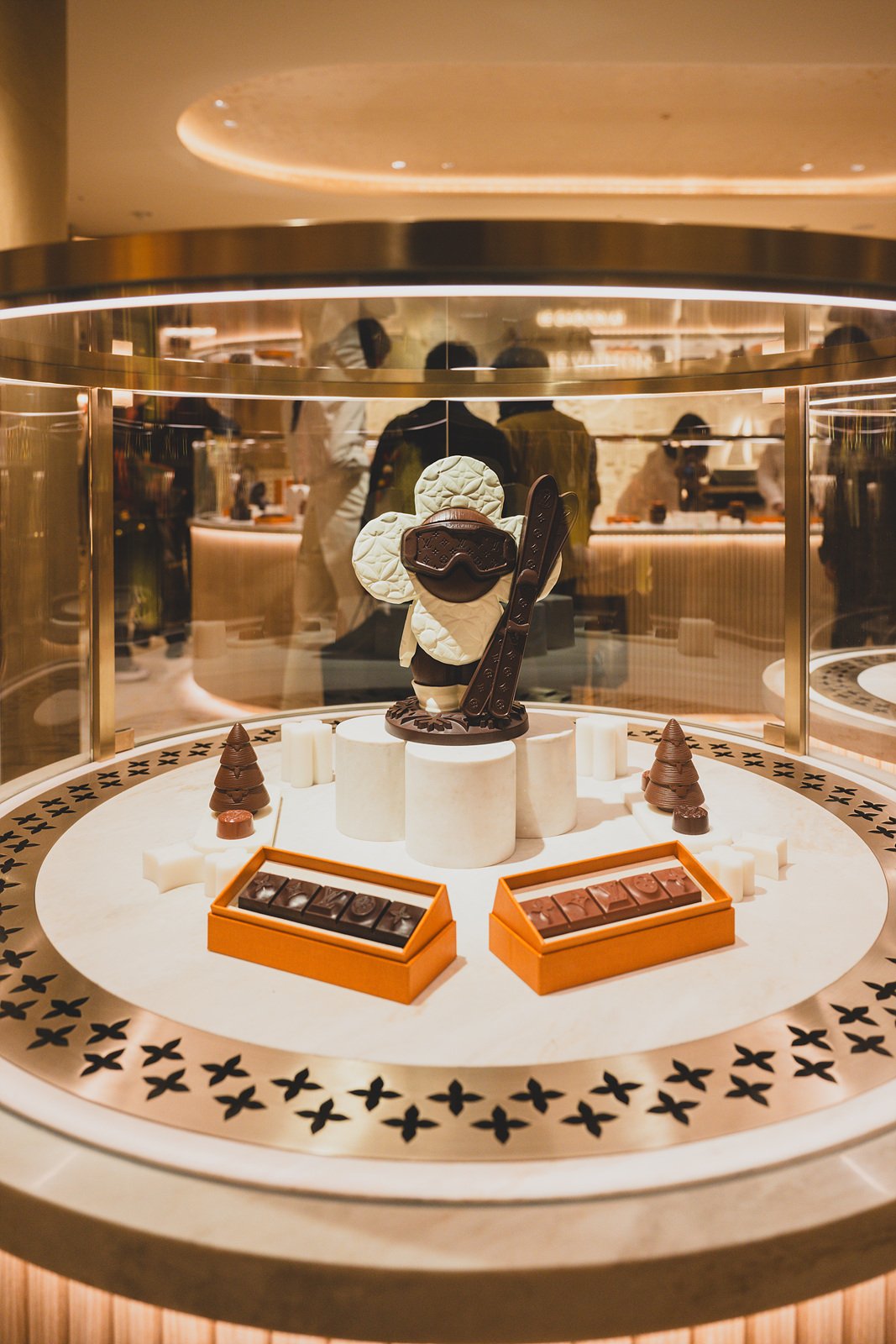
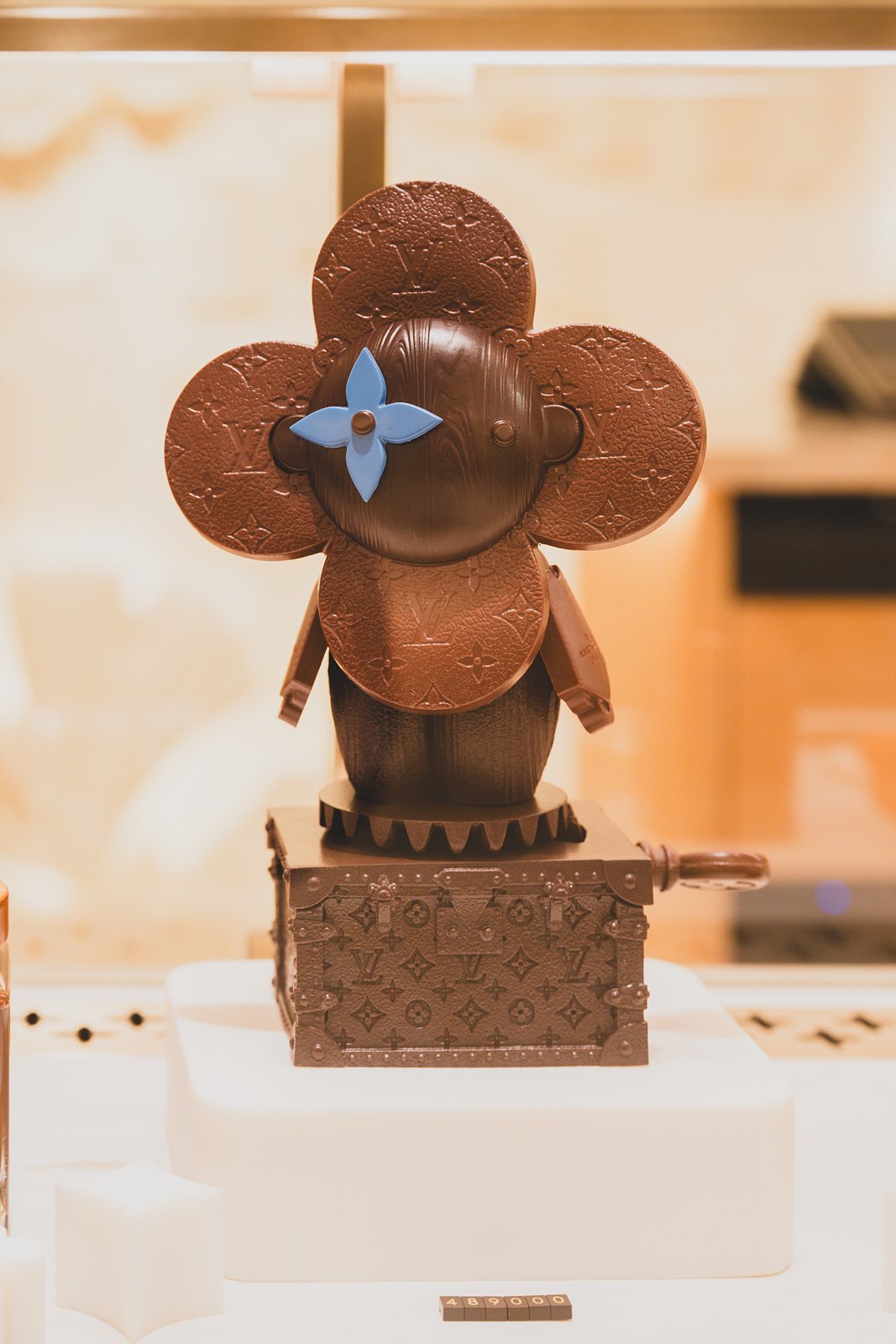
Le Chocolat Louis Vuitton
The exhibition spits you out — appropriately — into the brand’s chocolate boutique, where the monogram shows up one more time in edible form. Prices are not exactly grocery-store, but it’s a good last stop for a gift.
Is it worth your time?
If you have zero interest in fashion, this is still a decent architecture-and-craft museum for an hour. If you do care about Louis Vuitton, it’s one of the more substantial brand exhibitions I’ve seen anywhere — more archive-museum than showroom. Budget 1–2 hours, more if you want to read every placard or catch a live atelier demo.
FAQ
Is Louis Vuitton Visionary Journeys Seoul actually free?
Yes. The exhibition on the 4th and 5th floors is free to enter with a reservation (or as a walk-in, wait permitting). You’re not required to buy anything.
Do I need a Korean phone number to reserve a spot?
No. The booking site lets you register with just an email address, which is the option most foreign visitors will want. A KakaoSync login is also available if you have a Korean KakaoTalk account.
How long does a visit take?
Plan on 1–2 hours to go through all the rooms at a normal pace. You can move faster if you’re only interested in a few sections.
Is there an English-language audio guide or tour?
Wall text throughout is bilingual (Korean/English), and there’s a printed leaflet in multiple languages at the entrance. Docent-led sessions and an audio guide are available, but language options for those can change — it’s worth asking at the front desk when you check in rather than assuming.
Is this the same as just visiting the Louis Vuitton store?
No — the retail boutique is a separate part of the building. The exhibition is a dedicated, non-commercial cultural space; you can visit it without setting foot in the store, and there’s no obligation to shop afterward.
Bottom Line
Louis Vuitton Visionary Journeys Seoul is a rare case of a luxury brand experience that’s genuinely worth the reservation even if you’re not planning to buy anything. Book ahead with just an email, budget about two hours, and go in expecting a design museum rather than a showroom.