TL;DR: Namyeongdon Seongsu is widely considered one of Seoul’s “Big 3” Korean charcoal BBQ restaurants, alongside Geumdwaeji Sikdang and Sancheong Sutbul Garden. What sets it apart is thickness — real charcoal heat lets them cut the pork thick enough to seal in the juices, instead of thin-sliced cuts that cook fast but dry out. It’s not cheap (mains run ₩20,000–25,000, roughly $15–18), but the newer Seongsu branch currently has little to no wait, unlike the famously long lines at the original location. Reserve for dinner if you can — waitlist opens at 2:00 PM same-day, phone/app booking not available.
Seongsu-dong’s reputation used to be all cafes and pop-ups. Lately, though, a handful of serious charcoal Korean BBQ spots have moved in, and Namyeongdon’s Seongsu branch is the one I’d been meaning to try for a while. Namyeongdon is usually named alongside Geumdwaeji Sikdang and Sancheong Sutbul Garden as Seoul’s “Big 3” Korean BBQ restaurants, and out of the three, it’s the one I rate highest.
Where it is and the basics
Address: 32 Seongsuiro 16-gil, Seongdong-gu, Seoul
Hours: Daily, 11:30 AM – 11:00 PM
Reservations: Same-day waitlist only, opens at 2:00 PM — no phone or app booking
Parking: Not available on-site; use a nearby public paid lot
Price range: Most cuts run ₩20,000–25,000 (~$15–18) for a single order; premium chef’s-special sets go up to ₩148,000 (~$110) for four people
Why the thickness matters
The reason I rate this place above the other two in Seoul’s “Big 3” comes down to one thing: cut thickness. Weak charcoal heat forces a restaurant to slice pork thin so it cooks through — but thin cuts also lose their juices fast. Real, high-heat charcoal lets a kitchen go the opposite direction: cut the meat thick, and the heat still sears the outside fast enough to seal the juices in before they escape. That’s the whole philosophy here, and it’s the difference you can actually taste.
A restaurant that doesn’t look like a Korean BBQ spot from the outside
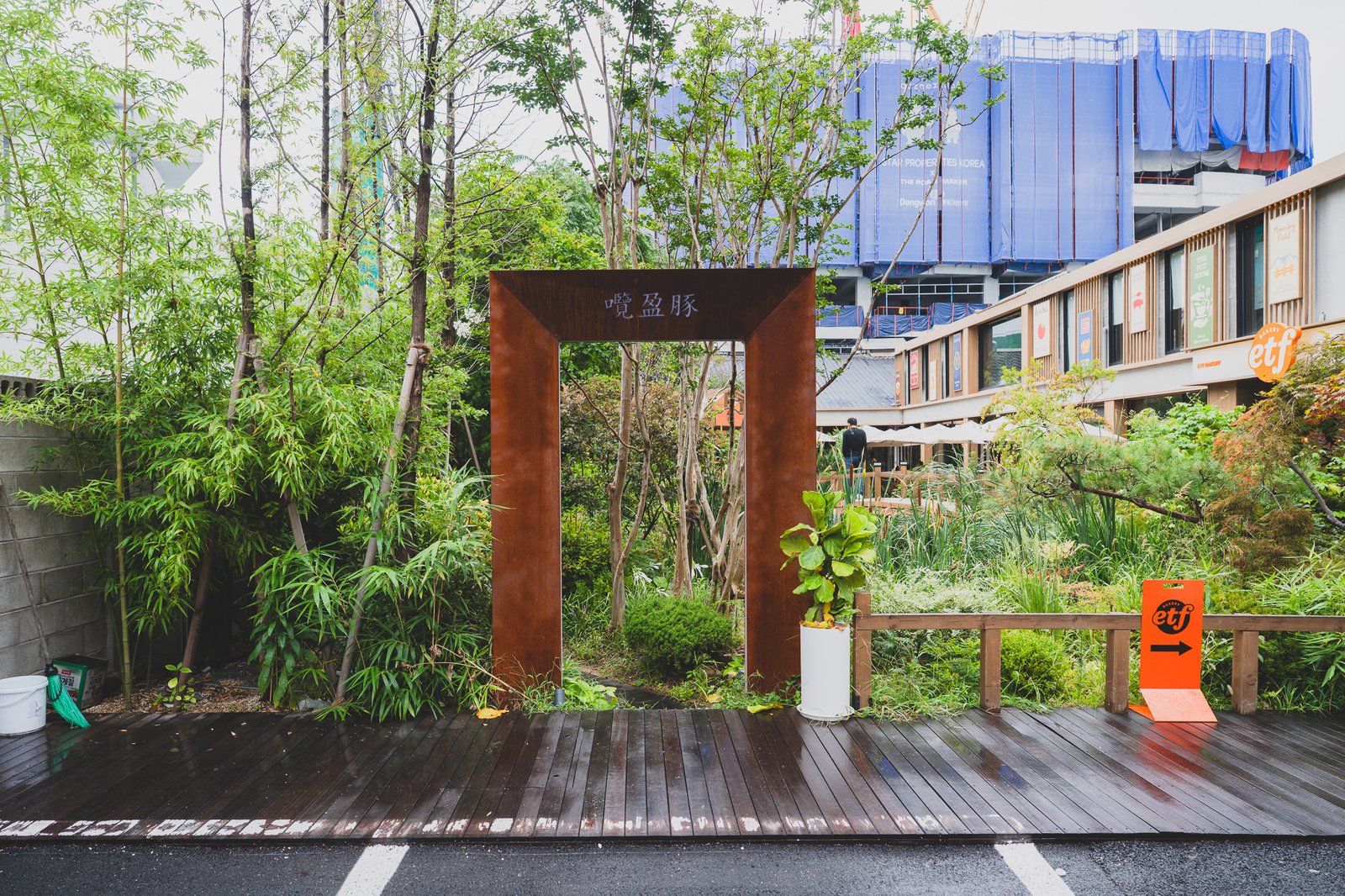
The entrance alone sets expectations differently than most BBQ places — you walk in along a wooden deck through landscaped greenery and bamboo, more like approaching a garden restaurant than a smoky grill house. That kind of space is genuinely rare for a charcoal BBQ spot in Seongsu, and it’s a point of difference before you’ve even ordered anything.
Inside, the interior mixes wood paneling and stone in a calm, low-lit tone — the ceilings are high and the lighting is soft enough that even a full dinner crowd doesn’t feel loud.
The Atlético Madrid connection
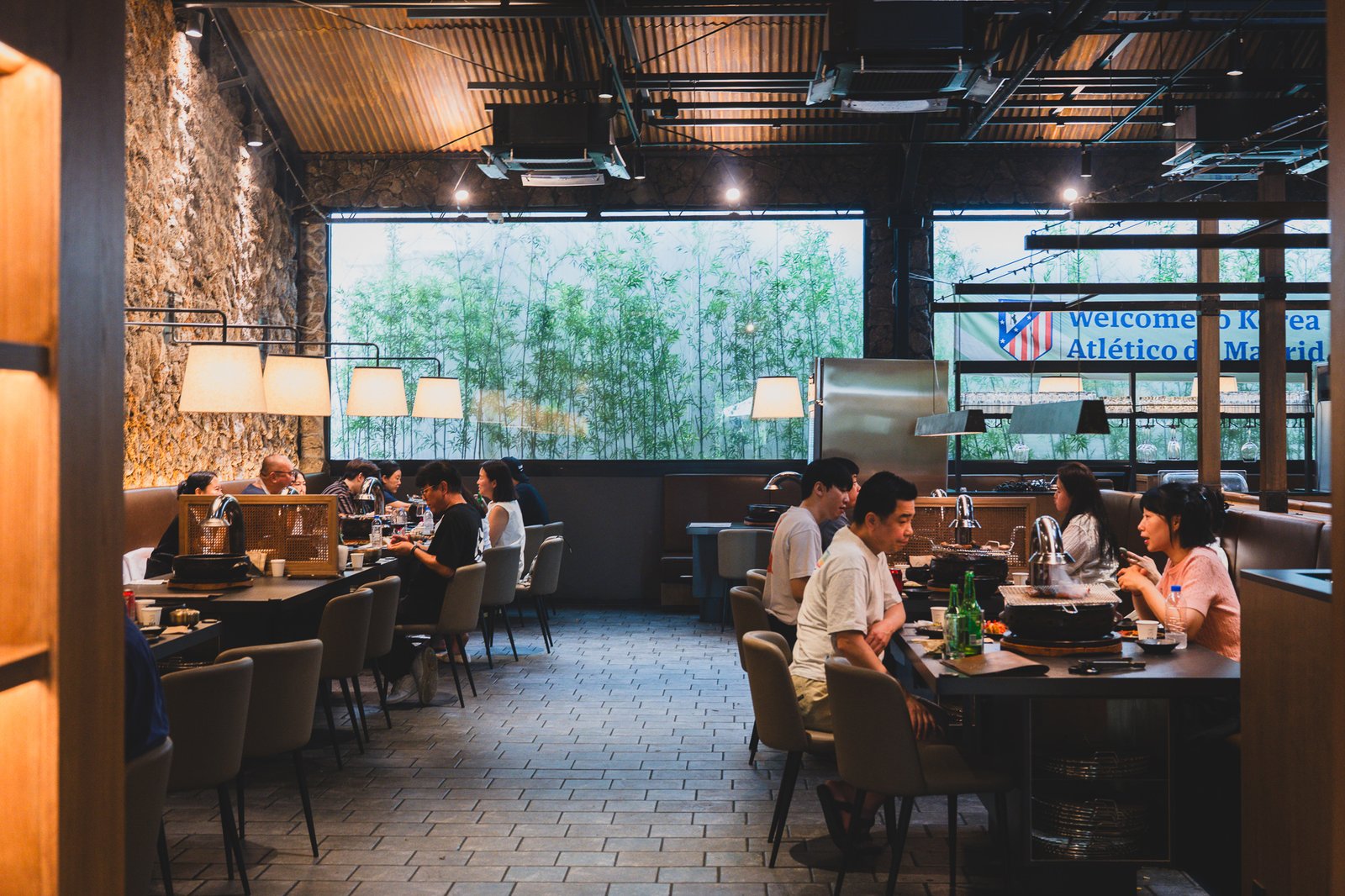
One wall still had a “Welcome to Korea Atlético de Madrid” banner up when I visited — a leftover from a very specific event. In August 2026, South Korean midfielder Lee Kang-in, who’d just transferred to Atlético Madrid, hosted a welcome dinner here for the entire traveling delegation — around 80 players, coaches, and staff — as a gesture after being warmly received on his first day with the club. Atlético’s manager Diego Simeone later called it a strong first impression of who Lee Kang-in is as a person. Seeing the actual banner still up in person made the story feel a lot more real than reading about it online.
If you’re a football fan visiting Seoul, this is a fun bit of context to know before you go — and it’s likely part of why the Seongsu branch’s profile has been rising fast.
The charcoal itself is the headline ingredient
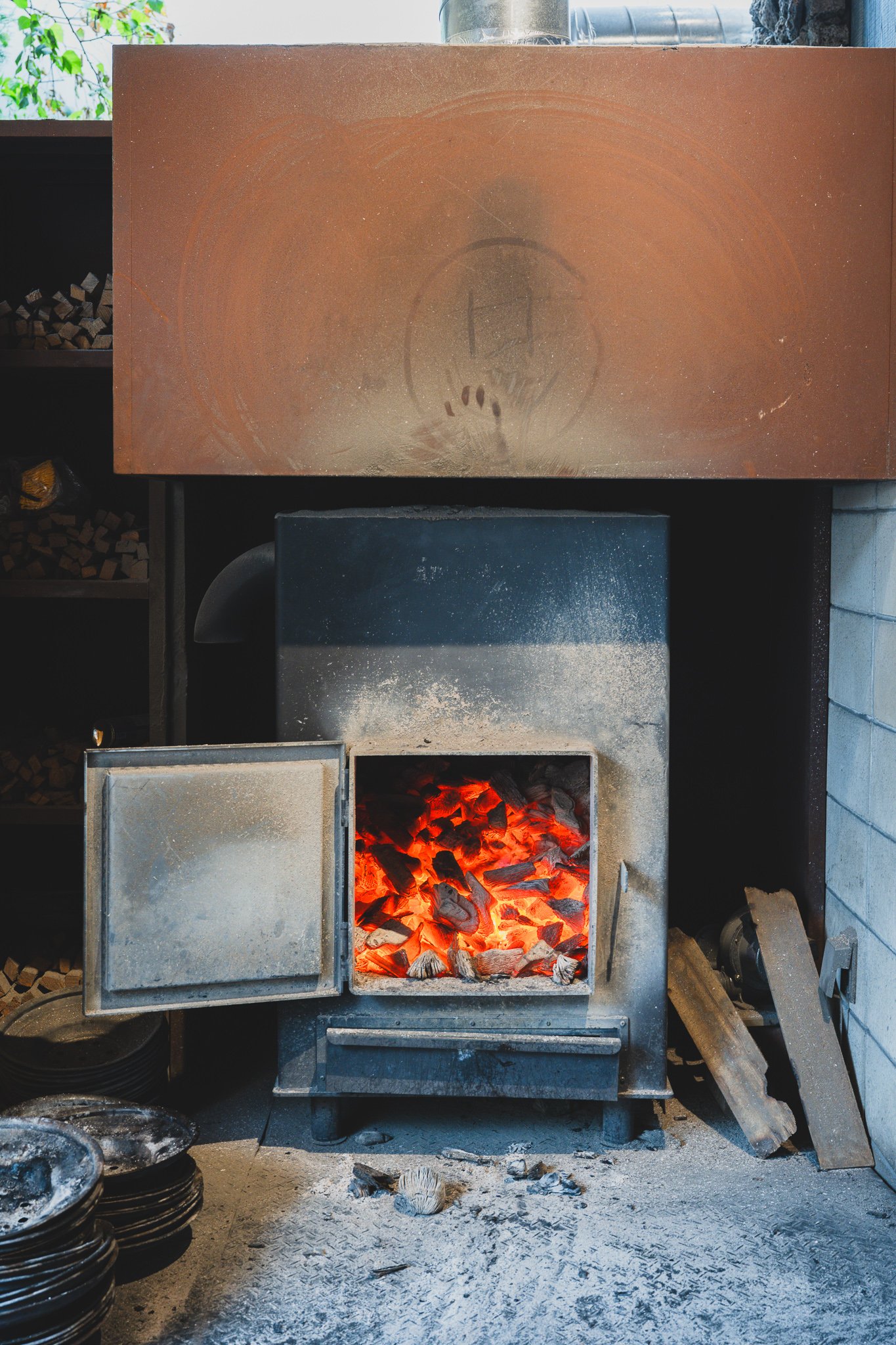
Real charcoal, glowing red-hot in a traditional furnace, backs up the claim — this isn’t gas or electric coils standing in for the real thing. Honestly, I’d guess a solid 80% of what makes this place’s meat taste the way it does traces back to this charcoal.
The menu: broad range, real pricing
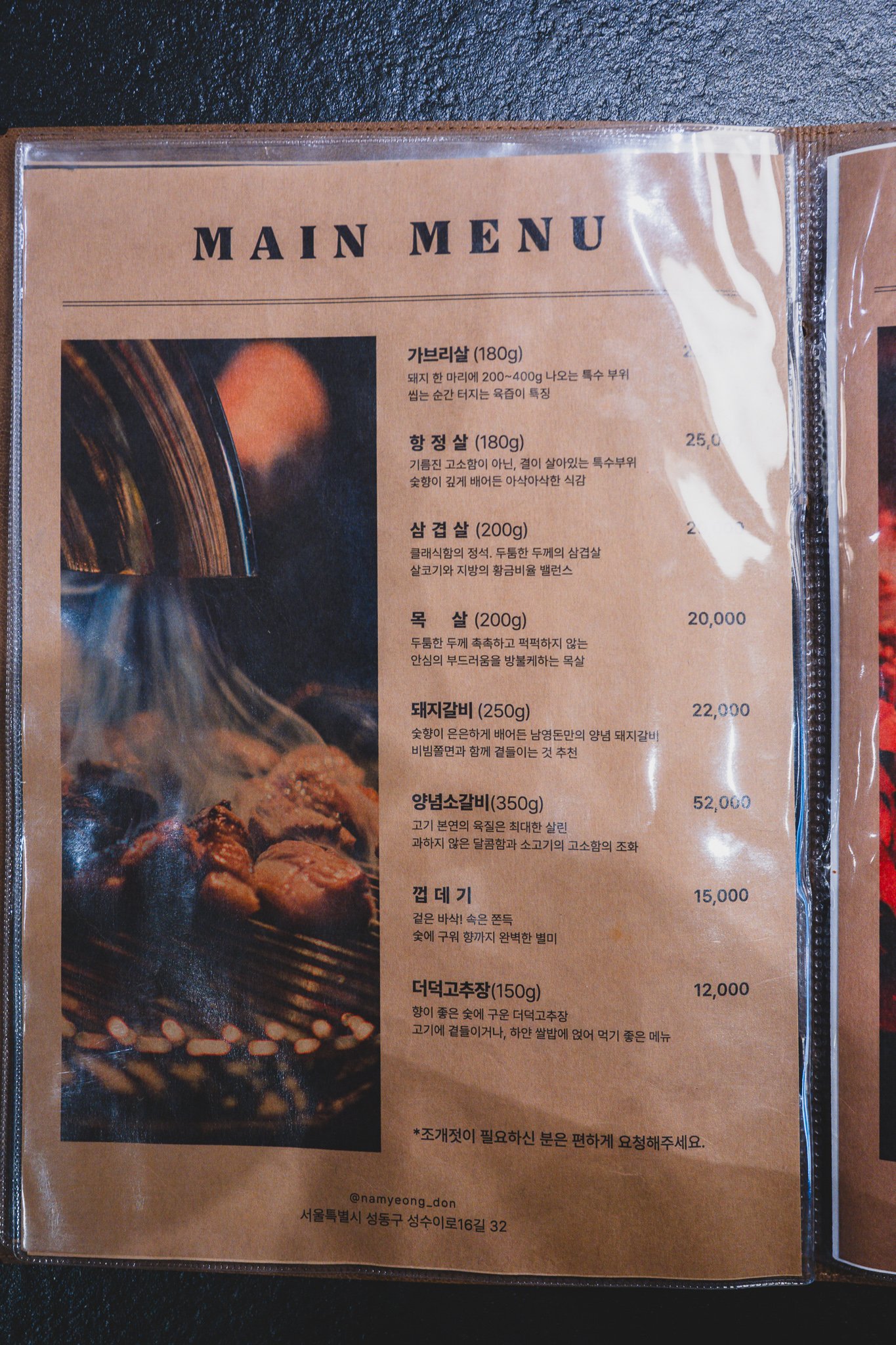
The menu covers a wide range of cuts — pork jowl and pork neck run around ₩25,000 (~$18) for 180g, pork belly and pork shoulder around ₩20,000 (~$15) for 200g, pork ribs around ₩22,000 (~$16) for 250g, and a seasoned beef short rib option at ₩52,000 (~$38) for 350g. Each cut comes with a short description on the menu — the pork jowl’s listed as “not greasy richness, but a specialty cut with real texture,” and honestly, that description held up once I actually tasted it.
Beyond the core BBQ menu, there’s also a side menu with beef tartare (₩32,000/~$23), a kimchi stew simmered for over 5 hours, and a chef’s-special tasting menu that goes as high as a caviar set for two to four people (₩102,000–₩148,000, roughly $75–$110) — this isn’t just a casual grill house, it’s positioning itself closer to fine dining in its upper tier.
Watching the technique in action
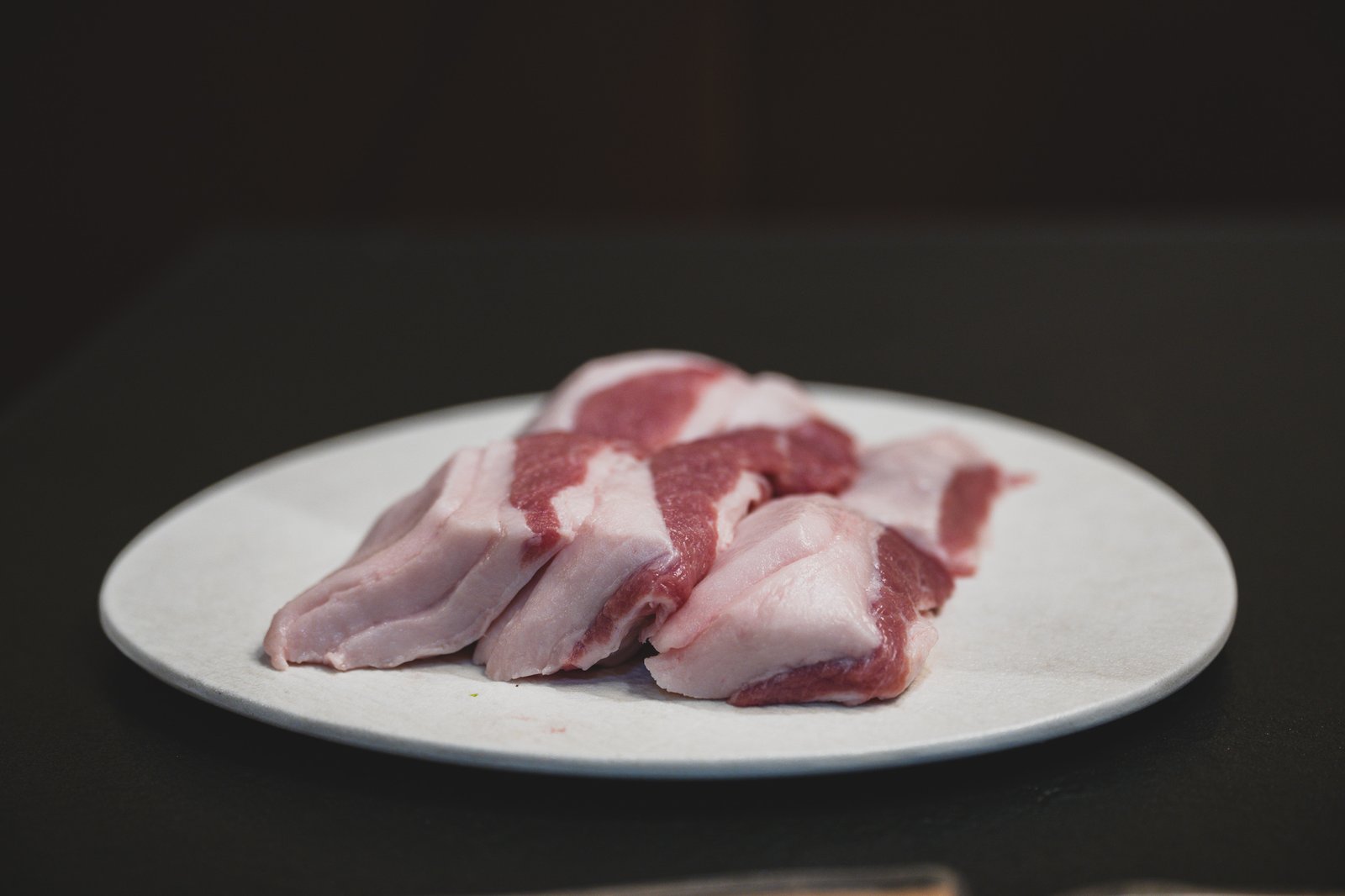
The pork jowl came out thick enough that you could see it wouldn’t survive weak heat — cuts this size usually burn on the outside before cooking through in the middle on a normal grill.
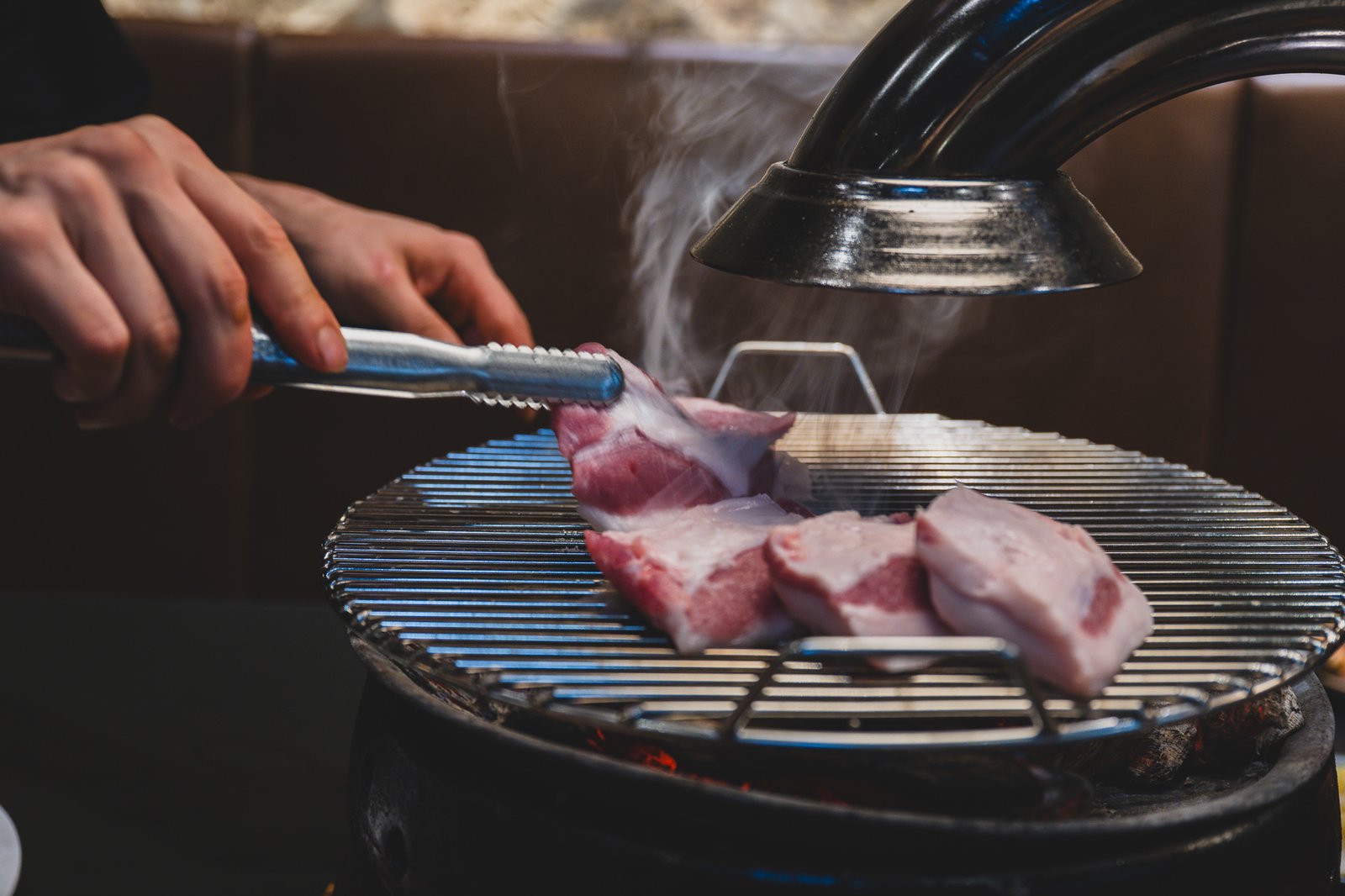
But watching it hit the charcoal, that concern went away fast. The coals were glowing bright red, and even a thick cut like this browned on the surface within a couple of minutes — no compromise needed between thickness and proper searing.
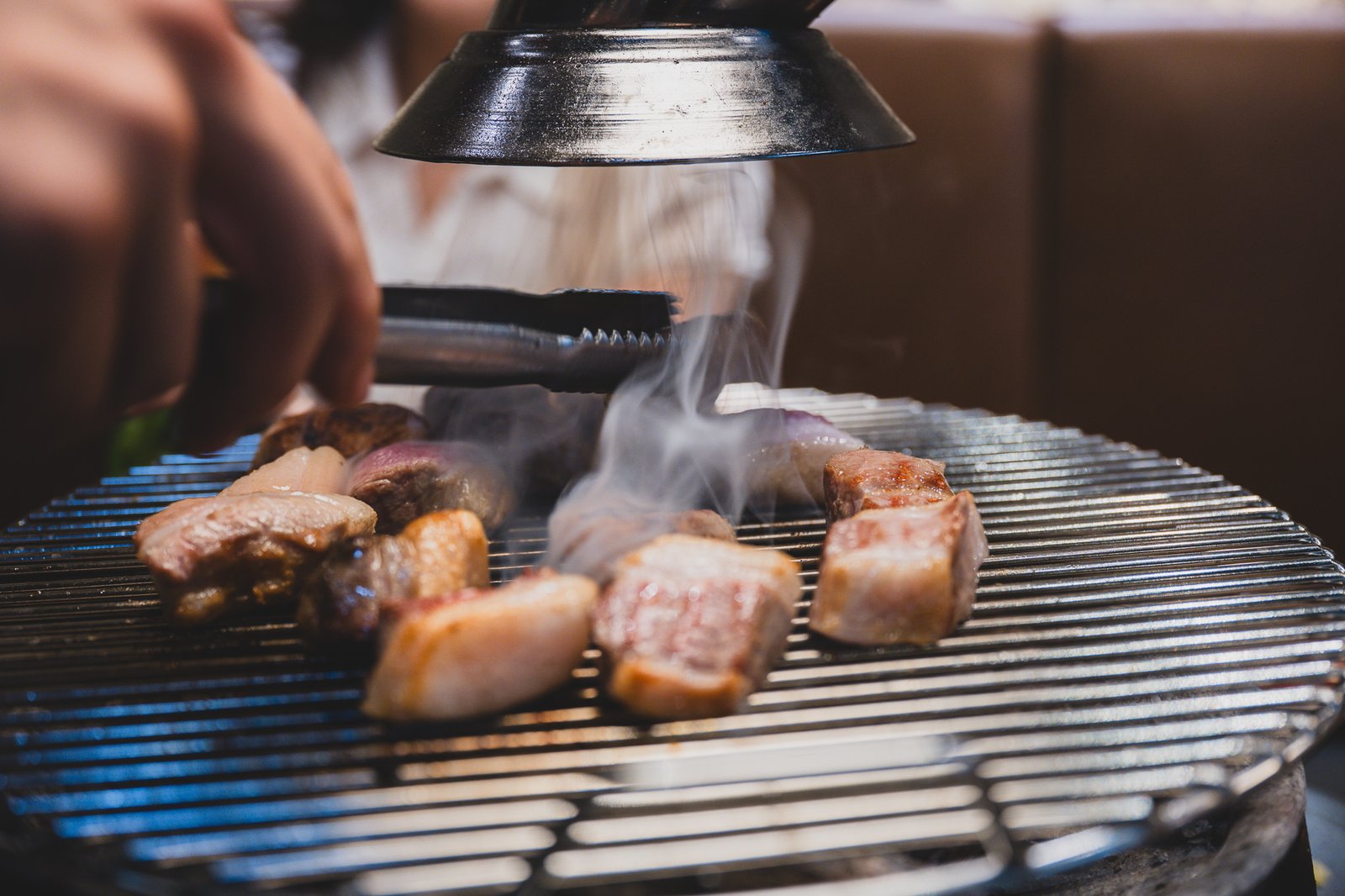
The result: a well-caramelized, slightly crisp exterior with juice still sealed inside. The menu’s claim that “juice bursts out with the first bite” wasn’t an exaggeration.
The real move: wrapping it in the house kimchi
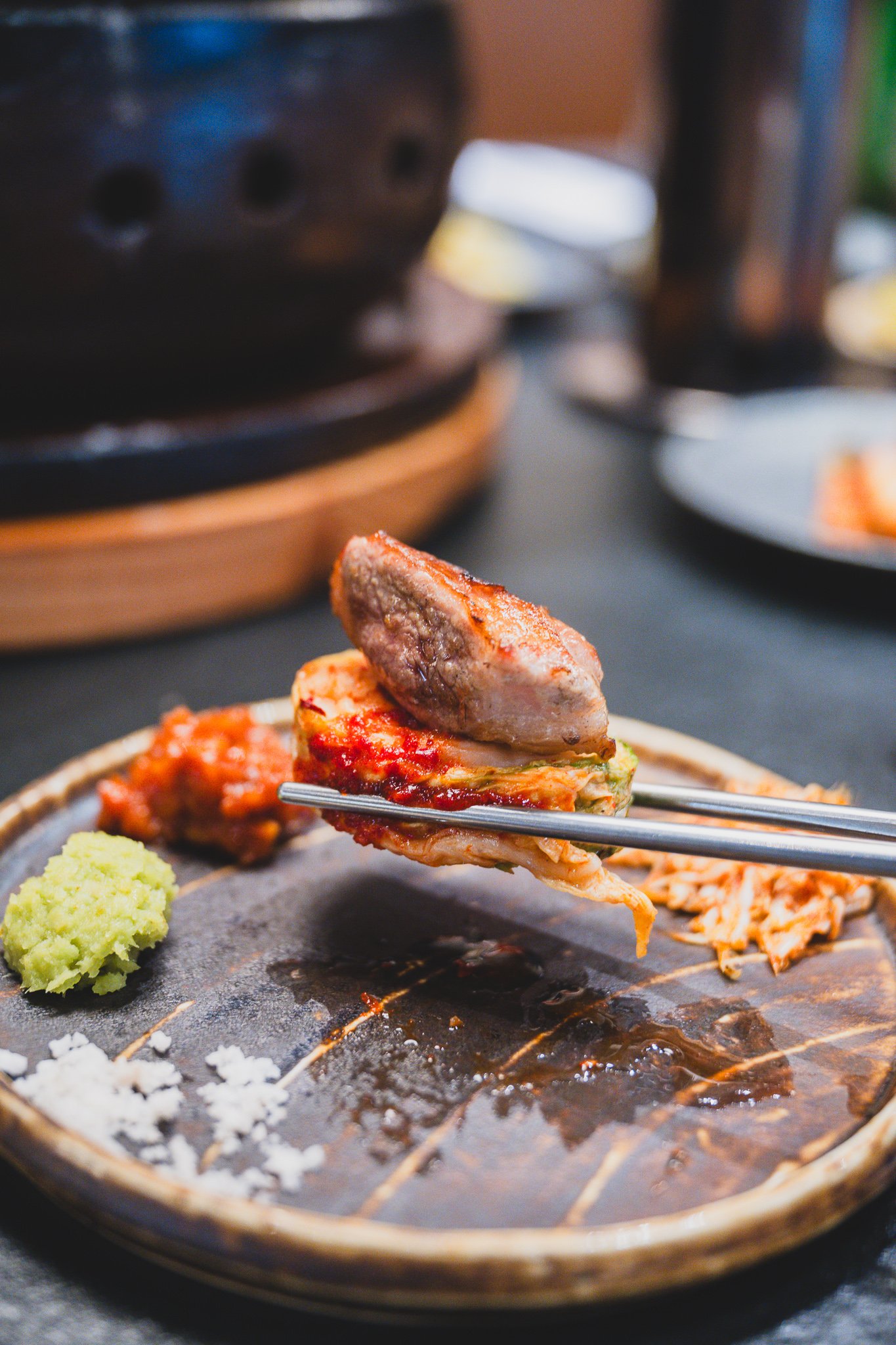
Here’s the detail that actually elevated the meal for me — wrapping the grilled pork in the restaurant’s house-made bossam kimchi. It’s made fresh daily, and it’s noticeably deeper in flavor than a standard fresh kimchi, with seasoning that plays well against the fat from the grilled meat. Eating the meat plain versus wrapped in this kimchi were two genuinely different experiences.
There are also three dipping options on the table — salt, wasabi, and a seasoned sauce — so you can vary how you eat each cut. Personally, the pork jowl worked best with salt, and the pork cheek with the seasoned sauce.
An unexpected extra: complimentary beef tartare
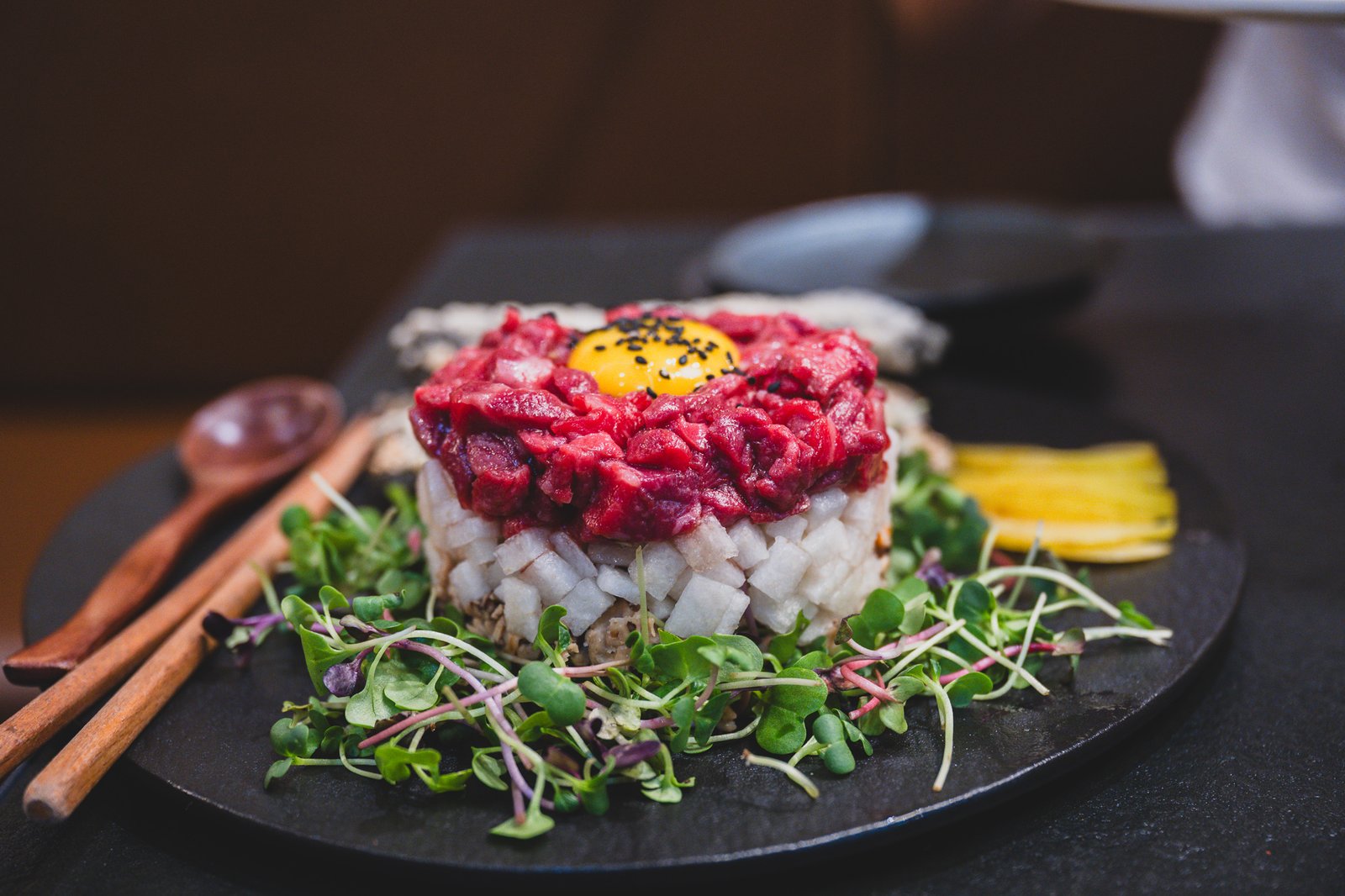
I ended up getting the ₩32,000 beef tartare (yukhoe) on the house that visit — a nice bonus, though not something every visitor should expect. Even setting the “free” part aside, the plating alone looked closer to a course-meal presentation than typical BBQ-restaurant service, with a soy-based dressing and a light shiitake mushroom aroma running through it — a good palate reset between rounds of grilled meat.
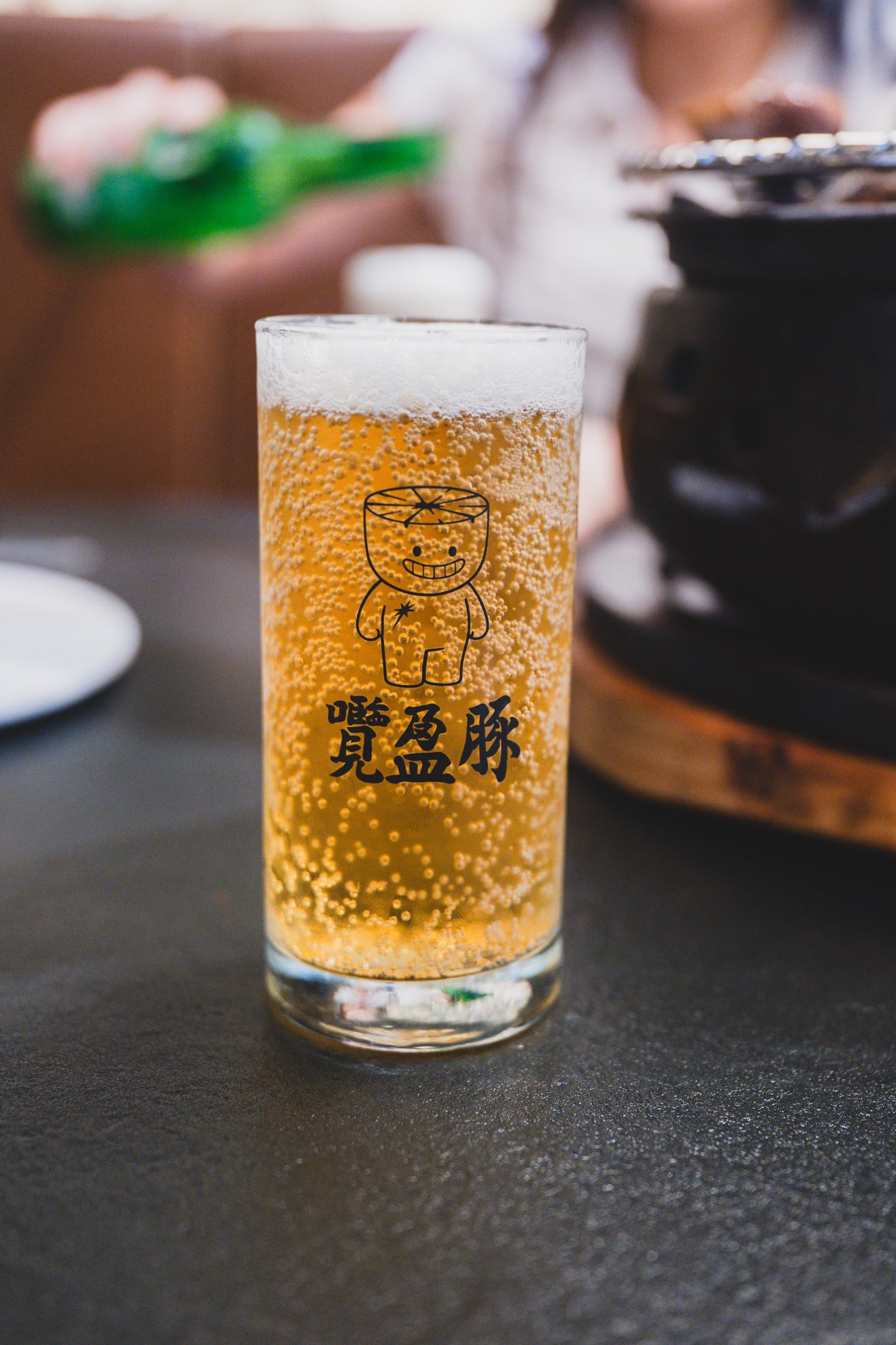
Even small details, like the branded character printed on the draft beer glasses, showed the kind of attention that tells you branding matters to this place beyond just the food.
Why I rate this over the other two “Big 3” spots
Comparing all three of Seoul’s well-known charcoal BBQ heavyweights, the dividing line for me really is thickness. Weak heat forces thin cuts; thin cuts can’t hold their juices. Namyeongdon solved that equation with genuinely strong charcoal, and thick, juice-sealed cuts are the direct result.
The timing tip: go now, before the wait catches up
One thing that surprised me: the original Namyeongdon location is notorious for long waits, but the newer Seongsu branch had essentially no wait when I visited. Part of that’s a bigger space, but a bigger part is probably that the Seongsu branch just hasn’t caught up to the original’s reputation yet. Given the Lee Kang-in/Atlético Madrid story is still fairly fresh, that’s likely to change — so if avoiding a wait matters to you, now’s a good window.
FAQ
Q: Do I need a reservation?
A: Same-day waitlist opens at 2:00 PM — there’s no advance phone or app booking. As of this visit, the Seongsu branch had little to no wait even without joining early, though that could change as the location gets more popular.
Q: Is this the same restaurant Lee Kang-in hosted his Atlético Madrid teammates at?
A: Based on the “Welcome to Korea Atlético de Madrid” banner still displayed inside, this appears to be the location — the timing lines up with the widely reported August 2026 team dinner Lee Kang-in hosted for around 80 people from the club.
Q: How expensive is a meal here?
A: Most individual cuts run ₩20,000–25,000 (~$15–18). Budget more if you add sides like beef tartare (₩32,000/~$23) or go for the chef’s-special tasting sets, which run up to ₩148,000 (~$110) for a group of four.
Q: Is this beginner-friendly if I don’t speak Korean?
A: The menu includes English names alongside the Korean, and the format — grilled meat, dipping sauces, wrap it in kimchi — doesn’t require much language to navigate once your food arrives.
Bottom Line
If you’re building a Seongsu-dong day around cafes and pop-ups, Namyeongdon Seongsu is worth carving out a dinner slot for — it’s a genuinely different Korean BBQ experience than a quick tourist-trap grill house, with real technique behind the thick-cut meat and a garden-style setting that doesn’t feel like a typical BBQ spot. It’s not a budget meal, but between the quality of the charcoal work, the house kimchi, and a bit of pop-culture history on the wall, it earns its “Big 3” reputation. Go now while the wait is still short.