TL;DR: Most souvenir guides send you to Insadong or a duty-free shop. Skip both if you want something that actually feels considered. The Hyundai Gift (Hyundai Department Store, Trade Center branch, Gangnam) organizes everything by occasion — housewarming, self-care, summer trip — so you don’t need to know a single Korean brand name to find something good. House of Shinsegae (Shinsegae Department Store, Main branch, Myeongdong) does the opposite: every object comes with the maker’s name and the technique behind it, aimed at people who want a gift with a story attached, not just a price tag.
I’ve now been to both — Hyundai Department Store’s new gift concept in Gangnam, and Shinsegae’s heritage gift shop in Myeongdong — and they turned out to be a genuinely useful contrast for anyone trying to buy a gift in Seoul that isn’t a keychain.
Quick Facts
The Hyundai Gift (Hyundai Department Store, Trade Center branch)
Address: 517 Teheran-ro, Gangnam-gu, Seoul (connected to COEX Mall)
Hours: Mon–Thu 10:30–20:00 / Fri–Sun 10:30–20:30
Price range: Roughly ₩7,500 (~$5.50) for a card up to several million won for crystal pieces
Getting there: Samseong Station (Line 2), connected via COEX underground passage
House of Shinsegae (Shinsegae Department Store, Main branch — “The Heritage”)
Address: 63 Sogong-ro, Jung-gu, Seoul
Hours: Mon–Thu 10:30–20:00 / Fri–Sun 10:30–20:30 (closed one Monday a month)
Price range: From roughly ₩30,000–40,000 up into the hundreds of thousands of won for artist pieces
Getting there: Myeongdong Station (Line 4) or City Hall Station (Line 1, 2), right by Namdaemun Market
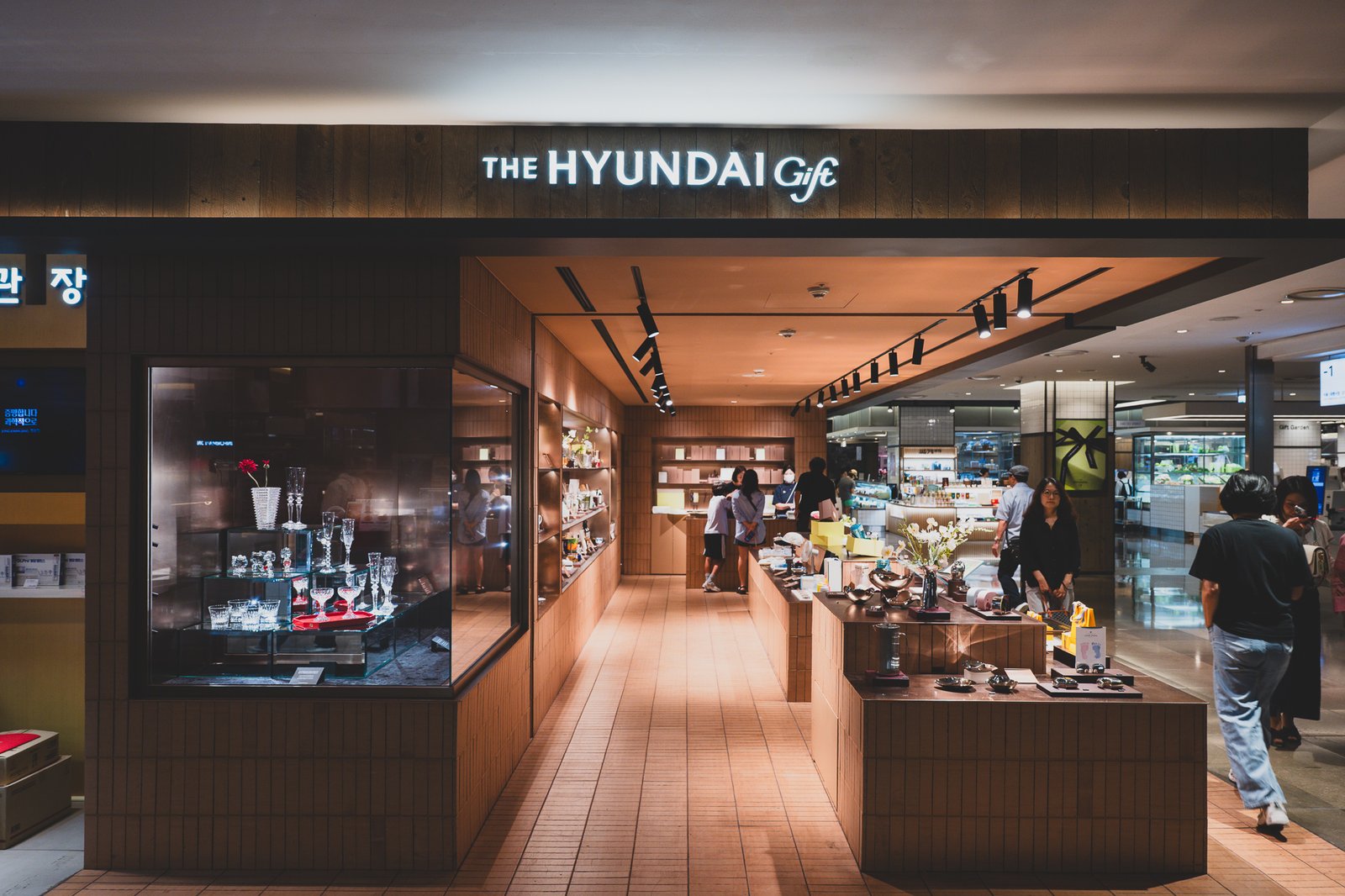
The Hyundai Gift: Shopping by Occasion, Not by Brand
The first thing you notice walking into The Hyundai Gift isn’t a brand name — it’s a hashtag. Every product has a small tag next to it reading something like #HousewarmingGift, #SelfCare, or #SummerEssential, and the brand name comes second, almost as an afterthought.
I assumed at first this was just styling. It’s not — it’s the actual organizing logic of the store. A Danish royal tea brand and a British umbrella maker have nothing in common as categories, but they were displayed side by side because they both fit “housewarming gift.” That’s a genuinely useful system if you’re a tourist who doesn’t know a single Korean gift brand: you don’t need to recognize any name, you just need to know the occasion you’re shopping for, and the tag does the rest.
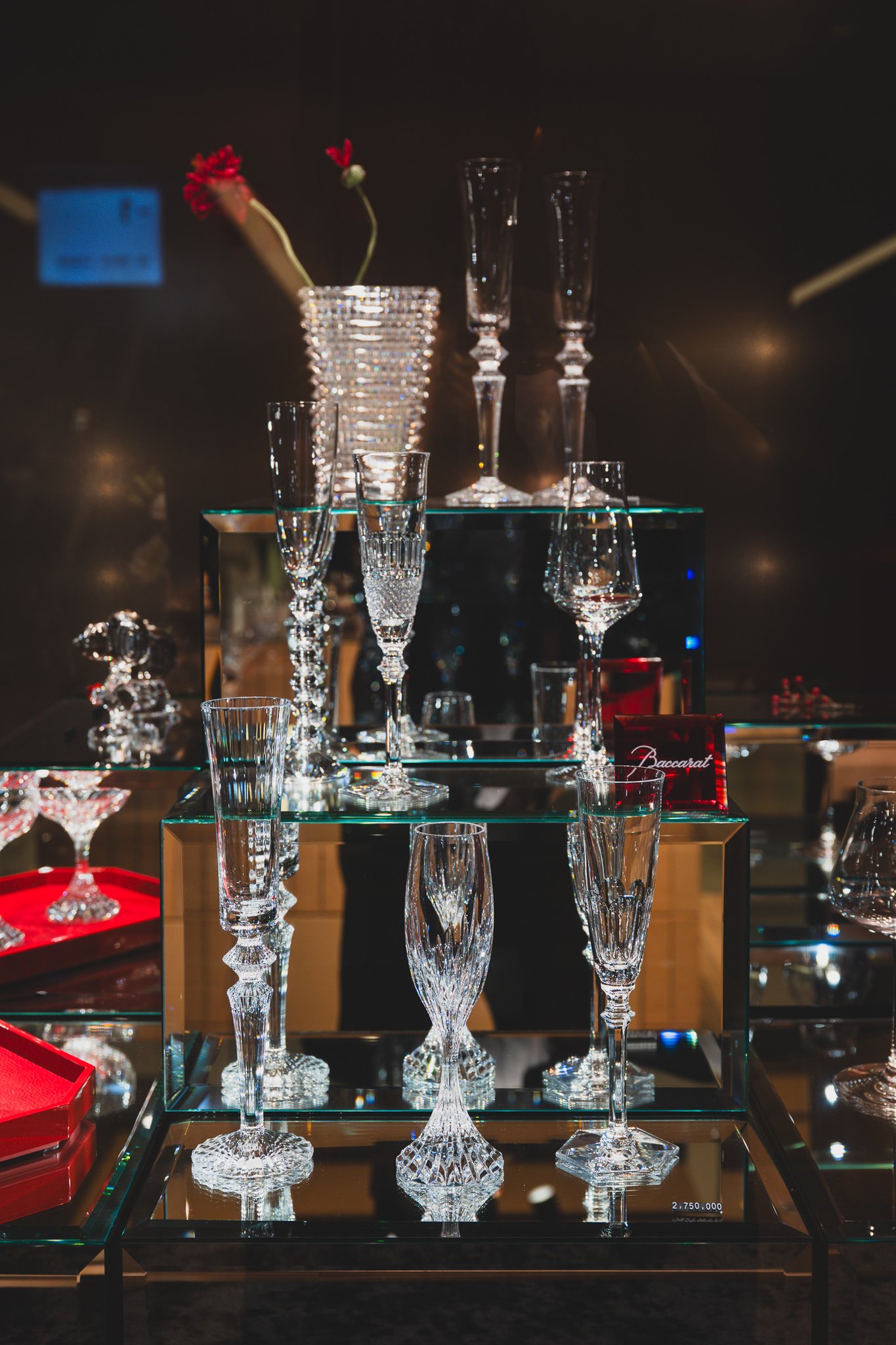
The price range backs this up. A card starts around ₩7,500 (~$5.50), and a set of Baccarat crystal on the same floor runs about ₩2,750,000 (~$2,000) — both inside the same store, organized by the same occasion-based logic rather than by brand tier.
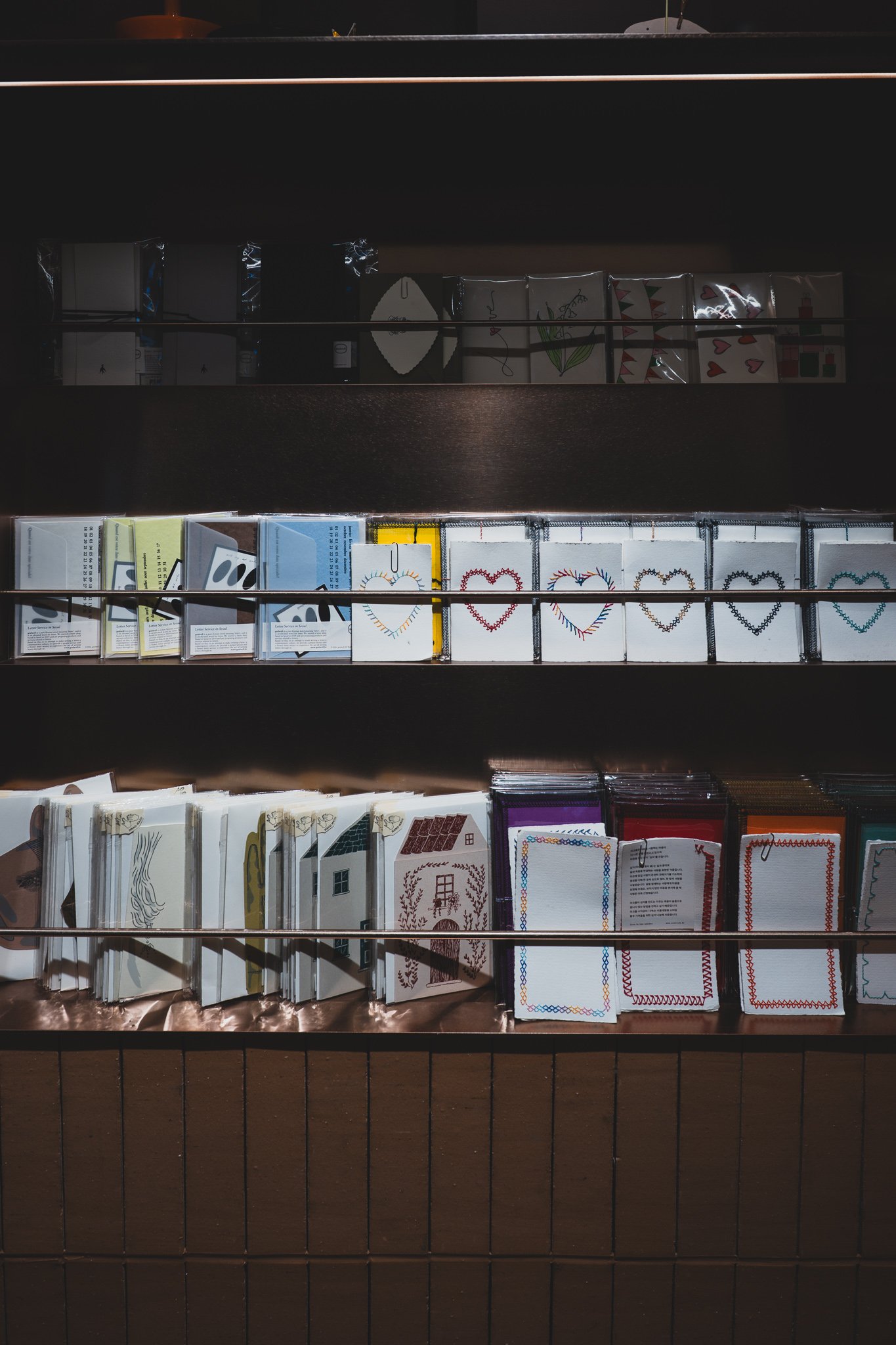
That ₩7,500 card sits in a whole wall of cards, letter paper, and small stationery — the actual entry point if you just want to grab something light before heading back to the tag-organized floor for the main gift.
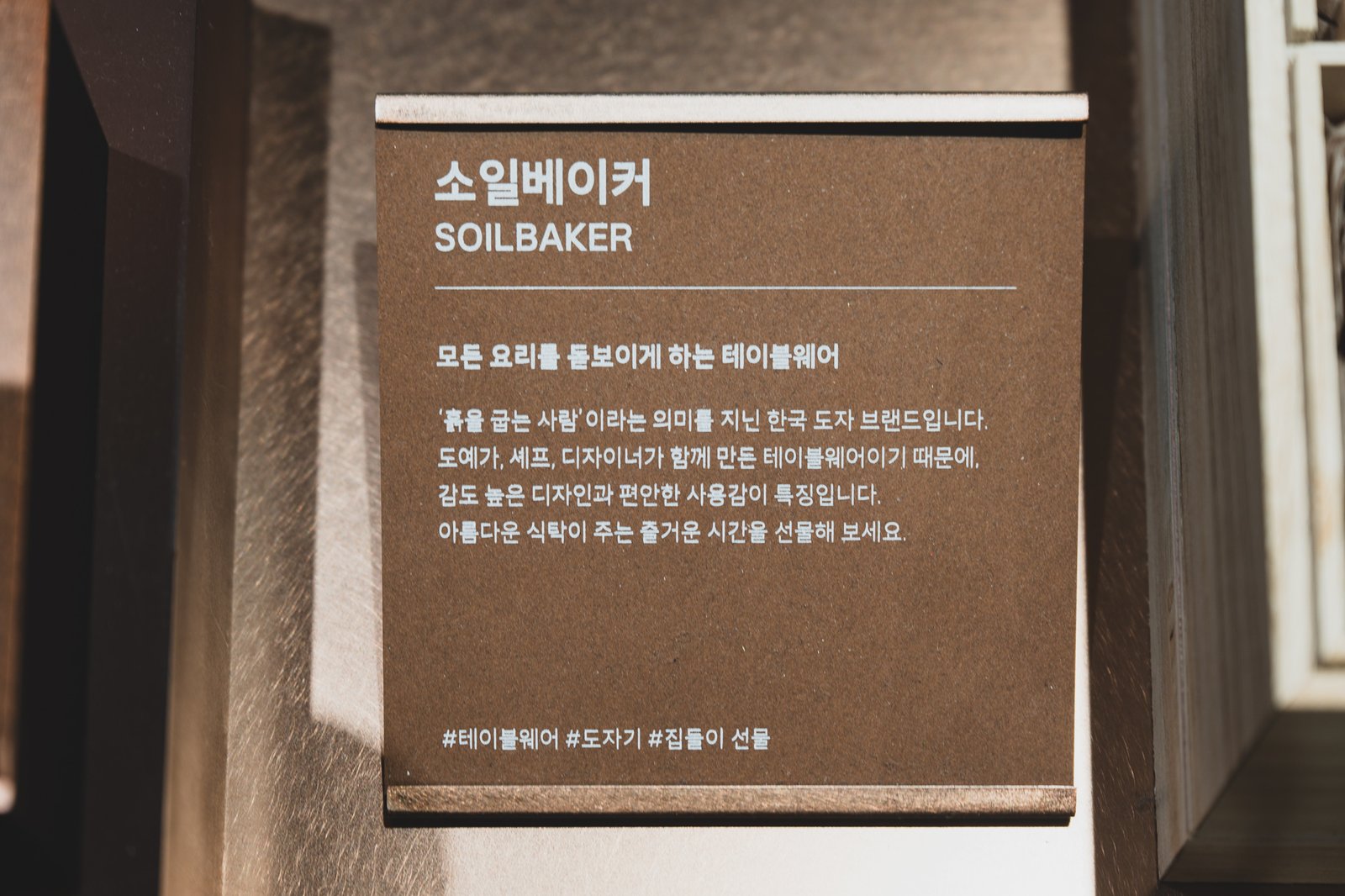
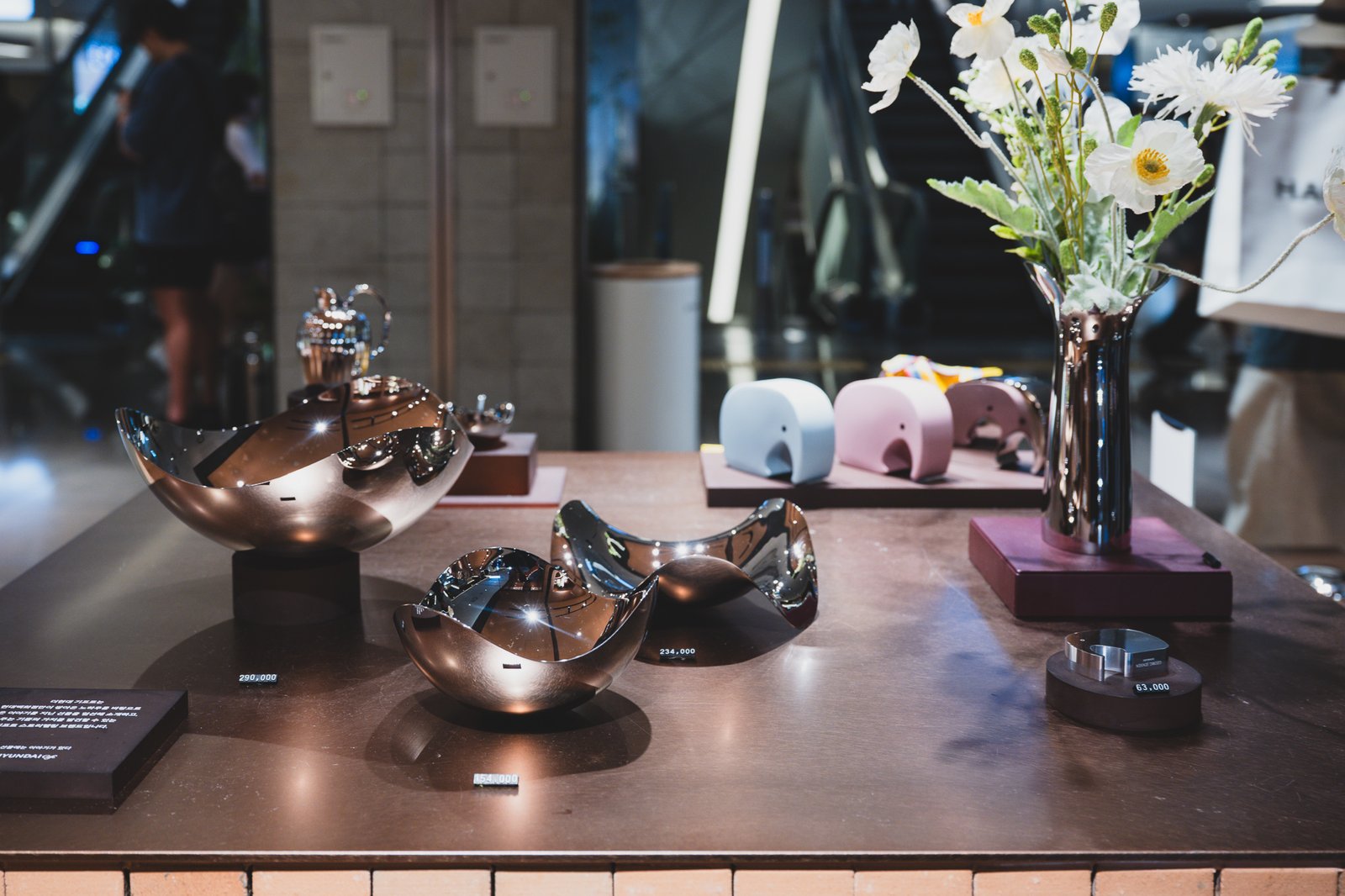
The middle of the price range is where it gets interesting — mirror-polished stainless steel objects (bowls, a bud vase) sitting between ₩63,000 and ₩290,000, each with its own small price tag so you can build a gift around a specific budget rather than guessing.
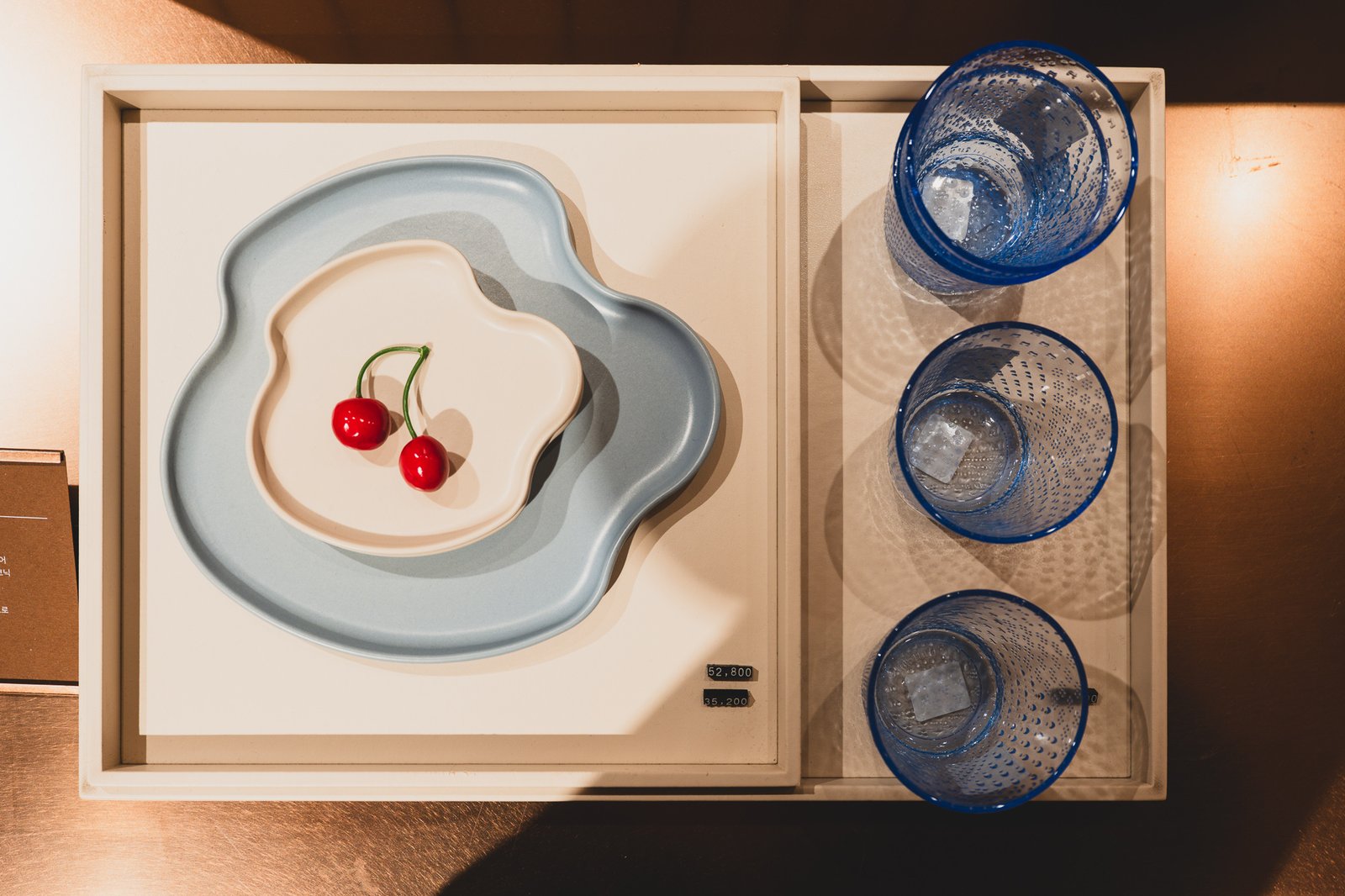
Tableware gets the same treatment — a cloud-shaped ceramic plate set paired with cherry-shaped objects, priced at ₩52,800 and ₩35,200, next to a set of hand-textured blue glassware. Nothing here reads as generic “department store gift wrap” — every piece is doing its own small design statement.
Worth knowing before you go: most of what’s here starts around the ₩50,000 mark. If you want something under ₩30,000, this isn’t really the store for that — casual, low-cost gifting in Korea has mostly moved to KakaoTalk’s built-in gift feature, so a physical department store gift shop makes more sense for something with a bit more weight to it.
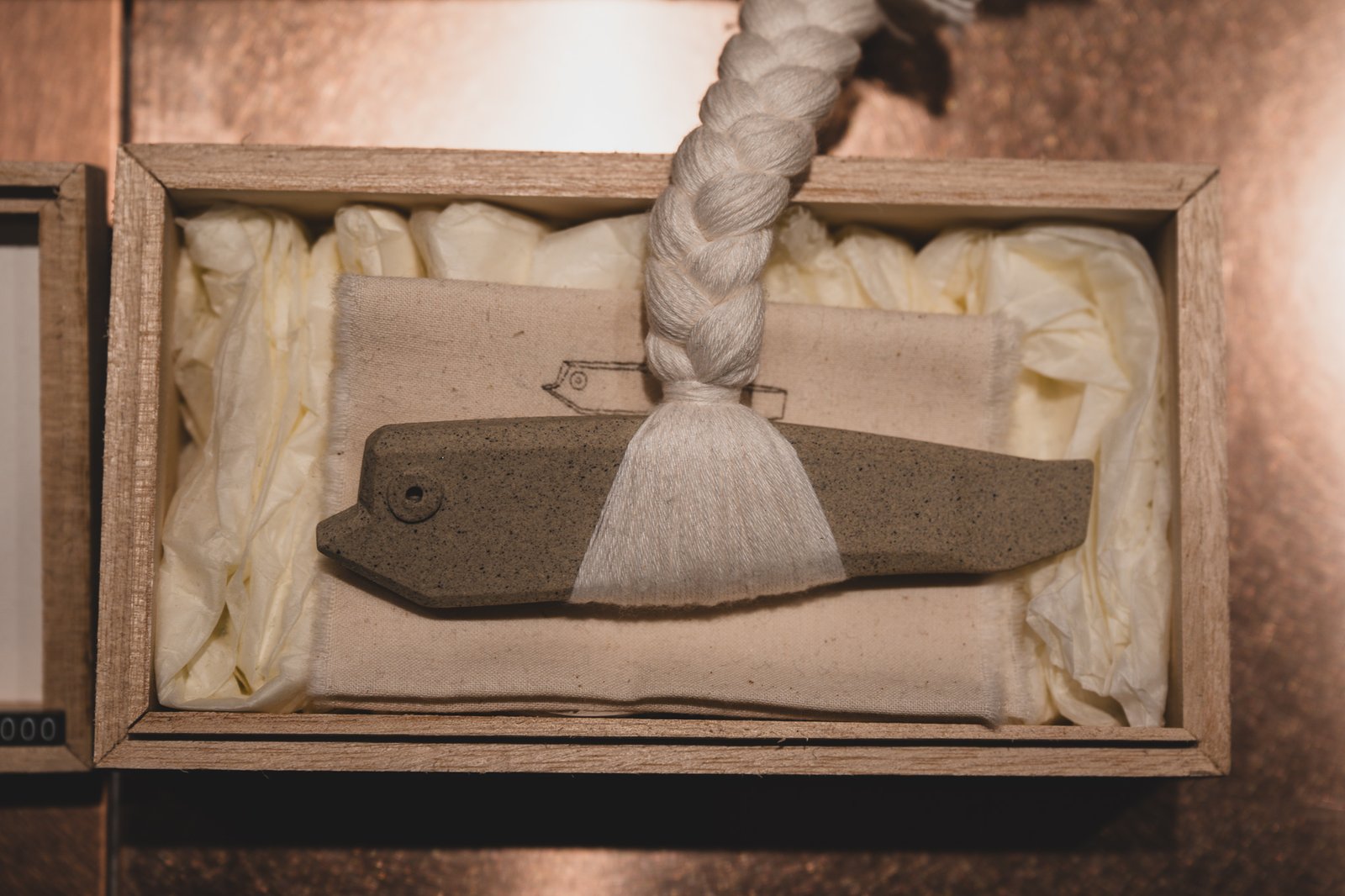
Even the smaller add-on items get real packaging — this ceramic charm came wrapped in a wooden box lined with tissue paper and tied with a braided cotton cord, which tells you the presentation is considered down to the cheapest item on the shelf.
House of Shinsegae: Every Item Comes With a Story
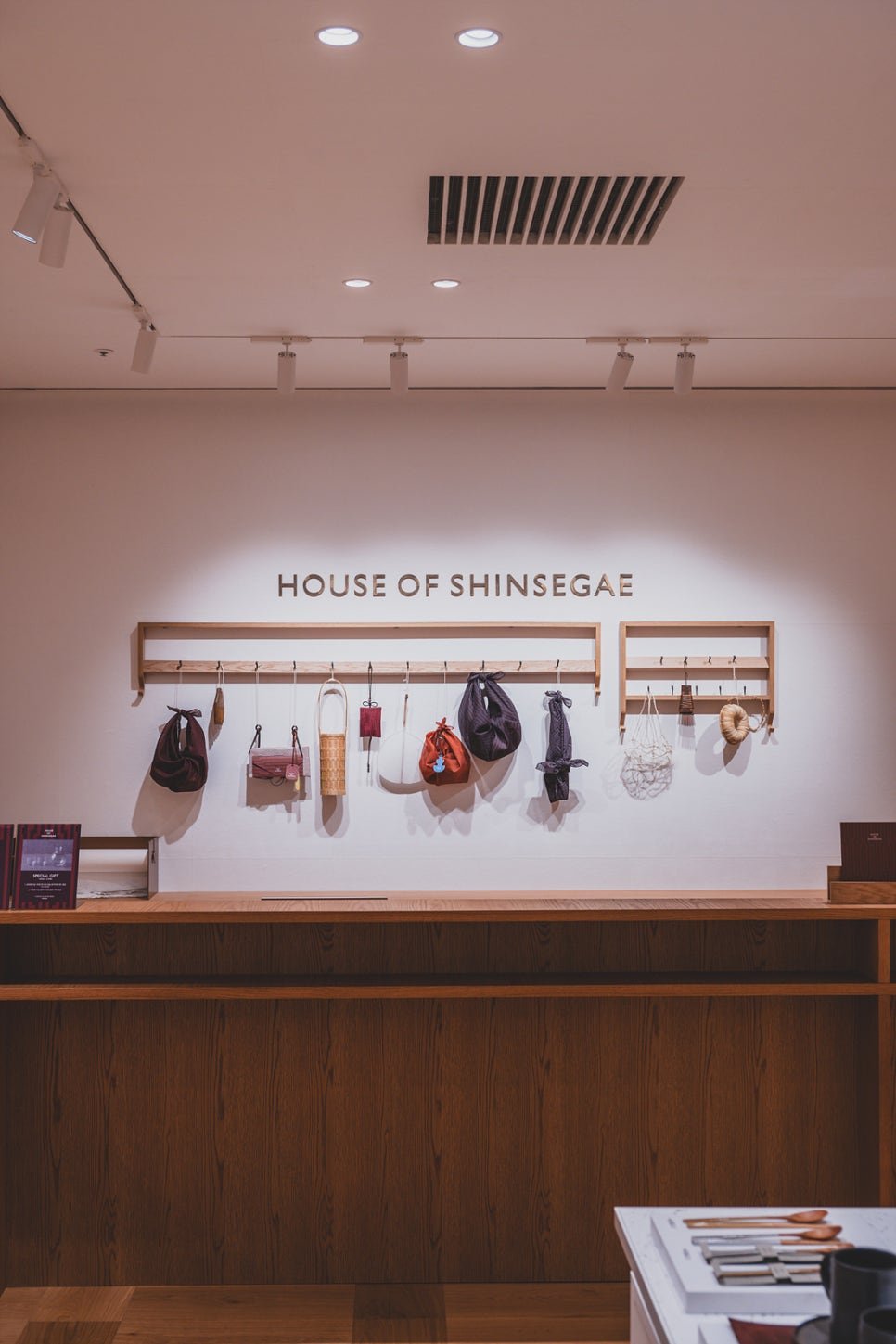
House of Shinsegae runs on the opposite logic. Instead of an occasion tag, every piece here comes with the maker’s name, the material, and the technique — who made it, what it’s made of, how it was made, spelled out on a caption next to the price.
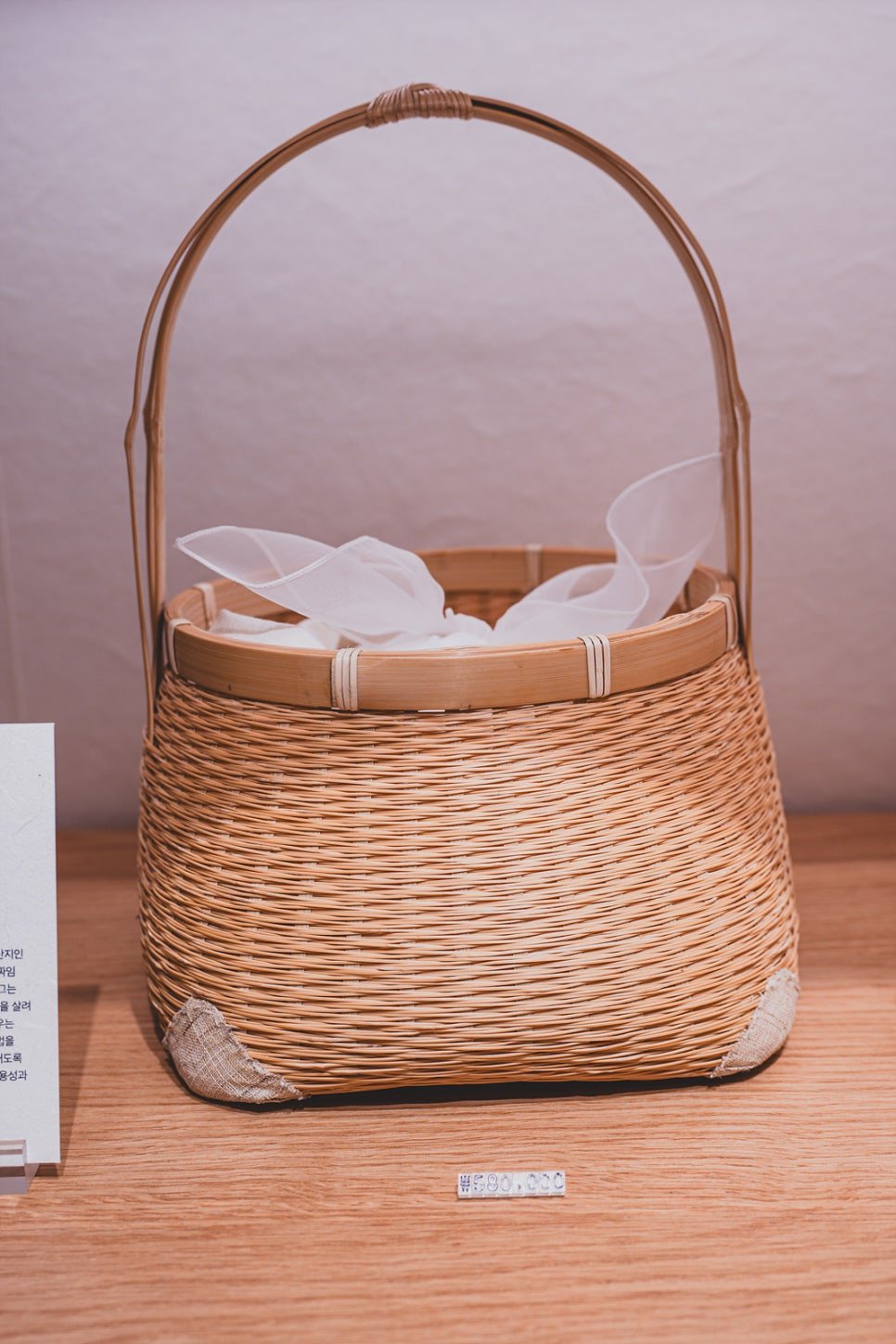
A woven bamboo basket by a Korean craft artist stopped me for a while — priced at ₩580,000 (~$425). My first reaction was that it felt expensive for a basket. Then I read the caption explaining it was made using a traditional bamboo weaving technique, and the price started making a lot more sense. That’s the whole pitch of this store: the caption is doing the convincing, not the price tag alone.
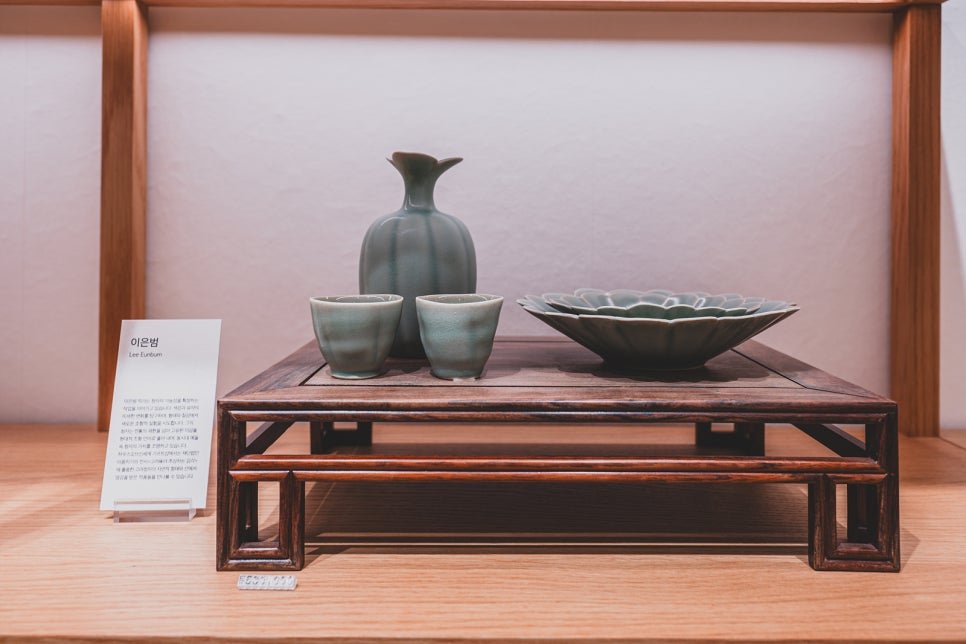
A celadon tea set by ceramicist Lee Eunbum, using the same jade-green glaze technique Korea’s Goryeo dynasty potters were known for centuries ago, was one of the pieces I kept circling back to — a teapot, two cups, and a lotus-shaped dish, all with that same slightly translucent green.
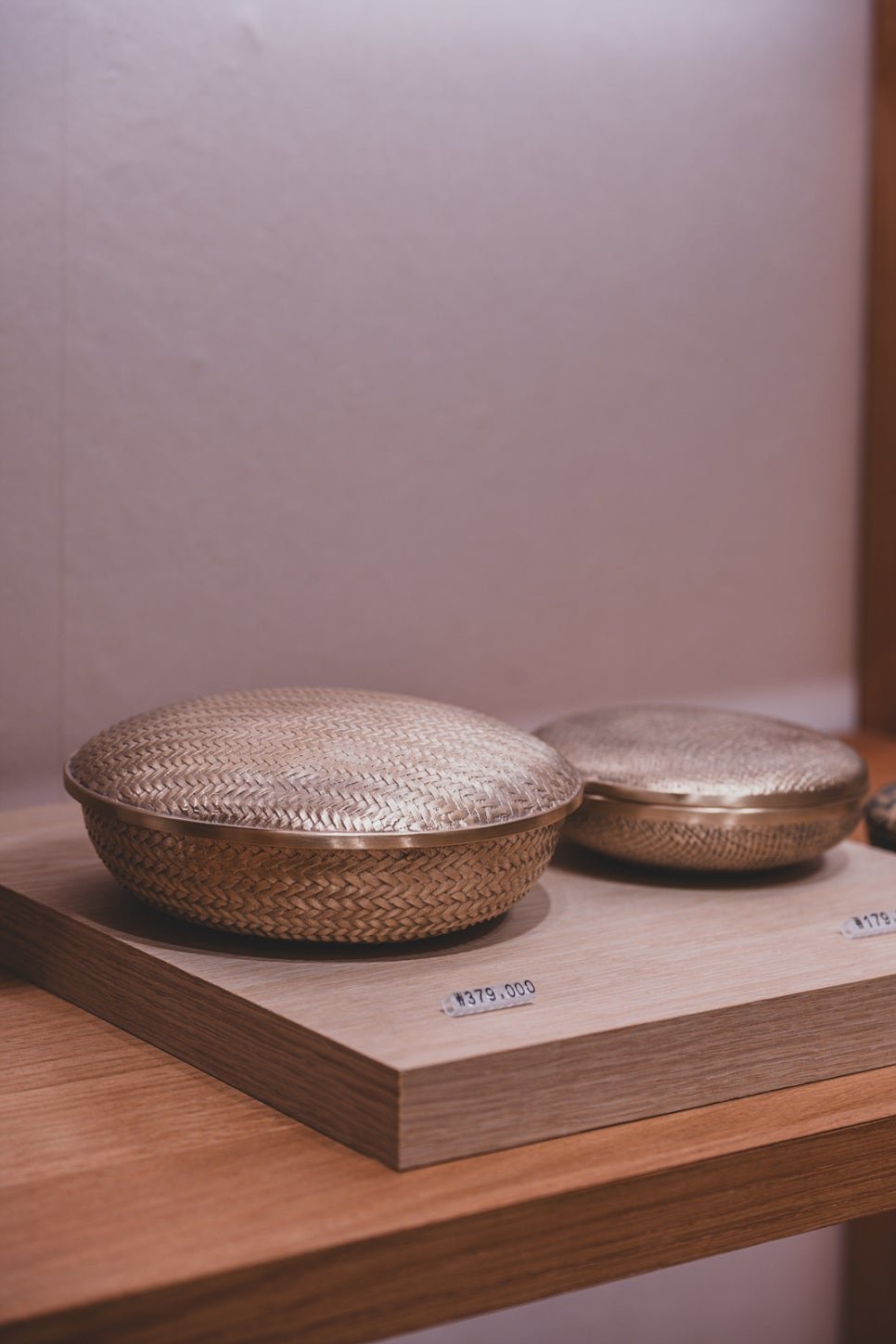
There’s a set of bronze lidded boxes from Geochang, a region with a 100-year yugi (traditional Korean bronzeware) tradition — the metal is refined through a 1,500°C furnace and a 1,200°C crucible before a craftsman shapes the final piece. If you’re the kind of gift-giver who likes being able to tell the recipient a real story behind what they’re holding, this is built for exactly that moment.
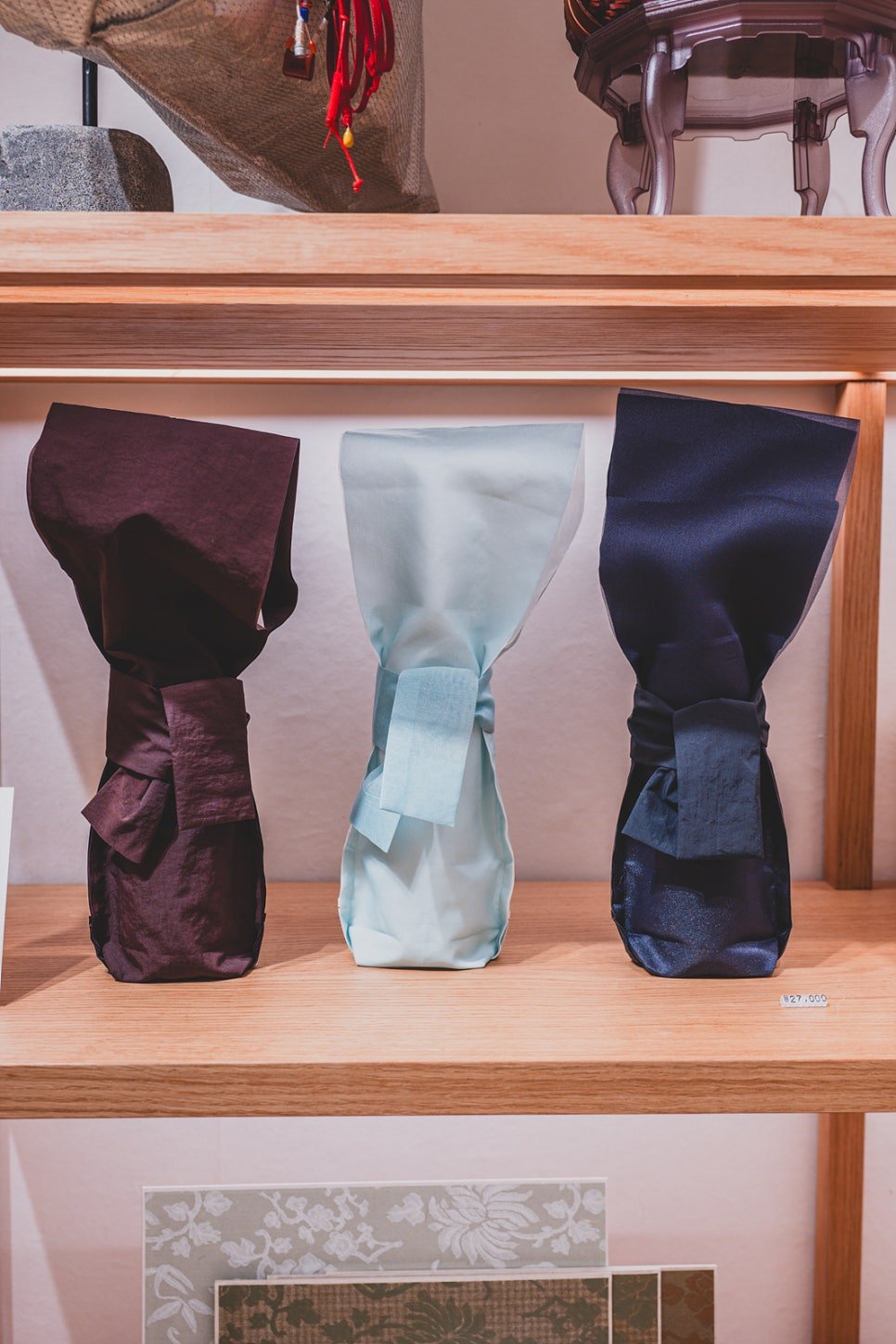
Even a bottle of wine gets the same treatment — fabric wine sleeves in three colorways, ₩27,000 each, meant to replace the generic gift bag you’d otherwise grab on the way to someone’s house.
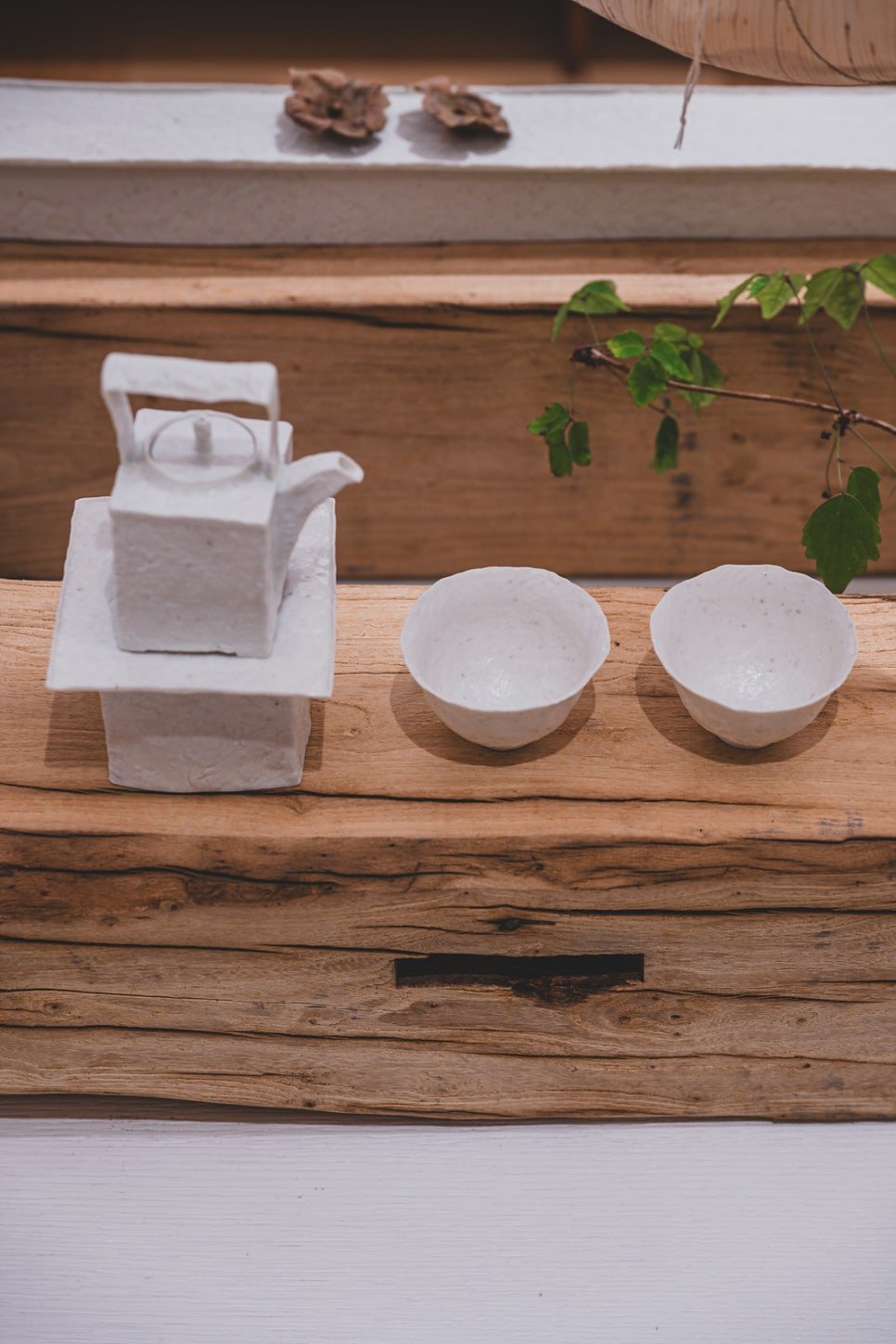
On the ceramics side, a teapot-and-cup set by artist Park Seong-geuk stood out for how thin the rims were — thin enough that you can tell just from a photo how much concentration it took to throw them that way, which is part of why pieces like this hold their value as a gift long after the wrapping paper is gone.
The store also has its own in-house line, including a hand-blown glass cup series called Yunseul (meaning something close to “glimmer on water”) — you can see tiny air bubbles trapped in the glass from the blowing process, which is the whole point: it’s not machine-stamped, so no two cups look quite the same.

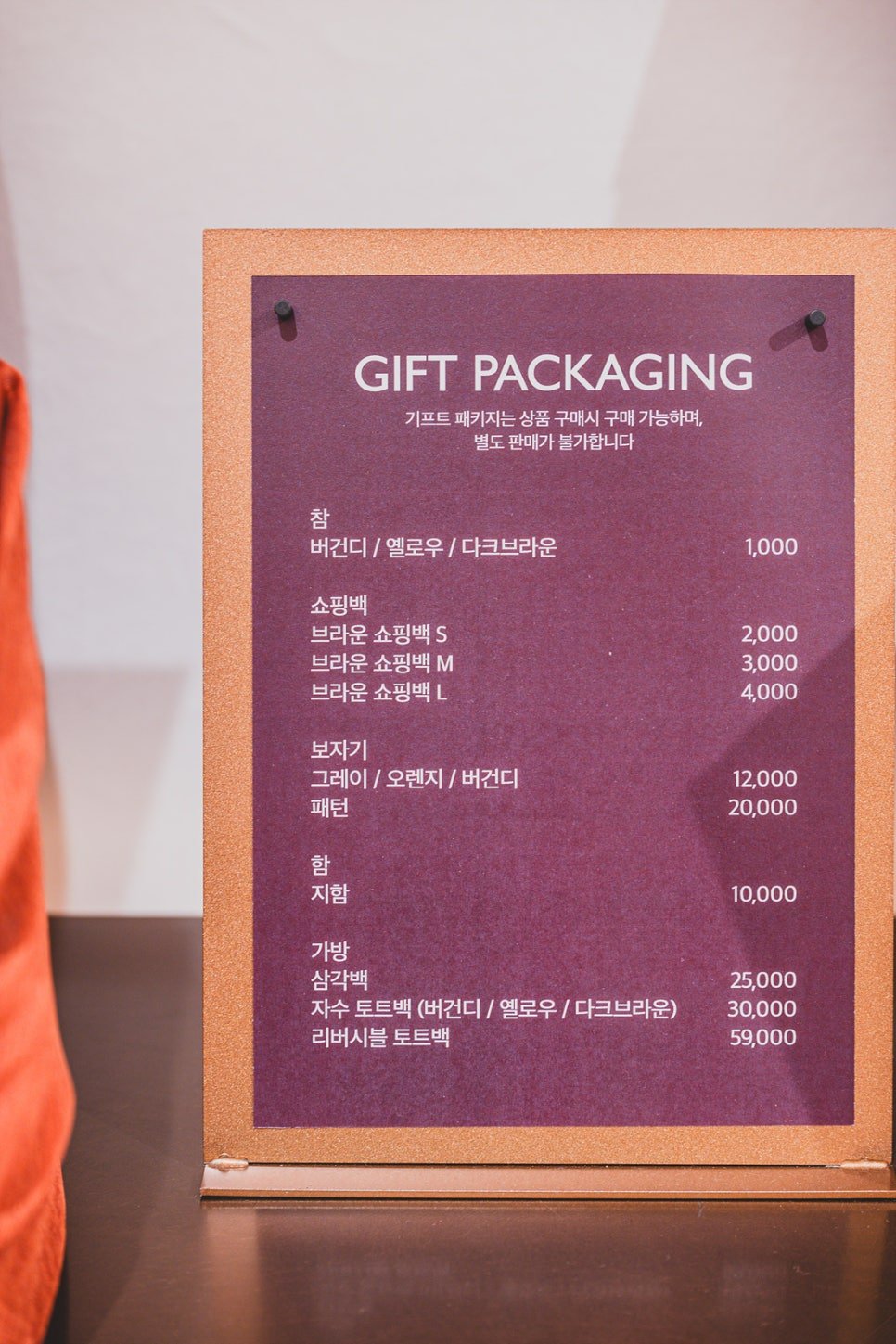
Packaging is priced separately and clearly posted — a basic ribbon runs ₩1,000, a patterned bojagi (traditional wrapping cloth) is ₩20,000, and a hand-embroidered tote bag tops out at ₩59,000. It’s worth budgeting for on top of the item itself if presentation matters to you.
One honest caveat: the space is large, and it’s built for reading captions, not browsing quickly. I didn’t get through the whole store on my visit — budget more time than you’d think, and if you can, go on a weekday morning when it’s quieter and you can actually read the captions instead of dodging other shoppers.
Bottom Line: Which One Should You Visit?
If you’re shopping alone without a specific item in mind and just want to browse by occasion — housewarming, a promotion, a new baby — The Hyundai Gift is the easier stop. You don’t need to recognize a single brand name; the tags do the work.
If you’re buying for someone who deserves a gift with a story attached, or you just want to browse genuine Korean craft — ceramics, bronzeware, hand-blown glass — House of Shinsegae is the better use of your time. Budget more than you planned to spend; reading the captions makes it hard to put things back.
Neither is a quick five-minute stop. Both are worth building into a Gangnam or Myeongdong afternoon rather than a rushed add-on.
FAQ
Q: Do these gift shops offer tax refund (tax-free) shopping for tourists?
A: Both are inside major Korean department stores, which generally operate tax refund desks for eligible purchases by international visitors — bring your passport when you shop and ask staff at the counter to confirm the current minimum purchase amount, since thresholds can change.
Q: Can I ship a gift internationally from either store?
A: Department stores in Seoul often offer in-store shipping or packaging services for larger or fragile purchases (like crystal or ceramics) — ask at the specific counter, since this can vary item by item.
Q: Do I need to speak Korean to shop here?
A: No — both stores are inside major department stores with English-speaking staff generally available, and the caption/tag system at both stores is largely self-explanatory even without much Korean.
Q: Are these good for a quick souvenir, or more of a special-occasion purchase?
A: More special-occasion. Both stores lean toward gifts starting around ₩30,000–50,000 rather than cheap souvenirs — if you want something small and inexpensive, a convenience store or Myeongdong street stall will be faster and cheaper.
Q: Is one of these stores objectively “better” than the other?
A: Not really — they’re solving different problems. The Hyundai Gift is faster and easier if you don’t know what you’re looking for. House of Shinsegae rewards spending more time and gives you a better story to tell the person you’re gifting to.
This post may contain affiliate links. If you book through them, we may earn a small commission at no extra cost to you.