TL;DR: Cafe Onion — the Seoul bakery chain known for turning a 1970s factory (Seongsu) and a traditional hanok (Anguk) into two of the city’s most photographed cafes — opened a new location in Myeongdong in October 2026. The building is split into a 1st-floor bakery, 2nd-floor coffee bar, and a 3rd-floor “traditional tea house” built around a 1970s-80s dabang theme, with floors 4 through 7 still marked “Coming Soon.” Address, prices, and what’s actually worth ordering are below.
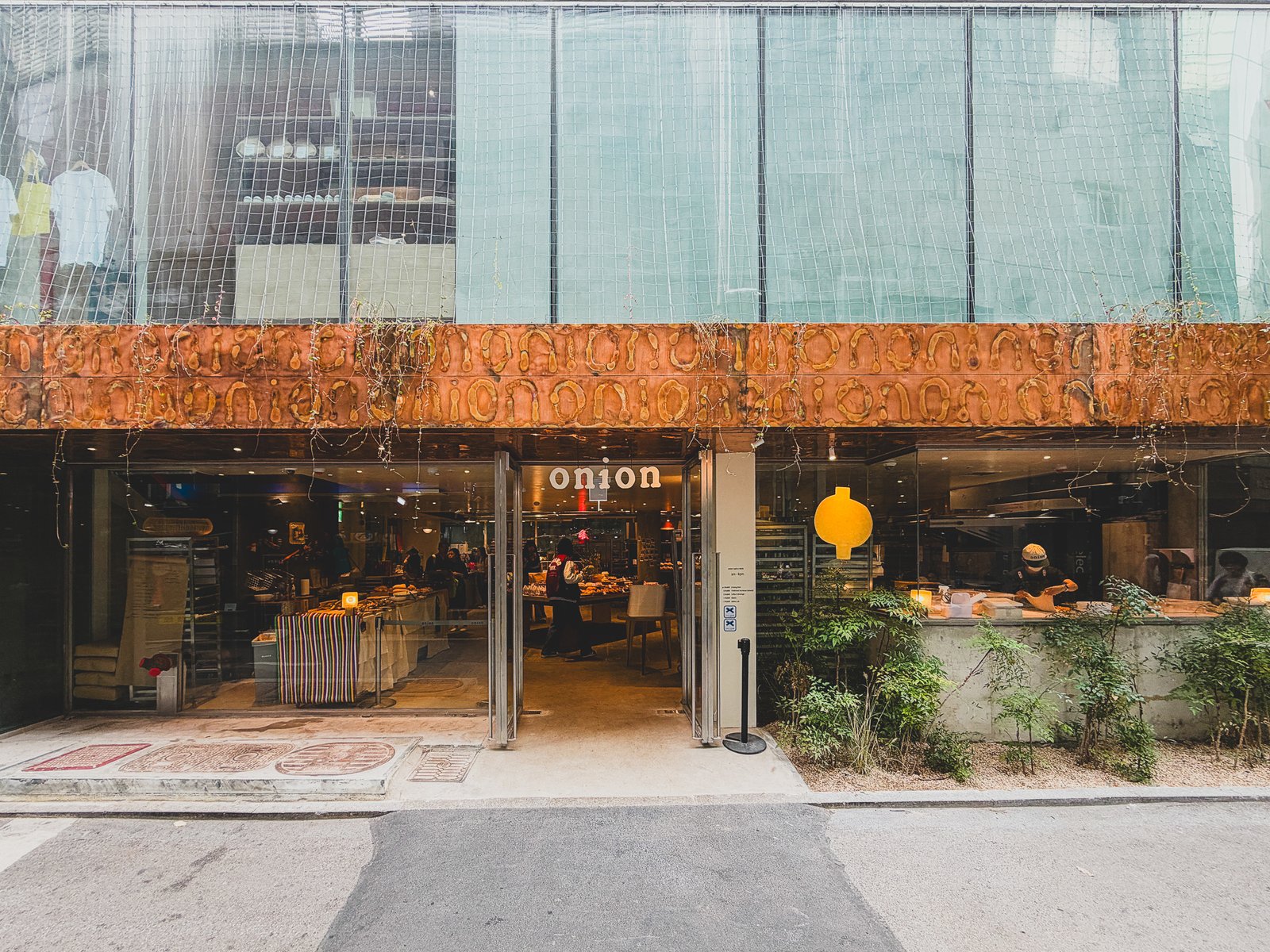
I’d been to Onion’s other two locations before — the converted factory in Seongsu and the hanok in Anguk — so when I heard the brand was opening in Myeongdong, I was curious in a specific way. Myeongdong is overwhelmingly a foreign-tourist district; most of the shops that survive there are duty-free cosmetics counters and street food stalls built for people who are in the neighborhood for a few hours, not locals doing a cafe crawl. It’s not an obvious place for a Seoul-local brand like Onion to plant a flagship. I went on opening week to see what they decided to do with it.
Three Floors (and Four More “Coming Soon”)
Onion Myeongdong is at 35-18 Myeongdong 10-gil, Jung-gu, open daily 08:00–20:00. There’s no parking, so plan on walking or taking the subway in — Myeongdong Station is a short walk away.
The building itself is bigger than either of the other two Onion locations I’d seen. The 1st floor is the bakery, the 2nd is the coffee and beverage bar, and the 3rd is a concept floor styled as a “Traditional Tea House” (Dabang in Korean — more on that below). Floors 4 through 7 were still sitting empty with “Coming Soon” signage when I visited, which tells you Onion is treating this address as a long-term project, not a pop-up.
The Open Kitchen That Sells Itself
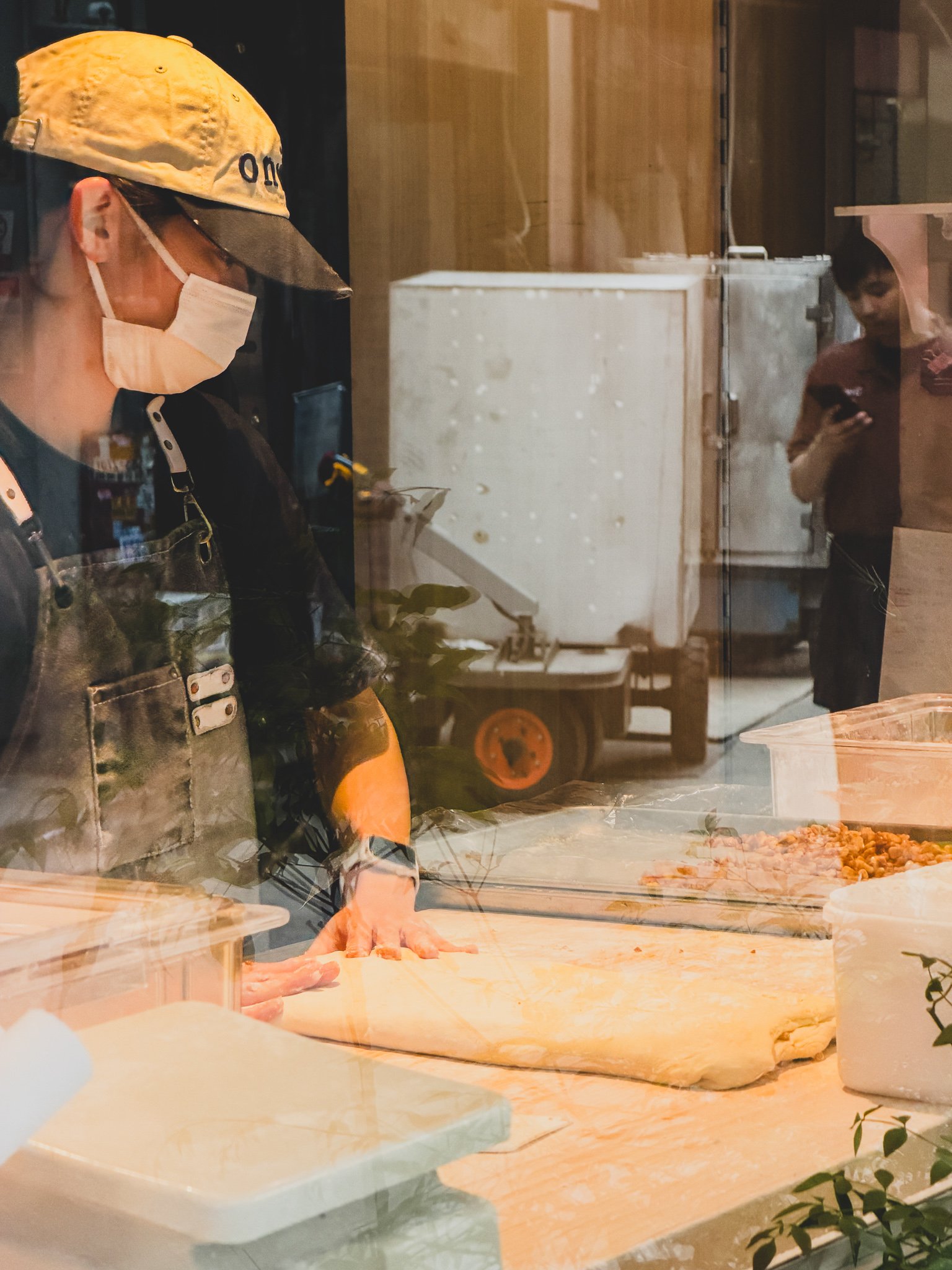
The exterior mixes rough-textured terracotta panels with a translucent glass facade — Onion’s usual material language, just scaled up for a street as visually loud as Myeongdong’s. What stood out more than the facade, though, was the ground-floor window: the kitchen is placed right against the street, so anyone walking by can watch staff kneading dough in real time. No sign, no explanation needed — you can just see that the bread is actually made on site. For a street full of tourists who don’t read Korean, that’s a more effective pitch than any amount of signage would be.
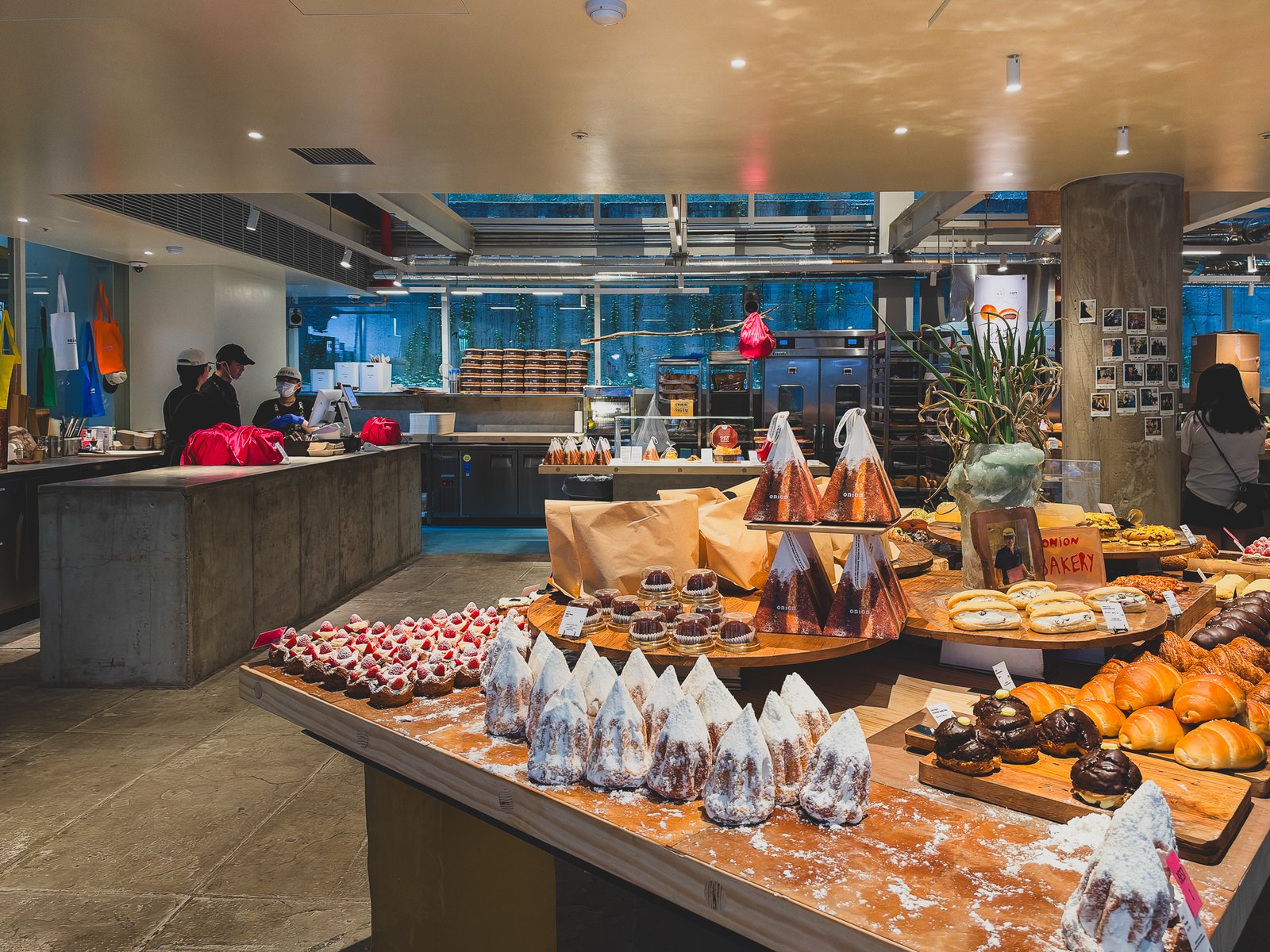
Inside, the entire first floor is bakery display — wooden cutting boards piled with bread by type, with a wall sign spelling out the floor plan: “1 FLOOR Bakery, 2 FLOOR Coffee & Beverage, 3 FLOOR Traditional Tea House (Dabang).” The route through the building is basically designed as a sequence — bakery, then coffee, then tea house — rather than three unrelated floors stacked on top of each other.
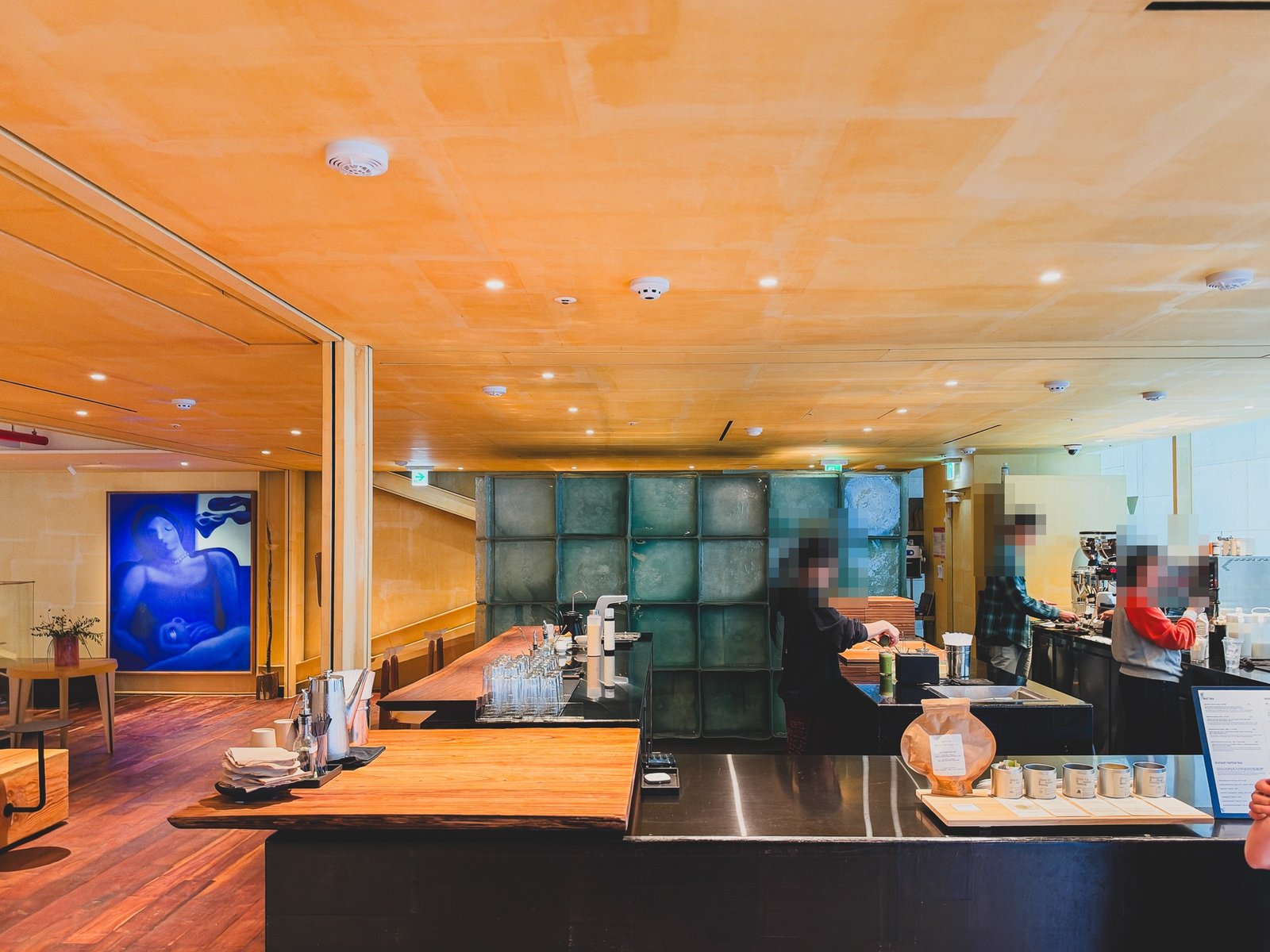
The Coffee Bar Behind Teal Glass Tile
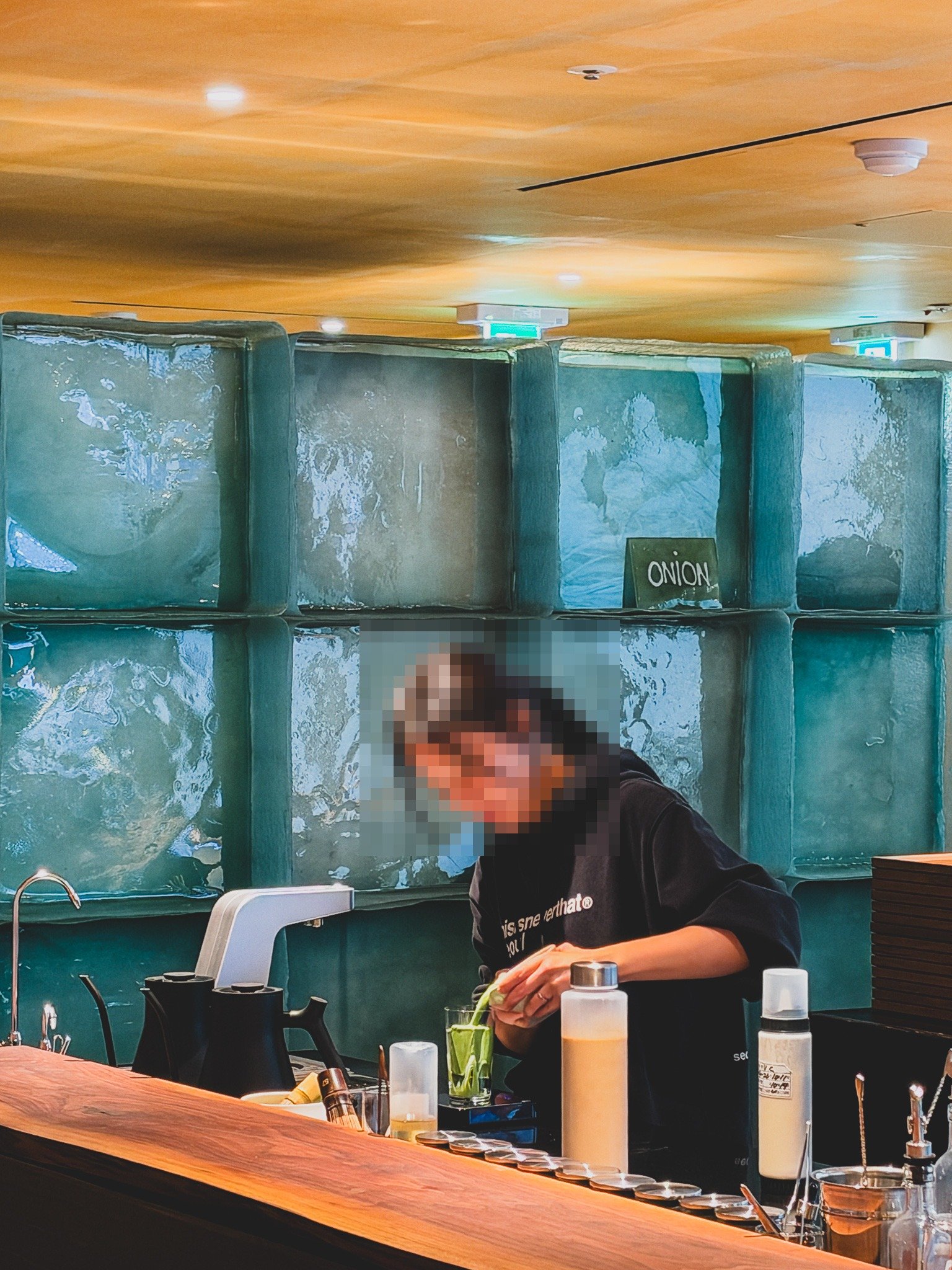
The 2nd floor centers on a drink bar finished in teal glass tile — a color shift from the concrete-and-wood palette Onion usually runs, used here to mark this floor as its own zone. I watched a barista pour a green liquid into a glass, which turned out to be the matcha that gets layered on top of their sujeonggwa (more on that drink below). It’s an open bar, so you can watch drinks get made the same way you can watch bread get made downstairs.
Seoul’s Newest Old-Fashioned Tea House
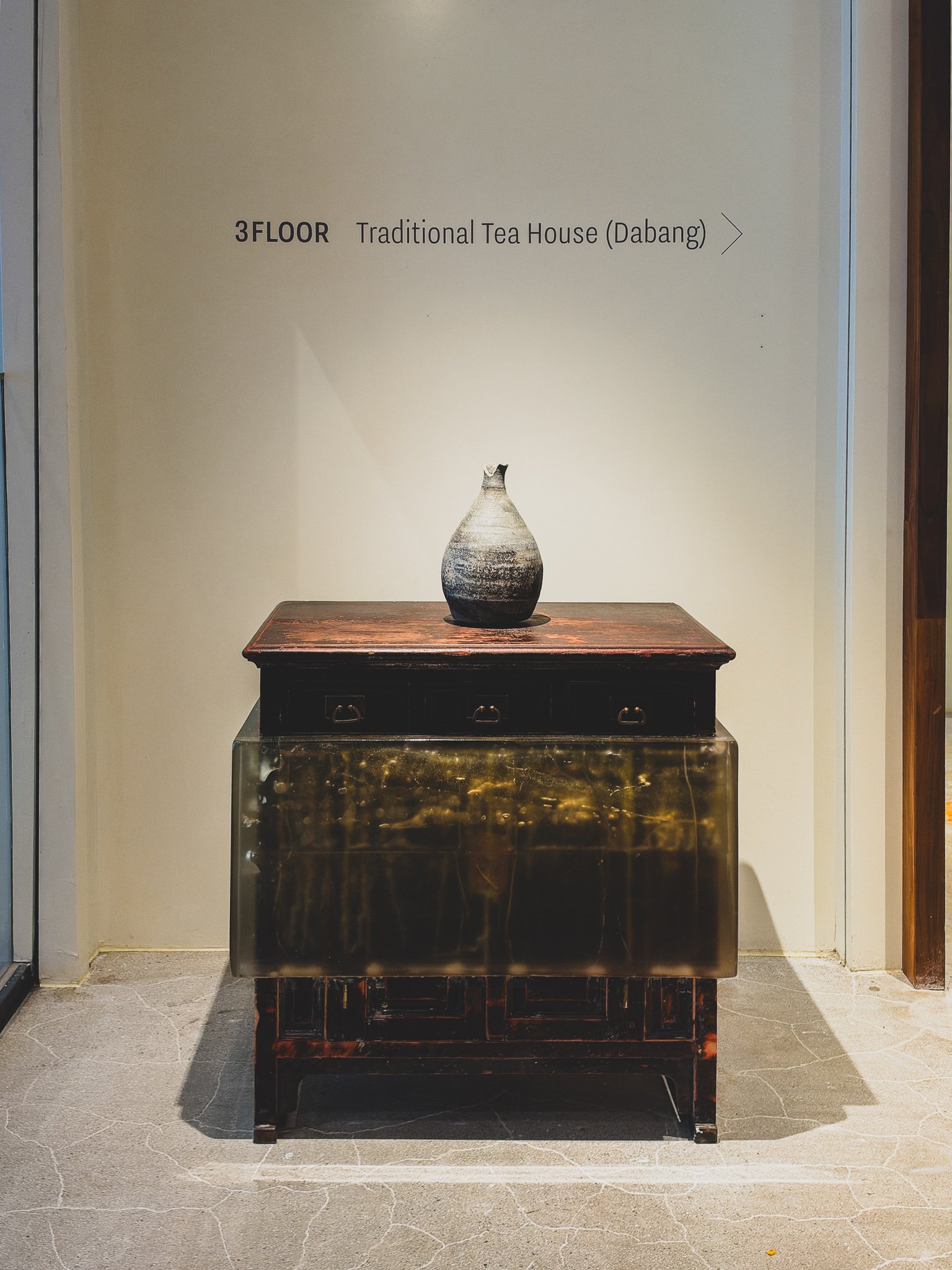
The stairwell up to the 3rd floor has a hand-painted sign that reads “Seoul’s Youngest Traditional Tea House — Onion,” next to an antique cabinet with a ceramic vase on top. A dabang (다방) is the old Korean word for a tea house — the kind of spot that was everywhere in Korean cities in the 1970s and 80s, usually dim, usually playing a radio or a record, usually where older men met for coffee before “cafe” culture existed. Onion isn’t pretending this is an actual decades-old dabang — the sign is explicit that it’s “the youngest” one — it’s using the aesthetic of that era as source material for a new space.
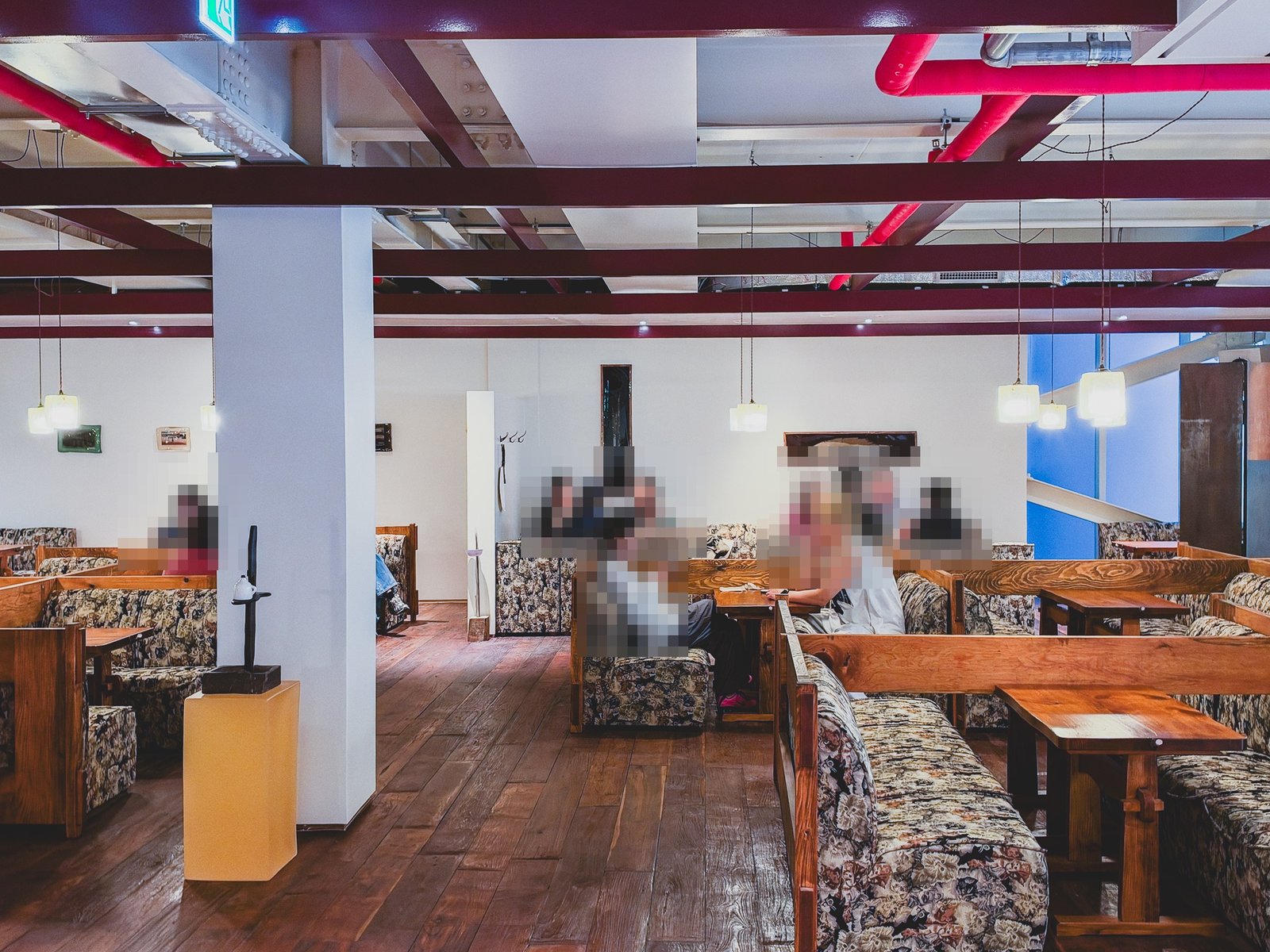
And the floor delivers on that premise. Red steel beams and neon-pink pipework run exposed across the ceiling, and the seating is a grid of booths upholstered in floral fabric. It’s not a literal recreation of a 1980s dabang — it’s that era’s materials and patterns, re-assembled for 2026.
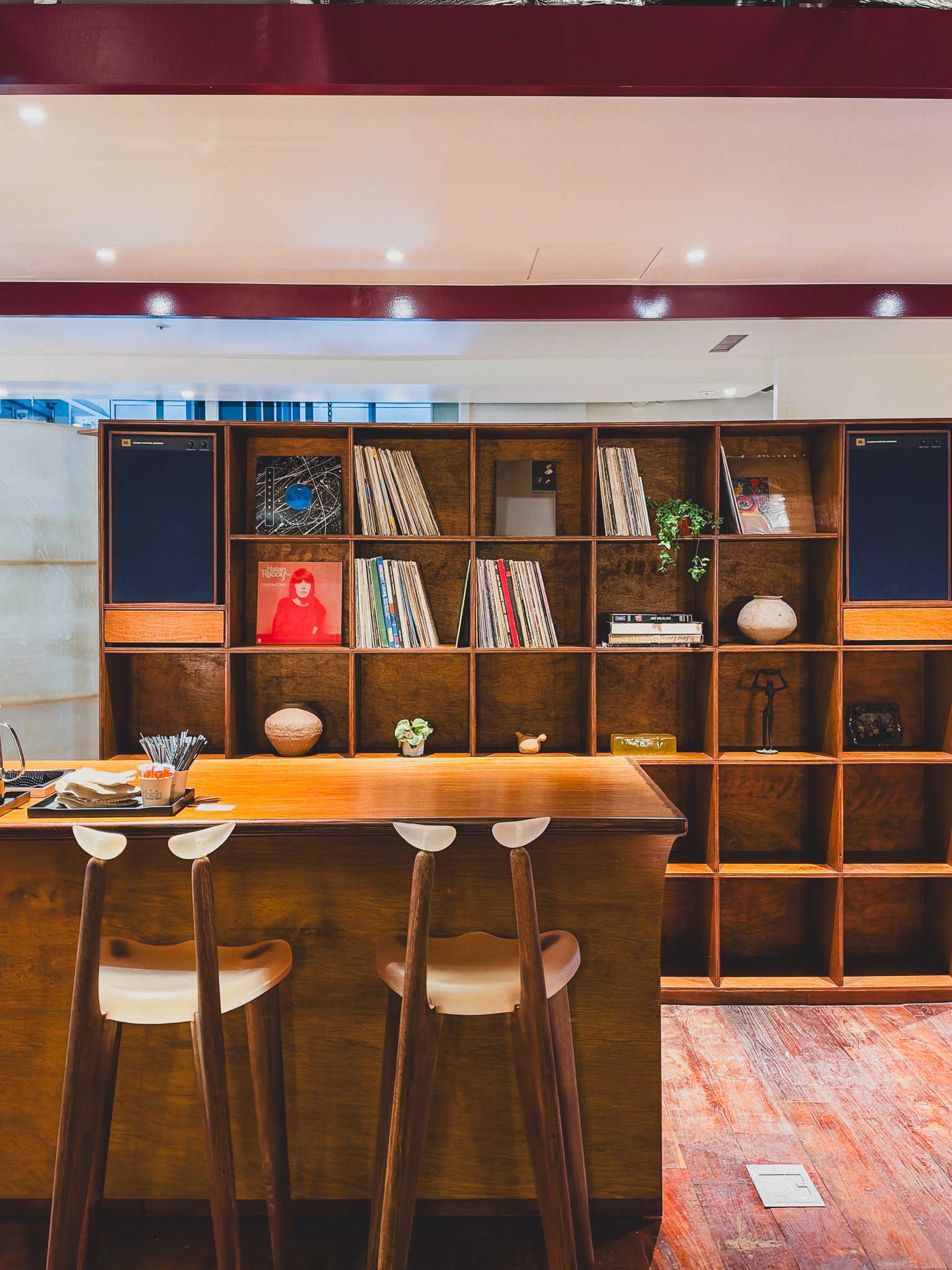
Behind the bar counter on this floor is a wooden shelf packed with actual vinyl — I spotted records by Helen Reddy and a Schubert lieder collection mixed in. It wasn’t just decoration; that’s what was playing while I sat there, and the soundtrack matched the room closely enough that the whole floor felt considered rather than thrown together.
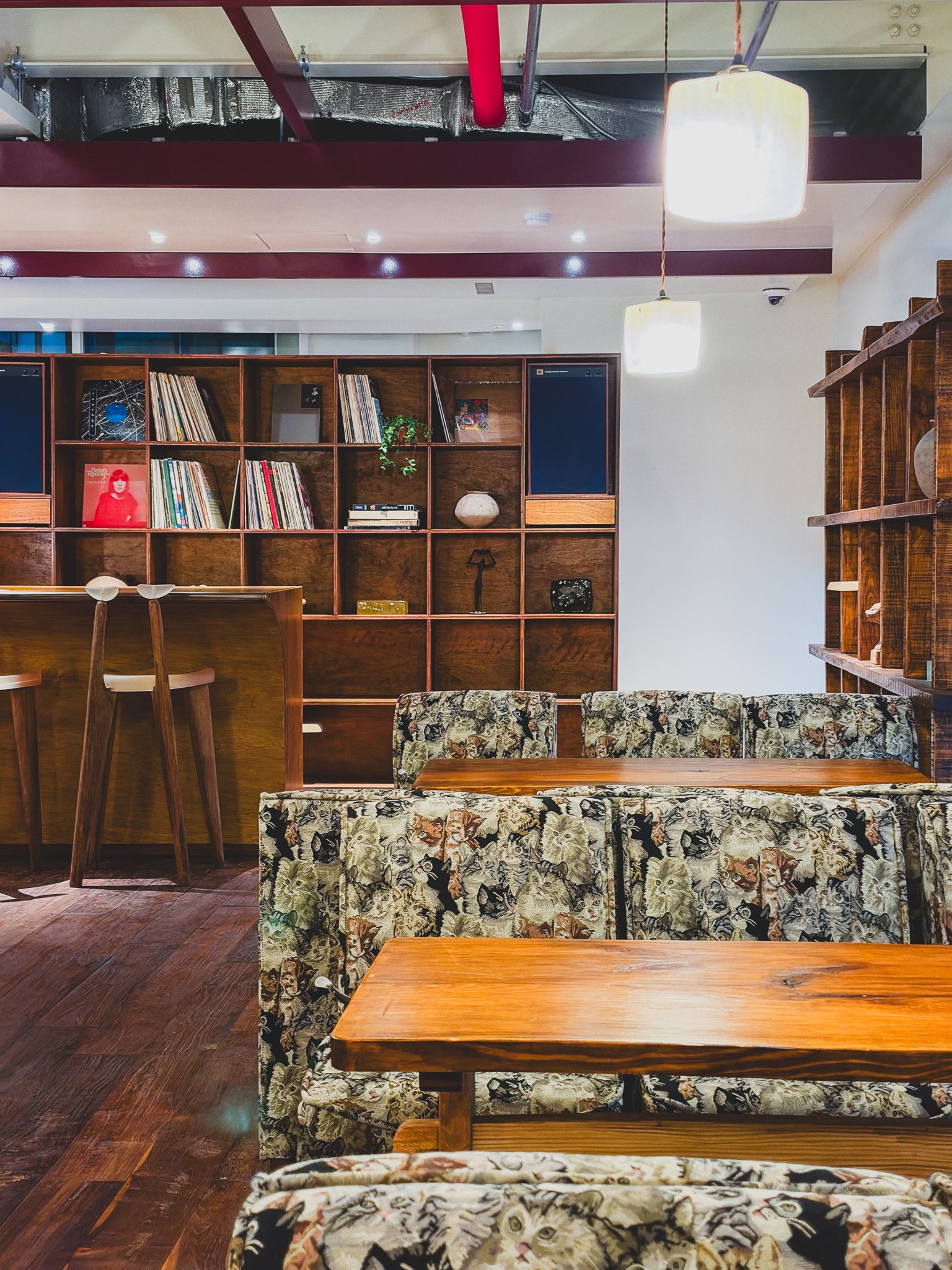
A cat-print velvet sofa, the record wall, and a yellow pendant light — none of these pieces individually reads as “tasteful,” but together they land closer to newtro (a Korean term for retro styling reinterpreted for a modern audience) than kitsch.
What’s Actually Worth Ordering
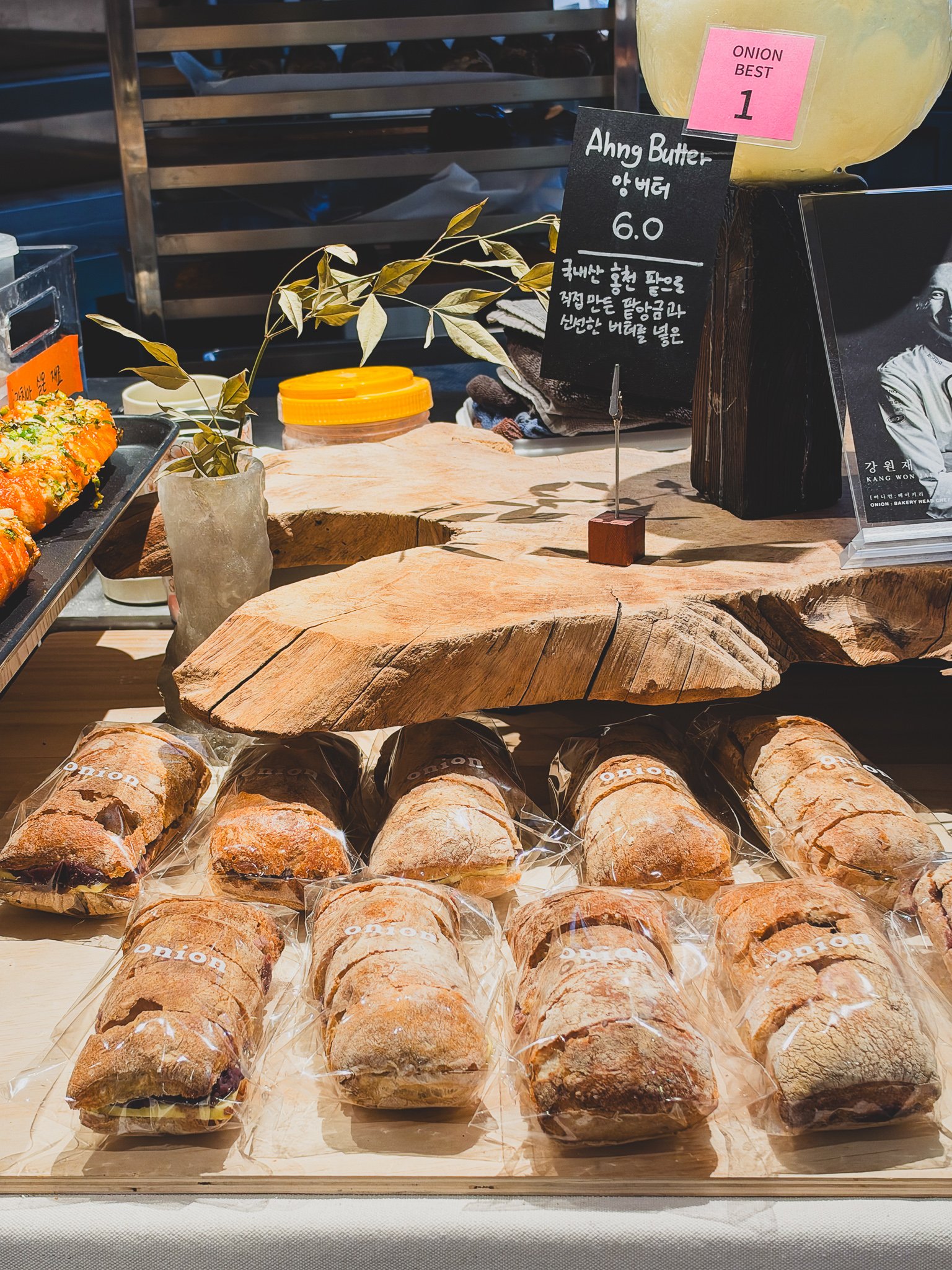
Onion puts its head baker’s name and photo right on the bakery floor — a sign for “Angbutter” credits head baker Kang Won-jae, and the pastry itself (₩6,000 / about $4.40) is made with red bean paste sourced from Hongcheon and fresh butter, tagged as “Onion Best 1.” Angbutter — a soft bun split and packed with sweetened red bean paste and a thick slab of butter — is one of the signature items across all of Onion’s locations, and naming the baker on the sign is a small but deliberate way of saying this is a bakery first, not just a photogenic space.
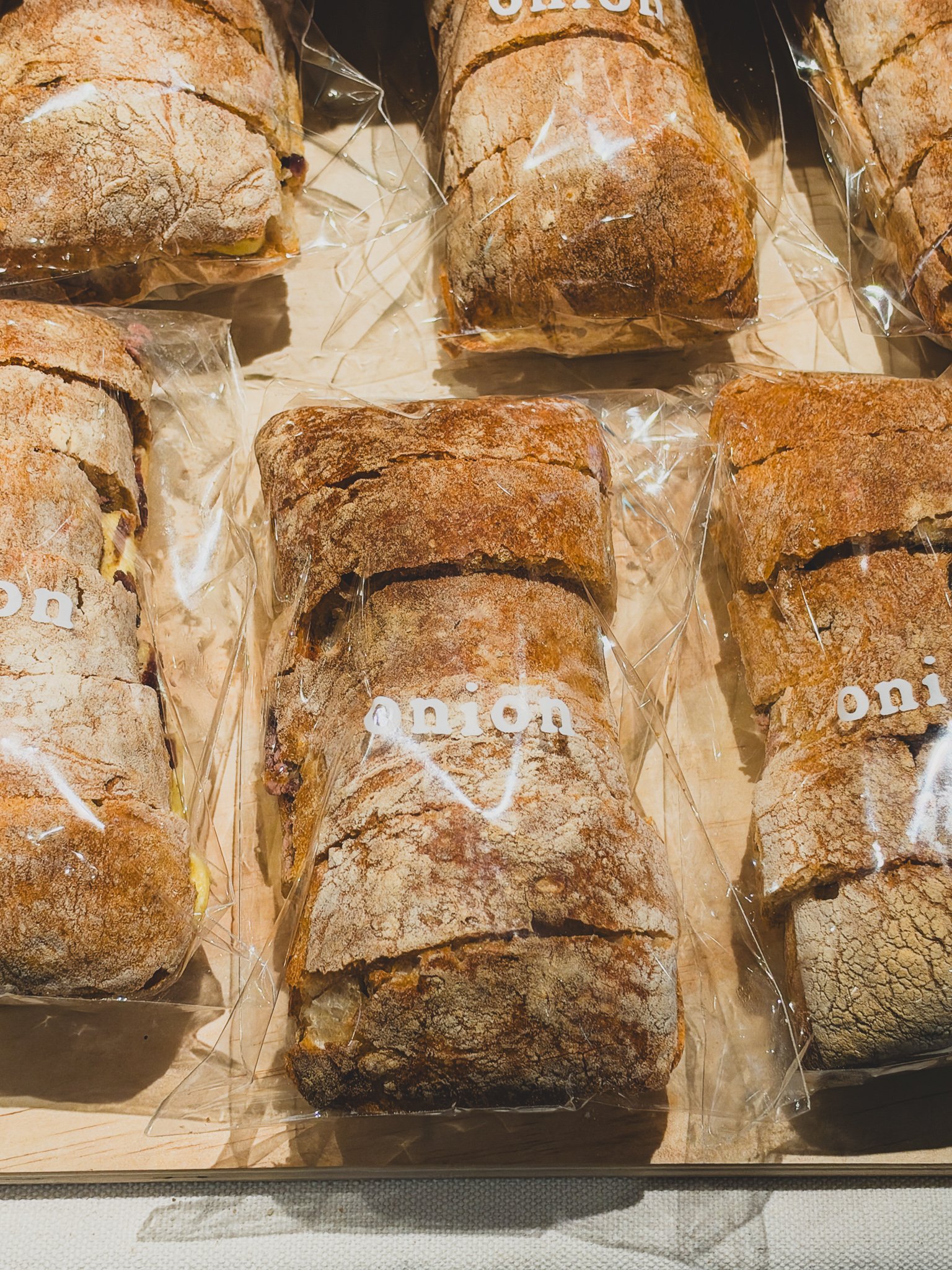
Every packaged item has the “onion” logo printed right on the wrapping — small detail, but it means the brand is visible the moment someone walks out the door with a bag, which in a district this tourist-heavy turns into free advertising almost immediately.
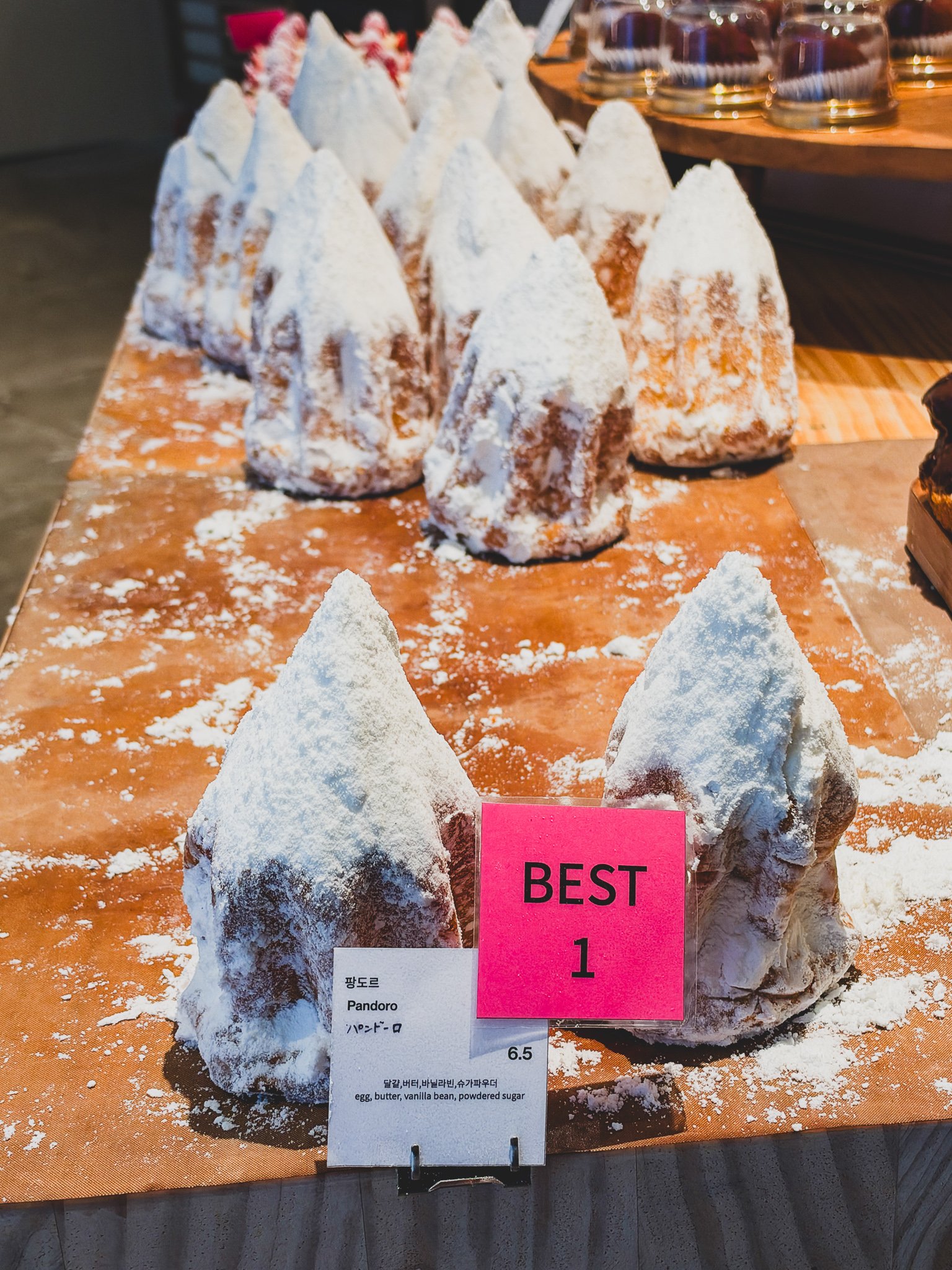
With a bakery case this large, picking where to start could easily turn into decision paralysis, so Onion ranks its own menu — pink “BEST” number tags are stuck directly into the display, from Pandoro at #1 (₩6,500 / ~$4.75) down through a chocolate donut and a strawberry brownie. You don’t need to read Korean to understand a number and a color-coded tag, which in a neighborhood this international is a smart, low-effort fix.
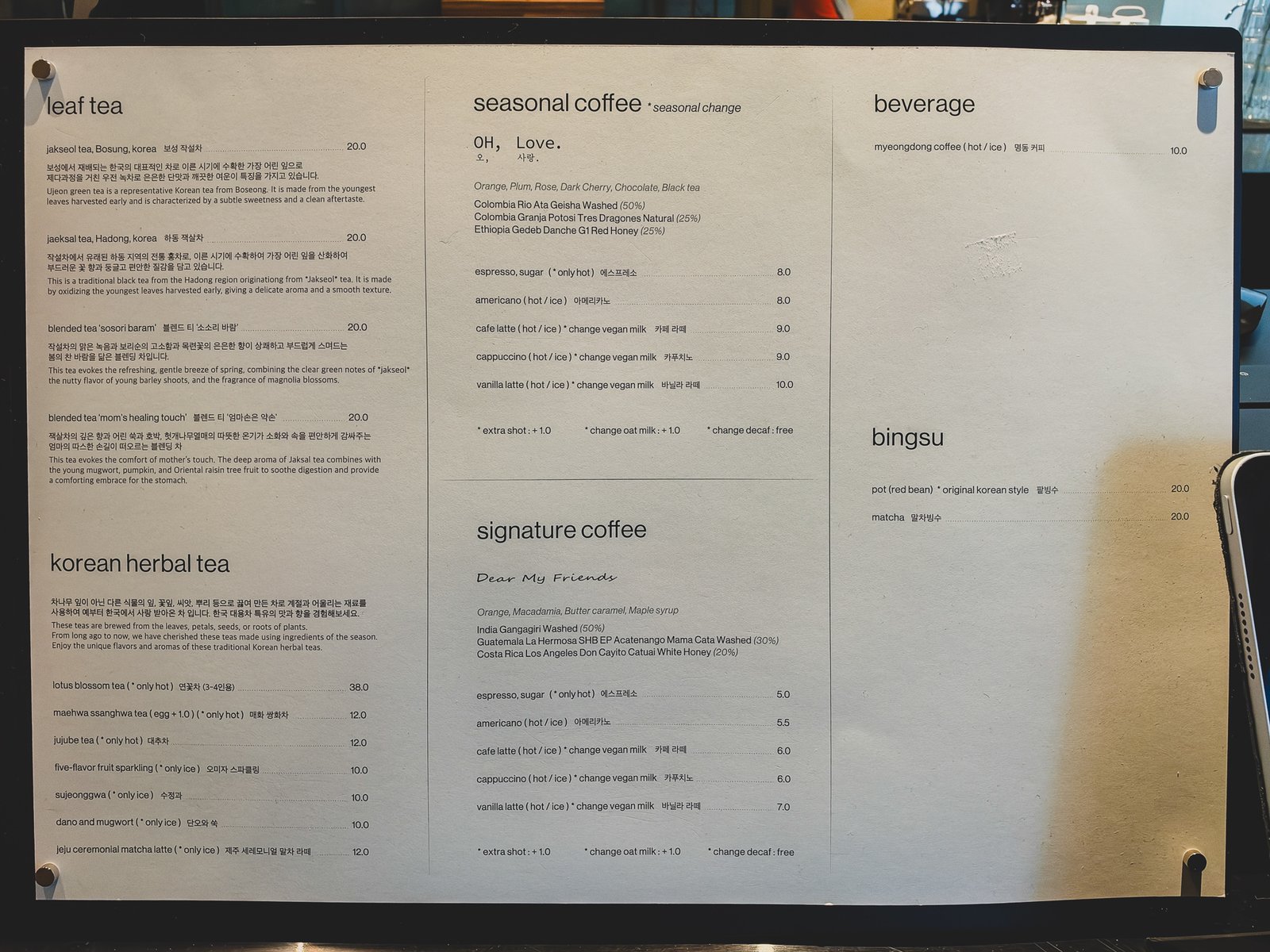
The 2nd floor drink menu was more unusual than I expected — alongside specialty coffee drinks like “Dear My Friends” and a seasonal “OH, Love,” there’s a whole section of Korean traditional teas: jakseolcha, Hadong jakseolcha, and blended teas with names like “Breeze of Sosoli” and “Mom’s Hand Is Medicine.” Sujeonggwa (수정과) — a cold, spiced Korean punch made from dried persimmon, cinnamon, and ginger — was also on the menu for ₩10,000 (~$7.30, ice only), and from the menu description alone I assumed it would be a straightforward, traditional glass of it.
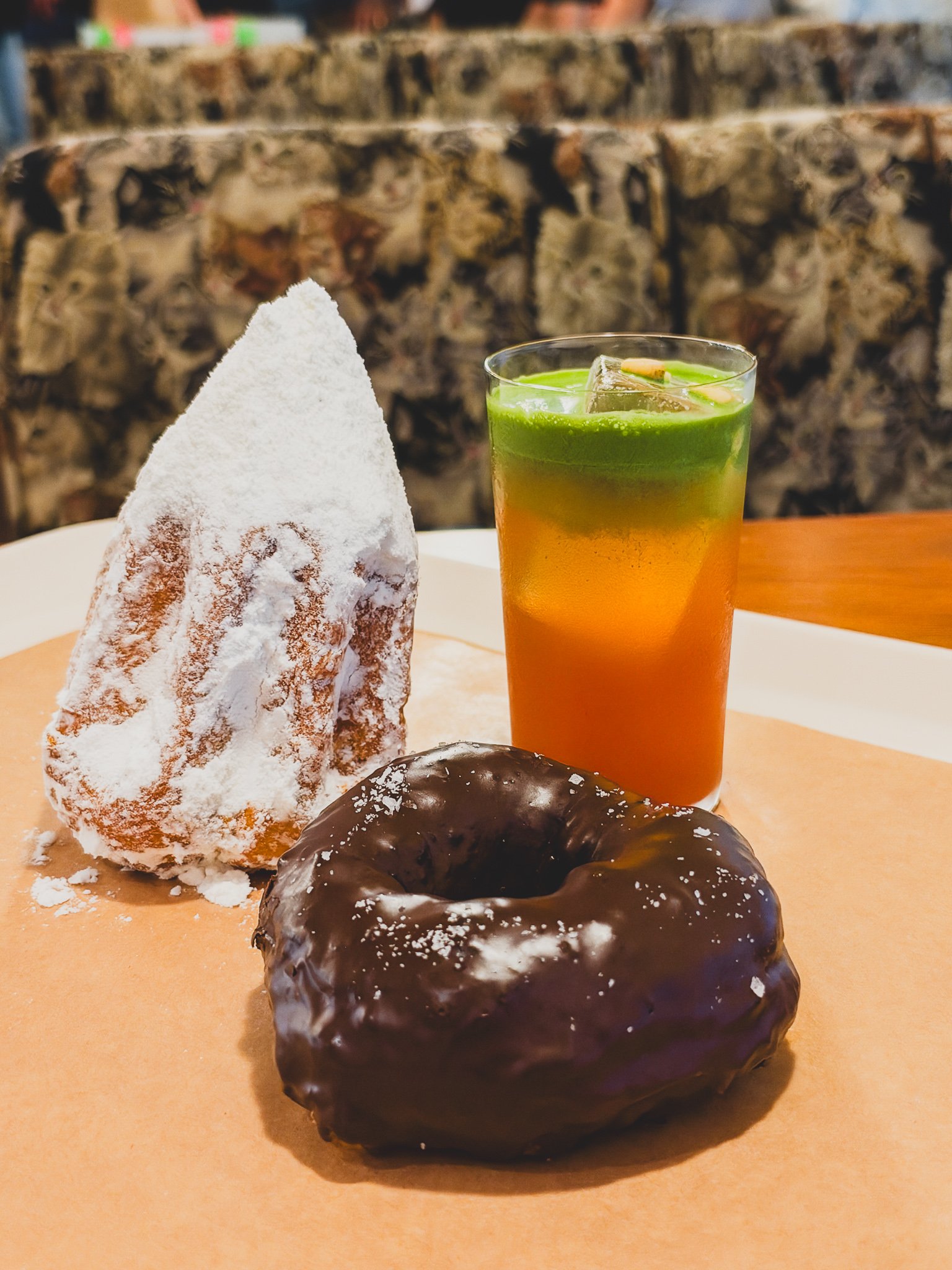
I ordered the chewy chocolate donut (₩3,500 / ~$2.55), the pandoro (₩6,500 / ~$4.75), and that sujeonggwa (₩10,000 / ~$7.30). Once the tray arrived, the drink looked nothing like what I’d pictured.
The Drink That Isn’t What It Looks Like
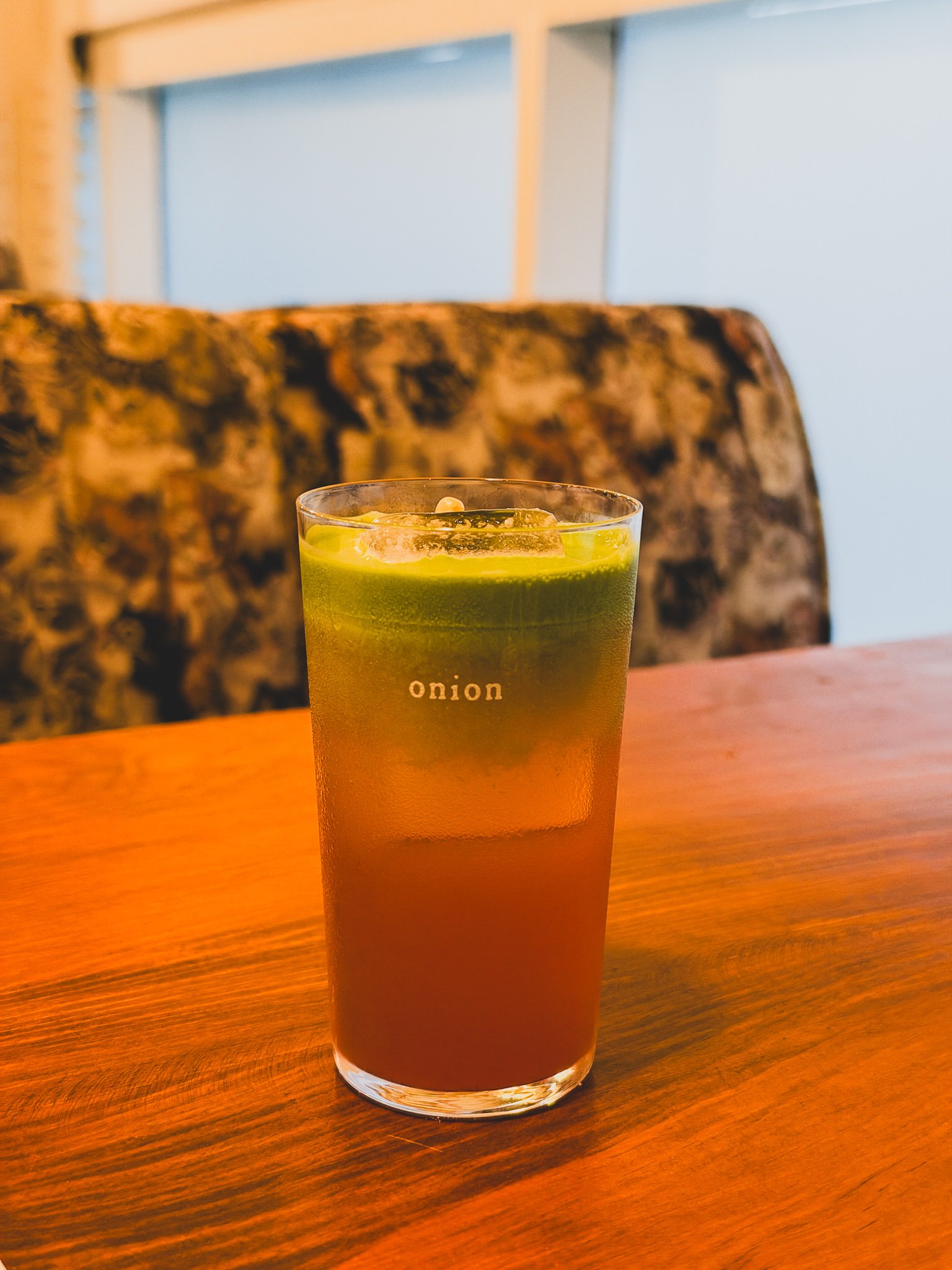
The glass is layered — amber sujeonggwa on the bottom, a green matcha foam on top, with a few pine nuts floating on the surface. The base has the usual cinnamon-and-ginger profile of sujeonggwa, and the matcha adds a bitter edge on top of that. It’s not a traditional drink served straight; it’s been translated once more into the vocabulary of a matcha drink that a younger, more international crowd already knows how to order. For a tourist in Myeongdong who’s never had sujeonggwa, pairing it with something as globally familiar as matcha is a specific, well-thought-out way to make an unfamiliar drink feel approachable without losing what makes it sujeonggwa in the first place.
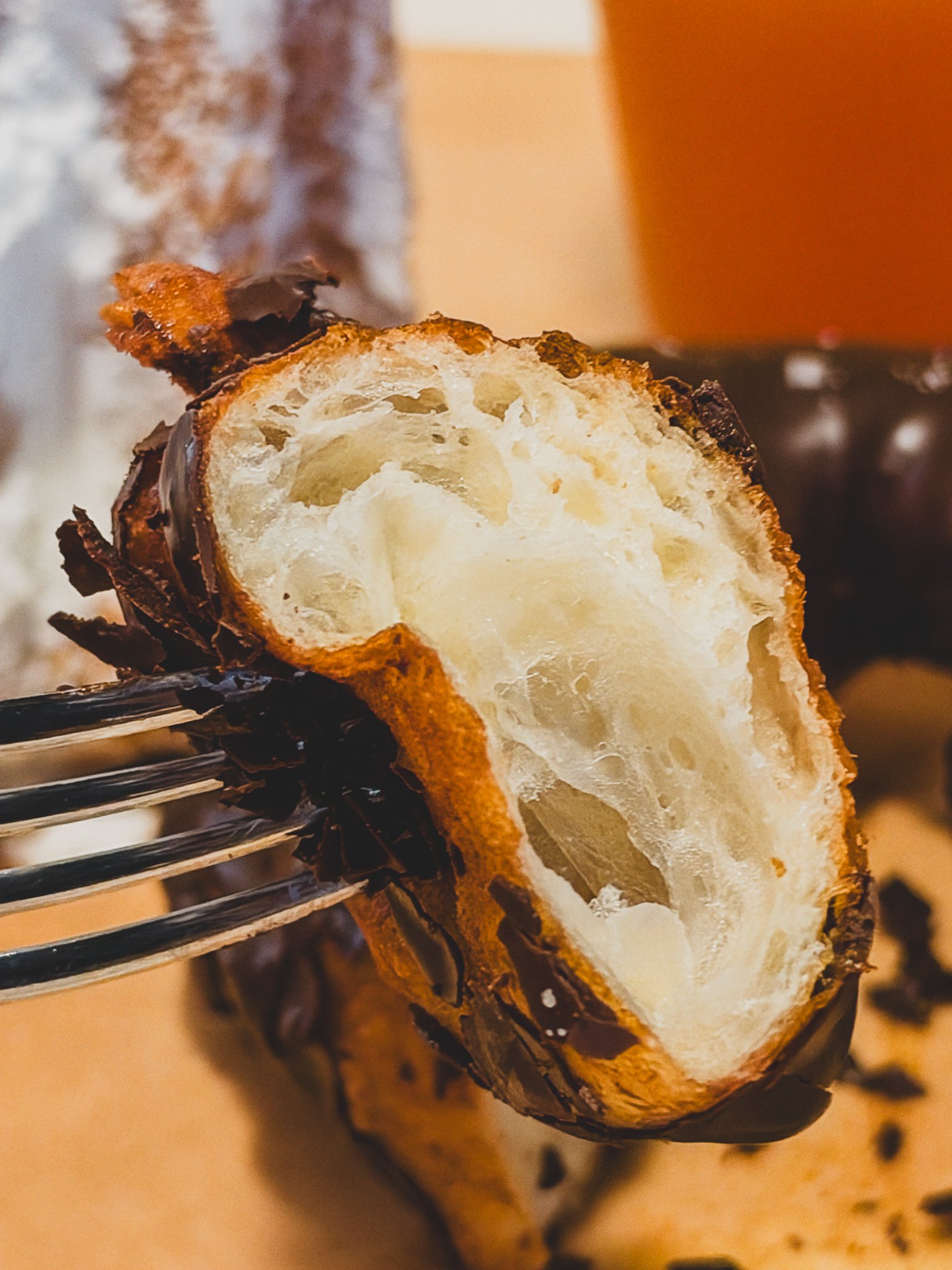
The chocolate donut is coated in a dark chocolate glaze finished with Maldon salt — dense and slightly chewy rather than light and airy, so the sweet-salty hit lands more like a bite of fudge than a typical donut. One was enough to feel full.
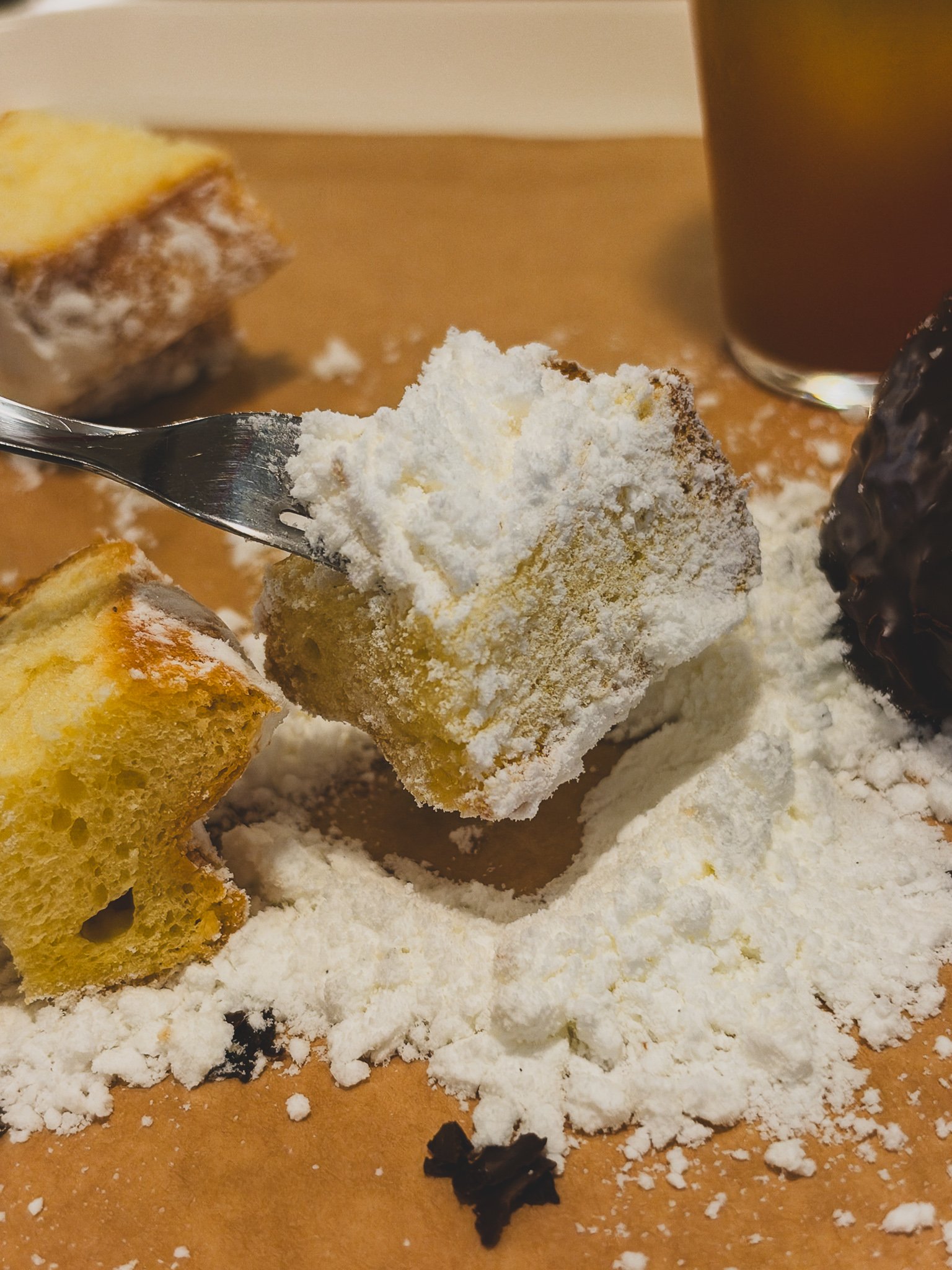
The Pandoro earned its “Best 1” tag — piled high with powdered sugar on the outside, with a soft, buttery interior once you cut into it. There’s a faint vanilla bean note running through it, and it reads as more savory-leaning-rich than sweet.
FAQ
Q: Where exactly is Cafe Onion Myeongdong?
A: 35-18 Myeongdong 10-gil, Jung-gu, Seoul, 1st floor and up. It’s a short walk from Myeongdong Station.
Q: What are the hours, and is there parking?
A: Open daily 08:00–20:00. There’s no parking at the building, so plan to walk, take the subway, or use a taxi.
Q: Is the menu the same as Onion Seongsu or Anguk?
A: The core bakery lineup — Angbutter, Pandoro — felt consistent with what I’ve had at Onion’s other locations. The Myeongdong location’s 2nd-floor drink menu stood out specifically for its traditional Korean tea section and the matcha-sujeonggwa combination, which I didn’t see called out the same way elsewhere.
Q: What should I order first?
A: Start with the Angbutter — it’s tagged “Onion Best 1” for a reason — and if you’re curious about something less typical, the sujeonggwa with matcha foam is worth trying even if you’ve never had sujeonggwa before.
Q: Is it crowded?
A: The 1st floor bakery display is large and dense, and people browsing bread, people trying to pay, and people taking photos all end up moving through the same narrow space — expect it to feel busy on weekends or around lunch. The route up to the 3rd floor also isn’t clearly marked, so keep an eye out for the floor signage on the stairs.
Our Take
Onion Myeongdong keeps the same bakery fundamentals as the brand’s other locations, then adds a layer specifically built for this neighborhood: a ranked “Best” menu that removes the language barrier, a traditional drink reworked into something a tourist audience can approach without hesitation, and a 3rd-floor tea house that’s built as a complete world — furniture, music, and lighting all pointed the same direction — rather than a few retro props scattered around for photos. Taken together, it reads as an answer to a specific question: how does a Seoul-local brand hold onto its identity in a neighborhood built almost entirely around foreign tourists.
If you only have time for bread and coffee, the 1st and 2nd floors cover that on their own. But if you can spare the extra ten minutes, go up to the 3rd floor — a glass of sujeonggwa in that room is a strange, pretty good way to pause in the middle of Myeongdong.