TL;DR: OKIBORU — the tsukemen (dipping ramen) specialist from Manhattan’s Lower East Side that The New York Times named one of its 100 best restaurants in the city in 2025 — opened its first Korean location in March 2026, a five-minute walk from The Hyundai Seoul and IFC Mall in Yeouido. It’s walk-in only, orders go through self-service kiosks, and the signature tsukemen runs about $10 — roughly half of the $19.90 it costs at the original Orchard Street shop. We went for lunch to see whether the Seoul version holds up.
If you’ve eaten ramen anywhere in New York or LA in the last couple of years, there’s a decent chance you’ve heard of OKIBORU before you ever heard of Yeouido. Tsukemen — the style where thick noodles and a separately-served, concentrated dipping broth are kept apart instead of combined in one bowl — had already built a cult following overseas, to the point where some ramen fans abroad rate it above standard ramen. OKIBORU built its name on exactly that dish in Manhattan, got written up by the New York Times’ Pete Wells, and then, this spring, opened its first branch outside the US — not in Tokyo, not in LA, but in Yeouido, Seoul’s finance and broadcasting district.
Why Yeouido, of All Places
Yeouido isn’t a neighborhood known for leisurely lunches. It’s dense with securities firms, TV network headquarters, and the National Assembly, which means most of the people eating here are on a tight lunch break, not a day off. Opening a restaurant built around tsukemen — a dish you’re supposed to eat slowly, dipping noodle by noodle — in a neighborhood built around speed felt like a deliberate bet. The location itself is easy to find for anyone already sightseeing in the area: it’s on the ground floor of the World Vision building, about a five-minute walk from The Hyundai Seoul and IFC Mall.
OKIBORU (Yeouido)
Address: 1F, 102, 77-1 Yeouinaru-ro, Yeongdeungpo-gu, Seoul
Hours: Mon–Fri 10:30 AM–9 PM (break 3–5 PM, last order 8:30 PM); Sat–Sun 11 AM–8 PM (last order 7:30 PM); closed Sundays on some weeks — check ahead
Reservations: Walk-in only. Expect a wait during lunch hours.
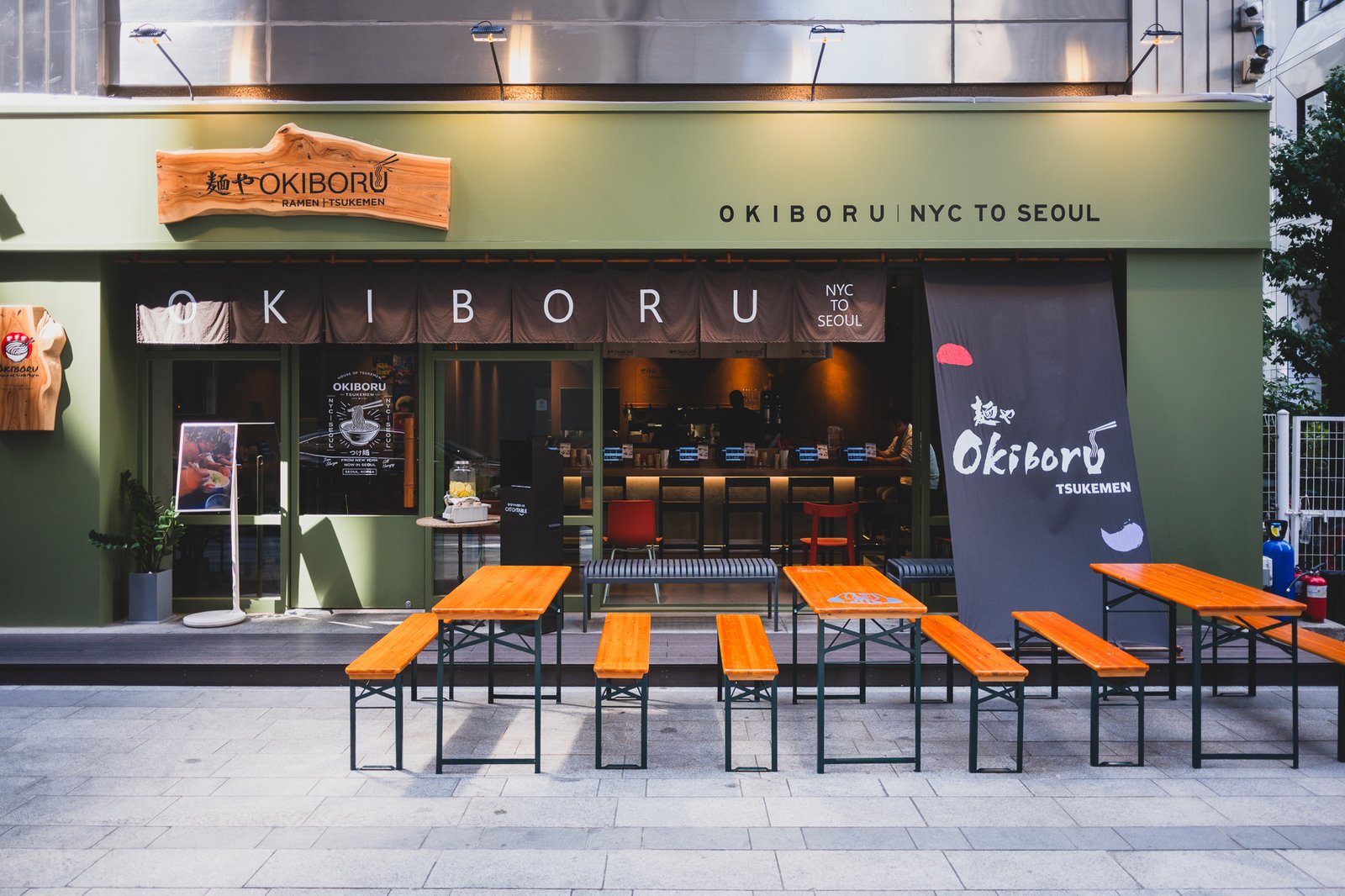
The storefront doesn’t try to blend in. An olive-green facade, a wood sign reading “麺や OKIBORU,” and “OKIBORU | NYC TO SEOUL” spelled out right next to it — there’s no ambiguity about where this brand is from. The outdoor seating area is generously sized for a Yeouido storefront, which tends to be the opposite of generous with space.
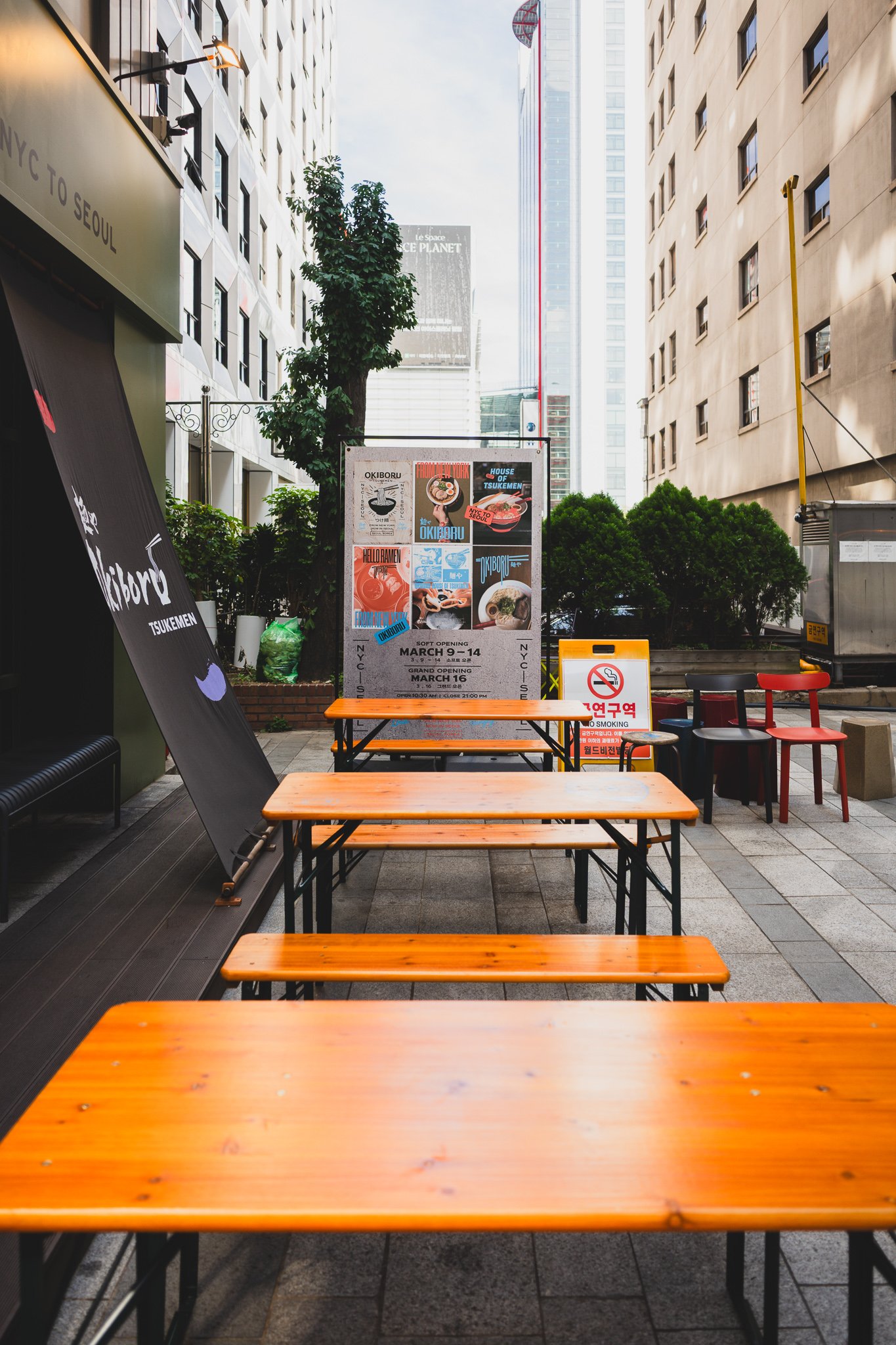
Around the side, a second terrace continues the outdoor seating. The soft-opening (March 9–14) and grand-opening (March 16) posters were still taped up when we visited in late September, a small sign of how recently this location launched.
Ordering Here Means Talking to a Kiosk, Not a Person
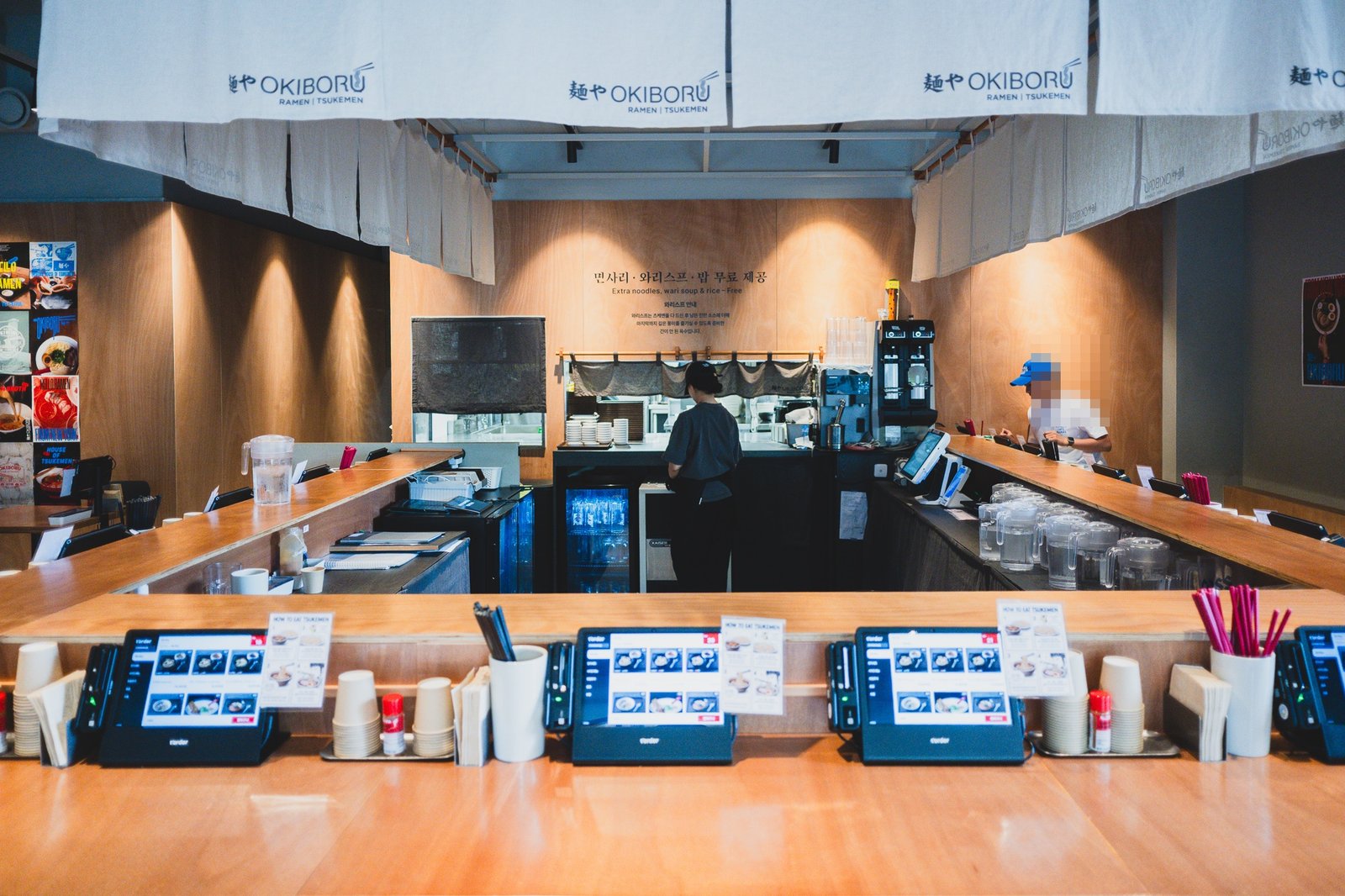
Walk in and the first thing you’ll see is a row of self-order kiosks rather than a register with a cashier. There’s no English toggle visible on the kiosk screens themselves, but the menu photos make ordering manageable even without reading Korean. For a neighborhood where everyone is watching the clock, cutting out the back-and-forth of ordering with staff is clearly the point.
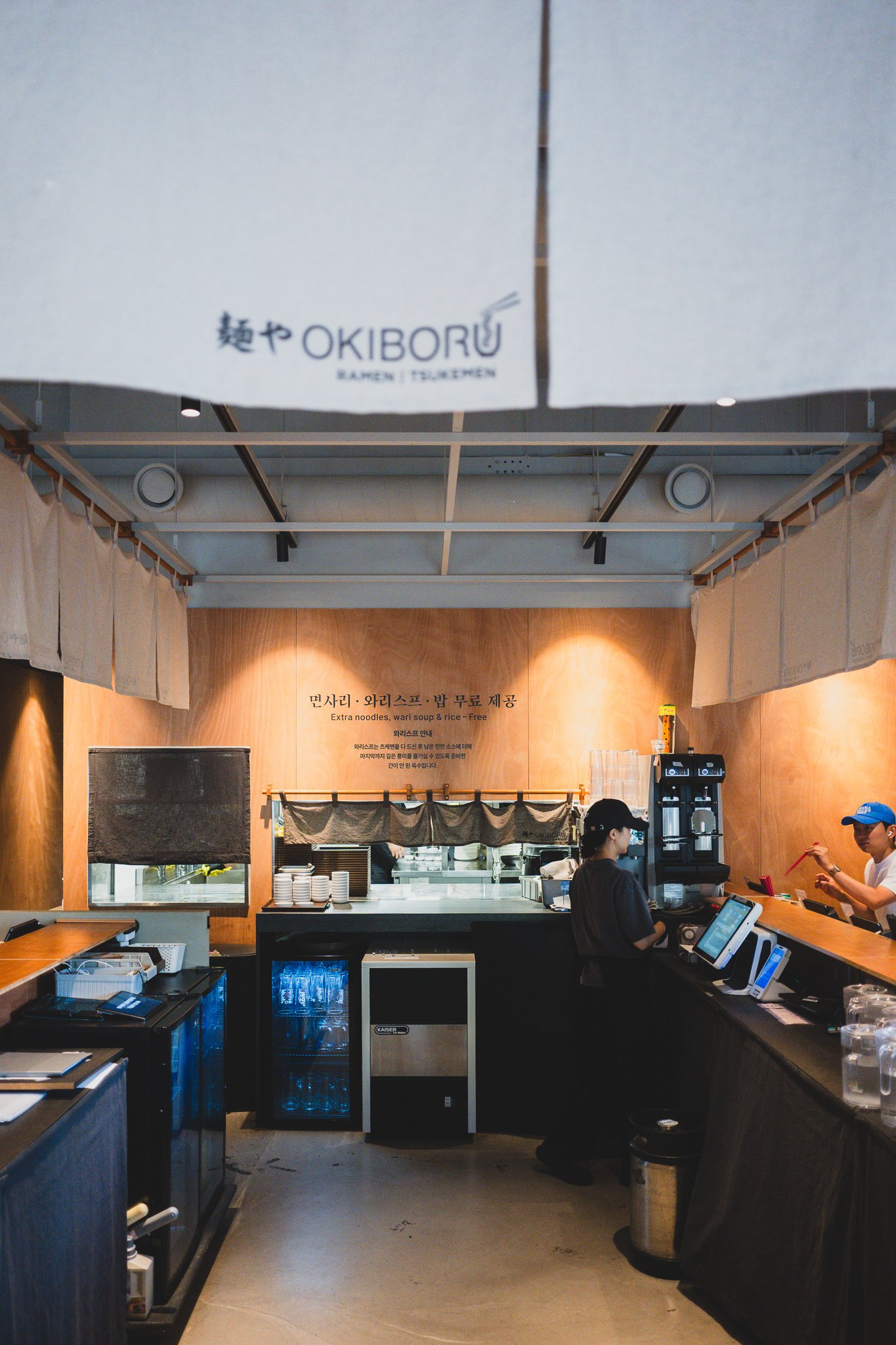
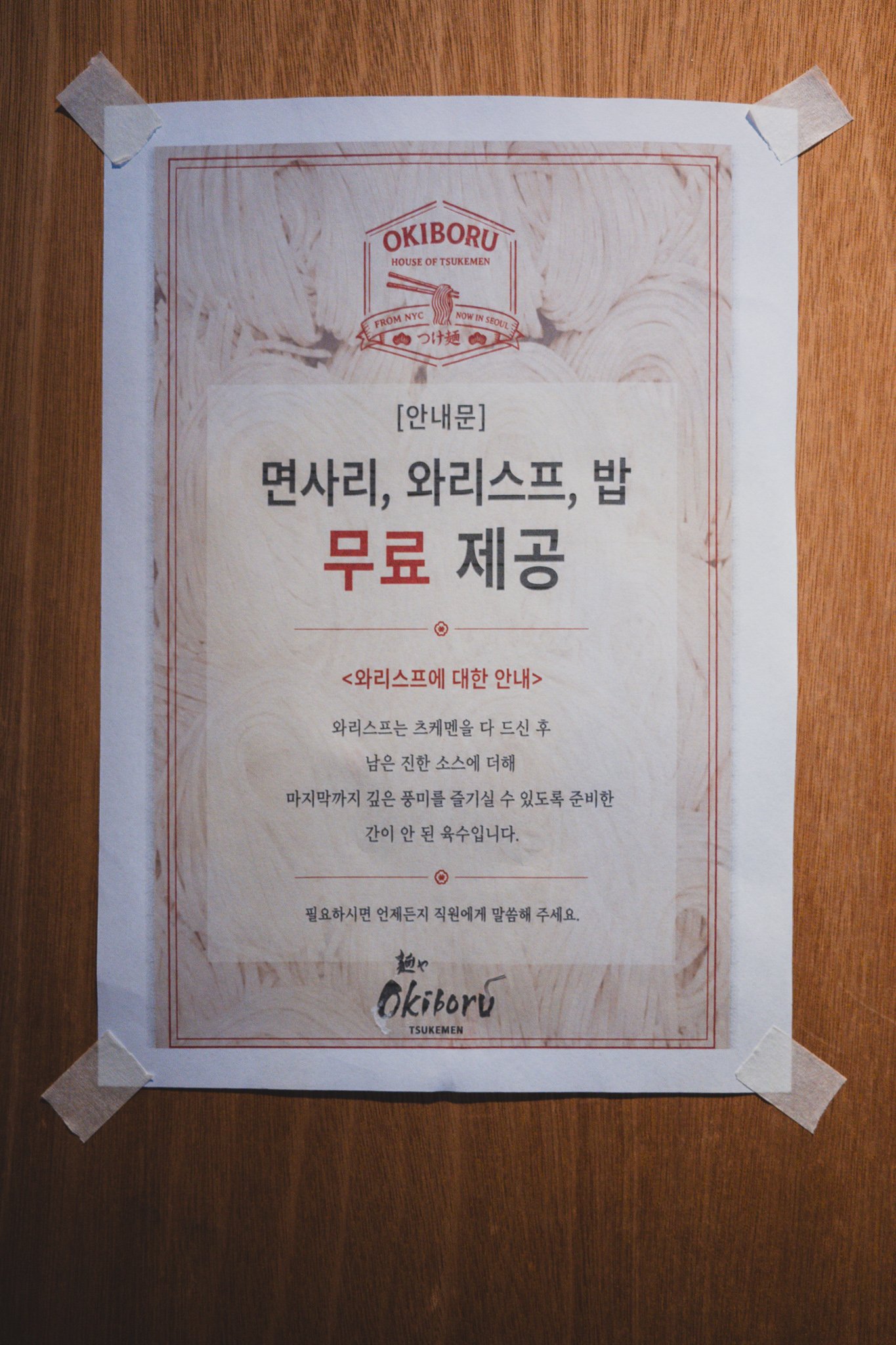
The kitchen is fully open, so you can watch the noodles go into the pot and the bowls get assembled in real time. A sign hanging under the curtain reads “Extra noodles, wari soup & rice — free,” which turns out to matter later.
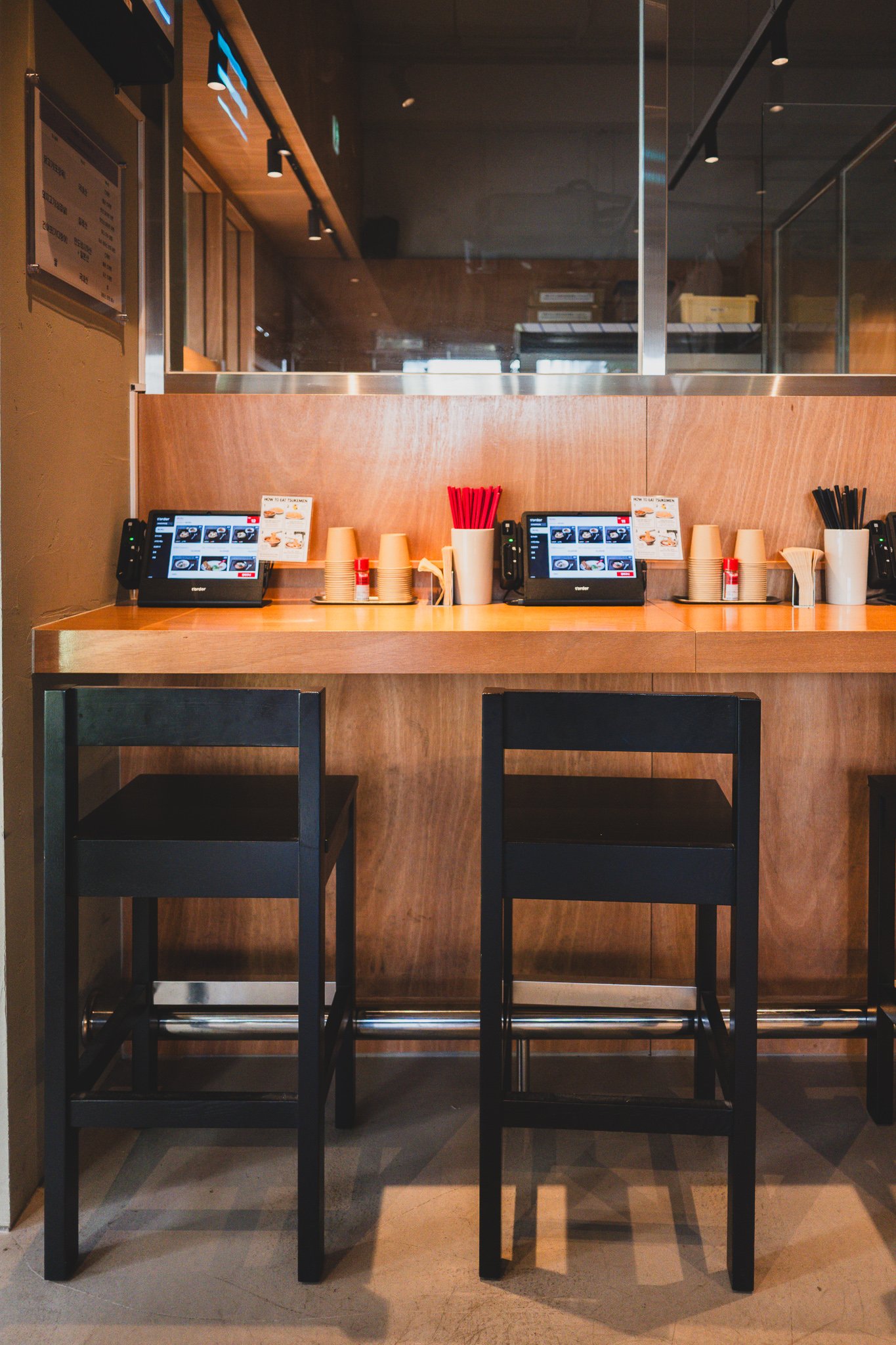
There’s also a wall-facing bar for solo diners, each seat with its own kiosk screen. We saw more than a few people eating alone here — it’s clearly built for exactly that.
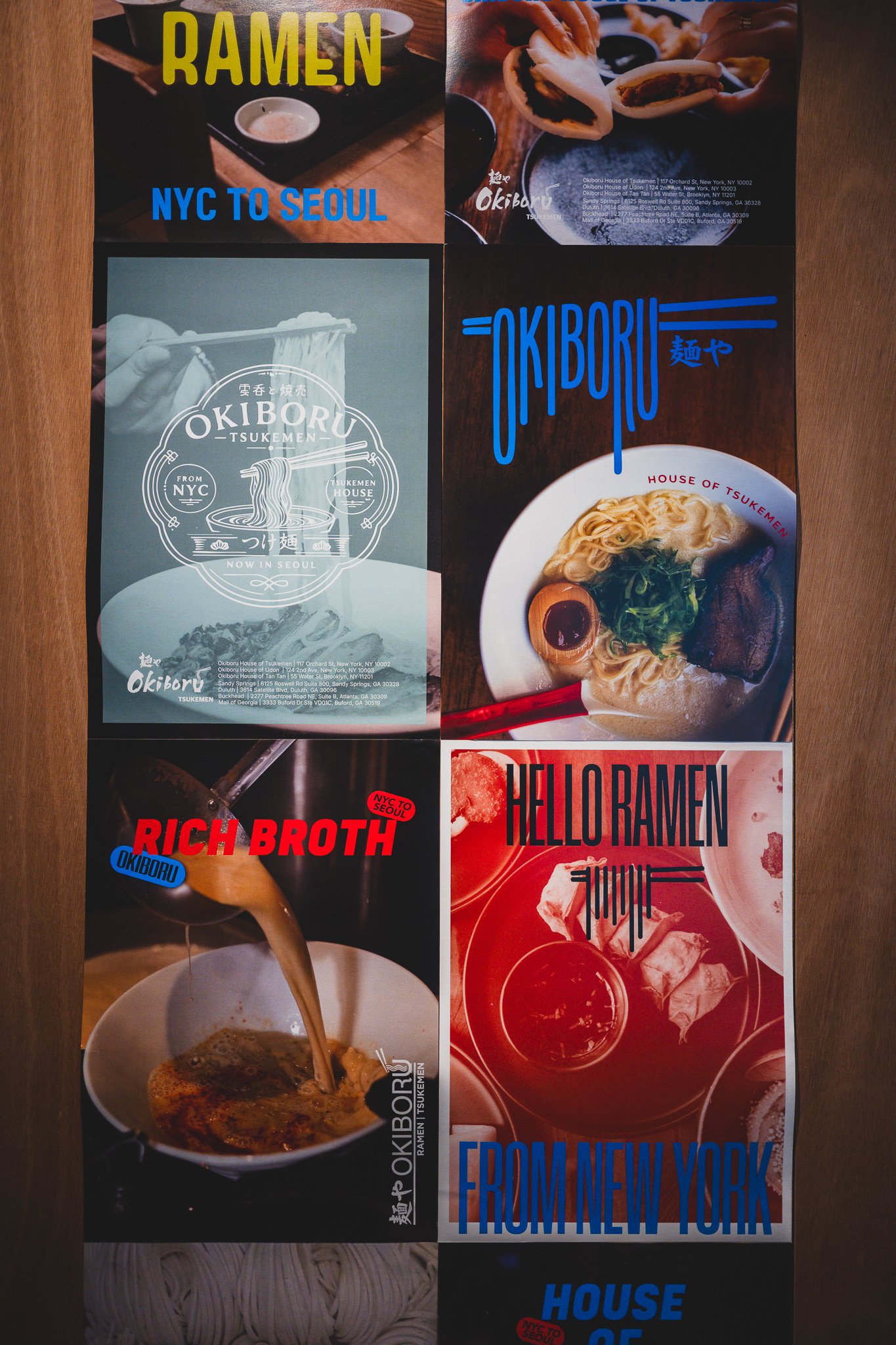
The interior leans hard into a New York street-diner aesthetic — graphic posters with phrases like “RICH BROTH” and “HELLO RAMEN FROM NEW YORK” cover one wall, which does double duty as decor and as a none-too-subtle reminder of where the brand is from.
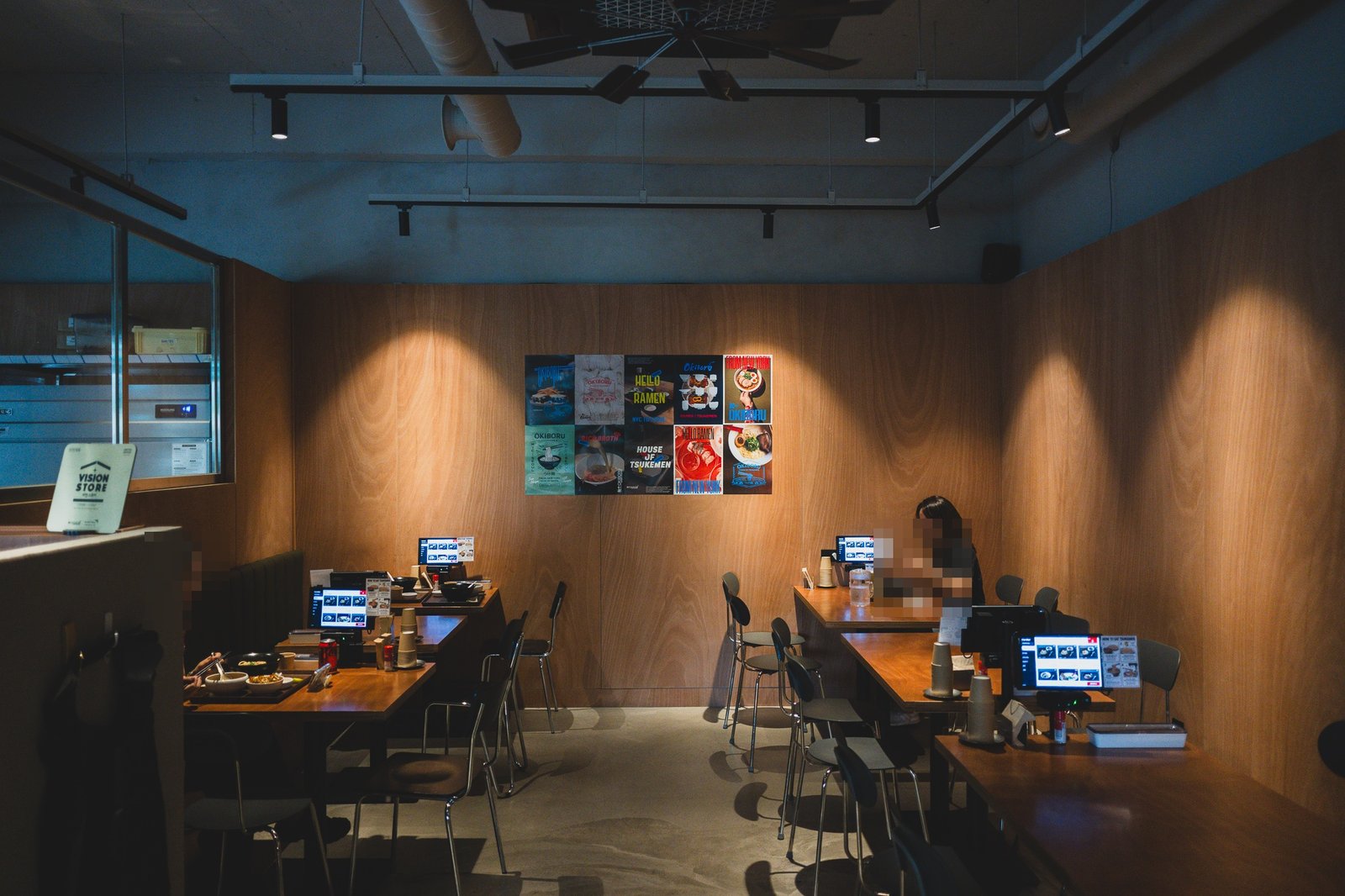
The main dining room uses boxed wooden tables with reasonable spacing between them — not cramped for a Yeouido lunch spot, where square footage is usually at a premium.
The Menu: Three Tsukemen, Three Ramen, Two Lunch Sets
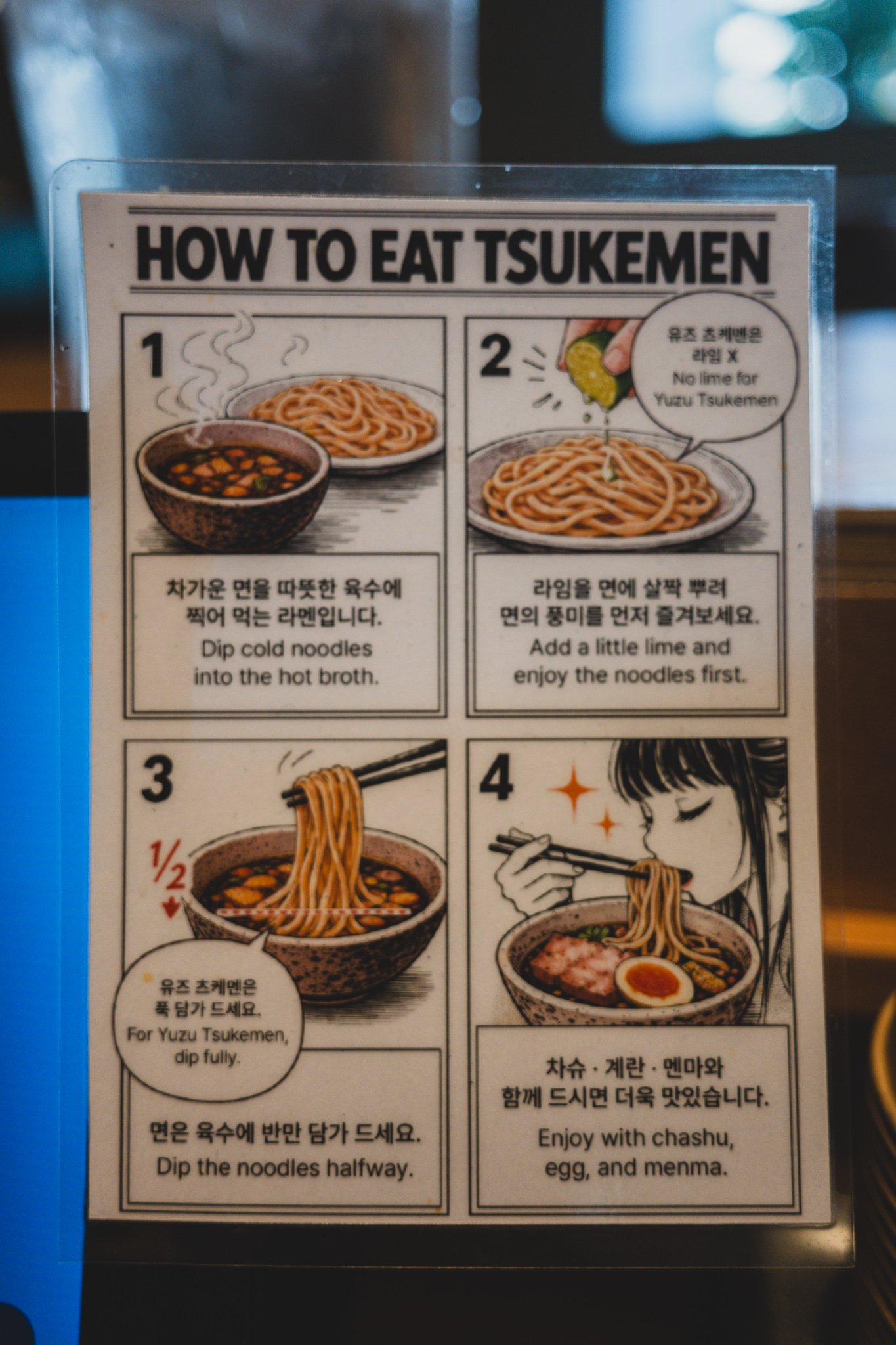
Every table has a four-panel comic explaining how to eat tsukemen, clearly aimed at people who’ve never dipped cold noodles into hot broth before. If this is your first time, it’s worth actually reading before you dig in.
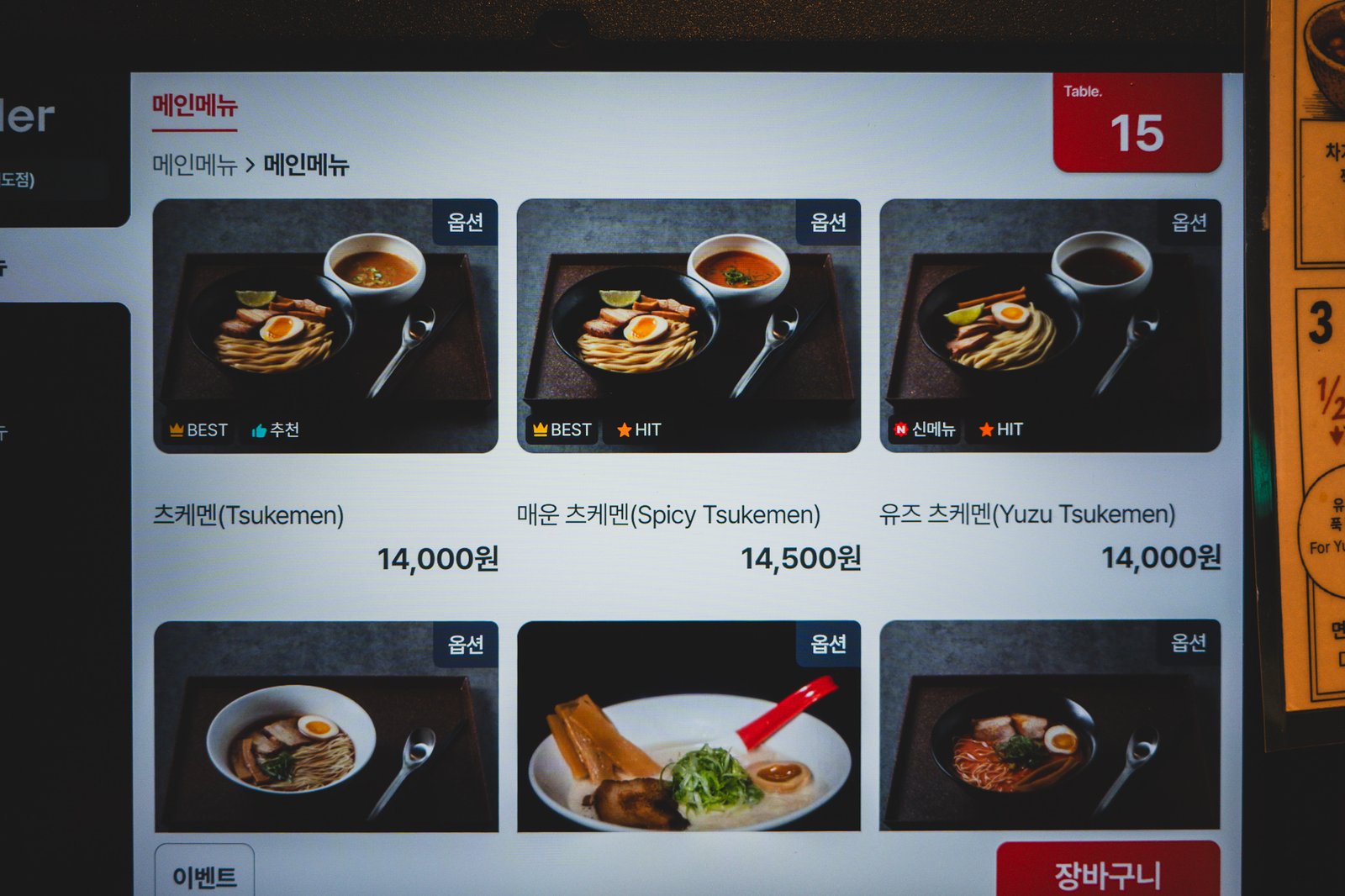
The tsukemen lineup:
– Tsukemen — ₩14,000 (~$10.22) — marked “BEST”
– Spicy Tsukemen — ₩14,500 (~$10.58) — marked “BEST”
– Yuzu Tsukemen — ₩14,000 (~$10.22)
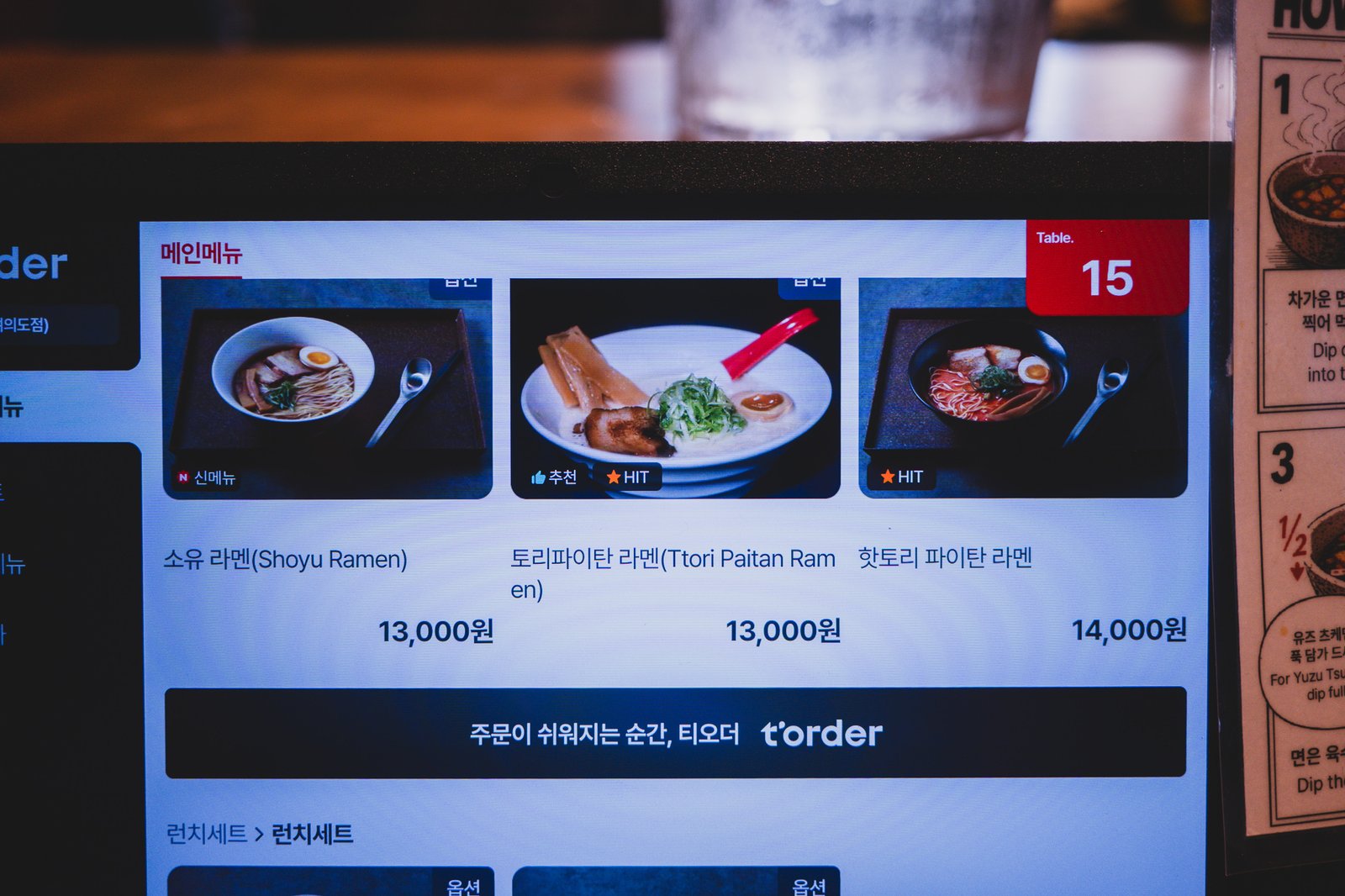
For anyone who’d rather have their broth and noodles together instead of dipped, there are three regular ramen options too:
– Soyu Ramen — ₩13,000 (~$9.49)
– Tori Paitan Ramen — ₩13,000 (~$9.49)
– Hattori Paitan Ramen — ₩14,000 (~$10.22)
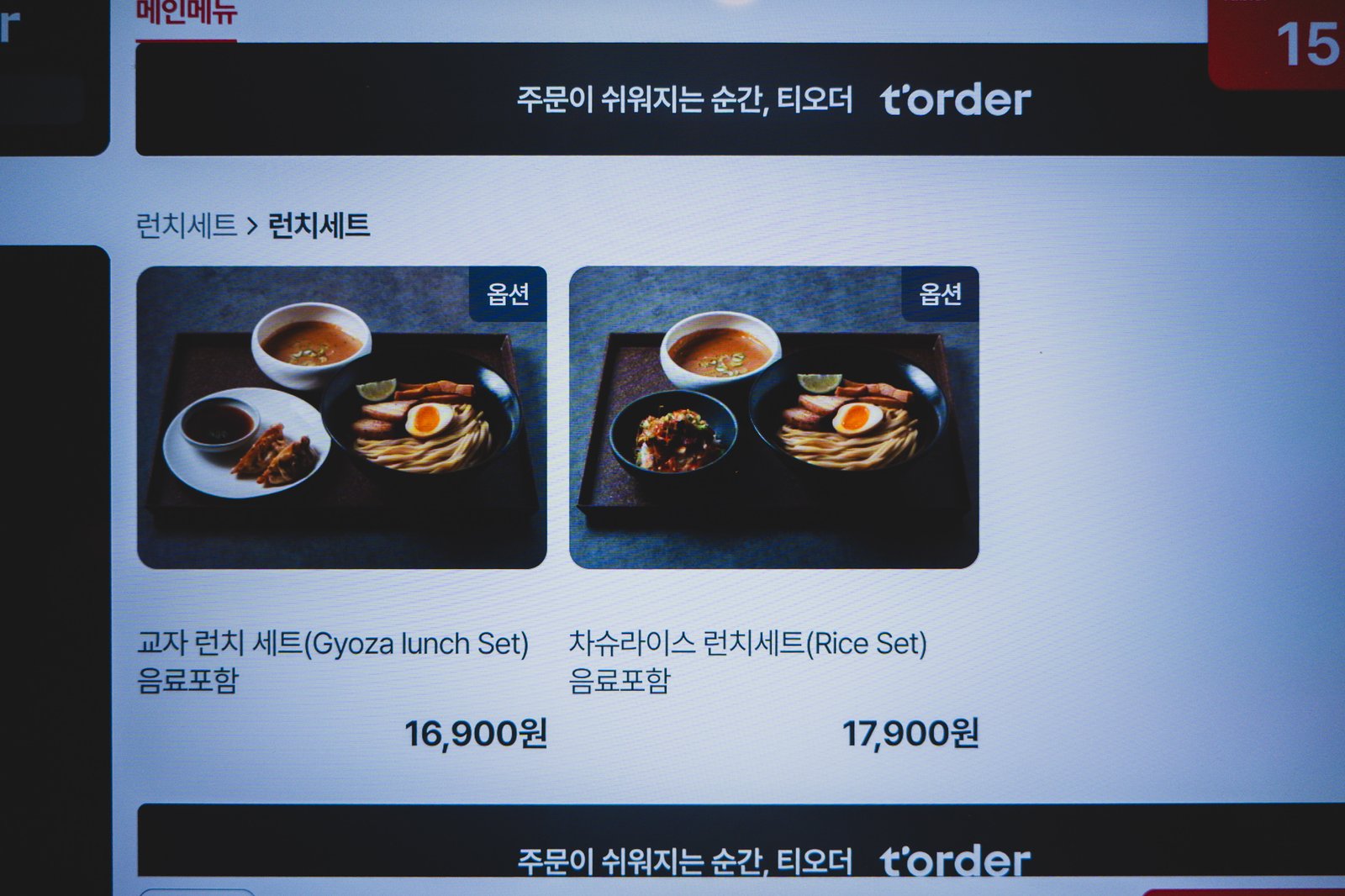
At lunch, there are two set options that bundle a drink in:
– Gyoza Lunch Set (with drink) — ₩16,900 (~$12.34)
– Chashu Rice Lunch Set (with drink) — ₩17,900 (~$13.07)
For context, the signature tsukemen at the Orchard Street original in New York runs $19.90. Here, it’s closer to $10 — and the lunch set, which adds gyoza and a drink, still comes in under what one bowl alone costs in Manhattan.
What We Ordered, Step by Step
We went with the Gyoza Lunch Set — the regular tsukemen with gyoza and a drink, ₩16,900 total.
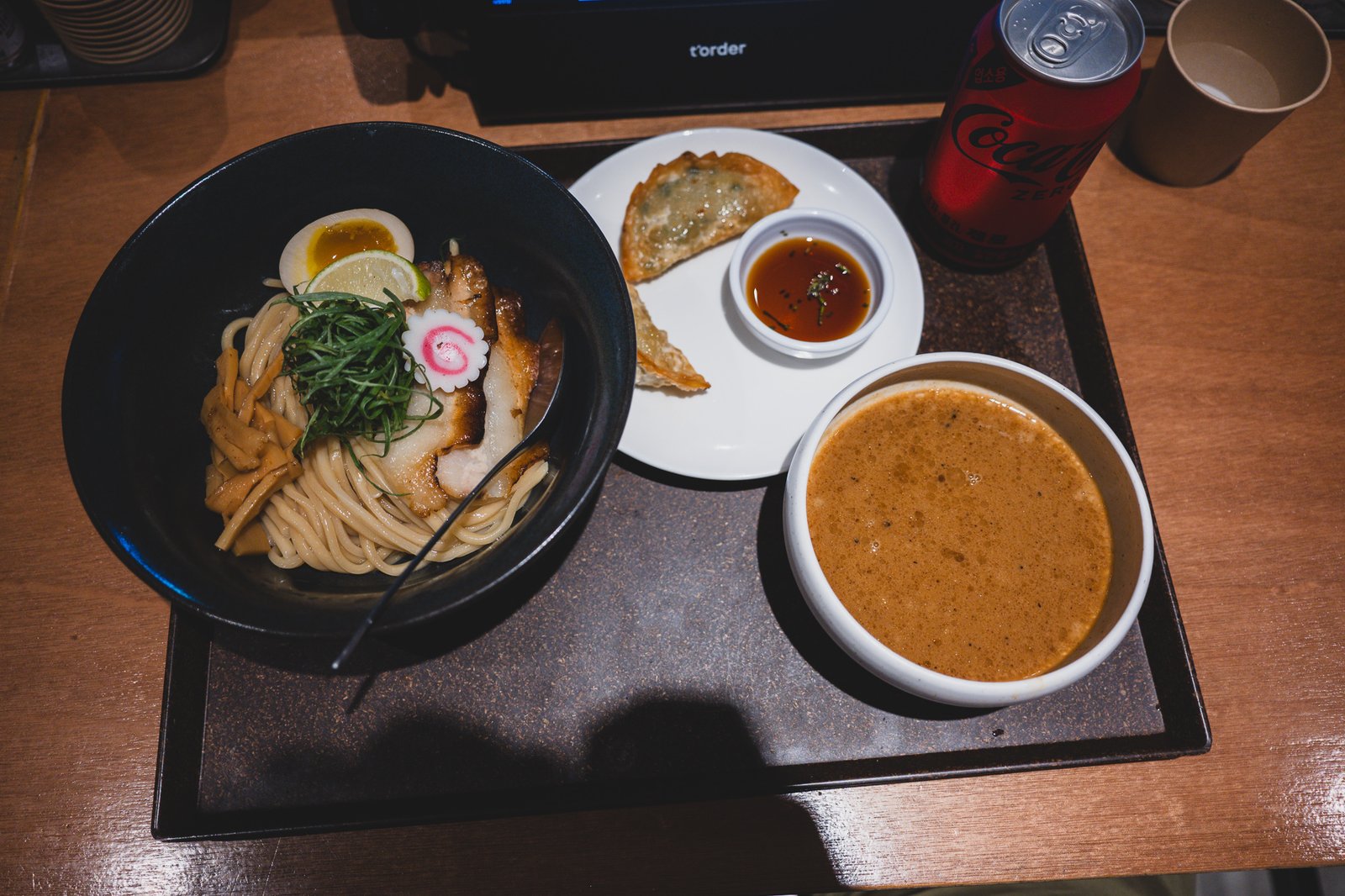
The tray alone looked like good value: a noodle plate topped with chashu, a soft-boiled egg, and menma (bamboo shoots), a separate bowl of concentrated dipping broth, two gyoza with a dipping sauce, and a can of Coke Zero.
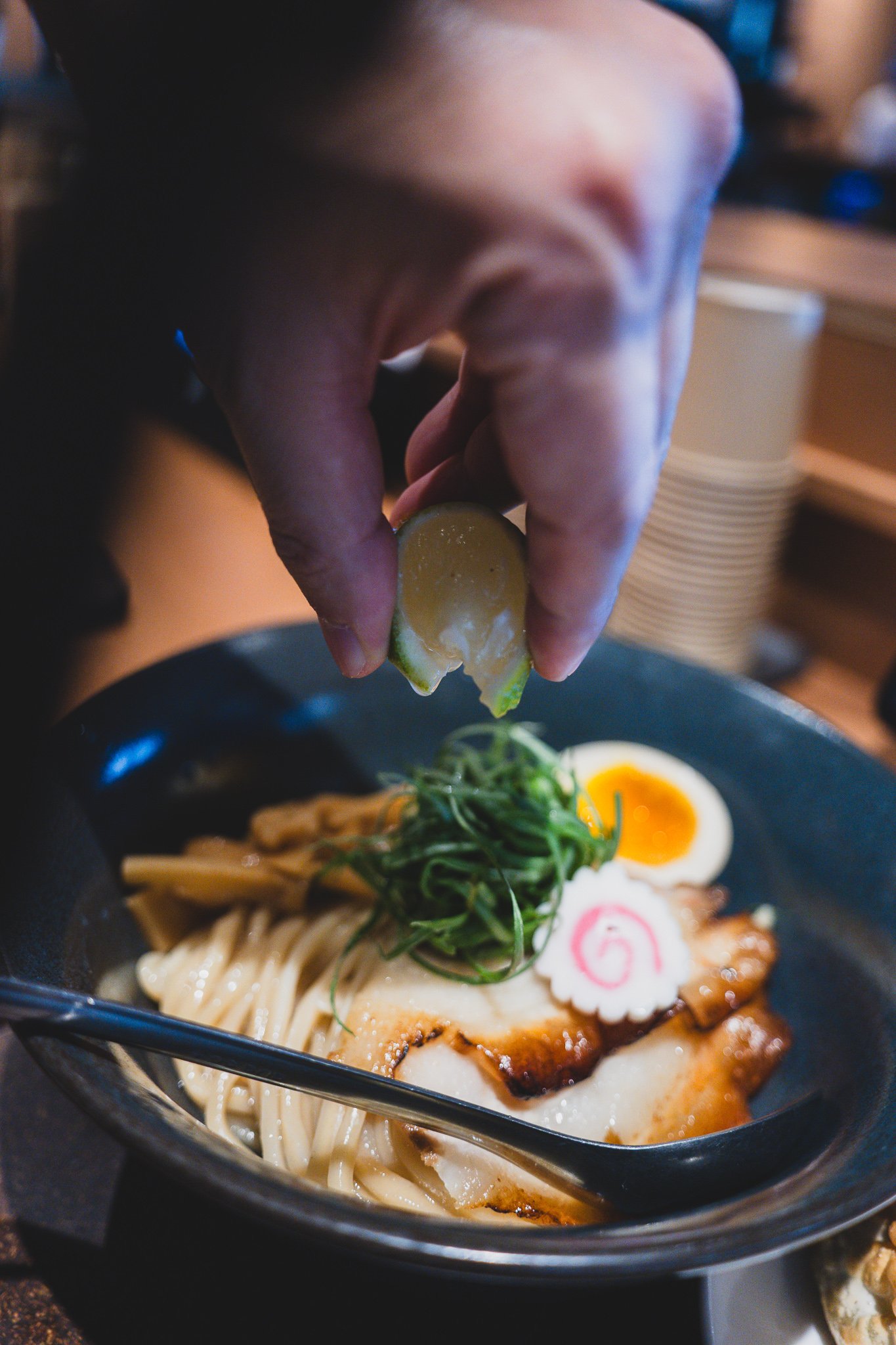
Following the comic’s instructions, step one was squeezing lime over the plain noodles and tasting them on their own first. The citrus made the noodles’ chew and aroma noticeably more distinct — the noodles themselves are thick and springy, clearly built to be the main event rather than a vehicle for the broth.
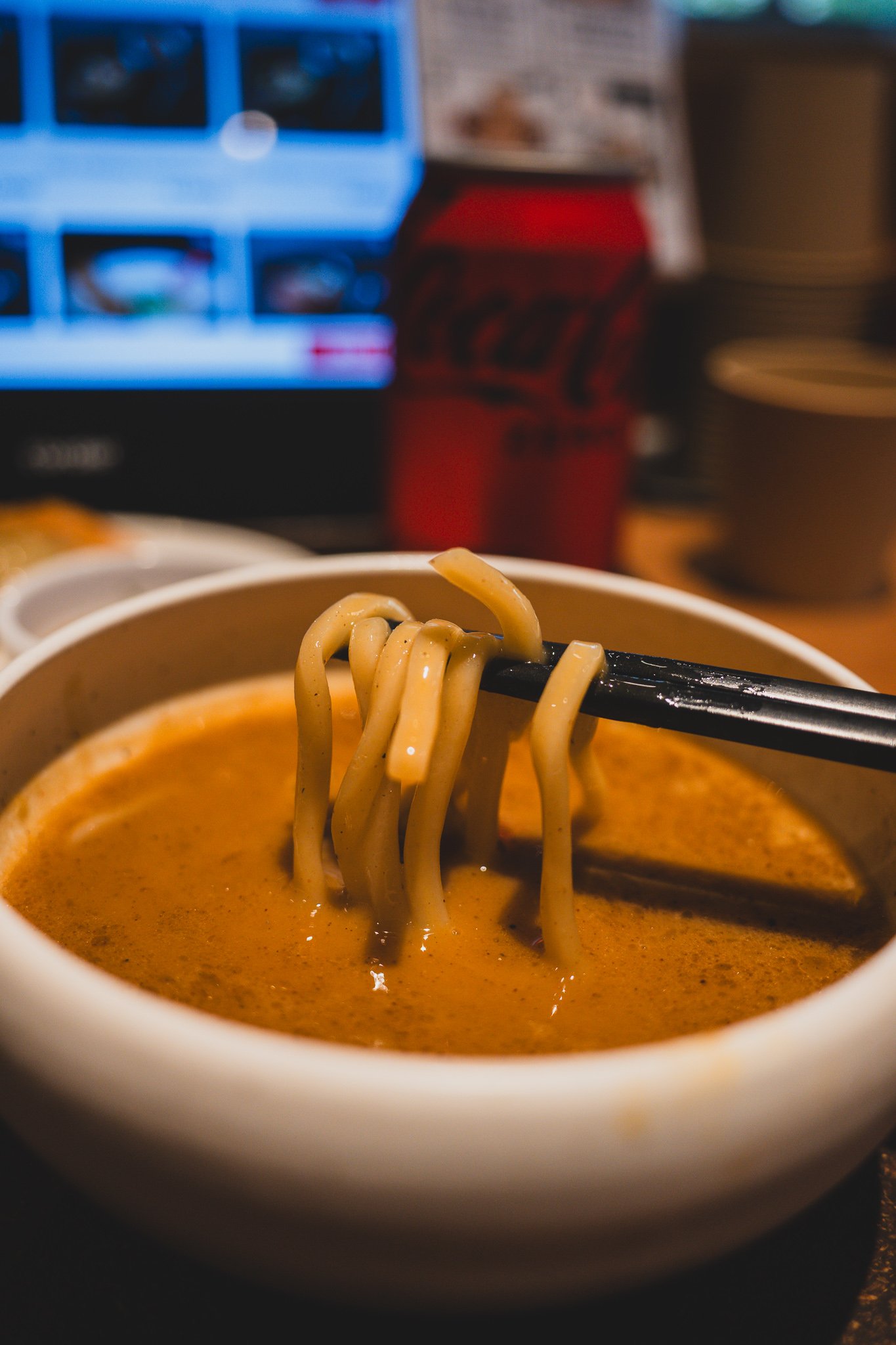
From there, it’s all about dipping: noodles into the broth, bite by bite. The broth is a tonkotsu base with a layer of spicy oil on top, heavier than it looks in the bowl. If I’m being honest, it didn’t quite hit the “best bowl of my life” mark the NYT hype might set you up for — flavorful, but I wanted another layer of umami complexity underneath the richness.
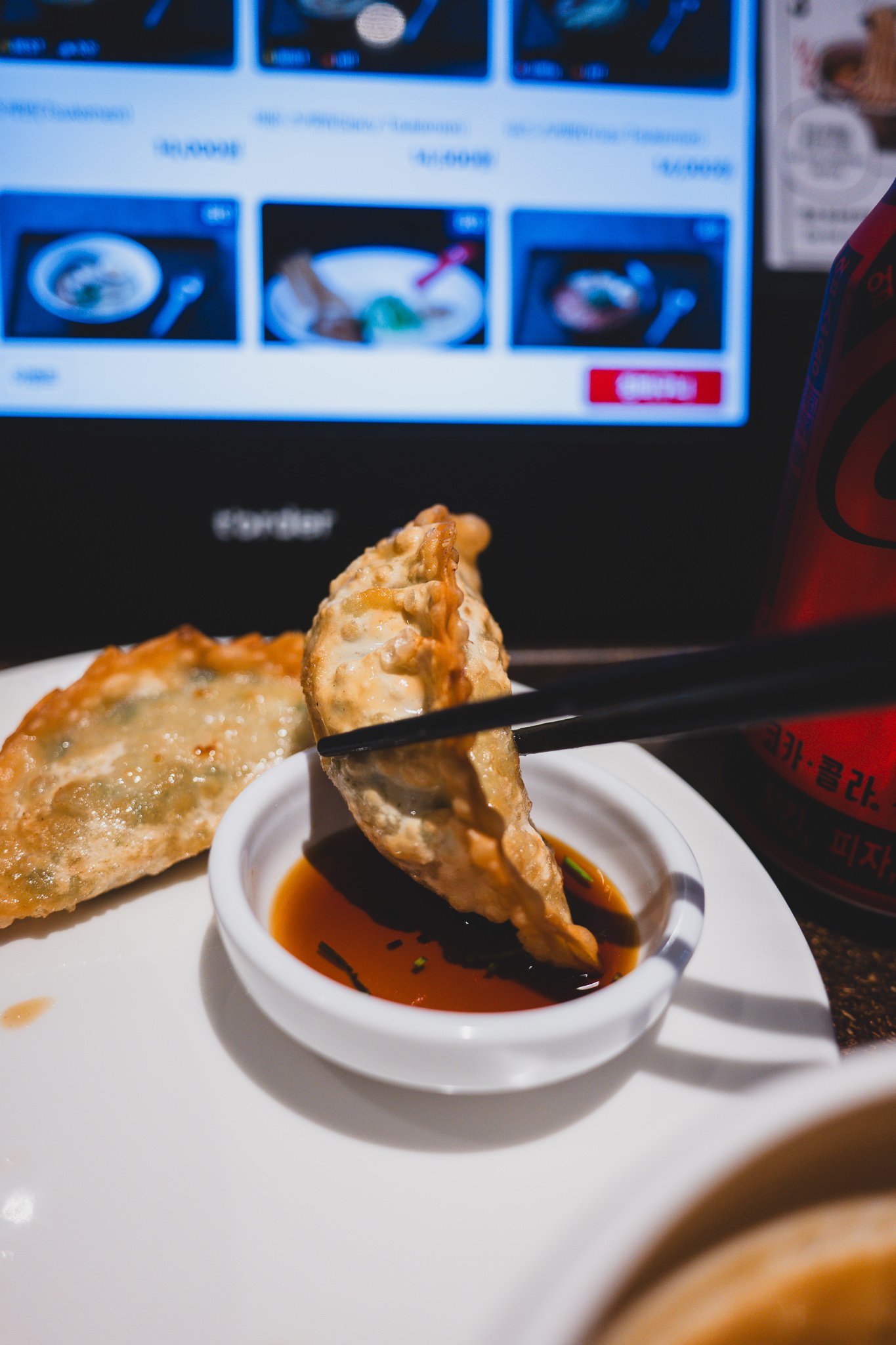
The gyoza, unexpectedly, were the more reliably good item on the tray — crisp exteriors, solid pairing with the soy dip, no notes.
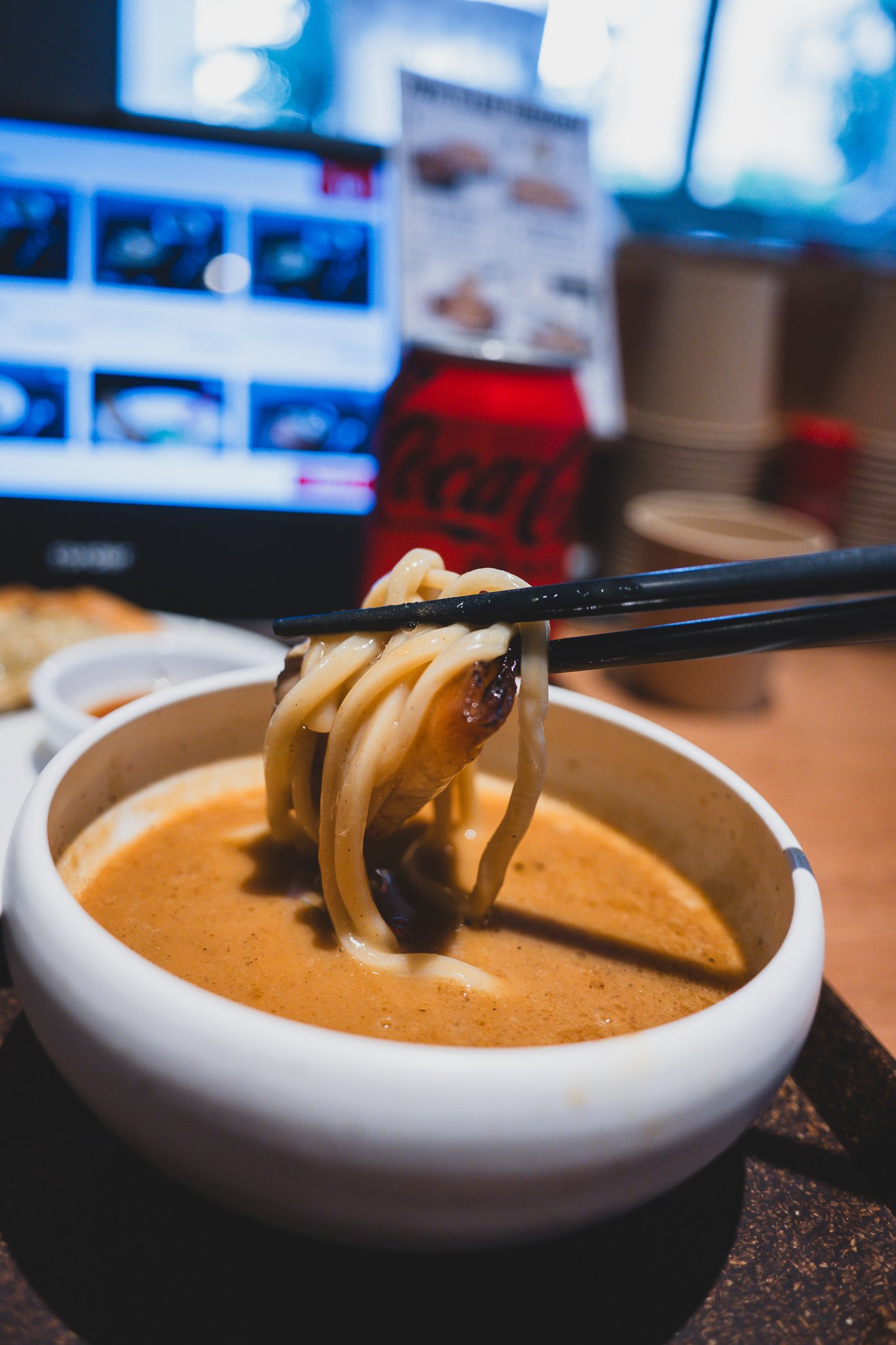
The chashu was thick-cut with a faint char, good texture throughout. At the end, per the table instructions, we got a pitcher of wari-sup (a lighter, unseasoned broth) to pour into the leftover dipping sauce and drink down — a finishing ritual you don’t get at most ramen counters, and genuinely one of the more interesting small details of the meal.
Is the Seoul Branch the Same Experience as New York?
Taste-wise, this isn’t a transcendent bowl of noodles, and if you walk in expecting the exact thing that got a Pulitzer-winning critic to rave about Orchard Street, you might come away slightly underwhelmed. But that’s judging it against a very high bar that isn’t really the point locally. What actually stands out is that there are very few places in Korea treating tsukemen as a dedicated category rather than a side item tacked onto a ramen menu — most ramen shops here offer a “dip-style” bowl almost as an afterthought. OKIBORU built its entire menu, ordering flow, and even a table-side instructional comic around tsukemen specifically, and at roughly half of what the same bowl costs in Manhattan, the value proposition is hard to argue with even if the broth doesn’t blow you away.
The self-order kiosks and quick table turnover also make it a genuinely practical lunch option for the office workers it’s clearly designed around — just budget extra time if you’re going during the lunch rush, since there’s no way to reserve ahead.
Good for: ramen and tsukemen fans curious about the NYC original, anyone doing a Yeouido day who wants a sit-down lunch near The Hyundai Seoul and IFC Mall. Less good for: anyone expecting a life-changing bowl based on the New York hype alone, or anyone on a tight 30-minute lunch break who can’t risk a wait.
FAQ
What is tsukemen, exactly?
It’s a style of ramen where the noodles and the broth are served separately — you dip bite-sized portions of noodle into a small bowl of concentrated, usually richer broth rather than eating them submerged together. It’s typically eaten with thicker, chewier noodles than standard ramen.
Do I need a reservation at OKIBORU Yeouido?
No — it’s walk-in only. Expect a wait during the weekday lunch rush, since Yeouido’s office crowd eats on a tight schedule.
How much does a meal cost?
A bowl of tsukemen alone runs ₩14,000–14,500 (about $10–10.60). The lunch sets, which add gyoza or chashu rice plus a drink, run ₩16,900–17,900 (about $12.30–13.10).
Is OKIBORU’s tsukemen spicy?
The Spicy Tsukemen has a visibly red broth, but it’s not aggressively hot by Korean spice standards — more comparable to a mild Japanese-style heat than Korean gochujang-level spice.
How is this different from the original OKIBORU in New York?
Same concept and similar menu structure (tsukemen plus a few straight ramen options), but the Seoul branch is noticeably cheaper — about half the price of the $19.90 signature tsukemen on Orchard Street — and runs entirely on self-order kiosks rather than counter service.