TL;DR: MICHELIN’s 2026 Key selection for Korea covers 9 hotels: three Two-Key properties (Four Seasons Hotel Seoul, Signiel Seoul, Signiel Busan) and six One-Key properties (Fairmont Ambassador Seoul, Josun Palace, JW Marriott Jeju Resort & Spa, Art Paradiso at Paradise City, The Shilla Seoul, and newcomer Yuwonjae). No hotel in Korea currently holds Three Keys. Below is what actually distinguishes each one, so you can pick based on what you’d get out of the stay rather than just the room rate.
If you know MICHELIN for its restaurant stars, the Key system is the newer, hotel-side version of the same idea — inspectors rate stays instead of meals, on a scale of One Key (“a very special stay”), Two Keys (“an exceptional stay”), up to Three Keys (“extraordinary, a destination unto itself”). It launched globally in 2024, and Korea’s 2026 list just grew from 8 hotels to 9, with one property jumping a tier and one small-town hotel making the cut for the first time.
The Three Two-Key Hotels
Four Seasons Hotel Seoul — Gwanghwamun’s High-Rise Take on a Palace
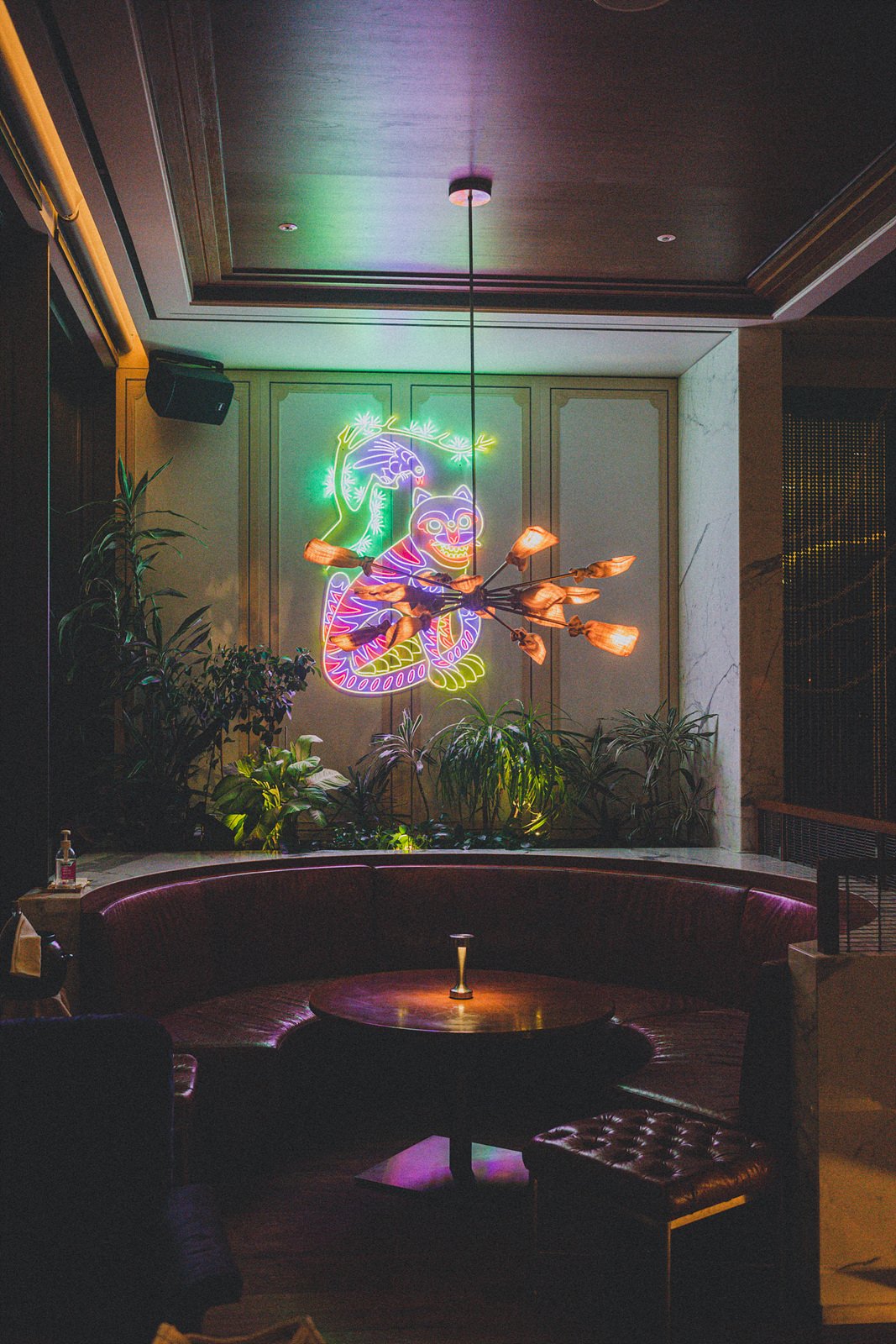
This is the hotel that jumped a tier this year, moving from One Key to Two Keys. The 29-story glass-and-steel tower faces Gyeongbokgung Palace and Gwanghwamun Square directly, and its exterior design deliberately echoes the sweeping eaves of Korean palace roofs in a modern form rather than copying them literally. Inside, there’s a genuinely deep dining lineup — including Yu Yuan, a MICHELIN one-star Cantonese restaurant — and more than 160 pieces of contemporary art placed throughout the lobby and public spaces. It’s the rare case of a hotel earning a higher tier not from a single new feature, but from years of consistently reinforcing the same idea: a “grand Korean” identity built for a location that demands one. The hotel’s bar, OUL, carries the same idea through in a different register — I’ve had cocktails there built around Korean ingredients (a kimchi highball, a rice-wine-based drink), served under a neon haetae sign, which is a strange and pretty effective way to make a five-star hotel bar feel specifically like Seoul rather than any five-star hotel bar.
Signiel Seoul — 76 Floors Up in Lotte World Tower
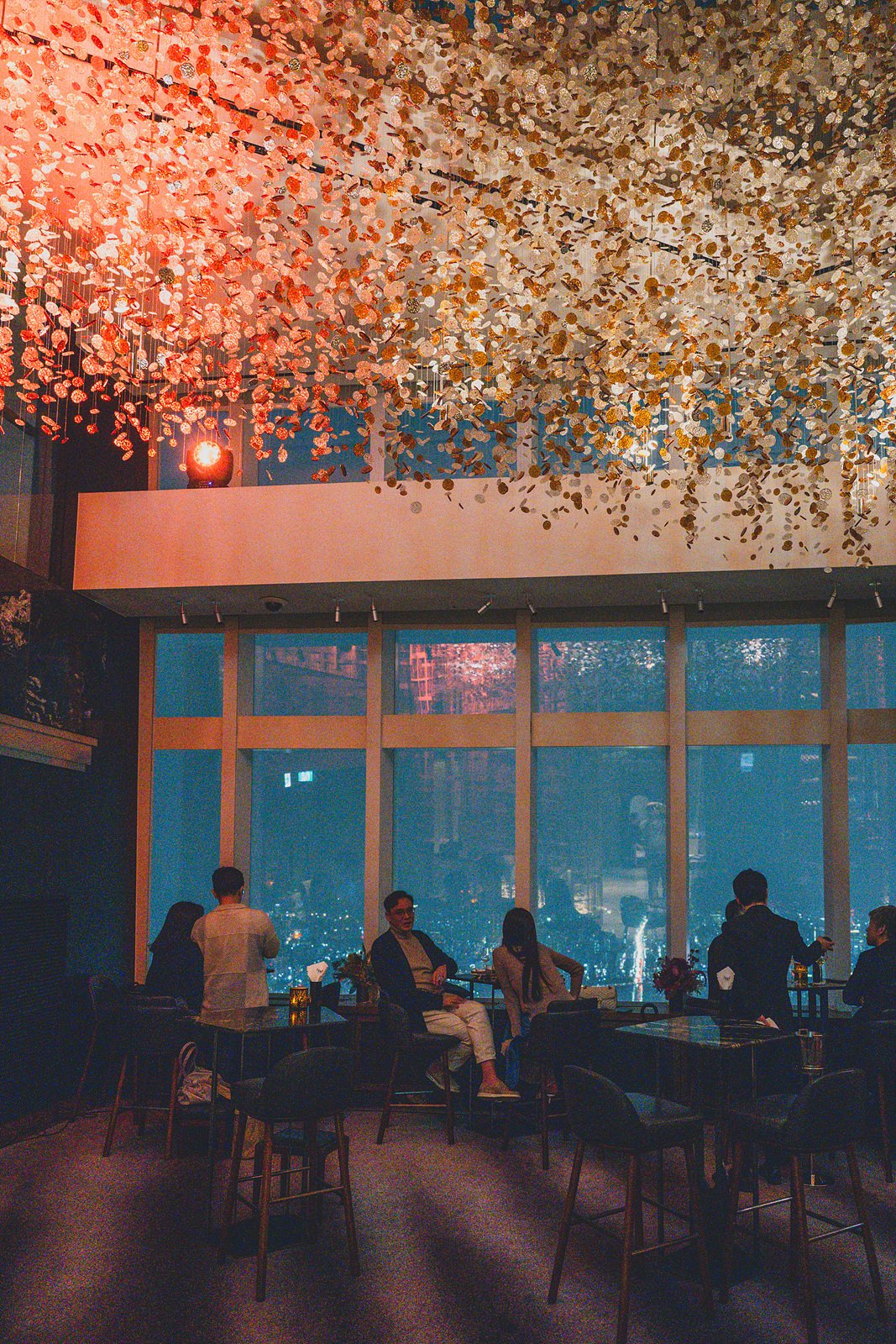
Signiel Seoul occupies floors 76 through 101 of Lotte World Tower — making it the tallest hotel in the country by a wide margin. Dining includes Bicena, a MICHELIN one-star modern Korean restaurant on the 81st floor, and STAY, a French restaurant by chef Yannick Alléno. What actually earns the Key, though, is something no other hotel here can copy: an indoor infinity pool where you can look out over the entire Seoul skyline while swimming. That single physical fact does more for the hotel’s identity than any amenities list could. I’ve been up to Bar 81 on the 81st floor myself — it’s a two-level space with a hanging installation over the main room, and once you’re seated by the window the city genuinely looks like a miniature model from that height.
Signiel Busan — Two Skylines, One Building
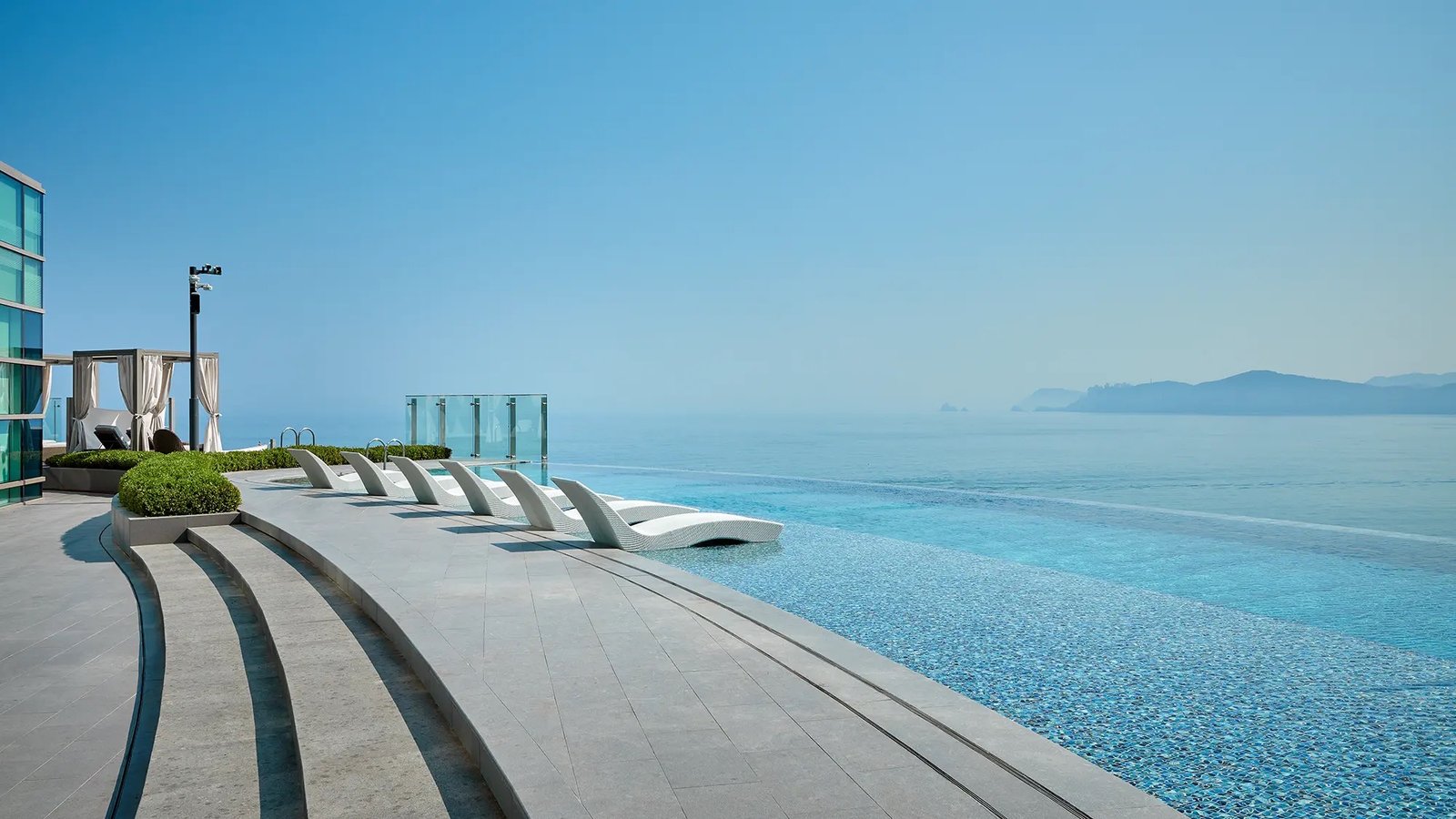
Signiel Busan sits inside Haeundae LCT, and its main advantage is location: it’s one of the only stays in the country where you get both an ocean-facing and a city-facing skyline from the same building. Dining includes Chaoran, a well-regarded Cantonese restaurant, but the Key here comes down to the same trick as its Seoul sibling — a rooftop infinity pool, this time framing Haeundae’s coastline instead of a downtown skyline. Same brand, same signature feature, but a completely different sense of place.
The Six One-Key Hotels
Fairmont Ambassador Seoul — Yeouido, Designed by the Architect Behind the Pompidou Center
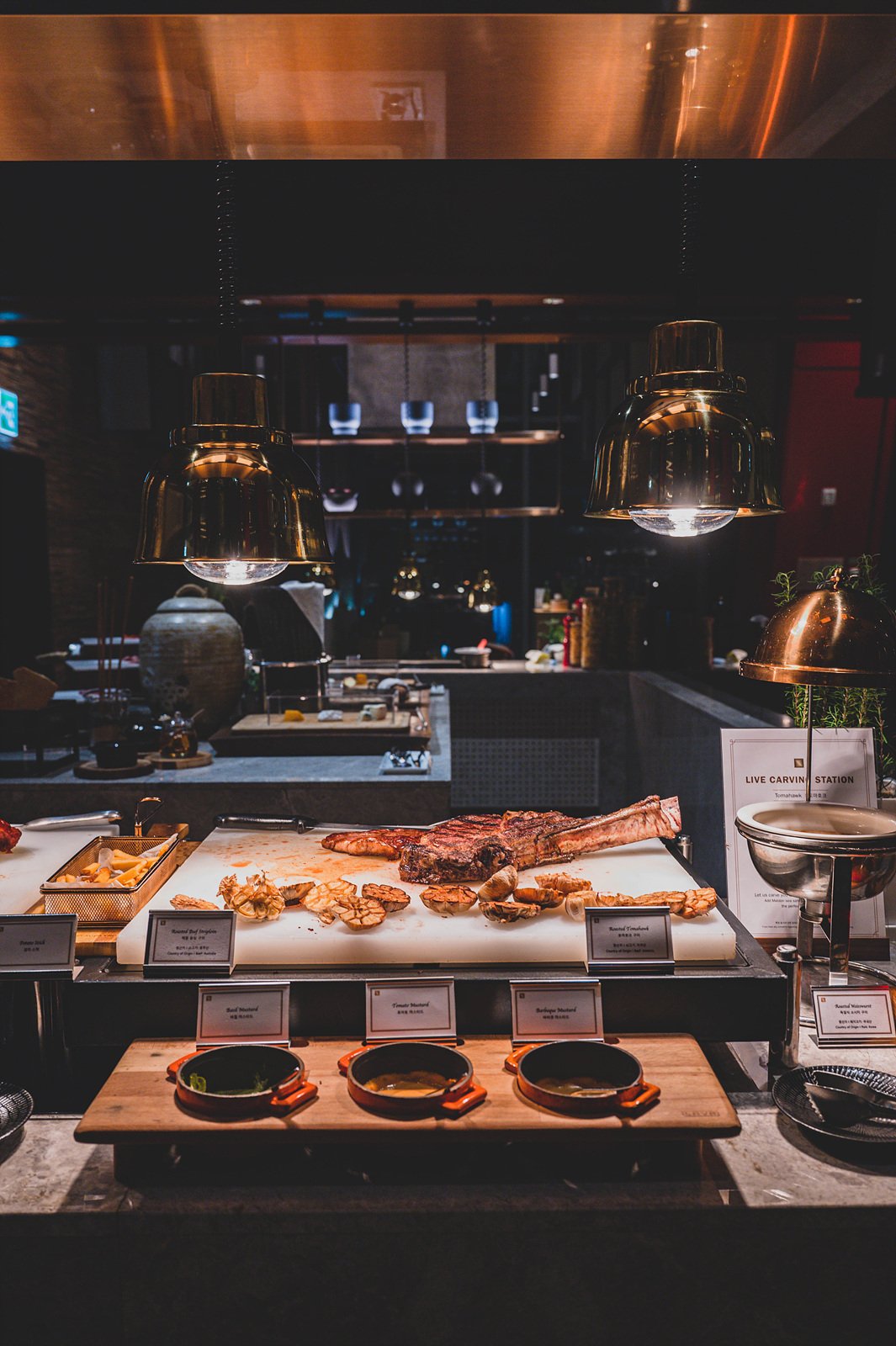
Korea’s first Fairmont-branded hotel sits inside the Parc.1 complex in Yeouido, Seoul’s financial district. The building’s design involved architect Richard Rogers — yes, the same architect behind the Centre Pompidou in Paris — and the hotel leans into an “understated glamour” concept, trading visual excess for a design that makes the most of its Yeouido skyline and Han River views. I’ve eaten at Spectrum, the hotel’s buffet restaurant, more than once — it runs a genuinely wide spread (Peking duck, an open seafood counter, a lobster station where they’ll steam it to order) and occasionally pairs the meal with wine promotions, which is a nice excuse to actually sit through the whole spread instead of rushing it.
Josun Palace — A Brand-New Building Carrying a 100-Year-Old Name
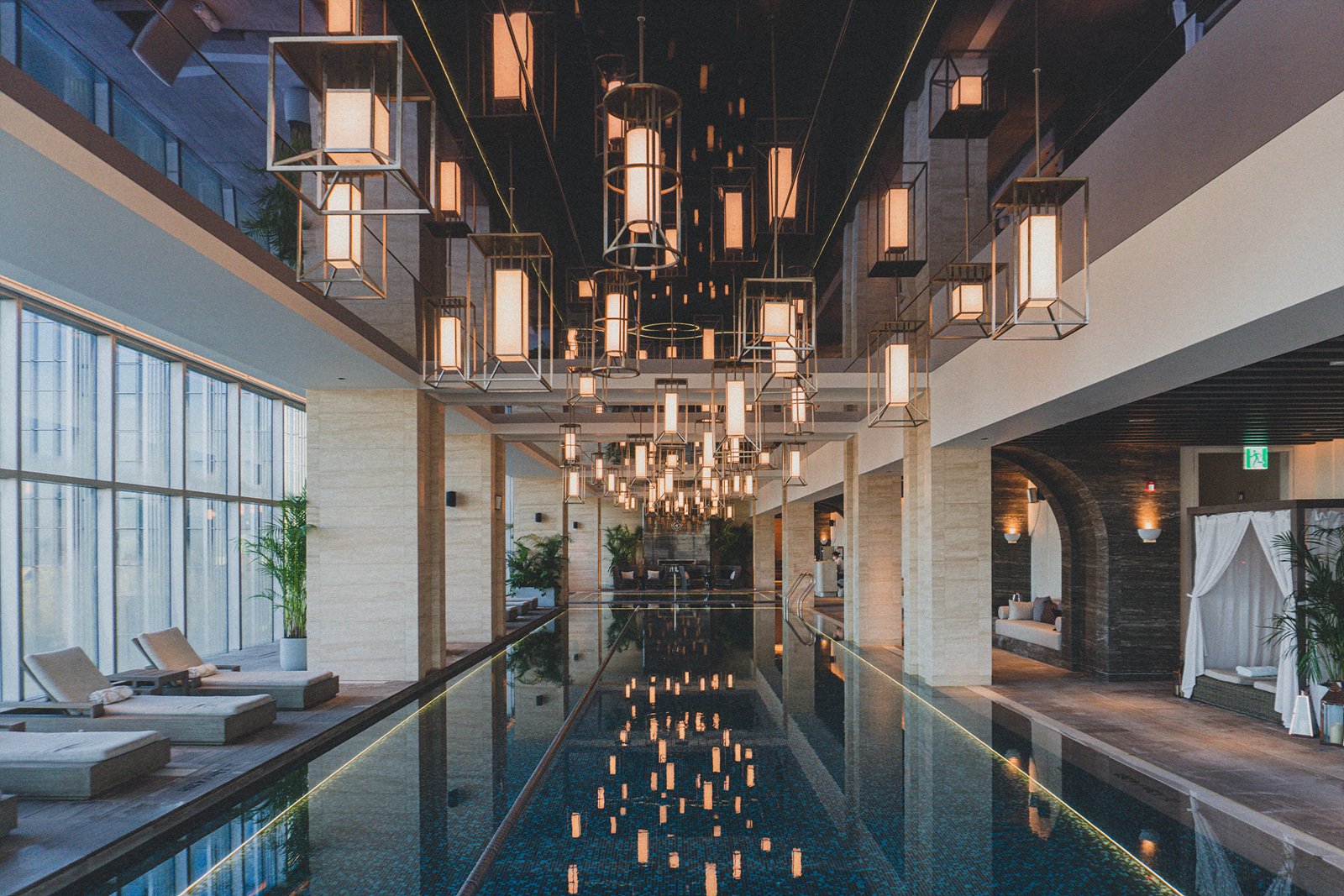
Josun Palace, in Gangnam, is a newly built property that inherits the name and heritage story of Josun Hotel, Korea’s first luxury hotel, which opened in 1914. The interior reworks Art Deco style for a modern setting, and the 36th-floor restaurant Eatanic Garden holds a MICHELIN star of its own. It’s a clean example of heritage-as-brand-asset: a completely new building borrowing more than a century of story to define what it’s supposed to feel like. I stayed here for two nights myself, and the 26th-floor pool was the actual highlight — a 25m lap lane under a mirrored ceiling, which sounds like a gimmick until you’re doing backstroke and can watch yourself doing it.
JW Marriott Jeju Resort & Spa — Bill Bensley’s Take on Volcanic Rock
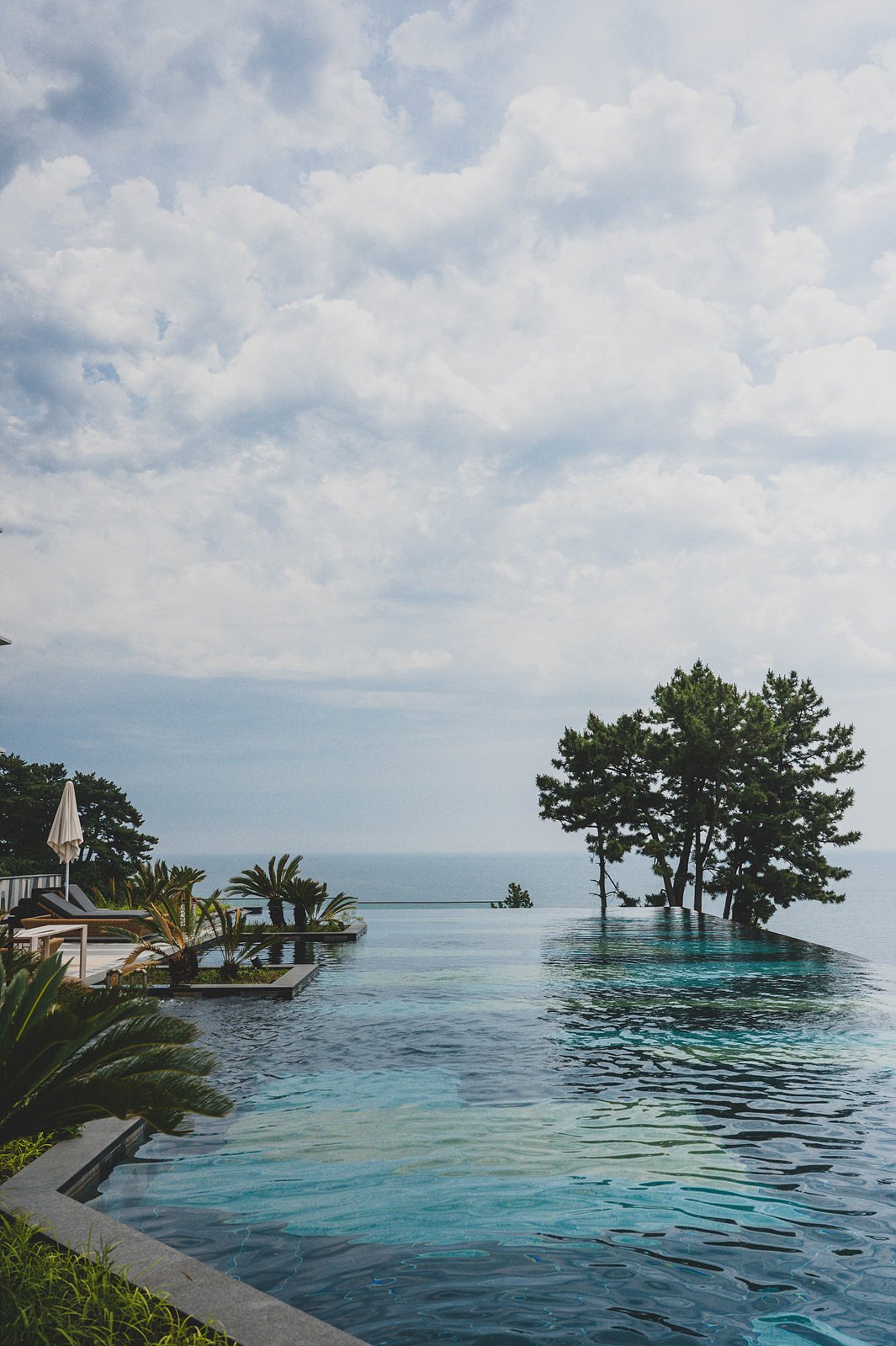
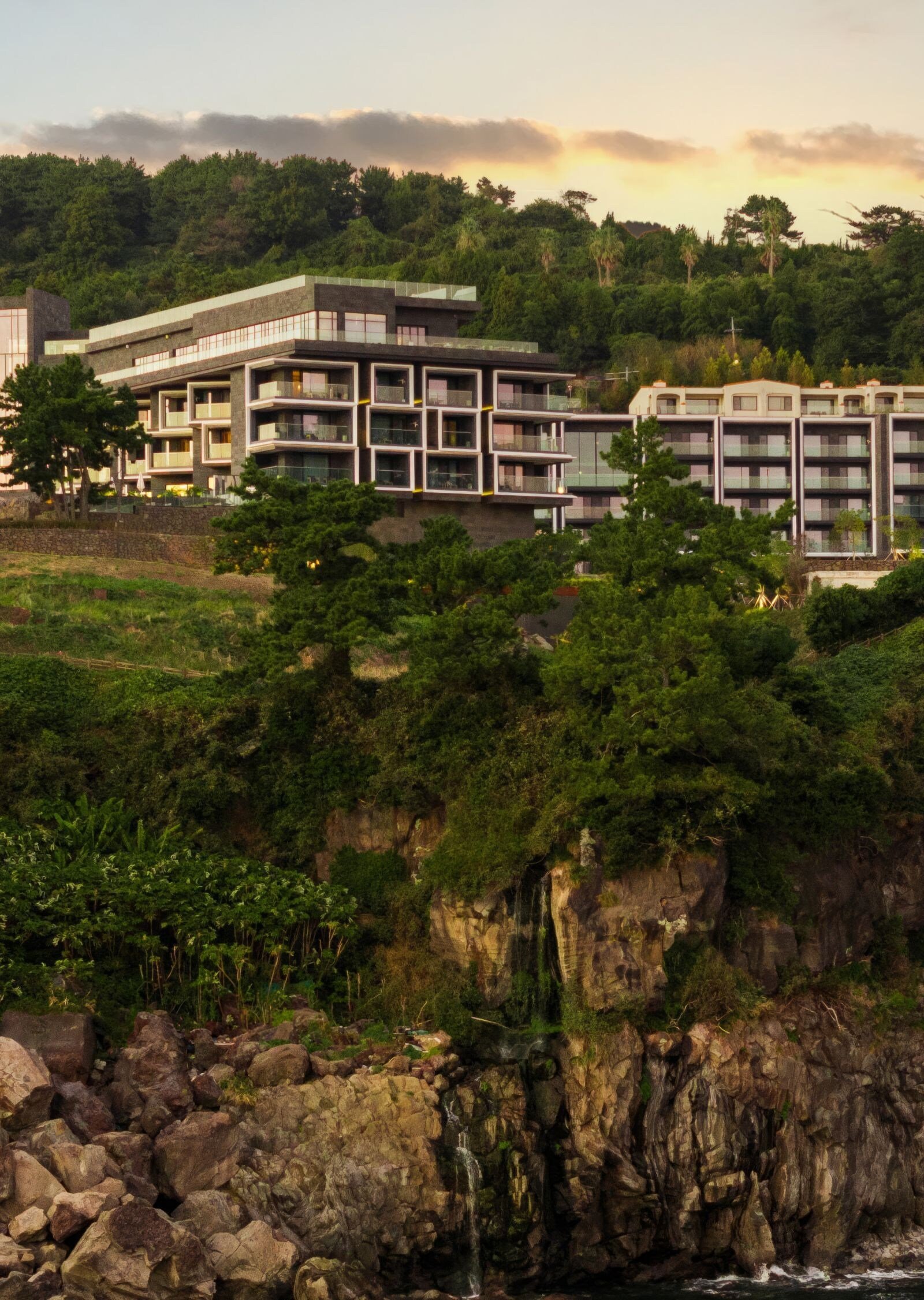
Opened in 2023 as Marriott’s first Jeju property, this resort was designed by Bill Bensley, who worked basalt stone and timber — both drawn directly from Jeju’s volcanic landscape — throughout the interiors. Its core asset is the site itself: a clifftop position overlooking scenery that’s part of a UNESCO World Natural Heritage area, which the resort’s layout is built to frame rather than compete with. I’ve swum in the outdoor infinity pool here myself — it’s on the third floor next to the breakfast restaurant, and the far edge lines up with the ocean horizon so cleanly that from the shallow end it’s hard to tell where the pool ends and the sea begins.
Art Paradiso, Paradise City — An Adults-Only Art Museum Next to the Airport
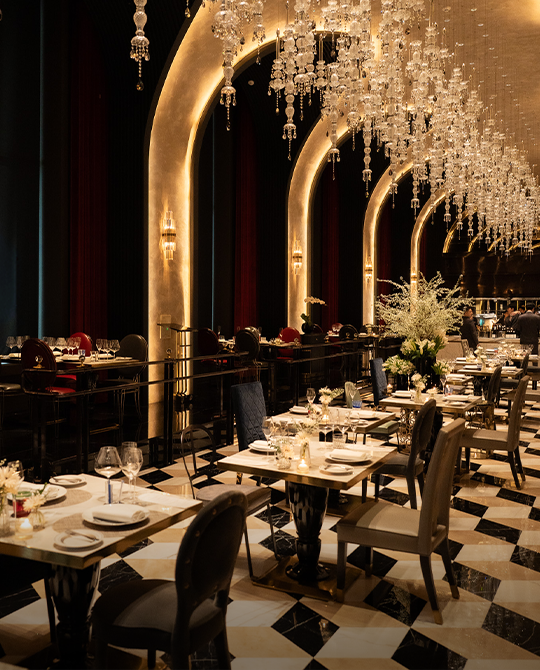
Located on Yeongjong Island in Incheon, Art Paradiso is an all-suite, adults-only boutique hotel that sits close enough to Incheon International Airport that it could easily be dismissed as a layover stopover. Instead, it fills the entire property with contemporary art, turning what could have been a purely transactional stay into a hotel with an actual point of view — an unusual position to hold for anything this close to an airport.
The Shilla Seoul — Seoul’s Reigning Symbol of Korean Hospitality
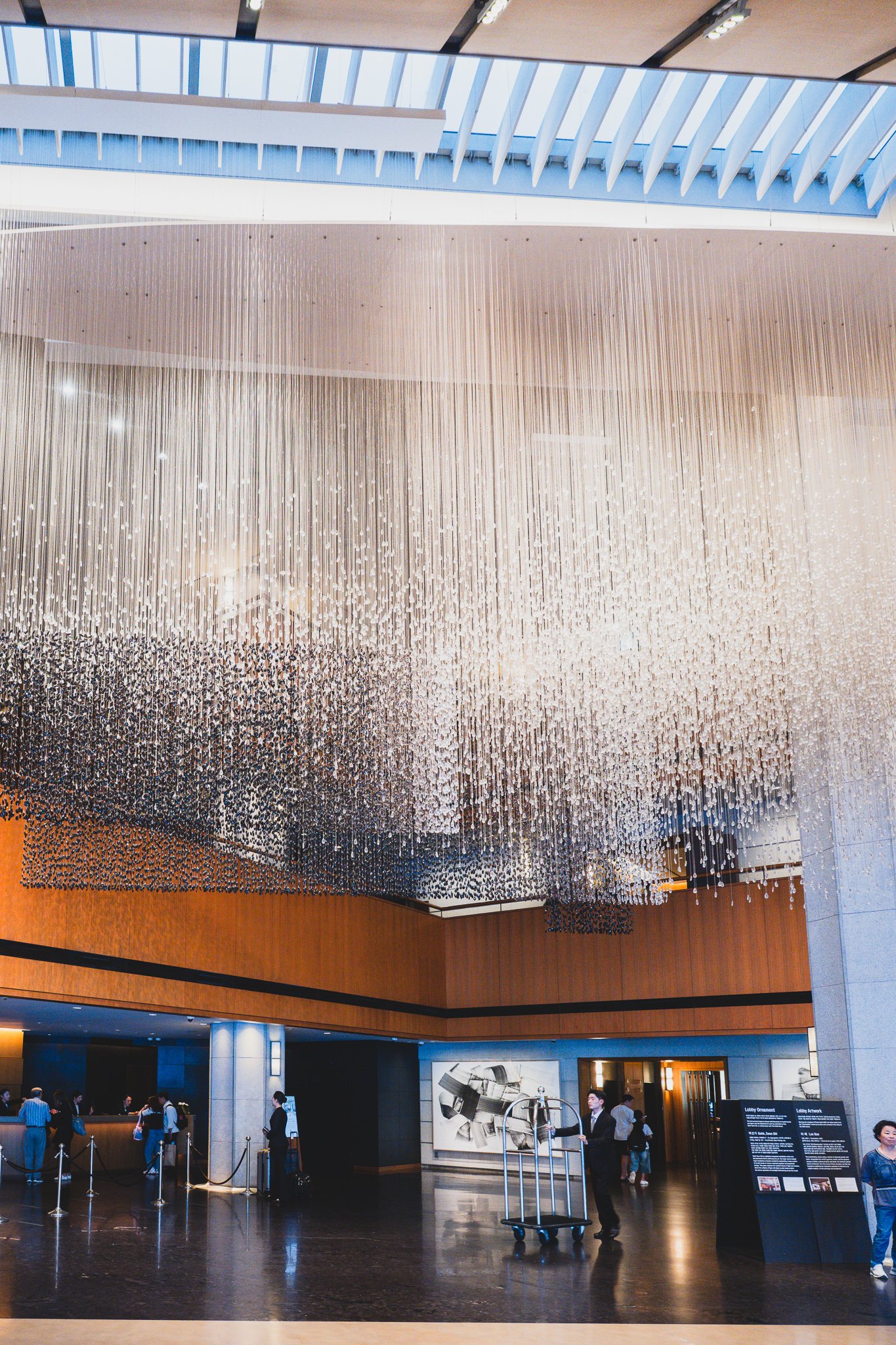
The Shilla Seoul has been synonymous with Korean-style hospitality for decades. Set at the foot of Namsan in Jangchung-dong, it offers gardens and green space that are rare for a hotel this central, and it houses La Yeon, a MICHELIN two-star Korean restaurant. Of the nine hotels on this list, it’s the one that leans most directly into “Korean-ness” as its defining trait, rather than architecture, height, or a single standout amenity. Past the lobby’s crystal ceiling installation, on the first floor, is The Distillers Library — a whisky space run by William Grant & Sons (the company behind Glenfiddich and The Balvenie) with an unusual model: buy a bottle at retail price and drink it in a private room with no separate room charge, which is a rare structure for a hotel bar. I sat in on a tasting there and the age-stated flights were genuinely well put together.
Yuwonjae — The First Key Hotel Outside Seoul, Busan, Jeju, or Incheon
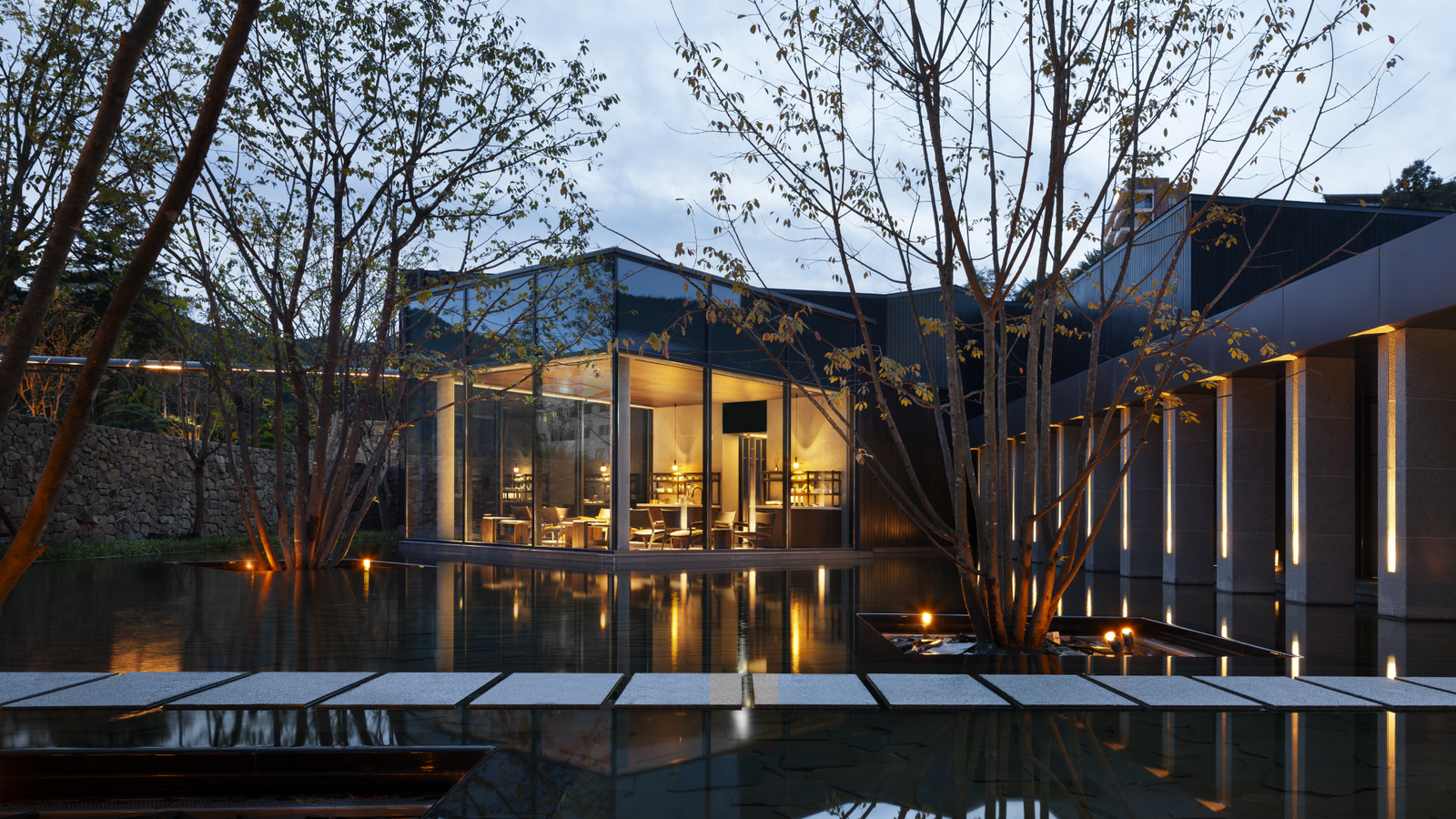
Yuwonjae, in Suanbo, Chungju, is the most notable new name on the 2026 list — and not just because it’s new. Every one of its 16 rooms comes with a private garden and an individual outdoor hot spring bath, and the architecture draws directly from traditional hanok design. It serves seasonal Korean course dining built around its hot spring setting. Until this year, every MICHELIN Key hotel in Korea sat in Seoul, Busan, Jeju, or Incheon — Yuwonjae is the first to put a small hot-spring town on that map, on the strength of an experience that’s genuinely only available there.
So, Which One Should You Actually Book?
- Chasing a skyline you can’t get anywhere else: Signiel Seoul or Signiel Busan — the infinity pools are the whole pitch, and neither view is replicable elsewhere.
- Want the “grand hotel” feeling with real heritage behind it: The Shilla Seoul or Josun Palace — both built around a story of Korean hospitality rather than a single design gimmick.
- Traveling for architecture or design as much as the stay itself: Four Seasons Hotel Seoul, JW Marriott Jeju, or Fairmont Ambassador Seoul — each involved a distinct design mind (palace-inspired form, Bensley’s volcanic materials, Rogers’ structural approach).
- Landing at Incheon with an early or late flight: Art Paradiso — it’s close to the airport without feeling like an airport hotel.
- Willing to travel further for something no other hotel in Korea offers: Yuwonjae — a private outdoor hot spring bath attached to every single room isn’t something you’ll find at any of the other eight.
FAQ
Q: What does a MICHELIN Key actually mean?
A: It’s MICHELIN’s rating system for hotels, separate from its restaurant stars. One Key means “a very special stay,” Two Keys means “an exceptional stay,” and Three Keys — the top tier, held by roughly 50-plus hotels worldwide — means the hotel is considered a destination in its own right. No hotel in Korea currently holds Three Keys.
Q: Is a MICHELIN Key the same thing as a Michelin-starred restaurant?
A: No, they’re separate systems. That said, several hotels on this list also happen to house Michelin-starred restaurants — Yu Yuan (Four Seasons Seoul), Bicena (Signiel Seoul), Eatanic Garden (Josun Palace), and La Yeon (The Shilla Seoul) — so the two lists overlap without being the same thing.
Q: Can regular travelers actually book these hotels, or are they invite-only?
A: All nine are commercially bookable, the same as any other hotel — a MICHELIN Key isn’t a private-members distinction. Rates and availability vary by season, so compare directly on each hotel’s own site or a major booking platform before you commit.
Q: Which hotel is the newest addition to Korea’s Key list?
A: Yuwonjae, a 16-room hot spring hotel in Suanbo, Chungju. It’s also the first Key hotel located outside Seoul, Busan, Jeju, or Incheon.
Q: Do any of these hotels have kids’ facilities or family-friendly rooms?
A: This list doesn’t specify family amenities one way or the other — Art Paradiso is explicitly adults-only, so it’s the one exception to rule out for a family trip. For the rest, check family-room availability directly with the hotel before booking.
Last updated: September 2026.