TL;DR: Geumdwaeji Sikdang (“Golden Pig Restaurant”), near Yaksu Station in Jung-gu, has held a Michelin Bib Gourmand for eight straight years (2019–2026) and is one of the most talked-about Korean BBQ spots in Seoul — a magnet for K-pop idols, a Shinsegae Group chairman, and international visitors like Kanye West and David Beckham. The reason it’s actually worth the hype: it grills its own custom-bred pig, a Duroc–Yorkshire–Berkshire cross the restaurant calls “YBD” (or Eollukdoyaji, “spotted pig,” informally), dry-aged roughly two weeks before it hits the table. It’s open daily 11:30 AM–11:00 PM with no phone or app reservation — you line up and scan a QR code on-site, with waitlisting starting as early as 10:30 AM — so budget for a real wait, especially at dinner.
Geumdwaeji Sikdang is one of those Seoul restaurants that shows up on every “best Korean BBQ” list, and after visiting, I get why — though I’d argue the real story isn’t the celebrity name-dropping, it’s the pig itself. Most Korean BBQ spots buy standard commercial pork. This one grills a breed the restaurant developed specifically for grilling, and you can taste the difference the moment the fat starts rendering.
If you’re building out a Seoul BBQ crawl, it’s also worth reading this alongside my visit to Namyeongdon Seongsu — the two are regularly named together as part of Seoul’s unofficial “Big 3” Korean BBQ trio, and they’re different enough experiences that trying both is worth it if you have the time.
Where it is and the basics
Address: 149 Dasan-ro, Jung-gu, Seoul (about a 10-minute walk from Yaksu Station, exit toward Sindang-dong 370-69, 1F–3F)
Hours (current, 2026): Daily 11:30 AM–11:00 PM, last order 10:20 PM, no break time, open every day of the week including holidays. Waitlisting can start forming as early as 10:30 AM before opening, and on busy days the ticket/waitlist window can close as early as 6:30 PM once the day’s stock runs out.
Reservations: No phone or app booking — walk-in waitlist only (QR code / tablet sign-in on-site).
Parking: Not available at the restaurant — use a nearby paid public lot.
Price range (current, 2026): Individual cuts now run roughly ₩19,000–24,000 for a 150g order, with the pork skin at ₩16,000 and the signature kimchi stew still just ₩8,000. A solo diner ordering a couple of cuts plus the stew still lands comfortably under the ₩45,000-per-person Bib Gourmand ceiling.
What’s changed since my 2021 visit: I confirmed current hours and pricing via WebSearch (Diningcode’s restaurant profile plus several 2025–2026 visitor write-ups) rather than relying on my own five-year-old numbers. Two things stood out: the weekday/weekend hour split I experienced in 2021 (weekends closing an hour earlier) appears to have been standardized to a daily 11:30 AM–11:00 PM schedule, and portion sizes shrank slightly — 150g per order now versus 170g when I visited — alongside real price increases on the meat cuts (roughly +35–40%). The kimchi stew, notably, is still ₩8,000, unchanged in five years. The menu has also grown a couple of items since 2021, including a basil-wrap side (₩5,000) and hanwoo beef tartare (₩36,000).
The line starts before the doors do
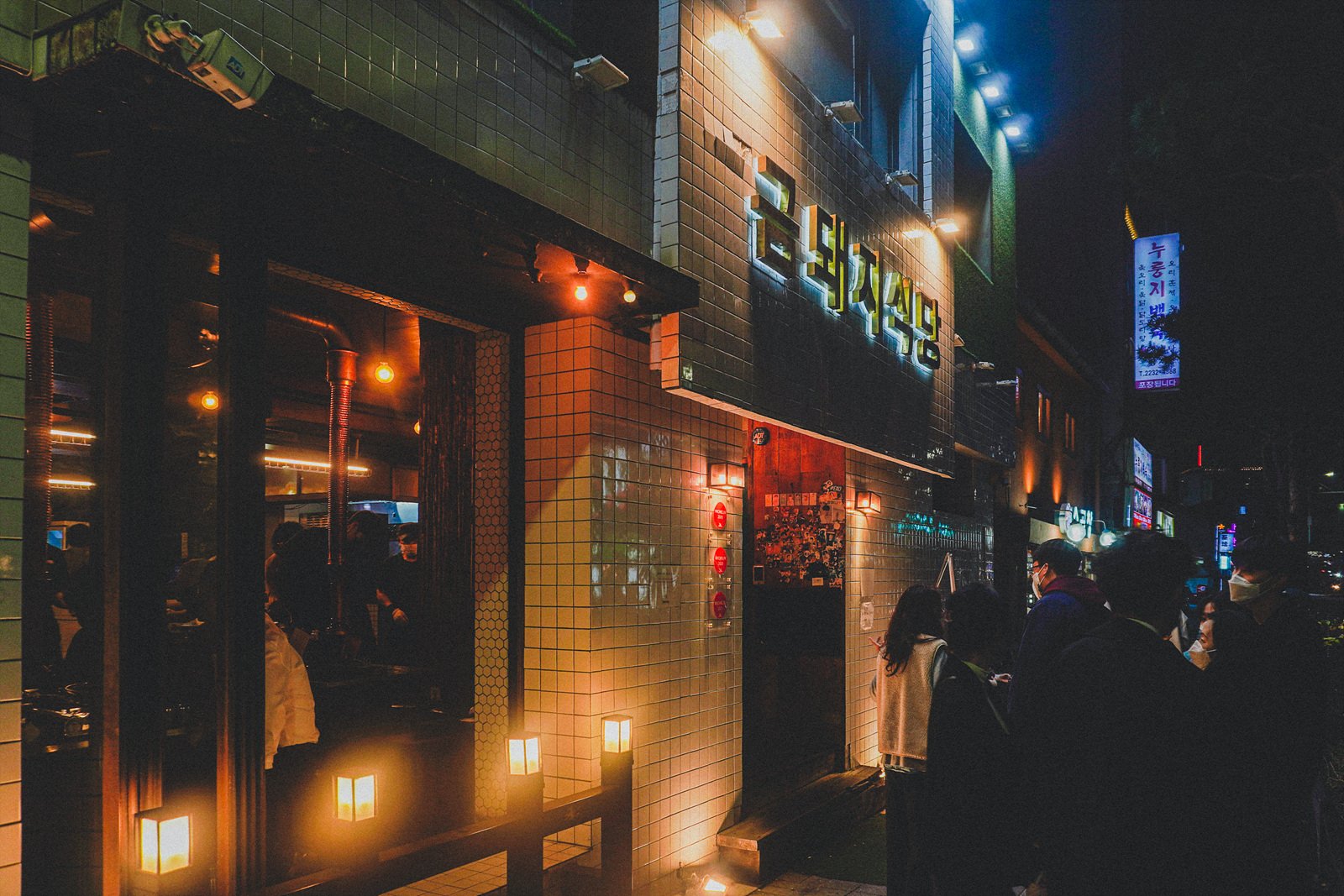
Even on a weeknight, there was already a small crowd gathered outside by the time we arrived — Geumdwaeji Sikdang doesn’t take reservations, so waiting is baked into the experience here. The signage glows gold against the dark tile facade, which, once you know the backstory, makes a lot more sense.
Why “Golden Pig” — and why the name might be slightly out of date
The restaurant’s name translates to “Golden Pig Restaurant,” and the story behind it is actually the most interesting thing about this place. Geumdwaeji Sikdang doesn’t buy standard market pork — it raises and grills its own custom-crossed breed, sometimes labeled “YBD” (Yorkshire × Berkshire × Duroc) on menus and in Korean coverage, and referred to informally as Eollukdoyaji (“spotted pig”). Each breed contributes something specific: Duroc for marbling and flavor, Yorkshire for meat yield, and Berkshire for texture. The pork is dry-aged for roughly two weeks at low temperature before it’s served, often bone-in.
The original blend reportedly leaned more heavily on breeds that gave the pigs a golden-toned coat — hence “Golden Pig.” The current three-way cross doesn’t necessarily produce gold-colored pigs anymore, but by the time that changed, the name (and the reputation) had already stuck, so nobody’s renaming a restaurant with an eight-year Michelin streak over a technicality.
A Michelin regular, and a celebrity magnet
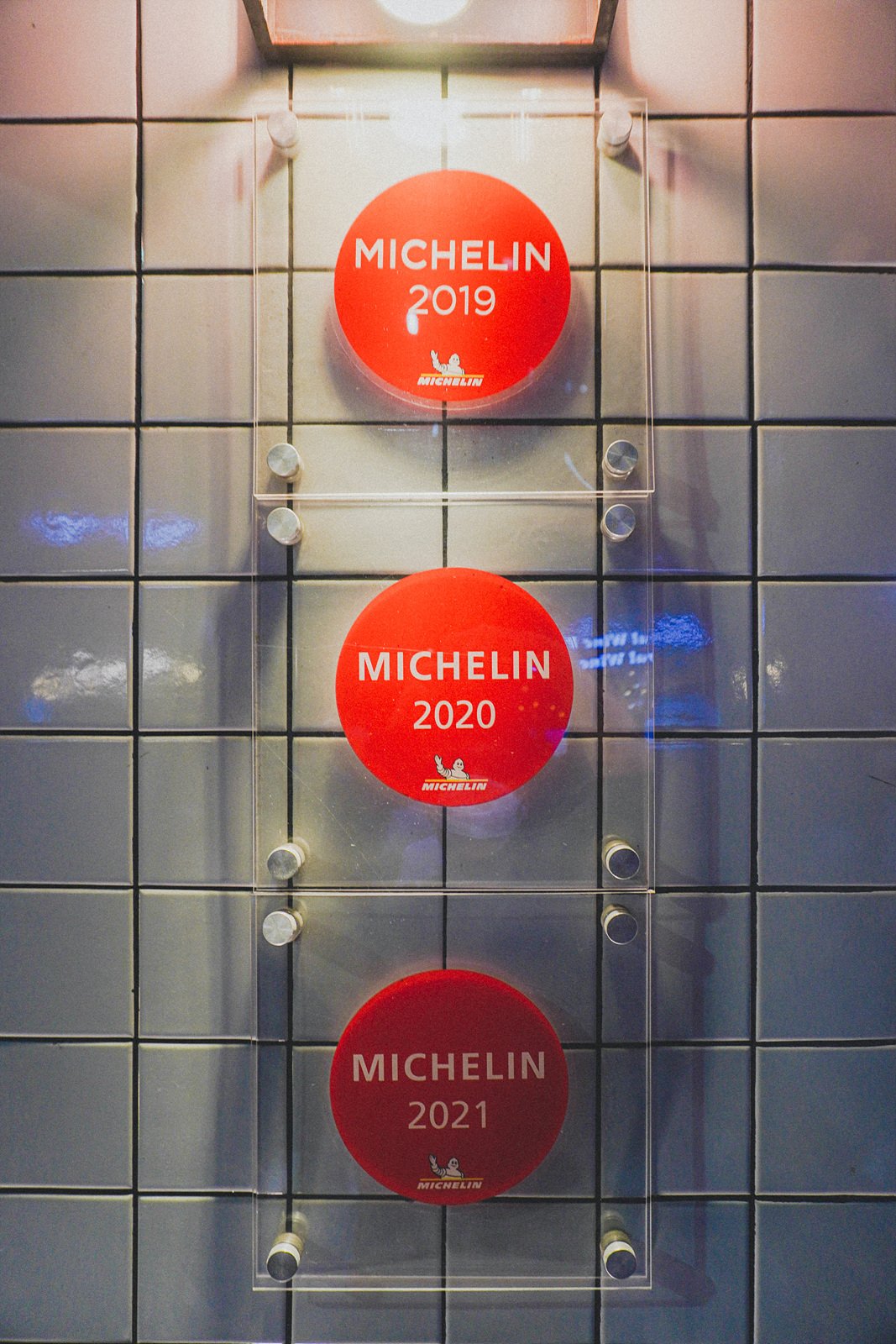
The wall inside tracks the restaurant’s Michelin history year by year — it’s been a Bib Gourmand pick (Michelin’s “great food, reasonable price” category, capped around ₩45,000 per person) every year since 2019, now eight years running through the 2026 guide, and was named to the Michelin Guide’s 2025 “Best Discovery” list on top of that.
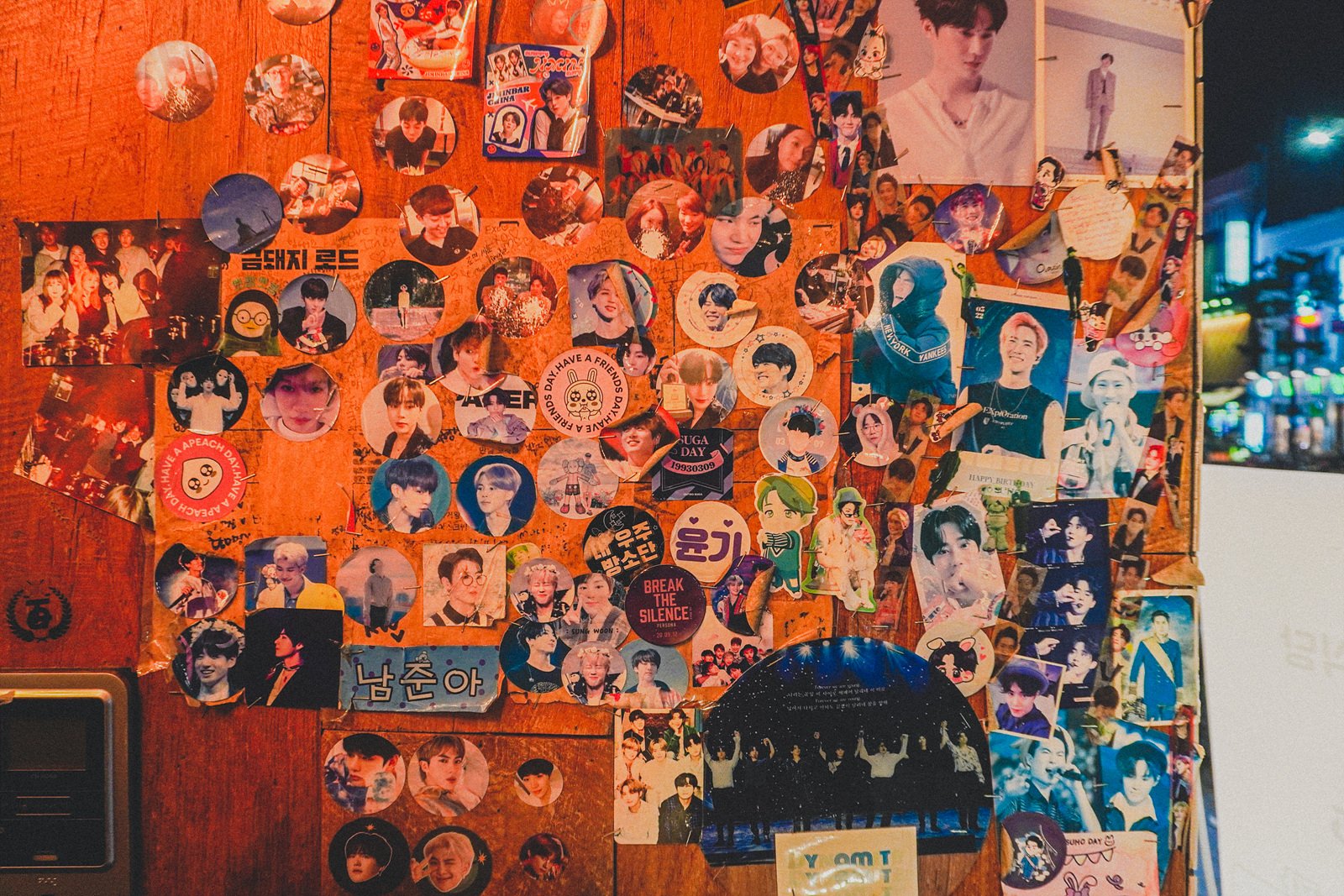
The other wall tells a different story. This is fan-made — a wall of K-pop photocards and notes left by fans tracking which idols have eaten here. Reports and fan accounts place BTS members, G-Dragon, and EXO’s Sehun and Suho among the visitors over the years, and the restaurant is frequently cited as a favorite of Shinsegae Group chairman Chung Yong-jin, one of Korea’s most prominent business figures and a well-known foodie. International names get thrown around too — Kanye West and David Beckham both show up in write-ups of past visits. I can’t independently verify every name on that wall, but the sheer density of it tells you everything about how this restaurant’s reputation snowballed.
Three floors, three different moods
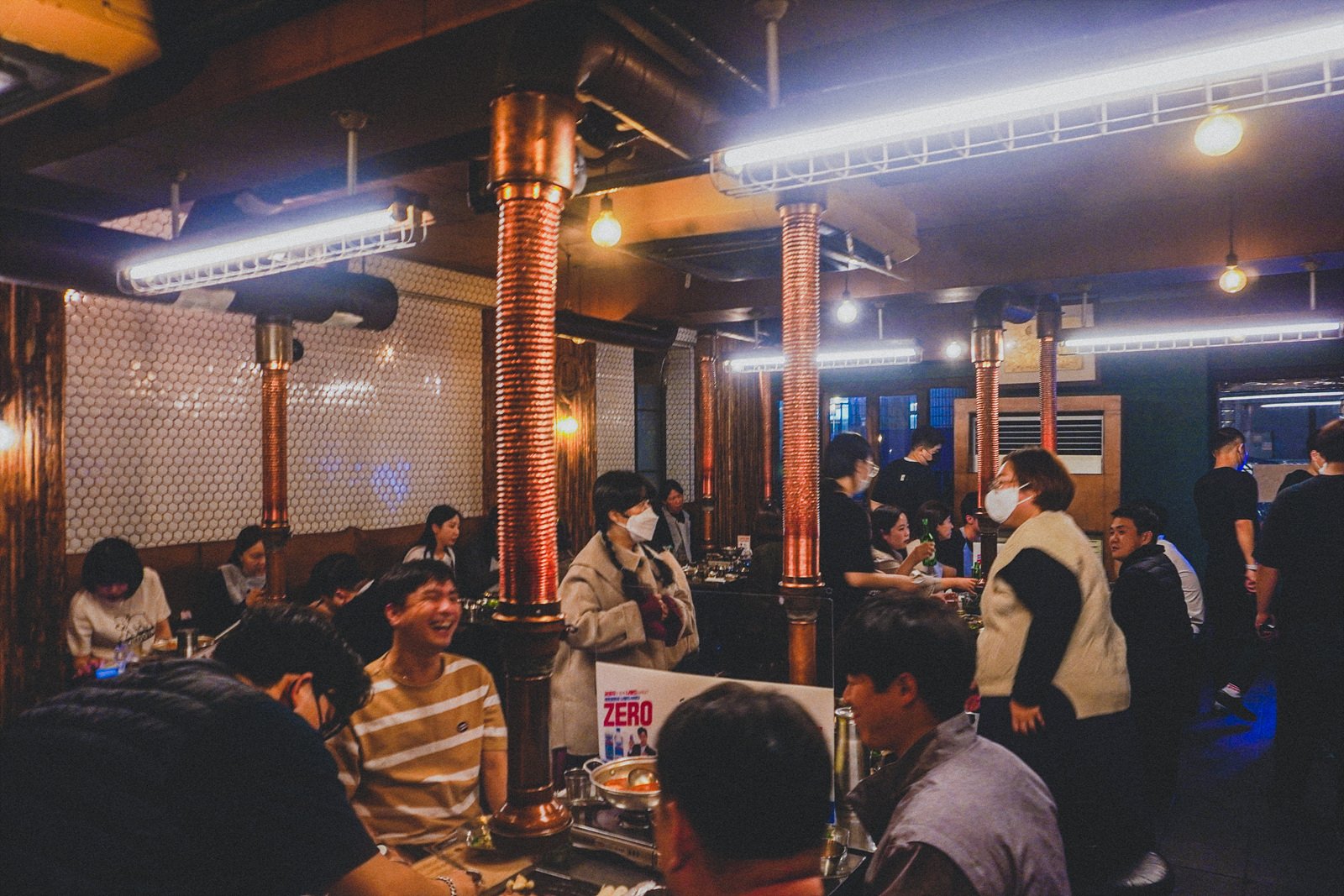
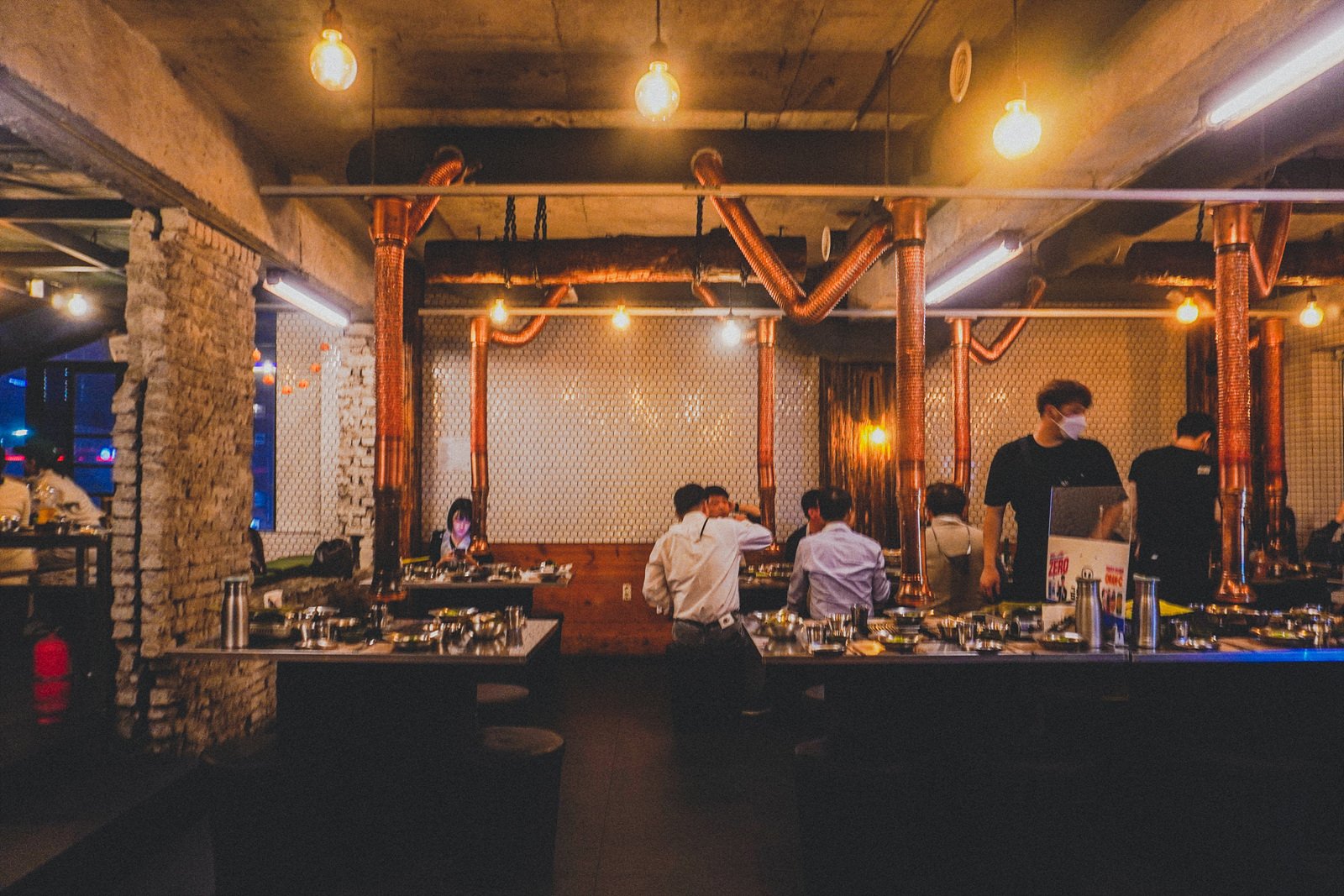
The restaurant is spread across three floors, and each one has a slightly different feel — one floor leans into a classic, no-frills samgyeopsal-joint layout, another has more intimate counter-style seating, and the floor we ended up on had a livelier, bar-like energy with groups packed in around shared tables. The copper exhaust pipes hanging directly over every table aren’t just decorative — with charcoal grilling at every seat, you need that much active ventilation, and it becomes part of the room’s visual identity.
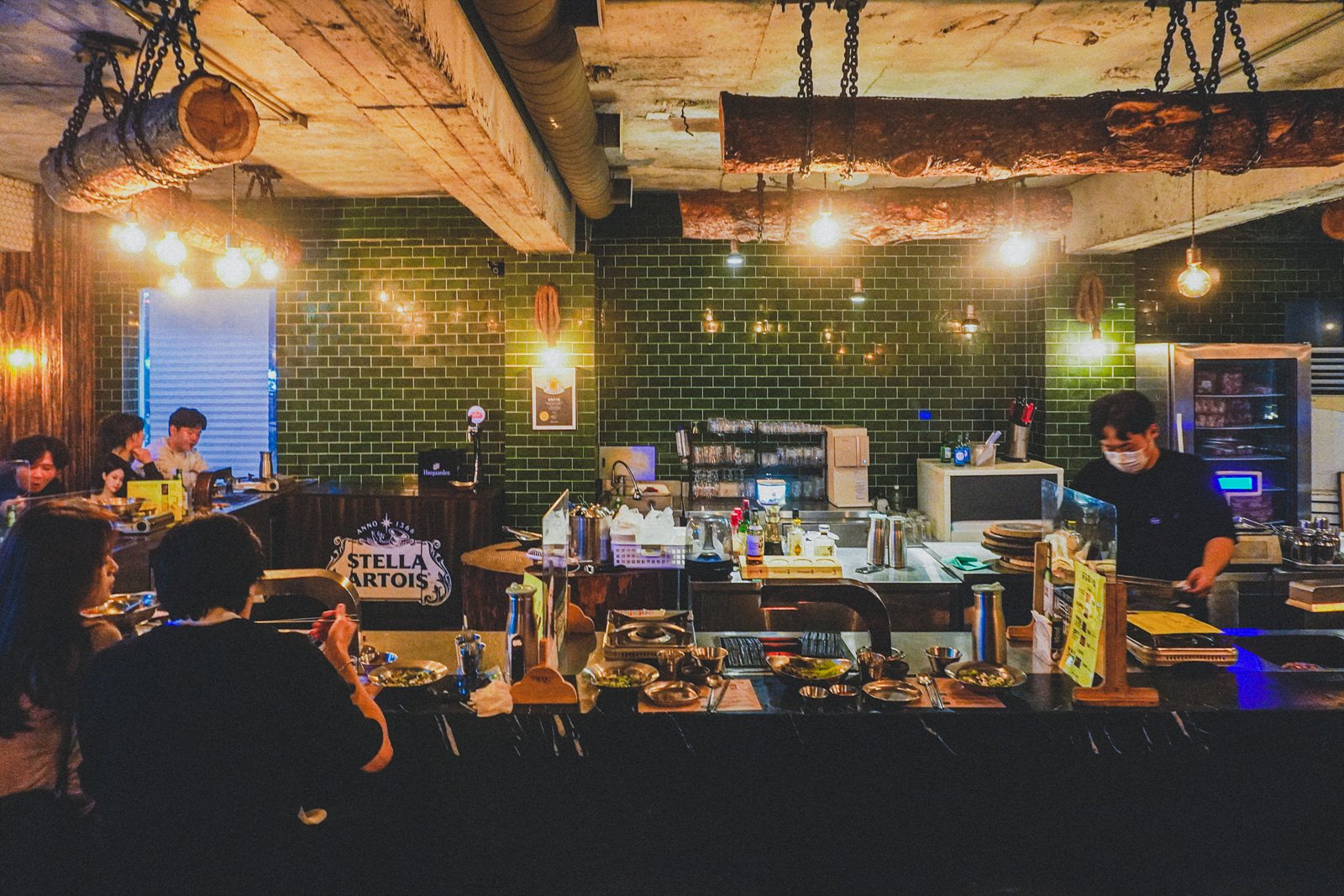
The counter area doubles as both a small bar and a staging point for banchan — a good sign if you’re the type who likes watching a kitchen work rather than just waiting on food to appear.
The menu — 2026 pricing (verified), with my 2021 visit for texture
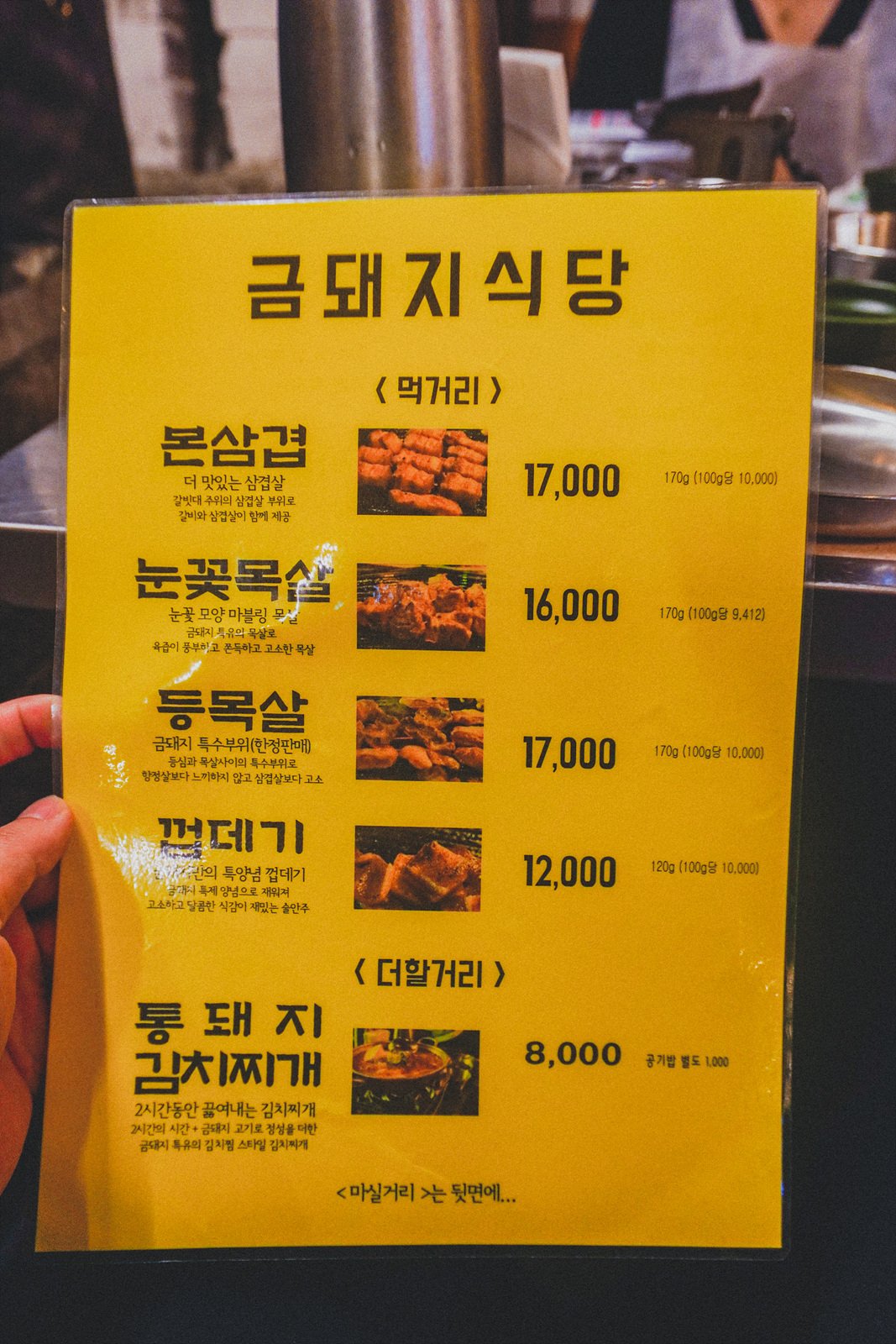
The core menu is short and pork-focused. This is my own 2021 menu photo, but I cross-checked every price against current 2026 listings (Diningcode’s restaurant profile) before publishing, since a five-year-old menu photo isn’t something I’d want a reader actually budgeting from:
| Item | 2021 (my visit) | Current, 2026 |
|---|---|---|
| Bon-samgyeop (본삼겹, pork belly cut from around the rib) | ₩17,000 / 170g | ₩19,000 / 150g |
| Nunkkot-mokssal (눈꽃목살, “snowflake” marbled pork neck/shoulder) | ₩16,000 / 170g | ₩23,000 / 150g |
| Deung-mokssal (등목살, a limited special cut between the loin and neck) | ₩17,000 / 170g | ₩24,000 / 150g |
| Kkeopdegi (꺼데기, seasoned pork skin) | ₩12,000 / 120g | ₩16,000 |
| Tongdwaeji Kimchi-jjigae (통돼지김치찌개, whole-pig kimchi stew) | ₩8,000 | ₩8,000 — unchanged |
Also new on the current menu since my visit: a basil-wrap side (바질쌈, ₩5,000) and hanwoo beef tartare (한우 육회, ₩36,000) — neither of which existed on the board I photographed in 2021. What’s held steady across five years is the relative pricing logic: the kimchi stew is deliberately cheap next to the meat cuts, meant as a shared side rather than a meal on its own, and the “limited” Deung-mokssal cut still carries the highest per-order price on the board.
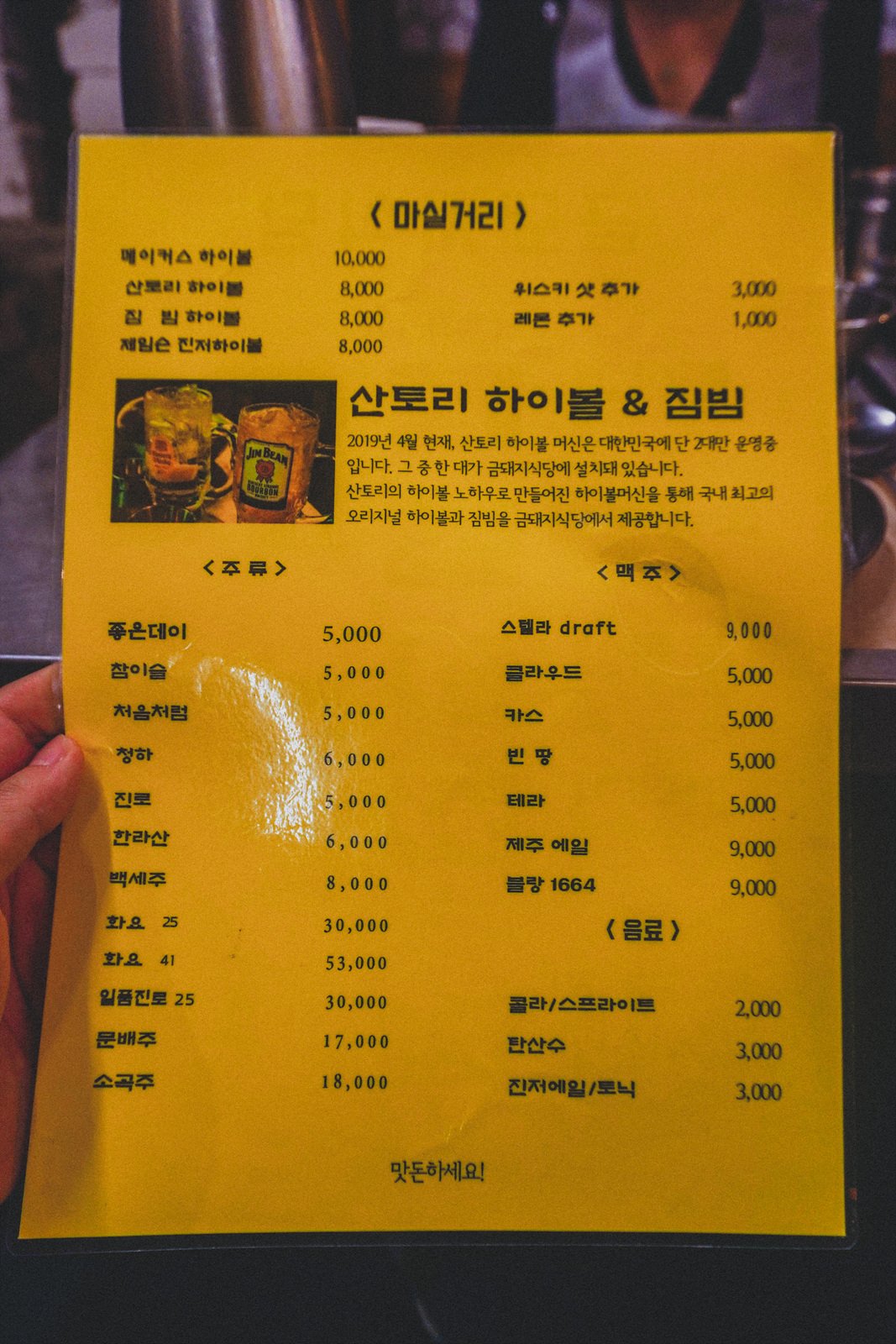
The drinks list is worth a glance too — beyond the usual soju and beer lineup, the restaurant had (as of 2021, per the menu’s own text) one of only two Suntory highball machines operating in Korea at the time, a small but genuinely unusual detail for a BBQ joint.
Watching — and tasting — the cuts
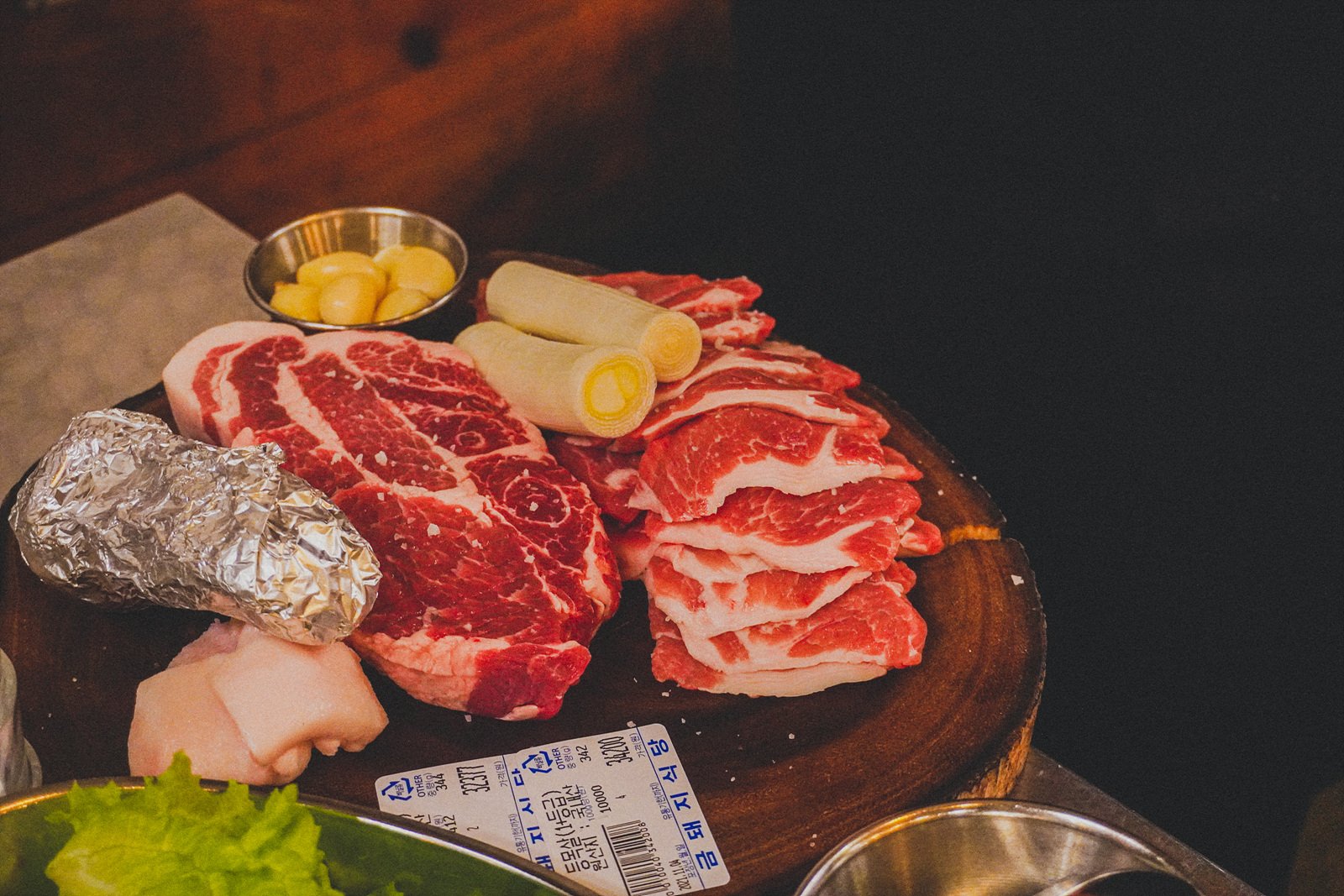
Everything arrives raw on a shared wooden board before it goes on the grill, which makes it easy to see exactly what you’re about to eat — no mystery cuts here.
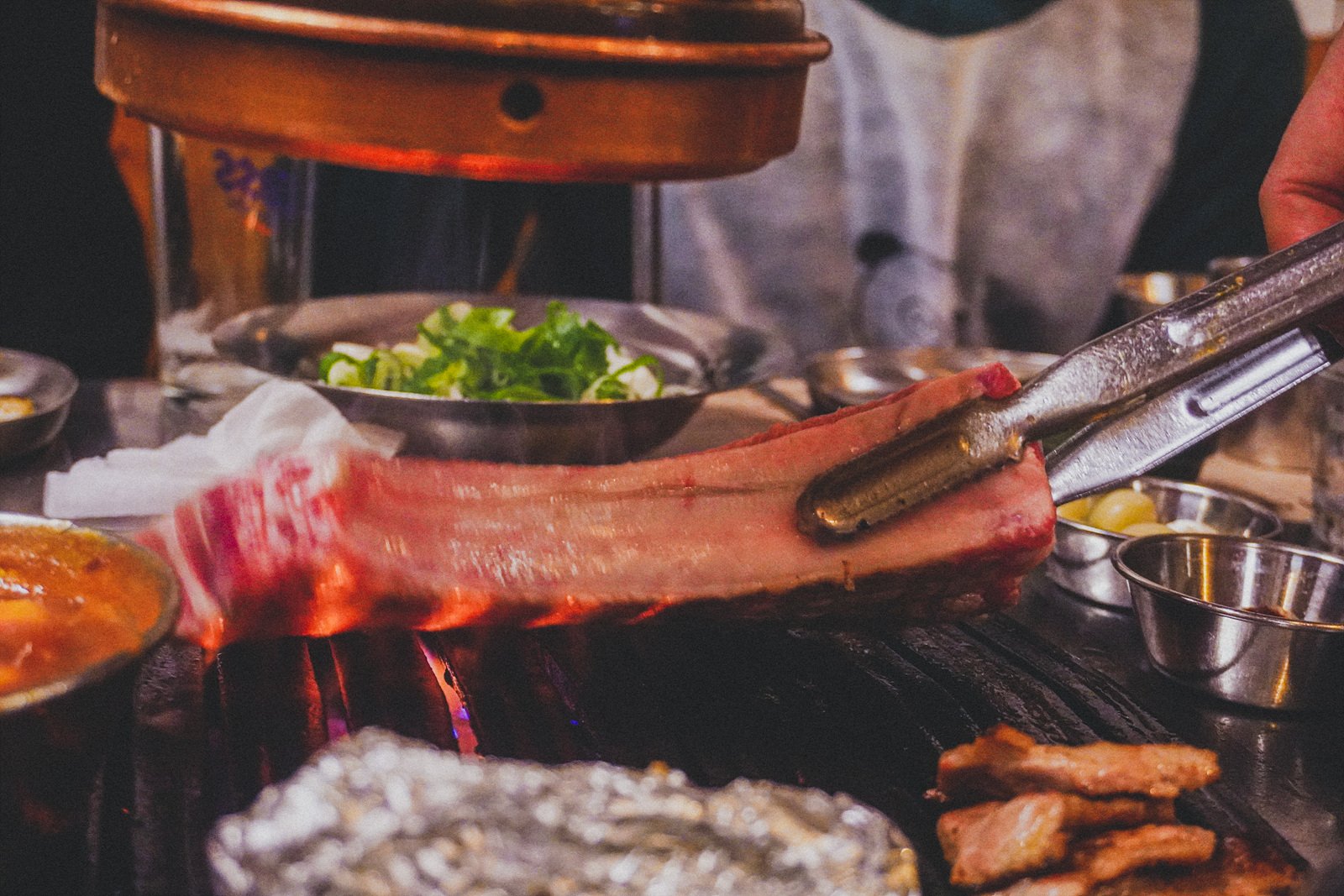
The Bon-samgyeop goes on bone-in, rib still attached, which is unusual for a cut most people expect to see pre-sliced. Watching it hit the charcoal first, whole, before eventually getting cut down tableside, was a small detail that set this apart from a standard samgyeopsal order.
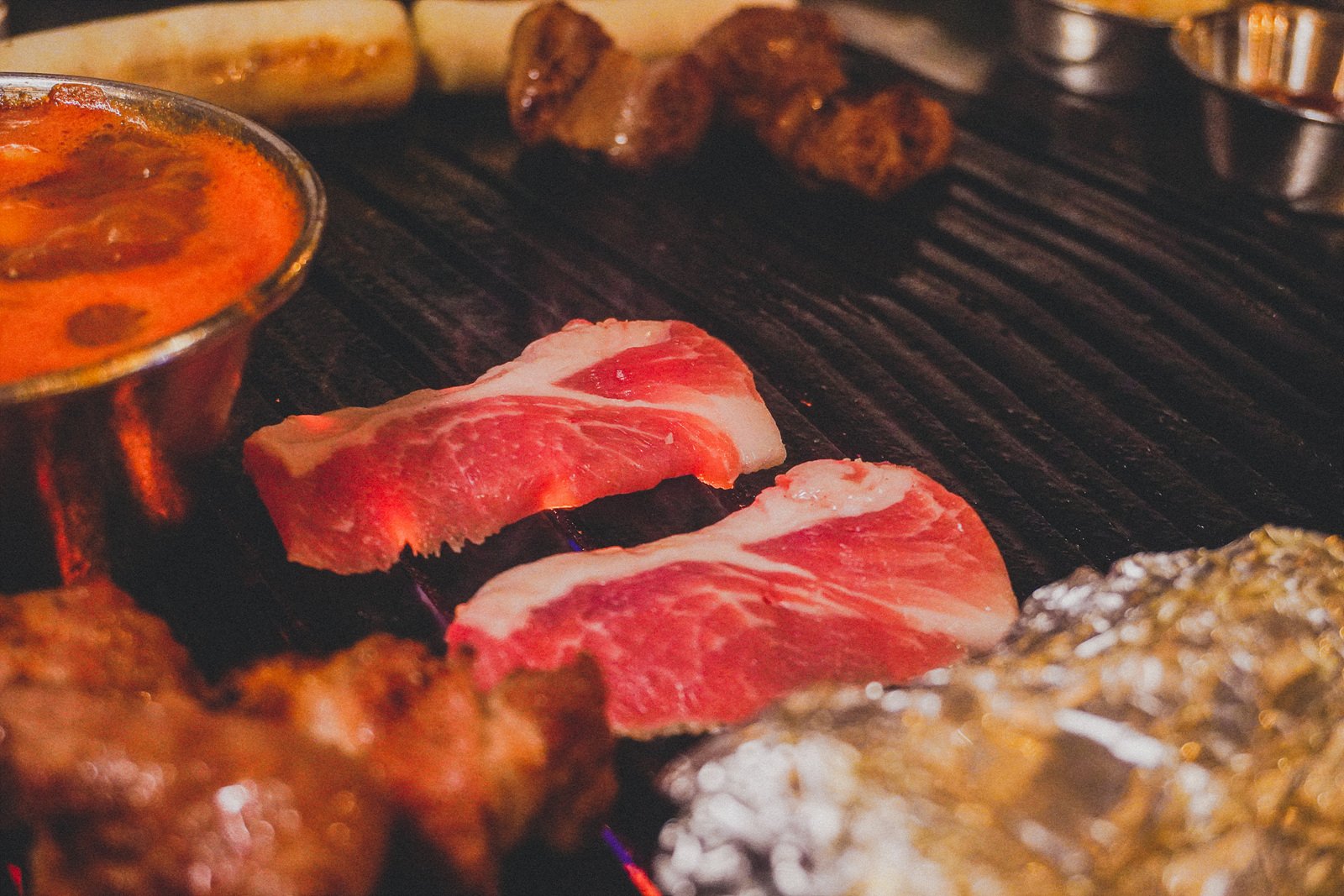
The Nunkkot-mokssal — the “snowflake” pork neck — earns its name from the marbling pattern, which shows up clearly once it hits heat. It’s the cut most reviews (and my own notes) single out as the best of the bunch: rich without tipping into greasy, with a genuinely different texture from the belly cuts.
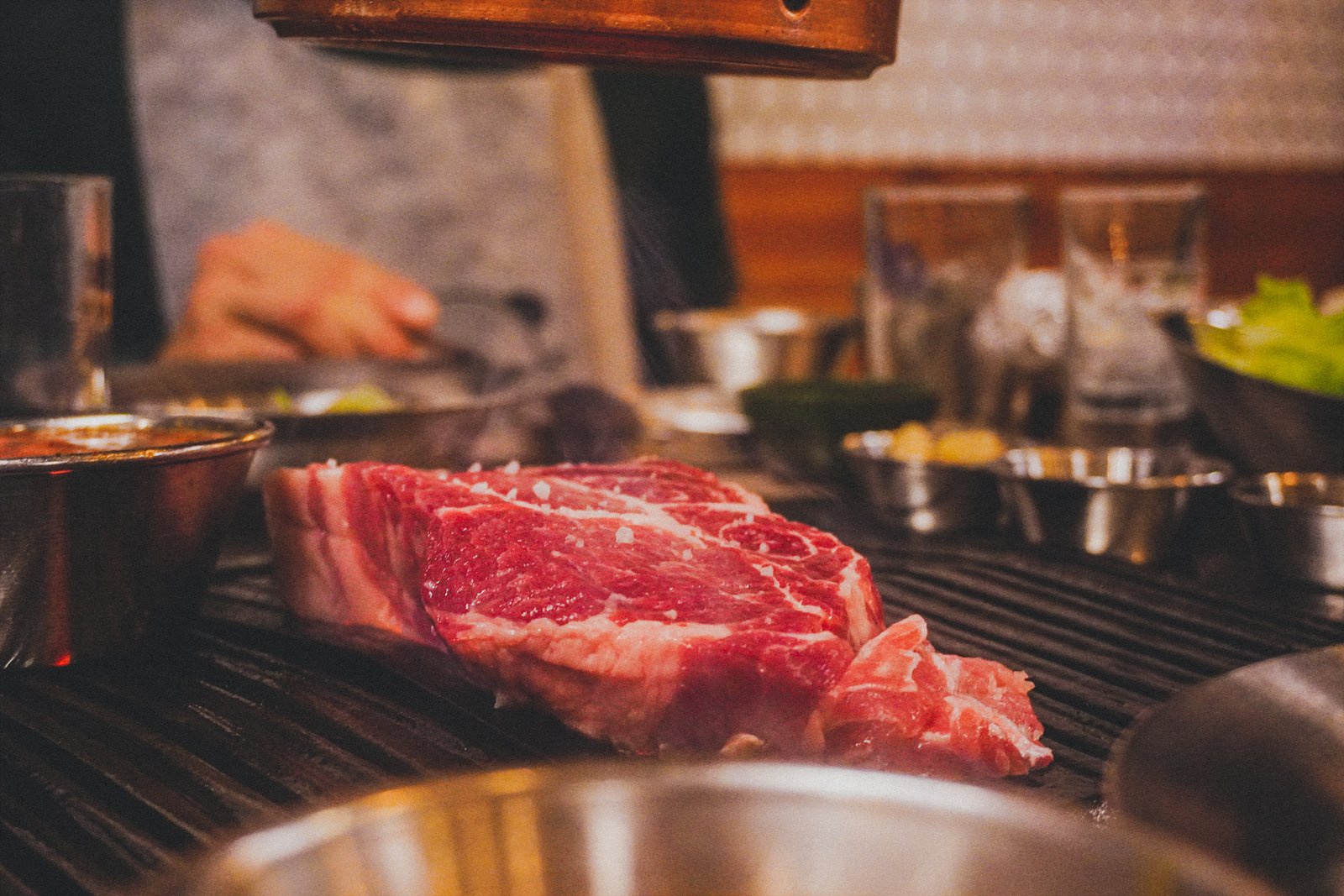
The Deung-mokssal, cut from between the loin and neck, came out thicker than I expected — closer to a small steak than a typical BBQ slice — which tracks with the menu’s claim that it’s a limited cut with less fat than the belly but more richness than a plain loin.
The pork skin, before and after
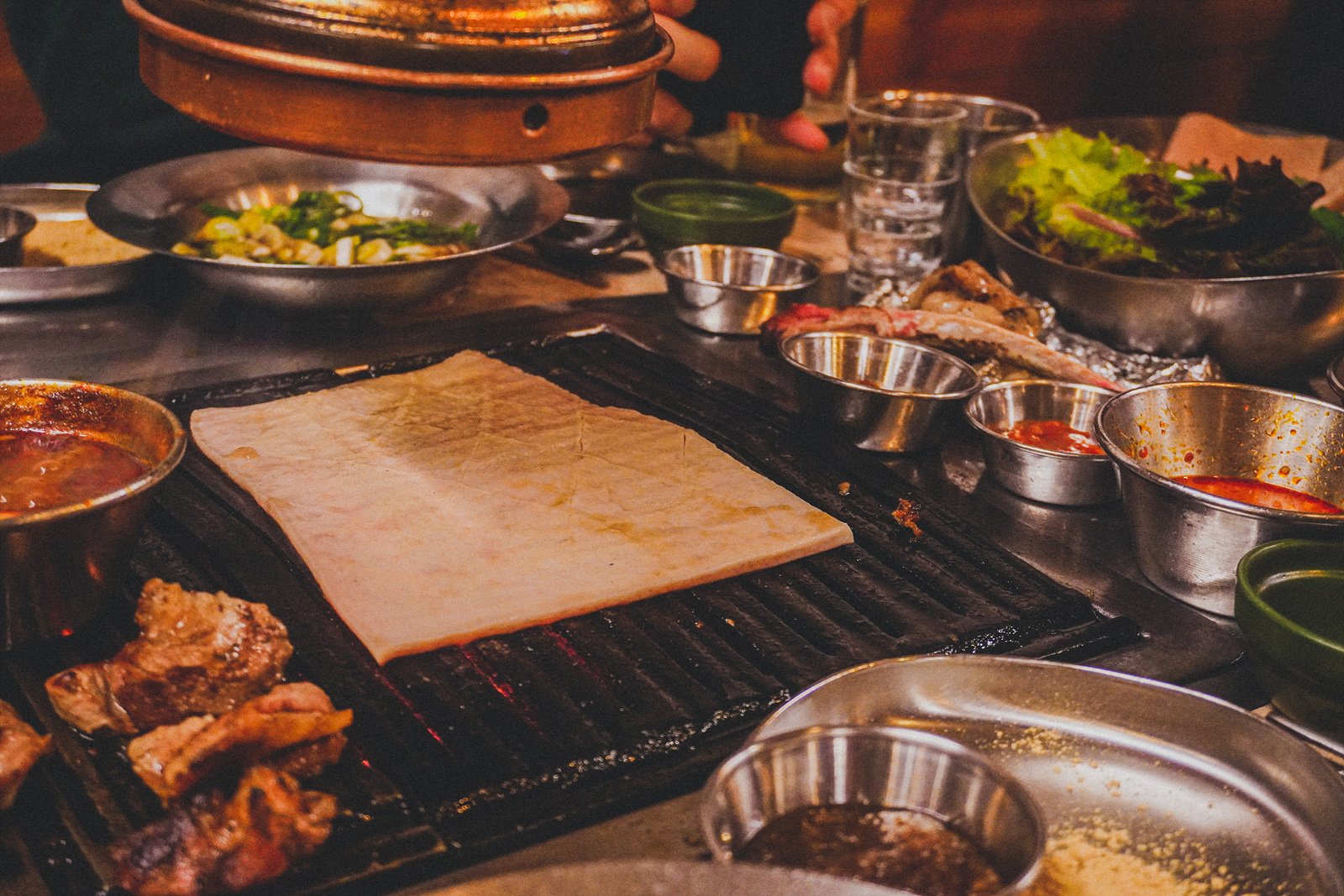
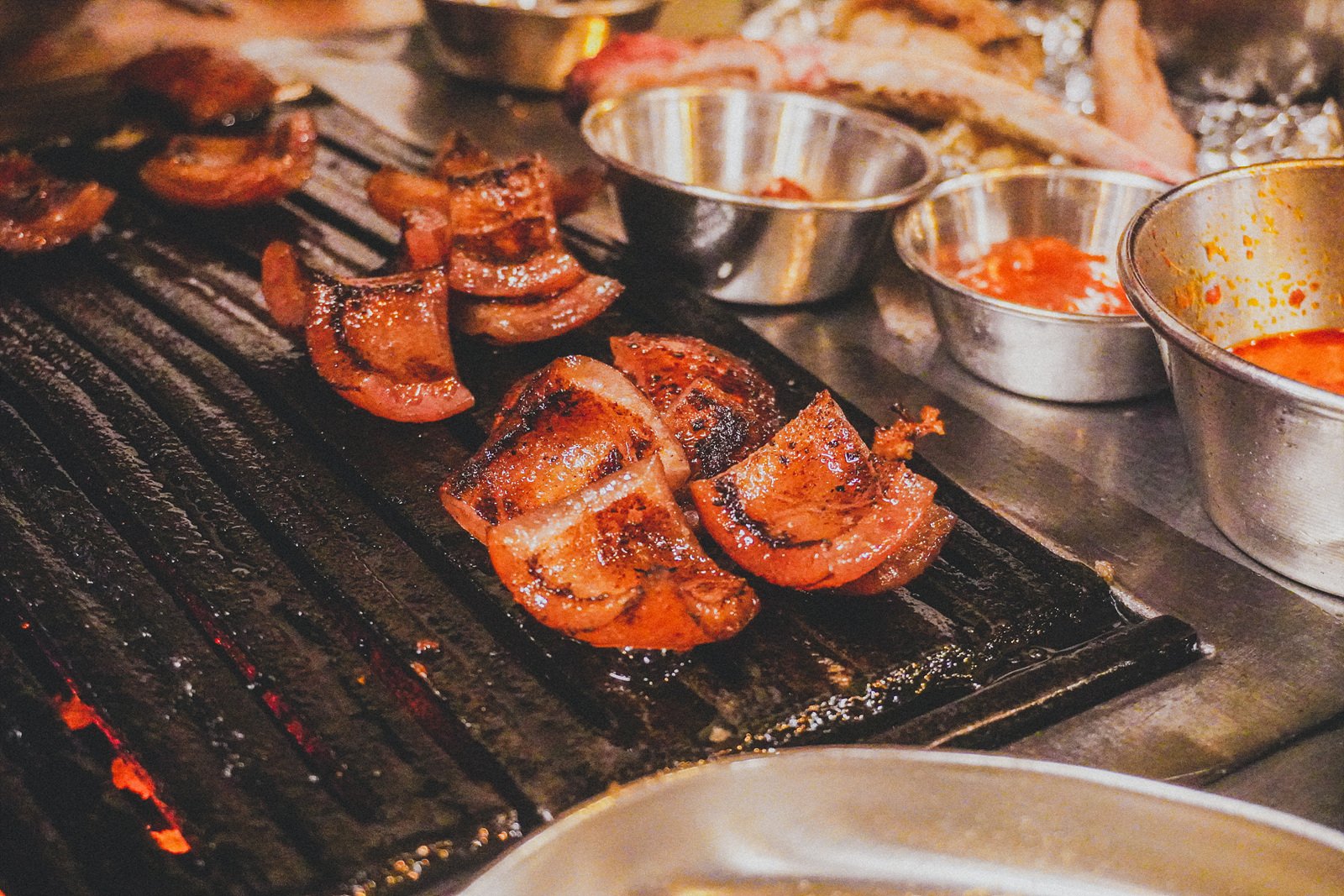
The Kkeopdegi (pork skin) goes on as one large slab and comes off cut into smaller pieces once it’s rendered down and browned. It’s chewier than the meat cuts and noticeably sweeter — the restaurant seasons it in-house — and it’s the item I’d most specifically recommend ordering if you only try one “extra” beyond the core meat cuts.
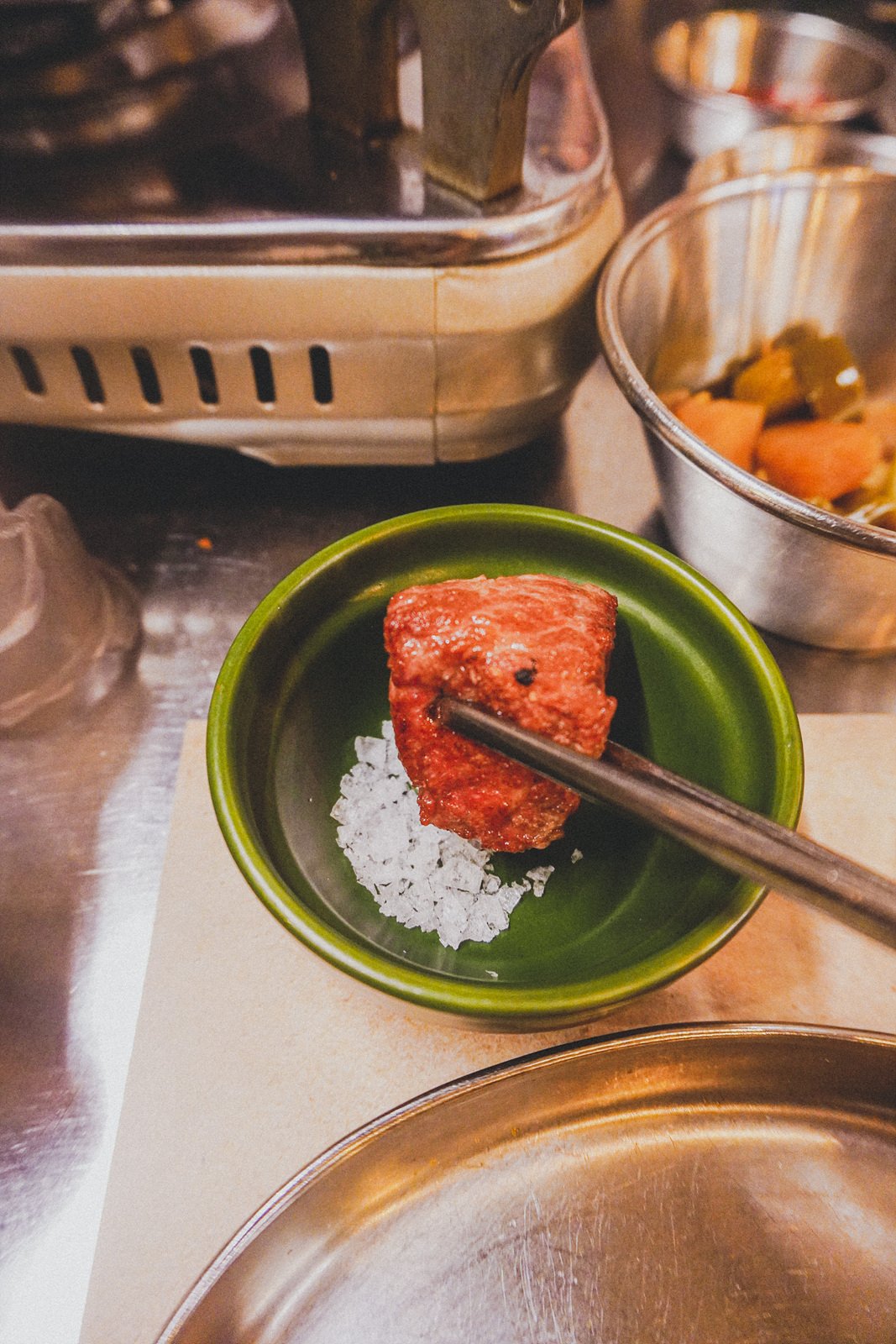
Coarse salt was the simplest way to eat any of the cuts, and honestly the one I kept going back to — letting the pork’s own fat and the char do the work instead of layering on sauce.
The signature: a kimchi stew that isn’t really trying to be a soup
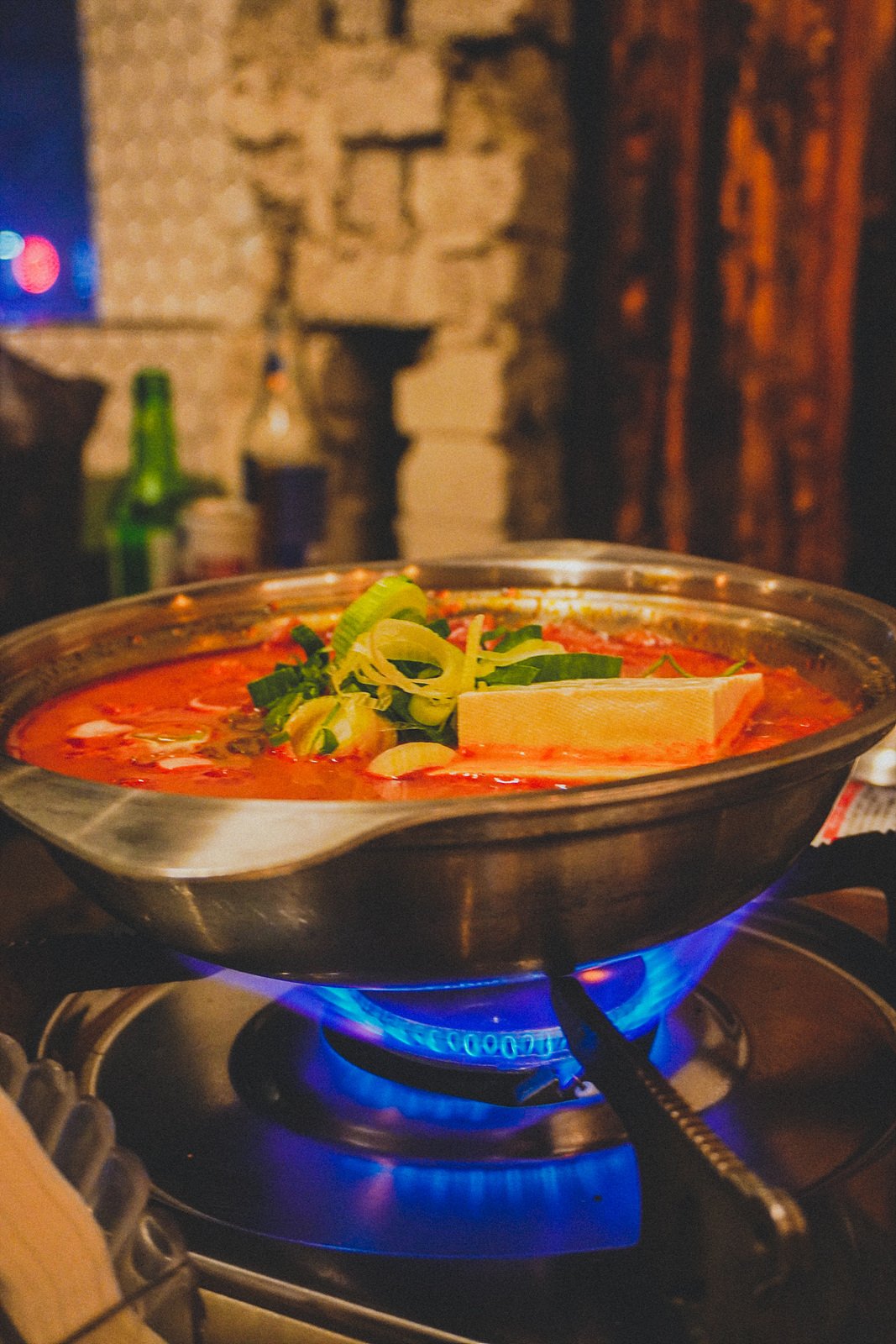
The Tongdwaeji Kimchi-jjigae is the one thing on the menu I’d tell a first-time visitor not to skip. It’s simmered for around two hours and built around the same pork the restaurant grills — the texture lands somewhere between a soup and a braise (closer to a Korean kimchi-jjim than a typical jjigae), thick with tofu, scallions, and well-rendered pork. It doesn’t come with rice — that’s a separate order — which tells you this is meant to be shared and eaten alongside the grilled meat, not ordered as a stand-alone meal.
FAQ
Q: Do I need a reservation?
A: No phone or app booking exists — you show up, sign in on-site (usually via a QR code or waitlist tablet), and wait for a table. Waitlisting can start as early as 10:30 AM, and on busy days the day’s tickets can run out by around 6:30 PM, so expect a real wait, especially for dinner or weekends.
Q: What are the current hours?
A: Daily, 11:30 AM–11:00 PM, last order 10:20 PM, no break time, open every day including holidays (verified 2026). This is a change from the weekday/weekend split I experienced on my 2021 visit — it now runs the same hours seven days a week.
Q: Is Geumdwaeji Sikdang still Michelin-rated?
A: Yes — it’s held a Bib Gourmand designation in the Michelin Guide Seoul every year since 2019, eight years running through the 2026 guide, and was named to Michelin’s 2025 “Best Discovery” list.
Q: What makes this different from a normal Korean BBQ restaurant?
A: The pork itself. The restaurant uses a custom Duroc-Yorkshire-Berkshire cross bred specifically for grilling, dry-aged for about two weeks before serving — most BBQ spots in Seoul are working with standard commercial pork.
Q: Is it beginner-friendly if I don’t speak Korean?
A: The core menu is short enough to navigate by photo alone, and staff grill much of the meat for you. That said, don’t expect an English menu — go in ready to point, or look up the Korean cut names above before you arrive.
Q: How much should I budget?
A: As of 2026, individual cuts run ₩19,000–24,000 for a 150g order, pork skin is ₩16,000, and the signature kimchi stew is still just ₩8,000. A solo diner ordering a couple of cuts plus the stew comfortably stays under Michelin’s ₩45,000-per-person Bib Gourmand ceiling; a group sharing several cuts, sides, and drinks will run higher.
Bottom Line
Geumdwaeji Sikdang earns its reputation less because of who’s eaten there and more because of what’s actually on the grill — a custom-bred, dry-aged pig you won’t find anywhere else in Seoul, backed up by eight straight years of Michelin recognition. The no-reservation policy and near-guaranteed wait are real downsides if you’re tight on time, and per-cut prices have climbed roughly 35–40% since my 2021 visit even as portions got slightly smaller — budget with the current 2026 numbers above, not nostalgia. But if you’re building a Korean BBQ stop into a Seoul itinerary and only have room for one “famous” pick, this is a reasonable one to choose — just get there early, and order the Nunkkot-mokssal and the kimchi stew no matter what else you get.