TL;DR: Ihwawon is a Chinese-Korean (hwagyo) restaurant in Yeonhui-dong now run by the third generation of the same family, open daily 11:30–22:00. Its summer specialty is bichwi naengmyeon (“jade noodles”) — spinach-and-chlorella noodles in a cold savory broth — and it also runs a full dim sum and banquet-course menu. Free valet parking is available, which matters more here than it sounds.
Yeonhui-dong’s Chinese food scene isn’t incidental — a hwagyo (ethnic Chinese-Korean) community has lived in this part of Seoul for generations, and eating well here means eating what that community has been cooking the whole time, not the sweet-and-sour-pork version of Chinese food most visitors know from elsewhere in the city. Ihwawon sits near the center of that scene, and it’s been on my list for a while. I finally went for a quiet solo lunch, ordered the restaurant’s signature cold noodles and a plate of shumai, and left wondering why I’d waited so long.
Quick info
- Where: 13 Yeonhui-mat-ro, Seodaemun-gu, Seoul
- Hours: Daily, 11:30–22:00
- Parking: Free valet — genuinely useful, since parking in Yeonhui-dong’s commercial strip is otherwise a headache
- Price range: Noodle and dumpling dishes 10,000–16,000 KRW; banquet-style course menus start around 99,000 KRW per person
- Reservations: Not confirmed either way — call ahead if you’re set on a specific time or a private room
A family restaurant, not a franchise
The building itself tells you what kind of place this is before you order anything. A two-story facade in red-lettered Hanja (梨花苑) faces the street, flanked by a pair of stone lion statues at the base of the entrance stairs, with banners advertising the jade noodles and dumplings hanging on either side.
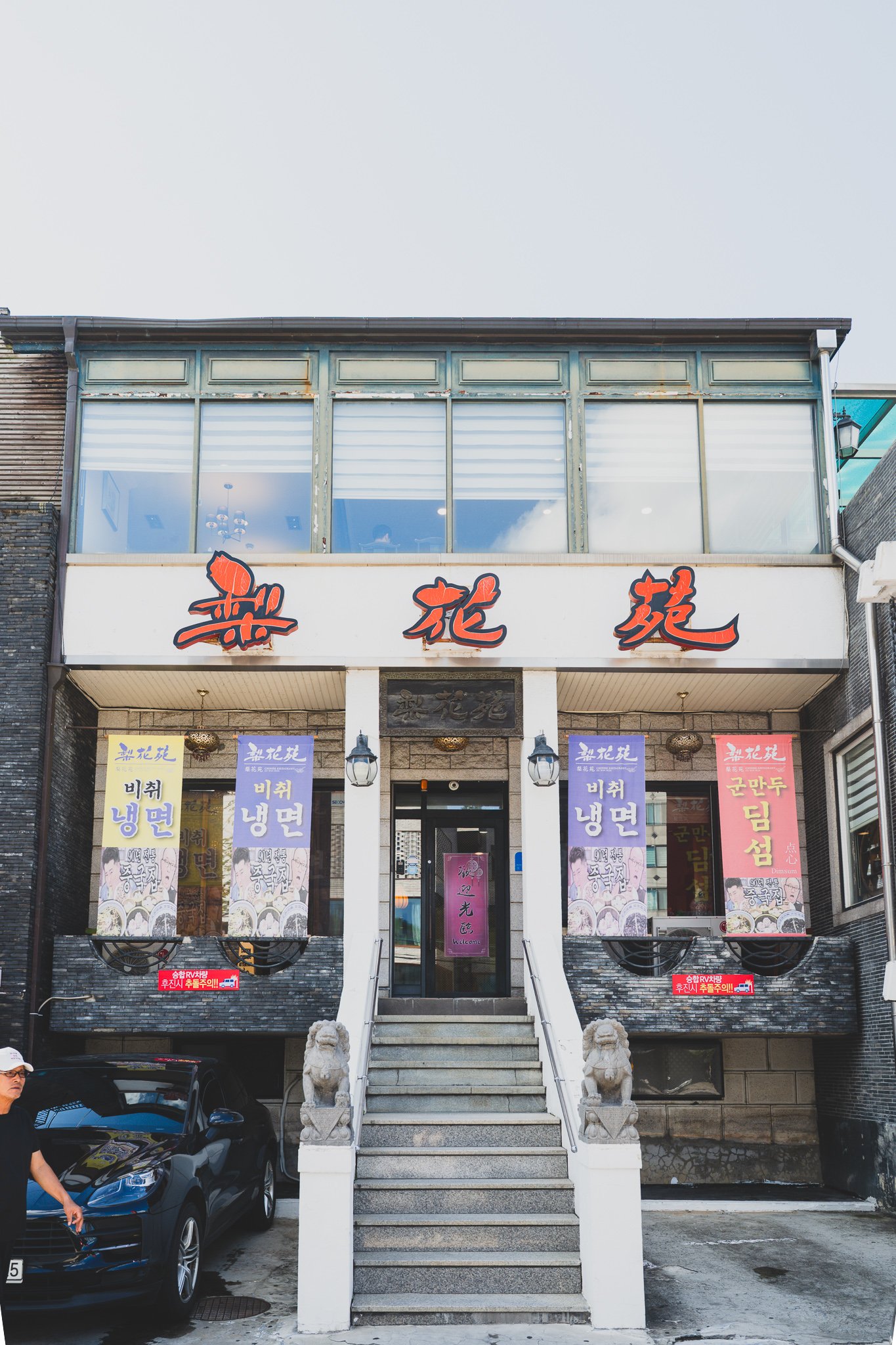
Ihwawon has been open for about 90 years and is now run by the third generation of the same hwagyo family — the same family also runs Maehwa, a well-known Chinese restaurant in nearby Yeonnam-dong. Everyone from the owners to the kitchen staff is part of the local Chinese-Korean community, which is part of why regulars treat this less like “going out for Chinese food” and more like eating at a place with real continuity behind it.
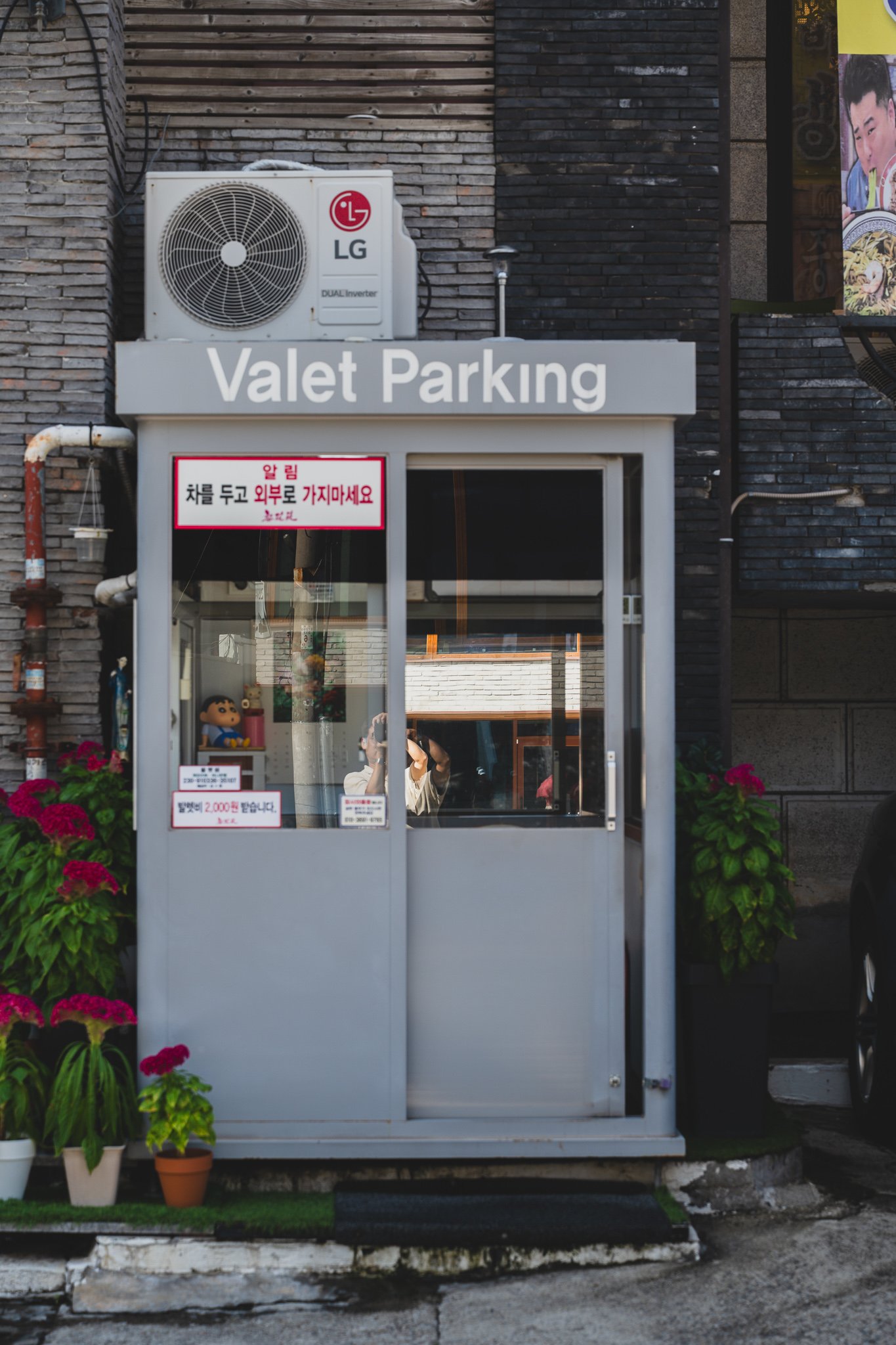
One practical detail worth calling out on its own: valet parking. Yeonhui-dong’s commercial streets are narrow and parking is genuinely difficult, so a restaurant that hands you a ticket and takes the car off your hands is a bigger deal here than it would be almost anywhere else in Seoul.
Ninety years, on the walls
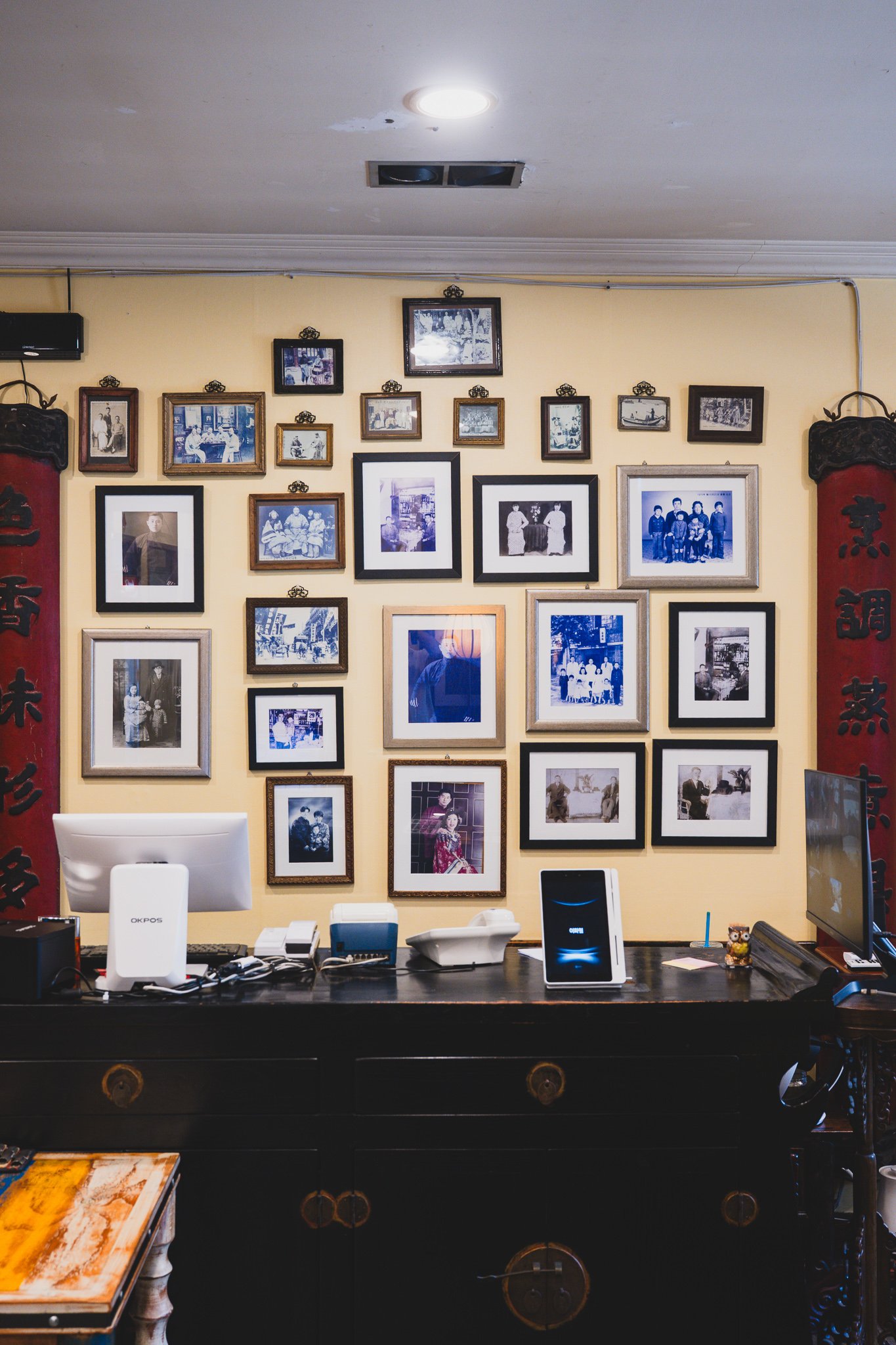
Walk past the entrance and the interior does a lot of the storytelling for you. The hallway leading into the dining rooms is lined with carved wooden panels, hanging lanterns, and a red lacquered cabinet standing next to a well-stocked drinks fridge — a small but telling detail of how old and new coexist here without much friction.
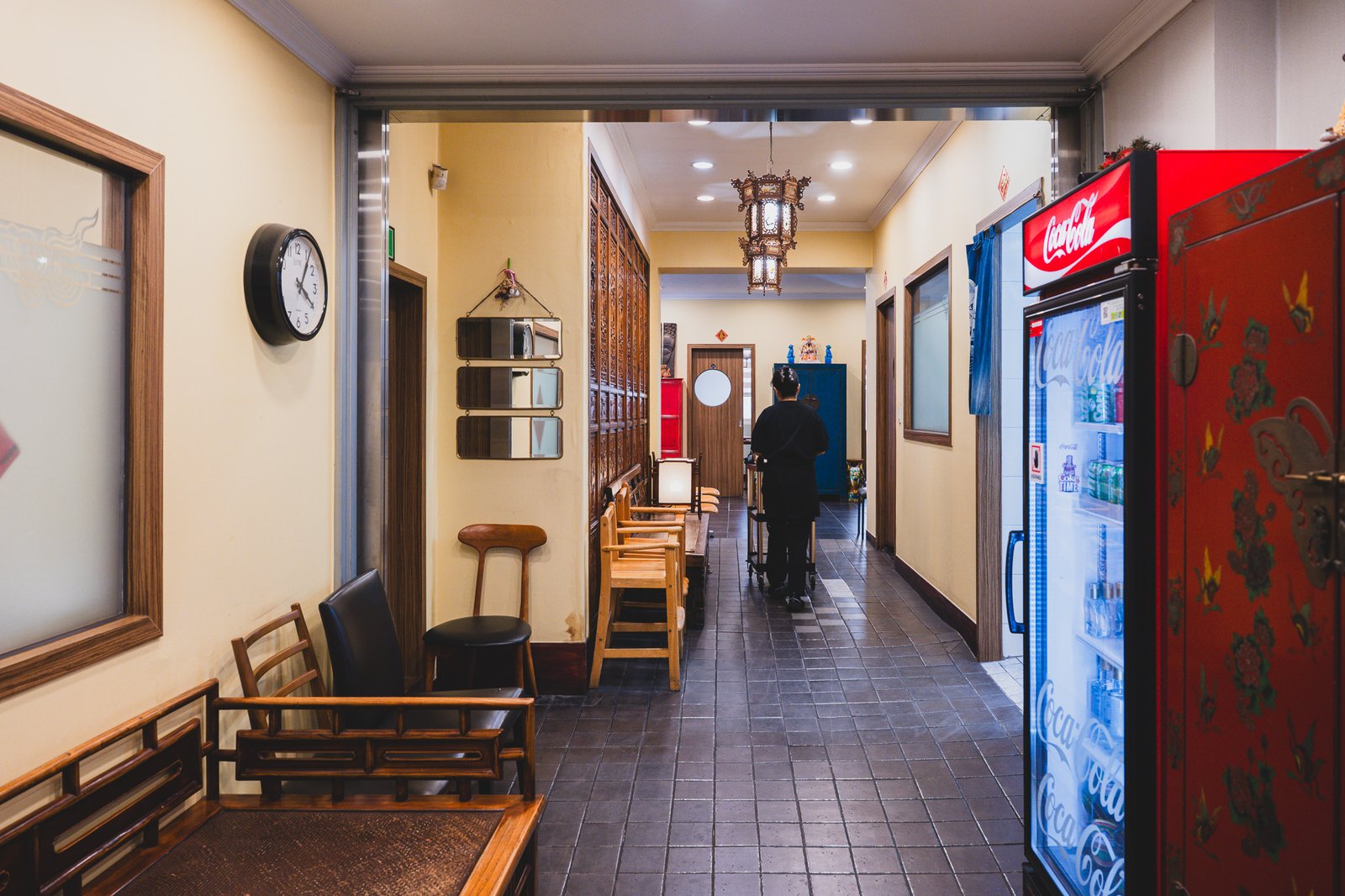
Behind the counter, the wall is packed floor to ceiling with black-and-white and sepia-toned family photographs — generations of the same family, captured at the restaurant and around Seoul over the decades. It reads less like restaurant decor and more like an actual family archive that happens to be visible to every customer who walks in.
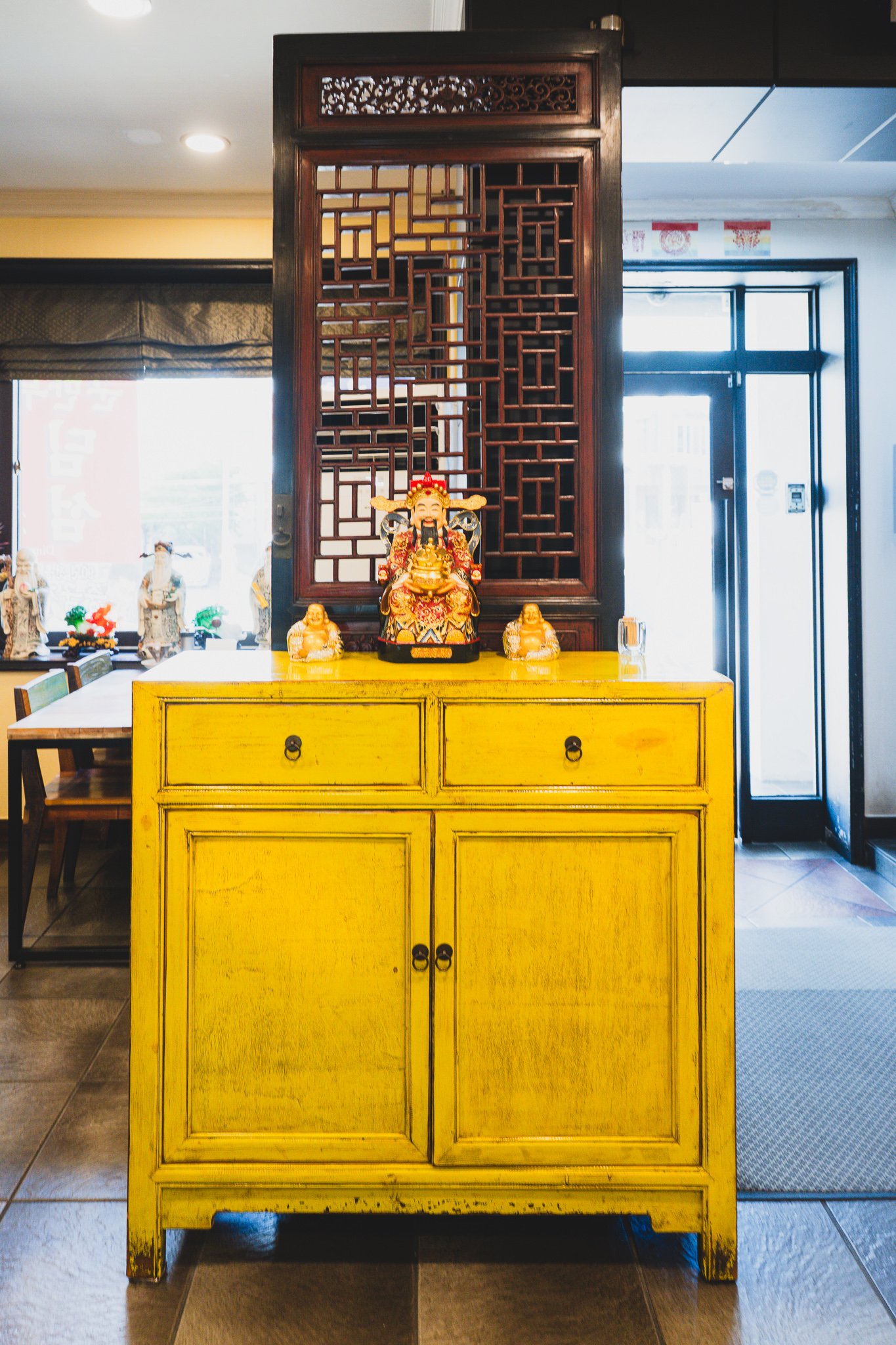
Elsewhere in the dining room, a bright yellow lacquered cabinet holds a small shrine-like arrangement — a wealth god figure flanked by two smiling Buddha statues, sitting in front of an ornate carved wooden screen. It’s the kind of detail that would look like a themed prop in a less genuine restaurant, but here it reads as exactly what it is: a family’s own decor choices, accumulated over decades rather than installed for atmosphere.
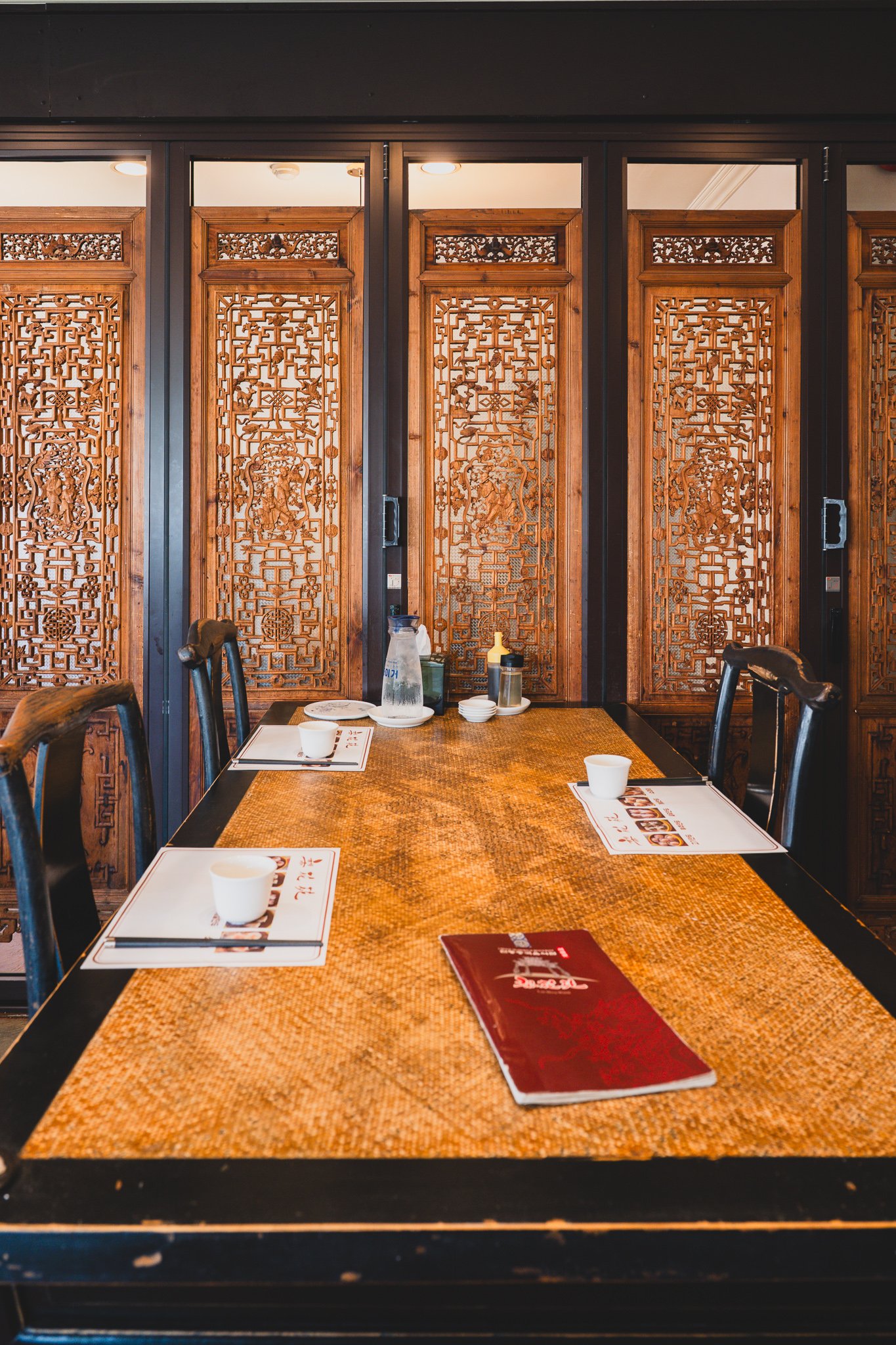
Private rooms are available too, enclosed with detailed wood-carved screens and set with cloth placemats, chopstick rests, and a red menu booklet at each seat — a good option if you’re bringing a group or want a quieter meal.
The jade noodles — Ihwawon’s reason to exist in summer
The dish that built Ihwawon’s reputation is bichwi naengmyeon, or “jade noodles” — noodles dyed a vivid green from spinach and chlorella worked into the dough, served cold in a savory, faintly sweet broth. It’s a hwagyo-style cold noodle rather than the Pyongyang or Hamheung naengmyeon most visitors will already know, and the color alone makes it worth ordering just to see.
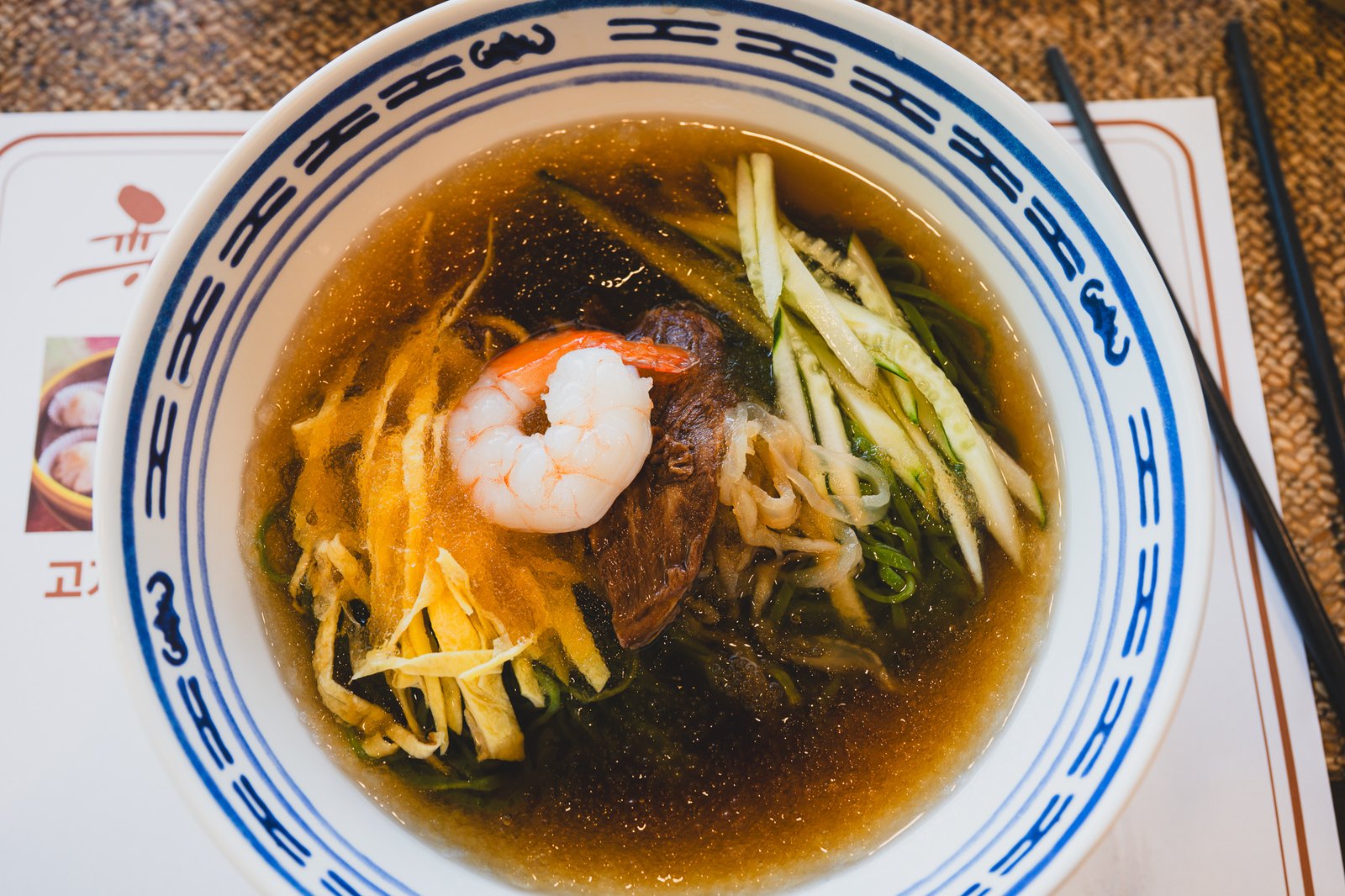
The bowl arrives loaded — shrimp, thin slices of braised beef, julienned cucumber, shredded egg, all fanned over the noodles before the broth is poured. It’s a genuinely photogenic dish, but the color isn’t a gimmick: the noodles carry a faint vegetal flavor that plays well against the broth, which is deeper and more savory than sweet, and not aggressively cold the way some naengmyeon broths are.
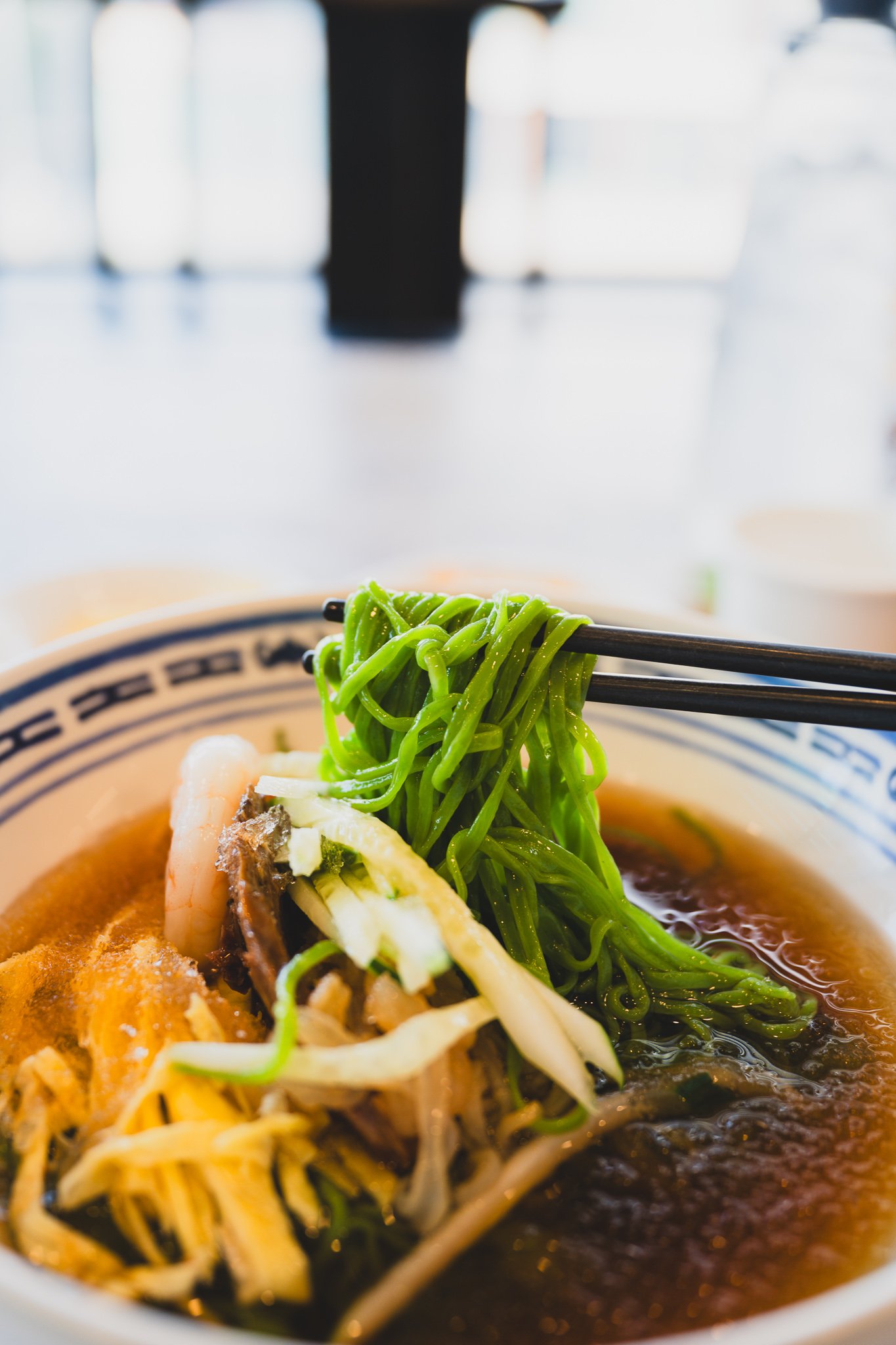
According to the family that runs it, this noodle alone sells well enough over the summer to functionally cover the restaurant’s costs for the year — whether that’s taken literally or as local legend, it says something about how seriously this neighborhood takes its cold noodles. A bowl runs 15,000 KRW.
Dim sum worth ordering alongside it
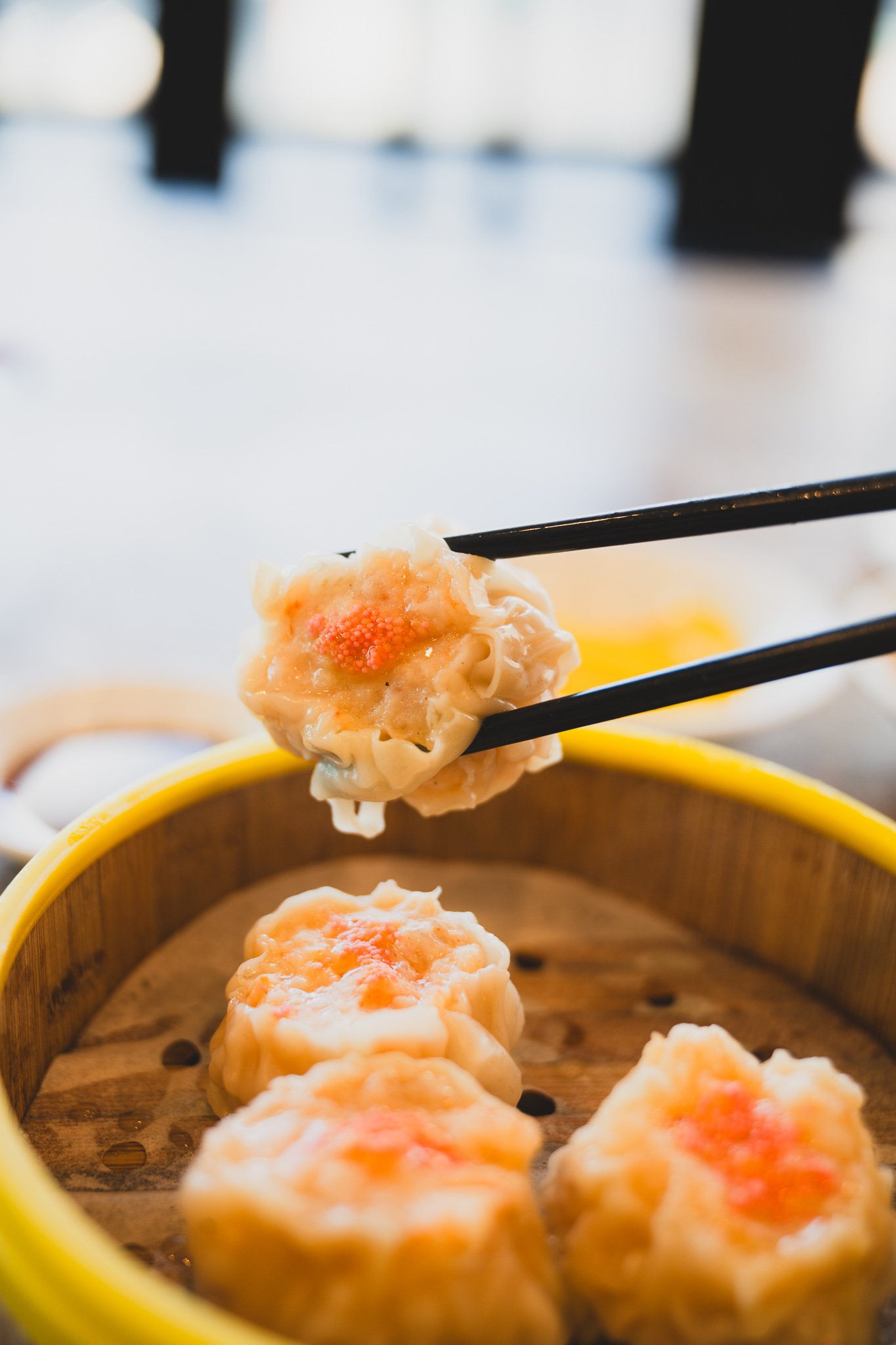
I also ordered a plate of shumai, and it was easily strong enough to make me want to come back and work through the rest of the dim sum menu — steamed dumplings with pork, chive, shrimp, and crab fillings are all on offer, served in stacked bamboo steamers the way you’d expect.
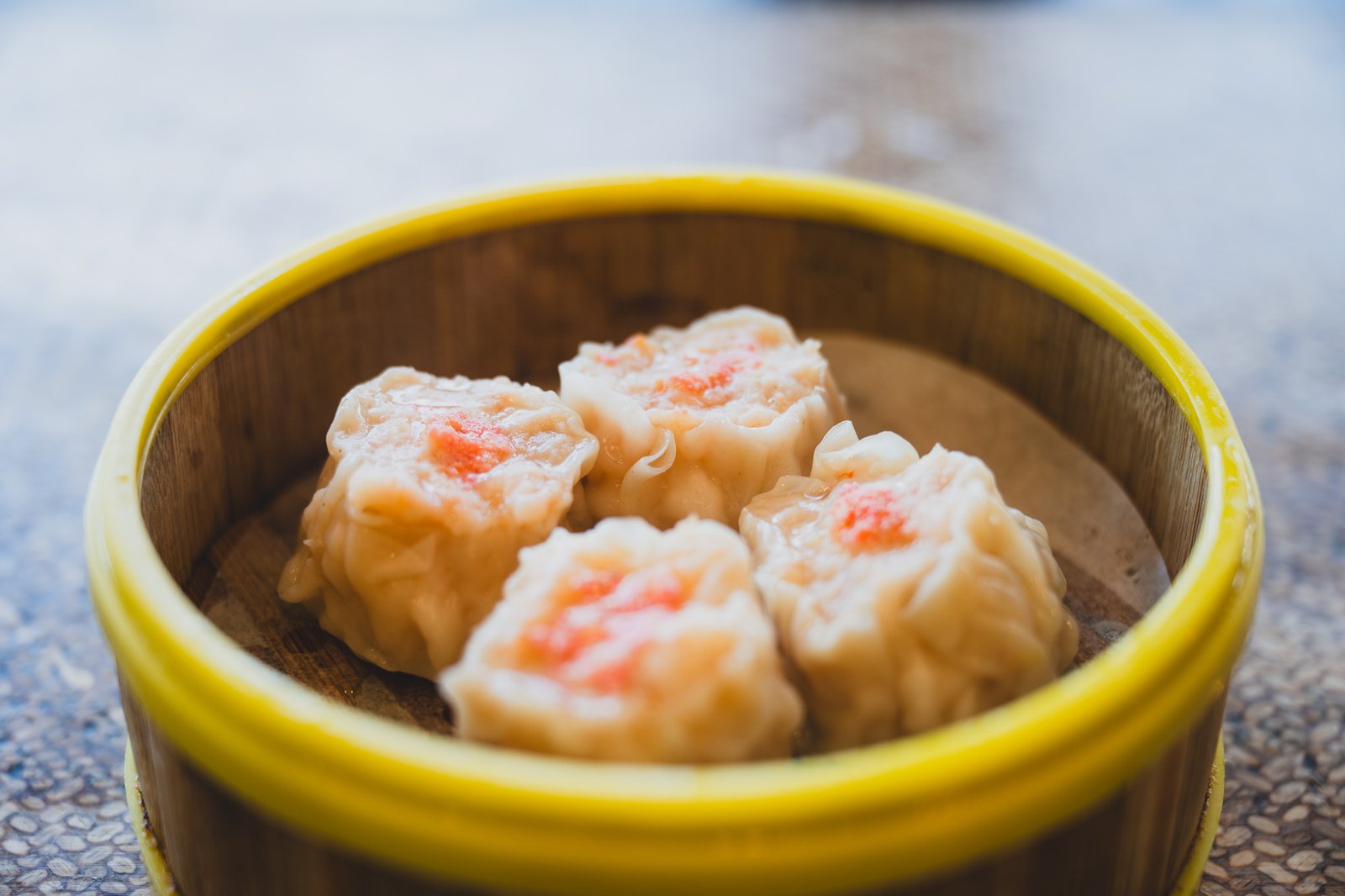
The wrapper held together without being thick, and the filling leaned generously toward shrimp rather than filler, which isn’t a given at this price point. A plate runs about 10,000 KRW for the pork-and-shrimp version — reasonable for the quality, and easy to order two or three different fillings between a couple of people without the bill getting out of hand.
Beyond noodles and dim sum, Ihwawon also runs a full banquet-course menu (starting around 99,000 KRW per person) that runs from cold appetizer platters up through shark fin dishes, plus a well-regarded sweet and sour pork made with Jeju pork — worth knowing about if you’re planning a group dinner rather than a solo lunch.
FAQ
Q: What’s the one dish I should order if I only get one?
A: The bichwi naengmyeon (jade noodles), and only in the warmer months — it’s a cold noodle dish built for summer, not a year-round menu item.
Q: Is this good for a solo meal, or is it more of a group restaurant?
A: Both work. The main dining room has regular table seating well suited to eating alone, while the private rooms are set up for groups wanting the course menu.
Q: Do I need a reservation?
A: Unconfirmed — walk-in seemed to work fine on a weekday, but call ahead if you want a specific time or one of the private rooms.
Q: Is parking really worth mentioning?
A: Yes — Yeonhui-dong’s shopping streets are notoriously hard to park in, and Ihwawon’s free valet removes that problem entirely. It’s a genuine reason to pick this restaurant over a competitor on a tight street nearby.
Q: Is the menu in English?
A: Not confirmed — bring a translation app or be ready to point at photos on the menu, as is common at long-running neighborhood restaurants like this one.
Bottom line
Ihwawon is worth seeking out specifically because it isn’t performing “authenticity” for visitors — it’s a three-generation family restaurant that happens to sit in one of Seoul’s few neighborhoods with a real, continuous Chinese-Korean community behind its food. Go for the jade noodles if it’s warm out, add a plate of shumai, and take advantage of the valet parking that makes Yeonhui-dong actually practical to drive to for once.
This post reflects a solo lunch visit in August 2026, when only the noodles and shumai were sampled. Hours and menu prices are accurate as of that visit but are worth confirming directly before a special-occasion visit, especially for the course menus.