TL;DR: Cards work almost everywhere in Korea — cafes, restaurants, convenience stores, taxis. Cash still matters at traditional markets (Gwangjang, Namdaemun) and some small independent vendors, many of whose card terminals are only set up for domestic Korean cards. Carry roughly 50,000–100,000 KRW in cash if you’re planning a market-heavy day, and keep a card as your default for everything else.
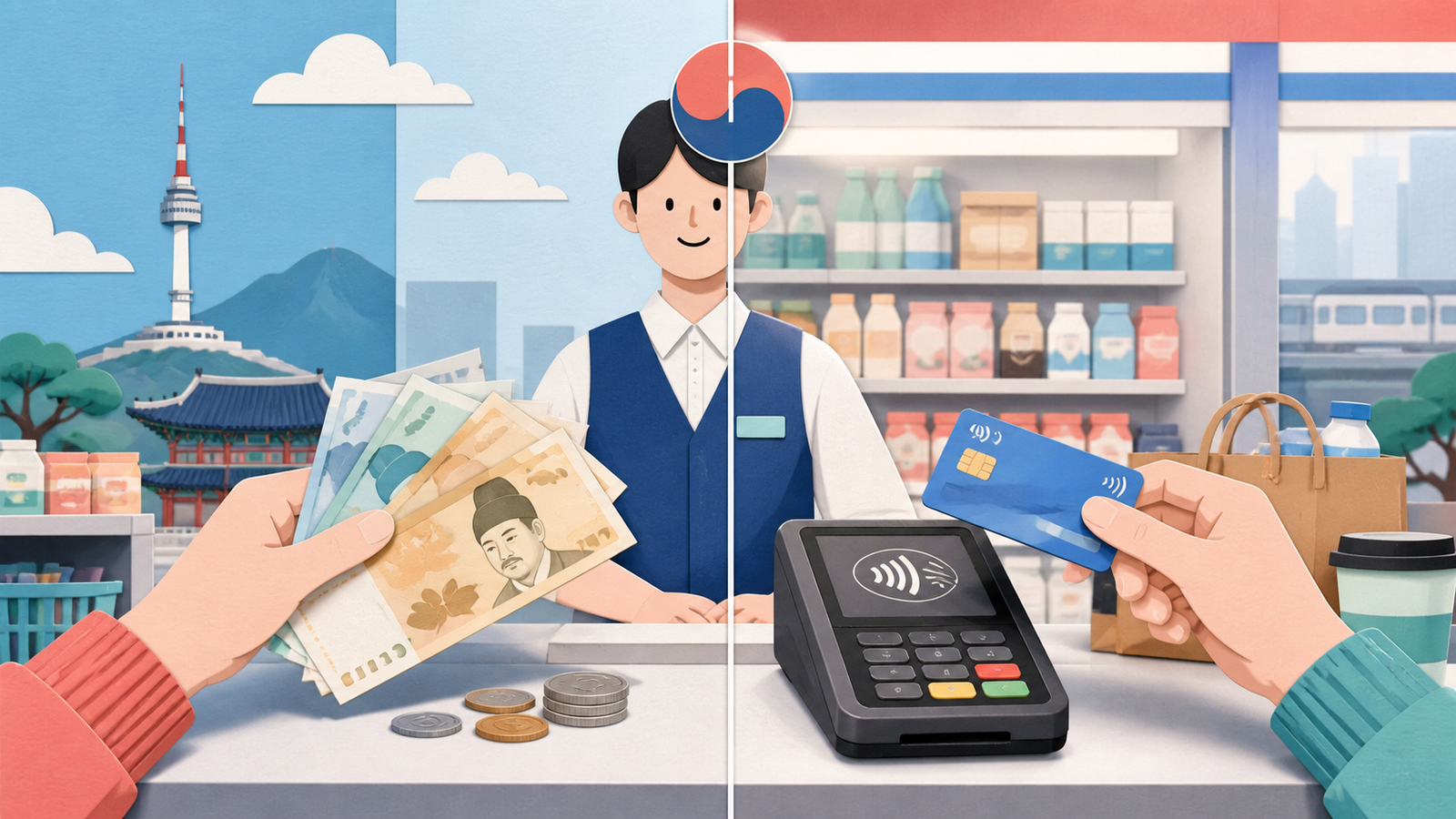
Korea’s reputation as a highly cashless society is mostly earned — but “mostly” is doing some work in that sentence, and the gap is exactly where traditional markets and street food live.
Where cards work fine
Cafes, restaurants, convenience stores, department stores, taxis, and transit all take cards without issue, and international Visa/Mastercard are widely accepted at major chains and mid-to-large businesses. If your entire trip were spent in these categories, you could realistically get by without touching cash at all.
Where you’ll actually want cash
Traditional markets are the clearest exception. Places like Gwangjang Market and Namdaemun Market are largely cash-only at the individual stall level, even though the market itself is a major destination. Beyond markets, some small independent vendors — a street food cart, a tiny family-run shop — either prefer cash or have card terminals configured only for domestic Korean cards, meaning your foreign card might get flatly rejected even though the terminal looks normal.
A reasonable rule of thumb: carry 30,000–50,000 KRW for a typical day that includes some market browsing or street food, and closer to 100,000 KRW if you’re planning a market-focused day (think a serious Gwangjang Market food crawl).
Getting cash and loading a travel card
ATMs are widely available, though not every ATM accepts foreign cards — look for ones with a “Global” or foreign-card logo, commonly found at convenience stores and post offices. If you’d rather set up a reloadable local payment card instead of carrying loose cash, WOWPASS is a popular option among tourists — it’s a prepaid card you can load with cash at kiosks (often found in Myeongdong and other tourist-dense areas) and then use both as a payment card and, in some cases, for transit.
FAQ
Q: Can I use my foreign credit card everywhere in Korea?
A: At most major businesses, yes. At small independent vendors and market stalls, don’t count on it — bring cash as a backup.
Q: How much cash should I carry as a baseline?
A: Around 50,000 KRW covers most situations, with more if you’re planning a market-heavy day.
Q: Are ATM fees an issue for foreign cards?
A: Some ATMs charge withdrawal fees for foreign cards, and your home bank may add its own foreign transaction fee — check with your bank before you go if this matters to you.
Q: Is WOWPASS necessary, or just convenient?
A: Not necessary — a regular T-money card plus some cash covers the same ground. WOWPASS is more of a convenience option if you’d rather consolidate cash and payment into one card.
Q: What about mobile payment apps like Apple Pay or Samsung Pay?
A: These work at many major chains and convenience stores, but coverage isn’t universal — treat them as a bonus option, not a primary plan.
Bottom Line
Default to card for nearly everything, but don’t leave your accommodation without some cash in your pocket — the moment you’re standing in front of a Gwangjang Market food stall with only a card, you’ll wish you had.