TL;DR: Start with tteokbokki, eomuk (fish cake), and gimbap, then add a seasonal snack if one is available. Prices and menus vary by vendor and date, so check the posted price before ordering. Gwangjang Market and Myeongdong are convenient areas to explore; Sindang-dong is known for tteokbokki.
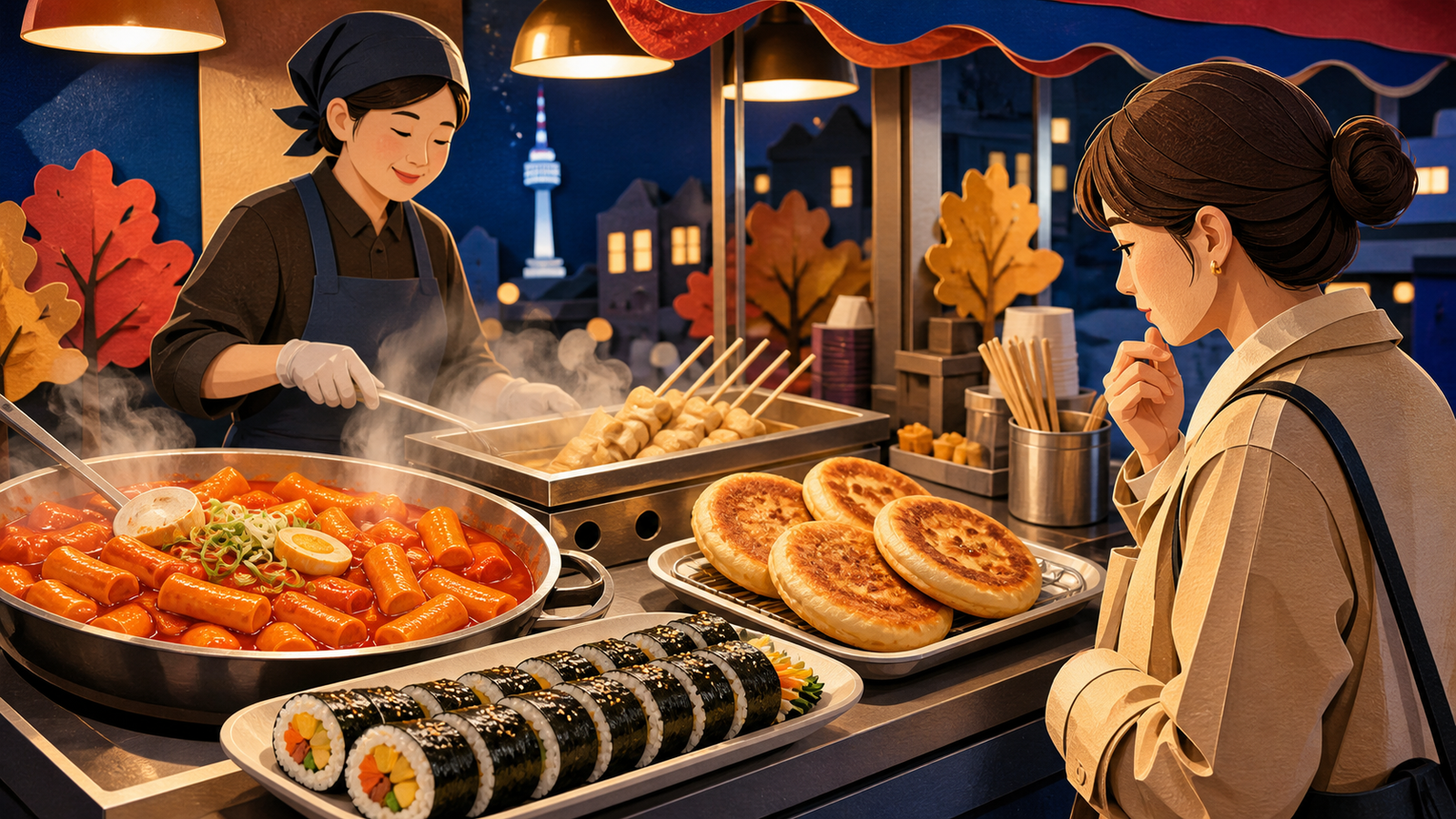
Street food is one of the easiest ways to eat well in Korea without planning a single restaurant reservation — most of it is cheap, fast, and doesn’t require reading a menu at all since you can just point.
The Korea Tourism Organization describes tteokbokki, fried foods, sundae, gimbap, and fish cakes as common bunsik and notes that some snacks are seasonal. Stall menus, ingredients, prices, and opening times vary, so treat the examples below as a guide to what you may find rather than a guaranteed menu. See its street-food overview.
The essentials
Tteokbokki — chewy rice cakes simmered in a spicy-sweet gochujang sauce. This is the anchor dish of Korean street food and the most common thing you’ll see at any cart. Prices vary by vendor and portion; check the stall’s posted price before ordering.
Eomuk (also called odeng) — fish cake skewers served in a hot savory broth, usually sold right next to tteokbokki carts. Prices and serving practices vary by vendor. Ask the stall if you are unsure whether broth is included.
Gimbap — seaweed rice rolls filled with vegetables, egg, and meat, closer to a full snack than the other items on this list. Triangle-shaped versions (samgak-gimbap) are sold at convenience stores if you want a quick option; prices vary by product and store.
Hotteok — a pan-fried stuffed pancake, sold savory (glass noodle filling) or sweet (brown sugar, cinnamon, and crushed nuts, which turns molten once it’s pressed on the griddle). Prices vary by vendor and filling.
Bungeoppang — a fish-shaped waffle filled with sweet red bean paste; the fish shape is purely decorative. This one’s seasonal — you’ll mostly find it from November through March, so don’t count on it in summer.
Sundae — Korean blood sausage, made from pig intestine stuffed with glass noodles, pork blood, and sometimes sticky rice. This is the one dish on this list that tends to split opinion the most — worth trying once with an open mind, but it’s the item most likely to end up in your “not for me” pile if unusual textures aren’t your thing.
Korean-style corn dogs — coated in everything from crispy potato cubes to a sugar glaze, these have become a genuine trend item, with Myeongdong and Hongdae having the densest concentration of stalls.
Where to actually eat it
Gwangjang Market has a food street with a range of menus. The Korea Tourism Organization lists its food-street hours as 09:00–23:00 and says cards are accepted at the market; individual stall hours and payment options may differ. See the official Gwangjang Market listing for venue details.
Myeongdong has the highest concentration of stalls per block, especially for tteokbokki, eomuk, and corn dogs — good if you want variety without much walking.
Sindang-dong Tteokbokki Town, near Sindang Station, is a full alley dedicated to tteokbokki specifically, if that’s the dish you care most about getting right.
If you’re spending time in Seongsu-dong specifically, check our roundup of the best food spots there for a more modern, cafe-driven alternative to the classic street food markets.
Want someone else to pick the stalls? A guided night market food tour walks you through a curated lineup with a local guide, no research required. Check the Seoul night market food tour on Klook →
What’s worth skipping
Not every stall is equal, and street food quality varies more than sit-down restaurants where reviews are easier to check. A couple of practical filters: go where there’s a visible line of locals (not just tourists), and be cautious of stalls in the most tourist-saturated single blocks of Myeongdong, where turnover and quality can be inconsistent compared to less crowded stretches a few minutes’ walk away.
FAQ
Q: Is street food safe to eat as a tourist?
A: I can’t guarantee the safety of an individual stall. Check that food is handled and stored appropriately, and ask about ingredients if you have an allergy or dietary restriction. For current venue details, use the market’s own notices.
Q: Can I pay by card at street food stalls?
A: Some do accept cards now, but many are cash-only or card-optional — carrying some cash (see our cash vs card guide) makes street food much easier.
Q: What if I have dietary restrictions?
A: Many street food items contain gluten (rice cake, batter), pork (sundae), or fish-based ingredients (eomuk broth) — if you’re avoiding any of these, ask before ordering or check ingredients using a translation app. For more options, see our guide to vegetarian and halal food in Seoul.
Q: Is Gwangjang Market touristy or still authentic?
A: Both — it’s genuinely popular with locals for food, but has also become a well-known tourist stop, so expect a mix of both crowds rather than a hidden gem.
Q: How much should I budget for a street food crawl?
A: Set a budget based on the current posted prices and how many dishes you plan to share; there is no reliable fixed total for every market or stall.
What’s Worth Your Appetite
Start with tteokbokki, eomuk, and gimbap as your baseline, add hotteok or bungeoppang depending on the season, and use Gwangjang Market if you only have time for one stop. It’s some of the best value eating you’ll do on the entire trip.
You might also like
- Best Food in Seongsu: 4 Places Worth Planning Your Afternoon Around
- Namyeongdon Seongsu: Inside One of Seoul’s “Big 3” Korean BBQ Restaurants
- Vegetarian and Halal Food Options in Seoul
This post may contain affiliate links. If you book through them, we may earn a small commission at no extra cost to you.