TL;DR: OJA CRAFT is a ceramics and glass studio shop on the 3rd floor of a small building in Yeonhui-dong, Seoul, open Tuesday–Sunday, 13:00–19:00 (closed Mondays). It’s known for a ceramics-kiln casting-glass technique where each mold is destroyed to produce a single piece — plates run roughly 25,000–145,000 KRW, and there’s no dedicated parking nearby.
I’d known OJA CRAFT by name for a while as a ceramics brand, so I went in expecting plates and not much else. What I actually found was a studio working in both ceramics and cast glass — and using a technique for the glass that I hadn’t seen described quite this way anywhere else in Seoul.
Quick info
- Where: 3F, 24 Yeonhui-ro 11-gil, Seodaemun-gu, Seoul
- Hours: Tuesday–Sunday, 13:00–19:00 (closed Mondays)
- Phone: +82 2-333-7232
- Parking: None on-site — use a nearby paid lot
- Price range: Incense and small objects from roughly 20,000–30,000 KRW; ceramic tableware around 25,000–30,000 KRW; the signature named plate series 135,000–145,000 KRW
A rusted sign instead of a storefront
There’s no flashy shopfront announcing OJA CRAFT — the building is an unremarkable three-story structure down a Yeonhui-ro side street, and the only signal you’re in the right place is a small, deliberately weathered iron plate reading “OJA CRAFT” bolted to the wall.
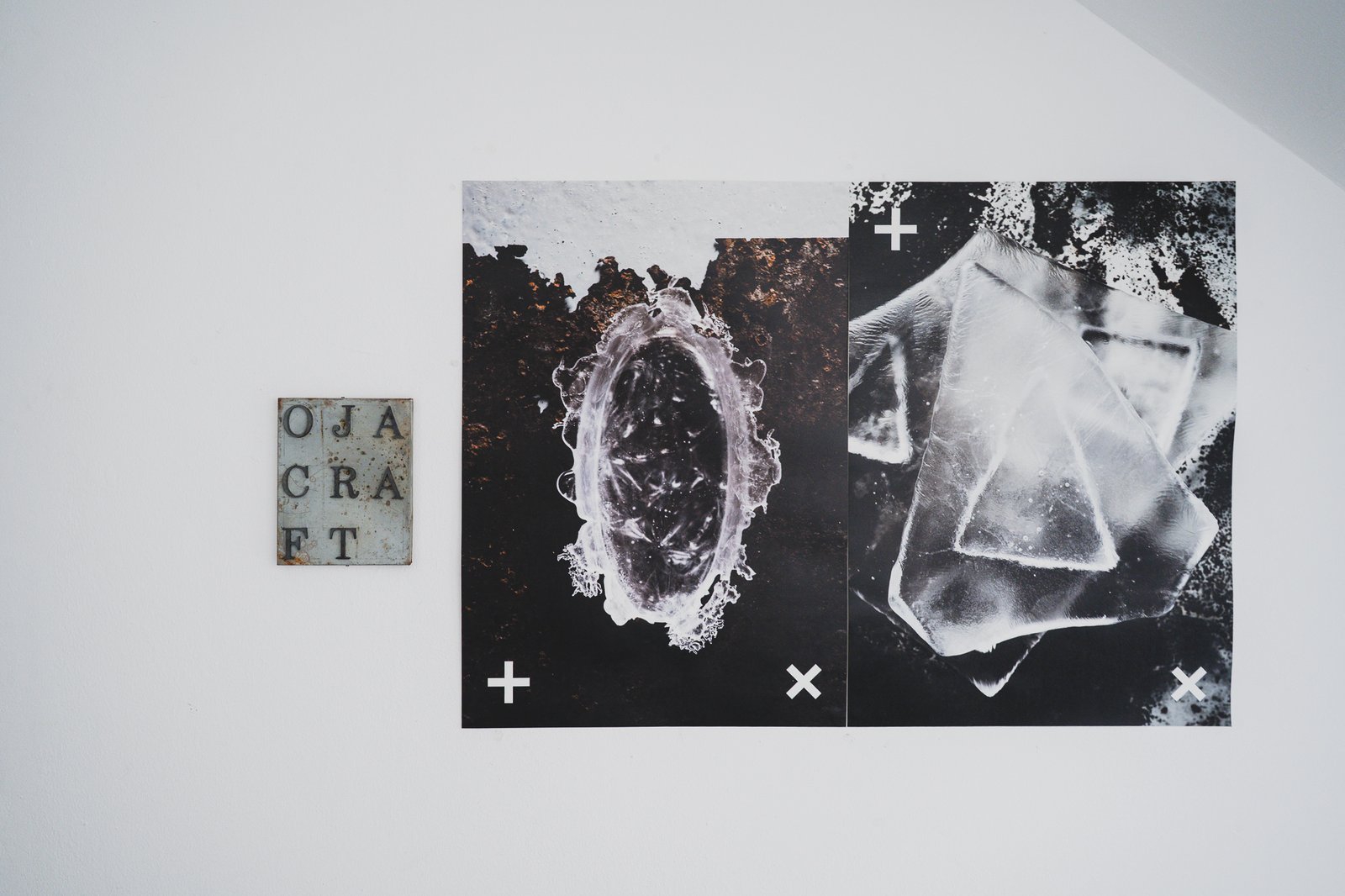
That understatement turns out to be the whole point. OJA CRAFT doesn’t lean on a polished retail look — the materials are left to show their age, and the space reads more like a working studio that happens to sell things than a shop designed to look like a studio.
The technique: glass, fired in a ceramics kiln
The single most interesting thing about OJA CRAFT is explained on a small card sitting on the studio’s own workbench, in the brand’s own English:
“Casting glass — one of the techniques of glasswork — involves filling a plaster mold with glass and firing the whole mold in a kiln. During firing, the glass melts and takes shape inside the mold; once firing is complete, the mold is broken and discarded.”
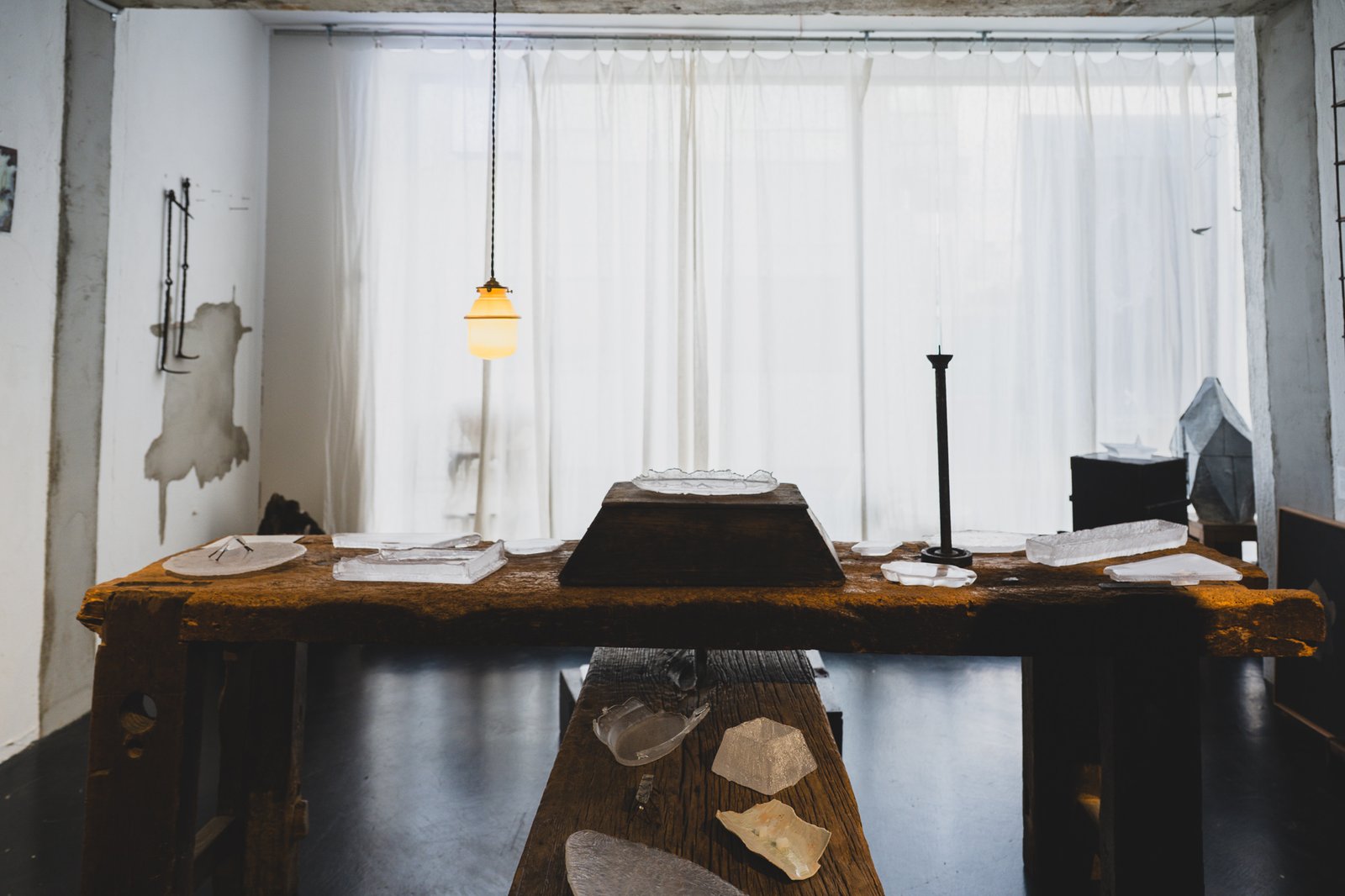
What makes this notable is that OJA CRAFT’s founder trained as a ceramicist, and is casting glass inside a ceramics kiln rather than the specialized glass-casting equipment most glass studios use. Because each mold is destroyed to release the finished piece, no two objects can ever be exactly identical — a deliberate rejection of the mass-producibility that casting techniques are normally chosen for. Up close, the glass itself isn’t the smooth, machine-clear surface you’d expect from a factory piece; it has a rough, irregularly cracked texture that makes it obvious this came out of a mold rather than off a production line.
Old furniture as the display case
The way finished pieces are displayed says almost as much about the studio as the technique does. Rather than staging new ceramics on clean, modern shelving, OJA CRAFT sets them directly on and inside worn antique cabinets — glass-fronted wood cases with visible age, dried flower arrangements sitting alongside the glazed pieces rather than separate from them.
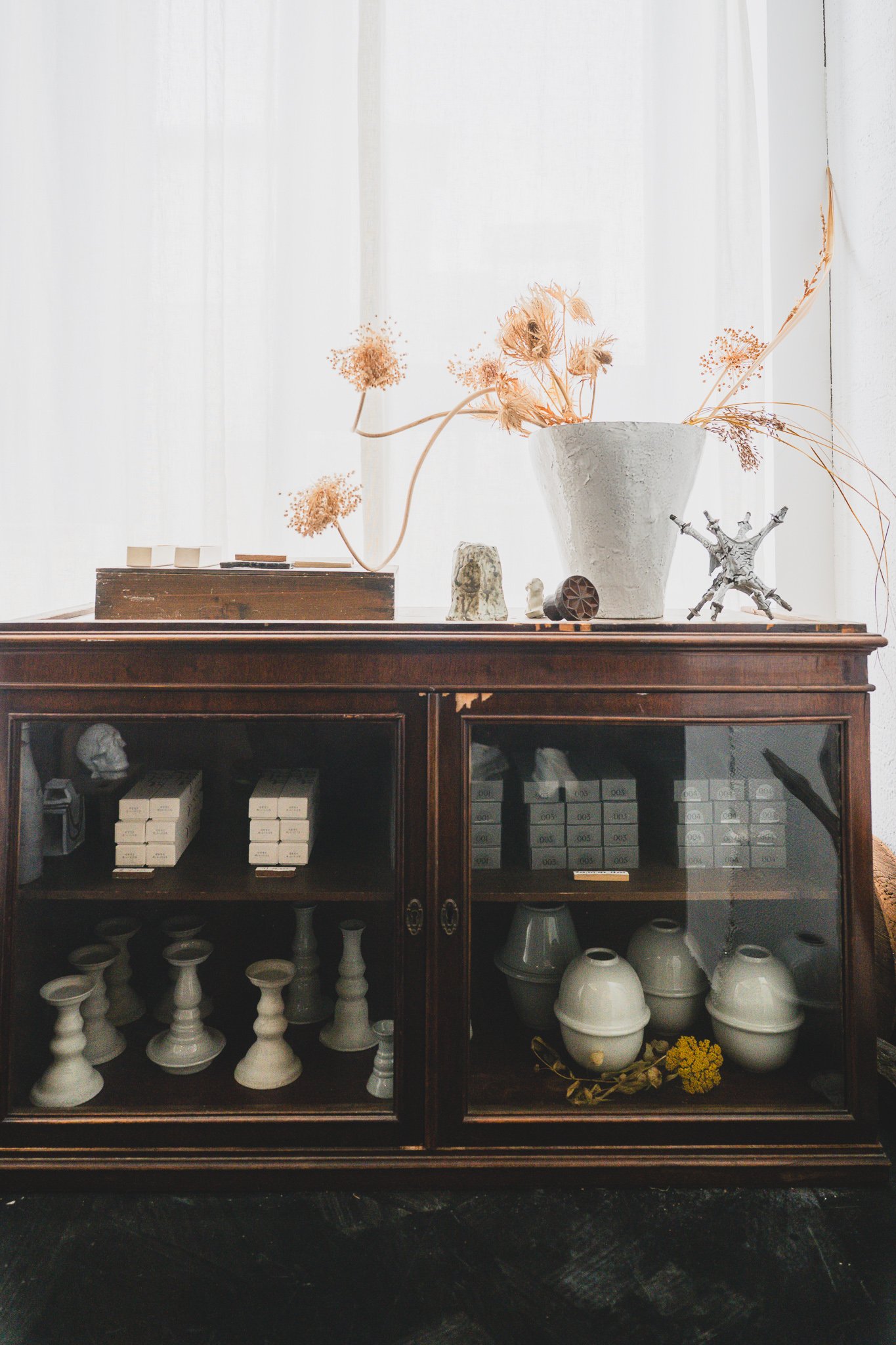
The contrast works better than it has any right to — a stark white new plate against a dark, decades-old cabinet ends up reading as more striking than it would on a neutral white pedestal. It’s a small curatorial choice, but it’s consistent throughout the space: nothing here is trying to look brand new.
Plates named like people
Some of the ceramic tableware carries names rather than plain size labels — a stack of oval platters tagged “Anita” (145,000 KRW) sits next to a scalloped-edge series called “Margot” (135,000 KRW), each price handwritten on a small wooden tag rather than printed.
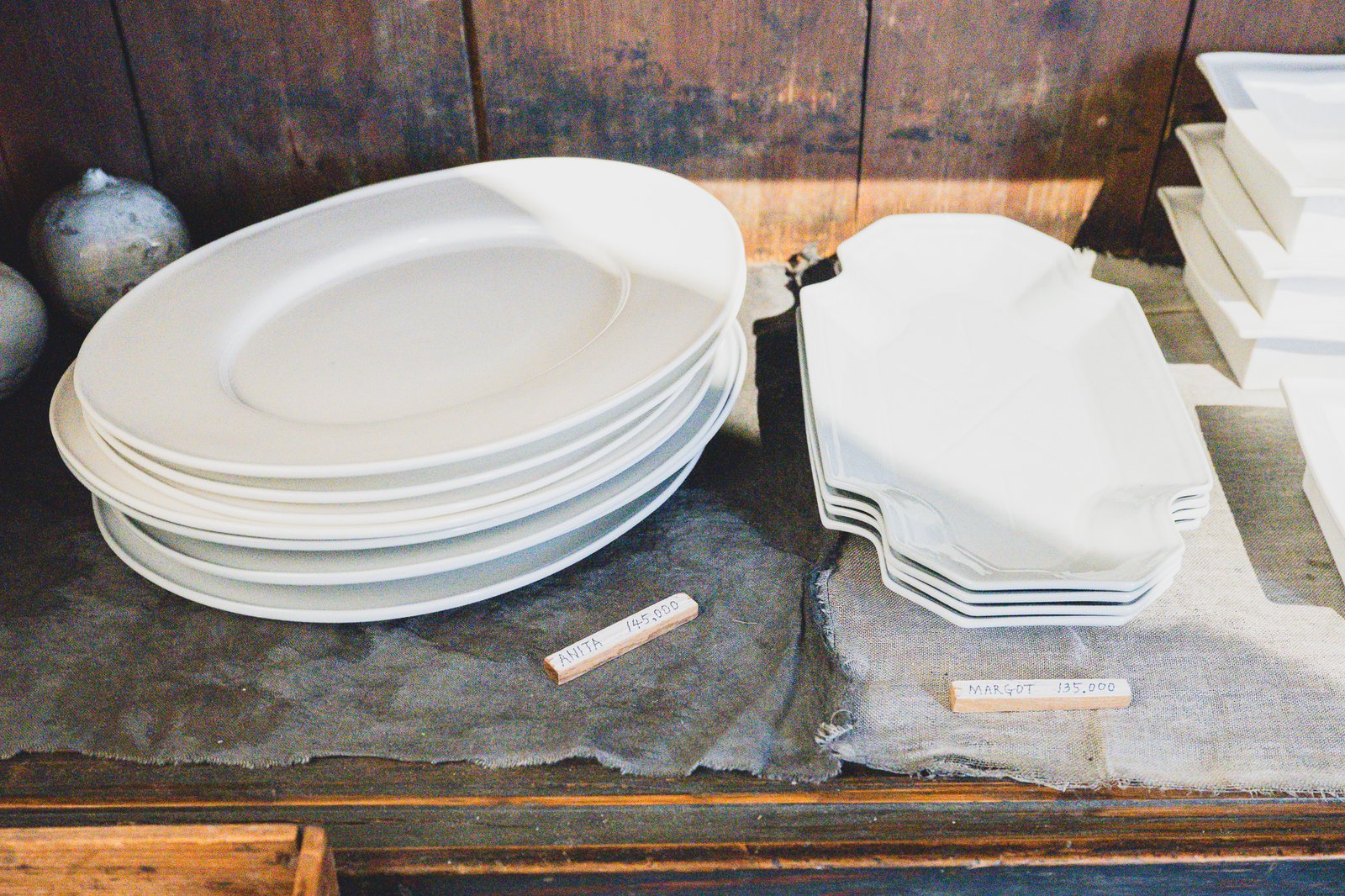
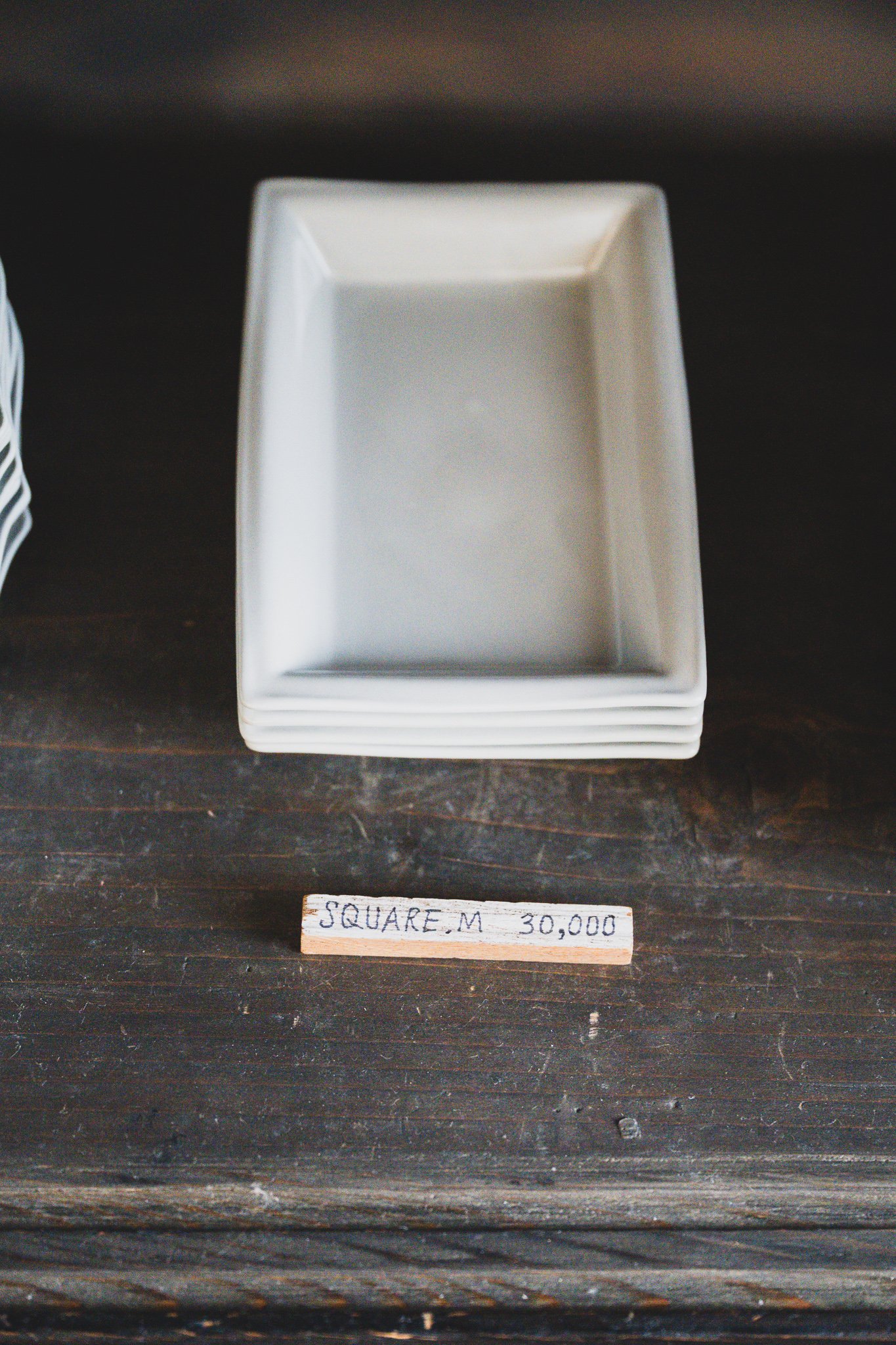
More affordable pieces are mixed in too — a square medium plate for 30,000 KRW, alongside star- and shell-shaped plates around 25,000–30,000 KRW — so it’s easy to walk out with something small even if the named series is outside your budget.
The honest part of the shop: mold parts, priced and labeled
My favorite corner wasn’t a finished product display at all — it was a wooden drawer unit filled with individual ceramic mold parts, each cubby hand-labeled with a name and price: “Venus,” “Two Hands,” “Torso,” each tag written on a scrap of paper or wood rather than a printed sign.
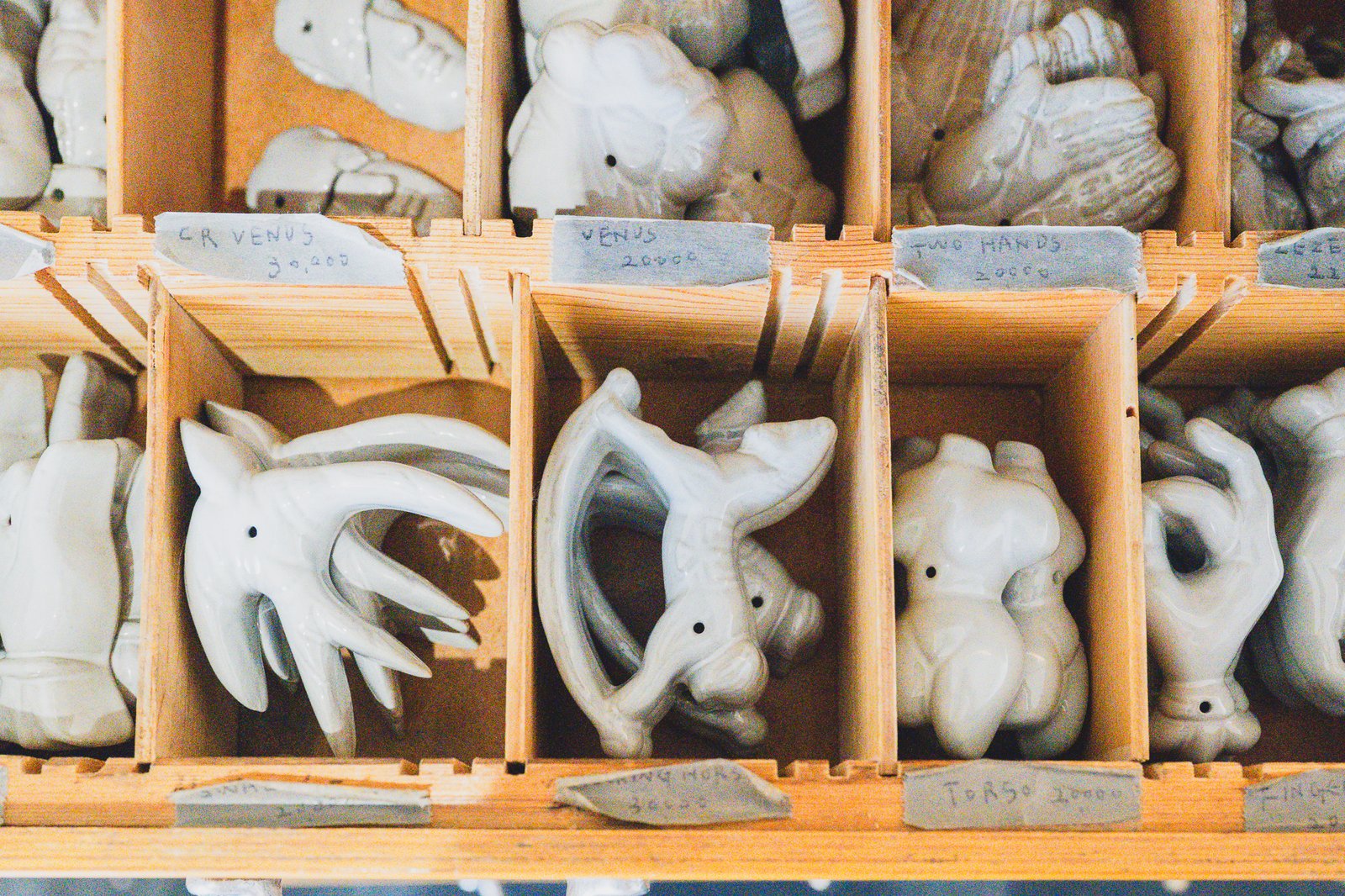
Most brands would keep this kind of raw production material in the back. Putting it out for sale, priced and labeled the same way as the finished tableware, is a small but honest gesture — it shows the process rather than only the polished result, and it reinforces that everything here really is handmade in-house rather than sourced.
An unexpected ceramic-and-incense collaboration
Tucked into one corner is an incense collaboration with Neungin Hyangdang, a maker recognized in Korea as a master of traditional incense-blending and agarwood appraisal. The card explaining it is in both Korean and English, and ends with an invitation that’s easy to miss if you’re not looking for it: “All are open for sampling — please feel free to ask.”
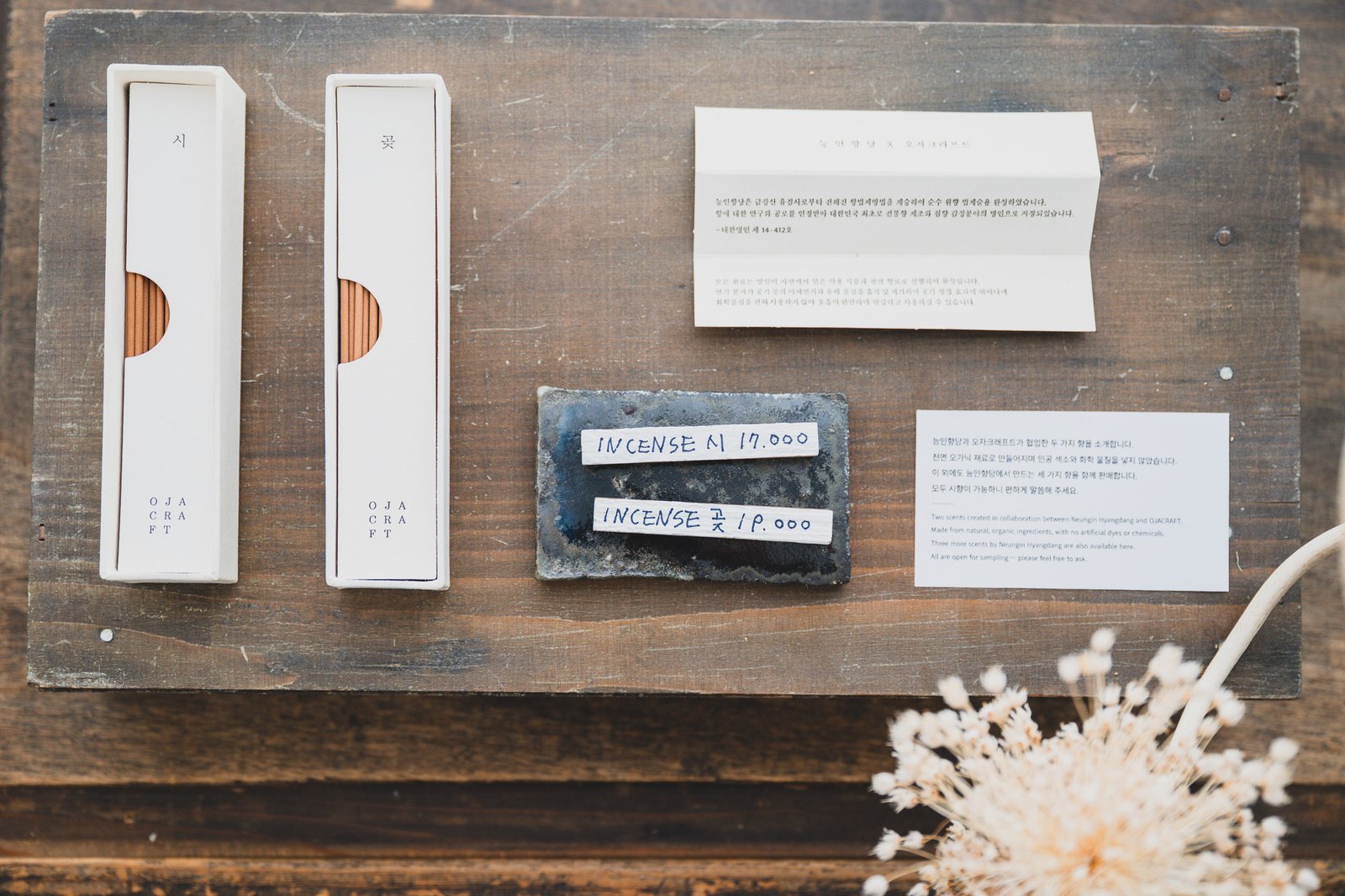
The two scents made specifically for this collaboration, “Si” (17,000 KRW) and “Got” (19,000 KRW), are made from natural, organic ingredients with no artificial dyes, and both are available to test in-store before you buy — worth asking for even if incense wasn’t on your list when you walked in.
An unusual wall piece: painting in glaze
On one wall, a narrow rectangular ceramic panel breaks from the tableware entirely — an abstract composition in iron-oxide glaze, rust-brown and deep purple bleeding across a pale cream ground in jagged, almost geological shapes.
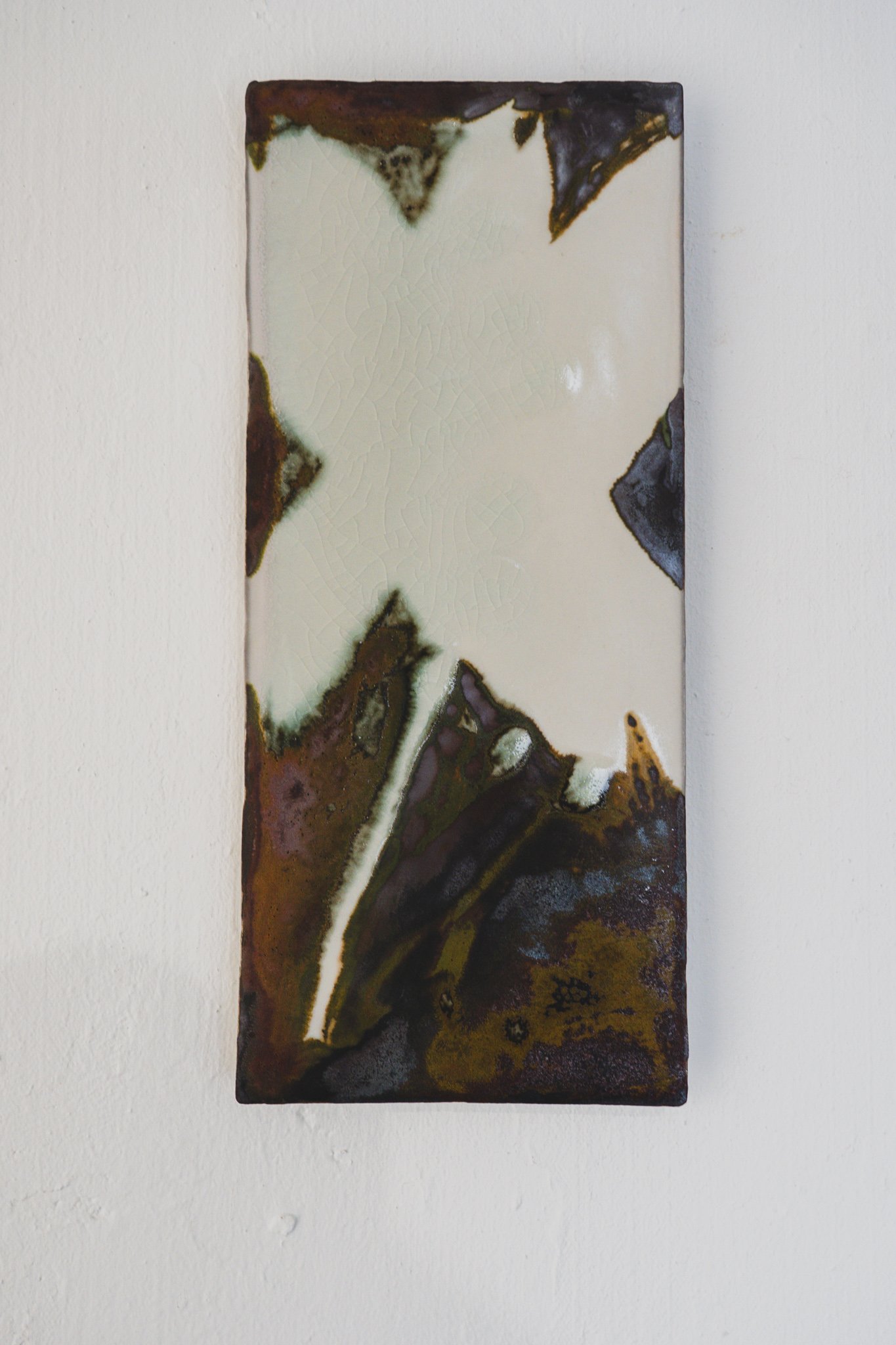
The glaze technique is more commonly associated with traditional iron-painted (cheolhwa) porcelain, but used here at wall-art scale rather than on a vessel — a reminder that OJA CRAFT’s founder is working from a ceramics background even when the output looks nothing like a plate or bowl.
FAQ
Q: Is any of this available in English?
A: Some of it — the casting-glass technique card and the incense collaboration card are both bilingual, in the brand’s own English. The website and most product labels, however, are Korean-only, so a translation app is useful if you want full detail on a specific piece.
Q: Is parking available?
A: No dedicated lot — the shop is on a narrow Yeonhui-dong side street, so plan on a paid public lot nearby or arriving on foot or by taxi.
Q: Is this a good stop for a gift, or mainly for serious collectors?
A: Both work. The incense (17,000–19,000 KRW) and smaller ceramic pieces (25,000–30,000 KRW) make easy, well-packaged gifts, while the named tableware series and the cast-glass pieces are priced more like collectible studio work.
Q: How long should I plan for a visit?
A: The shop is small — 20 to 30 minutes is enough to see everything without rushing, longer if you want to ask about the casting-glass process in detail.
Bottom line
OJA CRAFT is worth the walk down the side street specifically for the cast-glass technique — a ceramics-trained maker firing glass in a kiln built for clay, with every piece destroying its own mold to exist. Add in the honest mold-parts display, the incense collaboration, and the way old furniture is used as the display case rather than an afterthought, and it reads less like a shop and more like getting a look inside how a working studio actually makes decisions.
This post reflects a visit in August 2026. Prices and named-series availability are subject to change since pieces are handmade in limited runs — check OJA CRAFT’s Instagram (@ojacraft) for current stock before a special trip.