TL;DR: Start with tteokbokki (spicy rice cakes), eomuk/odeng (fish cake skewers in broth), and gimbap — the classic trio often sold from the same cart. Most items run 1,000–7,000 KRW, so you can graze through several dishes for under $10 total. Gwangjang Market and Myeongdong are the two easiest places to eat a wide range in one trip, with Sindang-dong being the destination if tteokbokki specifically is your priority.
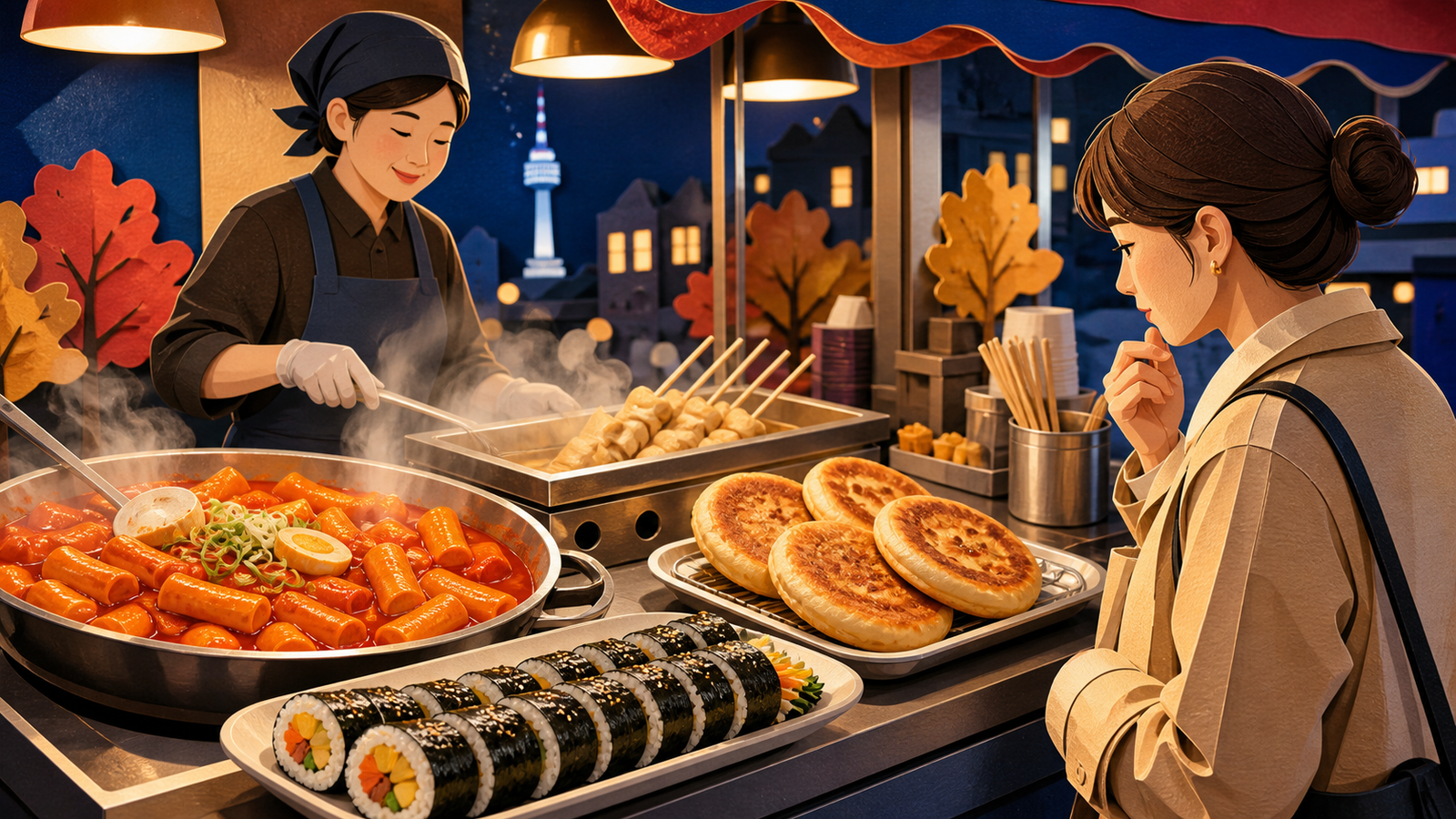
Street food is one of the easiest ways to eat well in Korea without planning a single restaurant reservation — most of it is cheap, fast, and doesn’t require reading a menu at all since you can just point.
The essentials
Tteokbokki — chewy rice cakes simmered in a spicy-sweet gochujang sauce. This is the anchor dish of Korean street food and the most common thing you’ll see at any cart. Around 5,000–6,000 KRW for a shareable portion.
Eomuk (also called odeng) — fish cake skewers served in a hot savory broth, usually sold right next to tteokbokki carts. About 800–1,000 KRW per skewer, and the broth itself is often free to sip while you eat, which doubles as a nice hand-warmer in cooler months.
Gimbap — seaweed rice rolls filled with vegetables, egg, and meat, closer to a full snack than the other items on this list. Triangle-shaped versions (samgak-gimbap) are sold in every convenience store for around 1,200 KRW if you want the fastest possible version.
Hotteok — a pan-fried stuffed pancake, sold savory (glass noodle filling) or sweet (brown sugar, cinnamon, and crushed nuts, which turns molten once it’s pressed on the griddle). Runs about 2,000–4,000 KRW.
Bungeoppang — a fish-shaped waffle filled with sweet red bean paste; the fish shape is purely decorative. This one’s seasonal — you’ll mostly find it from November through March, so don’t count on it in summer.
Sundae — Korean blood sausage, made from pig intestine stuffed with glass noodles, pork blood, and sometimes sticky rice. This is the one dish on this list that tends to split opinion the most — worth trying once with an open mind, but it’s the item most likely to end up in your “not for me” pile if unusual textures aren’t your thing.
Korean-style corn dogs — coated in everything from crispy potato cubes to a sugar glaze, these have become a genuine trend item, with Myeongdong and Hongdae having the densest concentration of stalls.
Where to actually eat it
Gwangjang Market is the single best one-stop option — it serves nearly the entire lineup (bindaetteok/mung bean pancakes, sundae, gimbap, mandu, tteokbokki) in one location, and prices here tend to run a bit lower than in Myeongdong or Hongdae.
Myeongdong has the highest concentration of stalls per block, especially for tteokbokki, eomuk, and corn dogs — good if you want variety without much walking.
Sindang-dong Tteokbokki Town, near Sindang Station, is a full alley dedicated to tteokbokki specifically, if that’s the dish you care most about getting right.
Want someone else to pick the stalls? A guided night market food tour walks you through a curated lineup with a local guide, no research required. Check the Seoul night market food tour on Klook →
What’s worth skipping
Not every stall is equal, and street food quality varies more than sit-down restaurants where reviews are easier to check. A couple of practical filters: go where there’s a visible line of locals (not just tourists), and be cautious of stalls in the most tourist-saturated single blocks of Myeongdong, where turnover and quality can be inconsistent compared to less crowded stretches a few minutes’ walk away.
FAQ
Q: Is street food safe to eat as a tourist?
A: Yes — Korean street food is generally prepared to a high standard, and food safety issues are rare. Stick to stalls with visible turnover and you’ll be fine.
Q: Can I pay by card at street food stalls?
A: Some do accept cards now, but many are cash-only or card-optional — carrying some cash (see our cash vs card guide) makes street food much easier.
Q: What if I have dietary restrictions?
A: Many street food items contain gluten (rice cake, batter), pork (sundae), or fish-based ingredients (eomuk broth) — if you’re avoiding any of these, ask before ordering or check ingredients using a translation app.
Q: Is Gwangjang Market touristy or still authentic?
A: Both — it’s genuinely popular with locals for food, but has also become a well-known tourist stop, so expect a mix of both crowds rather than a hidden gem.
Q: How much should I budget for a street food crawl?
A: 15,000–25,000 KRW comfortably covers trying several different items across an afternoon or evening.
Bottom Line
Start with tteokbokki, eomuk, and gimbap as your baseline, add hotteok or bungeoppang depending on the season, and use Gwangjang Market if you only have time for one stop. It’s some of the best value eating you’ll do on the entire trip.